Author: AFP

  • Meta to start labeling AI-generated content in May

    Meta to start labeling AI-generated content in May

    Facebook and Instagram giant Meta on Friday said it will begin labeling AI-generated media beginning in May, as it tries to reassure users and governments over the risks of deepfakes.

    The social media juggernaut added that it will no longer remove manipulated images and audio that don’t otherwise break its rules, relying instead on labeling and contextualization, so as to not infringe on freedom of speech.

    The changes come as a response to criticism from the tech giant’s oversight board, which independently reviews Meta’s content moderation decisions.

    The board in February requested that Meta urgently overhaul its approach to manipulated media given the huge advances in AI and the ease of manipulating media into highly convincing deepfakes.

    The board’s warning came amid fears of rampant misuse of artificial intelligence-powered applications for disinformation on platforms in a pivotal election year not only in the United States but worldwide.

    Meta’s new “Made with AI” labels will identify content created or altered with AI, including video, audio, and images. Additionally, a more prominent label will be used for content deemed at high risk of misleading the public.

    “We agree that providing transparency and additional context is now the better way to address this content,” Monika Bickert, Meta’s Vice President of Content Policy, said in a blog post.

    “The labels will cover a broader range of content in addition to the manipulated content that the Oversight Board recommended labeling,” she added.

    These new labeling techniques are linked to an agreement made in February among major tech giants and AI players to cooperate on ways to crack down on manipulated content intended to deceive voters.

    Meta, Google and OpenAI had already agreed to use a common watermarking standard that would invisibly tag images generated by their AI applications.

    Identifying AI content “is better than nothing, but there are bound to be holes,” Nicolas Gaudemet, AI Director at Onepoint, told AFP.

    He took the example of some open source software, which doesn’t always use this type of watermarking adopted by AI’s big players.

    Meta said its rollout will occur in two phases with AI-generated content labeling beginning in May 2024, while the removal of manipulated media solely based on the old policy will cease in July.

    According to the new standard, content, even if manipulated with AI, will remain on the platform unless it violates other rules, such as those prohibiting hate speech or voter interference.

    Recent examples of convincing AI deepfakes have only heightened worries about the easily accessible technology.

    The board’s list of requests was part of its review of Meta’s decision to leave a manipulated video of US President Joe Biden online last year.

    The video showed Biden voting with his adult granddaughter, but was manipulated to falsely appear that he inappropriately touched her chest.

    In a separate incident not linked to Meta, a robocall impersonation of Biden pushed out to tens of thousands of voters urged people to not cast ballots in the New Hampshire primary.

    In Pakistan, the party of former prime minister Imran Khan has used AI to generate speeches from their jailed leader.
  • Pakistan PM orders police punished after Chinese dam worker attack

    Pakistan PM orders police punished after Chinese dam worker attack

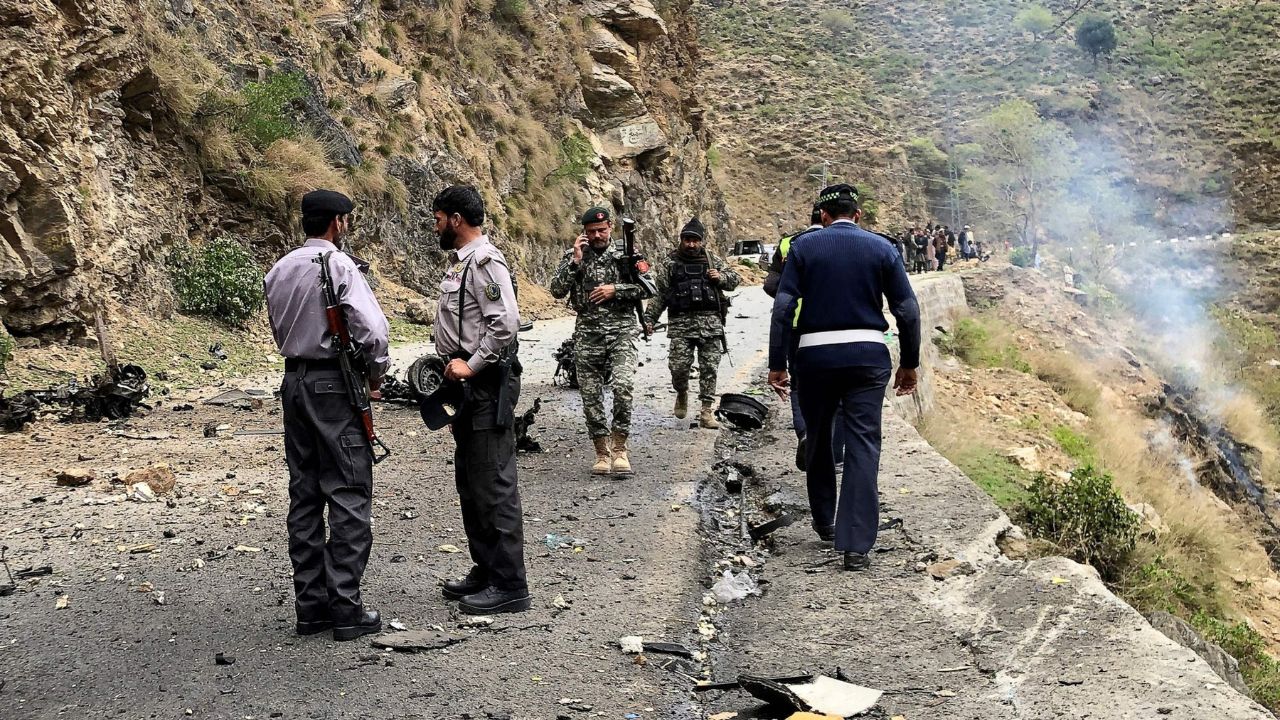
    Pakistan’s prime minister has ordered at least five senior police officials be punished for negligence after a suicide bomber killed five Chinese engineers at a major dam site last month, the country’s information minister said Saturday.

    The attack in northwestern Khyber Pakhtunkhwa province forced Power China and the China Gezhouba Company to suspend work on two dam projects after the bombing killed the five workers and a Pakistani driver, sending their van into a deep ravine.

    Hundreds of Chinese people are employed at the Dasu and Diamer Bhasha dam construction sites, located around 100 kilometres (62 miles) apart in the mountainous region.

    Minister of Information Attaullah Tarar said a committee appointed by Prime Minister Shehbaz Sharif identified a regional official, three district officials and the director of security at the Dasu dam project for their “negligence” in fulfilling their duties.

    “The prime minister has ordered immediate action against these officials,” Tarar told a press conference in the city of Lahore, without specifying what their punishment will be.

    “The prime minister himself will be monitoring the security of Chinese (nationals). Those individuals who have shown negligence will be set as an example.”

    Tarar said security matters regarding Chinese citizens would be “treated with utmost seriousness and any lapses will not be tolerated.”

    Operations by Power China have resumed at Diamer Bhasha while operations at China Gezhouba Group Company at Dasu remain closed.

    Pakistani police have detained more than 12 people, including Afghan nationals, in connection with the bombing.

    Beijing is Islamabad’s closest regional ally, frequently offering financial assistance to support its often-struggling neighbour and pouring more than $2 trillion into infrastructure projects.

    However, Pakistanis have long complained about not receiving a fair share of the jobs or wealth generated by the projects.

    The security of Chinese workers is a major concern to both countries, with nationals frequently targeted by militants hostile to outside influence.

    Last week’s attack came just days after militants attempted to storm offices of the Gwadar deepwater port in the southwest, considered a cornerstone of Chinese investment in Pakistan.

  • Israeli fire ‘most likely’ killed woman hostage on Oct 7: Army

    Israeli fire ‘most likely’ killed woman hostage on Oct 7: Army

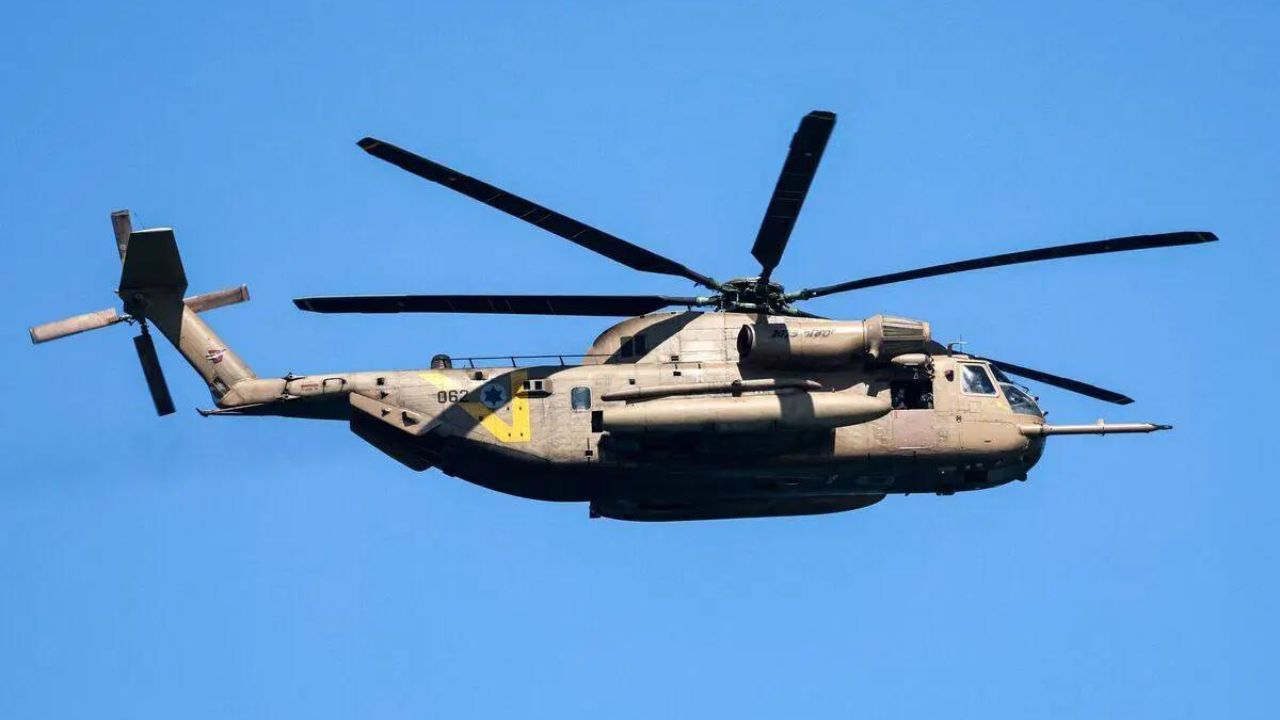
    An Israeli investigation found Friday that an Israeli woman who had been seized during the October 7 attack was “most likely” killed when a combat helicopter fired on her kidnappers’ vehicle.

    Efrat Katz and most of the militants in the vehicle were killed when the Israeli aircraft fired on them on October 7, the army investigation said.

    The helicopter “fired at a vehicle that had terrorists in it, and which, in retrospect, based on the testimonies, also had hostages in it,” the army said in a statement.

    “As a result of the fire, most of the terrorists manning the vehicle were killed, and most likely, Efrat Katz … was killed as well.”

    The “tragic and unfortunate” event occurred at a time of “fighting and conditions of uncertainty,” Israeli Air Force chief Tomer Bar said in the statement.

    “The commander of the air force did not find fault in the operation by the helicopter crew, who operated in compliance with the orders in a complex reality of war.”

    The army statement said the mistake occurred because surveillance systems could not distinguish hostages from kidnappers once in a vehicle, and that “the shooting was defined as shooting at a vehicle with terrorists”.

    Katz, 68 at the time of Hamas’s attack on southern Israel, was kidnapped from the Nir Oz kibbutz close to the Gaza border.

    Her daughter Doron Katz-Asher and her two children were taken hostage during the attack, but were later released on November 24.

    Katz’s partner Gadi Moses and his ex-wife Margalit Moses were also taken hostage during the attack. She was later released but Gadi is believed to remain in captivity in Gaza and still alive.

    The Hamas attack resulted in the death of 1,170 Israelis and foreigners, most of them civilians, according to an AFP tally of Israeli official figures.

    Palestinian militants took more than 250 hostages, of whom 130 remain in Gaza, including 34 the Israeli army says are dead.

    Israeli genocide in Gaza has killed at least 33,091 people since October 7, mostly women and children, according to the health ministry in the Hamas-run territory.

  • Israel increases Gaza aid; admits ‘mistakes’ in aid worker deaths

    Israel increases Gaza aid; admits ‘mistakes’ in aid worker deaths

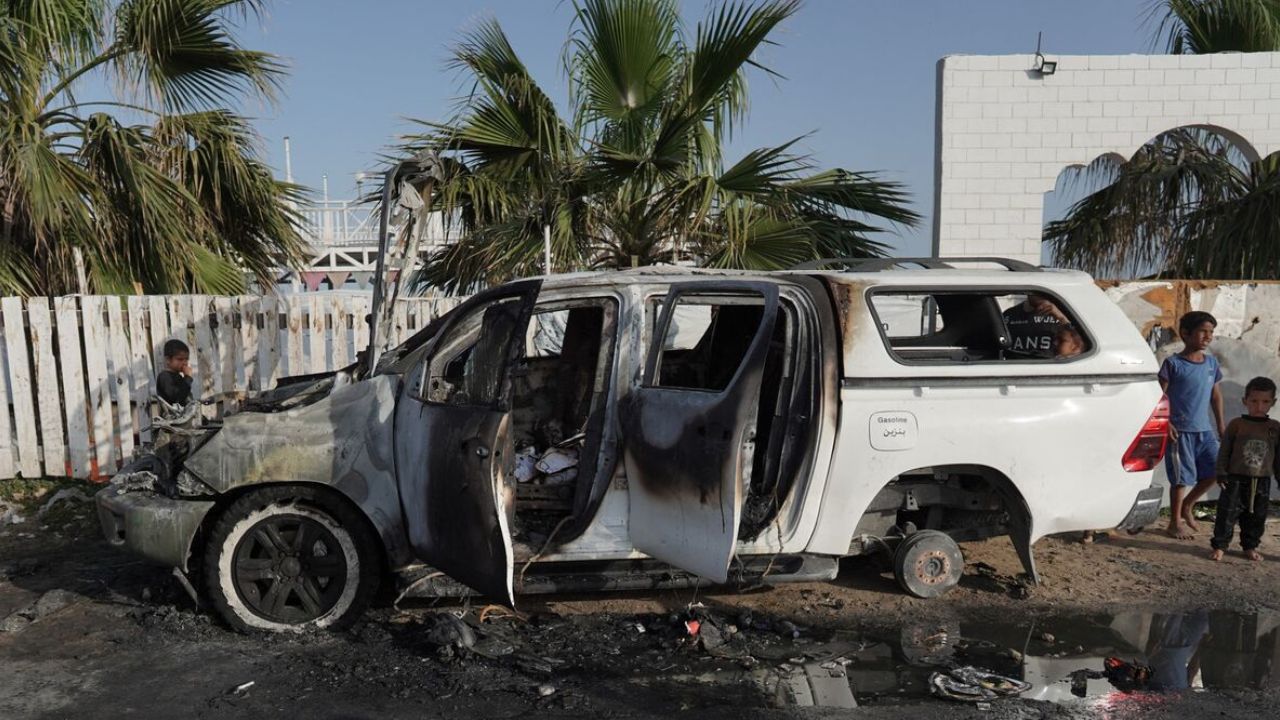
    TEL AVIV: The Israeli army on Friday admitted a series of errors and violations of its rules in the killing of seven aid workers in Gaza, saying it had mistakenly believed it was “targeting armed Hamas operatives”.

    The two brigade officers who ordered the drone strikes, a colonel and a major, are being fired, the army said, and its Southern Command chief reprimanded.

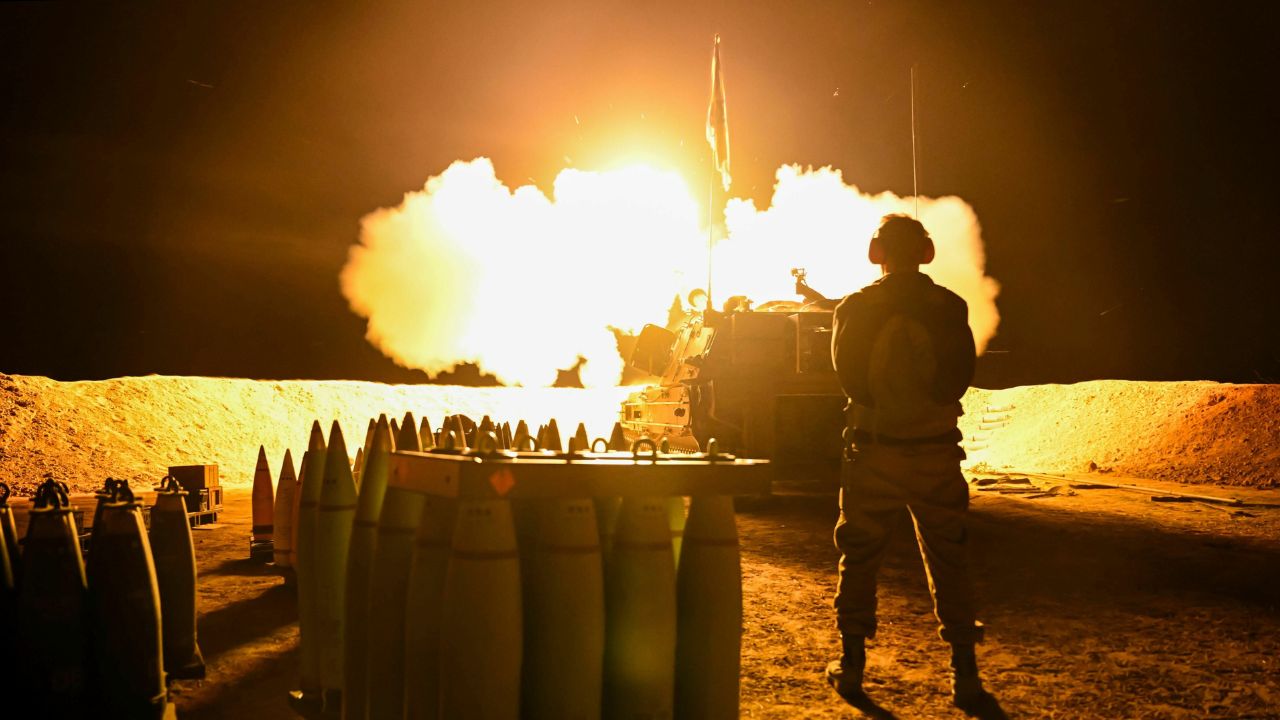
    It was a rare confession of wrongdoing by Israel in its nearly six-month war against Hamas in the Gaza Strip, where the health ministry of the Hamas-ruled territory says more than 33,000 people, mostly civilians, have been killed.

    The victims — an Australian, three Britons, a North American, a Palestinian and a Pole — were killed Monday night in three strikes over four minutes by an Israeli drone as they ran for their lives between their three vehicles, the military said.

    The US-based charity for which they worked, World Central Kitchen, demanded an independent inquiry, and Poland called for a “criminal” probe after the military’s announcement.

    The drone team who killed the aid workers made an “operational misjudgement of the situation” after spotting a suspected Hamas gunman shooting from the top of one of the food trucks the aid workers were escorting, an internal Israeli military inquiry found.

    Senior Israeli officers showed reporters clips from drone footage of what they said was a “Hamas operative” joining the US-based World Central Kitchen (WCK) convoy.

    Although the roofs of the three aid workers’ vehicles were emblazoned with WCK logos, retired Israeli general Yoav Har-Even, who is leading the investigation, said the drone’s camera could not see them in the dark.

    “This was a key factor in the chain of events,” he said.

    The aid group has said its team was travelling in a “de-conflicted” area at the time of the strike. “Despite coordinating movements with the (Israeli army), the convoy was hit as it was leaving the Deir al-Balah warehouse,” WCK said.

    The army said aid was moved at night to avoid deadly stampedes by hungry Gazans.

    The aid workers’ deaths “outraged” US President Joe Biden who demanded Israeli Prime Minister Benjamin Netanyahu order steps toward an “immediate ceasefire”.

    Israel later said it would allow “temporary” aid deliveries into northern Gaza, where the United Nations has warned of imminent famine.

    Har-Even admitted that “the three air strikes were in violation of standard operating procedures”.

    But he argued that “the state of mind” of the Israeli drone commanders “was that they were striking cars that had been seized by Hamas” after they thought one passenger was carrying a gun rather than a bag.

    “One of the commanders mistakenly assumed the gunmen were inside the vehicles and were Hamas terrorists,” the army said in a statement.

    US Secretary of State Antony Blinken said it was “very important that Israel is taking full responsibility for this incident.”

    The aid workers were killed after they had overseen the unloading of a ship carrying 300 tonnes of food aid from Cyprus to a warehouse inland.

    But as they drove south at 11:09 pm on April 1 the drone “struck one car, and identified people running out of the car and entering the second car,” Har-Even said.

    “They decided to hit it, which was against standard operating procedures. Then they struck the third car.”

    Asked by AFP, the general was not able to explain what happened to the “Hamas gunman” on the truck but he conceded they had been mistaken to think armed Hamas suspects had joined the WCK aid workers in the three pickups.

    “It is a tragedy. It is a serious mistake that we are responsible for,” Israeli military spokesman Daniel Hagari told reporters. “That shouldn’t have happened.”

    Har-Even said it was a breakdown in communication in the chain of military command which may have led to the strikes.

    He said that WCK had provided all the information necessary, but it was not passed down.

    “The biggest mistake was that (the drone team) didn’t have the coordination plan,” he said. “Their belief was the vehicles were Hamas, based on operational misjudgement and misclassification.”

  • UN chief ‘deeply troubled’ by reports Israel using AI to identify Gaza targets

    UN chief ‘deeply troubled’ by reports Israel using AI to identify Gaza targets

    UN Secretary-General Antonio Guterres on Friday expressed serious concern over reports that Israel was using artificial intelligence to identify targets in Gaza, resulting in many civilian deaths.

    According to a report in independent Israeli-Palestinian magazine +972, Israel has used AI to identify targets in Gaza — in some cases with as little as 20 seconds of human oversight.

    Guterres said that he was “deeply troubled by reports that the Israeli military’s bombing campaign includes Artificial Intelligence as a tool in the identification of targets, particularly in densely populated residential areas, resulting in a high level of civilian casualties.”

    “No part of life and death decisions which impact entire families should be delegated to the cold calculation of algorithms,” he said.

    The +972 report claims that “the Israeli army has marked tens of thousands of Gazans as suspects for assassination, using an AI targeting system with little human oversight and a permissive policy for casualties.”

    The report said that, according to “six Israeli intelligence officers”, a system dubbed Lavender had “played a central role in the unprecedented bombing of Palestinians, especially during the early stages of the war.”

    “According to the sources, its influence on the military’s operations was such that they essentially treated the outputs of the AI machine ‘as if it were a human decision’,” +972 reported.

    Two sources said “the army also decided during the first weeks of the war that, for every junior Hamas operative that Lavender marked, it was permissible to kill up to 15 or 20 civilians”.

    If “the target was a senior Hamas official… the army on several occasions authorized the killing of more than 100 civilians,” it added.

    The Israeli army, known as the IDF, on Friday rejected the claims.

    “The IDF does not use an artificial intelligence system that identifies terrorist operatives or tries to predict whether a person is a terrorist,” it said.

    Instead it has a “database whose purpose is to cross-reference intelligence sources… on the military operatives of terrorist organizations” to be used as a tool for analysts, it added.

    “The IDF does not carry out strikes when the expected collateral damage from the strike is excessive,” it said, using a term that includes civilian casualties.

    Israeli genocide in the Gaza Strip has killed at least 33,091 people since October 7, mostly women and children, according to the health ministry.

    The United Nations has warned of imminent famine in the besieged territory.

    Israel began hyping AI-powered targeting after an 11-day conflict in Gaza during May 2021, which commanders branded the world’s “first AI war”.

    The military chief during the 2021 war, Aviv Kochavi, told Israeli news website Ynet last year the force had used AI systems to identify “100 new targets every day”, instead of 50 a year previously.

    Weeks into the latest Gaza war, a blog entry on the Israeli military’s website said its AI-enhanced “targeting directorate” had identified more than 12,000 targets in just 27 days.

    An unnamed Israeli official was quoted as saying the AI system, called Gospel, produced targets “for precise attacks on infrastructure associated with Hamas, inflicting great damage on the enemy and minimal harm to those not involved”.

    But an anonymous former Israeli intelligence officer, quoted in November by +972, described Gospel’s work as creating a “mass assassination factory”.

    In a rare confession of wrongdoing, Israel on Friday admitted a series of errors and violations of its rules in the killing of seven aid workers in Gaza, saying it had mistakenly believed it was “targeting armed Hamas operatives”.

    Alessandro Accorsi, a senior analyst at Crisis Group, said the +972 report was “very concerning”.

    “It feels very apocalyptic. It’s clear… the degree of human control is very low,” he told AFP.

    “There are a thousand questions around this obviously — how moral it is to use it — but it is hardly surprising it is used,” he said.

    Johann Soufi, a human rights lawyer and former director of the UN Palestinian refugee agency UNRWA’s legal office in Gaza, said the +972 article described methods that were “undeniably war crimes”.

    They were “likely crimes against humanity” in view of the high civilian casualties, he added on X, formerly Twitter.

  • X gives free blue check to big follower accounts

    X gives free blue check to big follower accounts

    Users with big followings will receive a free subscription to X, formerly Twitter – and the platform’s famous blue check, the company said in another policy U-turn.

    Before Musk, the blue check mark was used as a verification system for major accounts including celebrities, institutions and journalists.

    But Musk saw the system as unfair to regular users and overhauled the blue checks so that they went only to paying subscribers, which meant thousands of holders were stripped of the feature.

    Late Wednesday, some users were surprised and even angry to find the blue tick reinstated.

    A message from the platform explained that they were given free subscriptions because they were an “influential member” of X.

    The site added that it “reserves the right to cancel the complimentary subscription in its sole discretion.”

    Musk said last week that “going forward, all X accounts with over 2,500 verified subscriber followers will get Premium features for free and accounts with over 5,000 will get Premium+ for free.”

    Premium or Premium+ perks include reduced ads and higher placement in the platform’s feeds, as well as access to Grok, X’s AI chatbot.

    Some users who received the blue check saw it as a bid by Musk to revitalize the struggling platform.

    “Translation: Pay $8? Kidding. Help me. But don’t say anything too free speechy about me or my Garbage Tower of Babel,” actor Jeffrey Wright, who received an unsolicited check, said in a post on X.

    Since Musk bought Twitter for $44 billion in 2022, the platform’s advertising business has collapsed as marketers soured on his leadership and the mass firings at the company that gutted content moderation.

    X on Tuesday named company veteran Kylie McRoberts as the new head of safety in an effort to shore up income from advertising, still the site’s main source of revenue.

    According to most industry-accepted metrics, X has lost users since Musk took ownership, but the company says activity on the site has grown.

  • Samsung Electronics expects 10-fold rise in Q1 profit

    Samsung Electronics expects 10-fold rise in Q1 profit

    Samsung Electronics said Friday it expects first-quarter operating profits to rise more than 10-fold year on year as chip prices recover.

    The firm is the flagship subsidiary of South Korean giant Samsung Group, by far the largest of the family-controlled conglomerates that dominate business in Asia’s fourth-largest economy.

    The tech giant said in a regulatory filing that January-March operating profits were expected to rise 931.3 percent to 6.6 trillion won ($4.89 billion). Operating profits in the same period last year totalled around 640 billion won.

    The expectation exceeded the average estimate by 20.5 percent, according to South Korea’s Yonhap news agency, which referenced its financial data firm.

    Sales, meanwhile, are expected to rise 11.4 percent to 71 trillion won, Samsung said.

    South Korean chipmakers, led by Samsung, enjoyed record profits in recent years as prices for their products soared, but a global economic slowdown dealt a blow to memory chip sales.

    However, the semiconductor market had been predicted to recover this year and grow 11.8 percent, according to industry monitor World Semiconductor Trade Statistics.

    The news from Samsung comes after South Korea’s SK Hynix — the world’s second-largest memory chip maker — announced in January that it had returned to profit after four consecutive quarters of losses.

    Samsung’s overall outlook is “fortified by a resurgence in the smartphone market, escalating DRAM (memory chip) prices”,  Neil Shah, vice president of Counterpoint Research, told AFP.

    Samsung is expected to release its final earnings report at the end of this month.

  • India’s Congress party promises minority protection and jobs

    India’s Congress party promises minority protection and jobs

    India’s main opposition party Congress vowed Friday to protect minorities – generally seen as a reference to the country’s Muslims – while accelerating growth and jobs in a manifesto for an election it is widely expected to lose.

    Nearly a billion Indians will vote to elect a new government in six-week-long parliamentary elections starting on April 19, the largest democratic exercise in the world.

    Many analysts see Prime Minister Narendra Modi’s re-election under his Hindu nationalist Bharatiya Janata Party (BJP) banner as a foregone conclusion.

    Congress led India’s independence struggle and dominated politics for most of the next seven decades but its secularist vision has since struggled against the BJP’s appeal to members of India’s majority faith.

    In its manifesto, Congress promised to protect “linguistic and religious minorities”.

    “The plurality of religions represents the history of India,” it said. “History cannot be altered.”

    India has a long and grim history of sectarian clashes between the country’s Hindu majority and Muslims, its biggest minority faith with 200 million members.

    Party leader Rahul Gandhi — the son, grandson and great-grandson of prime ministers — said the upcoming election was “fundamentally different” from any other in India’s history.

    “It is between those who want to end India’s constitution and democracy and those who want to save it,” he said.

    The Congress manifesto, titled a “justice document”, offered “concrete guarantees unlike Modi’s empty promises”, said lawmaker and lead author P Chidambaram.

    The party has promised to address India’s “massive unemployment” on a “war footing”, adding that it would earmark half of all government jobs for women.

    Young people voted for Modi in droves when he was first elected a decade ago after he said he would create 10 million jobs a year.

    But a recent International Labour Organization (ILO) report warned that India was hamstrung by a “grim” crisis, with unemployment on the rise.

    Congress proposed an unconditional annual cash transfer of Rs 100,000 ($1,200) “to every poor Indian family”, without precisely defining who would qualify.

    The BJP is yet to publish its own manifesto.

  • UN Rights Council considers call for halt to arms sales to Israel

    UN Rights Council considers call for halt to arms sales to Israel

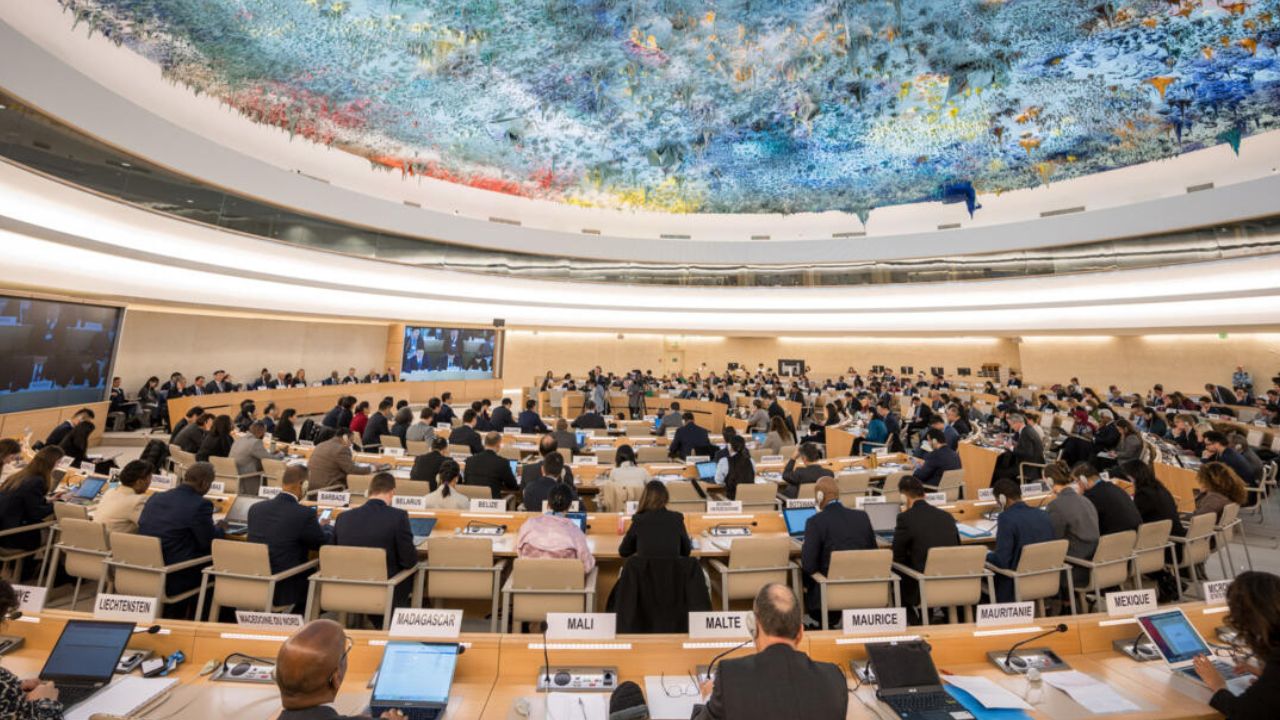
    The UN Human Rights Council was on Friday debating whether to demand a halt in arms sales to Israel, whose genocide in Gaza has killed more than 33,000 people.

    If the text is adopted, it would mark the first time that the United Nations’ top rights body has taken a position on the bloodiest-ever genocide to beset the besieged Palestinian territory.

    The draft text calls on countries to “cease the sale, transfer and diversion of arms, munitions and other military equipment to Israel”.

    This, it said, is needed among other things “to prevent further violations of international humanitarian law and violations and abuses of human rights”.

    It stresses that the International Court of Justice ruled in January “that there is a plausible risk of genocide” in Gaza.

    Friday’s draft resolution, which was brought forward by Pakistan on behalf of all Organisation of Islamic Cooperation (OIC) member states except Albania, calls for “an immediate ceasefire” and “for immediate emergency humanitarian access and assistance”.

    It comes after the UN Security Council in New York last week also finally passed a resolution calling for a ceasefire — thanks to an abstention from Washington, Israel’s closest ally and largest arms supplier.

    However, the ceasefire demand has had no impact on the ground.

    Palestinian militants also took more than 250 hostages on October 7, and 130 remain in Gaza, including 34 who the army says are dead.

    Israel’s retaliatory campaign has killed at least 33,037 people, mostly women and children, according to the health ministry in Gaza.

    The rights council draft resolution does not name Hamas but it does condemn the firing of rockets at Israeli civilian areas and demands “the immediate release of all remaining hostages”.

    The strongly worded text repeatedly names Israel, stressing it is “the occupying Power”.

    It demands that Israel end its occupation of all Palestinian territories and “immediately lift its blockade on the Gaza Strip and all other forms of collective punishment”.

    The text, which was revised late on Thursday removing several references to genocide, continues to express “grave concern at statements by Israeli officials amounting to incitement to genocide”.

    And it urges countries to “prevent the continued forcible transfer of Palestinians within and from Gaza”.

    It warns in particular “against any large-scale military operations in the city of Rafah” in the south of the densely populated Gaza Strip, where well over one million civilians are sheltering, warning of “devastating humanitarian consequences”.

    The draft resolution also condemns “the use of starvation of civilians as a method of warfare in Gaza”, where the UN has warned that famine is looming.

    And it slammed “the unlawful denial of humanitarian access, wilful impediment to relief supplies and deprivation of objects indispensable to the survival of civilians, including food, water, electricity, fuel and telecommunications, by Israel”.

    The text also condemns Israel’s “use of explosive weapons with wide area effects by Israel in populated areas in Gaza”.

    Friday’s draft resolution deplores the fact that Israel has persistently refused to cooperate with numerous investigations ordered by the UN rights council.

    And it insists on the “imperative of credible, timely and comprehensive accountability for all violations of international law” in Gaza.

    It calls on the Commission of Inquiry on the rights situation in the occupied Palestinian territories — the highest-level UN investigation launched prior to October 7 — to probe all “direct and indirect transfer or sale of arms, munitions, parts, components and dual use items to Israel, the occupying Power”.

    The team, it said, should identify the weapons used since October 7 and “analyse the legal consequences of these transfers”.

    The investigators should present their findings to the council at its 59th session, which will be held in mid-2025, it said.

  • Macron believes France, allies ‘could have stopped’ 1994 Rwanda genocide

    Macron believes France, allies ‘could have stopped’ 1994 Rwanda genocide

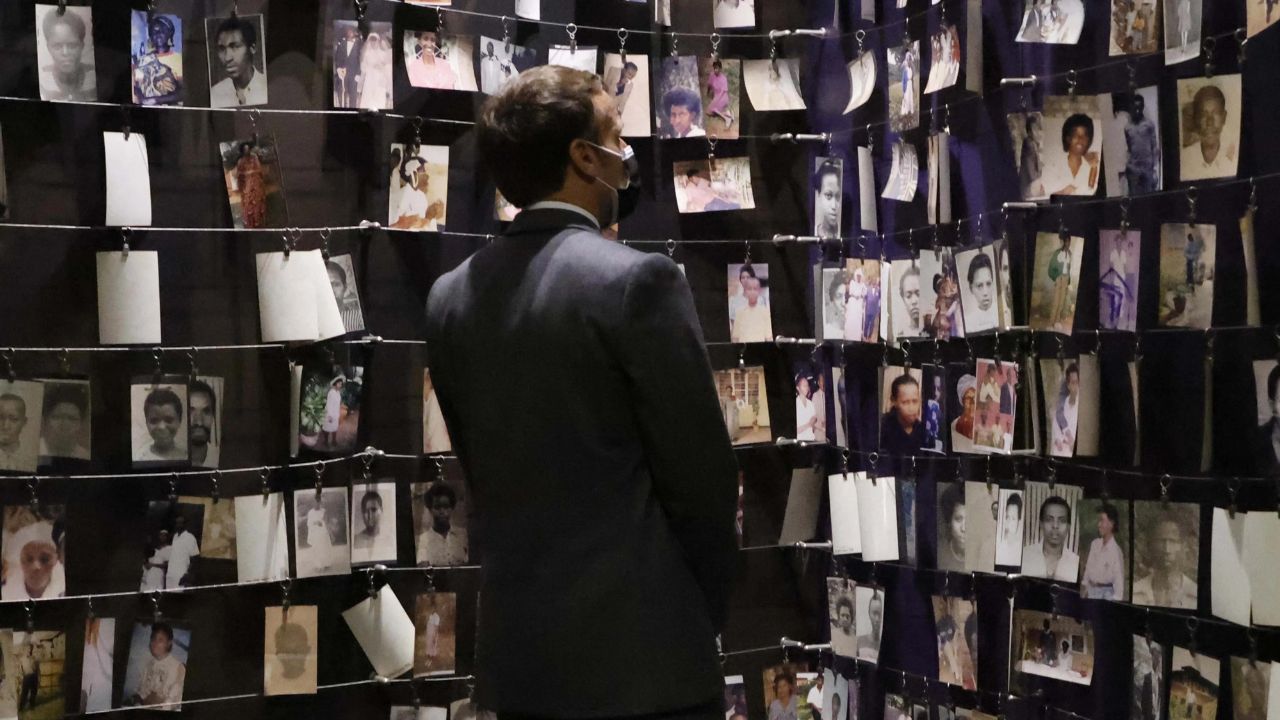
    President Emmanuel Macron believes France and its Western and African allies “could have stopped” Rwanda’s 1994 genocide but did not have the will to halt the slaughter of an estimated 800,000 people, mostly ethnic Tutsis, the presidency said on Thursday.

    In a video message to be published on Sunday to mark the 30th anniversary of the genocide, Macron will emphasise that “when the phase of total extermination against the Tutsis began, the international community had the means to know and act”, a French presidential official said, asking not to be named.

    The president believes that at the time, the international community already had historical experience of witnessing genocide with the Holocaust in World War II and the mass killings of Armenians in Ottoman Turkey during World War I.

    Macron will say that “France, which could have stopped the genocide with its Western and African allies, did not have the will” to do so, the official added.

    The president will not be heading to Kigali to attend commemorations of the genocide this Sunday alongside Rwandan President Paul Kagame, and France will instead be represented by Foreign Minister Stephane Sejourne.

    Macron, during a visit to Rwanda in 2021, recognised France’s “responsibilities” in the genocide and said only the survivors could grant “the gift of forgiveness”.

    But he stopped short of an apology and Kagame, who led the Tutsi rebellion that ended the genocide, has long insisted on the need for a stronger statement.

    A historical commission set up by Macron and led by historian Vincent Duclert also concluded in 2021 that there had been a “failure” on the part of France under former leader Francois Mitterrand, while adding that there was no evidence Paris was complicit in the killings.

    Marcel Kabanda, president of the Ibuka France genocide survivor association, welcomed Macron’s new message reported on Thursday.

    “It goes even further than the Duclert report or his message in Kigali” in 2021, he said.

    “I’m overjoyed he is giving France this positive image of a country that recognises its faults and grows through recognising its history,” he said.

    In his video message, Macron is to “reiterate the importance of the duty of remembrance, but also of developing and disseminating reference knowledge, in particular through the education of younger generations in France,” the presidency said.