Author: AFP

  • Canada to reduce number of temporary foreign workers

    Canada to reduce number of temporary foreign workers

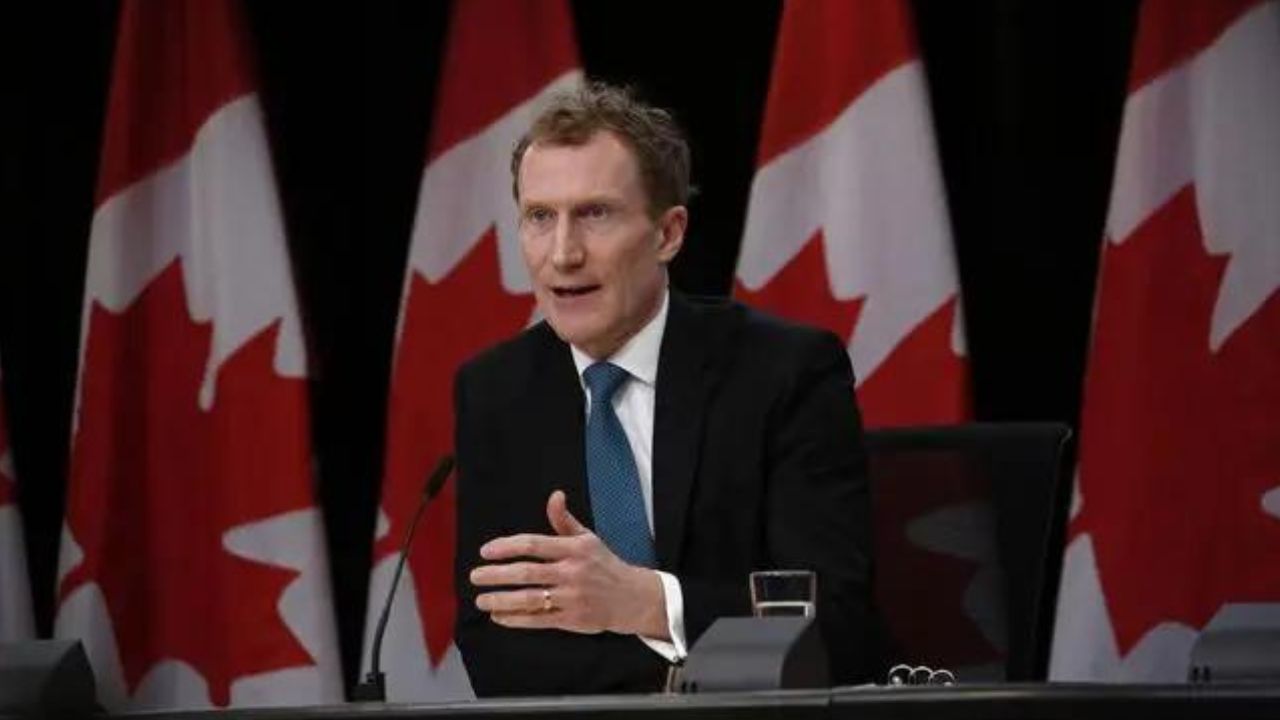
    Ottawa, Canada – Canada for the first time is planning to curb the number of temporary foreign workers it welcomes, officials announced Thursday, after years of lofty immigration levels.

    Ottawa is proposing to reduce the number of temporary residents to five percent of the population over the next three years, down from the current 6.2 percent (2.5 million people).

    That target will be firmed up after consultations with Canada’s provinces, some of which have been pushing back on large migrant inflows amid a housing crunch and soaring demands for services.

    Restrictions on temporary foreign worker permits will start on May 1.

    This follows a recently announced cap on new permits for international students and visa requirements for some Mexican travellers.

    “Canada has seen a sharp increase in the volume of temporary residents in recent years, from a rise of international students to more foreign workers filling job vacancies to those fleeing wars and natural disasters,” Immigration Minister Marc Miller told a news conference.

    However, Canada’s labour market is now much tighter, with its population growth, fueled by massive immigration, outpacing job creation.

    According to government data, job vacancies fell 3.6 percent to 678,500 in the last three months of 2023, marking the sixth straight quarterly decline from a record high of 983,600 reached in the second quarter of 2022.

    “Changes are needed to make the system more efficient and more sustainable,” Miller said.

    Employment Minister Randy Boissonnault urged employers to consider hiring refugees before seeking to bring in temporary foreign workers.

    He said businesses that are currently allowed to have temporary foreign workers make up to 30 percent of their workforce will see that proportion drop to 20 percent, except in the health care and construction sectors.

    Canada’s immigration department, meanwhile, has been ordered by Miller to conduct a review of existing programs that bring in temporary labourers to better align them with labour needs and weed out abuses.

    amc/bfm

    © Agence France-Presse
  • Modi opponent challenges arrest ahead of India election

    Modi opponent challenges arrest ahead of India election

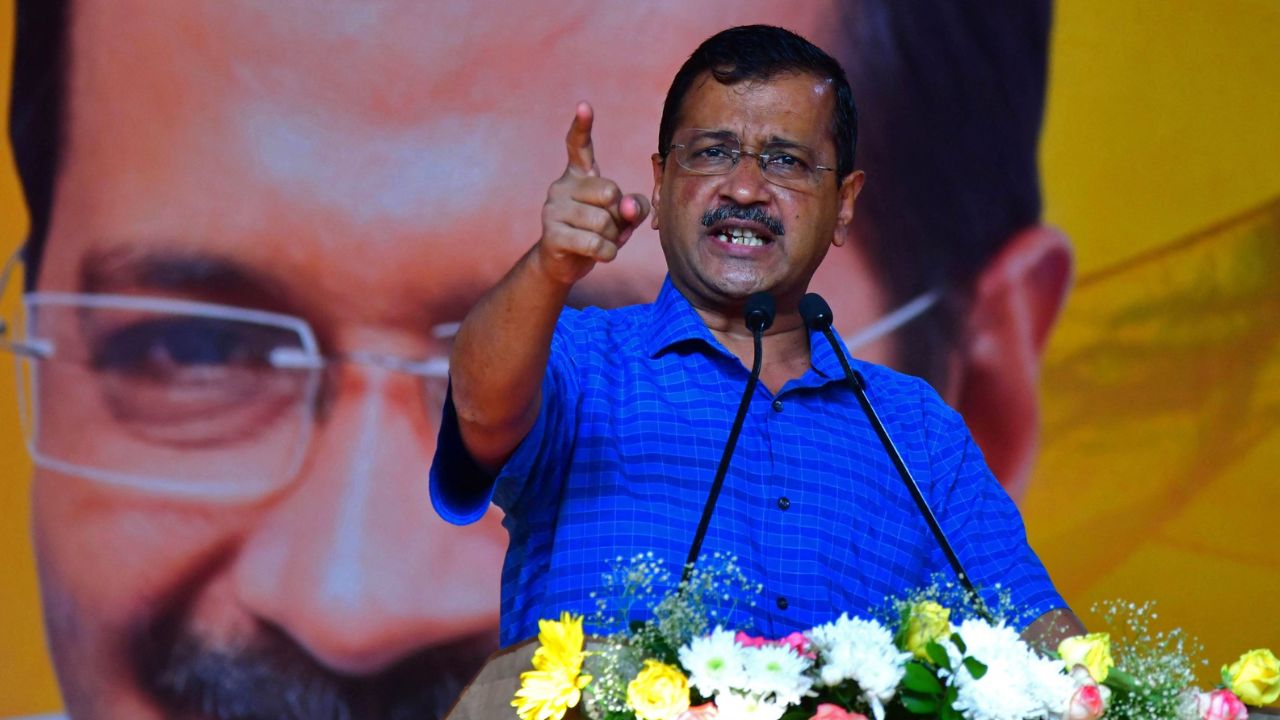
    New Delhi, India – A top Indian opposition politician appeared in court Friday to fight his arrest in a case supporters say is aimed at sidelining challengers to Prime Minister Narendra Modi before next month’s election.

    Arvind Kejriwal, chief minister of the capital Delhi and a key leader in an opposition alliance formed to compete against Modi in the polls, was detained on Thursday in connection with a long-running corruption probe.

    He is among several leaders of the bloc under criminal investigation and one of his colleagues described his arrest as a “political conspiracy” orchestrated by the ruling Bharatiya Janata Party (BJP).

    Kejriwal was escorted into a courtroom in the capital by officers from the Enforcement Directorate, India’s main financial crimes agency, to petition for bail while the case proceeds.

    His legal team had originally sought to challenge the legality of his detention in the Supreme Court but Shadan Farasat, a lawyer for Kejriwal, told AFP they would instead contest his remand in a lower court.

    Hundreds of supporters from Kejriwal’s Aam Aadmi Party (AAP) took to the streets on Friday to condemn the leader’s arrest, with police breaking up one crowd of protesters who attempted to block a busy traffic intersection.

    Several demonstrators were detained including Delhi education minister Atishi Marlena Singh and health minister Saurabh Bhardwaj, according to an AFP journalist at the scene.

    Small rallies in support of Kejriwal were held in several other cities around India.

    Kejriwal’s government was accused of corruption when it implemented a policy to liberalise the sale of liquor in 2021 and give up a lucrative government stake in the sector.

    The policy was withdrawn the following year, but the resulting probe into the alleged corrupt allocation of licences has since seen the jailing of two top Kejriwal allies.

    Kejriwal, 55, has been chief minister for nearly a decade and first came to office as a staunch anti-corruption crusader. He had resisted multiple summons from the Enforcement Directorate to be interrogated as part of the probe.

    Singh, the education minister, said Thursday that Kejriwal had not resigned from his office.

    “We made it clear from the beginning that if needed, Arvind Kejriwal will run the government from jail,” she told reporters.

    ‘Decay of democracy’

    Tamil Nadu chief minister M.K. Stalin, a fellow member of the opposition bloc, said Kejriwal’s arrest “smacks of a desperate witch-hunt”.

    “Not a single BJP leader faces scrutiny or arrest, laying bare their abuse of power and the decay of democracy,” he said.

    Modi’s political opponents and international rights groups have long sounded the alarm on India’s shrinking democratic space.

    US democracy think-tank Freedom House said this year that the BJP had “increasingly used government institutions to target political opponents”.

    Rahul Gandhi, the most prominent member of the opposition Congress party and scion of a dynasty that dominated Indian politics for decades, was convicted of criminal libel last year after a complaint by a member of Modi’s party.

    His two-year prison sentence saw him disqualified from parliament for a time until the verdict was suspended by a higher court, but raised further concerns over democratic norms in the world’s most populous country.

    Kejriwal and Gandhi are both members of an opposition alliance composed of more than two dozen parties that is jointly contesting India’s national election running from April to June.

    But even without the criminal investigations targeting its most prominent leaders, few expect the bloc to make inroads against Modi, who remains popular a decade after first taking office.

    Many analysts see Modi’s reelection as a foregone conclusion, partly due to the resonance of his assertive Hindu-nationalist politics with the members of the country’s majority faith.

    abh-sai/gle/mca

    © Agence France-Presse

  • Global fertility rate to keep plummeting, major study warns

    Global fertility rate to keep plummeting, major study warns

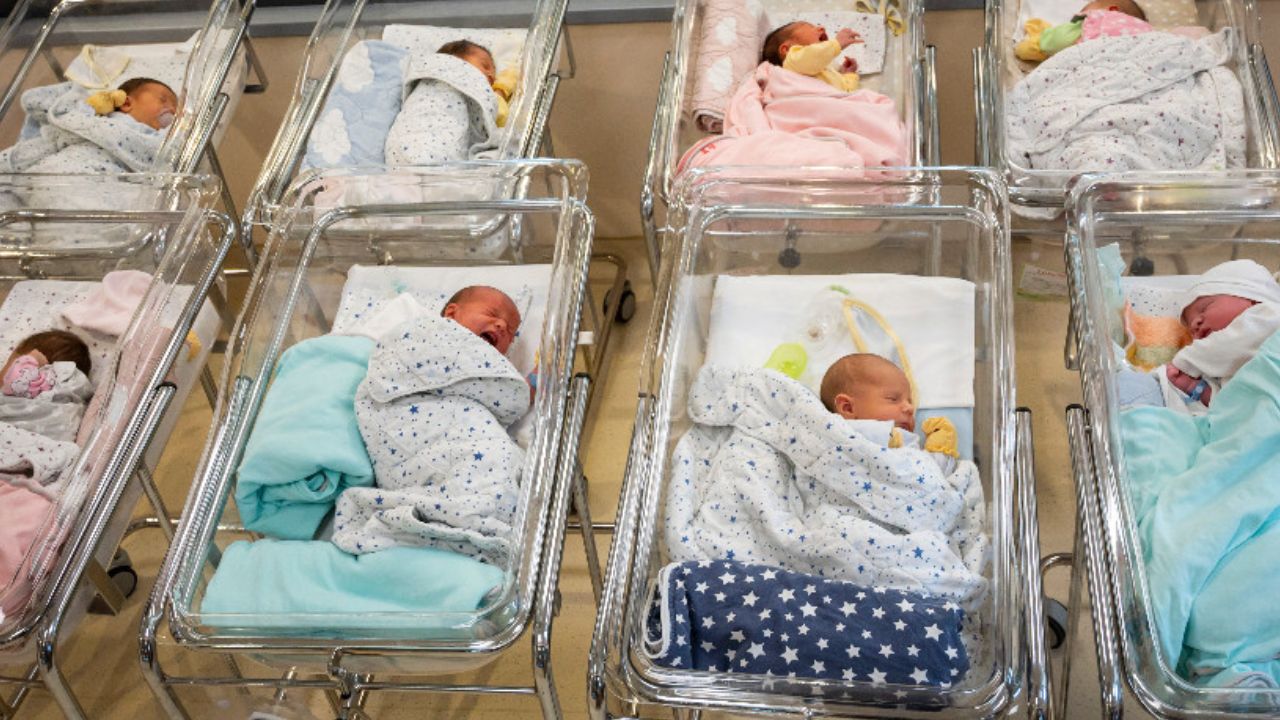
    Paris (AFP) – The population of almost every country will be shrinking by the end of the century, a major study said Wednesday, warning that baby booms in developing nations and busts in rich ones will drive massive social change.

    The fertility rate in half of all nations is already too low to maintain their population size, an international team of hundreds of researchers reported in The Lancet.

    Using a huge amount of global data on births, deaths and what drives fertility, the researchers tried to forecast the future for the world’s population.

    By 2050, the population of three quarters of all countries will be shrinking, according to the study by the US-based Institute For Health Metrics and Evaluation (IHME).

    At the end of the century, that will be true for 97 percent — or 198 out of 204 countries and territories, the researchers projected.

    Only Samoa, Somalia, Tonga, Niger, Chad and Tajikistan are expected to have fertility rates exceeding the replacement level of 2.1 births per female in 2100, the study estimated.

    During this century, fertility rates will continue to increase in developing countries, particularly those in sub-Saharan Africa, even as they tumble in wealthier, ageing nations.

    “The world will be simultaneously tackling a ‘baby boom’ in some countries and a ‘baby bust’ in others,” senior study author Stein Emil Vollset of the IHME said in a statement.

    ‘Implications are immense’

    “We are facing staggering social change through the 21st century,” he said in a statement.

    IHME researcher Natalia Bhattacharjee said the “implications are immense”.

    “These future trends in fertility rates and live births will completely reconfigure the global economy and the international balance of power and will necessitate reorganising societies,” she said.

    “Once nearly every country’s population is shrinking, reliance on open immigration will become necessary to sustain economic growth.”

    However World Health Organization experts urged caution for the projections.

    They pointed out several limitations of the models, particularly a lack of data from many developing nations.

    Communication about the figures “should not be sensationalised, but nuanced, balancing between gloom and optimism,” the WHO experts wrote in The Lancet.

    They also pointed out that there can be benefits of having a smaller population, such as for the environment and food security. But there are disadvantages for labour supply, social security and “nationalistic geopolitics”.

    Teresa Castro Martin, a researcher at the Spanish National Research Council not involved in the study, also emphasised that these are just projections.

    She pointed out that the Lancet study predicts the global fertility rate will fall below replacement levels around 2030, “whereas the UN predicts this to occur around 2050”.

    The study was an update of the IHME’s Global Burden of Disease study. The organisation, set up at the University of Washington by the Bill and Melinda Gates Foundation, has become a global reference for health statistics.

  • Afghan schools restart, with girls barred for third year running

    Afghan schools restart, with girls barred for third year running

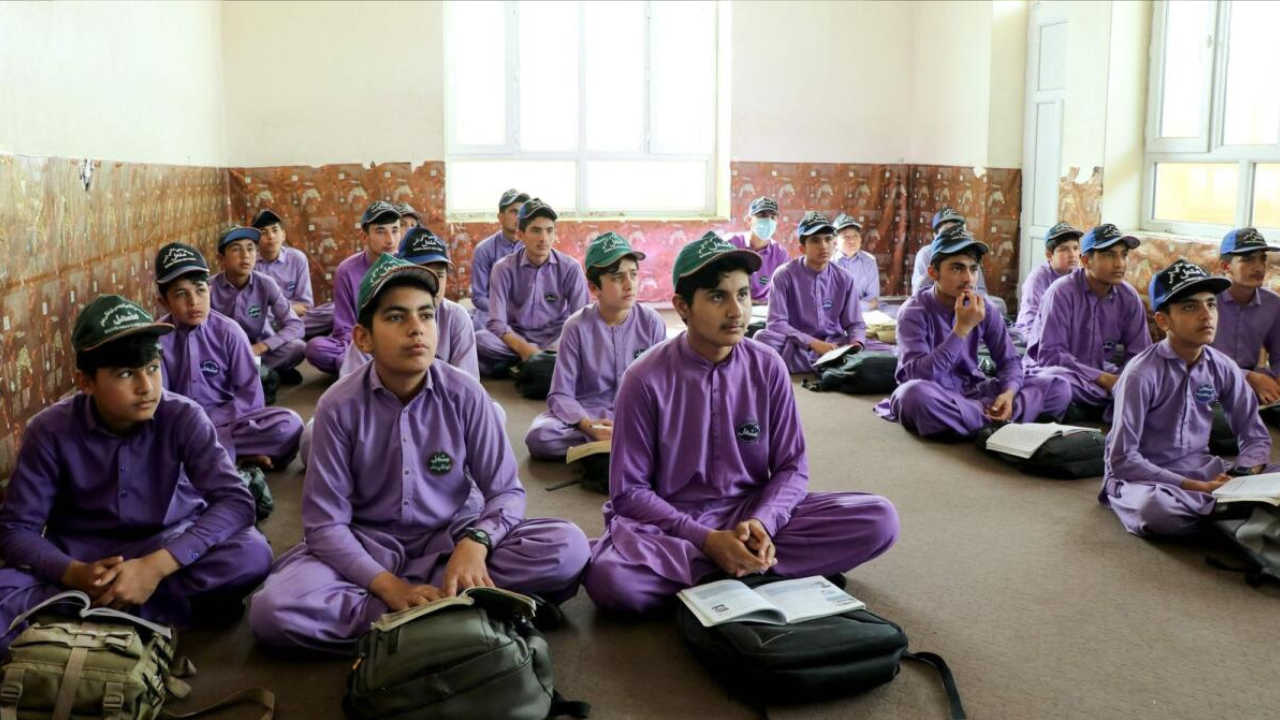
    Kabul, Afghanistan – Schools in Afghanistan opened for the new academic year on Wednesday, with girls lamenting being banned from joining secondary-level classes for a third year in a row.

    Taliban authorities barred girls from secondary school in March 2022, after surging back to power in 2021 and imposing an austere vision of Islam with curbs the United Nations labels “gender apartheid”.

    On Wednesday morning, uniformed boys carried black and white Taliban flags as they lined the entrance of Kabul’s Amani school, where local officials arrived for the ceremonial start of the school year.

    But 18-year-old Kabul resident Zuhal Shirzad had to stay home when the school bell rang.

    “Every year when my brother went to school, I felt very disappointed,” she told AFP.

    “I was happy for him and sad for myself,” she said.

    “This winter, my brother was studying and preparing for the university entrance exam,” she added.

    “I looked at him desperately and said that if I had been allowed to go to school, I would also be preparing for the university entrance exam now.”

    Afghanistan is the only country where girls’ education has been banned after elementary school.

    “None of the girls like me can continue our education and studies, and it is excruciating that boys can continue,” said 18-year-old Asma Alkozai, from the western city of Herat.

    “When there are barriers to education in society, such societies can never progress,” she told AFP.

    Online classes have sprung up in response to restrictions but a dearth of computers and internet, as well as the isolation of learning via screen, makes them a poor substitute for in-person learning, students and teachers say.

    Education ‘essential’

    The education ministry announced the new school year on Tuesday, a day before the start of the Afghan calendar’s new year, in a media invitation that expressly forbade women journalists from covering the ceremony at the Amani school.

    At the ceremony, Taliban government Deputy Prime Minister Abdul Salam Hanafi praised education, saying, “A nation without education will always be dependent on others”, local media reported.

    Universities also recently started the new academic year, but women have been blocked from attending since December 2022.

    Under the Taliban authorities, women have been excluded from many spheres of public life. Beauty salons have been shuttered and women have been barred from parks, funfairs and gyms.

    Women’s rights remain a key obstacle to international recognition of the Taliban government, which has not yet been recognised by any country.

    The United Nations mission in Afghanistan (UNAMA) called on the authorities to “end this unjustifiable and damaging ban”.

    “Education for all is essential for peace & prosperity,” the agency said in a post on social media platform X.

    ‘Half of society’

    Taliban authorities have insisted since girls were barred from secondary school that they are working on establishing a system that aligns with their interpretation of Islamic law.

    Thirteen-year-old Mudasir in eastern Khost province said girls and women should be given their rights to education “in the Islamic framework”.

    “They can go to school wearing Islamic hijab (covering),” he told AFP.

    “They must be given their rights, because if a sister is educated, she can be the reason for the whole family to be educated.”

    Faiz Ahmad Nohmani, who started secondary school at a private institution in Herat on Wednesday, was excited to start the new academic year but said he was “very sorry” that girls were not also returning.

    “Today, when I came to school, I wanted our sisters to come as well because they are half of society,” the 15-year-old told AFP. “They should study like us.”

    Ali Ahmad Mohammadi, an 18-year-old student in his final year of secondary school, also in Herat, said he’s aware of the chance he has to study.

    “Literacy helps us progress, it saves society,” said the teenager, who hopes to go on to university.  “An illiterate society will always face stagnation.”

    qb-sw/ssy

    © Agence France-Presse

  • Canada FM confirms halting arms shipments to Israel

    Canada FM confirms halting arms shipments to Israel

    OTTAWA: Canada will halt all arms shipments to Israel, Foreign Minister Melanie Joly’s office confirmed Wednesday, a decision that has drawn the ire of Israeli leaders facing growing international scrutiny over the war in the Gaza Strip.

    The besieged Palestinian territory is facing a mounting humanitarian crisis, and months of war have pushed hundreds of thousands of Gazans to the brink of famine.

    Canada, a key ally of the United States, which provides Israel with billions of dollars a year in military aid, had already reduced its shipments to Israel to only include non-lethal equipment, such as radios, following the October 7 Hamas attack.

    “Since January 8th, the government has not approved new arms export permits to Israel and this will continue until we can ensure full compliance with our export regime,” said a statement from Joly’s office.

    “There are no open permits for exports of lethal goods to Israel,” it added.

    Export permits approved prior to January 8, however, would “remain in effect,” Joly’s office said, explaining that canceling them risked “important implications for both Canada and its allies,” including NATO and the Five Eyes intelligence alliance.

    A senior Canadian official had on Tuesday told AFP that “the situation on the ground makes it so that we can’t” export any equipment that could have a potential military use.

    Israel slammed the decision, with foreign minister Israel Katz saying it “undermines Israel’s right to self-defense against Hamas terrorists.”

    “History will judge Canada’s current action harshly,” he said in a post on social media platform X.

    US Senator Bernie Sanders welcomed the move, saying in his own post on social media: “Given the humanitarian catastrophe in Gaza, including widespread and growing starvation, the US should not provide another nickel for (Prime Minister Benjamin) Netanyahu’s war machine.”

    The issue of arms deliveries to Israel has triggered legal proceedings in several countries around the world.

    In Canada, a coalition of lawyers and citizens of Palestinian origin filed a complaint against the government in early March to suspend arms exports to Israel, accusing Ottawa of violating both international and domestic law.

    Israel has historically been a top receiver of Canadian arms exports, with Can$21 million worth of military materiel exported to Israel in 2022, according to government data, following Can$26 million in shipments in 2021.

    That places Israel among the top 10 recipients of Canadian arms exports.

    Israel offensive in Gaza has killed at least 31,923 people, most of them women and children, according to Gaza’s health ministry.

    While affirming Israel’s right to defend itself, Canadian Prime Minister Justin Trudeau has taken an increasingly critical stance toward Israel as civilian deaths have mounted in Gaza.

    On Monday, the Canadian Parliament passed a nonbinding resolution calling for the international community to work toward a two-state solution between Israel and the Palestinians.

  • Seven BLA militants killed storming Gwadar port: officials

    Seven BLA militants killed storming Gwadar port: officials

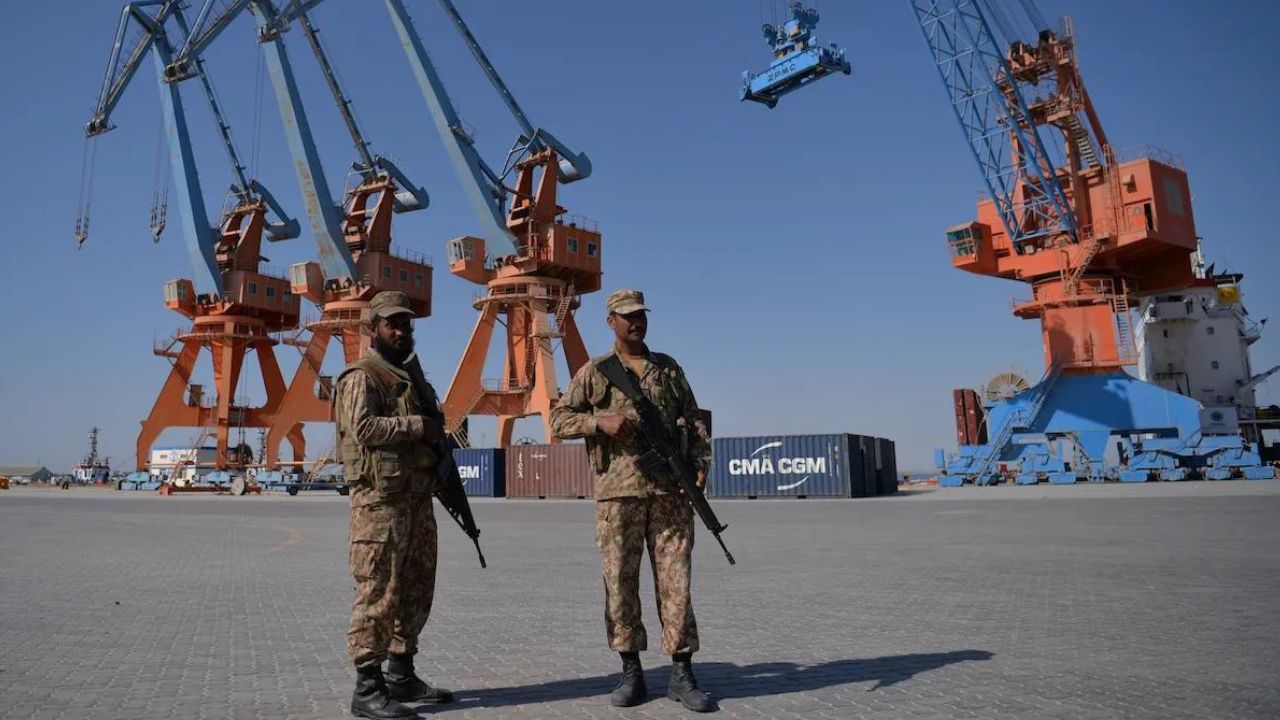
    Security forces killed at least seven militants on Wednesday as they tried to storm the offices of a Pakistan port considered a cornerstone of China’s investment in the nation, officials said.

    Pakistan has for decades battled a simmering insurgency in southwestern Balochistan province, where separatists hostile to Islamabad have often targeted foreign investment projects.

    Local official Saeed Ahmed Umrani told AFP seven militants had been killed in an attempt to “infiltrate” the compound of Balochistan’s Gwadar Port Authority.

    Gwadar Port, which sits on the Arabian Sea, is managed by a Chinese firm and considered the crown jewel of Beijing’s investment in Pakistan under its gargantuan Belt and Road infrastructure project.

    An army source who asked to remain anonymous also said seven militants had been killed, alongside four soldiers defending law-enforcement posts inside the compound.

    “The terrorists attacked with grenades, rocket launchers and Kalashnikovs,” he said. “The area is cleared now.”

    Chief minister of Balochistan province Sarfraz Bugti said on social media platform X that eight militants had been killed.

    The attack was claimed by separatist group the Baloch Liberation Army (BLA) in an email statement, and spokesman Jeeyand Baloch said military intelligence offices had been targeted.

    “The operation was launched at 3:30 pm (1030 GMT) and is still underway”, he said in a message sent early Wednesday evening.

    Last August, the BLA also claimed an attack on a convoy carrying Chinese engineers to the port.

    Ethnic Baloch separatists have long claimed their communities are not getting a fair share of wealth from the region, which sits atop huge reserves of natural resources.

    They have frequently targeted Pakistani security forces protecting foreign investment projects.

    China has inked over two trillion dollars in contracts around the world under its Belt and Road scheme, but projects in Pakistan have been plagued by security concerns.

    In 2022, a BLA suicide bomber killed four people, including three Chinese language teachers, in Karachi city.

    A year earlier, a bus carrying engineers to a construction site near a dam in northwestern Pakistan was hit by a bomb, killing 13 people including nine Chinese workers.

    Islamabad has been accused of committing abductions and extrajudicial murder of Baloch citizens in retaliation for their campaign of separatism.

    bur-jts/sco

    © Agence France-Presse

  • Finland is world’s happiest country for seventh year: study

    Finland is world’s happiest country for seventh year: study

    Helsinki (AFP) – Finland remained the world’s happiest country for a seventh straight year in an annual UN sponsored World Happiness Report published on Wednesday.

    And Nordic countries kept their places among the 10 most cheerful, with Denmark, Iceland and Sweden trailing Finland.

    Afghanistan, plagued by a humanitarian catastrophe since the Taliban regained control in 2020, stayed at the bottom of the 143 countries surveyed.

    For the first time since the report was published more than a decade ago, the United States and Germany were not among the 20 happiest nations, coming in 23rd and 24th respectively.

    In turn, Costa Rica and Kuwait entered the top 20 at 12 and 13.

    The report noted the happiest countries no longer included any of the world’s largest countries.

    “In the top 10 countries only the Netherlands and Australia have populations over 15 million. In the whole of the top 20, only Canada and the UK have populations over 30 million.”

    The sharpest decline in happiness since 2006-10 was noted in Afghanistan, Lebanon and Jordan, while the Eastern European countries Serbia, Bulgaria and Latvia reported the biggest increases.

    The happiness ranking is based on individuals’ self-assessed evaluations of life satisfaction, as well as GDP per capita, social support, healthy life expectancy, freedom, generosity and corruption.

    Growing inequality

    Jennifer De Paola, a happiness researcher at the University of Helsinki in Finland, told AFP that Finns’ close connection to nature and healthy work-life balance were key contributors to their life satisfaction.

    In addition, Finns may have a “more attainable understanding of what a successful life is”, compared to for example the United States where success is often equated with financial gain, she said.

    Finns’ strong welfare society, trust in state authorities, low levels of corruption and free healthcare and education were also key.

    “Finnish society is permeated by a sense of trust, freedom, and high level of autonomy,” De Paola said.

    This year’s report also found that younger generations were happier than their older peers in most of the world’s regions — but not all.

    In North America, Australia and New Zealand, happiness among groups under 30 has dropped dramatically since 2006-10, with older generations now happier than the young.

    By contrast, in Central and Eastern Europe, happiness increased substantially at all ages during the same period, while in Western Europe people of all ages reported similar levels of happiness.

    Happiness inequality increased in every region except Europe, which authors described as a “worrying trend”.

    The rise was especially distinct among the old and in Sub-Saharan Africa, reflecting inequalities in “income, education, health care, social acceptance, trust, and the presence of supportive social environments at the family, community and national levels,” the authors said.

  • 12 killed in Pakistan mine collapse: Officials

    12 killed in Pakistan mine collapse: Officials

    The bodies of ten more miners were pulled from a collapsed coal pit in southern Pakistan on Wednesday, officials said, bringing the death toll to 12 after the rescue bid ended.

    A gas explosion rocked the private coal pit in the mining region of Khost, about 80 kilometres (50 miles) east of Quetta, on Tuesday evening, trapping the miners hundreds of feet below ground.

    “The rescue effort has concluded with the recovery of all 12 dead bodies,” Abdul Ghani Baloch, chief inspector of mines for Balochistan province, told AFP.

    “Two bodies were recovered during the night, with the remaining 10 retrieved early in the morning.”

    Abdullah Shahwani, Balochistan’s director general of mining, also confirmed the death toll, while Prime Minister Shehbaz Sharif issued a statement expressing “profound sorrow and grief over the loss of precious lives”.

  • English court jails first offender for ‘cyber-flashing’

    English court jails first offender for ‘cyber-flashing’

    London, United Kingdom – A court in eastern England on Tuesday became the first in the country to jail someone for a new cyber-flashing offence, sentencing a convicted sex offender to 66 weeks in prison.

    A judge at Southend Crown Court handed Nicholas Hawkes, 39, the jail term after he previously admitted to the newly designated offence at an earlier appearance.

    Cyber-flashing, which can involve offenders sending people an unsolicited sexual image on social media, dating apps or by other electronic communication, became a crime in England and Wales on January 31.

    It was part of the government’s Online Safety Act.

    Hawkes, from Basildon, east of London, pleaded guilty to two counts of sending a photograph or film of genitals to cause alarm, distress or humiliation.

    He had admitted the latest offences of sending unsolicited images to a 15-year-old girl and a woman on February 9.

    The woman took screenshots of the photograph on WhatsApp and reported him to police the same day.

    Hawkes was already on the sex offenders register after a conviction last year of sexual activity with a child under 16 years old and exposure, for which he also received a community order.

    On Tuesday he also pleaded guilty to breaching that order and breaching a suspended sentence for another sexual offence.

    Victims of the new cyber-flashing offence and other image-based abuses have lifelong anonymity from the moment they report it under the Sexual Offences Act.

    jj/phz/

    © Agence France-Presse

  • Planet ‘on the brink’ with new heat records likely in 2024: UN

    Planet ‘on the brink’ with new heat records likely in 2024: UN

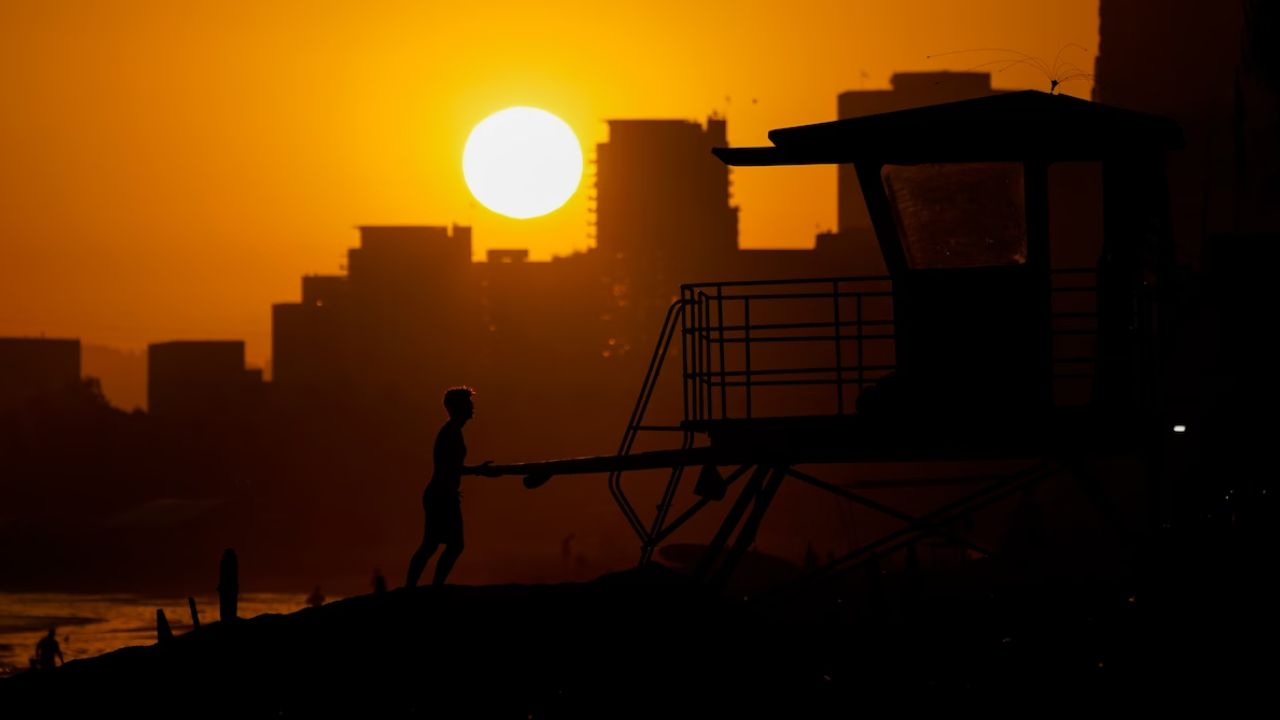
    Global temperatures “smashed” heat records last year, as heatwaves stalked oceans and glaciers suffered record ice loss, the United Nations said Tuesday — warning 2024 was likely to be even hotter.

    The annual State of the Climate report by the UN weather and climate agency confirmed preliminary data showing 2023 was by far the hottest year ever recorded.

    And last year capped off “the warmest 10-year period on record”, the World Meteorological Organization said, with even hotter temperatures expected.

    “There is a high probability that 2024 will again break the record of 2023”, WMO climate monitoring chief Omar Baddour told reporters.

    Reacting to the report, UN chief Antonio Guterres said it showed “a planet on the brink”.

    “Earth’s issuing a distress call,” he said in a video message, pointing out that “fossil fuel pollution is sending climate chaos off the charts”, and warning that “changes are speeding up”.

    The WMO said that last year the average near-surface temperature was 1.45 degrees Celsius above pre-industrial levels — dangerously close to the critical 1.5-degree threshold that countries agreed to avoid passing in the 2015 Paris climate accords.

    “I am now sounding the red alert about the state of the climate,” Saulo told reporters, lamenting that “2023 set new records for every single climate indicator”.

    The organisation said many of the records were “smashed” and that the numbers “gave ominous new significance to the phrase ‘off the charts’.”

    “What we witnessed in 2023, especially with the unprecedented ocean warmth, glacier retreat and Antarctic sea ice loss, is cause for particular concern,” Saulo said.

    One especially worrying finding was that marine heatwaves gripped nearly a third of the global ocean on an average day last year.

    And by the end of 2023, more than 90 percent of the ocean had experienced heatwave conditions at some point during the year, the WMO said.