Author: AFP

  • Entire Gaza population at ‘severe levels of acute food insecurity’: Blinken

    Entire Gaza population at ‘severe levels of acute food insecurity’: Blinken

    The entire population of Gaza is experiencing “severe levels of acute food insecurity”, US Secretary of State Antony Blinken said Tuesday, underscoring the urgency for increasing the delivery of humanitarian aid into the Palestinian territory.

    “According to the most respected measure of these things, 100 percent of the population in Gaza is at severe levels of acute food insecurity. That’s the first time an entire population has been so classified,” Blinken told a press conference in the Philippines where he is on an official visit.

    Blinken’s remarks came on the eve of his return to the Middle East, this time to Saudi Arabia and Egypt, to discuss efforts to secure a ceasefire in Gaza and ramp up aid deliveries.

    A United Nations-backed food security assessment warned Monday that half of Gazans are experiencing “catastrophic” hunger, with famine projected to hit the north of the territory by May unless there is urgent intervention.

    Martin Griffiths, the UN’s humanitarian chief, has called for Israel to allow unfettered aid into the besieged Palestinian territory, saying there was “no time to lose”.

    With aid agencies reporting huge difficulties gaining access to Gaza, particularly the north, the UN has warned for weeks that a famine is looming.

    Donors have turned to deliveries by air or sea, but these are not viable alternatives to land deliveries, UN agencies say.

    The Integrated Food Security Phase Classification partnership said Monday that while the technical criteria for a famine had not yet been met, “all evidence points towards a major acceleration of deaths and malnutrition”.

    Citing UN data, Blinken said 100 percent of the population in Gaza needed humanitarian assistance, compared with 80 percent in Sudan and 70 percent in Afghanistan.

    “This only underscores both the urgency, the imperative, of making this the priority,” Blinken said of aid deliveries.

    “We need more, we need it to be sustained, and we need it to be a priority if we’re going to effectively address the needs of people.”

    Blinken is in Manila as part of a brief Asia tour aimed at reinforcing US support for regional allies against China.

    During a joint press conference with his Philippine counterpart, Blinken was asked about steps he was taking to address the lack of access to Gaza for foreign journalists.

    “There are obviously profound security considerations in an active war zone and those have to be taken into account,” Blinken said.

    “But the basic principle of access for journalists is something we stand strongly behind.”

  • China says US has ‘no right’ to interfere in South China Sea

    China says US has ‘no right’ to interfere in South China Sea

    China said Tuesday the United States had “no right” to interfere in the South China Sea, after Secretary of State Antony Blinken said Washington stood by its commitments to defend the Philippines against armed attack in the disputed waterway.

    “The United States is not a party to the South China Sea issue and has no right to interfere in maritime issues that are between China and the Philippines,” foreign ministry spokesman Lin Jian told a regular press conference in Beijing.

    Blinken is in the Philippine capital Manila — his second visit since President Ferdinand Marcos took office in 2022 — as part of a brief Asia tour to reinforce US support for regional allies against China.

    “Military cooperation between the US and the Philippines must not harm China’s sovereignty and maritime rights and interests in the South China Sea, and still less be used to provide a platform for the Philippines’ illegal claims,” Lin said in a response to a question on Blinken’s earlier comments.

    “China will continue to take necessary measures to resolutely defend its territorial sovereignty and maritime rights and interests, and uphold peace and stability in the South China Sea,” he added.

    Beijing claims almost the entire South China Sea — a crucial route for global trade — brushing aside competing claims from several Southeast Asian nations, including the Philippines, and an international ruling that has declared its stance baseless.

  • Gaza world’s biggest ‘open-air graveyard’: EU’s Borrell

    Gaza world’s biggest ‘open-air graveyard’: EU’s Borrell

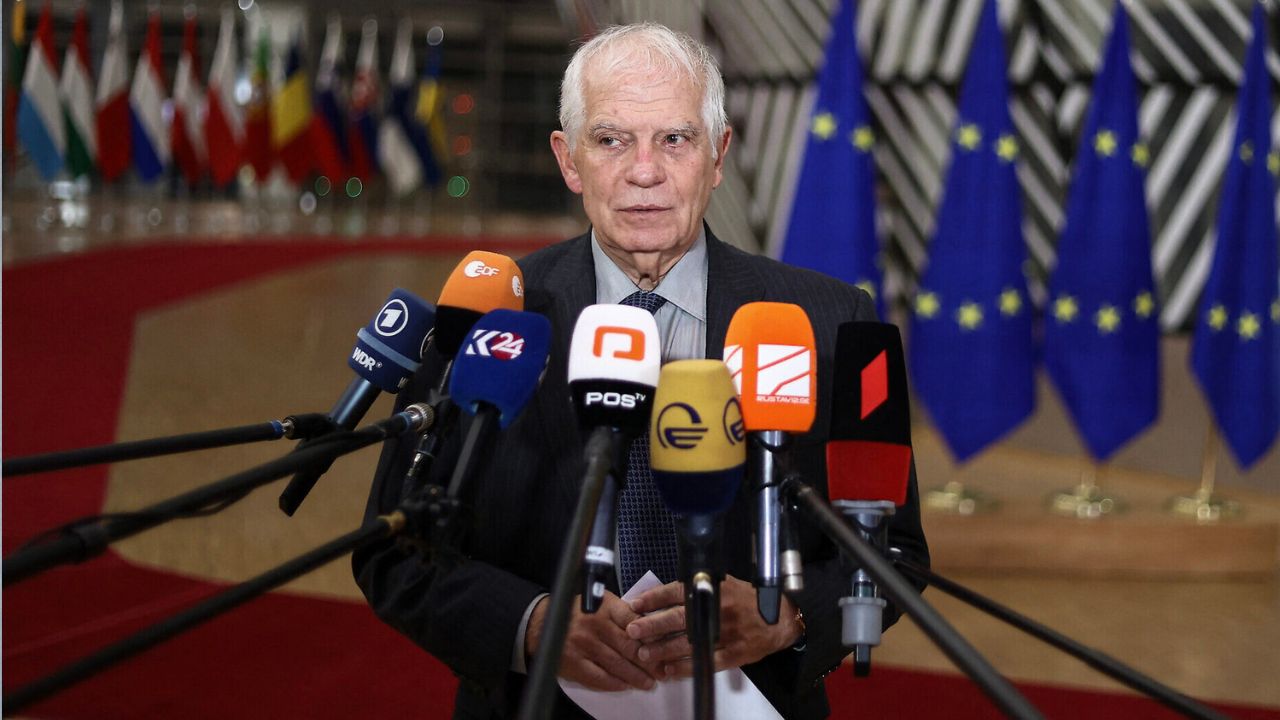
    EU foreign policy chief Josep Borrell said Monday that Israel’s military campaign in Gaza had turned the territory into the world’s biggest “open-air graveyard”.

    “Gaza was before the war the greatest open-air prison. Today it’s the greatest open-air graveyard,” Borrell said at a meeting of EU ministers in Brussels.

    “It’s a graveyard for tens of thousands of people and also a graveyard for many of the most important principles of humanitarian law.”

    Borrell on Monday also reiterated his accusation that Israel was using famine as a “weapon of war” by not allowing aid trucks into Gaza.

    “Israel is provoking famine,” he told a humanitarian conference.

    The Islamist militants also seized about 250 hostages, of whom Israel believes 130 remain in Gaza, including 33 who are presumed dead.

    Israel has carried out a relentless bombing campaign and ground offensive that Gaza’s health ministry says has killed at least 31,726 people, most of them women and children.

    The 27-nation EU has struggled to come up with a united response to the war in Gaza as some members firmly back Israel and others are more pro-Palestinian.

    EU ministers were set to discuss a proposal by Ireland and Spain to suspend a cooperation agreement with Israel, but that move was unlikely to get the support of all 27 countries.

    The bloc was however expected to agree on sanctions both against Hamas for sexual violence on October 7 and against violent Israeli settlers in the West Bank for attacking Palestinians.

    Britain and the United States have already imposed sanctions targeting a small number of “extremist” settlers.

  • TikTok and its ‘secret sauce’ caught in US-China tussle

    TikTok and its ‘secret sauce’ caught in US-China tussle

    Seoul (AFP) – As a US campaign to sever TikTok from its Chinese parent heads to the Senate, analysts say Beijing’s response to a forced sale of the app – and its ‘secret sauce’ algorithm – will be clear: Hands off.

    Under new legislation that passed the House of Representatives last week, TikTok could be banned in the United States if it does not cut all ties with Chinese tech giant ByteDance.

    But in the battle over TikTok’s future in the United States, what strikes many as a contradiction has emerged: while the company tries to convince Congress of its independence from Beijing, China has come out swinging in its defence.

    Beijing does not want a precedent to be set where a Chinese company is strong-armed into selling one of its most valuable assets, including an algorithm that is the envy of competitors, analysts say.

    “This kind of threat is like daylight robbery,” Mei Xinyu, a Beijing-based economist, told AFP. “All things considered, the Chinese government’s actions so far have been very mild.”

    “What the US government is proposing is way over the line.”

    US lawmakers and security agencies say TikTok presents a threat because China can access and use the vast troves of data the app collects for influence and espionage.

    TikTok has denied the allegations, saying it has spent around $1.5 billion on “Project Texas”, under which US user data would be stored in the United States.

    However, many lawmakers and bodies including the FBI remain unconvinced.

    Some critics have said the data itself is only part of the issue, and that the algorithm that produces personalised recommendations for TikTok users must also be disconnected from ByteDance.

    ‘The secret sauce’

    That ByteDance algorithm has helped drive TikTok’s stratospheric success since the app was launched for the international market in 2017.

    It crunches huge amounts of user data, such as their interactions on the app and their location, to provide more content tailored for them.

    Its precise details are a closely guarded secret, but it helped propel TikTok to one billion users in just four years. Facebook, by comparison, took more than eight years to reach that milestone.

    Other social media platforms also deploy tailored recommendations based on algorithms that analyse user data, but analysts say TikTok’s has been so successful that it is considered by some to be the company’s most precious asset.

    The algorithm is “valuable because TikTok is sticky. People spend more time on TikTok than they do on other social media”, James Andrew Lewis, a technology expert at the Center for Strategic and International Studies (CSIS), told AFP.

    “This is the secret sauce that makes TikTok a success.”

    The algorithm has been at the centre of discussions about any potential sale of TikTok since the administration of then US president Donald Trump sought to ban TikTok in 2020.

    That year, the Chinese government designated algorithms that provide recommendations based on user data analysis as a protected technology, meaning their export would require Beijing’s approval.

    While no specific app or firm was cited, the economist Mei said the move was “to a very large extent” because of US pressure against TikTok.

    TikTok has said that under Project Texas, its recommendation algorithm for US users is stored along with their data on Oracle servers in the United States.

    However, The Wall Street Journal reported in January that ByteDance employees in China updated the TikTok algorithm so frequently that Project Texas workers could not track all changes.

    TikTok did not respond to AFP’s questions about the Wall Street Journal report or about where its algorithm is updated.

    CEO Shou Zi Chew has said previously that TikTok will not be “manipulated by any government” and that it has never been asked by the Chinese government for US user data.

    ‘Commercial plunder’

    In Beijing, however, officials have not minced words in their opposition to the TikTok bill, saying China will take all necessary measures to protect its interests.

    “You’ve got the desire to protect the option for a relationship with the intelligence services, and you’ve got a little bit of nationalist pride because it’s so successful,” said Lewis at CSIS.

    “Some of it is just (being) annoyed with the Americans for trying to force them to sell. All of that puts Beijing right behind ByteDance.”

    Beijing wants to avoid a forced sale to protect Chinese firms, Zhang Yi, founder of the Guangzhou-based tech research firm iiMedia, told AFP.

    “Once the precedent is set, there may be countless other Chinese companies that will face a similar fate in the future.”

    Hu Xijin, a former editor of the nationalist Chinese newspaper Global Times, urged ByteDance not to give in to US pressure.

    “The essence of this matter is commercial plunder,” he wrote this month.

    “As long as ByteDance remains firm, willing to shut down TikTok rather than give up ownership, it will create reverse pressure on the passage of the bill.”

  • Israeli military tells Gazans to evacuate Al-Shifa hospital

    Israeli military tells Gazans to evacuate Al-Shifa hospital

    Palestinian Territories

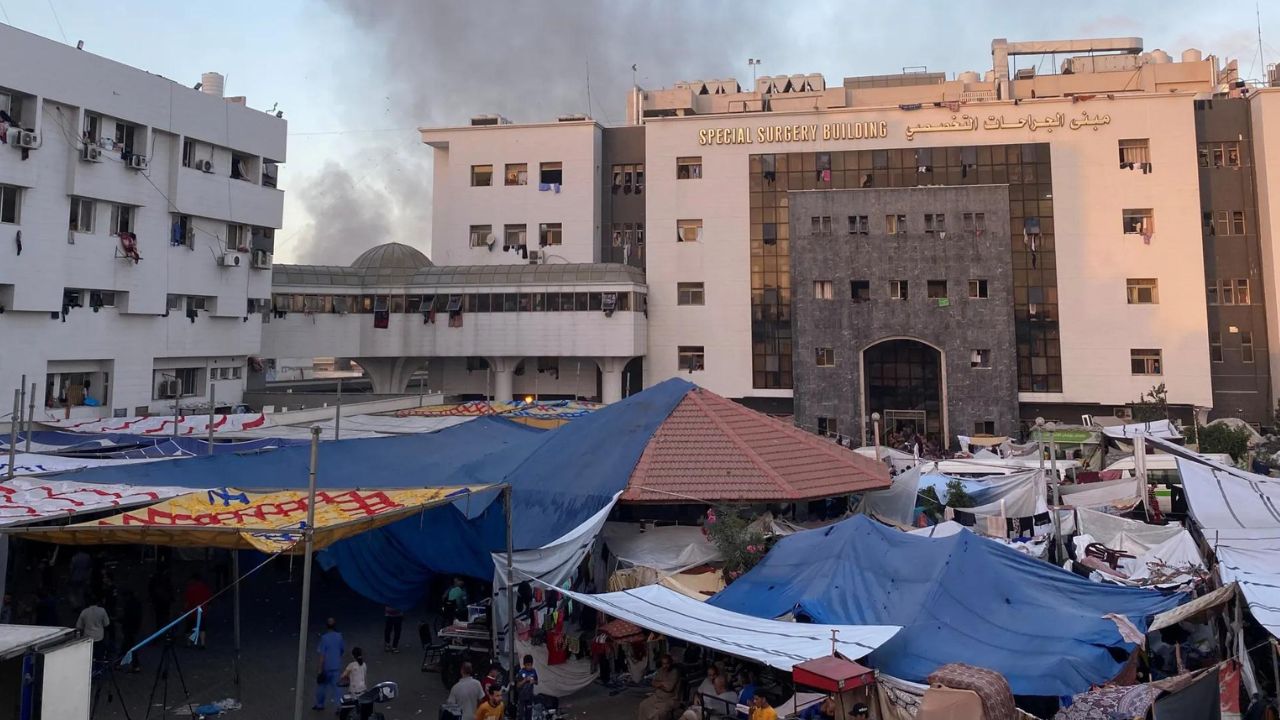
    Israel’s military on Monday called on Gazans to evacuate the area in and around the territory’s largest hospital as battles raged at the complex crowded with patients and displaced people.

    “In order to maintain your security, you must immediately evacuate the area,” army spokesman Avichay Adraee said on social media platform X, instructing “all those present” to head west and then south to a “humanitarian area”.

    ha-rcb/jm/fz

    © Agence France-Presse

  • Kabul Says Eight Killed In Pakistani Air Strikes On Eastern Afghanistan

    Kabul Says Eight Killed In Pakistani Air Strikes On Eastern Afghanistan

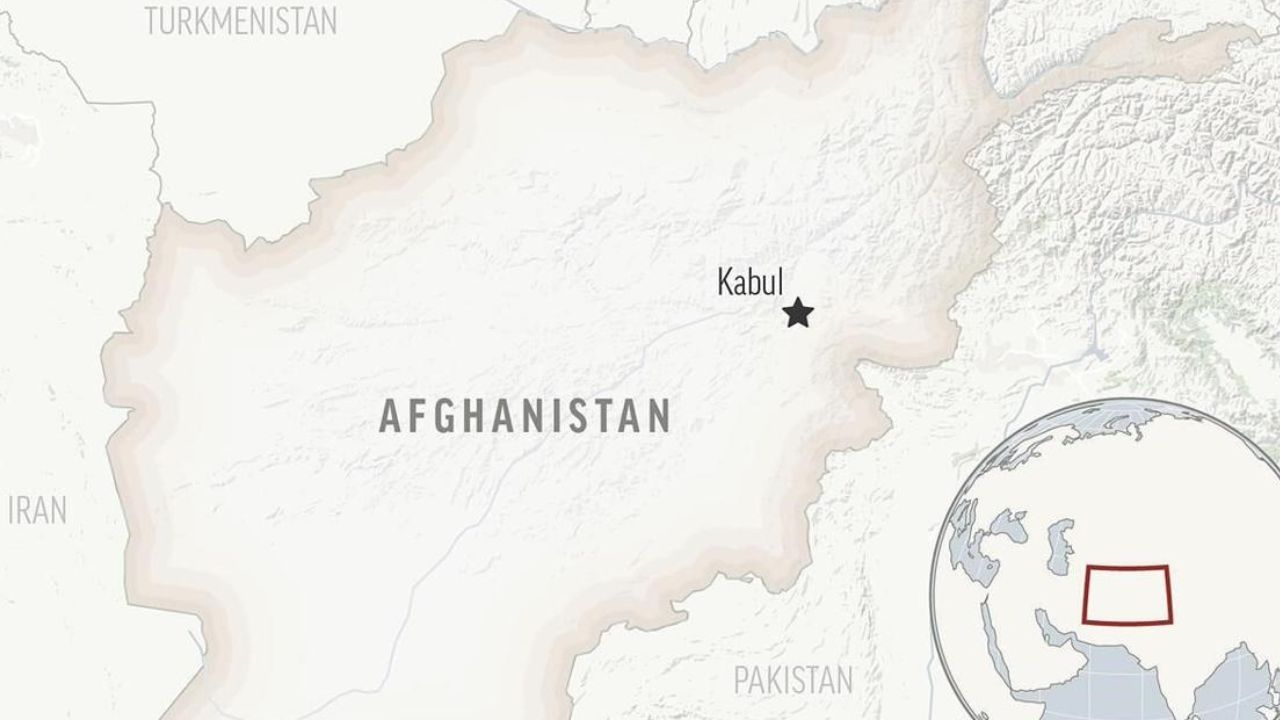
    Eight people, all women and children, were killed on Monday in “reckless” air strikes by the Pakistani military in the border regions of Afghanistan, the Taliban government’s spokesman said.

    Border tensions between Pakistan and Afghanistan have risen since the Taliban government seized power in 2021, with Islamabad claiming militant groups are carrying out regular attacks from the neighbouring country.

    At “around 3:00 am (2230 GMT Sunday), Pakistani aircraft bombarded civilian homes” in Khost and Paktika provinces near the border with Pakistan, spokesman Zabihullah Mujahid said in a statement.

    The Taliban government “strongly condemns these attacks and calls this reckless action a violation of and an attack on Afghanistan’s sovereignty”, he added.

    The strikes come after seven Pakistani troops were killed in an attack inside Pakistan territory on Saturday, for which the country’s President Asif Ali Zardari vowed retaliation.

    “Pakistan has decided that whoever will enter our borders, homes or country and commit terror, we will respond to them strongly, regardless of who it is or from which country,” he said while attending the funeral prayers of the soldiers, which included a lieutenant colonel.

    Areas along the border have long been a stronghold for militant groups such as Pakistan’s home-grown Taliban group Tehreek-e-Taliban Pakistan (TTP), which operates across the porous frontier with Afghanistan.

    Analysts say militants in the former tribal areas have become emboldened since the Taliban’s return to power, with TTP waging a growing campaign against security officials.

    The Taliban deny harbouring Pakistani militants.

    In 2022, Taliban authorities said Pakistani military helicopters carried out strikes along the Afghan side of the border killing at least 47 people.

    The TTP issued an official statement denying that Monday’s strikes targeted the group, saying their members operate from within Pakistan.

    However, a TTP source who spoke to AFP on condition of anonymity because he was not authorised to speak to media said the strikes in Paktika and Khost left at least nine people dead.

    “A house has been attacked where two women and seven children have been killed and a child has been wounded” in the Barmal district in Paktika.

    “A bombardment in the Pasa Mela area of Khost also has casualties.”

  • Putin vows Russia cannot be held back in victory speech

    Putin vows Russia cannot be held back in victory speech

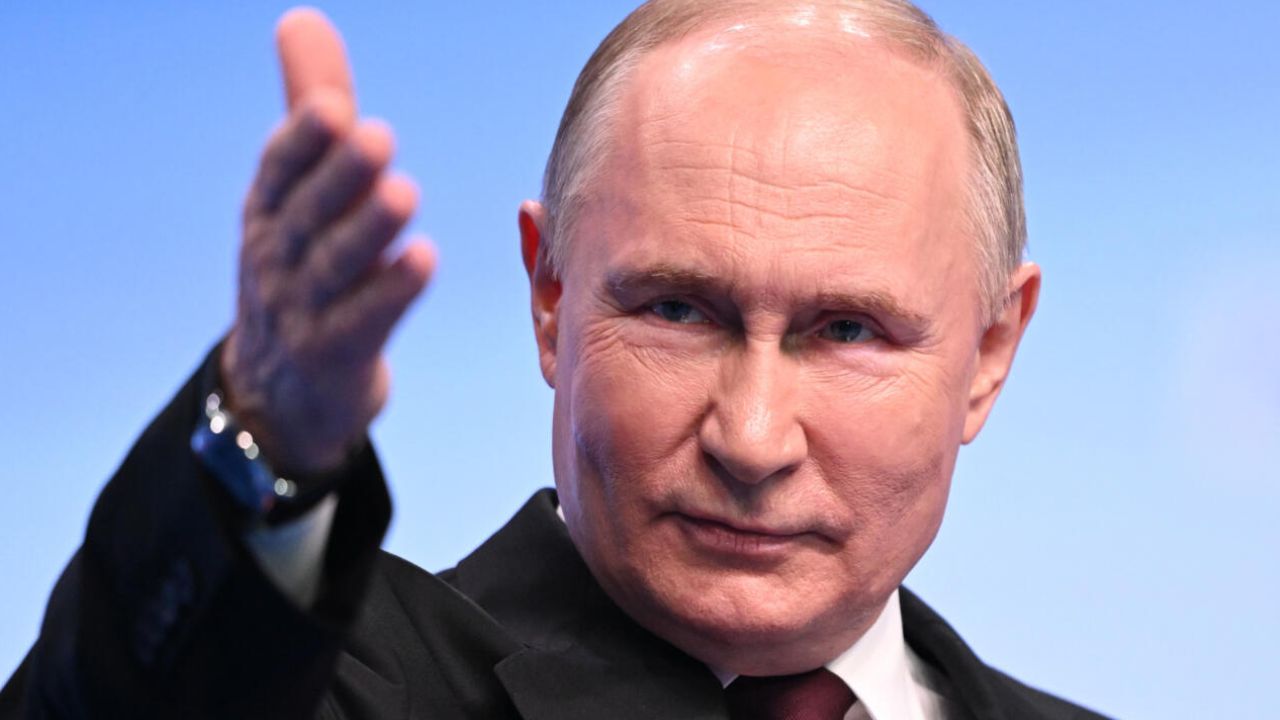
    Vladimir Putin said Russia would not be “intimidated” as he hailed an election victory that paves the way for the former spy to become the longest-serving Russian leader in more than 200 years.

    All of the 71-year-old’s major opponents are dead, in prison or exiled, and he has overseen an unrelenting crackdown on anybody who publicly opposes his rule or his military offensive in Ukraine.

    “I want to thank all of you and all citizens of the country for your support and this trust,” Putin told a news conference at his campaign headquarters in Moscow early Monday, hours after polls closed.

    “No matter who or how much they want to intimidate us, no matter who or how much they want to suppress us, our will, our consciousness — no one has ever succeeded in anything like this in history. It has not worked now and will not work in the future. Never,” he added.

    With more than 99 percent of voting stations having submitted results, Putin had secured 87 percent of all votes cast, official election data showed, according to state news agency RIA.

    It is a record victory in a presidential election where he faced no genuine competition.

    The three-day election was marked by a surge in deadly Ukrainian bombardments, incursions into Russian territory by pro-Kyiv sabotage groups and vandalism at polling stations.

    The Kremlin had cast the election as a moment for Russians to throw their weight behind the full-scale military operation in Ukraine, where voting was also being staged in Russian-controlled territories.

    ‘Drunk from power’

    Putin singled out Russian troops fighting in Ukraine for special thanks in his post-election speech in Moscow.

    And he was unrelenting in claiming his forces had a major advantage on the battlefield, even after a week that saw Ukraine mount some of its most significant aerial attacks on Russia and in which pro-Ukrainian militias launched armed raids on Russian border villages.

    “The initiative belongs entirely to the Russian armed forces. In some areas, our guys are just mowing them — the enemy — down,” he said.

    Kyiv and its allies slammed the vote as a sham. President Volodymyr Zelensky lashed out at Putin as a “dictator” who was “drunk from power”.

    “There is no evil he will not commit to prolong his personal power,” Zelensky said.

    As early as Friday, the first day of voting, EU chief Charles Michel had sarcastically congratulated Putin on his “landslide victory”.

    Britain’s foreign minister David Cameron added his voice to the protests, saying “this is not what free and fair elections look like”, while the United States criticised the holding of the vote in Ukrainian territories occupied by Moscow.

    The leaders of Venezuela, Nicaragua, Cuba and Bolivia congratulated Putin on his re-election.

    If he completes another full Kremlin term, Putin will have stayed in power longer than any Russian leader since Catherine the Great in the 18th century.

    Allies of the late Alexei Navalny — Putin’s most prominent rival, who died in an Arctic prison last month — had tried to spoil his inevitable victory, urging voters to flood polling stations at noon and spoil their ballots.

    His wife, Yulia Navalnaya, was greeted by supporters with flowers and applause in Berlin. After voting at the Russian embassy, she said she had written her late husband’s name on her ballot.

    ‘Mr. Navalny’

    Some voters in Moscow answered the opposition’s call, telling AFP they had come to honour Navalny’s memory and show their defiance in the only legal way possible.

    “I came to show that there are many of us, that we exist, that we are not some insignificant minority,” said 19-year-old student Artem Minasyan at a polling station in central Moscow.

    Putin said the protest had had no impact and that those who spoiled their ballots would “have to be dealt with”.

    In his first public comments on Navalny’s death last month, Putin called his passing a “sad event”.

    Using his name in public for the first time in years during a televised news conference, Putin said: “As for Mr. Navalny. Yes, he passed away. This is always a sad event.”

    Putin said a colleague had proposed swapping Navalny several days before he died for “some people” currently held in prisons in Western countries.

    “The person who was talking to me hadn’t finished his sentence and I said ‘I agree’”.

    Former Russian leader Dmitry Medvedev also congratulated Putin on his “splendid victory” long before the final results were due to be announced.

    And state-run television praised how Russians had rallied with “colossal support for the president” as well as the “unbelievable consolidation” of the country behind its leader.

    ‘Not alone’

    At Navalny’s grave in a Moscow cemetery, AFP reporters saw spoiled ballot papers with the opposition leader’s name scrawled across them on a pile of flowers.

    “We live in a country where we will go to jail if we speak our mind. So when I come to moments like this and see a lot of people, I realise that we are not alone,” said 33-year-old Regina.

    There were repeated acts of protest in the first days of polling, with a spate of arrests of Russians accused of pouring dye into ballot boxes or arson attacks.

    Any public dissent in Russia has been harshly punished since the start of Moscow’s offensive in Ukraine on February 24, 2022 and there were multiple warnings from the authorities against election protests.

    The OVD-Info police monitoring group announced that at least 80 people had been detained across nearly 20 cities in Russia for protest actions linked to the elections.


  • ‘Bloody’ Ramzan Friday as Gaza strike kills 36 relatives

    ‘Bloody’ Ramzan Friday as Gaza strike kills 36 relatives

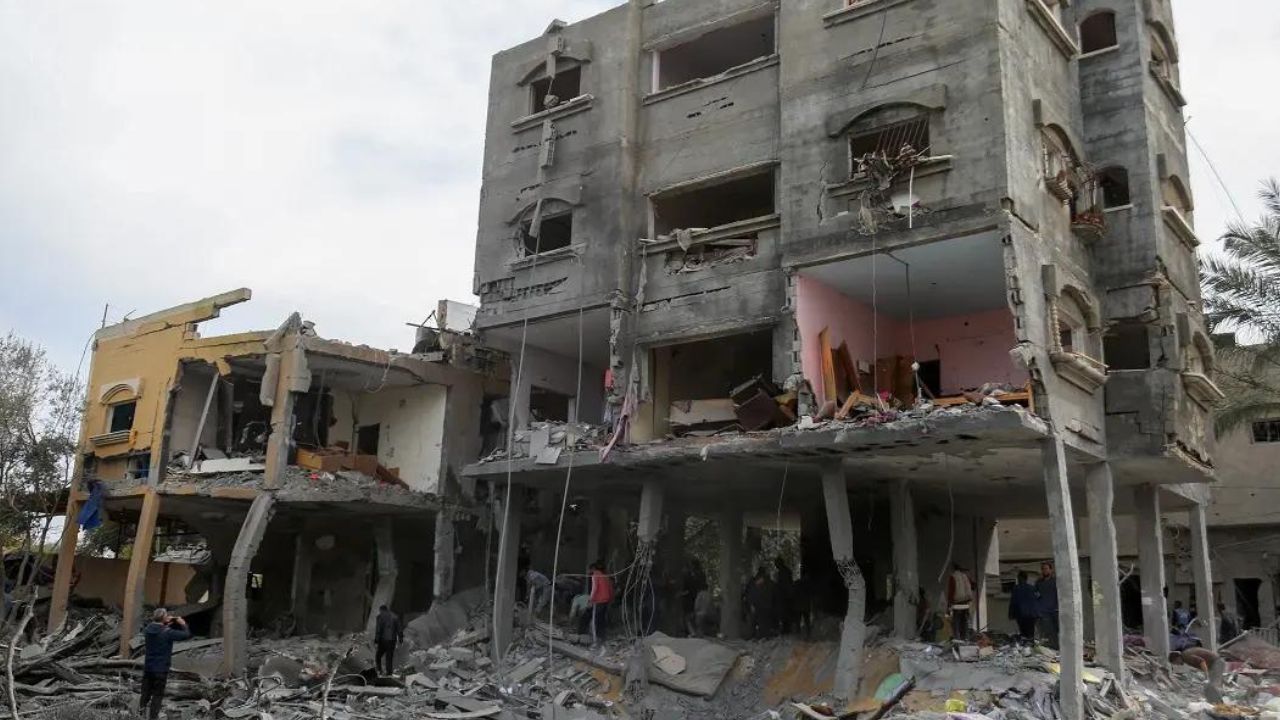
    Palestinian Territories: Displaced by Israeli bombardment, the Tabatibi family gathered in central Gaza to eat together during the first Friday night of Ramzan, a scene that soon turned into a bloodbath.

    An air strike hit the building where they were staying as women prepared the pre-fasting meal, killing 36 members of the family, survivors told AFP on Saturday.

    The health ministry in Gaza, which provided the same death toll, blamed Israel for the strike in Nuseirat, while the Israeli military said it was looking into the incident.

    “This is my mother, this is my father, this is my aunt, and these are my brothers,” 19-year-old Mohammed Al-Tabatibi, whose left hand was injured in the strike, said through tears at the Al-Aqsa Martyrs Hospital in nearby Deir Al-Balah.

    “They bombed the house while we were in it. My mother and my aunt were preparing the suhoor food. They were all martyred.”

    He spoke as bodies were spread out in the hospital courtyard, then stacked on a truck to be driven to a cemetery.

    Because there were not enough body bags, some of the dead — including at least two children — were wrapped in white cloth stained with blood, AFPTV footage showed.

    The first Friday of Ramzan, the Muslim fasting month which began on Monday, passed peacefully in Israeli-annexed east Jerusalem, despite concerns about tensions at the sacred Al-Aqsa Mosque compound.

    But it was a different story in Gaza.

    The strike in Nuseirat was one of 60 “deadly air strikes” reported overnight by the press office of the government, from Gaza City in the north to Rafah in the south.

    “This is a bloody night, a very bloody night,” said Salama Maarouf of the media office.

    Israel’s retaliatory military campaign has killed at least 31,553 people in Gaza since October 7, mostly women and children, according to the health ministry.

    In Rafah, where the majority of Gaza’s 2.4 million people have sought refuge, more bloodshed is feared after Israeli Prime Minister Benjamin Netanyahu’s office said on Friday he had approved plans for a military operation there.

    Yet even before any such operation begins, air strikes continue, including one early Saturday that witnesses said killed Issa Duhair, the muezzin of a mosque, along with his two sons.

    Mahmoud Duhair, a 41-year-old relative who lives nearby, described the muezzin as “a good man” who, as usual, dutifully performed the call to prayer before dawn on Saturday, then went to eat with his family “when his house was struck.”

    Back in Nuseirat, in central Gaza, Yussef Tabatibi said the true toll of the strike that killed 36 members of his family could rise.

    “Some of the martyrs we are unable to retrieve. We lack equipment, bulldozers, machinery, or anything else, ” he told AFP, his hands and sweatshirt covered with dust from trying to clear rubble.

    “We retrieve them only with our hands. We brought shovels and hammers, but to no avail. Look at the extent of the destruction.”

  • In Gaza, there are no more ‘normal-sized babies’: UN official

    In Gaza, there are no more ‘normal-sized babies’: UN official

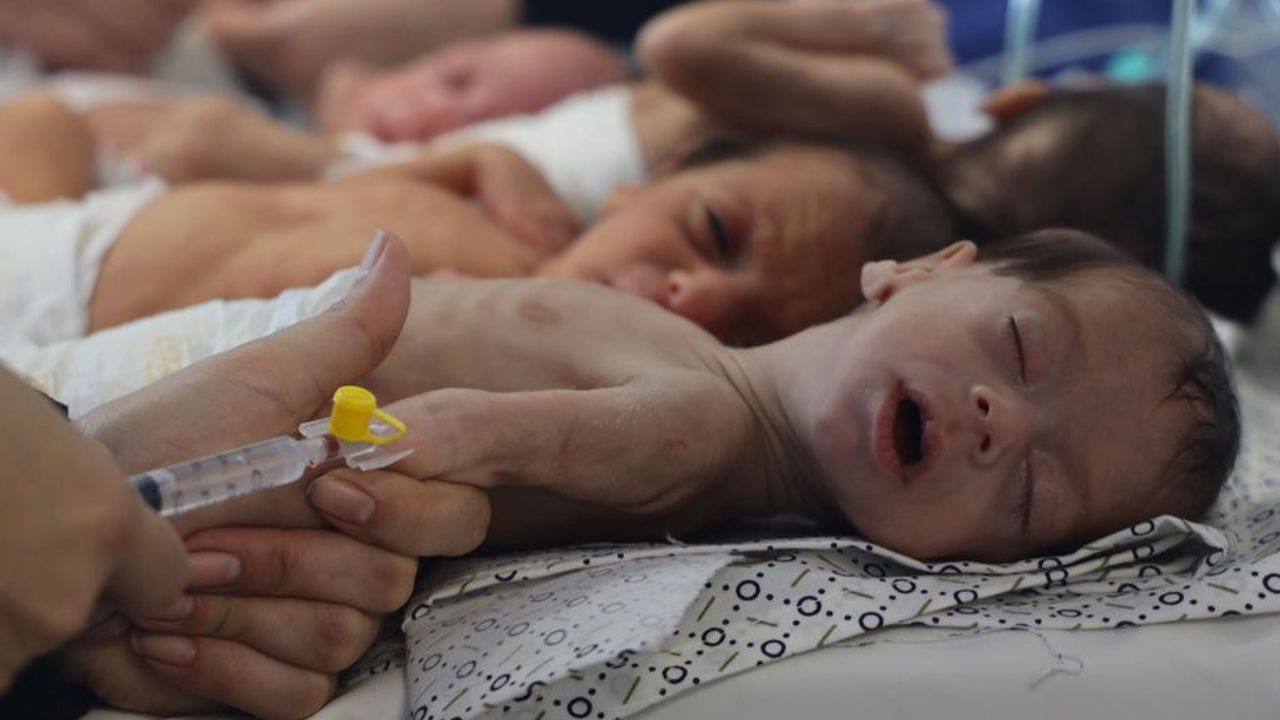
    The humanitarian situation in Gaza is a “nightmare” for mothers and babies, with doctors reporting small and sickly newborns, stillbirths and women forced to undergo C-sections without adequate anesthesia, a UN official said Friday.

    “I’m personally leaving Gaza this week terrified for the one million women and girls of Gaza… and most especially for the 180 women who are giving birth every single day,” Dominic Allen, UN Population Fund (UNFPA) representative for the state of Palestine, said in a video news conference from Jerusalem.

    “Doctors are reporting that they no longer see normal-sized babies,”  Allen said after visiting hospitals still providing maternity services in the north of Gaza, where need is especially great.

    “What they do see though, tragically, is more stillborn births… and more neonatal deaths, caused in part by malnutrition, dehydration and complications.”

    The numbers of complicated deliveries are roughly twice what they were before the war with Israel began — with mothers stressed, fearful, underfed and exhausted — and caregivers often lacking necessary supplies.

    “We have had reports of insufficient anesthetic being available” for Caesarean sections, “which again is unthinkable.”

    “Those mothers should be wrapping their arms around their children,” he said. “Those children should not be wrapped in a body bag.”

    Israel has defended its policies as it pursues its stated goal of destroying Hamas, saying the UN should send more aid to the war-ravaged territory, pushing back on reports by the UN and NGOs that cumbersome Israeli inspections are blocking food and other essentials.

    Allen said Israeli authorities had refused to allow in some UNFPA supply shipments, such as kits for midwives, or had removed supplies like flashlights and solar panels.

    “It’s a nightmare which is much more than a humanitarian crisis,” he said. “It is a crisis of humanity… beyond catastrophic.”

    What he saw while driving through Gaza, he said, “really broke my heart.”

    Everyone he passed or spoke to, Allen said, “was gaunt, emaciated, hungry” and exhausted from the daily struggle to survive.

    At one military checkpoint, he said, he saw a boy who appeared to be about five years old walking with his hands held high, clearly frightened, as his slightly older sister followed behind, holding a white flag.

    Israel’s military operations has killed at least 31,490 people in Gaza since October 7, most of them women and children, according to the health ministry.

  • Voting in Indian elections to begin April 19: commission

    Voting in Indian elections to begin April 19: commission

    New Delhi, India – India’s election commission announced Saturday that national polls would begin on April 19, with Hindu-nationalist Prime Minister Narendra Modi strongly favoured to win a third term in the world’s largest democracy.

    “Date of polling would be 19th of April” for the first phase of the vote, which is staged over several weeks, chief election commissioner Rajiv Kumar told a press conference.