Author: AFP

  • Italy: Pakistani parents sentenced to life-imprisonment for killing daughter

    Italy: Pakistani parents sentenced to life-imprisonment for killing daughter

    A Pakistani couple was sentenced to life in prison by an Italian court on Tuesday for the 2021 murder of their daughter after she refused an arranged marriage.

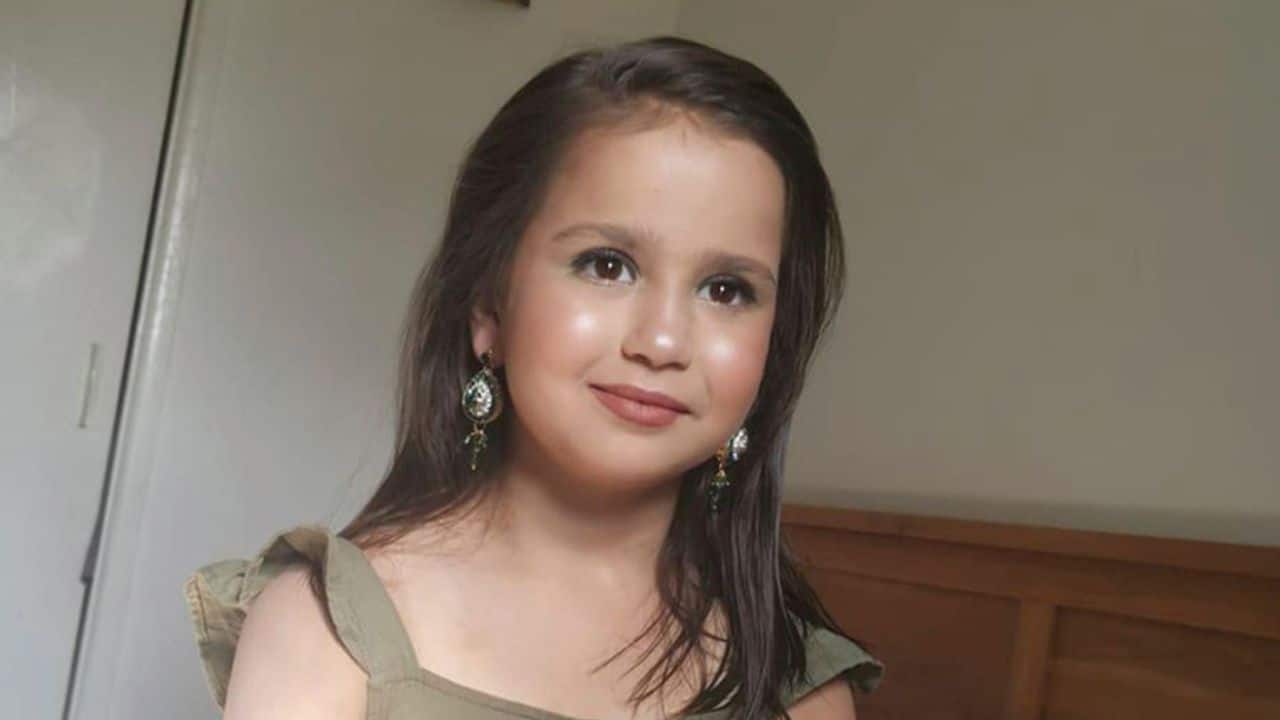
    Saman Abbas, 18, was living in Novellara near Bologna when she disappeared in May 2021, having rejected the previous year her family’s demand that she marry a cousin in Pakistan.

    A tribunal in Reggio Emilia in central Italy ruled that the parents ordered the murder and that an uncle had strangled his niece.

    The uncle was sentenced to 14 years after accepting a plea bargain, while two cousins were acquitted in an affair that shocked the country.

    Abbas had denounced her parents to the police and social workers placed her in a shelter in November 2020.

    But she visited her family in April 2021, planning to pick up her passport and start a new life with her boyfriend, whom her family disapproved of.

    She disappeared soon after, and police, alerted by the boyfriend, raided the family home in May but the parents had already left for Pakistan.

    The young woman was probably killed the night of April 30 to May 1, according to surveillance camera footage showing five people leaving the family home with shovels, crowbars and buckets, before returning two and a half hours later.

    A year later Abbas’s body was found in an abandoned farmhouse with a broken neck.

    Her brother told police that he had overheard his father talking about the murder and that it was the uncle who had killed his sister.

    The father, Shabbar Abbas, was arrested in Pakistan and extradited to Italy in August 2023.

    The uncle, Danish Hasnain, was turned over by French authorities while the cousins were arrested in Spain.

    The four men were present at the trial, but the mother, Nazia Shaheen, is still a fugitive.

  • US-led coalition to patrol Red Sea against Houthi attacks

    US-led coalition to patrol Red Sea against Houthi attacks

    The United States on Monday announced a 10-nation coalition to quell Houthi missile and drone attacks on ships transiting the Red Sea, with Britain, France, Bahrain and Italy among countries joining the “multinational security initiative.”

    “Countries that seek to uphold the foundational principle of freedom of navigation must come together to tackle the challenge posed by this non-state actor,” US Defense Secretary Lloyd Austin said in a statement.

    Iran-backed Houthi rebels have escalated attacks on tankers, cargo ships and other vessels in the Red Sea, imperiling a transit route that carries up to 12 percent of global trade.

    The security coalition, Austin said, will operate “with the goal of ensuring freedom of navigation for all countries and bolstering regional security and prosperity.”

    It includes the United States, United Kingdom, Bahrain, Canada, France, Italy, Netherlands, Norway, Seychelles and Spain, Austin said.

    Yemen’s Iran-backed Houthi rebels said earlier they had attacked two “Israeli-linked” vessels in the Red Sea in solidarity with Gaza, as more companies halt transit through the troubled but vital waterway.

    The attacks on the Norwegian-owned Swan Atlantic and another ship identified by the Houthis as the MSC Clara are the latest in a flurry of maritime incidents that are disrupting global trade in an attempt to pressure Israel over its war against Hamas militants.

    In a statement, the Yemeni rebels said they had carried out a “military operation against two ships linked to the Zionist entity” using naval drones.

    They vowed to “continue to prevent all ships heading to Israeli ports… from navigating in the Arab and Red Seas” until more food and medicine is allowed into Gaza.

    But the Swan Atlantic’s owner, Norway’s Inventor Chemical Tankers, said in a statement the ship was carrying biofuel feedstock from France to Reunion Island.

    It said the vessel has “no Israeli link” and was managed by a Singaporean firm, adding that the Indian crew were unharmed and the vessel sustained limited damage.

    British oil giant BP became the latest to suspend transit through the Red Sea on Monday, while Taiwan shipping firm Evergreen said it was suspending its Israeli cargo shipments with immediate effect.

    Frontline, one of the world’s largest tanker companies, also said it was rerouting ships and would “only allow new business” that could be routed via South Africa’s Cape of Good Hope.

    That route is far longer and uses more fuel.

    The Red Sea attacks have forced insurance companies to significantly increase premiums on ships, making it uneconomical for some to transit through the Suez Canal.

    Italian-Swiss giant Mediterranean Shipping Company, France’s CMA CGM, Germany’s Hapag-Lloyd, Belgium’s Euronav and Denmark’s A.P Moller-Maersk — the latter accounting for 15 percent of global container freight — have all stopped using the Red Sea until further notice.

    The attacks have become “a maritime security crisis” with “commercial and economic implications in the region and beyond,” Torbjorn Soltvedt of analysis firm Verisk Maplecroft told AFP.

    Monday’s attack took place as the Pentagon chief visited Israel after a stop in Bahrain, home base of the US Navy’s Fifth Fleet.

    “In the Red Sea, we’re leading a multinational maritime taskforce to uphold the bedrock principle of freedom of navigation. Iran’s support for Houthi attacks on commercial vessels must stop,” Austin said at a news conference.

    On Saturday, a US destroyer shot down 14 drones in the Red Sea launched from rebel-controlled areas of Yemen, the US military said.
    Britain said one of its destroyers had also brought down a suspected attack drone in the area.

    Rebel spokesman Mohammed Abdul Salam said neutral Oman had launched mediation efforts to safeguard shipping using the waterway.

    “Under the sponsorship of our brothers in the Sultanate of Oman, communication and discussion continue with a number of international parties regarding operations in the Red Sea and Arabian Sea,” he said on X, formerly Twitter.

    The Gaza war broke out when its rulers Hamas launched an unprecedented attack on Israel on October 7, killing around 1,140 people and kidnapping some 250, according to an AFP tally based on official Israeli figures.

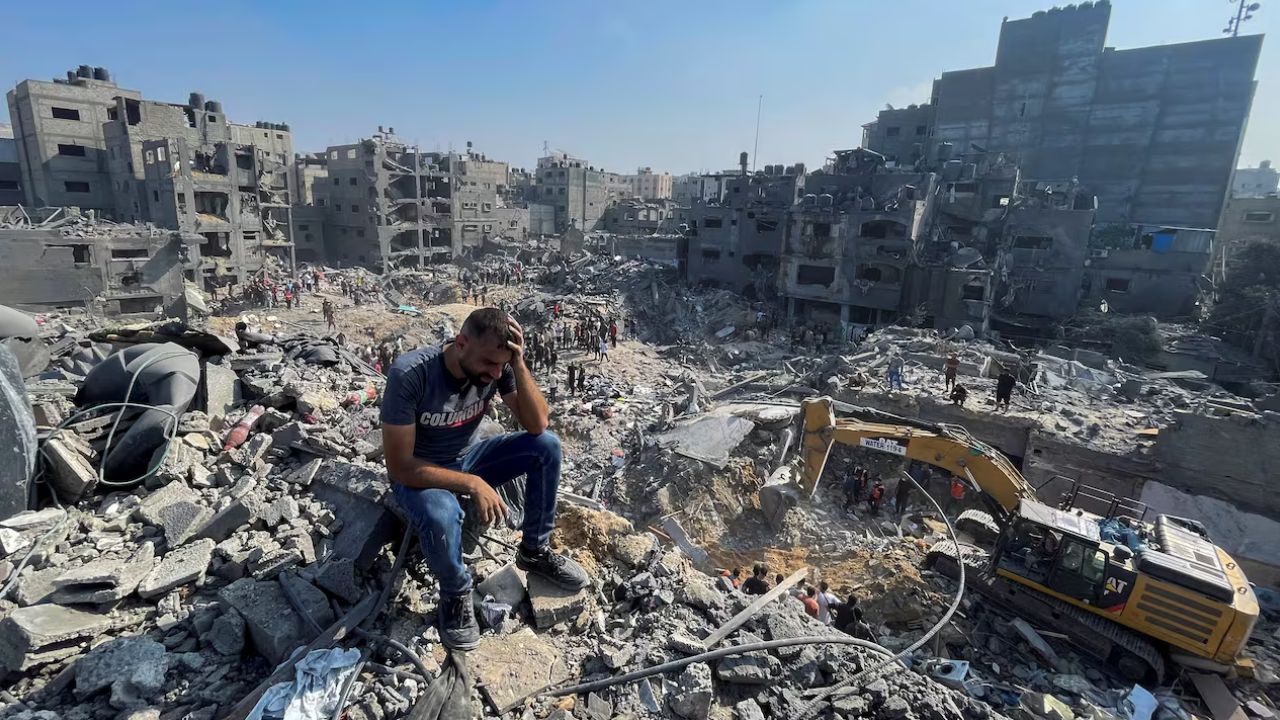
    Gaza’s health ministry says Israel’s military response has killed more than 19,450 people, mostly women and children.


  • Israel intentionally starving civilians in Gaza: HRW

    Israel intentionally starving civilians in Gaza: HRW

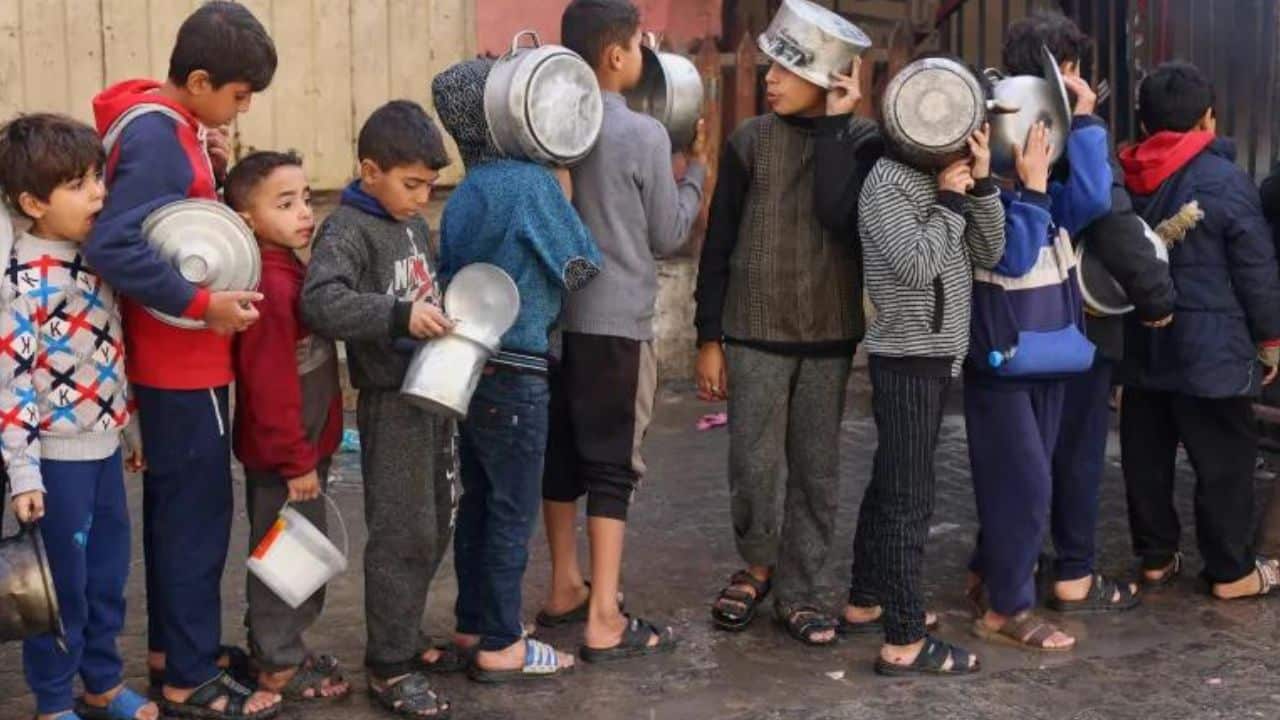
    The group Human Rights Watch on Monday accused the Israeli government of intentionally starving civilians in Gaza as part of its offensive in the besieged Palestinian territory. 

    “The Israeli government is using starvation of civilians as a method of warfare in the occupied Gaza Strip, which is a war crime,” the New York-based group charged in a report.

    “Israeli forces are deliberately blocking the delivery of water, food and fuel, while wilfully impeding humanitarian assistance, apparently razing agricultural areas, and depriving the civilian population of objects indispensable to their survival,” it added.

    The Israeli government hit back at HRW, accusing it of being an “anti-Semitic and anti-Israeli organisation”.

    “Human Rights Watch … did not condemn the attack on Israeli citizens and the massacre of October 7 and has no moral basis to talk about what’s going on in Gaza if they turn a blind eye to the suffering and the human rights of Israelis,” foreign ministry spokesman Lior Haiat told AFP.

    The deadliest ever Gaza war began with the unprecedented attack by Hamas on October 7, when the group killed 1,139 people, mostly civilians, and abducted around 250, according to updated Israeli figures.

    The health ministry in the Hamas-run territory says more than 18,800 people, mostly women and children, have died in Israel’s campaign in Gaza.

    Following months of fierce bombardment and fighting, most of Gaza’s population has been displaced and people are grappling with shortages of food, water, fuel and medicine.

    Israel on Friday approved the “temporary” delivery of much-needed aid to Gaza via its Kerem Shalom crossing.

    A humanitarian aid convoy entered Gaza through the crossing on Sunday, the first since Israel approved the move, an Egyptian Red Crescent official said.

    A total of “79 trucks began entering today,” the official, who is not authorised to speak to the media, said on condition of anonymity.

  • Luton’s Lockyer ‘Stable’ After Cardiac Arrest As Bournemouth Clash Abandoned

    Luton’s Lockyer ‘Stable’ After Cardiac Arrest As Bournemouth Clash Abandoned

    Luton captain Tom Lockyer was in a “stable” condition in hospital after suffering a cardiac arrest that led to his side’s Premier League clash against Bournemouth being abandoned on Saturday.

    With the score level at 1-1 in the 65th minute, Lockyer suddenly fell to the turf in a worrying scene.

    Hatters manager Rob Edwards sprinted out to the Welshman’s aid and play was paused as the Luton defender received treatment from medics.

    Both sides were sent to the dressing room before Lockyer was eventually stretchered off, surrounded by the medical team, and taken immediately to hospital.

    There was a standing ovation from the crowd, with fans in the Vitality Stadium chanting Lockyer’s name.

    “Our medical staff have confirmed that Tom Lockyer suffered cardiac arrest on the pitch, but was responsive by the time he was taken off on the stretcher,” Luton said in a statement.

    “He received further treatment inside the stadium, for which we once again thank the medical teams from both sides.

    “Tom was transferred to hospital, where we can reassure supporters that he is stable and currently undergoing further tests with his family at his bedside.

    “We would like to thank everyone for their support, concern and loving messages for Locks.”

    Around half an hour after the incident, referee Simon Hooper confirmed the game would not restart on Saturday.

    Players from both sides returned to the pitch and applauded the crowd.

    “We’re relieved to hear Tom is responsive. Our thoughts will continue to be with Tom and his family at this time,” Bournemouth said in a statement.

    “We’d like to thank all the medical staff for their quick action as well as everyone inside the stadium for their support and unity during a difficult moment.”

    Lockyer also collapsed during Luton’s Championship play-off final win against Coventry at Wembley in May.

    The Wales international was taken to hospital and later underwent heart surgery.

    The 29-year-old had an operation to correct an atrial fibrillation, a condition the UK’s National Health Service (NHS) describes as causing “an irregular and often abnormally fast heart rate”.

    Lockyer returned to action for the start of Luton’s first season in the top flight for 31 years.

    He had made 15 appearances so far in all competitions before Saturday’s match.

    Lockyer could now face a battle to resume his career after the latest health scare.

    A statement from the Premier League read: “The Premier League match between AFC Bournemouth and Luton Town FC has been abandoned due to a player medical incident.

    “Our thoughts are with Tom Lockyer and all players involved in today’s match.”

    Bournemouth right-back Max Aarons wrote on social media: “Thoughts and prayers are with Tom Lockyer and his family.”

    The Wales national team posted on X, formerly Twitter: “Our thoughts are with Tom Lockyer.”

    Elijah Adebayo’s early header had put the visitors in front on the south coast, before Dominic Solanke scored Bournemouth’s equaliser seven minutes prior to Lockyer’s collapse.

  • Haye mehngai; Turkey’s Central Bank Chief moves in with parents

    Haye mehngai; Turkey’s Central Bank Chief moves in with parents

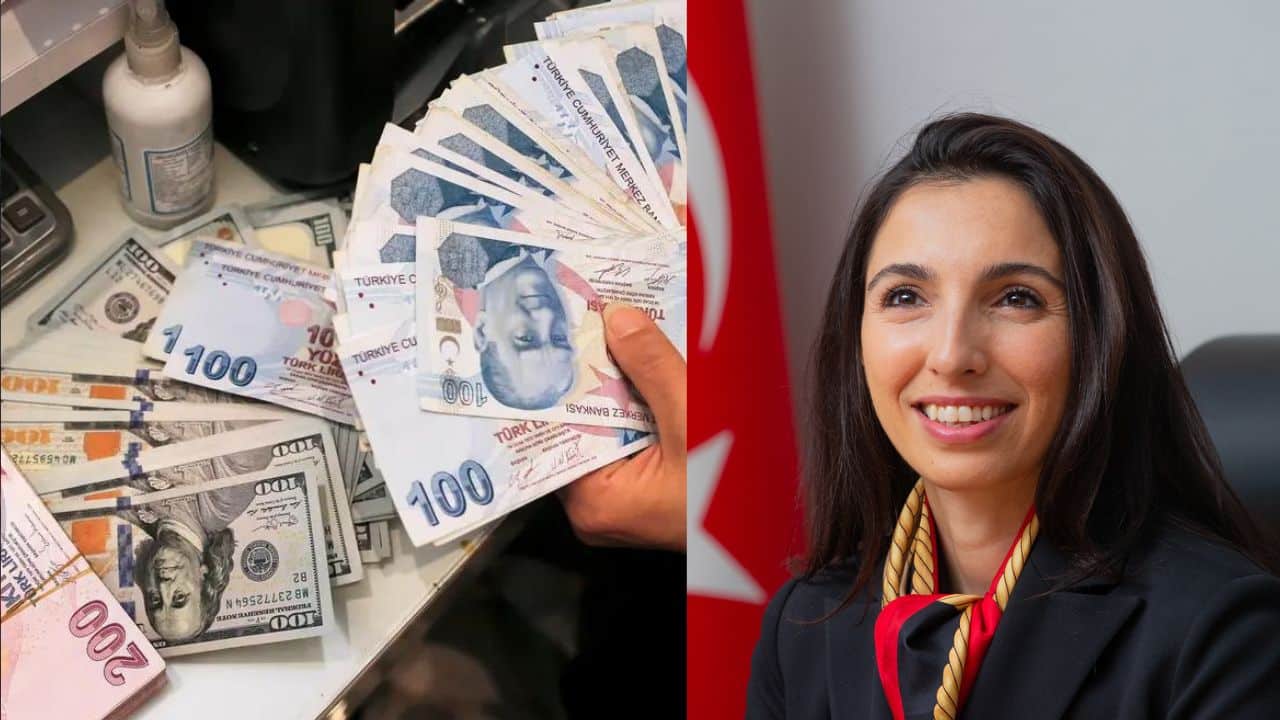
    The new head of Turkey’s central bank has said she has been priced out of Istanbul’s property market by rampant inflation, leaving no choice for the former finance executive but to move back in with her parents.

    “We haven’t found a home in Istanbul. It’s terribly expensive. We’ve moved in with my parents,” 44-year-old Hafize Gaye Erkan, who took up her post in June after two decades in the United States, told the Hurriyet newspaper.

    Erkan previously worked at renowned firms including Goldman Sachs and First Republic Bank — and is now getting a crash course in the soaring prices that have seen many young people struggling to find lodgings.

    “Is it possible that Istanbul has gotten more expensive than Manhattan?” she said.

    Year-on-year inflation stood at 61 per cent in November as President Recep Tayyip Erdogan has allowed the lira currency to weaken while promising that a new team of economists with Wall Street experience would tackle years of economic crisis.

    To quell growing anger, officials also capped rent increases at 25 percent — though experts say that has only amplified the housing tensions, as owners try to push out occupants, sometimes fraudulently, in order to set new and higher rents.

    The central bank last month pushed up benchmark lending rates to 40 per cent in a bid to get inflation under control.

    “We’re nearing the end of our monetary tightening measures,” Erkan told the paper.

  • UK Judge Rules Prince Harry Was Victim Of Phone Hacking By Mirror Group

    UK Judge Rules Prince Harry Was Victim Of Phone Hacking By Mirror Group

    A UK judge ruled on Friday that Prince Harry was a victim of phone hacking by journalists working for Mirror Group Newspapers (MGN), and awarded the royal £140,600 ($179,600) in damages.

    The decision is one in a number of legal cases brought by Harry against British media, with which the Duke of Sussex has long had a turbulent relationship. High Court Justice Timothy Fancourt ruled in favour of Harry in 15 of the 33 sample articles that the prince submitted as evidence in his lawsuit against MGN, which publishes the Mirror, Sunday Mirror and Sunday People.

    He concluded that the newspapers carried out “extensive” phone hacking of celebrities between 2006 and 2011, even when a public inquiry into the conduct of the British press was ongoing.

    Fancourt said Harry´s personal phone had been targeted between 2003 and 2009 and that the 15 articles were “the product of phone hacking… or the product of other unlawful information gathering”.

    “I consider that his phone was only hacked to a modest extent, and that this was probably carefully controlled by certain people at each newspaper,” Fancourt said.

    Prince Harry said in a statement read outside court by his lawyer that the ruling was “vindicating and affirming”. A spokesperson for MGN said: “Where historical wrongdoing took place, we apologise unreservedly, have taken full responsibility and paid appropriate compensation.”

    Harry, the younger son of King Charles III, became the first British royal in over a century to take to the witness stand when he gave evidence in the trial.

    The last time a royal had given evidence in court was in the 1890s, when the future king Edward VII took the stand in a slander trial. Harry, 39, accused MGN of “industrial scale” phone hacking during emotional testimony in which he relived upsetting episodes of his life.

    The prince argued he had been the victim of relentless and distressing media intrusion virtually his entire life. Harry holds the media responsible for the death of his mother, Princess Diana, in a 1997 Paris car crash while she was being pursued by paparazzi.

    He stood down from royal duties in early 2020 for a life in California with his American wife Meghan, in part for privacy reasons. The prince and several other claimants alleged the MGN titles engaged in “illegal information gathering”, including intercepting phone voice mails, to write dozens of stories about him.

    The Duke of Sussex has launched legal action against several tabloid media groups, alongside barrages of attacks aimed at his family and the monarchy. “I´ve been told that slaying dragons will get you burned,” he said in his statement.

  • The war will last for ‘months’, says the Israeli Defence Minister to US envoy

    The war will last for ‘months’, says the Israeli Defence Minister to US envoy

    Israel pressed its offensive in the Gaza Strip on Friday after telling a key supporter, the United States of America that the war to crush Hamas will last “more than several months”.

    On Thursday, US National Security Advisor Jake Sullivan met in Tel Aviv with Israeli Prime Minister Benjamin Netanyahu and Defence Minister Yoav Gallant.

    During their meeting, Mr. Gallant warned that Israel’s fight with Hamas “will require a period of time — it will last more than several months, but we will win and we will destroy them”.

    Speaking in Washington, U.S. President Joe Biden urged Israel to take more care to protect civilians in Gaza.

    “I want them to be focused on how to save civilian lives — not stop going after Hamas, but be more careful,” said Mr. Biden, whose government has provided Israel with billions of dollars in military aid.

    White House spokesman John Kirby, meanwhile, said Washington was “not dictating terms” to Israel and that the timeline given by Gallant was “consistent” with what Israeli officials had previously said.

    Mr Netanyahu on Thursday vowed to carry on “until victory”, and Foreign Minister Eli Cohen said the war would continue “with or without international support”.

    Mr Sullivan on Friday will head to the Israeli-occupied West Bank city of Ramallah for talks with Palestinian Authority leaders, a US official said on condition of anonymity.

    The West Bank, which is ruled by the Palestinian Authority (PA), has seen a surge in violence since October 7.

    There, the Palestinian health ministry said 11 people had been killed since the Israeli military launched a raid in the city of Jenin and its refugee camp earlier this week.

    The war in Gaza has led to increased popular support for Hamas in the West Bank, further weakening the internationally recognized PA.

  • Family Members Deny Murder Of British-Pakistani Girl In England: Court

    Family Members Deny Murder Of British-Pakistani Girl In England: Court

    The father of a British-Pakistani 10-year-old girl whose death sparked an international manhunt pleaded not guilty to her murder in a UK court on Thursday, together with two other family members.

    Sara Sharif’s body was discovered at her home in Woking, southern England, on August 10.

    A post-mortem examination found she had sustained “multiple and extensive injuries” over a long period.

    Her father 41-year-old Urfan Sharif, her step-mother Beinash Batool, 29, and his brother Faisal Malik, 28, deny killing the girl.

    They entered their pleas via video link to London’s Old Bailey court.

    Sara’s body was found after an emergency call alerting officers was made from Pakistan by a man identifying himself as the father, according to detectives.

    The house was otherwise empty, and the manhunt continued with Interpol and Britain’s foreign ministry coordinating with authorities in Pakistan.

    The day before Sara’s body was found the three defendants had left the UK for Pakistan with Sharif’s five other children.

    They were arrested in September after disembarking from a flight from Dubai.

    The trial is expected to start in September 2024, and to last six weeks.

  • Zahara: South African Music Star Passes Away at 36

    Zahara: South African Music Star Passes Away at 36

    South African singer Zahara, who rose from an impoverished rural background to find rapid fame with multi-platinum selling albums and delivered her unique version of wistful Afro-soul in her country’s isiXhosa language and in English, has died, her family said Tuesday. She was 36.

    Zahara, whose real name was Bulelwa Mkutukana, died Monday, her family said in a statement posted on her official page on X, formerly Twitter. It gave no cause of death. The family said last month that Zahara had been admitted to a hospital with an undisclosed issue and had asked for privacy.

    “She was a pure light, and an even purer heart, in this world,” her family said in Tuesday’s statement.

    Zahara’s debut 2011 album “Loliwe” — meaning “The Train” — was certified double platinum and became South Africa’s second-fastest selling album after the 1997 record “Memeza” by Brenda Fassie, an icon of South African music.

    Just 23 when “Loliwe” was released, Zahara was a sensation and immediately compared with Fassie, who also died young at 39.

    Zahara won 17 South African music awards, was also recognized in Nigeria and was included on a list of the 100 most influential women in the world in 2020 by the BBC. She released four more albums — one of them triple platinum and one platinum.

    Zahara’s death prompted reaction from across South Africa, including all major political parties and South Africa’s Parliament, which said in a statement “it was difficult to accept the news of Zahara’s passing” at such a young age.

    Zahara became known as South Africa’s “Country Girl,” a testament to her upbringing in the rural Eastern Cape province, but also how her award-winning music came with a highly-effective simplicity; through her voice and an acoustic guitar. Her songs were marked with references to her Christian religion but also to South Africa’s painful history of apartheid, even if she was only a young child when it ended.

    In the single “Loliwe” — from the same album — “Loliwe” was the train that carried fathers, brothers and sons to the big city of Johannesburg to find work during the time of racial segregation. Many didn’t return and their families were left to wonder what had happened to them. The song was about “lingering hope,” Zahara said in 2012. But the lyrics also included the phrase “wipe your tears,” which she said urged those left behind to “pick yourself up and look forward.”

    It resonated with a new generation of post-apartheid South Africans.

    “She inspired us with Loliwe,” South African Music Awards spokesperson and former music journalist Lesley Mofokeng told TV channel Newzroom Afrika. “You could not ignore Loliwe. Her voice could reach the heavens.”

    In an interview published by her record label after Loliwe’s release, Zahara said she began playing guitar on her own and wrote the songs for her first album without knowing what the chords were called.

    “All along I was just using my ears,” she said.

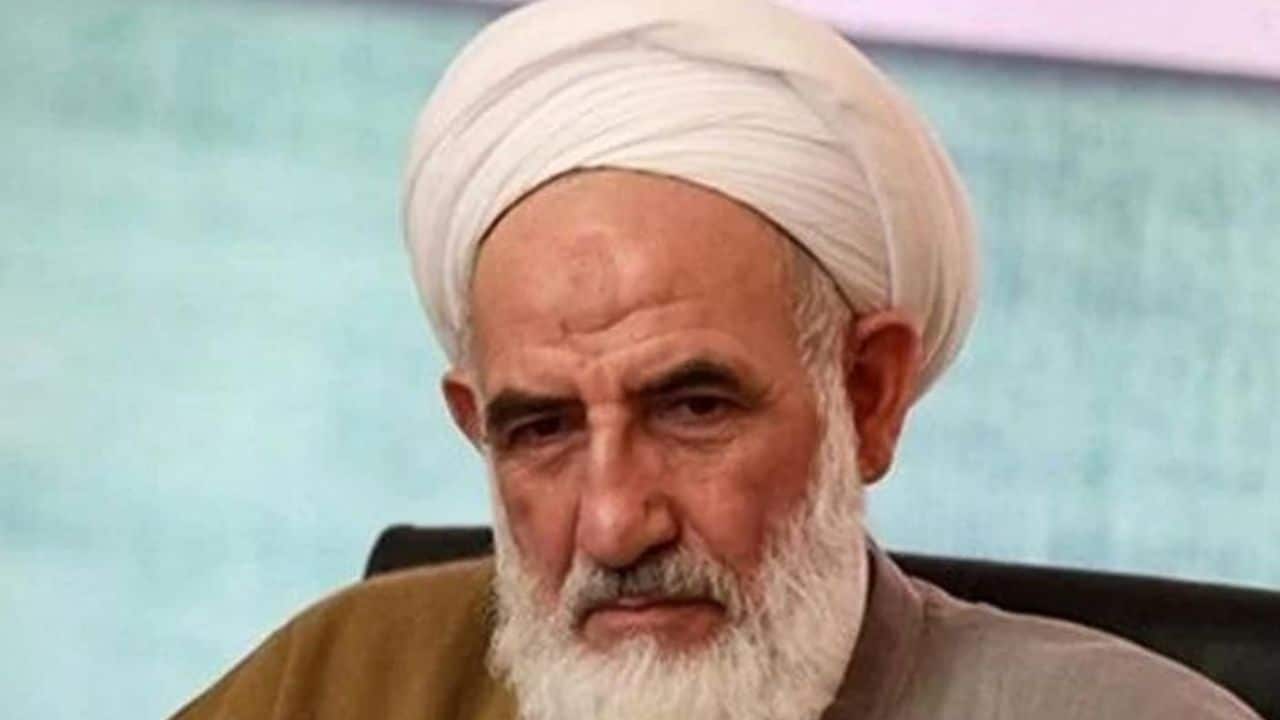
  • Iran executes murderer of Ayatollah Abbas Ali Soleimani

    Iran executes murderer of Ayatollah Abbas Ali Soleimani

    Iranian authorities executed a man convicted of killing a powerful cleric in April, the judiciary said Wednesday.

    Ayatollah Abbas Ali Soleimani, a member of the Assembly of Experts that selects the country’s supreme leader, was killed on April 26 in a bank in Babolsar city in the northern province of Mazandaran.

    The murderer, who has not been named, was a security guard at the bank. CCTV footage published by local media showed him shooting the cleric from behind as he was sitting in a chair.

    “The sentence of qesas (Islamic law of retribution) for the murderer of Martyr Ayatollah Abbas Ali Soleimani was carried out today after being approved by the country’s Supreme Court,” a local official said, according to the judiciary’s Mizan Online website.

    Under Islamic law, the sentence of qesas can be dropped if the victim’s family agrees to spare the convict.

    Soleimani, 75, was previously a representative of Supreme Leader Ayatollah Ali Khamenei and led Friday prayers in the cities of Kashan and Zahedan.

    The 88-strong Assembly of Experts is tasked with supervising, dismissing, and electing the supreme leader. It is headed by ultra-conservative 96-year-old cleric Ahmad Jannati.

    Its members are elected for eight-year terms, but candidates are closely vetted.

    In April 2022, two clerics died in a knife attack in Iran’s second city of Mashhad. A 21-year-old suspected jihadist, Abdolatif Moradi, was hanged two months later for the crime.

    Rights group Amnesty International says Iran executes more people than any country except China.

    It has executed more than 600 people so far this year, already the highest figure in eight years, according to a report last month by the Norway-based Iran Human Rights group.