Author: AFP

  • Nepali TikTok Influencers Upset After Unexpected Ban

    Nepali TikTok Influencers Upset After Unexpected Ban

    Nepali influencer Anjana Aryal went from homemaker to entrepreneur by sharing recipes on TikTok, but her lucrative business collapsed last month when the Himalayan republic banned the Chinese-owned short video app.

    Filming with her mobile phone in one hand and cooking with the other, Aryal rapidly became a social media star in Nepal last year, garnering millions of views from a following of nearly 600,000 people.

    That all came to a sudden halt when Nepal banned TikTok to protect “social harmony”, following similar restrictions imposed in other countries on concerns over data security, obscene content and its owner’s alleged ties to the Chinese government.


    “My life changed a lot because of TikTok, a lot,” Aryal, 39, told AFP from her home in Kathmandu. “So many recognise me because of TikTok wherever I go.”
    She earned nearly $3,000 from endorsement deals just in October, more than double Nepal’s average yearly income.


    Encouraged by her audience, Aryal also started a business selling her own brand of pickles, which saw her inbox flooded with orders.


    But since the ban, Aryal and other prominent Nepali content creators have seen their revenue streams dry up, jeopardising their livelihoods.
    “People were earning, running businesses or just being entertained on TikTok. Everyone has been affected now and they don’t know what to do,” she said.
    Owned by Beijing-based ByteDance, TikTok is one of the most popular social media platforms on the planet with more than one billion users.
    Its explosive growth has given its content creators and influencers an immense audience, and its editing features and AI-powered algorithm have proved particularly attractive.


    But the algorithm is opaque and often accused of putting users into content silos, and the platform has also been blamed for spreading disinformation.
    It has faced intense scrutiny in the United States and other nations over user data security and the company’s alleged ties to Beijing.
    TikTok announces $1.5bn deal to restart Indonesia online shopping business


    Multiple countries have sought to tighten controls on TikTok, and the platform has been banned in neighbouring India.
    ‘Start from zero’
    Growing criticism of the app has worried influencers around the world.
    Others in the United States have voiced fears to local media about losing thousands of dollars in income if bans are enforced.
    Nepal’s government justified its ban on the platform by accusing it of damaging the Himalayan republic’s social fabric.
    It came days before a huge rally called by a prominent businessman who was using TikTok to organise a campaign demanding the reinstatement of Nepal’s monarchy.


    Dozens of content creators staged a rally in Kathmandu demanding the ban be lifted last month.
    Advocate Dinesh Tripathi, who is challenging the decision in court, said the ban was an attack on people’s freedom of speech because the government was fearful of “dissenting voices”.


    Manish Adhikari, who uses TikTok to discuss cars and Nepali start-ups, said he had several endorsement deals scuttled by the ban.
    “Brands started to call me… and I wondered if I was getting out of business, is my work going to stop?” Adhikari said.
    Adhikari has shifted to Instagram but the views and followings are a fraction of his earlier audience.


    “I lost all my audience because I was not as active on any other platform,” he said. “Now I have to start from zero.”
    There are around 2.2 million TikTok users among Nepal’s 30 million people, according to the Internet Service Providers Association.
    But Monayac Karki, founder of Nepali influencer marketing agency Uptrendly, said TikTok’s popularity had been rising exponentially.


    He added that the ban had torpedoed a market with an estimated worth in excess of $5 million each year for advertisers and content creators, and which was set to grow rapidly.
    “I really hope this ban is a temporary one and it will be lifted soon,” he said.
  • Israel strikes Gaza after failed UN ceasefire bid

    Israel pressed its offensive against Hamas in Gaza on Saturday after the United States blocked an extraordinary UN bid to call for a ceasefire in the two-month war.

    Hamas and the Palestinian Authority swiftly condemned the US veto as the Hamas-run health ministry put the latest death toll in Gaza at 17,487 people, mostly women and children.

    An Israeli strike on the southern city of Khan Yunis killed six people, while five others died in a separate attack in Rafah, the ministry said Saturday.

    Israel has vowed to eradicate Hamas over its unprecedented attack on October 7 when militants broke through Gaza’s militarised border to kill around 1,200 people and seize hostages, 138 of whom remain captive, according to Israeli figures.

    Vast areas of Gaza have been reduced to rubble and the UN says about 80 percent of the population has been displaced, with dire shortages of food, fuel, water and medicine reported.

    “It’s so cold, and the tent is so small. All I have are the clothes I wear, I still don’t know what the next step will be,” said Mahmud Abu Rayan, displaced from Beit Lahia in the north.

    A UN Security Council resolution that would have called for an immediate cease-fire was vetoed by the United States on Friday.

    US envoy Robert Wood said the resolution was “divorced from reality” and “would have not moved the needle forward on the ground.”

    Israeli Foreign Minister Eli Cohen said the cease-fire “would prevent the collapse of the Hamas terrorist organization, which is committing war crimes and crimes against humanity, and would enable it to continue ruling the Gaza Strip.”

    Hamas slammed on Saturday the US rejection of the cease-fire bid as “a direct participation of the occupation in killing our people and committing more massacres and ethnic cleansing.”

    Palestinian Prime Minister Mohammed Shtayyeh said it was “a disgrace and another blank cheque given to the occupying state to massacre, destroy and displace.”

    The veto was swiftly condemned by humanitarian groups, with Doctors Without Borders (MSF) saying the Security Council was “complicit in the ongoing slaughter.”

    Israel’s military said Friday it had struck 450 targets in Gaza over 24 hours, showing footage of strikes from naval vessels in the Mediterranean.

    The health ministry reported 40 dead near Gaza City in the north, and dozens more in Jabalia and the main southern city of Khan Yunis.


    Humanitarian Catastrophe

    Following two months of conflict and bombardment, UN chief Antonio Guterres said Friday “the people of Gaza are looking into the abyss.”

    “People are desperate, fearful and angry,” he said.

    “All this takes place amid a spiralling humanitarian nightmare.”

    Many of the 1.9 million Gazans who have been displaced by the war have headed south, turning Rafah near the Egyptian border into a vast camp.

    With the death toll of medical workers in the conflict mounting, more than a dozen World Health Organization member states submitted a draft resolution on Friday that urged Israel to respect its obligations under international law to protect humanitarians in Gaza.

    They called for Israel to “respect and protect” medical and humanitarian workers exclusively involved in carrying out medical duties, as well as hospitals and other medical facilities.

    Only 14 of the 36 hospitals in the Gaza Strip were functioning in any capacity, according to United Nations’ humanitarian agency OCHA.

    With the civilian toll mounting, US National Security Council spokesman John Kirby told reporters Friday that Washington believes Israel needs to do more to protect civilians in the conflict.

    “We certainly all recognize more can be done to… reduce civilian casualties. And we’re going to keep working with our Israeli counterparts to that end,” he said.

    The death toll also rose in the Israeli-occupied West Bank, where Israeli forces shot dead six Palestinians on Friday, the territory’s health ministry said.

    Israel said Friday it has lost 91 soldiers in Gaza.

    It said two others were wounded in a failed bid to rescue hostages overnight, and that “numerous terrorists” were killed in the operation.
    Hamas claimed a hostage was killed in the operation, and released a video purporting to show the body, which could not be independently verified.

    Hamas rocket parts, launchers and other weapons as well as a one-kilometer tunnel were found at Al-Azhar University in Gaza City, the army said, as it warned residents to move west.

  • ‘Deliberate’ Israeli strike on journalists in Lebanon warrants ‘war crime’ investigation: watchdogs

    ‘Deliberate’ Israeli strike on journalists in Lebanon warrants ‘war crime’ investigation: watchdogs

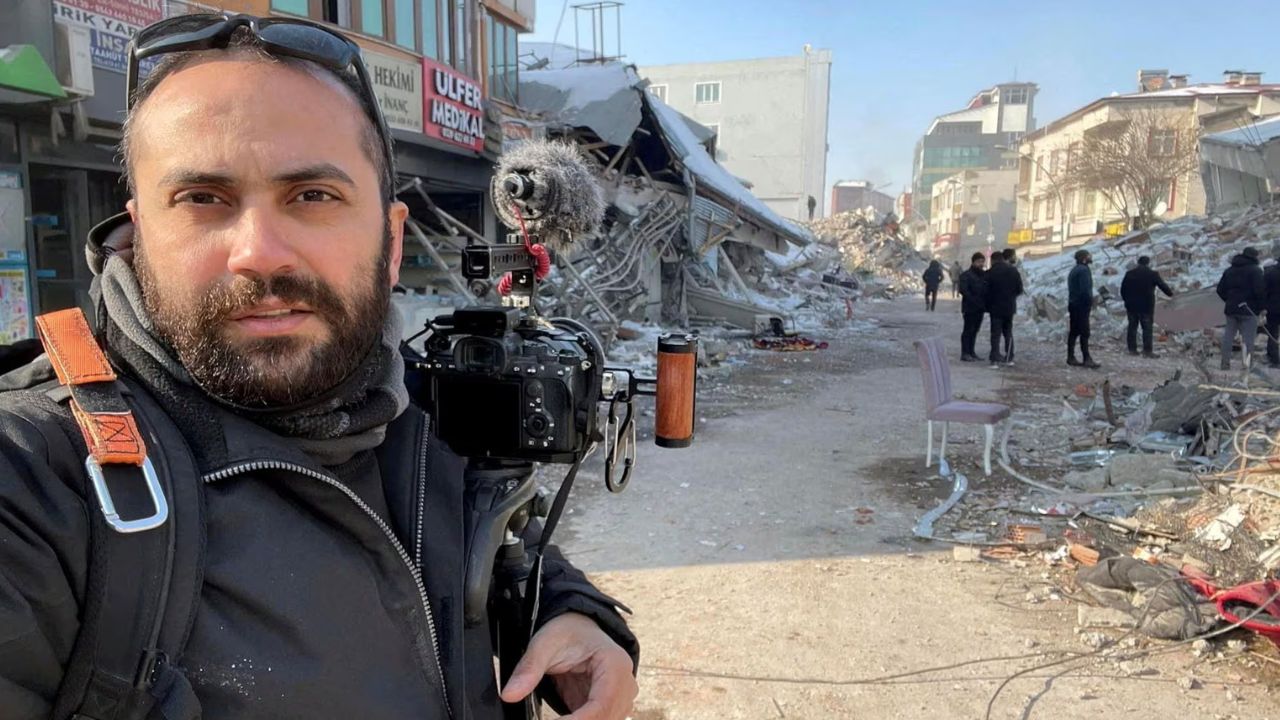
    The Israeli strike that killed one journalist and wounded six others in Lebanon merits a “war crime” investigation, rights groups Amnesty International and Human Rights Watch (HRW) told AFP on Thursday.

    Reuters journalist Issam Abdallah, 37, was killed instantly in the strike on October 13 in the south of the country near the Israeli border.

    The others present — two more Reuters journalists, two from Al Jazeera, and two from AFP — were all injured.

    AFP photographer Christina Assi, 28, was seriously wounded, later had a leg amputated and is still in hospital.

    Independent investigations by both rights groups concluded, like an AFP investigation published earlier on Thursday, that the first strike that killed Abdallah and severely wounded Assi was most likely a tank round fired from Israel.

    Amnesty said the strikes “were likely a direct attack on civilians that must be investigated as a war crime”.

    “Those responsible for Issam Abdallah’s unlawful killing and the injuring of six other journalists must be held accountable,” said Aya Majzoub, Amnesty’s deputy regional director for the Middle East and North Africa.

    “No journalist should ever be targeted or killed simply for carrying out their work. Israel must not be allowed to kill and attack journalists with impunity.”

    HRW said the two Israeli strikes “were apparently deliberate attacks on civilians, which is a war crime”.

    Under international humanitarian law, “it is forbidden in any circumstances to carry out direct attacks against civilians”, it said.

    The group’s investigation indicated that the journalists were “well removed from ongoing hostilities, clearly identifiable as members of the media, and had been stationary for at least 75 minutes before they were hit”.

    Amnesty said images it verified showed “the seven journalists were wearing body armour labelled ‘press’, and that the blue Reuters crew car was marked ‘TV’ with yellow tape on its hood”.

    “The evidence strongly suggests that Israeli forces knew or should have known that the group that they were attacking were journalists,” HRW’s Lebanon researcher Ramzi Kaiss said.

    “This is an unlawful and apparently deliberate attack on a very visible group of journalists,” he said.

    ‘Justice and accountability’

    Speaking at a press conference in Beirut, Dylan Collins, the other AFP journalist wounded in the attack, said: “I know they (the investigations) won’t bring Issam back to life. I know they won’t help Christina walk again.

    “But what I do hope is that they at least will mark the start of some sort of process of justice and accountability,” he said.

    He shared a message from Assi that said: “We chose journalism with a mission to deliver the truth, and despite the inevitable costs, our commitment remains unwavering. Nothing can silence us.”

    Lebanese Prime Minister Najib Mikati said in a statement his government would “take all measures to include” the conclusions of the investigation “in the complaint filed before the UN Security Council”.

    Since Israel’s bombardment of Gaza started after Palestinian fighter group Hamas struck Israel in a surprise attack on October 7, 63 journalists and media workers have been killed — 56 Palestinians, four Israelis and three Lebanese, the Committee to Protect Journalists says.

    The New York-based rights group on Thursday called for “an immediate, independent, and transparent investigation that holds the perpetrators to account” for the strike on journalists in Lebanon.

  • Pakistan zoo shut down after mystery tiger attack

    Pakistan zoo shut down after mystery tiger attack

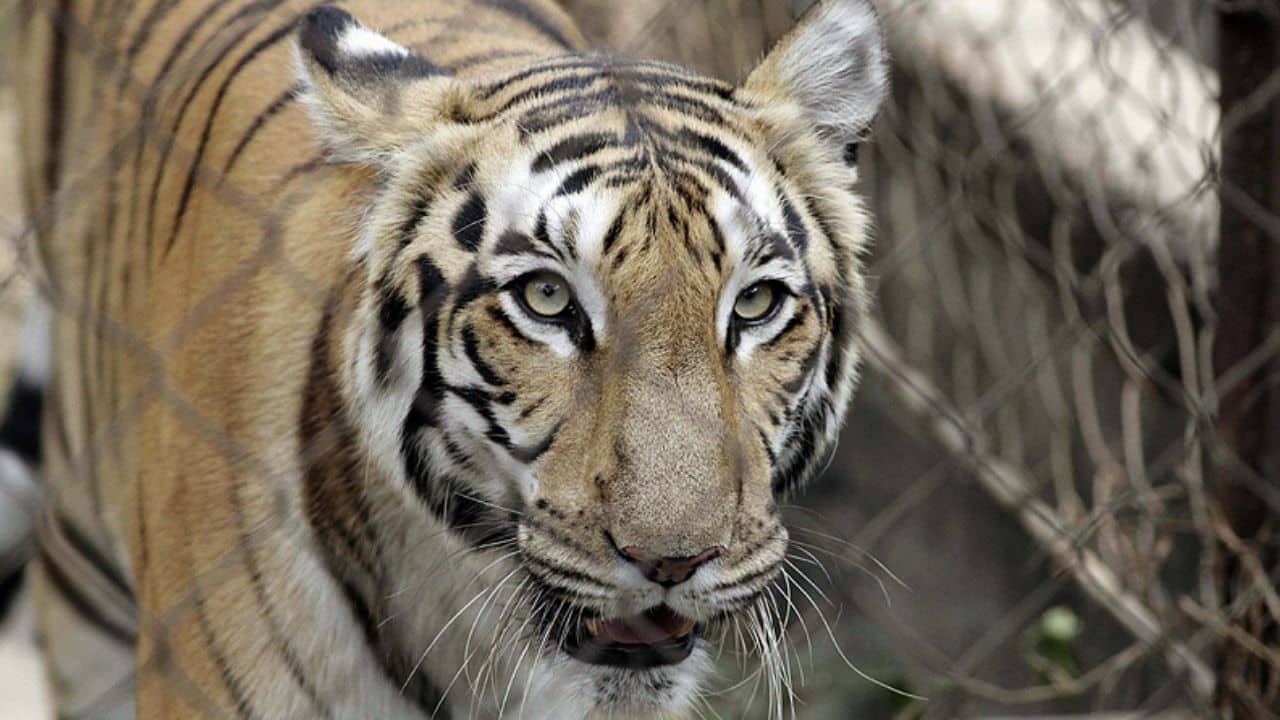
    AFP – Lahore: A zoo in Pakistan has been shut down after a man was mauled to death by tigers in an attack discovered during routine cleaning, officials said Thursday.

    The body was found on Wednesday morning in Bahawalpur’s Sherbagh Zoo in the eastern province of Punjab after staff spotted one of the three tigers with a shoe in its mouth.

    “The zoo is closed right now as we determine how the man got in,” Ali Usman Bukhari, a senior officer of the province’s wildlife department, which operates the zoo, told AFP.

    The condition of the body suggests the attack happened late Tuesday night.

    “The autopsy report has not been released, however evidence gathered from the enclosure points towards him being alive when he was attacked by the tigers,” Bukhari said.

    “The tigers did not go out of the den to attack the man, he jumped into their enclosure,” he said.

    “If we find a security lapse, we will address it. If need be, we will hire private security guards.”

    The victim has not been identified and no family member has come forward to claim the body.

    Speaking to media outside the zoo after the body was discovered on Wednesday, senior local government official Zaheer Anwar said all staff had been accounted for.

    “Our assessment so far is that this appears to be a lunatic, because a sensible person would not jump into the den,” he said.

    “You can see the den is secured. There are stairs behind the den, maybe he jumped from there.”

    The three tigers present in the den when the body was discovered have been restricted to a smaller space while evidence is collected.

    The zoo was built in 1942 by the ruling royal family of the former princely state of Bahawalpur and costs adults 50 rupees (18 cents) to enter.

    Pakistan’s zoos are generally in a poor condition and frequently accused of disregarding animal welfare.

  • Green turtles fight to survive against Pakistan’s urban sprawl

    Green turtles fight to survive against Pakistan’s urban sprawl

    Against the backdrop of the mega port city of Karachi, choked with traffic and construction, four green turtles emerge from the frothy Arabian Sea seeking a spot to lay their eggs.

    Three immediately retreat to the water, put off by the glittering lights and heavy beat of a nearby beach party.

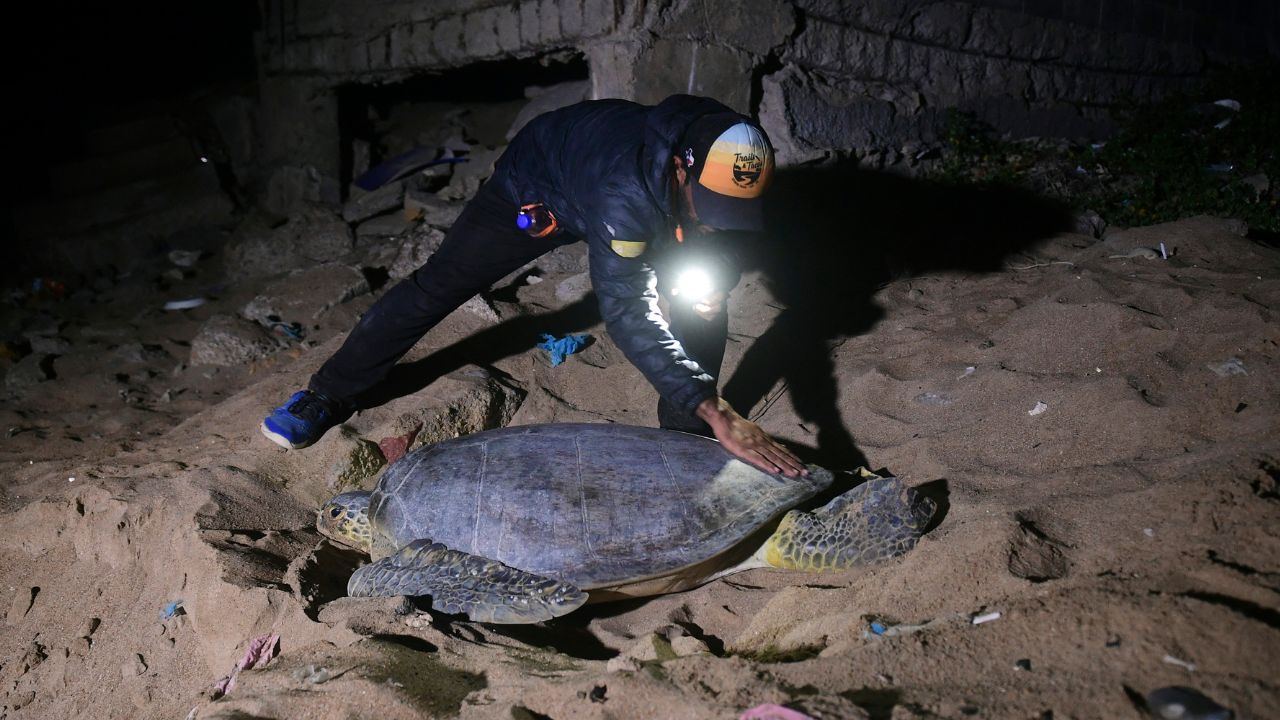
    But one trundles towards the end of the beach bank, its flippers whipping sand into the air before settling on a dry spot of sand in which to deposit 88 golf ball-sized eggs.

    Newly-hatched green turtles crawl towards the Arabian Sea, after being released by marine conservationists on Sandspit beach in Karachi. PHOTO: AFP

    Six conservationists tasked with protecting the last surviving turtle species to nest in Pakistan stand guard nearby.

    “Being human doesn’t only call for loving another human being. These animals also require the same attention and love,” said Ashfaq Ali Memon, the head of marine wildlife at Sindh province’s Wildlife Department.

    Sandspit Beach is a beloved recreation spot for the city’s 22 million residents, as well as a critical habitat for Pakistan’s endangered green turtles.

    Until the early 2000s, the beaches of Pakistan’s Arabian coast were the nesting habitat for five endangered turtle species, now only the green turtles come to shore to lay their eggs. PHOTO: AFP

    The eight-kilometre (five-mile) stretch of beach is being relentlessly encroached upon by the construction of concrete beach houses that have, metre-by-metre, eaten into the strip of sand where turtles nest.

    “Once I saw someone disturbing a turtle while she was laying eggs. She ran off for safety, leaving a trail of eggs behind her. That was a very painful scene,” said Haseen Bano, Memon’s wife who supports the work of the volunteers.

    Marine turtles have covered vast distances across the world’s oceans for more than 100 million years but human activity has tipped the scales against the survival of these ancient creatures, the World Wildlife Fund says.

    Until the early 2000s, the beaches of Pakistan’s Arabian coast were the nesting habitat for five endangered turtle species.

    Marine turtles have covered vast distances across the world’s oceans for more than 100 million years but human activity has tipped the scales against the survival of these ancient creatures, the World Wildlife Fund says. PHOTO: AFP

    Now only the green turtles come to shore to lay their eggs on just two beaches in Karachi and on uninhabited islands in Balochistan, further down the coast towards Iran.

    Alongside construction, noise and garbage pollution, WWF-Pakistan has also reported that diesel and petrol fumes have caused deformities in hatchlings.

    As well as major disruption to their nesting habitats, thousands of turtles are also injured or killed in fishing nets every year.

    Named for the greenish colour of their cartilage and fat, they are classified as endangered across the world.

    Sindh Wildlife Department has a dedicated team of six volunteers, paid according to fluctuating donations, who patrol the beaches after dark during nesting season between August and January.

    “When the turtles arrive to use the pits, our volunteers are present to take care of them and to ensure no one can disturb them,” Amir Khan told AFP.

    Data on the number of green turtles is not available in Pakistan but, for the past few years, the number of hatchlings has increased. PHOTO: AFP

    The 88 — a decent batch for a young female — were delicately collected the same night and taken to a protected coastal conservation centre and reburied in the sand for the 45-60 day hatching cycle, away from the danger of stray dogs, mongoose and snakes.

    Baby turtles just a few hours old and only about two inches long are meanwhile brought to the water’s edge in buckets by volunteers and released one-by-one, swimming off into the night.

    Data on the number of green turtles is not available in Pakistan but, for the past few years, the number of hatchlings has increased.

    In 2022, volunteers successfully hatched 30,000 eggs and the current year’s count has already passed 25,000 just over halfway through the season.

    Baby turtles just a few hours old and only about two inches long are brought to the water’s edge in buckets by volunteers and released one-by-one, swimming off into the night. PHOTO: AFP

    Khan said these “living dinosaurs” will continue to struggle against the accelerating urban sprawl of the city and the dangers posed by fishermen.

    “It feels good to take care of these turtles, they boost the beauty of our beach,” said Mohammad Javed, a 29-year-old volunteer who inherited the caretaker legacy from his father.

  • In rare Israel rebuke, US restricts visas on extremist settlers

    In rare Israel rebuke, US restricts visas on extremist settlers

    Washington (AFP) – The United States said Tuesday it would refuse visas for extremist Israeli settlers behind a wave of violence against Palestinians in the West Bank, as it also asked Israel to do more to spare civilians in Gaza.

    The visa measures amount to a rare concrete repercussion by the United States against Israelis in the nearly two-month-old war, in which President Joe Biden has nudged the US ally privately but also promised strong support.

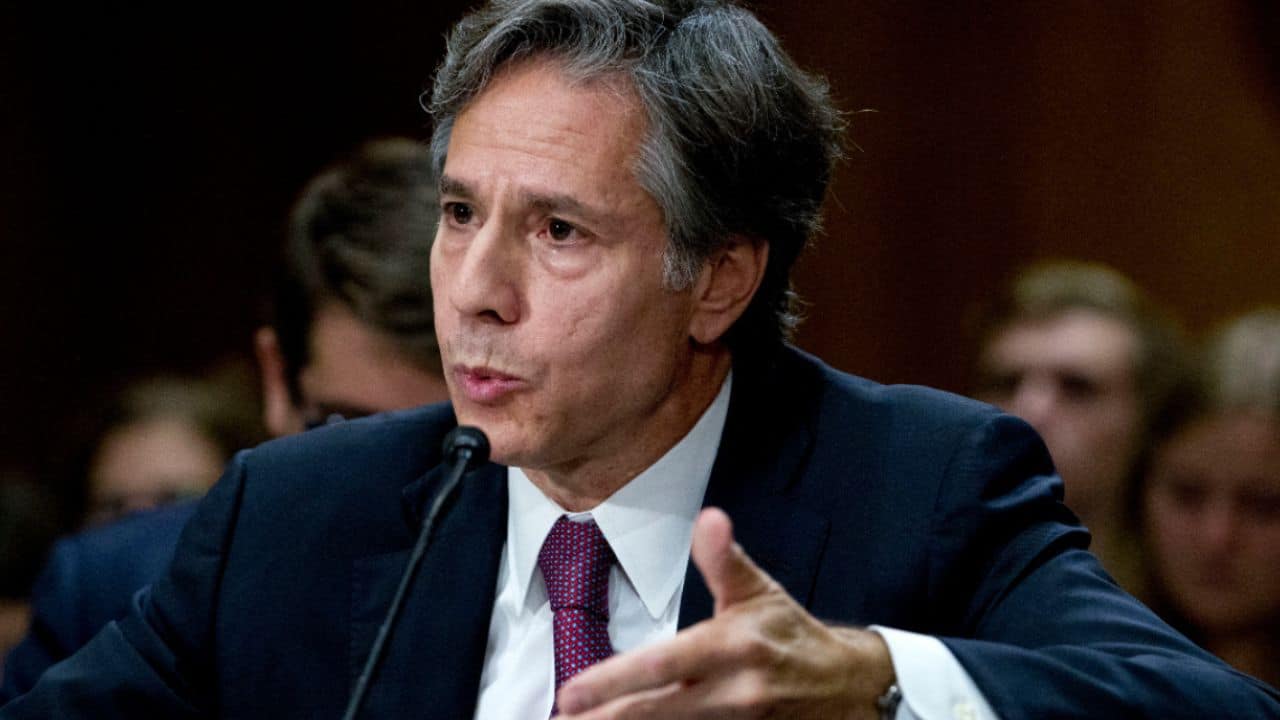
    “We have underscored to the Israeli government the need to do more to hold accountable extremist settlers who have committed violent attacks against Palestinians in the West Bank,” Secretary of State Antony Blinken said in a statement.

    “As President Biden has repeatedly said, those attacks are unacceptable,” he said.

    Blinken said the United States would refuse entry to anyone involved in “undermining peace, security or stability in the West Bank” or who takes actions that “unduly restrict civilians’ access to essential services and basic necessities.”

    “Instability in the West Bank both harms the Israeli and Palestinian people and threatens Israel’s national security interests. Those responsible for it must be held accountable,” Blinken said.

    State Department spokesman Matthew Miller said that dozens of settlers, who were not publicly named, would be affected. The visa ban also applies to their immediate family members.

    Restrictions on entering the United States will not apply to extremist settlers who are US citizens.

    Wave of violence

    Hamas militants stormed out of Gaza into Israel on October 7, killing around 1,200 people, mostly civilians, and taking around 240 hostages, according to Israeli officials.

    In response, Israel vowed to destroy Hamas and has carried out air strikes and a ground offensive that have killed around 15,900 people, mostly women and children, according to the Hamas-run health ministry.

    Even though Hamas does not control the West Bank, some 250 Palestinians have been killed there by Israeli soldiers and settlers since October 7, according to a Palestinian government tally.

    The Palestinian Authority holds limited autonomy in the West Bank where Palestinians have complained of impunity over attacks and harassment carried out by settlers, some of whom have been serving in the Israeli military as forces are shifted to Gaza.

    Prime Minister Benjamin Netanyahu is in a coalition with far-right parties that strongly support Jewish settlement of lands seized in 1967, construction that is considered illegal under international law.

    Blinken visited both Israel and the West Bank last week just as a pause ended between Hamas and Israel.

    The State Department said that Israel has shown “improvement” in targeting its strikes in Gaza as it voiced concern about a repeat of the widespread bombing at the start of the war.

    “We will continue to monitor what’s happening and will continue to press them to do everything they can to minimize civilian harm,” said Miller, the State Department spokesman.

    The United States has also promised more than $100 million in humanitarian aid to the Palestinians but has faced strong criticism in much of the Arab world for its diplomatic and military support of Israel.

    J Street, the left-leaning pro-Israel US group that is frequently critical of Netanyahu, praised the visa restrictions as an “important first step.”

    It said that the Biden administration should specifically restrict two far-right ministers in Netanyahu’s cabinet, Minister for National Security Itamar Ben-Gvir and Finance Minister Bezalel Smotrich.

    Before entering politics, Ben-Gvir hung a portrait in his living room of Baruch Goldstein, the US-born settler who killed 29 Palestinian worshippers at a mosque in the West Bank city of Hebron.

    The Biden administration has returned to the traditional US and international position of opposing settlements, although until now its stance has largely been rhetorical.

    Previous president Donald Trump switched course, with Blinken’s predecessor Mike Pompeo dropping objections to settlements and visiting one late in his term.

  • Detained Iran protesters raped, sexually assaulted: Amnesty

    Detained Iran protesters raped, sexually assaulted: Amnesty

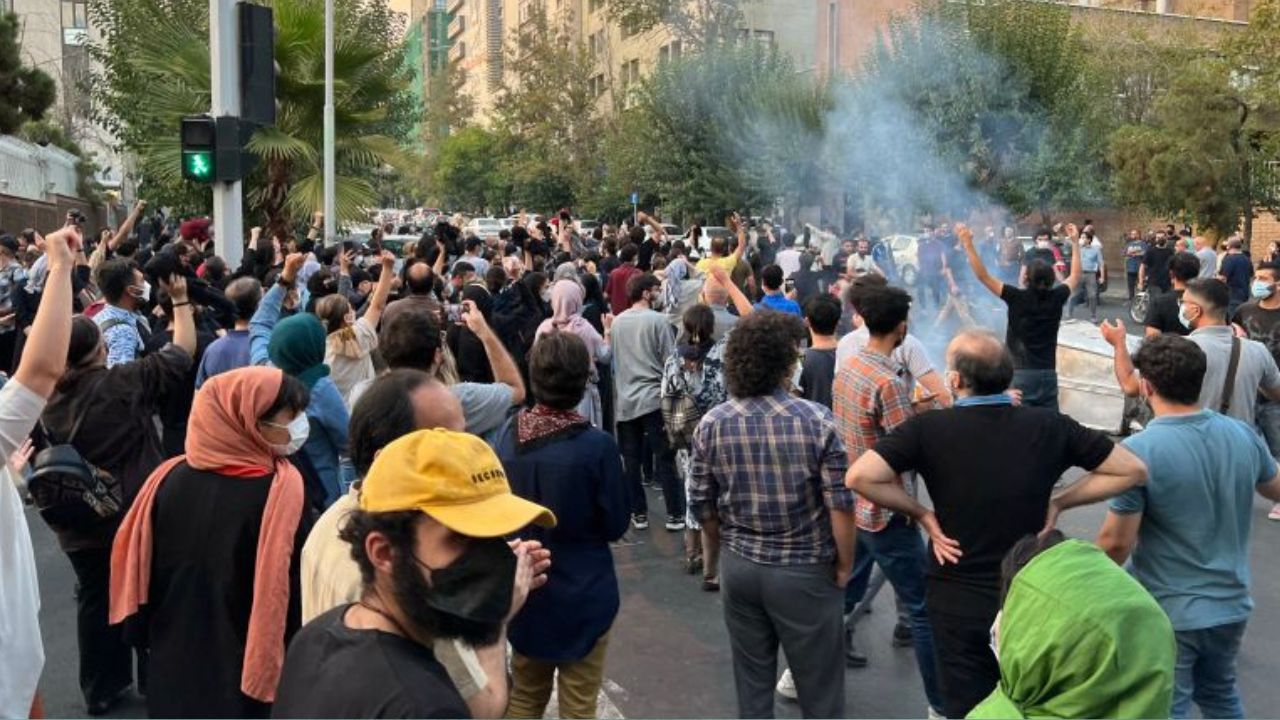
    Members of the Iranian security forces raped and used other forms of sexual violence against women and men detained in the crackdown on nationwide protests that erupted from September 2022, Amnesty International said Wednesday.

    Amnesty said in a report it had documented 45 such cases of rape, gang rape or sexual violence against protesters. With cases in more than half of Iran’s provinces, it expressed fear these documented violations appeared part of a “wider pattern.”

    “Our research exposes how intelligence and security agents in Iran used rape and other sexual violence to torture, punish and inflict lasting physical and psychological damage on protesters, including children as young as 12,” Amnesty’s secretary general Agnes Callamard said.

    The London-based organization said it had shared its findings with the Iranian authorities on November 24 “but has thus far received no response.”
    The protests began in Iran in September 2022 after the death in police custody of Mahsa Amini, 22. Her family says she was killed by a blow to the head but this has always been disputed by the Iranian authorities.

    After rattling Iran’s clerical leadership, the movement lost momentum by the end of that year in the face of a fierce crackdown that left hundreds dead, according to rights activists, and thousands arrested, according to the United Nations.

    Amnesty said 16 of the 45 cases documented in the report were of rape, including six women, seven men, a 14-year-old girl, and two boys aged 16 and 17.

    Six of them — four women and two men — were gang raped by up to 10 male agents, it said.

    It said the sexual assaults were carried out by members of the Revolutionary Guards, the paramilitary Basij force, agents of the intelligence ministry, as well as police officers.

    The rapes on women and men were carried out with “wooden and metal batons, glass bottles, hosepipes, and/or agents’ sexual organs and fingers,” it said.

    As well as the 16 rape victims, Amnesty said it documented the cases of 29 victims of other forms of sexual violence such as the beating of breasts and genitals, enforced nudity, and inserting needles or applying ice to men’s testicles.

    It said it collected the testimony through interviews with the victims and other witnesses, conducted remotely via secure communications platforms.

    “The harrowing testimonies we collected point to a wider pattern in the use of sexual violence as a key weapon in the Iranian authorities’ armory of repression of the protests and suppression of dissent to cling to power at all costs,” said Callamard.

    One woman, named only as Maryam, who was arrested and held for two months after removing her headscarf in a protest, told Amnesty she was raped by two agents during an interrogation.

    “He (the interrogator) called two others to come in and told them ‘It’s time’. They started ripping my clothes. I was screaming and begging them to stop.

    “They violently raped me in my vagina with their sexual organs and raped me anally with a drink bottle. Even animals don’t do these things,” she was quoted by the group as saying.

    A man named as Farzad told Amnesty that plain clothes agents gang raped him and another male protester, Shahed, while they were inside a vehicle.

    “They pulled down my trousers and raped me. I couldn’t scream out. I was really being ripped apart… I was throwing up a lot, and was bleeding from my rectum when I went to the toilet,” said Farzad who was released without charge a few days later.

    Amnesty said most victims did not file complaints against the assault for fear of further consequences, and those who did tell prosecutors were ignored.

    “With no prospects for justice domestically, the international community has a duty to stand with the survivors and pursue justice,” said Callamard.

  • Saudi Arabia says ‘absolutely not’ to oil phaseout at COP28

    Saudi Arabia says ‘absolutely not’ to oil phaseout at COP28

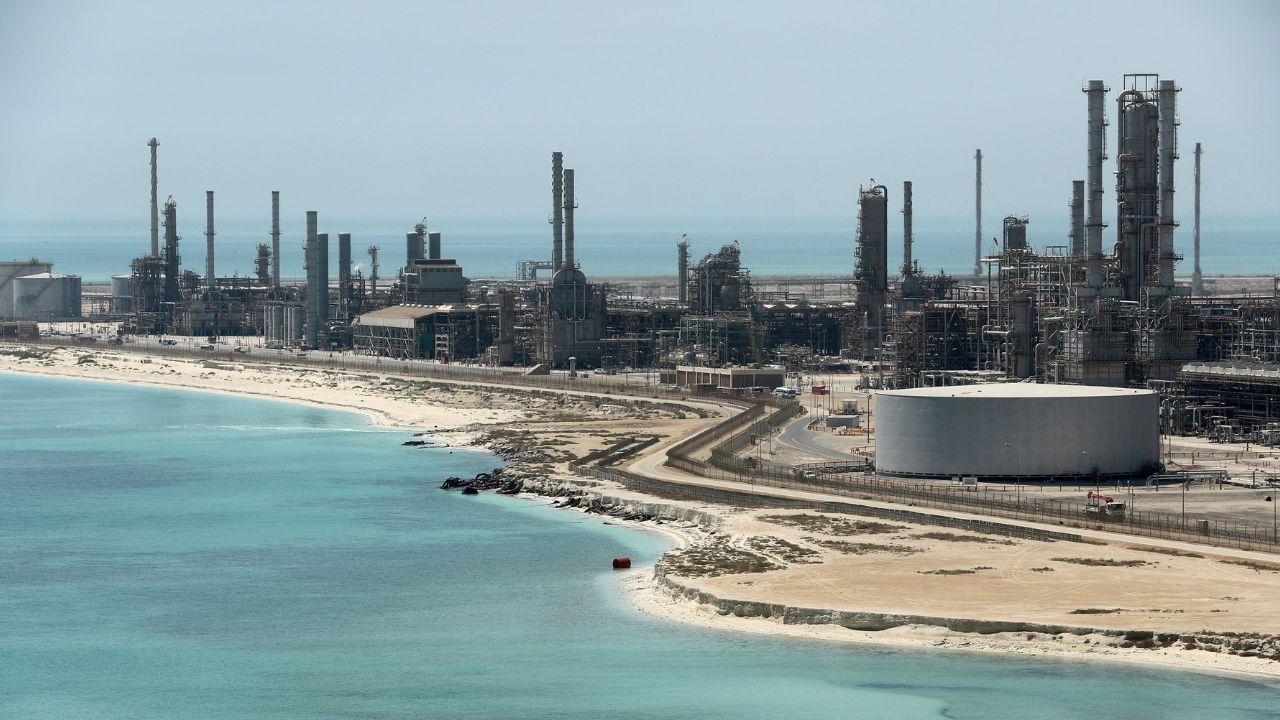
    AFP – DUBAI: Saudi Arabia’s energy minister has slammed the door shut on agreeing to phase out fossil fuels at the UN’s COP28 climate talks, setting the stage for difficult negotiations in Dubai.

    A tentative “phasedown/out” was included in a first draft of an agreement on climate action that delegates are haggling over during talks that are scheduled to finish on Dec 12.

    But Energy Minister Prince Abdulaziz bin Salman, a half-brother of de facto ruler Crown Prince Mohammed bin Salman, told Bloomberg that Saudi Arabia, the world’s biggest oil exporter, would not agree.

    “Absolutely not,” he said in an interview in Riyadh.

    “And I assure you not a single person – I’m talking about governments – believes in that.”

    About 200 countries must come to a consensus decision at the meeting in Dubai, held at the end of the hottest year on record.

    In an interview with AFP last week, United Nations Secretary-General Antonio Guterres called for a total phaseout of fossil fuels, warning “complete disaster” awaits mankind on its current trajectory.

    But Prince Abdulaziz said: “I would like to put that challenge for all of those who… comes out publicly saying we have to (phase out), I’ll give you their name and number, call them and ask them how they are gonna do that.

    “If they believe that this is the highest moral ground issue, fantastic. Let them do that themselves. And we will see how much they can deliver.”

    ‘Small change’

    Separately, the Saudi royal also derided Western donations to a new climate loss and damage fund as “small change” and trumpeted Riyadh’s pledges to developing countries.

    The fund for vulnerable nations – a major win at the start of COP28 – has attracted about US$655 million (S$876.22 million) so far from donors including the European Union and the United States, a sum criticised as insufficient by campaigners.

    “Unlike the small change offered for loss and damage from our partners in developed countries, the Kingdom through its South-South cooperation announced in the Saudi Africa Summit in Riyadh last month the allocation of up to US$50 billion,” he said in a video message to Monday’s Saudi Green Initiative forum, held on the sidelines of COP28.

    “This will help build resilient infrastructure and strengthen climate resilience and adaptation in the African continent directly through Saudi stakeholders,” added the prince, without giving further details.

    Such private funds have been criticised by campaigners for lacking transparency and because the pledges are non-binding and include loans and investments.

    Saudi Arabia has revamped its energy sources, invested in renewables and improved energy-efficiency as it tries to decarbonise its economy by 2030, Prince Abdulaziz added.

    But that target does not include emissions from the 8.9 million barrels of oil a day exported by Saudi Arabia.

    Africa and its energy mix is an area of focus for both Saudi and the UAE, which in September pledged US$4.5 billion for clean-energy investments in the continent.

    “You cannot go to undeveloped countries or developing countries and ask them to do the same measures of the transition,” Yasir Al-Rumayyan, chairman of Saudi state oil giant Aramco, told the forum.

    “Especially people who don’t have access to the energy.”

    He said he heard an African minister say “in order for us to have growth, we have to carbonise first then to decarbonise.”

  • Heavy rains in Chennai flooded airport, leaving 8 dead, thousands affected

    Heavy rains in Chennai flooded airport, leaving 8 dead, thousands affected

    Cyclone Michaung was expected to make landfall on the coast of the southern Indian state of Andhra Pradesh around noon on Tue­sday, the country’s weather office said, with sustained winds of 90-100kph (56-62mph), gusting to 110kph.

    The cyclone was forecast to hit the coast of Andhra Pradesh state later Tuesday as a “severe cyclonic storm”, packing winds up to 100 kilometres, the Indian Meteorological Department (IMD) said.

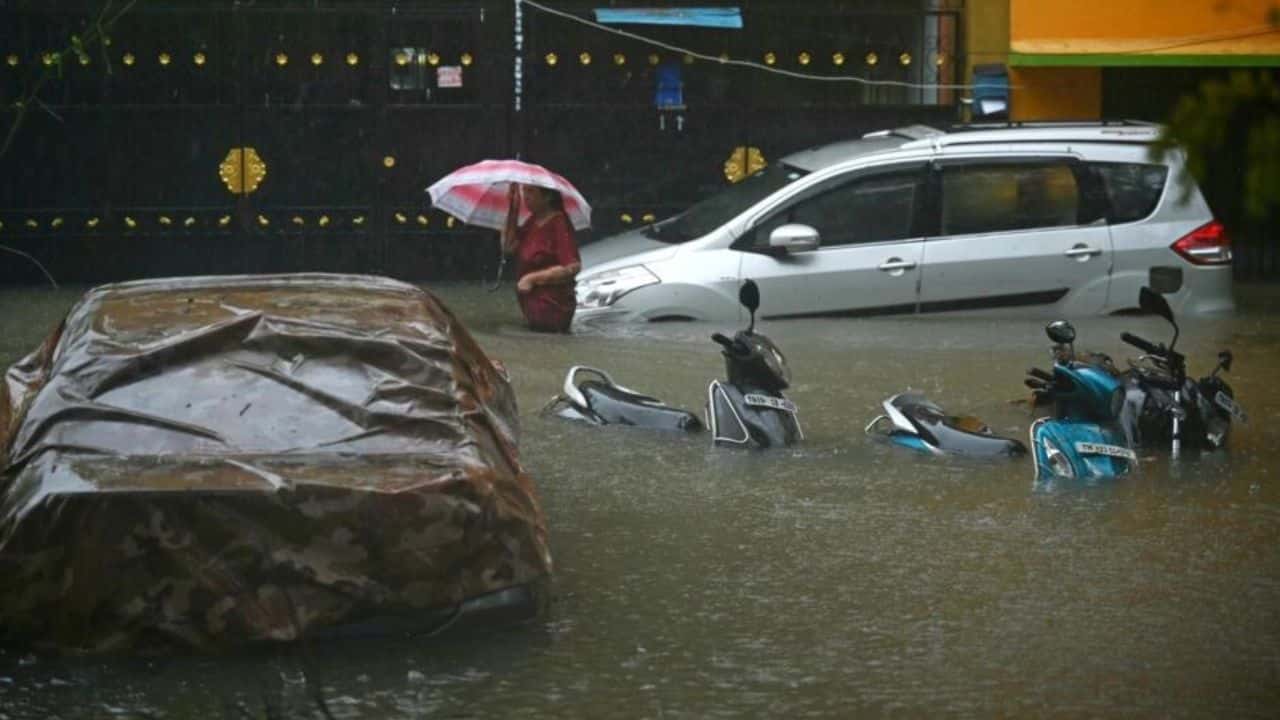
    In Chennai, cars were seen floating on raging torrents, homes were flooded, and a crocodile was spotted swimming the streets in the city.

    In some parts of the flooded city, people used boats to get out of their flooded neighbourhoods to the safety of government relief shelters.

    The IMD warned of “exceptionally heavy rainfall” in some areas.

    “We are facing the worst storm in recent memory,” Tamil Nadu state chief minister M.K. Stalin said, in a statement late Monday.

    Police said on Tuesday that eight people had been killed in the state capital of Chennai.

    They included some who drowned, as well as one person hit by a falling tree, another electrocuted by live wires in the water, and one crushed by a falling wall.

    Trees were uprooted and vehicles swept away due to the heavy rains, according to images posted on social media.

    Apple iPhone manufacturers Foxconn and Pegatron and automaker Hyundai suspended their operations in Tamil Nadu due to the storm, local media reported.

    The cyclone is expected to hit India’s southeast coast near the town of Bapatla, on the 300-kilometre (185-mile) stretch between Nellore and Machilipatnam.

    Hundreds of people from coastal villages in the neighbouring state of Andhra Pradesh have moved inland, with emergency rescue teams deployed to deal with the aftermath of the cyclone’s landfall, according to local media.

    Sea surges of waves up to 1.5 metres (nearly five feet) above normal tide levels are expected when the cyclone makes landfall, the IMD said.

    Home Minister Amit Shah said the government was “braced to provide all the necessary assistance to Andhra Pradesh”, with rescue teams deployed and more “on standby to mobilise as needed”.

    The cyclone is expected to weaken late Tuesday.

    Scientists have warned that storms are becoming more powerful as the world gets warmer with climate change.

    Cyclones — the equivalent of hurricanes in the North Atlantic or typhoons in the Northwest Pacific — are a regular and deadly menace on coasts in the northern Indian Ocean, where tens of millions of people live.

    Schools, colleges, offices and banks were closed on Monday and Tuesday in at least four districts of Tamil Nadu, including Chennai, because of weather conditions, a government notice said.

  • Driver arrested for running over pigeon

    Driver arrested for running over pigeon

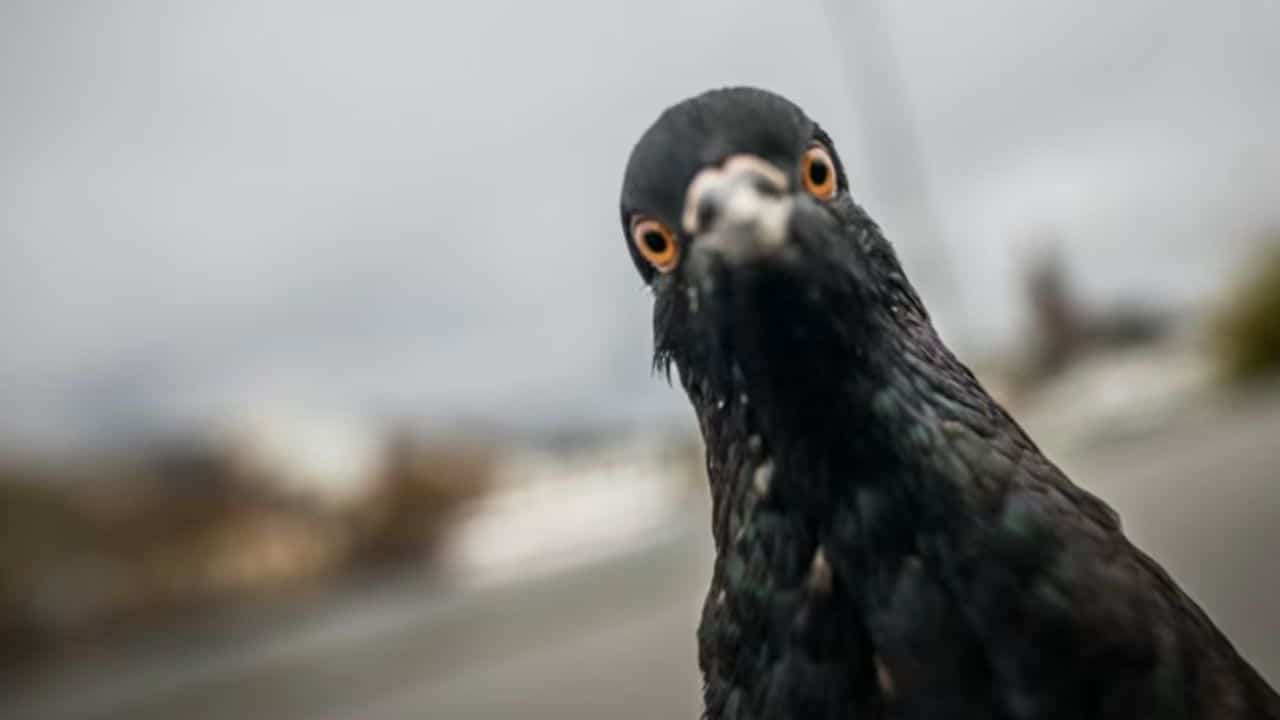
    A Tokyo taxi driver was arrested for deliberately driving into a flock of pigeons and killing one, police said Tuesday, reportedly because he was angry that the birds were on the road.

    Atsushi Ozawa, 50, “used his car to kill a common pigeon, which is not a game animal”, in the Japanese capital last month, and was arrested on Sunday for violating wildlife protection laws, a Tokyo police spokesman told AFP.

    Ozawa sped off from a traffic light when it turned green, ploughing his taxi into the bevy of birds at a speed of 60 kilometres (37 miles) per hour, local media said.

    The sound of the engine reportedly prompted a surprised passer-by to report the incident.

    Tokyo police had a veterinarian perform a post-mortem on the hapless pigeon and determined its cause of death as traumatic shock, according to local media.

    “Roads belong to humans, so pigeons should have dodged out of the way,” Ozawa was quoted by local media as telling investigators.

    Police called his behaviour “highly malicious” for a professional driver, before deciding to go ahead with the arrest, broadcaster Fuji TV said.

    “Wow, can you get arrested for running over a pigeon?”, one user wrote on X, formerly known as Twitter.

    “He could’ve just honked his car horn or something. But intentionally killing it? That’s crossing the line,” another posted.