Author: Ibraheem Sohail

  • PSX rallies 1,200 points on strong institutional buying

    PSX rallies 1,200 points on strong institutional buying

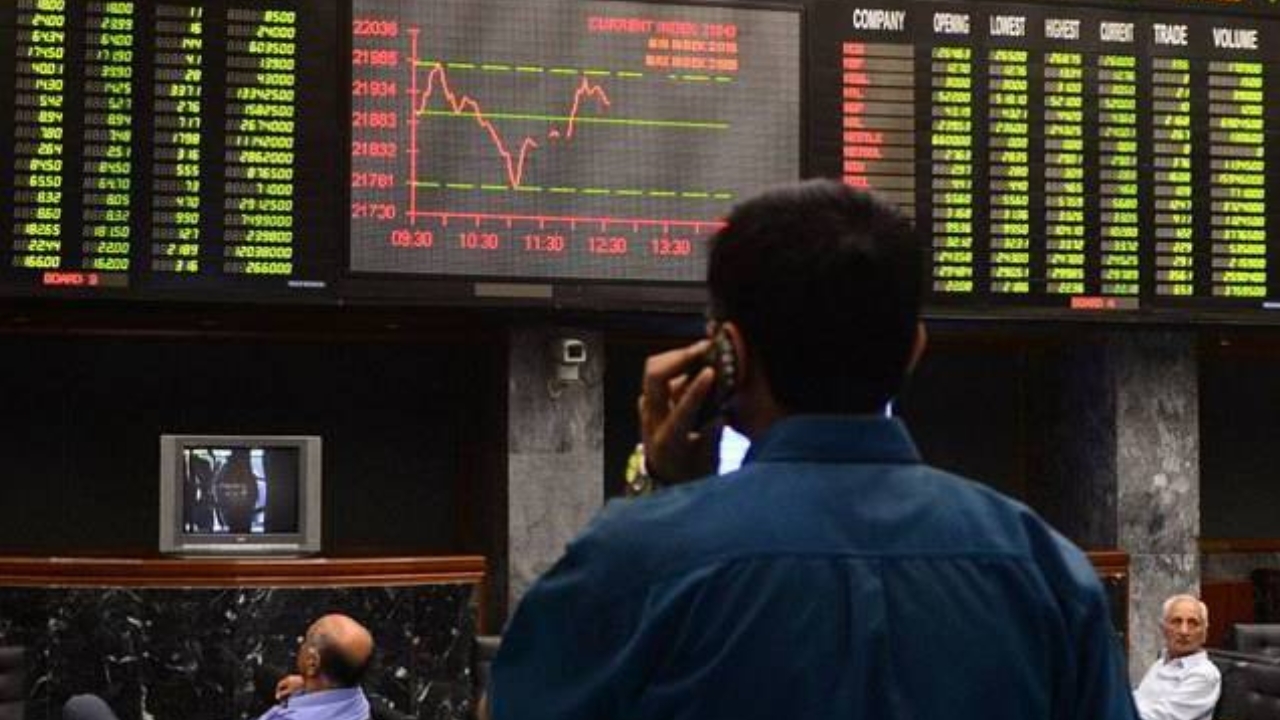
    The Pakistan Stock Exchange (PSX) closed in the green on Friday after remaining locked in a decline since it peaked on August 20 at 150,591 points. According to reports, the exchange owes its recovery to strong institutional buying that firms engaged in prior to the release of August’s inflation data and amid easing futures rollover pressure. 


    Reports suggest that concerns pertaining to flooding have waned in Punjab, allowing the exchange to rebound. Moreover, market sentiment surged because of the federal government’s attempts to tackle the circular debt issue, rising foreign exchange reserves and a jump in the value of the rupee. 


    The benchmark index, the KSE-100, crossed the 148,500 point resistance level after gaining over 1,200 points since trading hours began. Institutional buying in the face of improving market sentiments caused the index to open in the green in the early hours of the day, later reaching an intraday high of 149,234.94 points. 


    The index peaked at approximately 2:39 PM, after which the market witnessed a minor sell off, causing the index to fall to about 148,617.77 points at the close of trading hours. 


    For reference, the KSE-100 closed at 147,343.50 points on Thursday, after which the index recorded a growth of 0.86 percent during trading hours on Friday, leading to a 1,274.27 point rise. The market displayed a slowdown around 9:39 AM as the KSE-100 hit its intraday trading low of 147,488.46 points. 


    All 18 indexes listed on the exchange remained in the green, with the All-share index (ALLSHR) growing by 0.74 percent, recording a climb of 669.39 points during trading hours. Unlike the KSE-100, which tracks the performance of the 100 largest and most liquid companies, the ALLSHR index records the performance of all publicly listed companies on the PSX.


    A number of companies witnessed a rise in share prices, with First National Equities Limited (FNEL) and TPL Corp Limited (TPL) winning big, to the tune of growth rates that sat at 19.84 percent (FNEL) and 11.57 percent (TPL). 


    However, not every publicly listed stock witnessed an improvement, as many companies witnessed sharp declines. Of these declining companies, Dewan Mushtaq Textile Mills Limited (DMTM) posted a 10.01 percent decline in its position.

  • Fuel prices projected to drop by up to Rs3.13 per litre

    Fuel prices projected to drop by up to Rs3.13 per litre

    The prices of petroleum products are expected to decline significantly in the upcoming fortnight with shifts in international oil prices, refining margins, and import premiums. According to reports, high-speed diesel (HSD) rates are projected to decline by a respectable Rs3.13 per litre.

    The projected drop in HSD rates is expected to bring the price down to Rs269.86 per litre, from the current Rs272.99. As per reports, petrol prices are expected to fall from Rs264.61 to Rs264.00 per litre, a projected decrease of Rs0.61 per litre.

    These changes are expected to take effect in the first half of September 2025, after which prices will remain locked for two weeks. Reports also suggest that light diesel oil (LDO) may see a drop of Rs2.61 per litre, bringing its price down to Rs159.55 per litre.

    Following the same trend, reports anticipate a decrease of Rs1.78 per litre in Kerosene prices, causing its expected price to sit at Rs176.70 per litre for the upcoming fortnight. While ex-refinery price adjustments follow the same trend, these adjustments are more conservative.

    According to ex-refinery price adjustments, prices will decline by a factor of Rs2.87 per litre for HSD, Rs0.43 per litre for petrol, Rs2.61 per litre for LDO, and Rs1.57 per litre for Kerosene.  

    As per the details, these price estimates do not consider changes in the value of the rupee. Fuel prices can starkly differ from estimations depending on the rupee-dollar exchange rate. 

    Reports suggest that HSD is the most used fuel in Pakistan, and a drop in its prices is likely to have the most noticeable impact on the economy as it lowers the operating costs for both the transport and agriculture sectors. The projected decrease may benefit the economy by helping lower food prices. HSD is widely used in agriculture to power tractors and other mechanised farming equipment.

    A decrease in HSD rates could also benefit the transport sector, given its reliance on fuel. For instance, the transportation sector has diesel as a primary input and thus requires vast quantities of the commodity. Lower HSD prices imply lower operational costs for businesses in the transportation sector.

  • Govt finalises UAE takeover of Islamabad airport management

    Govt finalises UAE takeover of Islamabad airport management

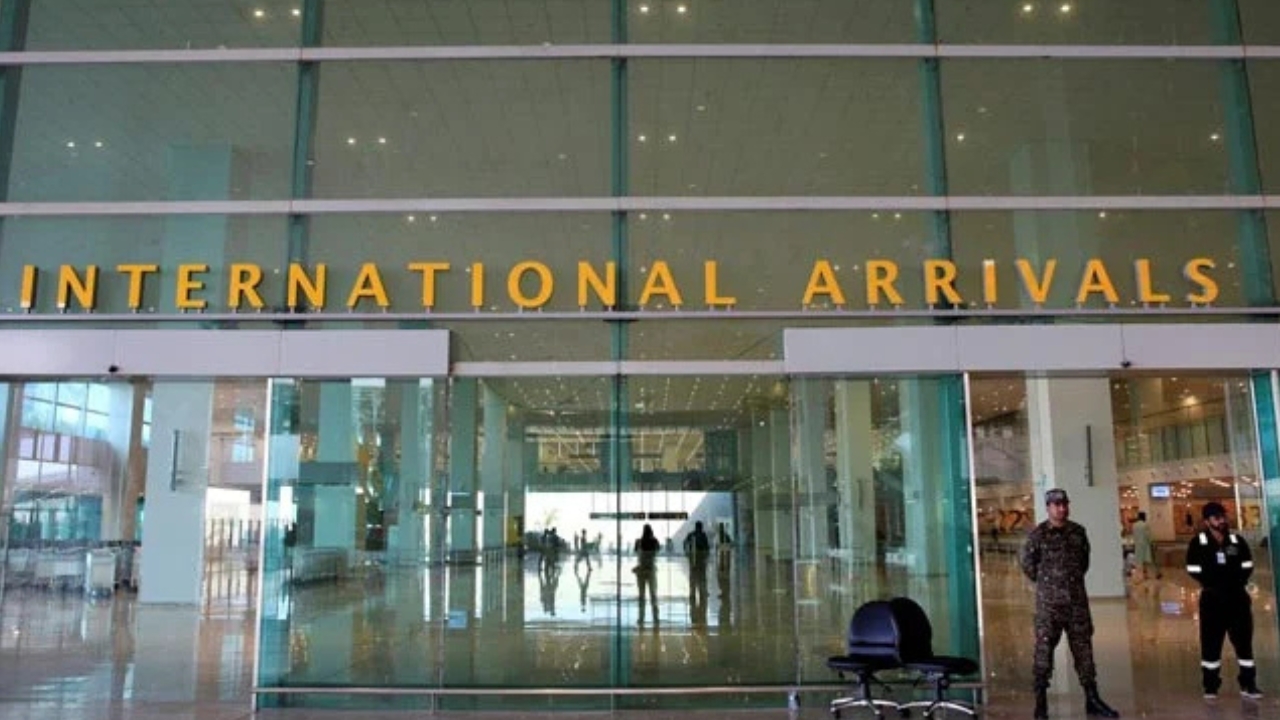
    The federal government’s Cabinet Committee on Inter-Governmental Commercial Transactions (CCoIGCT) on Thursday reportedly approved a proposal to transfer the management of Islamabad International Airport to the United Arab Emirates (UAE) under a government-to-government (G2G) arrangement.

    Reports reveal that Deputy Prime Minister and Foreign Minister Ishaq Dar chaired the CCoIGCT meeting, wherein the decision to transfer management to the UAE was reached. Petroleum Minister Ali Pervaiz Malik, Special Assistant to the Prime Minister Tariq Bajwa, and key officials from relevant government departments also attended the meeting.

    During the meeting, the committee approved the process for a negotiation team to work towards finalising the deal with the UAE. Reports suggest that the Prime Minister’s adviser on privatisation will lead the aforementioned negotiation team and will iron out the details of the deal in consultation with the privatisation, finance, defence, and law ministries. 

    As per the details, the decision to relinquish managerial control over the airport is part of the federal government’s attempt to minimise losses incurred by the state’s entities, boost these institutions’ efficiency, and attract foreign stakeholders to invest in and modernise state assets. Reports suggest that similar arrangements are also under consideration by the federal government, which could witness the outsourcing of other major airports in Pakistan.

    According to reports, Islamabad International Airport had been riddled with operational inefficiencies since its inauguration in April 2018. Moreover, the airport had also been beset by financial constraints since its inception, rationalising the authorities’ decision to hand over managerial control to the UAE.

    Lawmakers and authorities alike believe that the G2G deal with the UAE, regarding Islamabad International Airport, could restore foreign investors’ confidence within Pakistan’s aviation sector, potentially drawing in investments.  This is because authorities expect the new managerial team to bring global expertise to the table and ensure that passengers receive better services.  

    It merits a mention that the federal government did not attempt to outsource the operations of Islamabad International Airport under an open bidding process as was initially planned. The government chose to pursue a G2G model instead, possibly in anticipation of bids falling far below an acceptable amount. 

    The federal government has been dismayed similarly before, when Pakistan International Airlines’ (PIA) televised auction attempt drew in only one, abysmally low, bid of Rs10 billion against the minimum set price of Rs85 billion from a real estate developer.

  • SBP makes record Rs2.7 trillion payout to govt

    SBP makes record Rs2.7 trillion payout to govt

    The State Bank of Pakistan (SBP) has reportedly transferred a staggering Rs2.7 trillion to the government as a dividend payout for the fiscal year (FY) 2024-25. According to reports, this marks the largest-ever dividend payout by the SBP and comes amidst a 27 percent decline in the bank’s profit level.

    Data released by the SBP reveals that profits fell to just Rs2.5 trillion for FY 2024-25, which indicates that the bank paid out more money than it earned to the federal government. As per the details, the SBP paid out Rs200 billion in addition to its total profit for FY 2024-25 to Islamabad.

    The reason behind the decline in SBP’s profit is tied to the fall in the benchmark interest rate. Reports suggest that the SBP’s revenues have dropped significantly and could possibly fall further if the bank slashes interest rates again in upcoming monetary policy discussions.

    According to reports, the SBP’s transfer to the federal government is 180 percent higher than in FY 2023-24. It merits a mention that the SBP’s financial performance remained exceptional during FY 2024-25, as the central bank successfully built up its reserves through its interventions in the currency market.

    Data from reports indicates that the SBP’s holdings of foreign exchange jumped to a respectable $14.274 billion after it logged an increase of $18 million to its reserves last week. This allowed Pakistan’s liquid foreign reserves to balloon to $19.618 billion, after accounting for commercial bank reserves, which reportedly stand at $5.343 billion.

    A leading domestic securities company outlined the improvement in the SBP’s position, highlighting how import cover now rests at 2.7 months after the jump in reserves. While this sits below the 3 months of import cover considered “adequate” by the SBP, the improvement is still a welcome relief for the economy.

    The SBP was able to boost its reserves by heavily carrying out foreign exchange interventions, which reports suggest amount to $7.8 billion during the period June 2024 to May 2025. Details from reports suggest that the SBP has kept the rupee from appreciating because of its heavy dollar purchases to build reserves. 

    Another reason for the jump in reserves is linked to the increase in gold prices, which allowed the value of the SBP’s gold reserves to spike up to $6.8 billion in FY 2024-25. As per the data, SBP’s gold reserves recorded a 41 percent increase in value on a year-on-year basis.

  • Rs1.69 per unit electricity tariff cut on the cards

    Rs1.69 per unit electricity tariff cut on the cards

    Electricity users stand to obtain great financial relief from the federal government as the National Electric Power Regulatory Authority (NEPRA) will hear a petition today, seeking to reduce the power tariff by a respectable Rs1.69 per unit under the fuel cost adjustment (FCA) framework. According to reports, the Central Power Purchasing Agency (CPPA) has filed the aforementioned petition for reduced tariffs in September 2025’s bills.


    Power distribution companies (DISCOs) outlined a drop in fuel charges in July 2025, citing it as the primary reason behind their proposal for the relief. It merits a mention that the relief package has not been approved by Nepra yet, and that Nepra reserves the right to reject the petition or pass a different amount for the reduction in tariffs. 


    Reports reveal that a public hearing will commence today, wherein relevant stakeholders will determine if the amount requested by Discos for the refund is in line with the economic merit order.


    Details included within the petition reveal that domestic electricity generation during July stood at 14,123 gigawatt-hours (GWh) at an average cost of Rs7.781 per unit. This translates into the monthly fuel cost coming out to just Rs109.89 billion. 

    Reports suggest, however, that the per-unit cost of electricity once delivered to discos from power generation sources rose to Rs8.1848 per unit. This was due to a 2.95 percent transmission loss, which resulted in discos receiving only 13,666 GWh of power, down from the 14,123 GWh that were initially generated.


    The cost of Rs8.1848 per unit of electricity also includes a charge of Rs0.275 to cover for Rs3.883 billion in revenue shortfalls that Discos experienced in the previous periods. RLNG-based electricity generation proved to be a costly method of power generation, with the per unit cost standing at a staggering Rs22.03 per unit.


    However, reports suggest that residual furnace oil (RFO)- based power generation remained the least economical method of electricity generation, with a per unit cost of Rs31.053. Conversely, nuclear power plants reportedly managed to generate electricity at a fraction of the price, with the per unit cost sitting at a manageable Rs2.42 per unit. 


    According to the data, coal power plants managed to attain an electricity generation cost per unit of Rs 11.347 and Rs 14.498 for domestic and imported coal respectively. The proposal to reduce pass relief to consumers comes after (NEPRA) announced a quarterly tariff relief of Rs1.8881 per unit earlier this month for the period spanning August 2025 to October 2025.

  • ADB to finance ML-1 railway in massive step towards cross-country connectivity

    ADB to finance ML-1 railway in massive step towards cross-country connectivity

    The Asian Development Bank (ADB) has reportedly agreed to finance Pakistan’s Mainline-1 (ML-1) railway upgrade, a multibillion dollar project that has not been completed since its proposal in 2015. According to reports, this section of the rail network stretches from Karachi to Peshawar and its upgrade could significantly boost connectivity within the country. 


    As per reports, the ADB had previously stepped back from the project when Beijing objected to third-party involvement in the project’s execution and financing. According to the Economic Affairs Division, ADB President Masato Kanda met Minister for Economic Affairs Ahad Khan Cheema in Islamabad on Wednesday to discuss the project’s funding requirements, design, and timelines for implementation.


    During the meeting, the Secretary of Pakistan Railways (PR) reportedly highlighted ML-1’s importance for trade, passenger mobility, and regional connectivity. As per the details, the Minister of Economic Affairs expressed confidence that the ADB would extend phased financial support and stressed the need to expedite approvals so construction could begin at the earliest. 


    He also called for reforms in credit guarantee mechanisms to improve Pakistan’s ability to utilize financing options. The President reaffirmed the regional lender’s commitment to the project, describing it as vital for trade and regional integration. 


    According to reports, he also said that the Karachi to Rohri stretch of the railway would be prioritized in the first stage of work. The discussions concluded with the signing of a separate agreement between the ADB and the Capital Development Authority (CDA), under which the CDA will provide land in Islamabad for the development of a new ADB office building.


    It merits a mention that earlier this month, reports revealed that the ADB had entered into advanced talks to arrange $2 billion in financing for the modernisation of a 500km stretch of railway that was previously included in a Chinese-backed plan. The proposed revamp aims to modernise tracks and bridges from Karachi to Rohri near Sukkur.


    As per the details, this project will allow trains on tracks to operate at higher speeds. Reports indicate that the upgraded line will connect to a branch coming from the Reko Diq mining area at Rohri and will transport copper concentrate to port facilities.


    Reports reveal that the ADB has vested interest in the Reko Diq mining project as it committed a staggering $410 million in financing for the project earlier this week.

  • Govt levies whopping 40 percent tariff on used cars

    Govt levies whopping 40 percent tariff on used cars

    The federal government has announced a ban on the import of damaged vehicles, along with the implementation of a 40 percent levy on used car imports once commercial entry is allowed next month. According to reports, this move has been introduced to protect local automobile assemblers.

    During a joint sitting of the Senate’s finance and industry committees, Joint Secretary for Trade Policy Mohammad Ashfaq reportedly clarified that only non-accidental and good-quality vehicles would be permitted to be imported. Reports reveal that the Joint Secretary claimed that the decision followed commitments made to the International Monetary Fund (IMF), which requires Pakistan to gradually reduce the protection it offers to domestic automobile manufacturers and assemblers. 

    Under the IMF’s framework, the additional 40 percent duty is to be phased out over a period of four years, while older vehicles up to eight years old will eventually become importable. Moreover, data from reports suggests that under the IMF program, Pakistan will have to gradually reduce import tariffs from 20.2 percent to 9.7 percent over five years. In the first year, the overall rate will drop to 15.7 percent, with cuts to customs, additional, and regulatory duties aimed at slowly lowering protection for local carmakers.

    According to reports, Pakistan currently does not allow commercial imports of cars, and vehicles can only enter through transfer of residence, baggage, or gift schemes. Despite this restriction, these vehicles attract 25 percent of all vehicle purchases as consumers often prefer used imports over local models because of better features, even if the vehicles have been involved in crashes.

    As per the details, the IMF has mandated that Islamabad formally open imports of used cars up to five years old from September and remove all age restrictions on cars by the start of fiscal year (FY) 2026-27.

    Reports claim that the phasing out of import taxes in the upcoming periods will not reduce the prices of locally manufactured cars, citing domestic manufacturers’ statements concerning the high taxes levied upon the domestic automobile sector. As per reports, taxes amount to 30 to 61 percent of the price of domestically produced vehicles. 

    Toyota Indus Motors CEO Ali Asghar Jamali reportedly told lawmakers that the tax component on small cars is around 30 percent, 44 percent for Altis, 60 percent for pickups, and 61 percent for the Fortuner SUV. He added that consumers blame assemblers for high costs when the bulk is actually collected by the state.

    Committee members criticised local assemblers for charging premium rates while offering cars with fewer safety features than imported cars. The representatives of two leading automobile manufacturers admitted that most locally made cars come with just two airbags compared to six in imported models but insisted that overall quality was comparable.

  • Govt regulator signals possible end to SBP’s ban on crypto currencies

    Govt regulator signals possible end to SBP’s ban on crypto currencies

    In a bid to cement its position as a digital asset hub, the federal government’s latest addition to the crypto framework, the Pakistan Virtual Assets Regulatory Authority (PVARA), convened its inaugural board meeting on Tuesday. According to reports, the meeting was attended by senior officials, including the Governor of the State Bank of Pakistan (SBP), the chairmen of the Securities and Exchange Commission of Pakistan (SECP) and Federal Board of Revenue (FBR).


    At PVARA’s first session, officials reportedly approved the launch of a complaint portal in partnership with the National Cyber Crime Investigation Agency (NCCIA) to allow users to report issues related to virtual assets and receive timely redress. Reports reveal that members also discussed the possible withdrawal of the State Bank of Pakistan’s 2018 directive that had barred financial institutions from engaging in cryptocurrency transactions.


    If withdrawn, cryptocurrencies and digital assets would leave the state’s gray area, officially operating in full compliance with Pakistan’s legal framework. This could also result in a drop in instances of crypto scams operating with the country, namely the Peer-to-peer (P2P) scam wherein P2P traders defraud customers by reversing bank transactions knowing the latter cant turn to the authorties for help given crypto’s legal status.


    PVARA Chairman Bilal bin Saqib said that the Authority would introduce innovation along with implementing safeguards for the financial system. “Our goal is to build trust domestically and enhance Pakistan’s credibility as a forward-thinking player in the global virtual assets economy.” he remarked.


    Reports indicate that Finance Minister Muhammad Aurangzeb, who attended the meeting as a special invitee, called the regulatory authority’s creation a milestone for Pakistan’s economy. Moreover, he credited the Pakistan Crypto Council (PCC) for its early role in consultations with regulators, stakeholders, and industry experts that laid the groundwork for PVARA.


    Officials present at the meeting also outlined initial priorities, which reportedly include aligning PVARA’s operations with global Anti-Money Laundering and Counter-Terror Financing (AML/CFT) standards, finalizing the regulatory framework, and recommending independent directors with expertise in virtual assets. 


    Reports reveal that in order to speed up progress, dedicated committees will engage with international entities, draft up regulations, work on sandbox testing, and finalise taxation policies. 


    A draft licensing framework was also reportedly circulated among members for review, which is projected to be finalized soon. For its first six months, the authority is slated to meet twice a month to ensure close oversight and consistent consultation with stakeholders.

  • Hiring numbers drop as AI reduces job opportunities in Pakistan: survey

    Hiring numbers drop as AI reduces job opportunities in Pakistan: survey

    A recent survey by the Pakistan Software Houses Association (P@SHA) has shown that companies are changing the way they recruit. According to reports, the survey included 256 companies and aimed to identify gaps in skills and help guide training programs.

    The survey identified that instead of hiring large teams for specific tasks, companies now want people who can handle multiple roles and use technology, especially AI, to work faster and smarter. As per reports, Pakistan’s IT sector is growing, but the number of new hires is slowing. 

    Data from the PASHA Skill Survey has revealed that in the past year, IT firms hired 32,685 technical staff and 1,969 non-technical employees. The drop in the number of new hires is because many routine tasks that once required several people can now be completed with the help of AI tools. 

    As such, companies are reportedly leaning toward smaller teams with versatile skills, as these teams can now handle a larger workload because of the AI tools at their disposal. As per reports, professionals who can combine coding, design, and AI-driven problem solving are in high demand and in order to stay relevant and hirable in the software sector, adaptability has emerged as a key factor.

    The survey has highlighted that mid-level and senior-level professionals in .NET and Python remain top choices, while individuals well-versed in Fullstack JavaScript remain top candidates too. 

    As per the details, mobile developers with knowledge of hybrid frameworks like React Native and Flutter are especially valued at entry levels. Amazon Web Services (AWS) certifications are widely requested for fresh graduates as well, while Microsoft Azure and DevOps skills are needed at all levels.

    The survey has indicated that software testing roles are stable across experience levels, with tools like ISTQB, Selenium, and Cypress leading the way. For early-career professionals, game development and UI/UX design are growing fields. 

    Blockchain development is still small but emerging, especially on Ethereum. Relational databases such as Oracle, MySQL, and MS SQL remain essential, showing that traditional IT foundations still matter alongside new technologies.

    P@SHA Senior Vice Chairman Muhammad Umair Nizam has outlined that people are the IT industry’s most valuable asset. He stressed that investing in skills is crucial if Pakistan wants to grow technology exports. Nizam added that while AI changes the hiring landscape, it is also an opportunity to train young professionals in emerging technologies, helping them build better careers and contribute to the country’s economy.

  • Govt clears Rs100 billion in dues to Chinese power producers

    Govt clears Rs100 billion in dues to Chinese power producers

    The federal government has decided to clear a staggering Rs100 billion in outstanding payments to Chinese Independent Power Producers (IPPs) ahead of Prime Minister Shehbaz Sharif’s visit to China. According to reports, this payment is expected to slash the federal government’s dues to Chinese electricity producers by 25 percent, creating fiscal breathing space for Islamabad.

    Reports reveal that the Ministry of Finance (MoF) has issued directives for the repayment amount to be released from funds that were initially allocated to sustain the power sector subsidy for the fiscal year (FY) 2025-26. It merits a mention that Chinese IPPs have not received this amount as of publishing, as reports suggest that they will obtain this amount in a few days. 

    As per reports, the federal government has also earmarked Rs8 billion for Chinese IPPs from funds that were initially allocated for routine budgetary provisions. With the aforementioned repayments, Islamabad’s total outstanding amount to Chinese IPPs will sit close to Rs300 billion, down from the initial amount of Rs423 billion.

    For reference, the Rs423 billion figure was the value owed by the government to plants owned by the Chinese under the China-Pakistan Economic Corridor (CPEC) framework. Reports claim that Pakistan’s inability to clear the dues had been straining relations with Beijing, causing the Prime Minister to push for a partial repayment.

    Under the 2015 CPEC Energy Framework Agreement, Pakistan was obligated to settle all liabilities in the power sector in full, irrespective of recoveries from users of the national grid.

    Earlier this month, the Chief Executive Officer (CEO) of Port Qasim Electric Power Company (PQEPC) Wang Dongfang warned the federal government, indicating that the company was legally allowed to suspend plant operations if payments were not cleared. Additionally, he outlined how the company would not be liable for liquidated damages either as per Section 9.10 of the Power Purchase Agreement (PPA).

    The CEO underlined how this would “result in a lose-lose outcome for both sides”. Pakistan’s energy sector is already under stress and the closure of the plant would have only served to exacerbate the strain on the sector.

    In the face of the aforementioned developments, the Finance Ministry is reportedly negotiating a loan amount of Rs1.3 trillion from domestic commercial banks to clear circular debt owed to Chinese, private, nuclear and state-owned power plants. As per the details, discussions to secure the loan are still ongoing.