Author: Ibraheem Sohail

  • NAB claims gold mining operations costing KP trillions in revenue

    NAB claims gold mining operations costing KP trillions in revenue

    The National Accountability Bureau (NAB) has reportedly uncovered large financial irregularities in the auction and operation of placer gold mining along the Kabul and Indus rivers in Khyber Pakhtunkhwa (KP). According to reports, these mining operations may have caused losses worth trillions of rupees to the provincial government.

    For reference, placer mining is a process of extracting gold from riverbed deposits formed through natural accumulation. NAB has reportedly raised concerns over the bidding process, particularly the minimum reserve price set for gold blocks during auctions.

    NAB revealed that the minimum reserve prices at auctions were intentionally miscalculated to favour certain entities partaking in the bidding process. According to reports, NAB has indicated that leaseholders are subletting mining rights to excavator owners, charging as low as Rs500,000 per excavator for an entire week’s access to the mining site.

    As per the details, a whopping 1,500 excavators were operating in KP, generating weekly earnings of up to Rs1.05 billion. However, reports maintain that the provincial government received only a minor portion of this amount as proceeds to the provincial exchequer. 

    KP Chief Minister (CM) Ali Amin Gandapur has hailed the auction of mines as a successful endeavour, outlining the benefits of mining operations. According to KP’s CM, the recent auctions witnessed access to mines being priced at higher amounts to generate larger revenue inflows.

    Moreover, he reportedly revealed that the minimum price of gold blocks at auctions jumped from just Rs650 million to a respectable Rs1.1 billion, which translates into a 69.23 percent increase. The CM further underlined that the lease of four gold blocks at a ten-year term fetched a staggering Rs4.6 billion for the provincial exchequer. 

    As per KP’s CM, illegal mining has been rampant in the province for over 20 years, and successive governments have failed to host an auction for the sale of mining rights to firms. However, he outlined how his administration took measures to crack down on province-wide illegal mining operations.

    According to reports, he also highlighted that the venture was advertised multiple times and that details of the auction were also provided to the NAB. Defending the provincial government’s moves, the CM revealed that an officer from the NAB was present at the auction’s proceedings.

    Details from reports, however, highlight leaseholders generating trillions of rupees in revenue via illegal means, leaving the government with marginal revenue inflows.
  • World Bank greenlights $47.9 million package to improve primary education in Punjab

    World Bank greenlights $47.9 million package to improve primary education in Punjab

    In a bid to boost enrollment levels at pre-primary and primary levels in Punjab, the World Bank (WB) has approved a grant totalling $47.9 million, translating into approximately Rs135 billion. According to reports, the program will be funded by the Global Partnership for Education Fund.

    As per the details, funding could increase the level of remedial learning support available to elementary students and could improve learning outcomes for primary school students. The funds will be directed to the “Getting Results: Access and Delivery of Quality Education Services and System Transformation in Punjab Project”, which intends to boost teacher support, improve childhood education outcomes, and bring out-of-school children back into the education system. 

    Reports reveal that the project will accommodate the most vulnerable and financially weak segments of the population. The project’s aims align with those of the World Bank, namely the promotion of shared prosperity and the eradication of poverty.

    The WB has set these goals for Pakistan under the Country Partnership Framework (CPF). According to the World Bank’s Country Director for Pakistan, Punjab’s project will serve to reduce the gap in access to quality education. He believes that the project could improve human capital development outcomes and economic growth prospects “by strengthening foundational learning, enhancing system capacity, and promoting behavioral change”.

    Once in effect, the project will help four million children and three million children attending School Education Department (SED) schools. Data from reports indicates that an additional 850,000 students in the non-formal sector, along with 140,000 differently abled students enrolled in Special Education Department (SpED) schools, will benefit from the program. 

    As per reports, all students in SpED, SED, and non-formal schools will benefit from system reforms. Moreover, more than 100,000 members of schools’ staff, community members and parents are expected to undergo professional development, making them beneficiaries of the program as well. 

    Reports suggest that the WB’s Task Team Leader for the project outlined that the project was in line with the Government of Punjab’s objective of creating “a more effective, accountable, and inclusive education system”. The task team leader believed that the project would further the provincial government’s goal of improving capacity, governance and management in education.

  • ADB eyes backing railway upgrade linking Reko Diq to Karachi

    ADB eyes backing railway upgrade linking Reko Diq to Karachi

    The Asian Development Bank (ADB) has stepped in to fund upgrades to a key section of Pakistan’s railway network after repeated delays in Chinese financing put a strategic mining-linked project at risk.

    According to reports, the ADB has entered advanced talks to arrange $2 billion in financing for the modernisation of a 500km stretch of railway that was previously included in a Chinese-backed plan. The proposed revamp aims to modernise tracks and bridges from Karachi to Rohri near Sukkur.

    As per the details, this project will allow trains on tracks to operate at higher speeds. Reports indicate that the upgraded line will connect to a branch coming from the Reko Diq mining area at Rohri and will transport copper concentrate to port facilities.

    For reference, copper concentrate is a semi-processed form of copper ore, typically containing 20 to 30 percent copper. Reports indicate that the project has become urgent because the line is essential for carrying copper ore away from the Reko Diq mine.

    It merits a mention that earlier this week, the ADB committed a staggering $410 million in financing for the Reko Diq project, under development by Canada’s Barrick Mining Corp. Reports claim that the ADB’s president is expected to arrive in Islamabad next week for further talks.

    Reko Diq project director Tim Cribb disclosed to a leading international news outlet that Barrick and the federal government will jointly pursue financing for the upgrade of the western branch linking the mine to Rohri. Data from reports indicates that production at Reko Diq is scheduled for 2028, with annual output projected to sit at around 200,000 metric tons of copper concentrate.

    As one of the world’s largest undeveloped copper deposits, the mine represents Pakistan’s biggest foreign investment in recent years. A key government official warned that without railway upgrades, the country will face a crisis as it will face difficulties in transporting output from Reko Diq.

    Additionally, while referencing the Karachi-Rohri line, the government official in question also suggested that “the exhausted line will come under even more pressure” without upgrades. 

    As per reports, neither China’s foreign ministry nor Pakistan’s railway ministry provided an immediate comment on these developments. It merits a mention that the ADB has not confirmed the $2 billion financing package yet, which was initially reported upon by a leading international news outlet. However, the ADB acknowledged that discussions with Pakistan on railway sector development remain ongoing.

    The regional lender stressed that “any potential ADB assistance would be subject to comprehensive due diligence and consideration under ADB’s policies and procedures before any commitment is made,”.

  • Illegal pay raises, unlawful allowances at SECP: audit report

    Illegal pay raises, unlawful allowances at SECP: audit report

    The Auditor General of Pakistan (AGP) has raised alarm over serious irregularities in the financial dealings of the Securities and Exchange Commission of Pakistan (SECP), citing unauthorised salary hikes, illegal allowances, and billions withheld from the national treasury. According to an audit report, the SECP authorised large increases in the salaries of its chairman and commissioners without securing the required approval from the Ministry of Finance (MoF). 

    Reports reveal that the SECP was required to obtain approval from the finance division for any pay increase to be considered legal. However, the commission’s management approved the move in a Policy Board meeting on October 17, 2024. The raises were also backdated to July 1, 2023, adding an extra financial burden on the national exchequer.

    The audit calculated that the SECP’s Chairman Akif Saeed drew a salary package of a staggering Rs41.53 million during fiscal year (FY) 2023-24, translating into an astronomically high monthly payout of Rs34 lakh per month. Moreover, the report revealed that SECP commissioners received Rs35.8 million during the aforementioned period. 

    Apart from the backdated increase in salaries, reports suggest that the SECP unlawfully disbursed entertainment allowances amounting to a whopping Rs110 million to commissioners and staff. 

    The AGP noted that although the SECP Policy Board authorised these raises, it did not possess the legal authority to approve such changes. Moreover, it merits a mention that the allowance and pay hikes were made without authorisation from the finance division. 

    The audit report has recommended that the MoF either authorise the increases in salary to make them legal or reverse the unlawful changes. According to reports, the audit also found that the SECP failed to transfer approximately Rs14 billion into the Federal Consolidated Fund.

    The SECP’s failure to transfer the funds was in violation of the Public Finance Management Act of 2019, under which revenues generated by federal government entities must be deposited into the Treasury Single Account. Data from reports suggests that the withheld funds came from a range of revenue sources, including Rs4.13 billion from licensing and registration, Rs1.91 billion from specialised companies, Rs591.56 million from the insurance sector, and Rs47.77 million from the securities market.

    Reports indicate that the SECP retained a surplus balance amount of Rs6.99 billion, failing to deposit it into the Federal Consolidated Fund.

  • Relief for electric consumers in September bills

    Relief for electric consumers in September bills

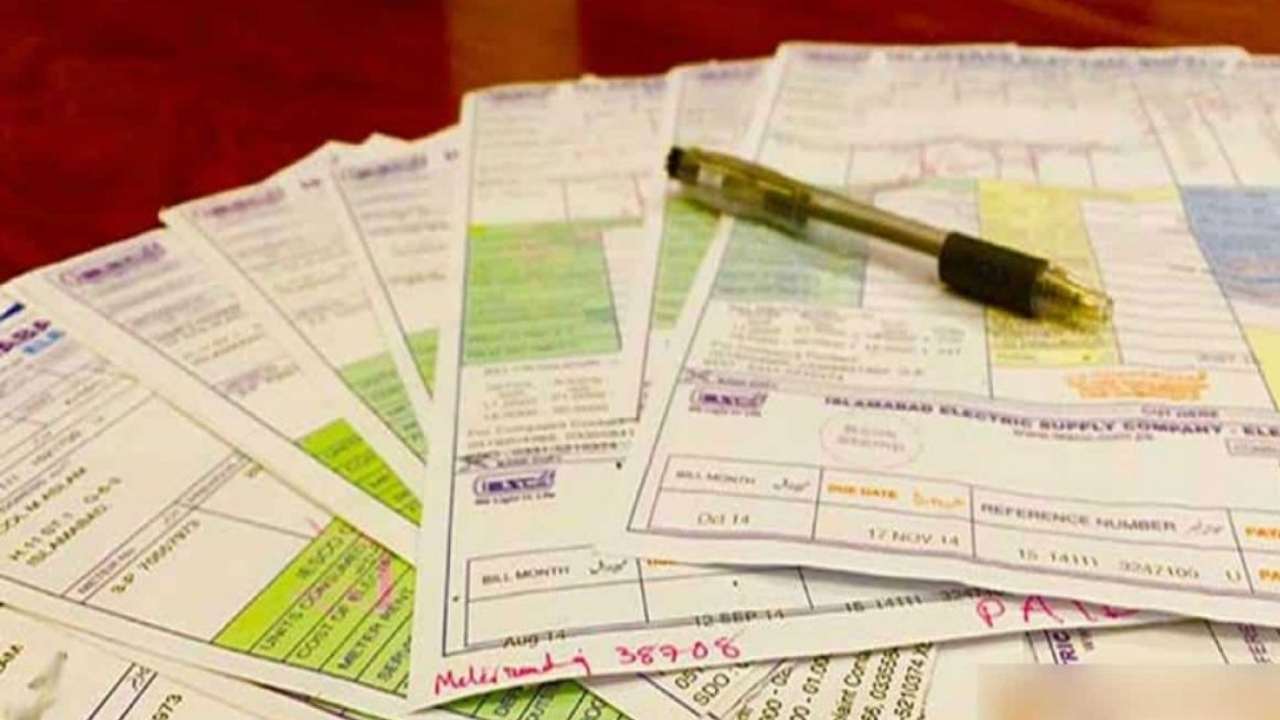
    In a bid to pass relief to electricity users, state-owned power distribution companies (Discos) have proposed a Rs1.691 per unit refund in electricity bills for September.

    According to reports, Discos have outlined a drop in fuel charges in July 2025 as the primary reason behind their proposal for the refund.

    The Central Power Purchasing Agency (CPPA) submitted the aforementioned proposal to the National Electric Power Regulatory Authority (NEPRA) as part of the monthly Fuel Charges Adjustment (FCA) framework.

    While the relief package has not yet been approved by NEPRA, reports reveal that a public hearing has been scheduled for August 28, wherein relevant stakeholders will determine if the amount requested by Discos for the refund is in line with the economic merit order.

    Details included within the petition reveal that domestic electricity generation during July stood at 14,123 gigawatt-hours (GWh) at an average cost of Rs7.781 per unit. This translates into the monthly fuel cost coming out to just Rs109.89 billion.

    Reports suggest, however, that the per-unit cost of electricity, once delivered to discos from power generation sources, rose to Rs8.1848 per unit. This was due to a 2.95 percent transmission loss, which resulted in discos receiving only 13,666 GWh of power, down from the 14,123 GWh that were initially generated.

    The cost of Rs8.1848 per unit of electricity also includes a charge of Rs0.275 to cover for Rs3.883 billion in revenue shortfalls that Discos experienced in the previous periods. RLNG-based electricity generation proved to be a costly method of power generation with the per unit cost standing at a staggering Rs22.03 per unit.

    However, reports suggest that residual furnace oil (RFO) based power generation remained the least economical method of electricity generation, with a per unit cost of Rs31.053. Conversely, nuclear power plants reportedly managed to generate electricity at a fraction of the price, with the per unit cost sitting at a manageable Rs2.42 per unit. 


    According to the data, coal power plants managed to attain an electricity generation cost per unit of Rs11.347 and Rs14.498 for domestic and imported coal respectively. The proposal to pass relief to consumers comes after (NEPRA) announced a quarterly tariff relief of Rs1.8881 per unit earlier this month, for the period spanning August 2025 to October 2025.

  • NAB returns Rs3.7 billion to victims of one of Pakistan’s largest ponzi schemes

    NAB returns Rs3.7 billion to victims of one of Pakistan’s largest ponzi schemes

    The National Accountability Bureau (NAB) held a ceremony to return funds recovered from the B4U fraud to its victims, to reverse the financial damage caused by one of Pakistan’s largest scams. According to reports, the B4U fraud was an online Ponzi scheme run by Saif-ur-Rehman and his accomplices.

    The scheme operated via shell companies and reports indicate that the conspirators managed to siphon off billions of rupees from the public. As per the details, investors were lured in with a promise of an attractive seven percent rate of return every month.

    This translates to a 125 percent annual rate of return if investors did not draw upon monthly proceeds from the scheme. This raises alarms, as B4U’s promised returns stand in stark contrast to the 11 percent interest rate offered by banks, which should have served as a warning that it was a highly risky scheme.

    Reports reveal that NAB started looking into the matter in early February 2021, after the bureau received complaints from the Securities and Exchange Commission of Pakistan (SECP) and hundreds of victims. During the investigation, authorities froze assets belonging to the conspirators. The assets in question were 56 commercial bank accounts and a multitude of properties.

    Officials from NAB gathered online data to verify the claims and damage that had been caused to affectees. Data from reports suggests that the NAB initiated a recovery process to claw back Rs7.3 billion from the masterminds behind the ponzi scheme.

    It is worth noting that the compensation will be distributed in phases. In the first phase, Rs3.7 billion will be paid out, with 10,000 victims receiving their full amount, while the remaining 7,500 will receive only 40 percent of their investment.

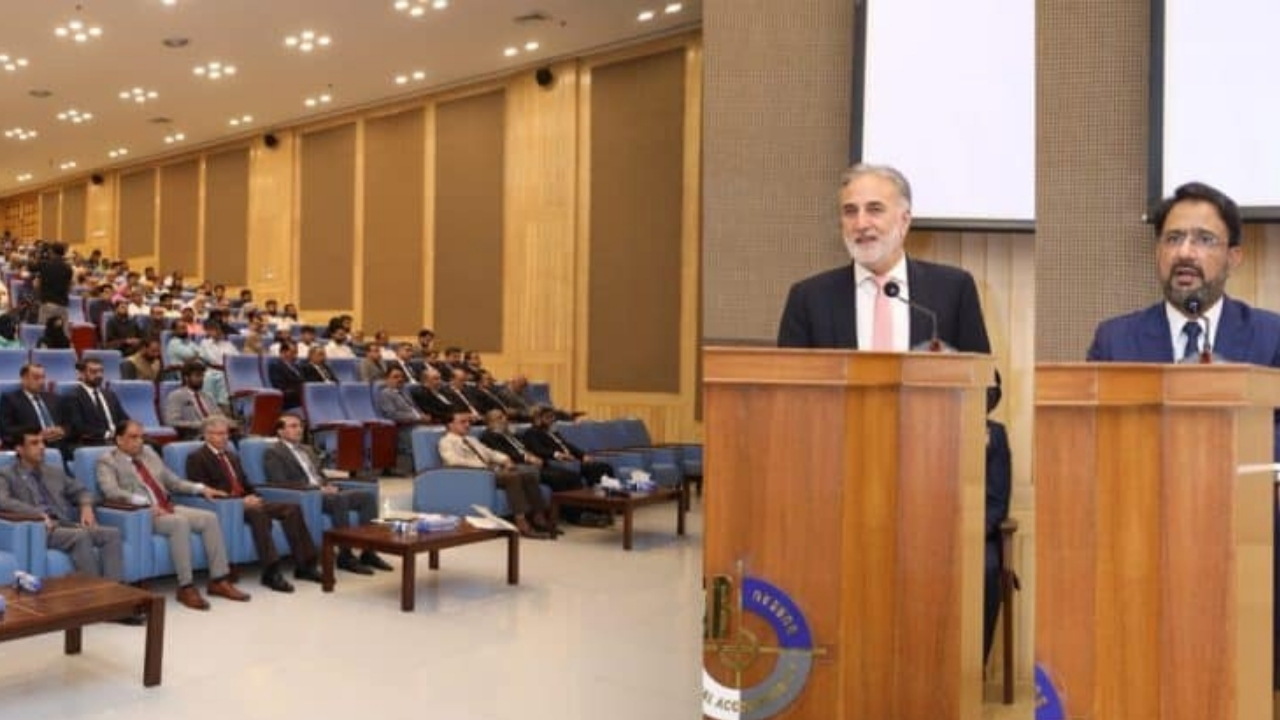
    Reports have revealed that those currently receiving only 40 percent of their investment will receive the remaining amount within six months after the liquidation of the masterminds’ properties. Addressing the attendees at the ceremony, the NAB’s chairman advised the public to remain cautious when considering investing their funds into schemes.

    As per reports, he also urged those present to invest their funds after conducting detailed inquiries into the schemes. Victims are not expected to visit NAB’s offices again to recover their remaining amount, as the bureau intends to transfer the remaining amount directly into their bank accounts.

  • Indians lose it over Pakistan’s biplomacy spree; claim army chief is head of American crypto company

    Indians lose it over Pakistan’s biplomacy spree; claim army chief is head of American crypto company

    Pakistan has made great strides since May 2025 to establish itself as a digital hub, drawing it ever closer to the pro-crypto Trump Administration. However, its improving ties with the United States, the global economic powerhouse, have sparked unfounded criticism from media figures in neighbouring India.

    An Indian media outlet has claimed that Pakistan’s improving ties with the US are linked to its dealings with World Liberty Financial (WLF), a crypto venture associated with President Donald Trump’s family. The anchor falsely labelled WLF as “a completely illegal business” and baselessly alleged that it is “used mostly by drug traffickers.”

    Moreover, the anchor in question further claimed that Field Marshal Asim Munir was the Chief Executive Officer (CEO) of WLF. Meanwhile, Indian media outlets have long alleged that the military meddles in the affairs of the Pakistan Crypto Council (PCC). 

    It merits a mention that this is not the first time Indian media has undermined Pakistan’s crypto progress by portraying it as an attempt to strengthen ties with the US. Recent reports claimed that Pakistan’s dealings with WLF and Fr8Tech on virtual assets were efforts to “curry favour with political players in Washington”.

    Moreover, the Indian media has been pushing a political narrative, baselessly suggesting that Pakistan’s military will soon take control of the country’s digital asset landscape. Some reports went as far as alleging that virtual asset bodies would be dominated by military officials, drawing a misleading parallel with the 36 active-duty officers who “reportedly” oversee the Special Investment Facilitation Council (SIFC).

    However, it merits a mention that the PCC, Strategic Bitcoin Reserve, and Pakistan Virtual Assets Regulatory Authority (PVARA) were all created by formal democratic channels, with no evidence of military involvement.

    Apart from working with Pakistan on virtual asset initiatives, the US recently lowered tariffs on imports from Pakistan to a reasonable 19 percent – one of the lowest US tariffs on exports in South Asia. Meanwhile, India faces a steep 50 percent tariff.

  • T-bill auction draws bids of Rs1.385 trillion, govt raises Rs527 billion

    T-bill auction draws bids of Rs1.385 trillion, govt raises Rs527 billion

    Pakistani banks and companies invested a staggering Rs1.385 trillion in Treasury bills (T-bills) on Wednesday, seeking to park their funds in risk-free instruments. According to reports, the federal government’s latest auction exceeded its target, raising more than the amount set to mature.

    This indicates a strong demand by the corporate sector for short-term debt. The high demand suggests that Islamabad could have slashed yield rates and potentially managed to bring in sufficient funds through the auction of T-bills.

    However, reports reveal that the federal government did not reduce the cut-off yields, suggesting that the interest rate may remain fairly anchored in the coming periods. 

    As per reports, banks have preferred longer-term 12-month bonds, which reveal their predictions about interest rates not increasing in upcoming monetary policy committee sessions. 

    Data from reports reveal that bids worth Rs556.5 billion came for 12-month T-bills, with the federal government raising a whopping Rs275.7 billion through the 12-month maturity period. Islamabad also managed to raise Rs73 billion, Rs41.3 billion, and Rs23 billion from one, three and six-month bills, respectively.

    As per the details, the auction managed to receive total bids of Rs1.385 trillion against the Rs450 billion target, exceeding by over 207 percent. The government reportedly accepted Rs527 billion against Rs445 billion maturing this period. 

    For reference, the maturing amount refers to the sum the government must repay to previous investors in T-bills during this period. The strong demand underlined banks’ and financial institutions’ reliance on T-bills as secure short-term investments.

    According to reports, banks continue to invest larger funds in government securities per annum as Islamabad’s fiscal needs grow. In the budget for fiscal year (FY) 2024-25, interest payments alone constituted half of the expenditure from the Rs18 trillion budget.

    Details from reports suggest that the government is likely to rely extensively on bank borrowing during FY 2025-26. Even with the Federal Board of Revenue (FBR) exceeding revenue targets for the first month of FY 2025-26, experts predict that collections could fall short of targets, causing the government to borrow funds to plug the budget deficit.

    Revenue collection has reportedly improved in recent years; however, Islamabad still reports that citizens and businesses alike continue to evade taxes.

  • Rains strangle karachi’s industries, choke exports

    Rains strangle karachi’s industries, choke exports

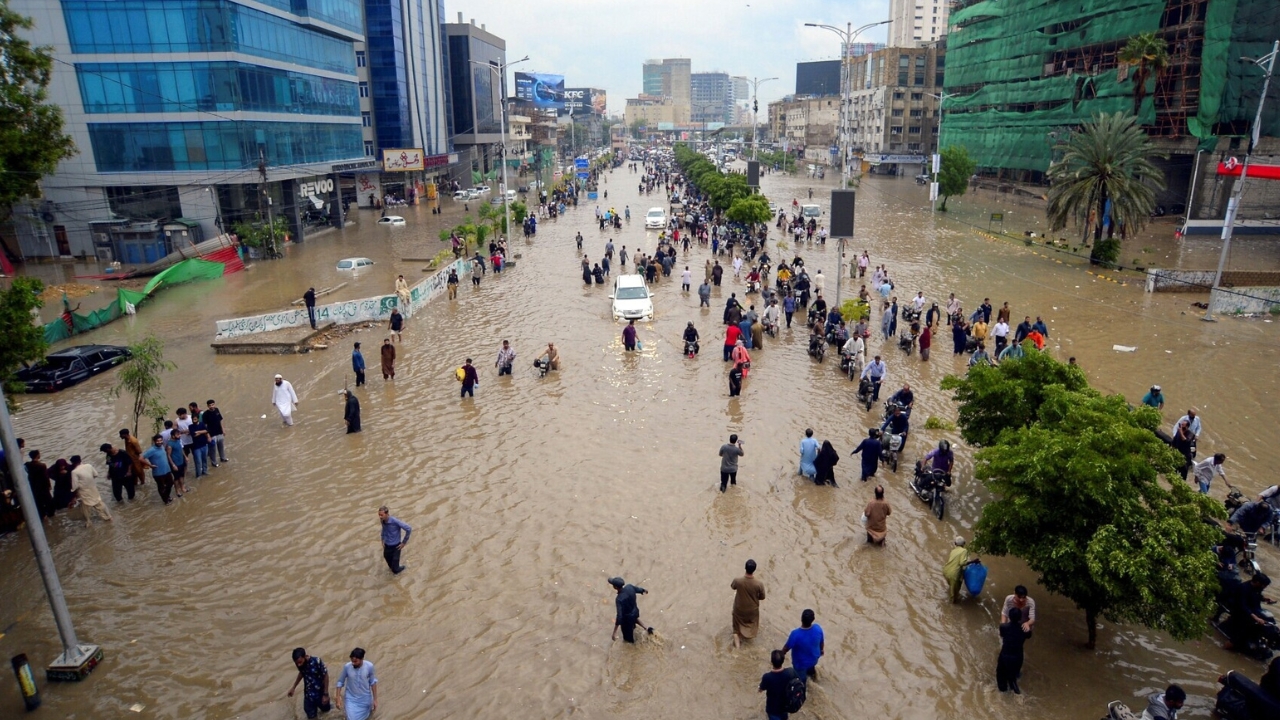
    Heavy rains on Tuesday crippled Karachi’s industrial and commercial activities, with flooding, road closures, and transport shortages causing factory operations to grind to a halt. According to reports, the heavy rainfall has also caused delays in export shipments.

    Factories in Karachi’s industrial sector usually run on three shifts per day, but were forced to suspend afternoon and night operations after heavy downpours submerged key roads, leaving workers unable to commute to their respective factories. As per the Korangi Association of Trade and Industry’s (KATI) President, up to 30 percent of workers in over 4,000 industries in Korangi were absent on Tuesday.  

    Data from reports suggests that productivity plummeted significantly, as workers were forced to leave early. According to the KATI’s President, the downpours caused productivity to fall by a staggering 50 percent.

    Reports reveal that the President of the Site Association of Industry (SAI) outlined that while production remained normal in over 3,500 units, workers faced significant hurdles commuting back to their residences as gutters overflowed and roads flooded. 

    The SAI’s President criticised authorities for failing to manage drainage despite Karachi’s importance to the economy, noting that female workers were especially hard hit because of the reported lack of public transport.

    Attendance rates at over 1,000 factories in the F.B. Area reportedly dropped by 25 percent. As per reports, the F.B. Area Association of Trade and Industry’s (FBATI) President has warned that industrial output may be “severely impacted” if rains continue with the same intensity for an additional two to three days.

    As per the details, the North Karachi Association of Trade and Industry (NKATI) reported the sharpest disruption, with 80 percent of the 4,500 factories present in the region halting production due to the absence of workers. The NKATI’s President cautioned that since 70 percent of the area’s industries are export-oriented, the cancellation of second and third shifts could result in severe disruptions.

    The downpour also reportedly battered the city’s retail sector. Trading in the old city markets, home to more than 10,000 shops, was negligible as shopkeepers either stayed home or left early. Reports reveal that wholesale vegetable markets had low customer turnout, while incoming supplies from northern Pakistan faced delays.

    With forecasts predicting more rain, reports suggest that Karachi’s industries and markets could face prolonged disruptions, affecting production and exports.

  • Govt greenlights Rs5.8 billion relief package to assist flood affectees

    Govt greenlights Rs5.8 billion relief package to assist flood affectees

    Following the widespread devastation from ongoing floods, the Economic Coordination Committee (ECC) of the Cabinet on Tuesday approved a proposal by the National Disaster Management Authority (NDMA) to provide relief to the affectees. The meeting, chaired by Finance Minister Muhammad Aurangzeb, has reviewed development and economic matters.

    Recent monsoon rains, coupled with cloudbursts, have resulted in multiple instances of flash floods, claiming the lives of approximately 670 individuals. In light of the situation, the ECC has approved a relief package totalling Rs5.8 billion in support, with the Finance Division receiving directives to release Rs4 billion from the package immediately.

    It merits a mention that the floods have also severely damaged key infrastructure. As per reports, the destruction caused by floodwater triggered a major internet outage from Tuesday night until early Wednesday morning, with connectivity dropping to nearly 20 percent of usual levels.

    Moreover, the federal government may have to allocate additional funds to assist victims of the floods, as India has reportedly released additional water into the Sutlej River.