Author: Ibraheem Sohail

  • Pakistan’s trade deficit surges to $3.4 billion in April

    Pakistan’s trade deficit surges to $3.4 billion in April

    Pakistan’s economic woes continue as the economy witnessed its trade deficit grow to a staggering $3.4 billion in April 2025. According to reports, economic experts believe that Pakistan’s overall current account balance may close in the red for fiscal year (FY) 2024-25, as Pakistan runs persistently high trade deficits.

    Macroeconomic indicators exhibited signs of revival in March 2025 as Pakistan logged its largest current account surplus of $1.2 billion. For reference, the current account considers net export income, net income from abroad and net current transfers.

    Cash-strapped Pakistan was only able to achieve a surplus based on the net current transfers component of the current account, which considers remittance inflows into the country. According to reports, Pakistan has witnessed a significant growth in remittance inflows, largely because of 2.4 million migrating out of the country over the last three years.

    Data from the Pakistan Bureau of Statistics (PBS) paints an alarming picture, revealing falling export revenues alongside growing import bills. Pakistan’s trade deficit surged to a staggering $3.39 billion, translating into a month-on-month (MoM) deficit growth of 55.2 percent.

    The widening of the trade deficit is likely to put significant depreciatory pressure on the rupee, resulting in a subsequent pressure on the State Bank of Pakistan’s (SBP) foreign reserves. This is because the SBP follows a managed float regime, intervening in the foreign exchange market to prevent the rupee from straying beyond its permitted exchange rate band.

    As per data from the PBS, Pakistan’s import bill grew to a whopping $5.53 billion, indicating that the import bill had recorded a 14.52 percent growth on a MoM basis. Export figures in April 2025, on the other hand, witnessed a 19.05 percent MoM drop, falling to just $2.14 billion.

    Moreover, this trend of rising imports and falling exports is present in year-on-year (YoY) trade statistics as well. Imports have logged a 14.09 percent YoY increase, with exports witnessing 8.93 percent fall on a YoY basis. 

    Aggregated data from the PBS indicates that the trade deficit for the first ten months of FY 2024-25 has ballooned to a colossal $21.35 billion. The breakdown of Pakistan’s trade statistics over the aforementioned period has revealed that total exports stand at $26.86 billion, vastly outweighed by imports amounting to $48.21 billion.

    Details from reports suggest that the higher import bill signifies a revival of the economy, as the domestic economy demands more petroleum products. The surge in petroleum demand comes on the back of higher vehicle sales due to lower interest rates.

  • PSX rebounds as Pak-India tensions ease, interest rates expected to fall

    PSX rebounds as Pak-India tensions ease, interest rates expected to fall

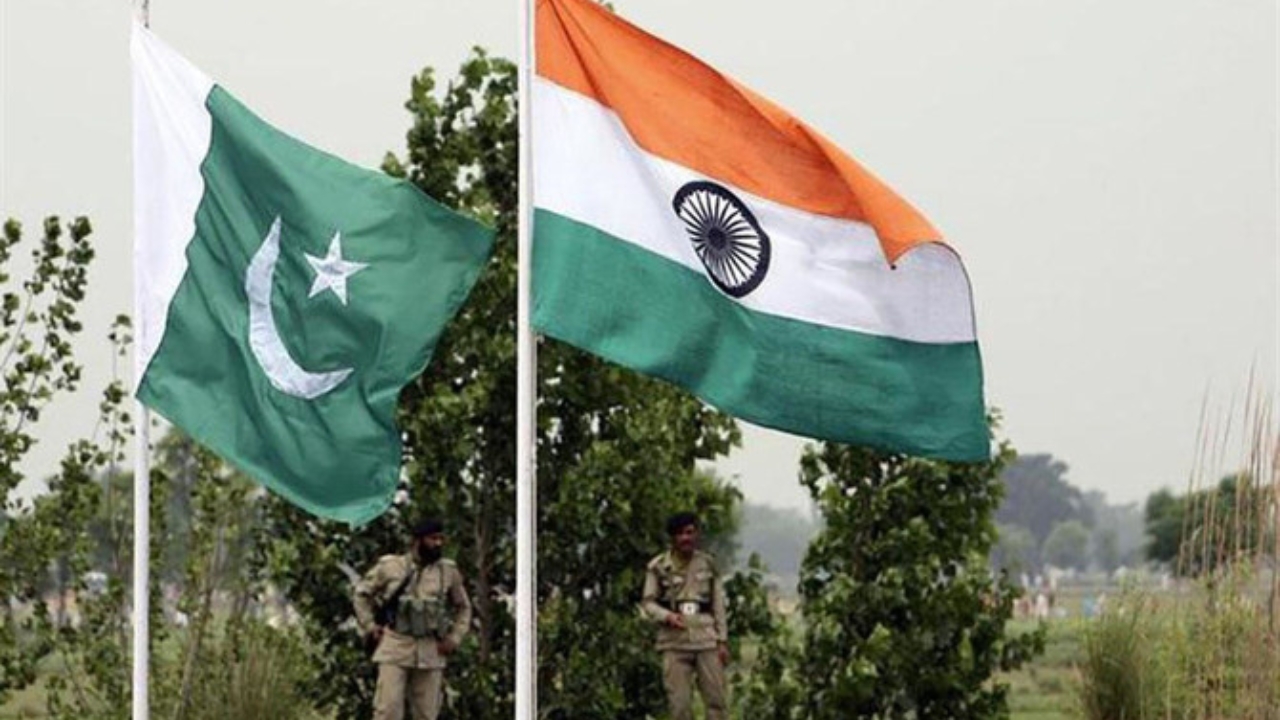
    The Pakistan Stock Exchange (PSX) has recorded a respectable bull run as the benchmark index of the exchange, the KSE-100, witnessed an early rally that maintained its momentum throughout the day. According to reports, the rebound was driven by a surge in investor confidence amid signs that tensions between Pakistan and India may soon de-escalate.

    The US State Department revealed that Secretary of State Marco Rubio was in contact with both Prime Minister Shehbaz Sharif and Indian Foreign Minister Subrahmanyam Jaishankar on Wednesday to smooth things over between both nuclear-armed nations. With Thursday, May 1 being a public holiday marking Labour Day, trading at the PSX remained suspended; however, the effects of the de-escalation were felt on Friday.  

    The KSE-100 index hit an intraday low of 112,820.07 points at approximately 9:38 AM, after which bullish sentiments took hold of the market, causing the index to rally to an intraday high of 114,546.87 points.

    However, a marginal drop was witnessed in the index before trading hours ended, causing it to close the day at a respectable 114,113.93 points. For reference, the KSE-100 closed at 111,326.57 points on Wednesday, after which the index recorded a growth of 2.50 percent during trading hours on Friday, allowing for a staggering 2,787.36 point rise. 

    Every single index remained in the green with the All-share index (ALLSHR) experiencing a 2.18 percent growth rate, which translates into a 1,516.25 point gain for the index. Unlike the KSE-100, which tracks the performance of the 100 largest and most liquid companies, the ALLSHR index records the performance of all publicly listed companies on the PSX.

    The PSX has displayed great average returns for its investors over the past year, and with the International Monetary Fund’s (IMF) board approval scheduled for May 9, indexes on the exchange continue to climb. 

    Moreover, investors expect a policy rate cut ranging from 50 basis points (bps) to 100 bps. A drop in interest rates could allow investors to pour in a greater amount of funds into the domestic capital market, owing to lower rates offered by local financial markets.

    Data from the PSX reveals that the ALLSHR index has shot up by a staggering 53.71 percent over just one year, with the KSE-100 recording an even greater rise of 61.50 percent over a one-year period – a growth rate which many would categorise as nothing short of meteoric.

    A vast array of companies witnessed a rise in share prices with Kohinoor Power Company Limited (KOHP) and Dewan Mushtaq Textile Mills Limited (DMTM) winning big during trading hours, to the tune of growth rates that sat at 16.07 percent (KOHP) and 14.37 percent (DMTM). 

    However, not every publicly listed stock witnessed an improvement, as many companies witnessed sharp declines. Of these declining companies, the one that fared the worst during intra-day trading was The Pakistan General Insurance Co. Ltd (PKGI), which posted a 10.07 percent decline in its position.

    Trading volume of regular stocks stood at an impressive 372,363,708 shares, translating into a total value of over 23.2 billion rupees.

  • Pakistan’s trade deficit with Middle East hits $10.5 billion over fuel imports

    Pakistan’s trade deficit with Middle East hits $10.5 billion over fuel imports

    Pakistan’s economic woes continue as the country’s trade deficit with the Middle East has widened by 10.11 percent to reach a staggering $10.502 billion in the first nine months of fiscal year (FY) 2024-25. According to data compiled by the State Bank of Pakistan (SBP), Pakistan’s trade deficit with the Middle East has worsened with the sharp rise in the import of petroleum products, accompanied by paltry export growth.

    The surge in petroleum consumption has reportedly caused concern to lawmakers in Islamabad, as high imports hurt Pakistan’s current account balance. Despite authorities raising the petroleum development levy significantly, domestic consumption remains high, which positively impacts the demand for imported fuel.

    As per reports, crude oil imports rose by a whopping 14.61 percent during the first eight months of FY 2024-25 compared to the same period in FY 2023-24. The demand for petroleum shrank in the previous FY because of a surge in domestic prices. Reports indicate that this allowed for Pakistan’s trade balance with the Middle East to improve by 20.47 percent in FY 2023-24.

    Compared to import growth, exports have grown sluggish, reportedly increasing by 4.47 percent to settle at $2.381 billion in the first nine months of FY 2024-25.

    Analysts have outlined how export growth this FY to the region has been poor, comparing it to the whopping 35.23 percent export growth Pakistan was able to achieve in FY 2023-24.

    Lawmakers intend to plug the trade gap and recently inked an agreement with the Gulf Cooperation Council (GCC) to boost commercial activities. Details from reports indicate that the agreement will serve to remove barriers to free trade.

    This could prove to be beneficial for exporters as Pakistani goods are sought after in the Middle East. One of the primary factors driving demand for Pakistani goods is the large expatriate community that lives in countries such as Saudi Arabia, Qatar and the UAE.

    Experts believe that if domestic fuel demand remains high, the federal government could attempt to raise the levy to curb excessive imports. Alternatively, Pakistan could consider the exploration and extraction of its own petroleum, which may significantly improve the cash-strapped economy’s balance of trade.

    However, in the short run, the government can only rely on measures such as import controls and higher taxation levels to ensure that the trade deficit with the Middle East does not grow sizably.

  • KIA slashes, Suzuki raises vehicle prices

    KIA slashes, Suzuki raises vehicle prices

    Carmakers in Pakistan have taken opposing routes on pricing, as Kia has announced major temporary price reductions starting May 1, while Suzuki has raised rates across several of its car models.

    Lucky Motor Corporation has dropped the prices of three Kia Sportage models. Data from reports indicates that the L Alpha is now priced at Rs8.499 million after a cut of Rs1 million. The L FWD has been reduced by Rs1.82 million to Rs9.999 million, while the L HEV sees the biggest drop of Rs1.851 million, bringing the price down to Rs10.999 million. According to the company, these cuts are temporary, but no end date has been announced.

    Meanwhile, Suzuki has recently increased its prices for multiple variants, despite no major changes in taxes or duties on automobiles. The Swift GL MT now costs Rs4.416 million, up by Rs80,000. Cultus variants have also increased, with the VXR now costing Rs4.230 million after witnessing a staggering rise of Rs372,000. 

    The Cultus VXL and AGS models have both gone up by Rs72,000 and are now priced at Rs4.316 million and Rs4.618 million respectively. The aforementioned price hikes were announced by the company on April 26 and followed earlier increases made by the company in February.

    Suzuki’s decision to raise prices in rapid succession could result in a major loss of market share. Given the price points, potential customers may consider opting for the Kia Picanto 1.0 AT, which has an on-road price tag of approximately Rs4 million. 

    Moreover, with Kia offering sharp reductions on its expensive variants, the company could gain a stronger hold on the domestic automotive industry. According to reporters, overall production costs are falling amid stable exchange rates, and with the SBP slashing interest rates, the company’s profit margins may not take a hit, as a drop in prices is likely to boost sales volume.

    The more accessible pricing may attract buyers who have held back on purchases in recent months amid affordability concerns. Moreover, the lower interest rates benefit not just automotive companies but also their customers, who can now purchase cars using more economical financing schemes.

    In another development, Bolan Casting Ltd, which supplies parts to the tractor industry, has paused its production from April 28 to May 9. As per reports, the company cited a sharp drop in orders as the reason for the temporary shutdown.

  • Dealers urge govt to raise profit margins on petrol, diesel

    Dealers urge govt to raise profit margins on petrol, diesel

    Petroleum dealers have urged the government to honour the long-overdue promise of raising their profit margins on petrol and diesel sales by Rs1.40 to Rs2.20 per litre. According to reports, this commitment has remained unfulfilled since the start of the current fiscal year (FY).

    This request was made during a session of the National Assembly’s Standing Committee on Petroleum, chaired by Syed Mustafa Shah. The committee called upon the Petroleum Division, the Oil and Gas Regulatory Authority (Ogra), and the Pakistan Petroleum Dealers Association (PPDA) to submit comprehensive reports so that a resolution could be reached.

    The PPDA voiced its dissatisfaction over the delay, highlighting that in September 2023, the Economic Coordination Committee (ECC) had approved a phased margin increase of Rs1.64 per litre for fuel station owners and Rs1.87 per litre for oil marketing firms. According to reports, the aforementioned calculations were made with Pakistan State Oil’s cost structure in mind.

    Moreover, the government had reportedly pledged to adjust these margins annually in line with inflation. However, inflation has remained subdued, with inflation levels dropping to 0.7 percent in March 2025.

    Reports indicate that earlier this year, dealers proposed raising their margins by Rs2.20 per litre, while Ogra suggested a smaller hike of Rs1.40 per litre on the current margins of Rs7.87 for dealers and Rs8.64 for marketing firms. Despite these recommendations, no official notification has been issued throughout FY 2024-25.

    During discussions, the idea of transforming CNG outlets into petrol stations was briefly mentioned. Petroleum Minister Ali Pervaiz Malik responded that such conversions could be considered individually within the scope of current energy policies, which would not be immediately revised. Reports suggest that the committee postponed further discussions on this matter to a later meeting.

    Responding to inquiries about fuel quality and pricing concerns, the minister acknowledged challenges linked to GST and LPG profit structures. He assured the committee that Ogra was responsible for oversight in these areas and that relevant matters would be addressed in the upcoming national budget.

    Ogra Chairman Masroor Khan noted that petroleum product prices are reviewed bi-monthly, subject to government approval, and that the state-run PSO currently fulfils about half of the country’s fuel demand.

  • Crypto diplomacy peaks as Trump Jr follows Pak council’s Bilal Bin Saqib on X

    Crypto diplomacy peaks as Trump Jr follows Pak council’s Bilal Bin Saqib on X

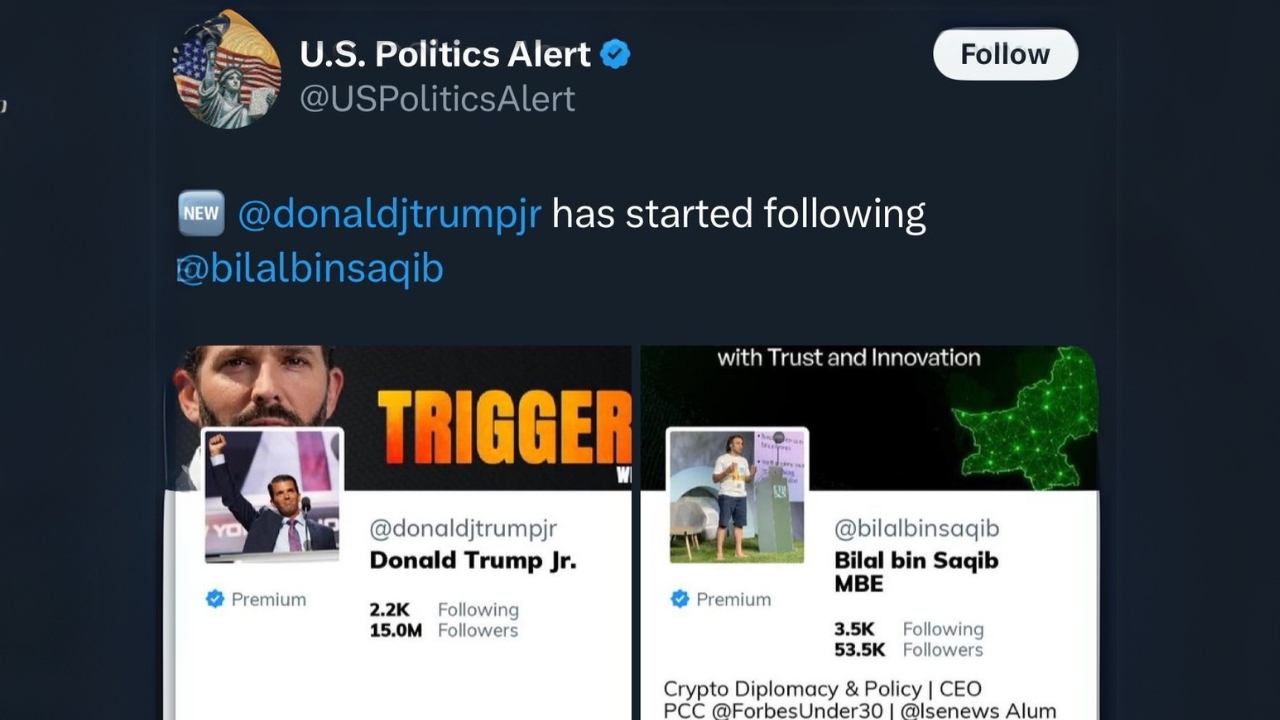
    Following a series of high-level meetings between Pakistan and United States (US) digital finance stakeholders, Donald Trump Jr has followed Pakistan Crypto Council (PCC) CEO Bilal Bin Saqib on X. The gesture comes on the heels of a landmark partnership between the PCC and World Liberty Financial (WLF). 


    As per reports, President Donald Trump and some of his closest relatives collectively hold a 60 percent stake in the WLF, which is a decentralised finance platform. The partnership was formalised during a high-level meeting in Islamabad, and if successful, could accelerate blockchain innovation, support the adoption of decentralised finance (DeFi), and promote sustainable use of digital assets across Pakistan.


    Meetings between the PCC and WLF concluded that core initiatives that will fall under the partnership include regulatory sandboxes for blockchain-based financial products, real-world asset tokenisation, stablecoin rails for remittances and trade, and advisory services on global digital finance infrastructure.


    The PCC aims to reposition Pakistan as an innovation-friendly, tech-forward economy. Senior officials from the council such as Bilal bin Saqib intend to fast-track blockchain policy, while ensuring compliance with international standards. Donald Trump Jr is not the only individual keen in partnering up with Pakistan, as Binance’s co-founder Changpeng Zhao (CZ) also recently joined the PCC, lending credibility to the country’s crypto initiatives on the global stage.  


    Analysts have noted how all of this progress has taken place within just five weeks of the Council’s formation — signaling the speed and scale of transformation that effective leadership can deliver. The aforementioned groundbreaking partnerships have allowed the PCC to garner global attention, as it earns Pakistan international recognition as a serious player in crypto diplomacy.


    The WLF’s partnership with the PCC and Donald Trump Jr’s subsequent decision to follow Saqib is a symbolic yet significant moment — representing the growing interest among US crypto entrepreneurs and tech investors in Pakistan’s digital future. 


    This chapter of U.S.–Pakistan cooperation marks more than a moment — it signals a new direction; one where businesses are powered by blockchain, and innovation becomes the bridge between nations.

  • Bloodbath at PSX amid rising Pak-India tensions

    Bloodbath at PSX amid rising Pak-India tensions

    Bearish sentiments gripped investors on Wednesday as the Pakistan Stock Exchange (PSX) recorded a sharp decline owing to escalating tensions with India. Data from the PSX suggests that the KSE-100, the benchmark index of the PSX, declined by over 3,500 points during intraday trading.

    The market witnessed a sharp sell-off at 9:30 AM that gradually intensified over time, causing the KSE-100 index to witness a 3,646.17-point drop, which translates into a 3.17 percent decline. This caused the index to fall to 111,226.01 points, with many anticipating the freefall to continue.

    Pakistani stock brokers see red pixels across their screens as all 17 indices remain in the red. At the height of the fall, the All Share (ALLSHR) index fell to 69,482.98 points after starting the session at 71,509.46 points. Unlike the KSE-100, which tracks the performance of the 100 largest and most liquid companies, the ALLSHR index records the performance of all publicly listed companies on the PSX.

    However, the damage isn’t limited to Pakistan, as the National Stock Exchange of India Limited (NSE) is also subdued. Reports indicate that a “bearish bias” is forming in India’s capital market, as the Put-Call ratio has fallen from 1.17 to 0.84.

    According to a senior official at a reputable brokerage, the PSX is in freefall as a full-scale conflict with India could erupt in the coming days. These claims are not unsubstantiated, however, as Information Minister Attaullah Tarar announced the possibility of India pursuing military action against Pakistan.

    This has severely shaken investor confidence, who continue to pull their funds out of the PSX. According to reports, the director of research at one of Pakistan’s largest brokerages outlined how fears have grown after the information minister’s press briefing.

    A multitude of analysts believe that investor confidence remains shaky, especially after the information Minister revealed that India could attack Pakistan “within the next 24 to 36 hours”.  If the anticipated attack does not occur, the PSX could witness a revival; however, analysts speculate that investors will likely make investment decisions based on the state of Pak-India relations at the time.

    According to reports, India has granted “operational freedom” to its military in response to the Pahalgam attack. For reference, the Pahalgam attack took place in Indian occupied Kashmir (IOK) – which Indian authorities believe was supported by Pakistan.

  • PSX climbs as investors anticipate good news from IMF

    PSX climbs as investors anticipate good news from IMF

    The Pakistan Stock Exchange (PSX) closed in the green owing to a bull run triggered by an announcement from the International Monetary Fund (IMF) regarding its Executive Board meeting with Pakistani officials.

    As per reports, the meeting could unlock a $1.3 billion disbursement for Pakistan under the Extended Fund Facility (EFF), along with a new 28-month agreement under the Resilience and Sustainability Facility. 

    Trading hours began with a selloff, causing the KSE-100, the benchmark index of the PSX, to reach an intraday low of 112,935.56 points at approximately 11:17 AM. 

    Data from the PSX reveals that the KSE-100 index then witnessed a rally, causing the market to hit an intraday high of 115,040.58 points before closing at 114,872.18 points.

    For reference, the KSE-100 closed at 114,063.90 points on Monday, after which the index recorded a growth of 0.71 percent during trading hours on Tuesday, allowing for an 808.28 point rise.

    The index continued to climb despite border tensions escalating with neighbouring India. While a minor sell-off was noted as news of Pakistan shooting down an Indian quadcopter broke, investors seemed eager to park their funds into the PSX. 

    Of the 17 indices on the PSX, 16 remained in the green, with the UPP9 index being the only index in the red. The index shrank marginally by 0.01 percent, which translates into a 4.19-point decline. 

    The Allshare (ALLSHR) index climbed by 346.22 points, which translates into a growth of 0.49 percent. Unlike the KSE-100, which tracks the performance of the 100 largest and most liquid companies, the ALLSHR index records the performance of all publicly listed companies on the PSX.

    While recent global and regional geopolitical issues have caused a pullback in the PSX in recent weeks, data from the exchange reveals that the ALLSHR index has shot up by a staggering 52.44 percent over just one year, with the KSE-100 recording an even greater rise of 60.22 percent over a one-year period.

    A vast array of companies witnessed a rise in share prices with Tri-Star Mutual Fund Limited (TSMF) and Apna Microfinance Bank Limited (AMBL) winning big, to the tune of growth rates that sat at 10.59 percent (TSMF) and 10.41 percent (AMBL). 

    However, not every publicly listed stock witnessed an improvement, as many companies witnessed sharp declines. Of these declining companies, the one that fared the worst during intra-day trading was First Capital Equities Limited (FCEL), which posted a 13.62 percent decline in its position.

    PSX climbs as investors anticipate good news from IMF

    The trading volume of regular stocks stood at an impressive 409,933,985 shares, translating to a total value of over 29 billion rupees.

  • SBP pins weak growth on falling productivity

    SBP pins weak growth on falling productivity

    The State Bank of Pakistan stays firm on its projections, revealing that real Gross Domestic Product (GDP) growth rate will range from 2.5 to 3.5 percent during fiscal year (FY) 2024-25. According to reports, the SBP expects macroeconomic indicators pertaining to growth to move in a positive direction owing to an uptick in economic activity in the second half of the current FY.

    However, international creditors have revised their growth projections downward. Data from the World Bank indicates that Pakistan’s economy is expected to grow by 2.7 percent during the current FY, falling marginally from earlier estimations of a 2.8 percent growth rate.

    However, the International Monetary Fund’s (IMF) growth revisions have been more pronounced as the lender expects real GDP growth to sit at just 2.6 percent. This is a large deviation from the growth rate the IMF originally anticipated, which stood at a respectable three percent.

    In the SBP’s biannual report, The State of Pakistan’s Economy, the central bank has pinned the blame for sustainable economic growth on falling productivity levels. According to the report, the drop in productivity has negatively impacted the cash-strapped country’s “economic competitiveness”. 

    The report outlined abysmally low GDP per worker figures, which, as per reports, were below its counterparts. The figure above is often used by economists to roughly gauge the average productivity of workers in the economy.  

    Pakistan’s GDP per capita values have not fared well either, as Trading Economics projects per capita GDP to be $1717 for 2025. For reference, India’s GDP per capita was estimated at $2,377 during the same period.

    The SBP’s report conceded that there is a greater risk of weaker real GDP growth rates, which may sit closer to the 2.5 percent value of the 2.5 to 3 percent growth band predicted by the SBP.

    According to data from reports, domestic industries are struggling, especially the Large-Scale Manufacturing sector, which recorded a staggering 1.9 percent decline during the first eight months of FY 2024-25. Coupled with other sectors shrinking, the SBP has highlighted a paltry growth in employment levels, spelling bad news for job seekers.

    The cotton sector has witnessed a 28 percent fall, which spells bad news for a textile exporting nation, as cotton is a major input material in textiles. The decline in cotton production could stem from the domestic textile sector’s increasing reliance on imported cotton. 

    However, the federal government has enacted policies to make domestically produced cotton as competitive as imported cotton to boost productivity.

  • Former finance minister warns of unsustainable policies, low growth

    Former finance minister warns of unsustainable policies, low growth

    Former finance minister and economist Dr Hafeez Pasha described the State Bank of Pakistan’s (SBP) foreign exchange interventions as unsustainable in an interview on private television. He explained that the SBP purchases dollars entering the system through informal money transfer systems to ensure that the rupee does not depreciate too much against the dollar, while also building foreign reserves.

    Currently, the rupee operates under a managed float regime relative to the  dollar, effectively trading within a range of Rs278 to Rs280 per dollar. For reference, a managed float regime is a system in which a currency’s value is loosely pegged to another currency, allowing it to fluctuate within set limits.

    However, Pasha has outlined how this will serve to the detriment of domestic exports as artificially inflating the value of the rupee reduces export competitiveness. If the SBP moves from a managed float regime to a purely floating system, the rupee may depreciate significantly. Experts, on the other hand, believe that it could cause export growth to skyrocket.

    He further critiqued the policy against exporters, highlighting how they now face a 29 percent income tax, which sat at just one percent prior to the International Monetary Fund’s (IMF) austerity measures. Reports quoting Pasha indicate that the government has rescinded its support for exporters while countries such as Bangladesh and India are granting tax cuts to their exporters. 

    He outlined how economic growth will likely remain below two percent for fiscal year (FY) 2024-25 despite the federal government’s efforts. However, projections from the World Bank indicate that Pakistan’s economy is expected to grow by 2.7 percent during the current FY.

    According to Pasha, the reason for the abysmally low growth rate lies in the shrinking of sectors such as large-scale manufacturing and cotton. As per reports, cotton production has witnessed a 28 percent fall, which spells bad news for a textile exporting nation, as cotton is a major input material in textiles. 

    The decline in cotton production could stem from the domestic textile sector’s increasing reliance on imported cotton. Recent reports indicate that millers and ginners were opting to buy imported cotton, which, up until recently, would arrive duty-free into the country, while local cotton farmers were subjected to an 18 per cent General Sales Tax (GST).

    However, reports from April 2025 suggest that the federal government withdrew the GST on the sale of domestically produced cotton. Analysts believe that the government will have to reshuffle its policies to witness economic revival.