Author: Ibraheem Sohail

  • Exporters eye $100 million mango exports despite climate hurdles

    Exporters eye $100 million mango exports despite climate hurdles

    Pakistani exporters are targeting to ship off 125,000 tons of mangoes this season. Shipments will reportedly begin from May 25 and are expected to generate large foreign exchange inflows for cash-strapped Pakistan.

    According to the Pakistan Fruit and Vegetable Exporters Association (PFVA), if exporters are able to meet the target, the mangoes will bring in approximately $100 million in export revenues. Reports reveal that last season’s export target sat at just 100,000 tons, indicating that exporters have increased their target by 25,000 tons for the current season.

    Analysts believe, however, that the domestic supply of mangoes may be detrimentally impacted by climate challenges, creating difficulties for exporters to meet their target. As per a key member of the PFVA, the supply of mangoes has been falling persistently owing to water scarcity and climate change.

    The aforementioned PFVA member, Waheed Ahmed, outlined how mango production could decline by a staggering 20 percent this year. He highlighted how mango production may fall from a respectable 1.8 million tons to a measly 1.4 million tons.

    Reports reveal that 70 percent of mangoes are grown in Punjab, with 29 percent being grown in Sindh. Khyber Pakhtunkhwa is responsible for producing just one percent of Pakistan’s mangoes.

    According to Waheed Ahmed, authorities need to enact “provincial-level initiatives” to relieve climate-based pressures impacting mango production. These include, but are not limited to, developing mango varieties that are climate resilient, improving water management on a provincial scale, modernising the agricultural sector and investing in research and development.

    As per experts, climate change poses a significant threat to agricultural activities, a threat which mangoes are not immune to. Pakistan may soon be able to invest in initiatives once it receives funds from the International Monetary Fund (IMF) under the Resilience and Sustainability Facility (RSF) to combat climate-related shocks.

    Falling mango yields could result in an uptick in fruit prices in the domestic market. Increasing mango exports could exacerbate the problem, causing a further increase in prices.

    Waheed Ahmed has revealed that exporters are targeting new markets in addition to long-standing importers of Pakistani mangoes. These new markets include the United States, Australia, Japan and South Korea.

    Moreover, he outlined that exporters will place special emphasis on moving into the Turkish and Chinese markets. Reports suggest that South Africa will open its market for Pakistan’s mangoes too, which could result in a significant jump in mango exports.


  • Digital asset authority formed to meet FATF requirements

    Digital asset authority formed to meet FATF requirements

    In a bid to ensure that Pakistan’s Virtual Asset Economy complies with safeguards set by the Fina­ncial Action Task Force (FATF), the federal government has decided to set up the Pakistan Digital Assets Authority (PDAA). According to details from reports, PDAA will be responsible for regulating digital assets and ensure that processes do not violate FATF’s regulations.


    As per a statement issued by the Ministry of Finance (MoF), officials from the ministry will initiate a strategy to accelerate the growth of Pakistan’s virtual asset economy while simultaneously regulating the digital asset space. The Pak­istan Cryptocurrency Cou­ncil (PCC) has recommended a general outline of tasks for the PDAA.


    Reports indicate that the tasks include ensuring economic inclusion, responsible adoption of virtual assets and to regulate financial infrastructure that is based on the blockchain. The purpose of regulation lies in ensuring that innovations are in accordance with FATF’s rules.  


    Finance Minister Muhammad Aurangzeb, also PCC’s chairman, outlined how Pakistan’s goal is “not just to catch up but to lead”. He highlighted that this was possible via regulation and with the PDAA, Pakistan will get catapulted to a leading role in global financial innovation.


    The PCC’s chairman further elaborated on the PDAA’s importance as its regulations could protect consumers and attract international investments – as regulation reduces risk.


    As per reports, he emphasized how the newly created PDAA is responsible for matters pertaining to digital asset compliance, licensing and innovation. The body is expected to regulate tokenized platforms, digital stablecoins, DeFi applications, wallets and exchanges. 


    Analysts have pointed out how Pakistan’s decision to lean into crypto and the digital asset space places it in the rank and file of leading economies such as those of Singapore, Japan, Hong Kong and the UAE. Reports confirm that the aforementioned countries have set up regulatory bodies of their own to oversee activities occurring in the digital asset space.


    The establishment of such bodies reportedly allows for the host country to remain compliant with international financial laws while also promoting innovation. Details from reports suggest that the PDAA will be able to yield positive returns from the domestic electricity surplus via regulated crypto mining.


    Aside from attracting investments, reports suggest that PDAA may regulate over $25 billion of the informal crypto market and tokenize government debt and national assets.


    Reports indicate that the PDAA may also assist startups to design and launch block-chain based solutions. If managed effectively, the PDAA could allow Pakistan to become a major competitor to existing players in the international virtual asset economy.

  • Investment ratio records major boost, just short of target

    Investment ratio records major boost, just short of target

    Pakistan has missed its targeted investment ratio despite the federal government’s best efforts. However, details from reports reveal that the investment ratio has improved, rising to 13.8 per cent of the economy’s size in the current fiscal year (FY).

    Islamabad has been working to raise investment inflows, particularly those that do not contribute to the national debt stock. Figures approved by the National Accounts Committee, however, indicate that the government was unable to meet the official investment ratio target.

    A possible contributing factor is the inelastic nature of private investments. Moreover, the Pakistan Sovereign Wealth Fund (PSWF) remains largely idle despite being set up about two years ago.

    The PSWF’s dormancy is linked to disagreements with the International Monetary Fund (IMF), with reports suggesting that the IMF is concerned about its legal framework.

    Lawmakers and authorities intended to boost the investment-to-GDP ratio up to a respectable 14.2 percent. While this conclusion has been based on provisional figures, reports have revealed that the result will become official next Sunday when authorities launch the Economic Survey of Pakistan. 

    Analysts note that despite missing the investment-to-GDP ratio target, the figure has logged a remarkable improvement from the previous fiscal year, as it sat at an abysmal 13.1 percent – the lowest investment ratio in 50 years.

    Pakistan is now relying on the Special Investment Facilitation Council (SIFC) to boost domestic investment levels while simultaneously assisting the federal government with the implementation of policies. Private sector investment levels increased marginally to settle at 9.1 percent of the Gross Domestic Product (GDP) – well below the target of 9.7 percent. 

    According to reports, the fixed investment-to-GDP ratio climbed up to 12 percent, a stark improvement from the 11.4 percent recorded during the previous FY. However, the targeted level was 12.5 percent, implying that the economy missed yet another investment goal. 

    Reports reveal that if the federal government exhausts its development budget of Rs1.1 trillion, the public sector investment-to-GDP ratio will be able to climb up to 2.9 percent. 

    The lack of investments suggests that the government will have to finance projects by taking out loans. However, the cash-strapped country is already beset by external financing issues; taking up additional loans will only serve to exacerbate financing problems.

    As per a recent staff report released by the IMF, Pakistan needs to ease its trade policies, which the IMF considers to be restrictive. The IMF believes that the removal of trade-hindering policies, with a focus on abolishing the existing inefficient tariff system, could result in increasing private investment levels.

  • Local gold prices record slight rise, global rates witness sharper hike

    Local gold prices record slight rise, global rates witness sharper hike

    Gold prices witnessed a rise in the international market owing to uncertainty regarding the United States’ (US) position on tariffs, depreciation of the US dollar and ongoing Russia-Ukraine ceasefire talks. As per reports, domestic gold prices did not shift significantly, as the price of one-tola 24k gold increased by a marginal Rs300.

    According to details released by the All Pakistan Sarafa Gems and Jewellers Association (APSGJA), per tola gold rates have inched up to Rs342,800. The price of a 10-gram 24k increased by Rs257, coming to rest at Rs293,895.

    However, details from reports suggest that the commodity is trading below the aforementioned prices in domestic gold and sarafa markets. One-tola gold is fetching Rs341,350 in local markets, with 10 grams being sold for approximately Rs292,658. This phenomenon is fairly common as prices quoted by APSGJA and domestic gold rates differ slightly at times. 

    The price of gold in the domestic market rallied sharply on Monday, recording a Rs4,000 gain per tola. A director of a reputable commodities institution has reportedly highlighted that gold trading stayed muted throughout the day.

    As per reports, the director outlined the trends in the international bullion market, mentioning how gold hit a low of $3,206 per troy ounce (t oz). Currently, the price of the commodity is resting at approximately $3312 per t oz.

    According to analysts, $3,250 and even $3,200 could be key support levels for the commodity if prices begin to fall. As per reports, comments by analysts outlined how a close above $3,300 could result in a “bullish breakout”.

    The price of gold in the international market rose by over one percent on Tuesday, owing to a depreciation of the dollar. The strength of the dollar and gold prices are inversely related, meaning that gold prices surge when the dollar depreciates.

    Reports reveal that the cause of the dollar’s depreciation was a consequence of Moody’s, a renowned credit rating agency, downgrading the economic superpower’s sovereign rating. Moody’s downgrade, coupled with the Federal Reserve displaying caution, triggered a large sell-off as many perceived that it was riskier to hold onto dollars.

    Reports attribute uncertainty related to tariffs and the Russia-Ukraine ceasefire negotiations as another factor causing gold prices to rise. This is because gold is perceived by many as a safe haven asset, and with uncertainty on the rise, many prefer to hold onto gold given its historic status of being a store of value.

  • Govt revises economic growth rate down to 2.68 percent

    Govt revises economic growth rate down to 2.68 percent

    Pakistan’s economy continues to post modest growth as macroeconomic indicators such as Gross Domestic Product (GDP) and per capita income have increased in Fiscal Year (FY) 2024-25 compared to FY 2023-24. The government announced that it anticipated the economy to grow at a rate of 2.68 percent.

    The figure displays a steep drop from initial projections which suggested that the rate of economic growth would sit at 3.6 percent in FY 2024-25. The government’s statement from Tuesday indicates that the country will not be able to meet the targeted GDP figure. 


    The latest growth figures released by the government align closely with revised projections released by international financial institutions such as the World Bank and International Monetary Fund (IMF). Data from the World Bank indicates that Pakistan’s economy is expected to grow by 2.7 percent during the current FY, falling marginally from earlier estimations of a 2.8 percent growth rate.


    However, the International Monetary Fund’s (IMF) growth revisions have been more pronounced as the lender expects real GDP growth to sit at just 2.6 percent. This is a large deviation from the growth rate the IMF originally anticipated, which stood at a respectable three percent.


    The Asian Development Bank (ADB) estimates growth rate to sit at 2.8 percent, depicting the institutions’ optimism surrounding Pakistan’s economy. 


    The revised GDP growth rates were approved during a meeting of the National Accounts Committee (NAC). As per reports, Planning Commission Secretary Awais Manzur Sumra chaired the 113th NAC meeting during which the aforementioned revisions were approved.


    Reports reveal that Paksitan’s economic recovery is stagnating because of falling industrial output and pressures on the economy stemming from external financing issues. The large scale manufacturing sector witnessed a contraction of 1.53 percent in the first three quarters of FY 2024-25 accompanied by a 3.38 percent decline in the mining and quarrying sector.


    The agricultural sector is projected to log a marginal 0.56 percent growth during FY 2024-25, a figure lower than what most economists would prefer.  Despite challenges faced by the agricultural and industrial sectors, the service sector has witnessed sizable growth, resulting in the size of the economy reportedly rising to $410.96 billion in FY 2024-25.


    Compared to the previous FY, the figure stood at a much higher than the 371.66 billion nominal GDP figure indicating a revival of the economy. Per capita income has grown as well, reportedly rising from $1,680 in FY 2024-25 to $1824 for the current FY.

  • Pakistan seeks $350 million in loans from UAE banks

    Pakistan seeks $350 million in loans from UAE banks

    Lawmakers in Islamabad have reportedly engaged in discussions with commercial banks from the United Arab Emirates to request loans totalling $350 million. According to reports, the federal government requires these loans to meet external financing needs.

    Finance Minister Muhammad Aurangzeb has been holding talks with the UAE’s commercial banks in efforts to resume their lending to Pakistan. Analysts believe that the loan package may be finalised soon, providing the economy with some fiscal breathing room.

    In the first nine months of fiscal year (FY) 2024-25, foreign creditors provided Islamabad with approximately $504 million, with a number of the lenders based in the UAE. This has reportedly subsided fears foreign commercial banks had and kept them away from providing Pakistan with loans.

    Lately, Pakistan has greatly improved its banking outlook along with most of its macroeconomic indicators. The Finance Minister outlined Pakistan’s accomplishment of meeting quantitative targets set by the International Monetary Fund (IMF) while highlighting how the renowned credit rating agency, Fitch, improved Pakistan’s credit rating.

    Aside from Fitch, another credit rating agency, Moody’s, also upgraded Pakistan’s rating, reflecting rising market confidence in the country’s ability to pay back its liabilities. Commercial banks prefer lending to countries with a low risk of default as it is a safer option with steady returns on issued debt.

    The Ministry of Finance has revealed that it engaged with three UAE-based banks, namely Abu Dhabi Islamic Bank, Ajman Bank and Sharjah Islamic Bank. As per reports, these meetings were held virtually and revolved around the aforementioned banks’ support for Islamabad’s fiscal and developmental goals.

    The finance minister was at the helm of the discussions and even engaged with members of a team from Standard Chartered Bank. Reports suggest that he expressed gratitude to both Dubai Islamic Bank and Standard Charte­red Bank for identifying Ajman and Sharjah Islamic Banks as potential lenders.

    Reports indicate that the Asian Develop­ment Bank (ADB) is willing to back the loans totalling $350 million with its guarantees, greatly reducing the risk of the UAE’s banks lending to Pakistan. In the event that Pakistan defaults on these specific loans, ADB may have to repay the banks with its own resources. 

    As per reports, the Finance Minister outlined the government’s commitment to long-term reforms, including active privatisation efforts and rightsizing of the government.

  • Petroleum levy to surpass Rs100 per litre as Pakistan aligns with IMF demands

    Petroleum levy to surpass Rs100 per litre as Pakistan aligns with IMF demands

    The federal government, following discussions with the International Monetary Fund (IMF), has reached an agreement with the creditor to increase the domestic Petroleum Development Levy (PDL) to over Rs100 per litre. According to reports, the international lender expects Pakistan to make this change in fiscal year (FY) 2025-26.

    Reports indicate that proceeds from the PDL will be directed towards power sector subsidies and payments to reduce the country’s ballooning circular debt. This will result in a massive hike in the PDL, which is Rs78 per litre and Rs77 per litre for petrol and diesel, respectively.

    Reports reveal that the hiking of the PDL is in line with the federal government’s initiatives as lawmakers intend to fund electric vehicle and power subsidies via proceeds from non-tax revenues. Moreover, it is part of the IMF’s Extended Fund Facility Program, and if followed correctly, it will allow Islamabad to greatly consolidate its fiscal position.

    This move may pave the way for Pakistan to curb fuel imports, reducing the current trade deficit. However, many analysts believe that the demand for fuel is inelastic, resulting in only a minor drop in domestic consumption of the commodity – this could allow for a significant boost in government revenues.   

    The PDL has recently witnessed a series of increments, rising from Rs60 per litre in July 2024 to its current high of Rs80 per litre. According to reports, this Rs20 rupee hike, spread out over 10 months, resulted in the government obtaining an additional Rs1 trillion in revenue.

    Islamabad had initially planned to bring in a whopping Rs1.281 trillion via the levy by the end of the FY. Moreover, the levies on fuel are not limited to the PDL as the government intends to impose a carbon levy on petrol and diesel, standing at Rs5 per litre.  

    Reports suggest that the government intends to abolish the ceiling on the Debt Service Surchage (DSS) on power bills by the end of FY 2024-25. The ceiling stands at 10 percent, and if removed, may greatly alleviate the cash-strapped nation’s rising circular debt stock.

    To counter the circular debt problem, the government intends to pass fuel cost pass-throughs and regular tariff adjustments onto users of the national grid. This could result in the general public facing higher power bills, thereby reducing household purchasing power.

  • IMF team in Pakistan for crucial budget talks

    IMF team in Pakistan for crucial budget talks

    A delegation from the International Monetary Fund (IMF) has come to Pakistan to engage in high-level policy discussions regarding the federal government’s budget for fiscal year (FY) 2025-26. According to reports the delegation will remain in Pakistan until May 22. 


    As per the Ministry of Finance (MoF), Islamabad’s negotiations with the international lender will cover a vast array of budgetary estimates, revenue targets and expenditure figures. The IMF intends to lend support to the domestic economy to relieve the growing external financing and fiscal pressures.


    The IMF has also tacked on 11 conditions on Pakistan, bringing the total number of loan conditions to 50,  to ensure that it remains on the roadmap laid out by the fund. One of these conditions, revealed in a staff level report, included raising debt servicing surcharge on electricity bills.


    While stricter austerity measures might be required in FY 2025-26’s budget, the general public has witnessed a fall in purchasing power owing to rising taxation levels. 


    Reports reveal that key officials from the Federal Board of Revenue (FBR), State Bank of Pakistan (SBP), the MoF and Planning Commission are to tackle negotiations with the delegation sent by the international creditor. While macroeconomic indicators have logged a remarkable improvement, with an award winning journalist even dubbing Pakistan’s economy as a ‘mini-miracle’, the country still struggles in the face of the external financing gap.


    Reports indicate that the external financing gap continues to widen and if left unchecked, could grow to a staggering $19.75 billion in FY 2025-26. Furthermore, the gap is not expected to close any time soon as projections suggest that the gap will not shrink, with analysts anticipating for the gap to remain over $19 billion even in FY 2026-27.  


    Beyond that, estimates from reports reveal that by FY 2027-28, Pakistan’s total external financial shortfall will surge to approximately Rs9 trillion. However, by FY 2027-28, analysts believe that Pakistan foreign exchange reserves could grow to a respectable $23 billion.


    Reports suggest that remittances will remain at approximately $36 billion throughout, with the current account deficit being close to $3.85 billion. While rising remittance inflows recently allowed Pakistan to experience a rare current account surplus, a widening of the trade deficit can result in a worsening of the current account position.

  • Profit taking grips PSX after early record-breaking rally

    Profit taking grips PSX after early record-breaking rally

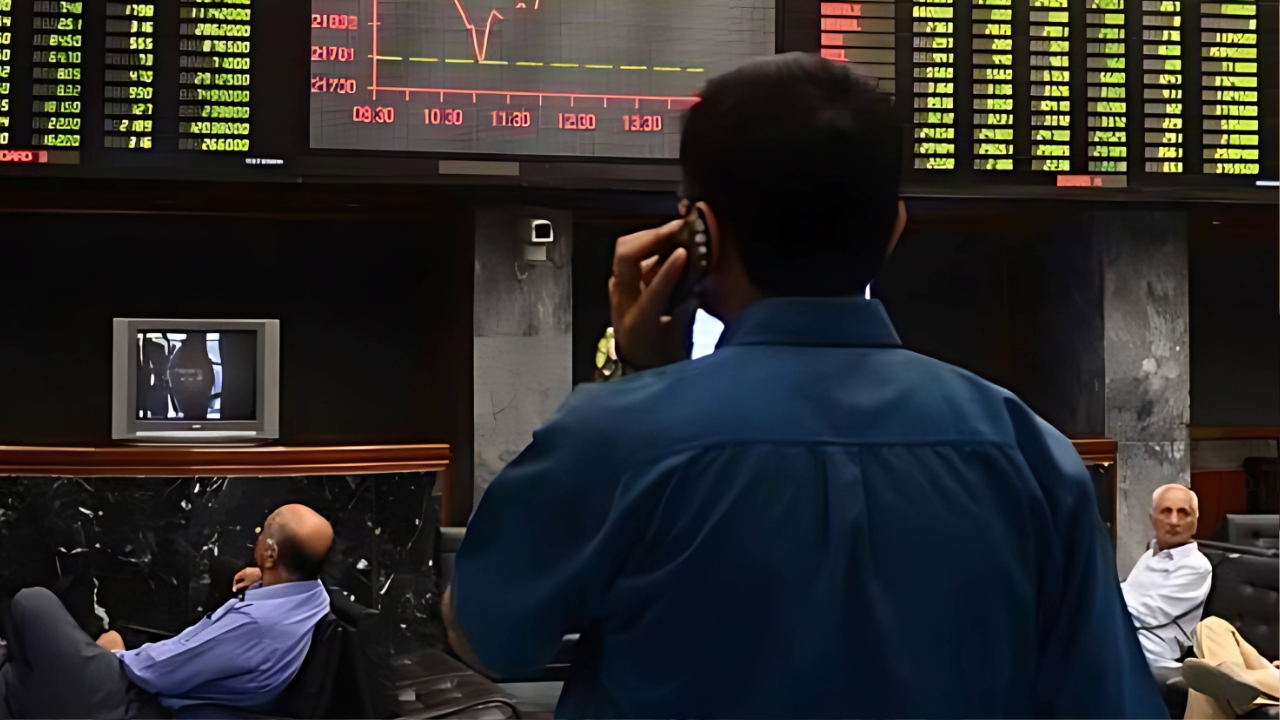
    Following exchanges with the International Monetary Fund (IMF) and the cessation of hostilities by India, the Pakistan Stock Exchange (PSX) continued its upward trend to cross 120,000 points during intraday trading. Reports have confirmed that surging investor confidence allowed the exchange to reach its highest point in history on Monday, setting a new record.

    The KSE-100, the benchmark index of the PSX, reached an intraday high of 120,285.54 points. The index peaked at 9:33 AM after which significant profit taking took hold of the market, causing the market to close at a lower, yet respectable, 119,649.14 points.

    For reference, the KSE-100 closed at 119,689.63 points on Friday, after which the index recorded a growth of 0.03 percent during trading hours on Monday, allowing for a 40.49 point rise. The market displayed a slowdown around 11:37 PM as the KSE-100 hit its intraday trading low of 119,250.67 points before recording a recovery to close the day marginally higher than when trading hours started.

    Of the 17 indexes listed on the exchange, 7 remained in the green with the All-share index (ALLSHR) being in the red, shrinking by 0.03 percent, which translates into a 20.99 point loss for the index. Unlike the KSE-100, which tracks the performance of the 100 largest and most liquid companies, the ALLSHR index records the performance of all publicly listed companies on the PSX.

    A number of companies witnessed a rise in share prices, with First Paramount Modaraba (FPRM) and Dost Steels Limited (DSL) winning big, to the tune of growth rates that sat at 12.08 percent (FPRM) and 11.99 percent (DSL).

    However, not every publicly listed stock witnessed an improvement as many companies witnessed sharp declines. Of these declining companies, the one that fared the worst during intra-day trading was J.K. Spinning Mills Limited (JKSM) which posted a 16.85 percent decline in its position.

    Analysts have pegged the boom in the KSE-100 to the Pak-India ceasefire, outlining how the index witnessed a staggering 12,474-point rally in the last week to settle just under 120,000 points. Moreover, the IMF has given its green light to the first review of the country’s loan program along with the approval of a climate fund, reportedly resulting in the disbursement of $1 billion.

    Analysts have reportedly projected that the KSE-100 index could cross 165,000 points by December 2025, owing to a drop in interest rates and an improved state of the wider economy. These factors are responsible for creating a business-friendly environment, lending weight to analysts’ claims.

  • Shehbaz Sharif rolls out phased tariff reforms to boost exports, strengthen industrial growth

    Shehbaz Sharif rolls out phased tariff reforms to boost exports, strengthen industrial growth

    In a bid to support industrialisation efforts and export revenues, Prime Minister (PM) Shehbaz Sharif has decided to implement the National Tariff Policy by forming a senior advisory committee. According to reports, the tariff policy is to be implemented over a period of five years and is expected to significantly improve the domestic economy.

    Reports indicate that the committee will include 10 senior officials, with Finance Minister Muhammad Aurangzeb at the helm. Notable figures on the committee include the ministers for Railways, National Food Security & Research, Commerce, and Petroleum.

    Furthermore, renowned economist Dr Ijaz Nabi, along with former bureaucrats Dr Robina Athar and Manzoor Ahmed, are also part of the committee. The inclusion of economic experts along with bureaucrats may result in the committee gaining a wider array of perspectives as opposed to one entirely composed of lawmakers alone.

    As per the notification, the committee is primarily responsible for leveraging tariffs to grow exports, come up with support schemes and outline different sectors that will be affected because of a revision in tariffs, among other duties.

    Other responsibilities include providing oversight to the policy’s implementation, along with studying the economic figures associated with tariffs. Moreover, reports indicate that the committee will also attempt to bring in foreign direct investment inflows while simultaneously focusing on creating a surplus in the supply of industrial products.

    While the surplus may not clear in the domestic market, experts believe that it could allow for a boost in exports, thereby generating export revenues for cash-strapped Pakistan.  This spells great news for the country as it has historically relied on remittances to stop the current account deficit from growing too large, a phenomenon caused by the country’s persistent trade deficits.

    Reports reveal that the Ministry of Commerce (MoCOM) will have the authority to induct members onto the committee. The MoCOM has also been tasked with extending secretarial support to the committee upon request. 

    PM Shehbaz has authorised a sizable drop in tariffs on imports, which could attract investments while boosting exports, as per details from an official announcement. He announced his intentions to create employment avenues by improving the economy.

    Reports suggest that PM Shebaz has also implemented a 15 percent upper limit on customs duty, a move that could provide importers relief. Moreover, he waived off additional customs duty entirely, which can be as high as seven percent, along with regulatory duties, which can be as high as 90 percent. 

    However, these reductions in tariffs and duties are to be implemented in phases. As per reports, it will take four to five years for importers to experience the full extent of tariff reductions.