Author: Ibraheem Sohail

  • PSX falls by over 1,900 points after record highs

    PSX falls by over 1,900 points after record highs

    The Pakistan Stock Exchange (PSX) on Thursday continued to fall on the second consecutive day as KSE-100 witnessed a 1,992-point drop during intraday trading.

    While Oil and Gas Tradable Sector Index (OGTI) was hit the hardest by the bearish trend, recording a fall by 3.82 percent after losing 1,119 points at closing time, such lows are common at the end of the year as investors resort to profit taking.

    The director of research from AKD securities attributed the fall in the PSX due to it being the last week of rollovers of future contracts and also partly due to investors realigning their portfolios.

    At the end of the year, investors often sell high performing assets. This is because high performing assets often grow to form a large part of an investor’s portfolio and are sold off for diversification purposes, usually causing a sharp decline. 

    Aside from the general trends, some global developments have also created an environment that might not be conducive to generate returns for investors. One such development is the fall in global crude oil prices.

    Financial experts are speculating that the substantial hit to the OGTI was probably due to the downward trend in global oil prices. A drop in international oil prices is usually accompanied by the government revising oil prices on a national level as well. 

    This could cause a fall in revenue for oil companies and investors were quick to pick up on this. As many as 12 out of the 13 publicly traded companies listed under oil and gas marketing and exploration suffered as their position declined at the end of intraday trading. Hascol was the only oil company in the green, resulting in an 8.24 percent increase in share value.

    Another pressing issue causing the decline in the PSX is the air force’s airstrike on Tehreek-e-Taliban Pakistan (TTP) hideouts in Afghanistan. The fear of retaliation from TTP is enough to shake investor confidence given Pakistan’s history of terror attacks.

    However, some industries remained in the green despite the financial carnage witnessed by stock brokers. Jute and leasing companies both posted healthy gains as the market closed. Crescent Jute and Pak Gulf Leasing witnessed a 14 percent and nine percent rise in share value, respectively.

    As the year comes to a close, the question on many financial experts’ minds is if the overall bullish trends from this year will carry into the next year. Only time will tell.

  • Islamabad’s debt relief: A temporary triumph amid fiscal uncertainty

    Islamabad’s debt relief: A temporary triumph amid fiscal uncertainty

    Islamabad has managed to repay Rs2.03 trillion in the first half of the ongoing fiscal year as compared to borrowing a staggering Rs2.875 trillion in the same period of fiscal year (FY) 2023-24, the State Bank of Pakistan (SBP) has revealed.

    As per the details, the federal government’s borrowings from financial institutions remained negative for the first two quarters of FY2024-25 as Islamabad was able to retire its debt liabilities owing to the record-breaking inflows the SBP was able to generate in the pervious year.

    The SBP was able to generate a whopping Rs3.4 trillion in profit, as a result of stable value of the rupee in the past year along with sky-high interest rates at 22 percent.

    The SBP transferred 80 percent of its profits to Islamabad, which amounted to Rs2.72 trillion. However, it might not be possible for the SBP to sustain such a high level of profitability as interest rates have been slashed to just 13 percent now.

    Experts, however, predict a fall in the liquidity of the national exchequer in the upcoming half of ongoing fiscal year, which could force Islamabad to borrow funds to finance the budget. The drop in liquidity is primarily due to the fact that SBP profits are projected to fall.

    According to reports, the SBP has been the government’s biggest profit-earner, surpassing any potential earnings from trade or industry. This means that cash inflows to the federal government might fall drastically in case of a drop in SBP profits.

    This fall in inflows might be exacerbated by a projected fall in Treasury bill (T-bill) yields causing further liquidity issues for the government in the upcoming half.

    While the retirement of debt in the first half of the fiscal year is a success, the same is being seen as temporary due to projected decline in inflows, which could prompt Islamabad to resort back to its historical trend of borrowing money for budgetary support.

    As of now, the Federal Board of Revenue (FBR) has consistently missed its collection targets in the first five months of FY2024-25. Since the FBR has been unable to generate the revenues necessary to sustain budget outlays for the second half.

    While current situation suggests that Islamabad will resort to utilising borrowed funds to plug the gap in the budget, speculations regarding the government’s future course of action are on the rise after achieving this short-term victory.

    Officials from the International Monetary Fund (IMF) are especially interested in the unveiling of said plans given how Islamabad is not delivering on all of the agreed upon terms for the $7 billion loan that it secured earlier this year.

  • PIA takes off again: European routes and new planes

    PIA takes off again: European routes and new planes

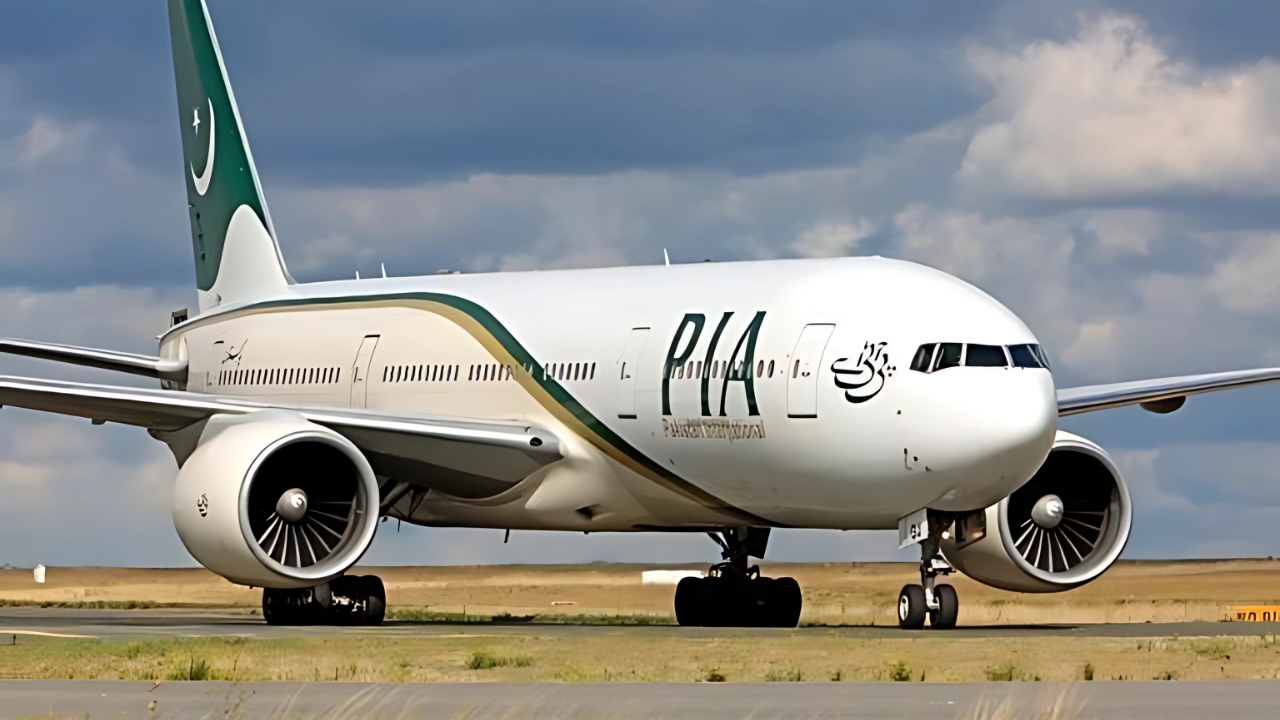
    Pakistan International Airlines (PIA) is planning to improve its fleet by adding eight aircraft in the coming year as per the Chief Executive Officer (CEO) of the national carrier. The upgrade plans have been formulated as PIA managed to regain lucrative routes to Europe after losing them after flight 8303 crashed in Karachi.

    PIA’s CEO Khurram Mushtaq reported that the Boeing 777 aircraft was going to be used to fly the longer routes.

    He disclosed in a briefing that PIA’s first flight would be to Paris on January 10. According to Mr. Mushtaq, PIA will be operating two flights a week to Paris where Air France will facilitate any passengers that are travelling to European countries other than France.

    As per Dawn news, aside from shedding light on the procedure of reopening routes to Europe, Mr. Mushtaq also addressed complaints about the food served on PIA flights. He said that food quality has improved to satisfy customers.

    Mr. Mushtaq also announced that daily flights from Karachi to Sukkur will be operational despite the lack of passengers on domestic flights due to the vast and impressive motorway network in Pakistan.

    Prior to the opening of the European routes, the runways of both Quetta and Lahore airport underwent upgrades. As per the DG of Pakistan Airports Authority (PAA), this included solving the longstanding issues of parking and transportation that had plagued Quetta airport.

    The senate committee, which had received both the CEO of PIA and the DG of PAA, was also briefed on initiatives that were being taken to develop airports further.

    The members of the senate however, were not pleased with the progress of the ongoing projects and initiatives. This resulted in the creation of a sub-committee to monitor and evaluate the progress of airport development initiatives.

    Following the briefing, a press release reiterated the Senate’s commitment to tackling any hurdles in the development of airports with complete accountability and transparency.

    The measures being taken by the Senate, PIA and CAA are an attempt to revitalize PIA after years of mismanagement has left the airline relying on government funds to stay afloat. 

    Attempts have been made to privatize PIA in the recent past but these efforts did not yield positive results as no notable bids were made to purchase the national carrier.

    However, with European routes open and new planes entering the fleet, acquiring PIA is an attractive prospect for investors. Privatization minister, Abdul Aleem Khan has been making efforts to fast-track matters pertaining to the sale of government owned entities. It will be interesting to see if Islamabad will be willing to keep PIA or privatize it as it starts to take off once again.

  • Farmers demand action as costs soar, profits plummet

    Farmers demand action as costs soar, profits plummet

    The Central Chairman of the Kissan Ittehad threatened to launch a march on Islamabad if the demands of farmers were not met. Farmer demands include increasing the wheat support price in addition to subsidizing input costs as they have risen recently.

    The demands are not entirely baseless, as rising electricity costs have hampered the ability of farmers to cost-effectively operate tube wells for irrigation. Farmers who have access to a flowing source of water are not faring much better either, as the rate of irrigation water has increased, making it tougher for farmers to afford to irrigate their fields.

    More concerningly, the prices of urea fertilizer, which is a major input in crop cultivation, have risen too. However, Islamabad’s hands are effectively tied due to the conditions imposed on the federal government by the International Monetary Fund (IMF).

    Under IMF conditions, Islamabad is unable to extend subsidies to these farmers to assist them when they need them. According to the chairman of Kissan Ittehad, this could leave them open to exploitation by flour mills that can purchase wheat at below-market prices.

    The implications for businesses operating in the agricultural sector will be serious if they are unable to secure governmental support in the form of minimum support prices or subsidies.

    This is because rising input costs will translate directly into a fall in the profit margins of farmers. This could result in a fall in the supply of crops such as wheat and sugarcane. While the damage ends here for farm owners and the 36.43 percent of Pakistanis who call the agricultural sector their source of income, the same cannot be said for others.

    It is to be noted that wheat, sugar, and other agricultural sector outputs are essential for businesses further along the supply chain. A lower supply means the prices for these inputs will rise, causing businesses that use wheat or sugar to lose profits. This spells bad news for businesses such as bakeries and confectionary manufacturers.

    Islamabad is expected to feel the impact of not providing subsidies as well. Experts predict that a reduction in wheat and sugarcane yields is likely to worsen the trade deficit for Pakistan as wheat imports surged to one billion dollars in FY 2023-24.

    Sugar exports brought in $330 million in 2023, and a fall in production might negatively impact export figures. The resulting widening of the trade deficit will strain the already meagre $16.62 billion in foreign reserves that the State Bank of Pakistan (SBP) possesses.

    If the farmers decide that Islamabad has left them to fend for themselves, the Kissan Ittehad might deliver on its promise to ‘initiate a sit-in in the capital’. The protests will negatively impact Pakistan’s attractiveness as a stable destination for both foreign and local investment funds.

  • PSX slumps as profit-taking reigns supreme

    PSX slumps as profit-taking reigns supreme

    The Pakistan Stock Exchange (PSX) experienced a noticeable decline, as the benchmark index KSE-100 dropped 1,509 points in intra-day trading. The slump follows the second-largest single-day pointwise rise in the KSE-100.

    Bearish sentiments resulted in profit-taking, causing 288 of the 456 companies being traded publicly to close at a lower value than the previous day. Automotor companies were some of these companies that suffered a decline. Notably, Hinopak Motor approximately 6.9 per cent of its share value, while Honda Atlas Cars and Indus Motor Company (manufacturer of Toyota vehicles) lost 5.06 per cent and 1.36 per cent of their value, respectively.

    Despite the financial carnage causing such a large number of companies to decline on the PSX, 129 companies actually managed to advance in share value. Notable companies that advanced in intraday trading include Fauji Foods Ltd and Attock Petroleum, which managed to close 1.62 per cent and 3.45 per cent higher, respectively.

    The All Share Index (ALLSHR) dropped 1.36 per cent by the end of the trading day, a loss of approximately 962 points. Despite the unusually high variation in share prices recently, foreign ownership of shares has risen by 0.30 per cent since the beginning of the month.

    The fall in the PSX could be attributed to the country’s political landscape. As it stands, the Pakistan Tehreek-e-Insaaf (PTI) has met with Islamabad in the hopes of reaching an amicable solution. If both parties reach an agreement, economic progress can continue undeterred as investors will not fear political tensions causing them financial losses.

    Despite everything, the talks have moved along sluggishly, with no concrete solution emerging in the near future. According to Dawn News, it might take a considerable amount of time before the political tensions are diffused with dialogue. This spells bad news for investors.

    It doesn’t seem as if the talks will progress much further either, as key members of PTI’s leadership were missing from the negotiations, and PTI’s demands for Imran Khan’s release seemed unrealistic. Nevertheless, if peace can be arbitrated between Islamabad and PTI through negotiations, the PSX is expected to see persisting bullish trends as investor confidence is restored.

    Publicly, however, the listed companies will have to find a way to weather the storm and hope they can preserve their share value until a greater level of political stability returns to Pakistan. This will be a significant challenge for companies such as Mari Petroleum, which is experiencing a decline in the PSX.

  • Falling T-bill returns may signal trouble ahead

    Falling T-bill returns may signal trouble ahead

    Foreign investors are disinvesting in Pakistan’s Treasury bills (T-bills) as returns have been shrinking steadily over the past few months. The returns on T-bills have been declining as The State Bank of Pakistan (SBP) has been slashing interest rates.

    Interest rates reached a staggering 22 per cent last year as the SBP desperately tried to control the ever-rising inflation rate. However, with inflation rates sitting at a comfortable 4.9 per cent, the SBP has cut back its policy rate to 13 per cent. This has resulted in a nine per cent fall in the returns to T-bill holders.

    Foreign investors purchased a large volume of T-bills when interest rates were high, bringing millions of dollars into Pakistan. As per Dawn News, however, the falling interest rates have resulted in foreign investors withdrawing 64 per cent of their investments from Pakistani T-bills.

    The cumulative outflows from T-bills stood at 550 million dollars, which will undoubtedly ring alarm bells in Islamabad. The government cannot credibly rely on T-bills to fund the federal budget if investors choose to withdraw their money in such large volumes.

    With investors unwilling to buy T-bills, the possible measures taken by Islamabad to plug the gap between expenditures and inflows in the federal budget might cause issues for businesses. Business owners could face the consequences in the form of higher taxation as the government might find itself strapped for cash.

    More concerningly, the government might resort to borrowing funds from local banks, which could crowd out private investments. This is because the private sector might not be able to secure loans if the government is borrowing vast amounts of funds from local banks.

    Rising taxes could reduce profit margins for businesses, while a decline in the availability of credit might hurt business growth as businesses will be unable to secure funds to expand their operations.

    The rupee might experience devaluation, with foreign investors finding alternative destinations for their funds where returns are higher than those of Pakistan. A weaker rupee is unable to procure a high level of imports. While this does reduce the trade deficit, which Islamabad can hail as a victory, it spells bad news for manufacturers who rely on imported goods to produce final goods.

    The declining value of the rupee for these manufacturers translates into lower profit margins as their input costs have risen. These business owners will have to make the tough choice of either passing on the higher costs to customers to maintain their profit margins or absorbing the higher prices, reducing profitability instead.

    While falling interest rates have reduced rates, the SBP and the Government of Pakistan could still take steps to reduce T-bill outflows. Authorities could ease restrictions on the repatriation of T-bill returns in order to incentivise foreign investors to reinvest once their T-bills mature.

    Moreover, attempting to increase political stability will portray Pakistan as a low-risk destination for foreign funds. As it stands, though, Islamabad is making an active effort to reinstate political stability as talks with Pakistan Tehreek-e-Insaaf (PTI) have begun.

    Outflows from T-bills of such a large magnitude are concerning, and it will be interesting to see what the SBP does now to counteract these rising outflows.

  • PTI-Government talks: A path to economic stability and business growth

    PTI-Government talks: A path to economic stability and business growth

    Pakistan Tehreek-e-Insaaf (PTI) and the government have agreed to settle their rising tensions via negotiations instead of protests. This is great news for the economy, as the’ long marches’ cost the economy an estimated 190 billion rupees per day at the peak of political clashes.

    If negotiations prove to be successful, businesses will benefit enormously from the resulting stable political landscape. This is because businesses will not fear constant road closures and blockades which strangle supply chains across the country.

    This will be great news for businesses that rely heavily on the transportation of their goods from warehouses to in-store locations. This also includes businesses in the petroleum industry, as, during the height of the protests, motorways remained closed, leaving petroleum tankers stranded.

    The greatest gain will arguably be for investors – both local and foreign. The mere mention of the peace talks has resulted in KSE-100, which is the benchmark index of the Pakistan Stock Exchange (PSX), to skyrocket by 4,200 points in intraday trading. This comes at a good time, as PSX recently recorded its largest fall in terms of points in the history of the exchange.

    If the negotiations bear fruit, foreign investment is expected to rise. This is because foreign investors are not particularly comfortable investing in a country plagued by political uncertainty and violence. The beneficiaries will be local businessmen again, as they will be able to utilise foreign investment to expand the scope of their operations and rely on their international backers to capture a higher market share.

    The greatest channel for business growth will most probably be the rise in domestic demand once political stability restores economic stability. Domestic demand will surge once citizens believe the economy is stable and that their livelihoods are not at stake.

    As it stands, experts are claiming that protests resulted in lots of damage to local businesses either due to vandalism or, more commonly, because of road closures. When consumers are uncertain about their employment outcomes in the future, they tend to save funds to smooth consumption patterns once they lose their source of income.

    Aside from domestic consumption rising due to certainty about employment, demand for local goods and services is also expected to increase due to lower interest rates. Interest rates were slashed last week and have settled at a two-year low of just 13 per cent, allowing consumers to purchase goods at a comparatively lower price tag as borrowing is cheaper now.

    Political and employment certainty, along with interest rate cuts, are expected to allow businesses to reap the benefits of higher sales volumes, which might translate into higher profit margins.

    Hospitality, tourism and travel companies will be the primary beneficiaries as they will not be forced to close down operations due to constant rallies and protests. This will be a welcome change for business owners in these sectors, as the protests have left many small companies teetering on the brink of bankruptcy.

  • 46pc believe taxes not spent on public good: survey

    46pc believe taxes not spent on public good: survey

    A global poll conducted by AccaGlobal to survey if citizens agree that taxes are paid in exchange for services, has displayed shocking results. As per the details, the poll suggested that just one-third of the population sees the social contract of taxation to be a deal that works in practice.

    Taxes are levied on the general public to provide public goods that everyone can utilise. Popular examples of public goods financed by taxation are toll free roads, public hospitals and public schools.

    Every individual has equal access to public goods and services, and cannot be excluded from utilising them. In line with this thinking, 52 percent of poll respondents felt that taxes were a contribution to the community rather than a cost.

    Poll respondents believed that public goods and services were a necessity. However, 25 percent disagreed, stating that in their opinion, taxes were a cost and not a contribution to the community.

    It is to be noted that only 33 percent of poll respondents believed that tax revenues collected in their country were actually used to provide public good while 46 percent outright refute this belief.

    There are two possible reasons as to why respondents believe their tax funds are not spent on them. The first of these is the level of corruption within the country. This could indicate that taxpayer funds are being misused as government officials consider said funds to be a source that can be used to illegally enrich themselves.

    The second reason concerns only the elite. This is because as wealth rises, it is unlikely that an individual would be a consumer of public goods and services. An example here could be a wealthy individual choosing to seek care at a private hospital as opposed to a local public hospital.

    Since both of these segments of society do not expect the funds to be spent on them, they believe that their funds never actually serve them.

    Poll respondents from Latin America displayed the most amount of pessimism regarding their tax funds being allocated to services they need. This makes sense as countries like Brazil and Argentina score abysmally low on the corruption index with scores as low as 36 out of 100 – the lower the score, the more rampant corruption is in the country.

    The chief executive of AccaGlobal has highlighted how public trust in taxation systems is necessary for an economy to attain prosperity. These arguments can also be applied to Pakistan as higher transparency and lower corruption levels might boost tax levels, resulting in citizens believing that their funds are truly spent on them.

  • Debt surges by 28 percent in Khyber Pakhtunkhwa, sparking concerns

    Debt surges by 28 percent in Khyber Pakhtunkhwa, sparking concerns

    International lenders have grown worried over Khyber Pakhtunkhwa’s rising debt levels as it surged by 28 percent in just a year. As per Dawn, the outstanding debt KP is liable to pay stands at a staggering 680 billion rupees.

    While this might not seem alarming at first glance, financial experts are predicting a drop in the development potential of KP as risk indicators continue to worsen in the province. As it stands, the provincial government of KP has been alerted by international creditors regarding the potential solvency issues that the government might run into.

    In a meeting with KP leadership, international lenders suggested a solution- austerity measures.

    As per Dawn News, the reason KP finds itself in constant need to borrow funds is because of PTI leadership’s focus on political issues rather than the economy. The claim has some merit to it as constant rallies to Islamabad and protests cause members of the provincial assembly to leave Peshawar largely unattended. This has created a vacuum for guidance within the decision makers, especially regarding matters pertaining to the economy.

    The rising debt burden comes at an inconvenient time as IMF expects budget surpluses of large magnitudes from both the provincial and federal government. The IMF condition in reference here requires all four provincial governments to generate a budget surplus of 1.127 trillion rupees.

    However, with KP relying on debt to finance government expenditures, lawmakers in Islamabad are worrying that the third largest provincial economy within the country may not be able to record a sizable budget surplus to meet IMF requirements.

    This is largely due to the fact that in the coming months, the burden of interest payments is expected to rise. For businesses across the province, this spells bad news as the government might try to levy additional taxes or try to expand the tax net in an attempt to meet IMF guidelines.

    The sectors where KP might attempt to increase tax collection will most probably be agriculture, automobiles, services, property and stamps. The reasoning behind this is that provinces are allowed to collect taxes on activity from these sectors.

    For the upcoming fiscal year 2024-25, KP has budgeted a staggering 67 billion rupees for debt payments. Of this total amount, over 40 percent will be purely to pay back interest on the principle amount.

    The interest repayments reduce KP’s ability to fund public projects within the province as the government will cut back expenditure on projects to pay back interest instead. The loss of potential public development initiatives is alarming as the current unemployment rate in KP stands at an uneasy eight percent which may rise even further if the government starts shelving projects as part of the stipulated austerity measures of the IMF.

  • PSX recovers 3,000 points after historic drop amid speculative buying

    PSX recovers 3,000 points after historic drop amid speculative buying

    Stock brokers saw a sharp rise in the Pakistan Stock Exchange (PSX) as bullish speculators participated in the exchange. The KSE-100 which is the benchmark index of the PSX recorded a 3,000-point recovery in the index after two full days of profit taking.

    Earlier in the week, the KSE-100 recorded the largest single day decline in its history of 4,795 points as panic selling gripped investors. Investors are growing weary of the unprecedented level of volatility in the exchange.

    Experts are predicting that the profit taking behavior could have been due to a recent bill that was proposed in Islamabad earlier this week. The proposed bill seeks to impose restrictions on the trading of securities by non-filers and tax evaders.

    While this bill has its merits and will be invaluable in the Islamabad’s journey to curb tax evasion, it is impacting businesses significantly. While experts were initially highlighting how the bill could be detrimental for business growth, it seems like it is not the case.

    It is possible that non-filers sold off their shares in order for a tax paying member of their household to purchase them instead. Such behaviors are common are probably what led to the sharp decline and rise in the PSX as the bill would have frozen non-filer trading activities.

    If a significant amount of non-filers end up permanently pulling their funds out of the exchange before the restrictions are levied, the market will suffer. The downward trend that took charge of the market earlier could return as currently, investors have lost some of their trust in the market. This is likely to fuel further profit taking.

    In the event of a persisting slump in the PSX, firms will not be able to raise funds easily. They will now have to issue more shares to gather the same amount of money now. This is because earlier, share values tanked with some companies such as Mari Petroleum losing as much as 10 percent of their value.

    The fall in share prices and the high fluctuations in the exchange are likely to cause a trend in company executives to favor the use of debt for operations instead of the sale of more equity. However, this will reduce dividend payments to shareholders as cash inflows from projects will then be used to finance interest payments on loans instead and lower dividends might reduce share values further.

    However, the low stock prices paved way for speculators as they saw an opportunity to make a quick profit due to market volatility. For now, experts have their eyes set on the PSX and are wondering if it can continue to exhibit steady growth rates as it has in the past few months or if the surge in volatility has just begun.