Author: Ibraheem Sohail

  • Measly tariff reductions offer little relief as Pakistan turns to solar power

    Measly tariff reductions offer little relief as Pakistan turns to solar power

    Consumers of ex-Wapda power distribution companies and K-electric are to benefit from a reduced electricity tariff of up to 75 paisa per unit. According to Express Tribune, the power sector regulator reduced tariffs by up to 0.7556 rupees per unit for power distributors because of the fluctuations in fuel charges experienced in late 2024.

    In October 2024, the cut in power price for K-Electric consumers stood at just under 0.5 rupees per kilowatt hour. The tariff reduction will be adjusted in electricity bills for January 2025, giving consumers some relief. Owing to the size of the reimbursement, the effects will be more pronounced for consumers who utilise more electricity on average.

    While addressing concerns regarding the application of tariffs by power distributors, the regulator stated that the National Transmission and Despatch Company (NTDC) reported losses from transformation and transmission that add up to approximately three percent of the energy produced.

    This loss translates to about 244 gigawatt hours (GWH). While transmission losses are to be expected over long distances, they still negatively impact the profit margins of power distributors.

    However, power distributors do not produce all of their electricity themselves, which is beneficial in reducing transmission losses. This is because electricity produced closer to a specific region can supply this region first, reducing the need for more electricity to be transmitted over larger distances.

    The two key agents aiding power distributors are the vast array of net metering unit owners and independent power producers. According to data released by the power producers, net metering units provided a staggering 80.78 GWHs, while power producers in contracts with distributors produced 18.22 GWH.

    The frequent revisions in electricity tariffs, both positive and negative, create a sense of uncertainty for businesses and consumers. The large amount of electricity produced by net meter owners shows how Pakistani consumers are shifting away from the national grid in favour of solar panels, which provide them with self-reliance.

    The transition to solar power continues despite the drop in tariffs and the recent winter package to reduce costs on additional units consumed. An increasing number of businesses and individuals alike have found electricity bills to be creating cash flow problems.

    The 0.75 paisa tariff reduction pales in comparison to a staggering 155 percent tariff increase over the past three years. However, some relief is better than none at all, and for users who still have not transitioned to solar power, this move will certainly provide some respite.
  • Strengthening ties: Pakistan’s bid to enhance exports with Bangladesh

    Strengthening ties: Pakistan’s bid to enhance exports with Bangladesh

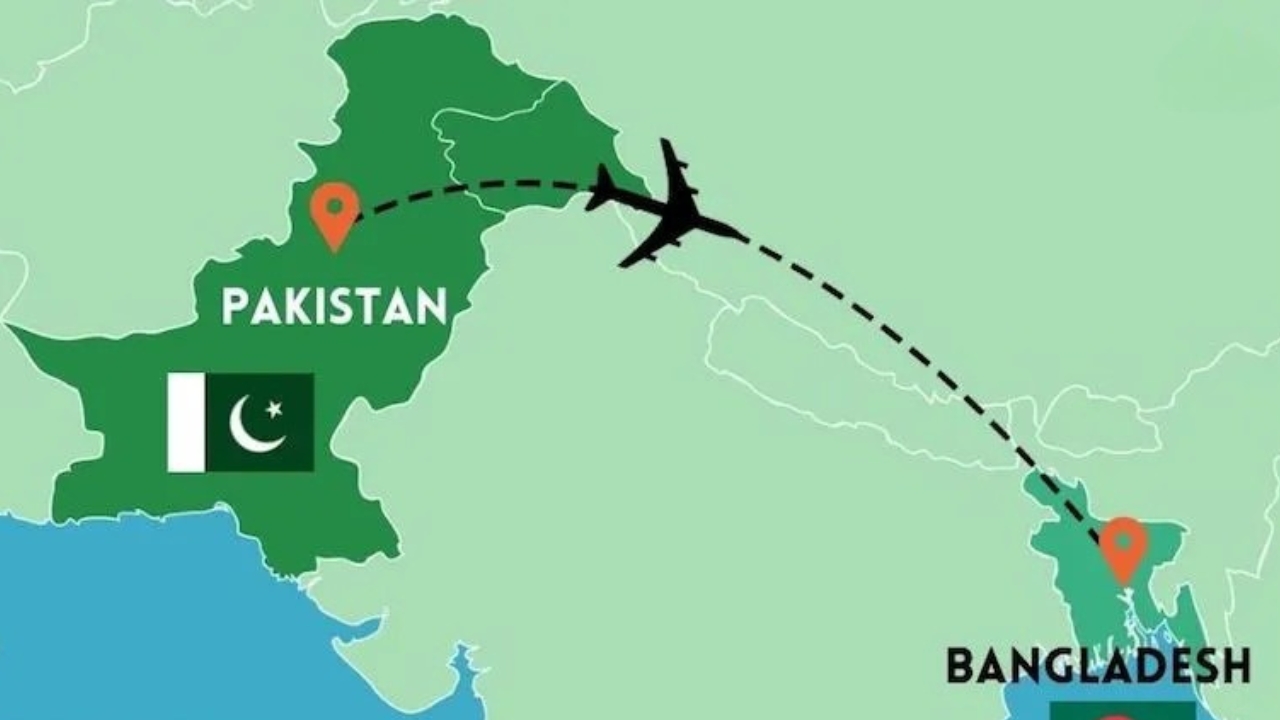
    Delegates from the Federation of Pakistan Chambers of Commerce and Industry (FPCCI) are heading to Bangladesh in an attempt to boost bilateral trade between the two countries. The delegates are mainly interested in boosting export levels, which currently stand at $800 million.

    Officials claim that this figure can be easily boosted up to three billion dollars in the coming years if bilateral relations improve.

    One of the primary beneficiaries of improved bilateral relations will be airlines, as flights between the two countries will resume. This could help local airlines, especially Pakistan International Airlines (PIA), as visas are expected to be issued in abundance, and hence, a lucrative route will be secured.

    The surge in visa issuance is expected as Bangladeshi officials are interested in opening up their borders to genuine Pakistani investors. The new route is expected to generate respectable cash flows for PIA and could even help in its privatisation efforts as it will appear more attractive to investors.

    Another beneficiary of enhanced trade will be the agricultural sector in Pakistan as Bangladesh imports approximately six billion dollars worth of fruits and vegetables annually.

    These include onions, which Bangladesh has been importing primarily from India. Bangladesh’s vegetable import bill, along with India’s, stood at over two billion dollars in 2022. However, with India imposing a ban on the export of onions in 2024, it is prime time for Pakistan to capitalise on the need gap in the Bangladeshi market.

    Aside from Indian export bans, Bangladesh alternates between importing from either Pakistan or India based on who sets a lower price. With the price of Indian onions projected to rise, Bangladesh could get a higher import order of Pakistani onions.

    The benefits of onion exports, however, should be taken with a grain of salt (no pun intended). Pakistan’s vegetable market frequently experiences a shortage of onions, resulting in the markets flooding with Iranian onions, which are either imported or illegally smuggled across the border.

    The chairman of the Rice Exporters Association claims that Pakistan could also export 200 million dollars worth of rice annually. This would boost bilateral trade with Bangladesh past the one-billion-dollar mark, bringing in vast sums of foreign exchange revenues for the cash-strapped nation.

    All in all, the agricultural sector will flourish as its yields find their way to the international market. Exporting to Bangladesh will not just bring in revenues but will also allow Pakistani products to gain recognition in the market — A market where goods from India have dominated in the past.

    With Bangladesh and Pakistan sharing a common sector as their largest textiles, collaborations between the two could also flourish in terms of exports. There can be huge gains from trade to be made with information and technology sharing alone.

  • UAE rolls over $2 billion, easing Pakistan’s economic strain

    UAE rolls over $2 billion, easing Pakistan’s economic strain

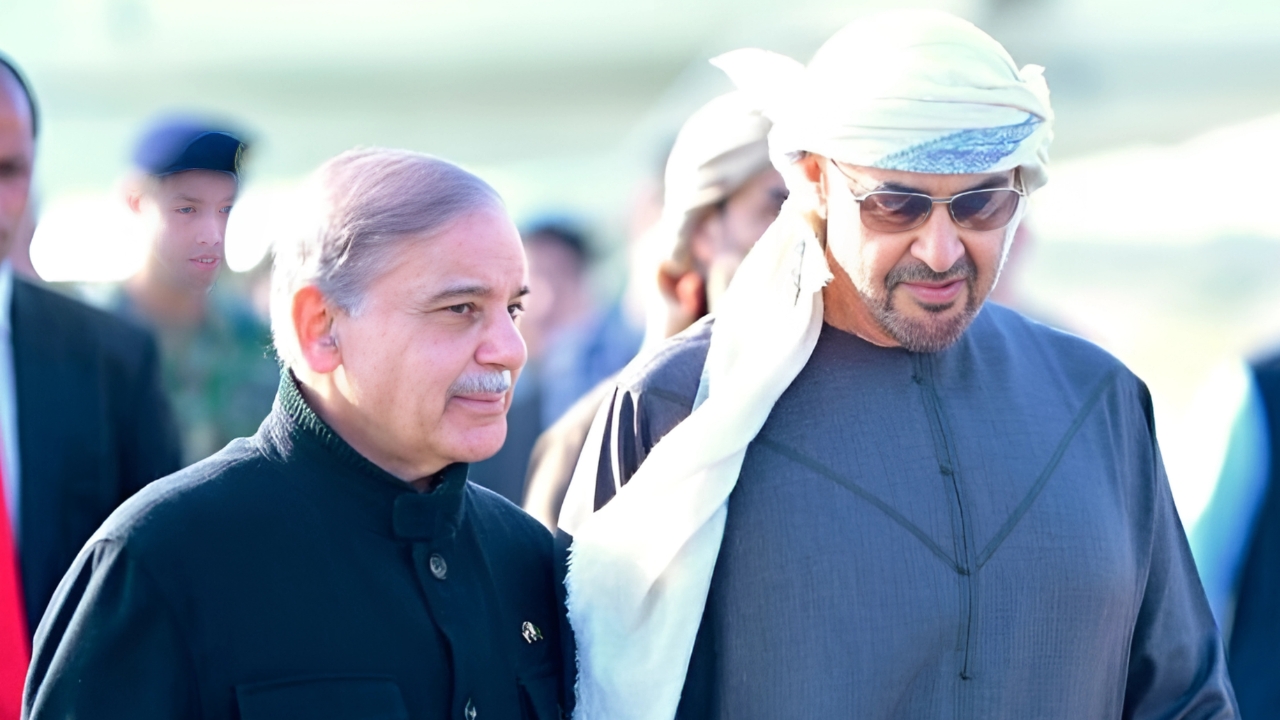
    Prime Minister Shehbaz Sharif was able to secure fiscal relief for Pakistan as he announced that the United Arab Emirates (UAE) had agreed to roll over $2 billion in repayments. The repayment was due by this month but owing to Pakistan’s debt burden and liquidity issues, the UAE allowed Pakistan to roll the debt over.

    As part of the International Monetary Fund’s (IMF) seven-billion-dollar bailout package to Pakistan, the cash strapped nation is supposed to attain external financing.

    A multitude of countries have been actively assisting Pakistan over the past year with respect to financing. Last year, financial assurances from countries such as China, Kingdom of Saudi Arabia (KSA) and UAE proved instrumental in Pakistan’s journey to secure the IMF program.

    The IMF had agreed to disburse funds only if Pakistan could roll over its debt that it had accrued over the years from these countries. This explains how important visits of the heads of state are between the two countries, especially for Pakistan, as it can effectively save the country from default.

    Mr. Sharif, while addressing members of the cabinet, revealed that he had a meeting with President Sheikh Mohammed bin Zayed Al Nahyan of the UAE. While the exact reasons of the premiers trip to Pakistan are not known, Dawn News reported that he was on a personal visit to Pakistan.

    Some analysts are speculating that the UAE president could be in Pakistan for investment purposes. However, the authenticity of these claims has not been validated. What is known however is that Mr. Sharif did ask the UAE to invest a few billion dollars in important projects as that would assist Pakistan.

    Moreover, Mr. Sharif also told the cabinet that the UAE premier had confirmed his intent to positively consider investment initiatives in Pakistan adding that both countries share “brotherly ties”.

    While it is not certain if the UAE is ready to back Pakistani investment by funneling billions of dollars into the country, the two-billion-dollar extension on the debt could help the State Bank of Pakistan (SBP) to potentially meet its targets. One of these include the SBP maintaining a $13 billion reserve at the end of FY 2025. This condition could have face a significant setback had Pakistan been forced to pay back this debt.

    A fall in the SBP reserves is the last thing lawmakers in Pakistan want as reserves are resting below the minimum threshold required by the reserve target at just $11.7 billion. For now, the rollover is being lauded as a massive achievement and experts are hoping that Dinars will trail the UAE president’s intent to invest in the country.

  • ‘Uraan Pakistan’ dubbed as an ambitious goal lacking a realistic plan

    ‘Uraan Pakistan’ dubbed as an ambitious goal lacking a realistic plan

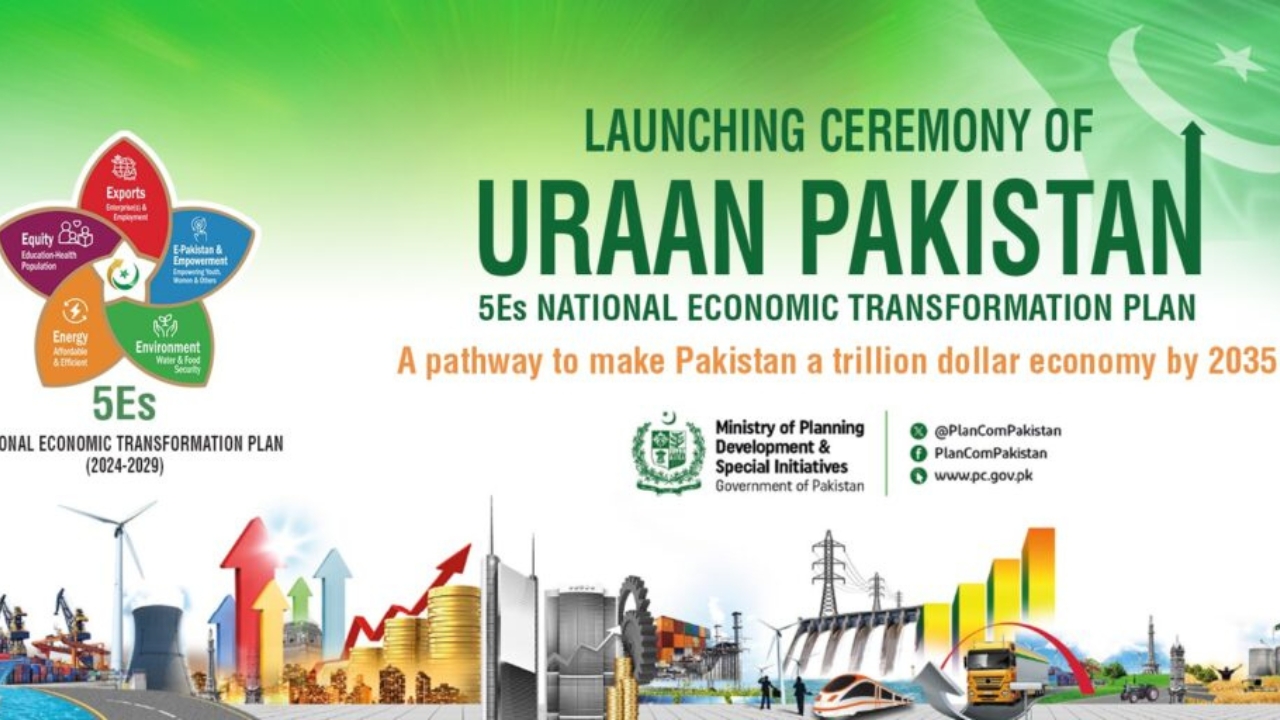
    Islamabad’s ambitious economic plan ‘Uraan Pakistan’ is dubbed as overly ambitious by experts and economists across the globe.

    According to Express Tribune, an international economist has highlighted the challenges that Pakistan will face in reaching its targets, given how ambitious these targets are. Prime Minister Shehbaz Sharif’s plan set out to target the five ‘E’s of the economy, namely e-Pakistan, environment, energy, equity and empowerment.

    Given Pakistan’s stagnating economic growth and the global economic forecast, the country’s set targets are unrealistic. The targets under consideration are to achieve a one trillion and three trillion dollar economy by 2035 and 2047, respectively.

    Pakistan would have to record robust growth figures of 10.32 percent per annum to achieve the target set for 2035. This is highly unrealistic as the current GDP growth rate for the first quarter of FY 2024-25 remained abysmally low at 0.92 percent. This represents a sharp decline from the 2.3 percent growth that was recorded in the same period last year.

    The finance division of the government of Pakistan revealed that real GDP grew by a low of 2.38 percent in FY 2024. As such, Islamabad might not be able to achieve its economic target as attaining such a high level of growth requires a multitude of sectors and businesses to grow aggressively. Experts are citing structural and political challenges as the primary constraints that will prevent Pakistan from achieving its targets. 

    Aside from feasibility constraints, ‘Uraan Pakistan’ has come under fire for not having a detailed plan. Analysts are commenting about how the plan does not possess directives regarding resource allocation, timelines, and the policies that are to be used.

    Without a proper plan for assigning responsibilities to all government institutions, ‘Uraan Pakistan’ could become yet another dream for Pakistan that may never be realised.


    According to Express Tribune, ‘Uraan Pakistan’’s focus on boosting exports and attracting foreign investment has created a tunnel vision for Pakistani lawmakers, who have seemingly overlooked critical internal challenges. These challenges include addressing issues related to political instability, widespread corruption, energy shortages, and bureaucratic inefficiencies.

    Casting internal issues aside, the external goals are largely unrealistic as well. This is because preexisting institutions such as the Special Investment Facilitation Council (SIFC) have failed to attract normal investors, which begs the question of how the government aims to attract foreign investors.

    If planned and implemented correctly, ‘Uraan Pakistan’ could change the trajectory of Pakistan’s economy. However, it can only realise its true potential if it is implemented on the basis of a realistic plan.

  • Expected 78.5 percent gas hike could jeopardise 60 percent of exports

    Expected 78.5 percent gas hike could jeopardise 60 percent of exports

    The International Monetary Fund (IMF) has directed Islamabad to crack down on industrial captive power plants (CPP) by significantly raising the levies imposed on their gas supply. CPPs are the preferred entity from which industrialists want to purchase energy as their electricity supply is both reliable and economical.

    However, government-owned power distribution companies remained unable to realise revenues from potential electricity sales as the reliance of industrialists on CPPs significantly hurt the national exchequer.

    The price of electricity between CPPs and the national grid is expected to equalise, with gas prices expected to surge from 2,800 to 5,000 rupees per unit. This spells bad news for energy-intensive industries, such as the textile industry, that rely on stable and cheap CPP electricity.

    The textile sector accounts for 17 percent of industrial consumption. It is precisely the availability of affordable gas that gives Pakistani millers the competitive edge that they enjoy in the international market.

    Experts, however, are predicting that the 78.5 percent rise in gas prices will erode the competitive edge of Pakistani textiles in the international market. This could significantly reduce export revenues as local companies might lose out on international contracts due to the expected rise in their products.

    The textile sector accounts for 60 percent of the country’s exports, and this move could effectively strangle textile exporters, akin to the government trading the metaphorical gold-laying chicken for a single golden egg.

    The national power distribution companies are notorious for their inability to provide a stable source of power, and millers are aware of this fact. Textile millers may direct CPPs to continue to operate using less efficient fuel sources such as coal instead of gas. As per Dawn, an official claimed that industrial consumers would rather burn old tyres to produce electricity than purchase it from the national grid.

    Islamabad might be inviting another problem, which those who walk the halls of power have not been able to realise yet. Raising the levies on gas could push CPPs to resort to using illegally smuggled gas from neighbouring Iran.

    This will be a much cheaper alternative, which many energy-intensive businesses might consider despite it being illegal.


    The national grid is already strained and faces frequent power shortages, and the addition of more industrial units could exacerbate the problem.

    Gas companies have already reported that their estimated losses could exceed 400 billion rupees per year if captive power plants cease to operate. They have claimed that strangling the gas supply could even cause Pakistan State Oil (PSO) to go bankrupt.

  • Internet slowdown could threaten Pakistan’s IT export growth, future prospects

    Internet slowdown could threaten Pakistan’s IT export growth, future prospects

    IT exporters are growing worried after Pakistan Telecommunication Company Ltd (PTCL) announced that slow speeds will persist as repair work on the damaged submarine cable is facing delays. In November 2024, Pakistan’s service exports grew by a respectable 6.5 percent because of the IT sector.

    Before the internet slowdown, service exports rose consistently by over 7.5 percent to reach $3.27 billion in the first five months of FY 2024-25. However, connectivity issues may jeopardise the growth of Pakistan’s rapidly growing service sector. PTCL has confirmed that it will take several days to get internet services back in order but that the internet will remain available for use in a limited capacity.

    Experts are predicting that these internet connectivity issues could significantly hamper the growth of future IT exports. The reason cited by experts is that foreigners could soon notice how unreliable internet services are once their projects face delays due to connectivity issues.

    Pakistani businesses working on outsourced tasks are expected to suffer tremendously as they may lose out on foreign contracts because of unreliable internet connection. A potential reason behind the loss of contracts is that prolonged connectivity issues can erode the trust of clients in the ability of Pakistani businesses.

    The freelancing community is another segment of the population that will be struck hard by the slowdown in internet speeds. According to Dawn, Pakistan ranked second in terms of the number of freelancers in the world last year, exporting services to 170 countries.

    For Islamabad, this is a huge setback as this could significantly hamper project Uraan Pakistan and Shahbaz Sharif’s plan to boost IT exports in the recent past. The government has set an export target of $25 billion in the next five years, which translates to five billion dollars per year. This is significantly higher than the 3.223 billion dollars it currently generates from IT exports.

    If this situation continues, Islamabad may soon witness a decline in the future foreign reserve inflows, which it desperately needs.

    Aside from exporters and the government, businesses will also be hit hard because of the abysmal internet speeds. The non-IT export businesses that will suffer the most include those that offer streaming services such as Urduflix and Vodlix.

    While Islamabad reiterates its commitment to achieve 25 billion dollars in exports in the next five years, experts are predicting that it might not be possible with the frequent fluctuations in internet speeds that occur either as a result of cable faults or to curb political protests.

  • Cotton production falls by 33 percent amid bad weather, unfair policies

    Cotton production falls by 33 percent amid bad weather, unfair policies

    Cotton farmers grow worried as the forces of nature and governance all stack up against them. The Pakistan Cotton Ginners Association (PCGA) reveals cotton production fell by 33 percent compared to the same period last year.

    The culprits responsible for the major drop in cotton yields are substandard seed varieties, bad weather and, arguably, an unfair taxation policy. These factors reduced cotton production by 2.719 million bales compared to the previous year.

    Cotton production has declined sharply in recent years, but not entirely because of seed quality or suboptimal weather conditions. In fact, cotton production levels are declining as the cotton ginners rely on imported cotton instead of procuring it locally.

    The reason millers and ginners purchase imported cotton is that it is cheaper because local cotton sales are subjected to an 18 percent tax, while no additional charges are levied on imported cotton.

    This poses an immediate risk to cotton farmers in Pakistan as discriminatory taxation policies are effectively pushing them out of business. According to the International Cotton Advisory Committee, a staggering 1.3 million Pakistani cotton farmers may lose their livelihoods soon.

    The current policy of not taxing cotton imports is likely to hurt Islamabad as well because, according to Dawn News, the shortfall of cotton may result in Pakistan needing to import cotton worth well over two billion dollars to fulfil the needs of the domestic textile sector.

    Islamabad is also losing out as tax revenues on imported cotton remain uncollected. The only sector seemingly befitting the entire situation is the textiles and apparel sector. However, their gains from purchasing cheaper imported cotton may also be short-term.

    The textiles and apparel sector, which makes up 60 percent of Pakistan’s total exports, could soon find itself at the mercy of foreign cotton producers. Large producers often utilise a tactic known as ‘dumping’ to damage infant industries. The same phenomenon, however, is being achieved in Pakistan as a result of the taxation policy.

    Pakistan’s centuries-old and well-established cotton-growing industry is at risk. If cotton production levels continue to plummet, the textile industry will become overly reliant on imported cotton.

    Islamabad can equalise prices between imported and local cotton by imposing taxes on imports. If this does not happen, foreign cotton sellers will then be able to dictate the price of cotton and sell it to Pakistan at exorbitant rates once domestic cotton growers are out of business.

  • Cement industry celebrates export gains despite declining local demand

    Cement industry celebrates export gains despite declining local demand

    Local cement manufacturers are celebrating despite local cement sales falling by 10.4 percent in the first half of FY 2024-25. Seemingly strange at first glance, there is a perfectly good reason for the sentiments within the cement industry.

    According to Dawn News, local cement sales have fallen from 20.228 million tons to just 18.122 million tons in the same period last year. However, a 32 percent increase in exports helped to stabilise the loss in local demand.

    All Pakistan Cement Manufacturers Association (APCMA) revealed that exports sharply increased from 3.655 million tons to 4.81 million tons over the first half of FY 2024-25.

    In December alone, local demand for cement shrank by five per cent, resulting in only 3.37 million tons dispatched to local purchasers. This represents a 0.17 million ton drop in local cement demand in comparison to December 2023.

    The recent explosion in cement prices is the reason behind the persistently declining demand for local cement. There has been a 21 percent increase in the YOY price of cement, which has made it unbearable for small to medium-sized construction companies to purchase it.

    Another contributor to the subpar local cement demand is the government itself, which is limiting expenditures on infrastructure projects. Reducing expenditures on projects is one of the many austerity measures that Pakistan is taking to ensure that it can maintain healthy fiscal surpluses and appease the International Monetary Fund (IMF).


    Cement manufacturers are making more money in absolute terms, even though the overall dispatch figures are growing as a result of the high level of demand for cement in the international market.

    In December 2024, total demand for cement rose by 2.23 percent to reach 4.154 million tons compared to 4.063 million tons in December 2023.

    Pakistan primarily exports cement to Afghanistan, Sri Lanka and Madagascar. Now, with the Sri Lankan government reducing import levies, Pakistani cement manufacturers have found it easier to export to their second-largest purchaser of cement.

    The reason behind larger import volumes is the reduction of import taxes by Sri Lanka, which has made Pakistani cement cheaper and more attractive there.

    While cement manufacturers benefit enormously from existing circumstances, the real estate sector is expected to slow down. The subpar level of cement procurement at the local level suggests a reduction in infrastructure projects.

    This could create an issue concerning housing, as individuals may find it tough to purchase cement at exorbitant rates. Experts are suggesting that the government should reduce the taxes on cement sales. Islamabad, however, may not be so keen to reduce these taxes if it really does want to adhere to the IMF-prescribed austerity measures.

  • State Bank might fail to achieve $13 billion reserve target by deadline

    State Bank might fail to achieve $13 billion reserve target by deadline

    The last two weeks have witnessed a $371 million decline in the foreign reserve holdings of the State Bank of Pakistan (SBP). The outflow of foreign reserves is significantly higher than the $300 million that Pakistan was able to secure from United Bank Ltd.

    According to the SBP, the reserves were used for external repayment obligations. The repayment of debt is a pressing issue for Islamabad; however, the repayments by the SBP have barely scratched the surface of the problem.

    Pakistan will have to pay a staggering $26.1 billion in debt servicing, along with FY25 Dawn News reports. With SBP’s foreign reserves declining and additional debt servicing payments rearing their head, experts are finding it unlikely for the SBP to reach its reserve target of $13 billion by the end of FY25.

    The rupee may depreciate strongly as analysts anticipate future outflows, possibly resulting in a sharp rise in the cost of imported goods.

    While this creates an incentive to discourage imports of expensive goods, the government might impose strict import controls akin to those in May 2022 when Pakistan was teetering on the edge of bankruptcy.

    If similar controls are imposed, importers may lose out on revenues as many of their goods have inelastic demands. In simple terms, consumers demand the goods that importers procure despite the significant price hikes following currency devaluation. These include items such as cigarettes and edibles, which the minister of commerce has repeatedly banned in the past to control the outflow of foreign reserves.

    The philosophy behind potentially controlling imports instead of boosting exports to increase foreign reserves is quite obvious. The minister of commerce, Jam Kamal Khan, is already attempting to boost exports; however, export growth is starting to stagnate.

    A senior analyst, in an interview with Dawn, confirmed that export growth has been insignificant. The issue, however, might rectify itself, with the possibility of the rupee devaluing in the near future.

    A fall in the value of the rupee will make it cheaper for international buyers to purchase Pakistani goods. The primary beneficiary of the potential currency devaluation will be the textiles and apparel industry, as they are responsible for 60 per cent of all exports from Pakistan.

    Despite the SBP’s falling reserves and the government struggling to roll over $14 billion in debt, Islamabad seems confident. Islamabad’s narrative is that all economic targets will be achieved by the end of the current fiscal year. Only time will tell if Islamabad’s promise holds up.

  • Growth prospects remain positive despite increase in exports

    Growth prospects remain positive despite increase in exports

    Exporters are sensing trouble as Pakistan’s merchandise exports declined for the second consecutive month to close out 2024. As per data from the Pakistan Bureau of Statistics (PBS), the fall in exports can be attributed to a sharp decline in international demand for goods.

    Despite a decline in export figures, it is important to highlight that total exports have not declined. Instead, their growth rate has fallen.

    The reduced level of export growth is predicted to end soon. According to Dawn News, the demand for Pakistani goods is expected to increase in North America and European countries from January onwards.

    The past year saw exporters post respectable figures as exports started growing in July. This trend of rising exports was because of a greater volume of international orders and a stable Rupee.

    Pakistan witnessed exports grow by double digits throughout July-September, with growth rates surging by as high as 16 per cent in August. However, November saw the export growth rate fall to 8.98 percent, while December witnessed an abysmally low of 0.67 percent.

    The positive export trajectory can be partially attributed to Commerce Minister Jam Kamal Khan’s extensive efforts to boost exports. Islamabad had a motivation to boost exports as it could not have tolerated a high trade deficit at a time when the nation was already strapped for cash. The outflow of foreign reserves due to a trade deficit would create significant issues for the economy.

    Exports in December climbed up to $2.84 billion after growing by 0.28 percent on a month-on-month basis. The export revenue in December was $20 million higher than the corresponding month in 2023.

    While the growth rate is declining on a month-on-month basis, it is important to highlight how export revenues surged past $16 billion in the first half of FY 2024-25. Compared to the same period last year, the export revenue has grown by 10.52% as exports stood just a little under $15 billion.

    Interestingly enough, it might not be Pakistani exporters or the Minister of Commerce who will help increase the growth rate of exports again. Instead, Pakistani exports may rise once President-elect Donald Trump takes office.

    The reasoning here is that experts are predicting that Donald Trump might impose tariff increases on the USA’s trading rival, China. For Pakistani businesses, this spells great news as they will be able to attract buyers from the USA who had previously purchased from China.

    In an interview with Dawn, Pakistan Textile Exporters Association Patron in Chief Khurram Mukhtar revealed that retailers and buyers from the USA were already visiting Pakistan to place orders.

    If Donald Trump follows through with his threat of increasing tariffs on Chinese goods, Pakistani exporters might benefit