Author: News Desk

  • Peshawar CCPO suspends six SHOs for alleged ties with criminals, land mafia

    Peshawar CCPO suspends six SHOs for alleged ties with criminals, land mafia

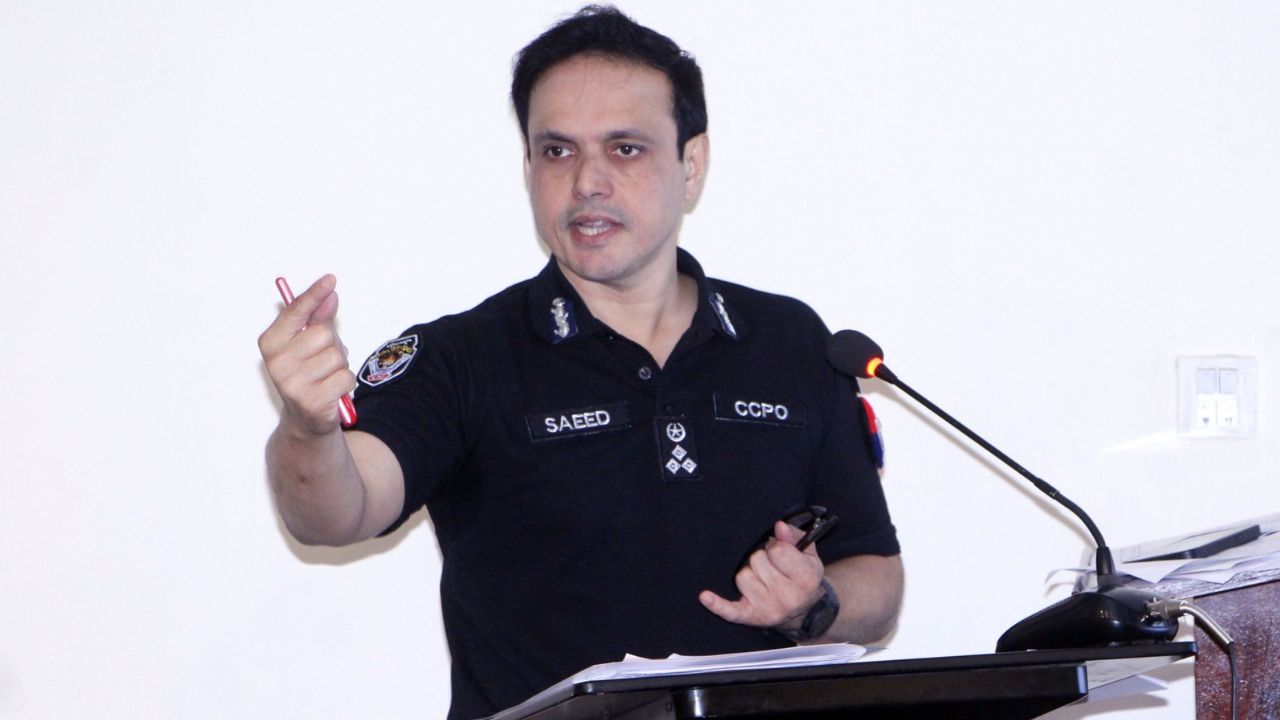
    Peshawar Capital City Police Officer (CCPO) Dr Mian Saeed Ahmad has suspended six station house officers (SHOs) for alleged ties with criminals and the land mafia. 

    The suspension was announced by KP police in a social media post, which also detailed that six sub-divisional police officers (SDPOs) and eleven other SHOs had been served with show-cause notices for “poor supervision”.

    “The CCPO reiterated ‘no room for corruption’ and that public safety is the top priority,” the post read.

    The suspended SHOs were serving Faqirabad, Hashtnagri, Paharipura, Pishtakhara, West Cantt and Khazana police stations. The officer in charge of the Jahangirabad police post and a junior clerk posted at Khazana Police Station also faced action.

    The six SDPOs who were issued show-cause notices were posted in Faqirabad, Hashtnagri, Gulbahar, Pishtakhara, University Town and Regi, whereas the 11 SHOs included those of Tatara, Hayatabad, Sharqi, Gulberg, Sarband, Kotwali, Bhana Mari, Daudzai, Chamkani, Mathra and Badaber police stations.

    It may be noted that said action comes as capital police launches an operation against mafias involved in drug trafficking, land grabbing, promotion of gun culture and other crimes.

    The CCPO has warned officials of dismissal over failure to improve their performance and take action against gangs while restoring peace.

    “Those who perform well will be rewarded and encouraged, while others failing to improve law and order will be dealt with strictly. We have to make important decisions to ensure security and restore public trust in police,” Ahmad said in a statement.

    The CCPO added that mafias involved in land grabbing, extortion, usury, gambling, aerial firing and the display of arms to spread terror had grown stronger in recent years due to the lack of decisive action against them, and a competent team was needed to deal with the situation.

  • ‘He should get his own head checked’: Laiba Khan claps back hard at Yasir Hussain

    ‘He should get his own head checked’: Laiba Khan claps back hard at Yasir Hussain

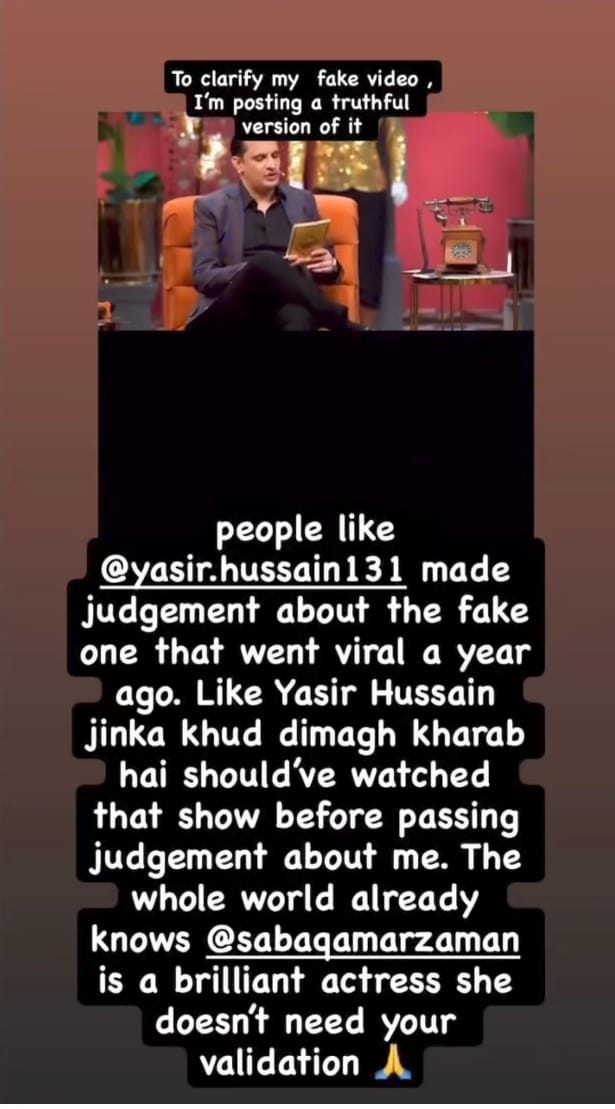
    Pakistani actress Laiba Khan has publicly clapped back at actor Yasir Hussain after he criticised her over a doctored video that falsely portrayed her as insulting celebrated actress Saba Qamar.

    The controversy ignited when Yasir shared a viral edited clip in which Laiba seemingly said Saba was “beautiful, fair and tall, but did not know how to act”.

    Reacting to the clip, Yasir took a personal dig at Laiba, writing, “Ye bohat achi larki hai in k Dimaghi ilaaj ka mutalba sarkari sata pe hona chahiye [she is a very decent girl… her mental illness should be addressed at the governmental level].”

    However, Laiba quickly set the record straight, calling the video “fake” and slamming Yasir for commenting without verifying facts.

    “People like @yasir.hussain131 made judgment about the fake one that went viral a year ago. Like Yasir Hussain, jinka khud dimagh kharab hai [whose own mind is not right], should’ve watched that show before passing judgment about me,” Laiba fired back in an Instagram story.

    She also emphasised her admiration for Saba and said, “The whole world already knows @sabaqamarzaman is a brilliant actress; she doesn’t need your validation.”

    Sharing the original unedited video, Laiba clarified that her comment was actually about Bollywood actresses.

    “I have seen many actresses of Bollywood who do not know how to act, but they are beautiful, fair and tall… yet they have become actresses,” she had said. Furthermore, when asked what profession Saba Qamar would have chosen if not acting, Laiba had answered, “Saba Qamar could have been a lawyer.”

    Meanwhile, social media users are happy that Laiba took a stand for her and did not let misinformation ruin her reputation.

    Laiba Khan made her television debut with Do Bol and rose to fame with Mera Dil Mera Dushman. She is garnering acclaim for her role in the hit drama Mohabbat Ka Safar, which is currently airing on ARY Digital.

  • Charlie Kirk murder suspect remains uncooperative, Utah governor says

    Charlie Kirk murder suspect remains uncooperative, Utah governor says

    Utah Governor Spencer Cox said on Sunday that the man accused of killing conservative activist Charlie Kirk is refusing to cooperate with investigators. Authorities are now relying on interviews with his friends and family to determine a motive.

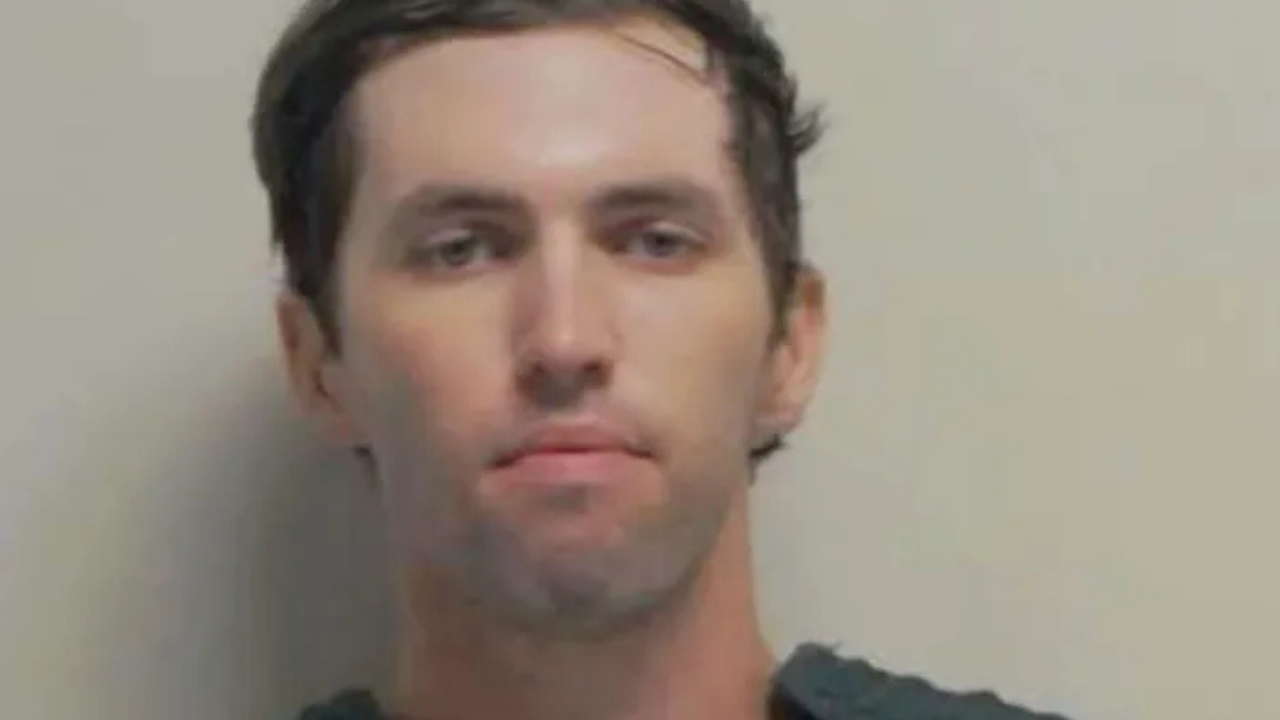
    Tyler Robinson, 22, is expected to be formally charged on Tuesday. He was arrested at his parents’ home following a 33-hour manhunt. Robinson is a third-year student at Dixie Technical College in Utah.

    Investigators say Robinson climbed onto a rooftop at Utah Valley University last Wednesday during an outdoor event and shot Kirk from long range. Kirk was struck in the neck by a single rifle round and died at the scene. 

    The event, held in Orem, about 65 kilometers south of Salt Lake City, was attended by nearly 3,000 people.

    Cox said Robinson’s roommate, who was also his romantic partner, has been cooperating with authorities. Citing the FBI, Cox described the roommate as a male transitioning to female. The governor added that investigators are still determining whether the roommate’s gender identity has any relevance to the case.

    According to court filings, investigators recovered bullet casings engraved with phrases and references to video game culture and memes. One casing read, “hey fascist! CATCH!” followed by button press symbols from a popular game. Another was inscribed with the message, “If you read This, you are GAY Lmao.”

    Relatives told investigators that Robinson’s political views had diverged from his religious and conservative upbringing. He was registered to vote in Utah but not affiliated with any political party. A family member said Robinson had previously expressed dislike for Kirk and his positions.

    Kirk was co-founder of Turning Point USA, a conservative student organization with chapters across U.S. campuses.

    He was a prominent supporter of Donald Trump and was known for his strong views on immigration and LGBT issues, which drew criticism from opponents.

    The killing has intensified debate over political violence in the United States. Trump blamed the “radical left” for Kirk’s death, though officials have not presented evidence supporting that claim.

    Pennsylvania Governor Josh Shapiro, a Democrat, said political leaders should work to reduce tensions and condemned violence across party lines.

    Governor Cox also criticized social media, saying it has played a role in recent political attacks. A memorial for Kirk is scheduled for September 21 in Glendale, Arizona, according to Turning Point USA.

  • Resolution in Punjab Assembly calls on federal govt to ban TikTok

    Resolution in Punjab Assembly calls on federal govt to ban TikTok

    A resolution in the Punjab Assembly has sought a complete ban on TikTok to put an end to “obscenity and nudity driving younger generation to immorality”.

    Farrukh Javed Moon, an opposition politician, introduced the resolution, which called on the federal government to shut down the video-sharing platform across Pakistan. 

    According to the text, TikTok was allegedly being misused by what it termed a “TikTok mafia” to promote obscenity and nudity through live chats, drawing children and the younger generation towards immoral activities.

    According to the resolution, it was against Islamic values and societal norms for young boys and girls to have indecent conversations and encouraging one another to commit indecent acts.

    The document further claimed that the pursuit of “cheap fame and money” on TikTok was luring youth towards destructive trends, thereby creating disorder in society.

    It demanded that this house of the provincial assembly appeal to the federal government to immediately ban TikTok and its live chat feature to save the younger generation from moral destruction.

    It should be stated that TikTok has already faced temporary bans in Pakistan due to concerns with immoral content, obscenity, and the detrimental impact on users’ moral and mental development.

  • Pakistan opens licensing process for global crypto exchanges

    Pakistan opens licensing process for global crypto exchanges

    The Pakistan Virtual Asset Regulatory Authority (PVARA) has invited international crypto exchanges and Virtual Asset Service Providers (VASPs) to apply for licenses under the country’s new Virtual Assets Ordinance 2025.

    The authority said the licensing framework is designed to bring Pakistan’s digital assets market in line with global standards, including those of the Financial Action Task Force, the International Monetary Fund, and the World Bank.

    Figures shared by PVARA estimate that more than 40 million people in Pakistan are engaged with digital assets, with an annual trading volume of over $300 billion. Officials said the introduction of licensing will place exchanges under defined rules for anti-money laundering, counter-terrorism financing, and cybersecurity.

    The ordinance, promulgated on July 8 and published in the Gazette of Pakistan the following day, gives PVARA the mandate to regulate and supervise VASPs in the country. It also enables the authority to establish regulatory sandboxes aimed at Shariah-compliant financial products and innovation.

    Licensing is open to exchanges already regulated abroad, such as those operating under the US Securities and Exchange Commission, the UK’s Financial Conduct Authority, the European Union’s VASP framework, the UAE’s VARA, or Singapore’s MAS. Applicants must submit their compliance records, operational details, company profiles, and licensing information, along with proposals for entering the Pakistani market.

    PVARA chairman and Minister of State for Crypto and Blockchain Bilal bin Saqib said the process is meant to encourage leading firms to take part in developing Pakistan’s digital financial landscape. He described the invitation as a step toward building a transparent and inclusive sector.

    The call for applications follows PVARA’s first board meeting last month, where members considered lifting the State Bank of Pakistan’s 2018 ban on virtual currencies. The meeting also set out priorities for risk management and oversight mechanisms.

    Submissions will be accepted on a rolling basis through email to the authority’s headquarters in Islamabad. Companies are required to include “EoI VASP Licensing” in the subject line of their applications.

    At a separate session last month, Finance Minister Muhammad Aurangzeb said digital assets and blockchain have already drawn significant interest in Pakistan, particularly among the youth, and that the government sees the sector as central to its plans for financial inclusion and transparency.

  • Family dispute turns deadly as woman burnt alive in Dhamial

    Family dispute turns deadly as woman burnt alive in Dhamial

    A 50-year-old woman was burnt alive after being doused with kerosene, allegedly by her brother-in-law in the Rawalpindi’s Dhamial area police said on Sunday.

    The suspect was taken into custody after initially claiming the woman’s injuries were caused by a compressor explosion.

     Police later confirmed the woman had been set on fire two days earlier. A murder case has been registered.

    City Police Officer (CPO) Syed Khalid Hamdani has ordered prompt action, including instructions on arresting the suspect and a case to be registered. 

    A 23-year-old resident of Quaid-i-Azam Colony in Dhamial named Mohammad Shahzad Ahmad Bhatti submitted the FIR, claiming that he was at work when his uncle called to tell him that his mother had been burned in a compressor explosion and sent to CMH hospital.

    Shahzad discovered his mother Shahzia Farooq unconscious and severely burnt when he arrived at the emergency room.

    His sister later told him that their aunt Hajra Adeel had quarreled with both her and their mother before threatening to kill them.


    She allegedly forced his sister out of the house, locked the door and shortly after, neighbors heard screams coming from within. 

    The neighbors unlocked the door and discovered Shahzia engulfed in flames, while Hajra was reportedly changing her clothes. When asked how the woman had caught fire, Hajra claimed it was due to a compressor explosion.

    Shahzad said that his aunt intentionally burned his mother alive, blaming it on a domestic dispute. He said quarrels often broke out as his father managed household expenses, leading to repeated tensions between his parents and his aunt.

    Initial police investigations confirmed that the woman was doused with kerosene and set alight.

    CPO Hamdani condemned the act, saying crimes against women will not be tolerated and that the accused would be punished according to law.

  • Indian Air Force wants 114 more Rafales after Pakistan shot down three in military clashes

    Indian Air Force wants 114 more Rafales after Pakistan shot down three in military clashes

    The Indian Air Force (IAF) has proposed that the government acquire 114 French-made Rafale fighter jets for the Ministry of Defence (MoD) after Pakistan Air Force (PAF) had shot down three aircraft when the countries clashed in May. 

    Following the April 22 Pahalgam incident in Indian Illegally Occupied Jammu and Kashmir (IIOJK), India launched strikes in Pakistan’s cities on the night of May 6-7. In response, PAF shot down six IAF fighter jets, including three Rafales.

    The 88-hour-long conflict between the neighbouring nuclear countries ended after the United States (US) President Donald Trump, in a post on Truth Social, announced a ceasefire on May 10. 

    Islamabad has time and again acknowledged President Trump’s role in mediating the ceasefire; however, India denied it, saying that the ceasefire was achieved during direct talks that had taken place between both countries’ Director General of Military Operations (DGMO).

    According to Indian media, if the proposal is accepted, the deal for Rafale is estimated to be done to cost INR 2 lakh crore, or about a whopping $23.8 billion. The jets will feature 60 percent indigenous content and will be built in India by Dassault Aviation and an Indian firm under the ‘Make in India’ scheme.

    The proposal is currently under consideration by different wings within the ministry, including Defence Finance. The IAF has reportedly called upon the MoD to bypass the Multi Role Fighter Aircraft (MRFA) program to directly opt for the Rafale.

    The biggest ever defence deal for the Rafales is expected to take the number of Rafale aircraft in the Indian defence forces’ fleet to 176, as the IAF had already inducted 36 of them, and the Indian Navy has placed orders for 36 of them under government-to-government deals.

  • Waseem Badami reveals reason behind Umer Shah’s death

    Waseem Badami reveals reason behind Umer Shah’s death

    In a heartbreaking development, Umer Shah, the younger brother of internet sensation Ahmad Shah, passed away in the early hours of Monday in Dera Ismail Khan, leaving fans, celebrities and the entire nation mourning.

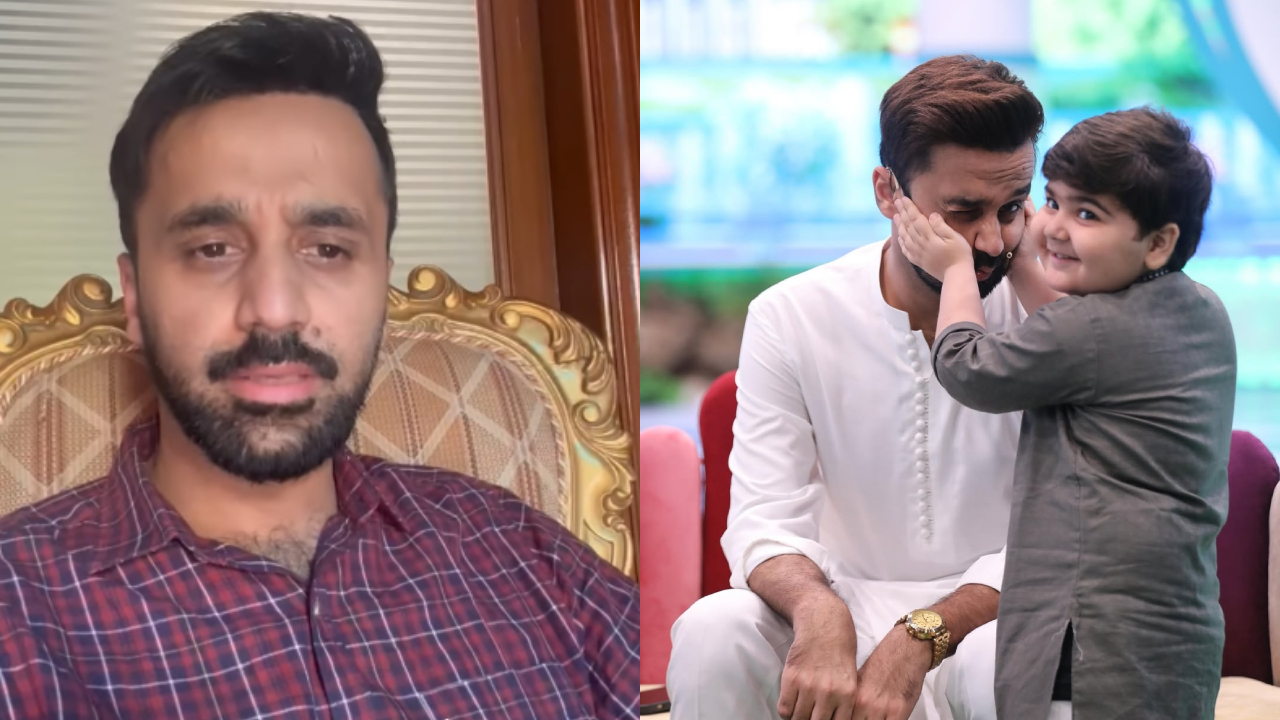
    Renowned TV anchor Wasim Badami, who shared a close and affectionate bond with the little star, with a heavy heart, revealed in a video that Umer passed away around the time of Fajr prayer. He also went on to share the reason behind the sudden demise.

    “According to the doctors, his vomit got stuck in his lungs. Due to the blocked airways, oxygen supply to his body was cut off, which ultimately led to cardiovascular arrest,” revealed Badami, who often expressed his fondness for Ahmad Shah and his brothers on-screen.

    He appeared visibly shaken as he urged the public to pray for the grieving family during this unimaginable loss.

    Medical experts explain that this tragic condition occurs when stomach contents accidentally enter the lungs — a process known as aspiration. When vomit is inhaled into the lungs, it can cause severe inflammation and blockage of airways. The resulting oxygen deprivation can lead to cardiac arrest within minutes if not immediately treated.

    As the news spread, waves of sorrow poured in from across the entertainment world. Social media influencer Muhammad Shiraz shared his grief, writing, “Some friends are like family, and losing you feels like losing a part of myself. May Allah grant you peace and the highest place in Jannah.”

    TV host Rabia Anum, in disbelief, took to Instagram and wrote, “Ya Allah. This is unbelievable.”

    Taking to Instagram, actor Adnan Siddiqui, who also have shared screen with the little star, expressed him grief and disbelief, “I am shattered to hear about the passing of little Umer Shah. He was a beam of light, joy, and innocence on Jeeto Pakistan. Constantly running up with that big smile, always hugging everyone with that boundless energy… it feels impossible that he’s no longer with us.”

    “My prayers are with Ahmed Shah and the entire family. May Allah grant Umer the highest place in Jannah. Umer, you’ll be really missed,” he added.

    Fahad Mustafa also shared a picture with Umer in his Instagram stories and wrote: “Humara Umer chala gya (Our Umer is gone). Speechless.”

    Actor Aijazz Aslam also penned a note to express his grievances.

    Umer Shah may have been young, but he touched countless hearts with his innocence, charm and infectious smile. His memory will forever live on in the hearts of those who loved him — both near and far.

  • Audit flags Rs100bn revenue loss in faceless customs system

    Audit flags Rs100bn revenue loss in faceless customs system

    The Faceless Customs Assessment (FCA) system, launched by Prime Minister Shehbaz Sharif in Karachi last year to curb corruption, has resulted in a revenue loss of around Rs100 billion within three months, an internal audit of Pakistan Customs has revealed. 

    The audit, conducted by the Pakistan Customs Audit wing of the Federal Board of Revenue (FBR), reviewed operations between December 16, 2024, and March 15, 2025. 

    Its 161-page report noted that the scrutiny of 13,140 goods declarations (GDs) uncovered discrepancies in 2,530 GDs, raising concerns over assessment quality, compliance gaps, and revenue leakage. 

    The report clarified that it did not cover 100 percent of FCA operations. Of the GDs reviewed, 76 percent were cleared through the red channel, 18 percent through the green channel, and six percent via the yellow channel.

    System weaknesses, employee inefficiencies, under- and over-invoicing, and widespread trade-based money laundering were all highlighted in the analysis.

    The audit also cited suspicious practices by solar panel importers. It noted that shipments imported in 2023 were cleared more than a year later, an apparent exploitation of advance knowledge about the FCA’s launch.

    Important discoveries included the clearance of banned items valued at Rs10.54 billion in 1,006 GDs, the loss of statutory fines of Rs2.43 billion, and duty/tax evasion of Rs5 billion across 1,524 GDs, all of which violated intellectual property conditions.

    It was reported that the failure to frame cases involving duty/tax evasions of Rs1 million or more resulted in another possible revenue loss of Rs30.364bn.

    The audit also exposed fiscal fraud in the cancellation of assessed/finalised GDs. These involved duty/tax evasions and fraudulent clearances of solar panel containers using unauthorised tax numbers, raising money laundering concerns. According to the report, applying the minimum statutory fine slab of 20 percent under SRO 499(I)/2009 should have generated Rs53.549bn.


    In practice, only Rs3.480bn was imposed and collected from 308 contravention cases. Even in cases with higher duty/tax evasions, the potential loss remained at Rs30.364bn.

    The Directorate General of Pakistan Customs noted that resource and time constraints forced reliance on transactional audits rather than broader entity-based scrutiny.

    Additionally, it said the audit’s scope was limited to GDs involving duty and tax payments, limiting detection of revenue-sensitive issues.

    A used Toyota Land Cruiser worth Rs10 million that was cleared for just Rs17,635 was one among the worst violations of the FCA that were highlighted in the report.

    The misdeclaration was flagged as a potential case of trade-based money laundering, where illicit payments may have been routed through hawala/hundi channels instead of official remittances.

    “The case reflects a serious risk of Trade-Based Money Laundering (TBML). By declaring such a nominal purchase amount, the importer appears to have circumvented financial scrutiny, potentially paying the true cost through unofficial or illicit channels as the declared value of the vehicle had to be paid through remittances originating from foreign countries.”

    In case of failure to substantiate that the actual value of the vehicle was paid through foreign country sources, it can raise concerns with regard to funds transferred through illicit channels involving hawala/hundi, a common hallmark of TBML schemes.

    The audit identified a wide range of discrepancies, including misclassification of HS Codes, misdeclaration of values, non-application of valuation rulings (VRs), violations of SROs that granted inadmissible concessions and exemptions, as well as short payment of sales tax on retail prices.

    A pattern of fiscal fraud was found during the post-clearance examination of GDs that were cancelled. The scheme was to cancel assessed or finalized GDs and cancel them in order to evade paying taxes and duties. Importers initially filed GDs by declaring false product descriptions, HS codes, and values.

    When assessments flagged adverse findings involving duty and tax evasions, instead of paying the amount due, the importers requested cancellation of GDs.

     These cancellations were allowed. After a gap of a few days or weeks, the same importers refiled GDs with the same wrongful declarations, but this time the goods were assessed at lower duty and tax rates. This allowed them to evade payments while also avoiding statutory fines.

    Numerous cases of imprecise product descriptions were also discovered during the assessment. As a result, the value assessments were lower. Such incidents became extremely challenging to identify at the post-clearance stage because the department and the assessing officers who accepted the lower values were mostly at fault.

     This shifted the burden of proof back onto the department to establish misdeclaration. A major case involved 54 solar panel containers belonging to five bogus importers. These shipments, manifested in 2023, were fraudulently cleared through 28 GDs between December 2024 and February 2025. 

    The clearances were carried out under different and unauthorised NTNs and Customs User IDs, reflecting exploitation of both the FBR’s Registration Module and the Customs Computerised System.

    The fact that some of these importers had already been arrested in other cases is even more concerning. They portrayed themselves as low-level workers with incomes of just Rs30,000.

    “This forms part of the broader solar panel money laundering scam already a high-profile case reflecting a serious systemic lapse.”


    The audit further highlighted that the increasing reliance on the green channel, now covering nearly 60 percent of imports and 85 percent of exports, was steadily reducing the scope of pre-clearance controls.

    Additionally, the report pointed out that limiting visibility of GD particulars under the FCA weakened the quality of pre-clearance assessments.

    The audit observed that modern customs administrations generally operate on the principle of “front-end facilitation with back-end control,” and maintaining an optimal balance between the two is critical.

    “In Pakistan Customs’ case, front-end facilitation without proportionate back-end oversight has created a structural lag in the taxation framework, escalating both revenue and compliance risks,” the audit said, adding that the green channel itself had become a risk area.

  • 400 ancient coins found in Dera Ghazi Khan

    400 ancient coins found in Dera Ghazi Khan

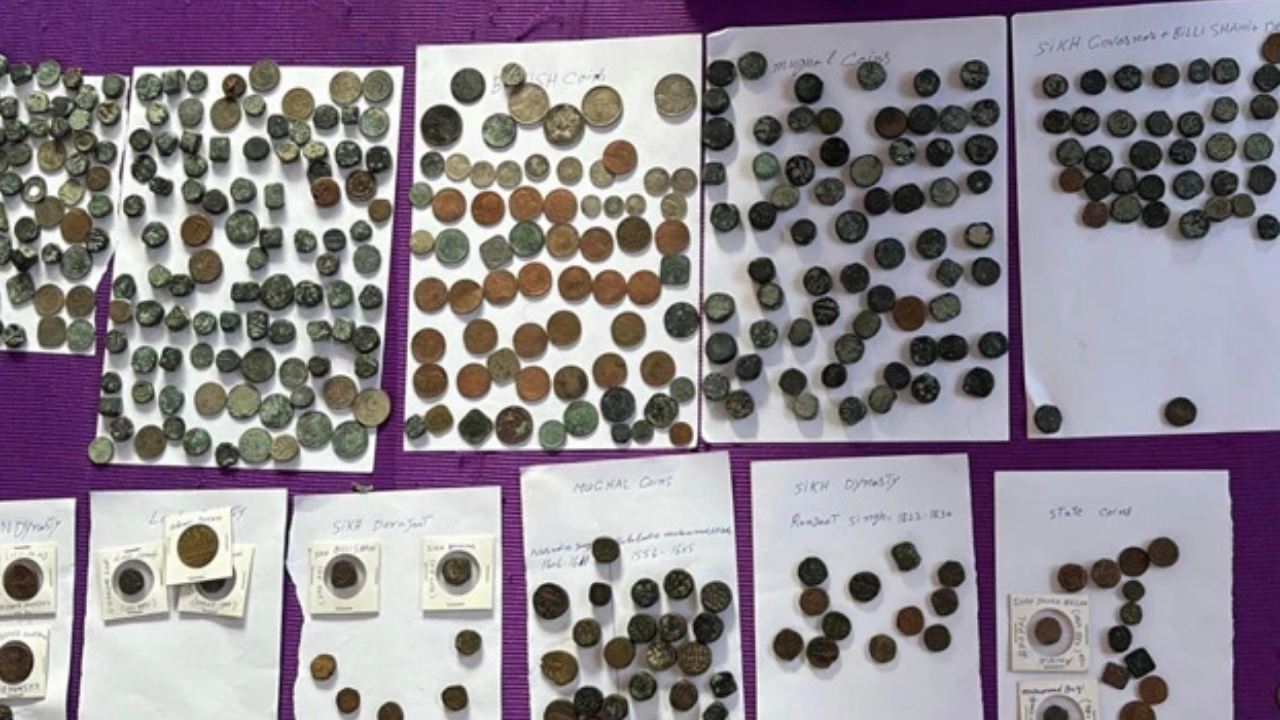
    Archaeological authorities have acquired nearly 400 ancient coins that were uncovered from the Kuki Hill Torrent in proximity to the shrine of Hazrat Sakhi Sarwar Syed Ahmed Sultan located in Dera Ghazi Khan. 

    Deputy Commissioner Usman Khalid reported that the coins originate from various centuries and dynasties and have been transferred to the archaeology department. A team led by deputy director of archaeology Sulaiman Tanveer visited the site, secured the coins, and stated that plans for further excavations along the torrent bed are in progress. 

    The initial discovery of the coins was made by local residents near the shrine of Hazrat Sakhi Sarwar, who is believed to have entered the region in 1077. Historical records indicate that he was martyred alongside his family and interred in that same area. Recognized for his efforts in promoting Islam, the shrine eventually evolved into a significant religious site in southern Punjab. 

    Prior to his arrival, historians note the existence of an ancient temple in the settlement. Along the path leading to this temple were rest houses called Dhodah Ranas, named after a local sweet bread. These facilities catered to travelers and devotees, although their original structures have undergone changes over time. A third Dhodah Rana was situated in the village of Wadore, which was positioned on the historic route that connected Nigaha-Moqam, the former name of Sakhi Sarwar, to Afghanistan. Historical narratives also document that Mughal emperor Babur traversed this ancient trail. 

    Recently, remnants of an old check post have also been found along the Kuki torrent. Archaeologists believe these discoveries highlight the region’s importance as a stopover on trade and travel routes for numerous centuries.

    The town of Sakhi Sarwar, formerly known as Nigaha and Moqam, has historically possessed both Islamic and pre-Islamic significance. Scholars assert that its geographical position on an ancient trade route linked it to Ghazi Ghat on the Indus River, which was previously referred to as Pattan Moqam. The latest findings contribute to the documentation of the town’s complex history, blending religious, cultural, and commercial narratives from diverse eras.