In the previous two years, Pakistan had started to pick its pace at a slightly high point and the economy had started to improve. Both the current account along with the non-oil current account had continued to improve after exchange rate reforms while sectors with the highest forward linkages i.e cement, iron and steel, had started to show an upward spike in production.
The fiscal side also seemed to strengthen over a period of time while growth in revenue collections at all levels, especially direct taxes, was also witnessed.
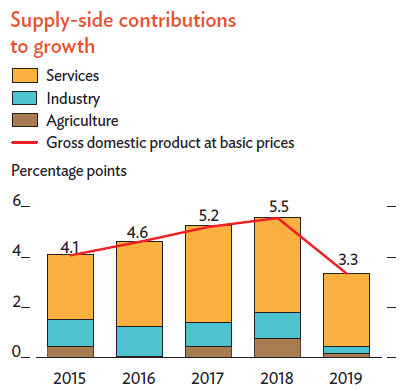
However, with the ongoing coronavirus pandemic raising its ugly head, the meager growth achieved is now threatened.
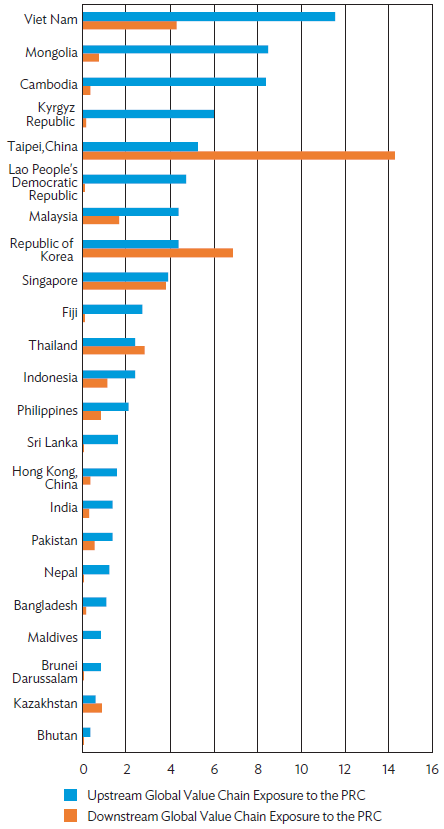
According to a World Bank (WB) assessment, the global impact of COVID-19 can reach $347 billion (0.4 per cent of Global GDP). Nearly all regions suffer a double-digit decline in trade volumes in 2020, with exports from North America and Asia hitting the hardest. But it is important to note that this hit was majorly experienced by countries with sizable exports due to trade problems while Pakistan has a low global value chains (GVC) exposure to the world, especially to People’s Republic of China (PRC), which means it has suffered lesser trade disruptions so far.
Trades have fallen steeper in sectors with complex value chains, particularly electronics and automotive products.
According to Urban Unit’s spatial industrial data, currently, 18 per cent of the industries in Pakistan are operational. These include the fertilizer industry, agriculture, agriculture spare parts and export industry, all of which are operating under conditions of following certain standard operating procedures (SOPs) developed by the Punjab government. However, strict monitoring from the government will also be required as an exemplary practice of these SOPs which will further encourage the authorities to open up other capital-intensive sectors.
On the monetary side, there are several efforts made by the government. Under a federal package, a Rs100 billion relief package has been provided to small and medium-sized enterprises (SMEs) and the agriculture sector along with concessional loans. Money is allocated to lower the input cost for farmers along with a Rs12,000 monthly package with facilities of panagahs [shelter homes] and langar centers [soup kitchens].
The Punjab government has also implemented tax reductions as all forms of GST have been removed from online platforms, businesses and services related to HR; deferment of tax has been implied for properties and CVT & stamp duties have been reduced to 2 per cent on property transactions, construction industries, hospitals and medical consultants. In addition to these, the State Bank of Pakistan (SBP) has provided relaxation in export schemes (EFS & LTFF) and has enhanced liquidity for exporters while providing extensions in the time period to ship and import goods against advance payment.
The central bank has also reduced its interest rate from 13.5 per cent to 9 per cent.
However, there are some further actions that the government can take in order to improve the current economic situation. A regulatory framework can be adopted keeping in view some of the best international practices from where many risk management practices can be learnt to determine the best price discovery (for example, the United States has dropped the interest rate to 0 per cent).
Secondly, allowing ease of entry for institutional capital in order to broaden the depth of the market i.e. attracting FDIs in newly established special economic zones in Faisalabad, Bhalwal, Vehari and Rahim Yar Khan by simplifying provincial and federal procedures. Thirdly, the role of aggregators, producers and organisations can be improved for better price negotiations for SME’s.
Fourth, access to foreign capital should be made easier and distortions should be minimised by developing linkages with the international markets. That means ease of doing business index, logistic performance index and reduced lead time for exports should be commenced. Lastly, e-markets should be developed where participants can access both international and domestic markets. An e-commerce policy at the provincial level must be put in place with incentives to increase documentation of economy and online trade at B2B B2C and C2C levels.
It is to be noted that Pakistan is not alone in this economic downfall. It is vital to have a positive outlook on the situation and prepare for the future with better resilience. Effective policies and active preparedness can give impetus to the post-pandemic industrial revival.