Category: Editorial

  • What’s the point of helping them now?

    What’s the point of helping them now?

    This week started off with the commemoration of Pakistan’s 76th year of Independence. Despite the current political uncertainty and economic instability, the flag was hoisted high by the president; the national anthem was recited; and as per tradition, the lit roads were taken over by youth dressed in green and white.

    And while passionate speeches were made praising the sacrifices of those who fought for the freedom of Pakistan, somewhere in the district of Faisalabad, an inaudible alarm of impending destruction rang through.

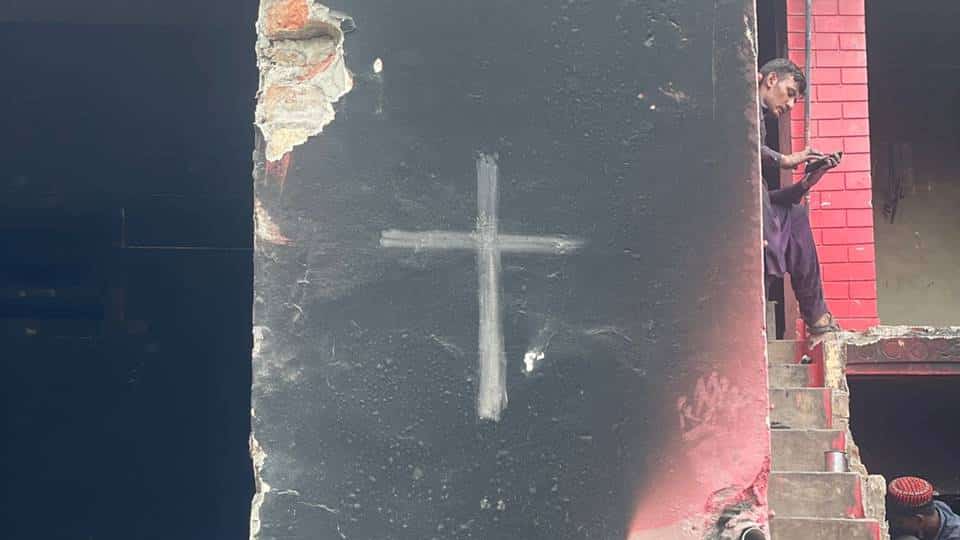
    On August 16, a mob of hundreds of people attacked the Christian community in Jaranwala over alleged blasphemy allegations against two Christian residents. By night, the Christians in Jaranwala were homeless in their own hometown. Even the churches, burnt and destroyed, could not accommodate its people in need.

    Members of our team visited Jaranwala yesterday and came back emotionally dazed after witnessing the helplessness and hopelessness of the Christian community. “What is the point of helping us now? Everything has been ruined,” one woman cried to us. And we could do nothing, say nothing to make her feel better.

    The people in that mob who wrecked an entire community are inheritors of the same freedom that is signalled to us on national television with pride. It is the freedom that was equally granted to Christians, Hindus, Ahmadis, and Sikhs along with Muslims. But somewhere along the way, it became the right of only one. Somewhere along the way, freedom became sectarian violence. Somewhere along the way, freedom became intolerance. And somewhere along the way, our freedom divided us.

    And so, today we mourn and deplore the horrors of mob violence for the umpteenth time.

    We continue to steer forward through blood and debris without minding the rotting smell of state’s conscience.

    Perhaps it is time to redefine ‘freedom’ in Pakistan. Like privilege, it only serves a few and obliterates the rest. Like hope, it is a yearning; but elusive as a mirage. Like tragedy, it has become our nightmare amidst all that could have been.

  • The Weight of a Life

    The Weight of a Life

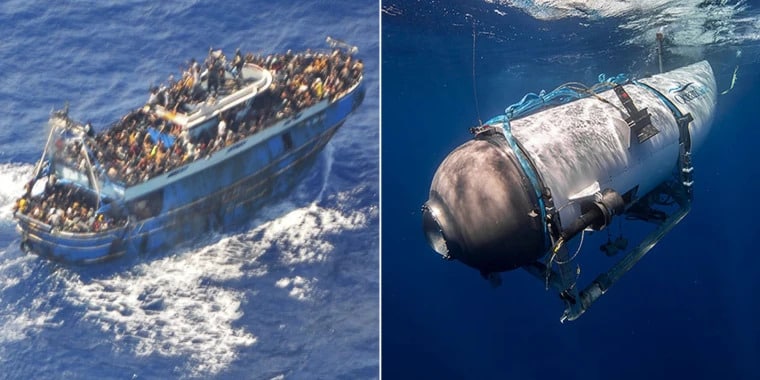
    In the last week alone, the world has been witness to two immense tragedies that played out at sea. Tragic as both events were, the public seems to be divided on which party to extend their empathy and/or sympathy toward: the 300+ Pakistani migrants that drowned after a trawler capsized off the south coast of Greece, or the Pakistani billionaire and his 19 year old son that died in an implosion thousands of metres below the surface of the North Atlantic Ocean?

    One only need to peruse through the comments under The Current’s reporting on the tragedies to understand what the two sides believe in. On the one hand, individuals are calling out the difference in response to both calamities and suggesting that Shahzada Dawood, Vice-Chairman of Engro Corporation, made a choice to die when he paid $500,000 for him and his son to travel to see the Titanic’s wreckage. Yet, this side maintains, the migrants aboard the trawler had ‘no choice’ but to embark on such a perilous journey to better fortune. 

    On the other hand, people are shocked by the Pakistani public’s ability to extend and withdraw empathy on the basis of an individual’s wealth – or lack thereof. The Dawoods were renowned philanthropists in the country, donating millions of their wealth to education and healthcare (notwithstanding the argument that, admittedly, it’s probably because they had those millions to spare). Should empathy not be extended to the wealthy that donated vast amounts to projects providing higher-education opportunities to Pakistanis? Should empathy only be extended if the wealthy are charitable?

    What is perhaps most interesting – and also practically self-evident – is the anger drawn from the media coverage of both tragedies. The OceanGate submersible was dominating global headlines the second it was announced ‘missing’, up until the moment they realised there was no hope. Meanwhile, the Greek migrant boat tragedy only saw a couple days of reporting – even though there is currently an ongoing investigation concerning the complicity or negligence of both Greek authorities and border authority Frontex on the discrepancies found in communication. 

    While there is more than plenty to criticise in regards to the stark difference with which both calamities were responded to, it is hugely counterintuitive to compare the loss of lives. It is indeed likely that the migrants were condemned to their deaths by the authorities. In transcripts published by AlarmPhone, and analyses of vessels in the area around the time the trawler sent out an alarm signal, discrepancies in official statements made by the European authorities are enough to merit investigations. Moreover, accusations have abounded regarding the Greek coast guard’s role in the eventual capsize. Pakistani survivors of the wreck reported that the boat only capsized after the Greek coast guard started towing it. 

    Of course, anger is bound to arise when one compares that scenario to a full-blown military-scale search for the five individuals onboard the missing submersible. However, the people offering no sympathy to Shahzada and his young son Suleman,  simply because they paid a lot of money to be in that position, are largely misplacing their anger. The tragic plight of migrants and refugees is not new to us: they were not simply left to their deaths only because they are poor as compared to the Dawoods. 

    Anti-immigrant sentiment is on the rise in Europe. Far-right parties with anti-immigrant policies have risen in popularity and have become quite verbose on how unwelcome immigrants are. Within such a growing sentiment – while it by no means justifies the tragedy – one simply cannot expect the same level of frantic search. It isn’t because those lives were not worth the search: it’s because those lives, in the clinical eyes of the Europeans, simply meant a burden on their existing economy and resources. 

    So yes, we should be angry. We should be absolutely livid at such blatant disregard for life. But to redirect that anger to two completely innocent Pakistanis who also encountered a tragic fate, simply because they’re rich, is quite unfounded. It could have made sense if the two incidents were correlated beyond just their occurrence in the sea – say, if the authorities meant to search for the migrants were redirected to the submersible. 

    At the end of the day, the families of the migrants have seen their entire world shatter, much like the Dawood family. To weigh the worth of lives on such a material basis such as wealth is counterintuitive to the anger felt by the loss of them. And to compare such tragedies distracts us from the larger, more pertinent structural issues that led to the worst migrant boat disaster in recent history. 

  • Budget 2023-24: Silent Budget, Fading Democracy

    Amidst endless political turmoil, with inflation standing at 38 per cent in May and the country teetering on the brink of default, Finance Minister Ishaq Dar presented the budget for the fiscal year 2023-24 on Friday. There was no Opposition present in parliament to suggest amendments. The budget was presented without the chaos we usually witness during budget speeches.

    Whatever semblance of Opposition we have, did criticise the coalition government for presenting a budget that appeases the International Monetary Fund (IMF). However, the chances of an IMF bailout appear slim, and if the bailout does not materialise, the threat of default is significant.

    In the next fiscal year, external payments of 25 billion dollars are required, which cannot be arranged without the IMF, as no international organisation will provide funds without the IMF’s involvement.

    It is also pertinent to mention here that no target from the previous budget was achieved. The growth target was set at 5 per cent, but it remained at 0.28 per cent, an abysmally low rate. The inflation target was set at 11.5 per cent, but it remained at 29 per cent, an astonishingly high rate.

    Budget deficit exceeded the target by Rs2.2 trillion, and the upcoming fiscal year has a tax target of Rs9.2 trillion, out of which 80 per cent, or Rs7.3 trillion, will be spent on paying interests alone.

    Pakistan Tehreek-e-Insaf (PTI) has rejected the budget, claiming that it offers no relief for the poor. Maybe if they had stayed in parliament and expressed criticism on the floor of the House, their objections could have had a stronger impact and they could have had a significant influence on shaping the budget. PTI’s criticism from outside parliament, without any actual impact, highlights the crucial role of the Opposition’s presence in such situations.

    A functioning democracy relies on the active participation of the Opposition to ensure the budget serves the interests of all citizens. The current scenario calls for a commitment to democratic values and for an Opposition that can help to effectively shape policies. The presence of Opposition in parliament is not just a symbol of a healthy democracy, it is a prerequisite for balanced decision-making, inclusive policies, and a stronger, more prosperous Pakistan.

  • No, divorces are not rising because of Aurat March, but because women are recognising their right to live

    On Saturday, actress Nazish Jahangir set social media ablaze when during a podcast with controversial YouTuber Nadir Ali, the model turned actor claimed that she did not identify as a feminist, because apparently “not all crying women are truthful.”

     “…l believe in equality, and I still confidently say that not all crying women are truthful. I am always standing with the right person whether it is a woman or a man.”

    The abysmal part of this conversation begun when Nazish Jahangir went on to address Aurat March, saying that the movement is responsible for the rise of divorces in the country, adding that it was not a solution to any problem:

    “I don’t believe in these Aurat Marches. It’s not benefiting the women for whom we are fighting. They are not reaching the women they’re standing up for. Such poor women would be sitting in villages and making food while they chant slogans on the streets here. I think these fake feminist movements will never get you justice,”

    “I wonder who they are protesting for then. Are they protesting for us? Because our league knows everything about it. We know our rights and we know the value of equality. The ratio of khula has also increased after these marches,” The ‘Thays’ actor claimed. “I’m not asking women to bear cruelties or abuse. They can leave their houses if they like but at least give it a shot. Our parents are the biggest example of sacrificing and surviving relationships with patience and love. Because now women are getting divorced only after one month.”

    Yes this is a deeply messed up argument, there is a lot to unpack and a lot of myths to dissect which are once more churning up harmful stereotypes towards organisations working for women’s rights. Perhaps the worst statement was about Aurat March encouraging divorces in Pakistan. A sweeping statement Jahangir gave without any proof that it is true.

    In reality, Aurat March is not the reason why women are choosing divorce Aurat March is the solution to a long term issue: the limited support and neglect shown towards women in a patriarchal society that demands that everything be sacrificed for the sake of a marriage.

    Since Ms Jahangir is from the acting profession, and our dramas claim to know best about what women should want from a marriage, can we all collectively recall one drama that has portrayed a healthy marriage? Can we say that ‘Tere Bin’, which features a man stalking and slapping his wife was what women should look up to in order to understand how to keep their marriages intact?

    Furthermore, if Ms Jahangir is claiming that women who break away from their marriages do not understand sacrifice and hard work because Aurat March tells them to be less tolerant, then she needs to be aware that more women in Pakistan have died trying to stay married. Sara Inam was murdered by her husband in Islamabad after three months of marriage, was the murder her own fault? Qandeel Baloch‘s murderer, her brother, was pardoned by the court despite confessing his crime to authorities, only because his parents pardoned him. Just five days ago, another man walked free from a court in Karachi after murdering his daughter, because he was once again pardoned by his family. Another man in Lahore murdered his wife and then sent her body back to her family via a rickshaw.

    All these nameless women, the countless ways they were let down by the law and society in Pakistan. How is that we know about them, Ms Jahangir? It’s definitely not because of the family system, which continues to hide predators, and pardon them after unforgivable crimes. This heroic act solely belongs to Aurat March, which has time and time again raised placcards for countless women you claim it does not protect.

    You claim to say that Aurat March cannot help the women in villages because they’re too busy shouting slogans, but it is through Aurat March that we know these women’s names. Working class women like Dua Zehra, whose parents couldn’t make an announcement at a mosque because she was a Shia, and who was slammed by media organisatons, who claimed she had disohonored her family. It was local activists who pressurised authorities to take child abduction seriously, helping her come back home.

    Claiming that you’re unaware about a topic is one thing, but making sweeping generalisations about women’s rights, especially during a time when laws seek to further restrict women’s access to escaping abusive marriages, and more feminist activists are being trolled onine, it is incredibly disheartening to see a public figure as yourself talking without properly fact checking yourself.

    If you are still confused about how to be a well informed and articulate public figure, then take an example from Ayesha Omar and Kiran Malik, who carefully broke down why watching the rise in divorce rates is a good sign that more women are learning to stand up for themselves and escape their abusive marriages.
  • Dear ‘Tere Bin’ writer, marital rape is rape

    To Nooran Makhdoom, the writer of the drama ‘Tere Bin’.

    How you chose to write your script is your own business. But to say that a heinous act like marital rape is justified and needed for the script is completely wrong and horrifying, as well as an insight into how the Pakistani entertainment industry keeps alienating women every year.

    This spectacle started on Friday, when the promo for the upcoming episode showed that after accusing Murtasim of cheating on her with Haya, Meerab is raped by her husband as punishment. Social media users were rightfully horrified, which led to a stream of hashtags like ‘Shame on Tere Bin Makers’ and ‘Nooran’, with users beginning to withdraw their support from the once popular drama, and criticising the production team for taking such a heinous step without realising its consequences and impact.

    Instead of listening to your fans and hearing their well-justified complaints about Meerab’s rape, you, Ms. Makhdoom, have instead decided to double down on your stand and defend it. In your statement to Arab News, you said that this is just a drama, and that this had not happened for the first time, so fans should stop complaining about every single episode.

    Now, Ms Makhdoom, we have to point out that you are entirely wrong to dismiss these complaints. Because:

    a. Marital rape is a crime, and many women in Pakistan suffer from it.

    b. Films and dramas are more than just means of entertainment. They are powerful tools to influence audiences.

    Let us break down all of this to you because clearly, you are not aware about the audience you are writing for.

    Marital rape has been declared as a human rights violation by the United Nations High Commissioner For Human Rights in 1993, when they included it in the ‘Declaration on the Elimination of Violence Against Women’. However, in Pakistan where approximately 40% of women have experienced physical or emotional violence in their lifetime, there are no laws that recognise this as an illegal act.

    Already Ms. Makhdoom, you must be aware that the country you are writing dramas for, is one where women are not granted financial independence or any form of security so that if they are suffering from violence, they find some solace and escape. But because of cultural restrictions that prevent women from finding support, as well as a dilapidating justice system that refuses to help survivors, very few women live to see the day when they are able to escape their abusers with ease.

    So to stress on why saying this is ‘just a drama’ is wrong, these kinds of scenes undermine the difficult realities of women in Pakistan. It refuses to acknowledge them as individuals with the right to reject sex from men, whether or not they are married to them. And such actions being normalised by some of the top rated dramas in this country will only further erode the little progress that has improve the rights of women in Pakistan.

    Furthermore, dramas aren’t ‘just dramas’ Ms. Makhdoom, but powerful instruments of change that can influence the masses that are watching them. As a script writer, you do not get to evade the responsibility that comes with being a public figure, because ultimately the public looks up to you and is watching your dramas to learn more about the society around them. Which is why, it speaks volumes about the way our entertainment industry has continued to dig itself further and further into a hole when one of the highest rated dramas of a country which has been declared as the fourth most dangerous country for women, thinks that showing marital rape is okay.

    It’s never okay. And we urge you, Ms. Makhdoom, to stop hiding behind such baseless defences, and actually look down to see the consequences of the narrative you are promoting. Women in Pakistan are in pain. And it is only when public figures like you take responsibility for your actions and stop churning out such debauched dramas for the sake of good ratings, that we can actually progress forward.

  • PDM be warned: allow Army Act trials and some day military laws might be used against you too

    PDM be warned: allow Army Act trials and some day military laws might be used against you too

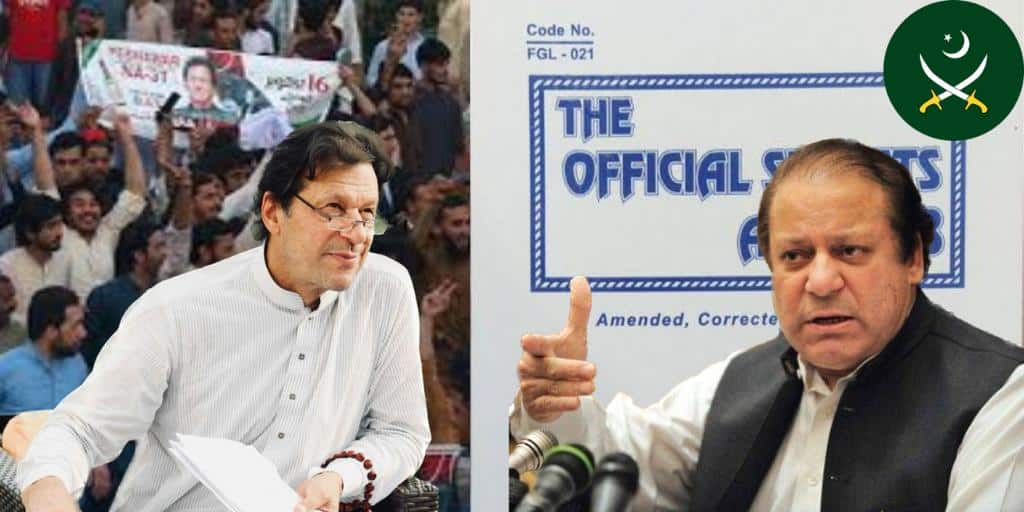
    A Special Corps Commander Conference held at the General Headquarters (GHQ) and presided by Chief of Army Staff General Asim Munir has decided that the planners, instigators, abettors and perpetrators of the attacks on military installations and buildings during the protests led by Pakistan Tehreek-e-Insaf (PTI) supporters will be tried under relevant Pakistani laws, including the Army Act and Official Secret Act. The statement released by the ISPR after the Corps Commanders meeting is not just unprecedented but is being seen as a violation of human rights and fundamental freedoms.


    In a statement, Aurat March Lahore said: “Use of military laws and courts to try civilians, the complete absence of due process, transparency and accountability flies in the face of the pretence of democracy under the current PDM regime… State institutions and monuments are not more important than people’s fundamental rights and lives. Respect must be earned through actions, not through the force of draconian laws.”


    It must be noted that if convicted under the Army Act, a person can be sentenced to life imprisonment or be handed a death sentence. Pakistan is going through one of its worst crises ever with the entire system tethering on the brink of collapse. From the military establishment to the judicial establishment, all institutions have lost their credibility. It is high time that political parties and parliament take charge of the situation and make sure that the law is followed instead of going down the path of military trials which offer no transparency.

    A word of caution: if the PDM government go down this path and allows civilian rioters to be tried under military laws, the same will one day be applied to their leadership, their supporters and workers. We have seen history repeat itself too many times to not learn a lesson. Democracy is not about punishing your opponents; it is about ensuring that no one is targeted unjustly for their political views. Rioters, when identified, should be prosecuted as per the law of the land in courts, not military courts. If PTI justified arbitrary arrests, detentions and draconian punishments, PDM should refrain from doing so. Politics isn’t about personal enmity.

  • It’s time to close the zoos in Pakistan

    It’s time to close the zoos in Pakistan

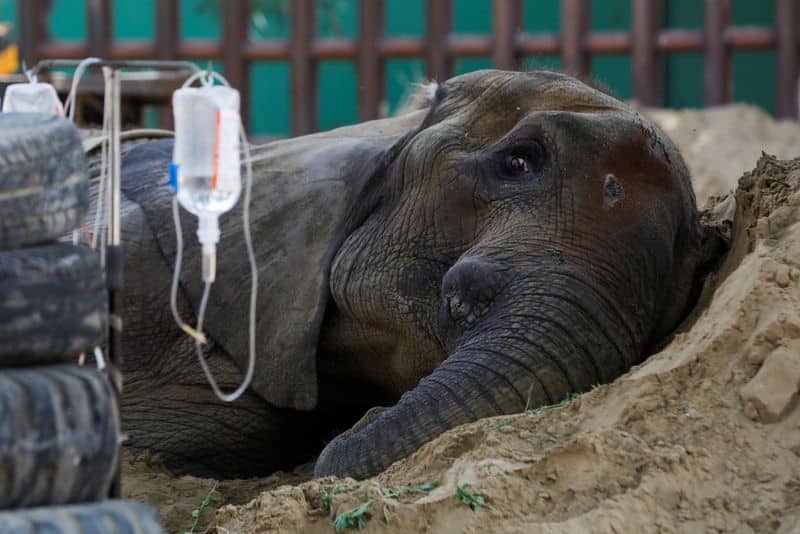
    Noor Jehan, an elephant in Karachi Zoo, is critically ill after the 17-year-old fell in a pond in a small enclosure. She has since been lying visibly weak with limited motion on a mound of sand, propped up against the only tree inside the enclosure. Noor Jehan’s condition is a reminder that we have imprisoned animals in cages for the entertainment of the people. We humans are the reason that the animals suffer and bear so much torture and pain.

    Wild animals are unlikely to survive or live happily in an artificial environment like the ones we provide them at the zoos. Moving them from their natural habitat and from their community puts them under great stress. It is no secret that animals in Pakistani zoos are kept in poor conditions.

    The wildlife parks and zoos of Pakistan are characterised by a weak governance system. The animals lying in the zoos and wildlife parks of Pakistan are ignored with regard to their physical and mental well-being. They are not properly provided with adequate nutritional food and are seldom treated effectively for their physical ailments. There are about 10 public zoos, 25 private zoos and 28 wildlife parks in Pakistan. Neither of these are authorised by any recognised association of zoos and aquariums. The animals kept in these zoos are often neglected. Not only is their food and nutrition ignored but several other environmental issues thwart their well-being. Several zoos lack veterinary professionals, owing to which the animals do not get ample medical help whenever required. Some animals die due to lack of adequate required treatment adding to the plight of the zoos of Pakistan.

    This brutality towards animals has been there because of continuous negligence being directed towards them. This isn’t the first time we are witnessing the suffering of animals at zoos and this definitely doesn’t seem to be the last time either. In 2020, American singer Cher arrived in Pakistan to send off Kaavan, an elephant in Islamabad Zoo she had spent years trying to free, before his move to a Cambodian sanctuary. Animal rights advocates had campaigned for the 36-year-old Asian elephant to be rescued from grim conditions.

    Minister for Climate Change, Sherry Rehman, has said that there is a no-zoo Islamabad model of rescue and rehab centre and transition sanctuary, in the federal capital. The Islamabad zoo where the bears and the elephant were kept have now been closed. Pakistan should stand firmly against any kind of animal cruelty and take timely action to stop it.

    We all need to stand up for the animals and treat them right. It took one Noor Jehan to make us realise that zoo animals suffer from continued neglect and will continue to die and go through pain if our policies don’t change. So if, we cannot take care of our animals, we should close the zoos and free the animals. We Pakistanis don’t deserve them.

  • Pakistan is the cradle of rape culture and sexism: are you surprised?

    Pakistan is the cradle of rape culture and sexism: are you surprised?

    The shocking rape of a 14-year-old girl, who was allegedly raped by her father and brother, has once again proven that there is no safe space for women in Pakistan. The girl, a resident of Azad Kashmir, was taken to a hospital by her mother after she complained of stomachache. Doctors discovered that the girl was pregnant and about to give birth. Investigation revealed that the victim’s brother and father raped her several times during the last few months. The DNA of the baby she birthed matches that of her brother’s.  Imagine the horror and fear of the girl who was not safe in her own house and where her own father and brother were her rapists and tormentors.

    Pakistan has staggering statistics that expose the rape epidemic in the country. In October last year, almost 21,900 women were reported to have been raped in Pakistan from 2017 to 2021. This meant that approximately 12 women were raped every day, or one every two hours, throughout the country. According to media reports, approximately 350 rape instances were recorded in Punjab, between May 2022 and August 2022. The Current records the tally of rape cases that are reported in news outlets on a daily basis to highlight the alarming situation. And not a single day goes by when rape isn’t reported in any city but that too doesn’t represent the actual figures because not all rape cases are reported. It’s hard to imagine what the real figures must be. Women around the country are raped, abused, and harassed every day, enduring it incessantly because the state and society has failed to ensure their safety. Occasionally, a rape case emerges in the media that elicits particular fury and ignites massive protests, while exposing the culpability of our society; the cradle for rape culture, the breeding ground that lets rapists get away by promoting victim-blaming.

    Everything about this incident tells the the horrifying story of impunity with which Pakistani men commit crimes, without an ounce of remorse. And then there are men like Pakistan People’s Party’s (PPP) Nabil Gabol, who have the audacity to pass disgusting comments about rape. In a recent interview, Gabol casually remarked: “When rape is inevitable, just enjoy it.” How can one be so heartless to say such sickening words? Gabol’s words garnered massive backlash, and rightly so. Pakistanis were angry, and outraged at the politician’s lack of sensitivity. The PPP politician apologised for his remarks later, saying that he regretted if his words had hurt women. But then he went on to blame Pakistan Tehreek-e-Insaf (PTI) supporters for launching a social media campaign against him. After issuing an apology for his misogynistic remarks, Nabil Gabol decided to defend his statement with a screenshot of PTI Chairman Imran Khan’s interview with Time Magazine. Gabol wrote that Aurat March organisers or journalists had not called Khan out for his past problematic statements. Gabol further said if he lost weight and looked handsome like Khan, then the backlash wouldn’t have happened. This non-apology and attack on women who raise their voice for victims of abuse shows that Gabol only apologised because of the backlash on social media but didn’t mean it. As if his non-apology was not enough, Gabol’s son Nadir came out to defend his father’s thoughtlessness and said that his father had intended to say: “Pain is inevitable, suffering is optional.” It is shocking that even today men have the audacity to utter such nauseating words.

    And yet, we question and pass comments on the severity of the situation. To the hopelessness and rage that fills our hearts, may women find security, protectiveness and justice in this country. Will this ever stop, is a question we ask ourselves often. Our society and justice system have failed the women of Pakistan. It is because of these attitudes that Pakistan ranks as the second-worst country on the gender gap index. Are you surprised?

  • Resham, you might not be depressed but 75 per cent of Pakistanis are

    Resham, you might not be depressed but 75 per cent of Pakistanis are

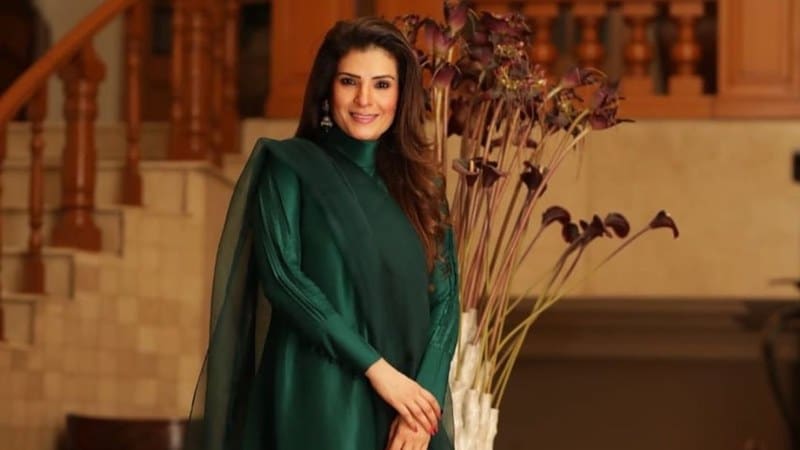
    In a recent interview on PTV Home, veteran actor Resham claimed that depression “does not exist”, which is an incredibly insensitive and illogical statement for a person in her position to say. Depression is not trivial; it is a genuine health condition. And it very much exists in Pakistan — more than most countries in the world.

    In 2022, public health experts and intellectuals pointed out that around 75 per cent of the population, especially youngsters, are experiencing stress, anxiety or depression in Pakistan. We have one of the highest rates of mental ill-health in the world; according to one estimate, around 50 million people in Pakistan suffer from debilitating issues such as depression, abuse, alcoholism, post-traumatic disorder, eating disorders, manic depressive psychosis, and schizophrenia. What is even more alarming is that according to the World Health Organisation (WHO), there are only 0.19 psychiatrists in Pakistan per 100,000 inhabitants, one of the lowest numbers in the world. The absence of trained mental health professionals in the country has created a major treatment gap, leaving more than 90 per cent with mental health issues untreated. More than 20 million Pakistanis (10 per cent of the country’s population) suffer from some form of mental health condition.

    With a deteriorating economy, unemployment, an all time high inflation, and low salaries, survival seems nearly impossible in Pakistan right now. People are getting killed in stampedes just to get free ration for themselves.

    Last year, WHO and the International Labour Organisation (ILO) called for concrete actions to address mental health concerns in the working population, saying that an estimated 12 billion workdays are lost annually due to depression and anxiety, costing the global economy nearly $1 trillion.


    The struggles and torment some people are facing in Pakistan are truly heart-wrenching, the reasons why the country is wrapped in depression. Conditions are so palpable and scary that last month we witnessed a Grade 17 officer of the Inland Revenue Service (IRS) in Pakistan’s Federal Board of Revenue (FBR) who allegedly wrote a letter to Prime Minister Shehbaz Sharif requesting permission to start engaging in corrupt activities from April 1. The officer claimed that he faced difficulties in meeting his expenses due to his low salary and the current high inflation in the country. In the letter, the officer said that he had been working with the FBR for the last four years and has never committed a single rupee of corruption, despite offers to earn below-the-table money on several occasions. However, now he was not left with any option but to look for illicit means to make ends meet, and seeks permission from the prime minister to engage in corruption. The officer also shared his salary, which is Rs122,922, and his general expenses, which amount to Rs110,500, not including petty expenses as a husband and father.

    In these desperate times how would one not be scared, anxious, worried and in depression? We can only hope that people take mental health seriously. Times are tough and only the right help and guidance will help us get through. And we hope that people acknowledge and understand the reality of these conditions and not disregard that we are very much, in fact, a depressed nation.

  • Political arrests show our politicians have learnt nothing

    Pakistan Tehreek-e-Insaf’s (PTI) social media head Azhar Mashwani went missing outside his house on Thursday when he was taking a cab to Zaman Park. His brother has lodged an FIR of his kidnapping. PTI has alleged that Azhar has been illegally abducted by the authorities. It is indeed quite alarming that three days have passed since he went missing from Lahore and yet there is no news about his whereabouts. Imran Khan has condemned the police in Punjab and Islamabad for “breaking all laws with impunity as they target PTI”. The recent targeting of PTI leaders and workers, including Fawad Chaudhry, Hassaan Niazi, and now Mashwani shows that our political parties have not learnt anything and will do the same when they come in power which they condemned when they were at the receiving end of the same treatment during the regime of their political opponents.


    Two wrongs don’t make a right is something we often hear, but we don’t see this being professed in Pakistan. Witnessing the wrongs in the politics of Pakistan, it is safe to say that no one learns from past mistakes. For years, we have seen politics in our country. The people in power change, and their faces change, but their means and tactics to settle scores remain the same, and this vicious cycle continues. In the last few months, we have seen how the PTI leaders and workers have been arrested on frivolous charges just like workers and leaders of the Pakistan Muslim League-Nawaz (PML-N), Pakistan People’s Party (PPP) or others when the PTI was in power. For years now, we have seen some very powerful sectors influencing decision-making both in politics and otherwise. The political arena is overshadowed by these mighty decision-makers and their idea of politics. Every time a politician is arrested to silence him or her, it just shows a flagrant disregard for the law of the land.


    An arrest should only be made if, and only a crime has been committed or one is found guilty of any wrongdoing. Arrests on frivolous charges are not the answer to silence opinion. Democratic countries allow dissent. We have seen journalists and activists being arrested or picked up because of their views and opinions. The PDM government, which was a victim of such brutal policies in the past, has now made it abundantly clear that it will go to the same lengths to arrest Khan and his supporters. However, this vicious cycle must end. It is the responsibility of the political class to decide if they want to continue with settling scores and political victimisation or they want to put a stop to it. All politicians, be they in the government or the Opposition, need to unite on this point. Otherwise, such arrests and disappearances will continue. This culture must stop and change because political arrests will get us nowhere. A country facing multiple crises – from economic to political – needs stability. Not more chaos.