Category: Editorial

  • Regressive roles perpetuate myths

    Regressive roles perpetuate myths

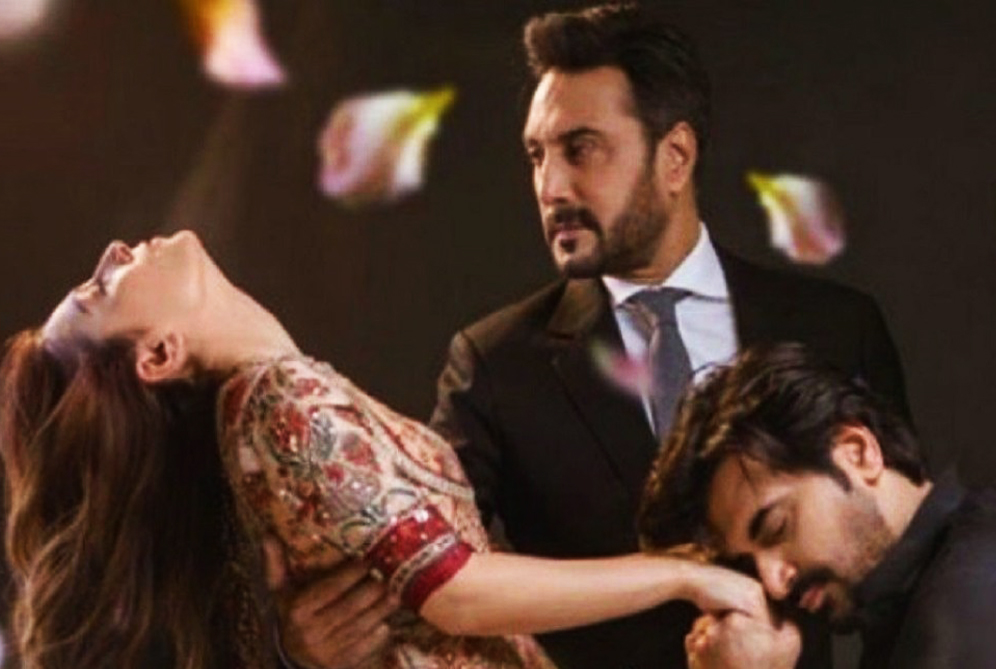
    If you are an avid follower of Pakistani serials/dramas, the one thing that is common in almost all of them is how women are portrayed.

    There is a ‘good girl’ who is a homemaker, wears eastern clothes, who will sacrifice everything for family, who is often seen in the kitchen cooking food or cleaning the house, who hardly steps out of the house unless it’s with her husband and/or family, who will forgive her husband for many things, including domestic violence or infidelity or both.

    Then there is the ‘bad girl’, who is more often than not a working woman, who wears western clothes, drives a car, goes out on her own, is ambitious and ‘conniving’. Divorced women are either shown as bad girls or sad girls.

    We often wonder how educated writers can write such stuff and why educated women actors can take up such roles.

    Actor Hina Bayat in an interview with Fifi Haroon for BBC Urdu once said, “ “Most scriptwriters today are women who have never seen the inside of an office. In their real-world, working women don’t exist so they don’t write them into their fictional worlds either – except perhaps as negative characters or mothers who ignore their children.”

    This explains why the writers write what they do to a certain extent.

    As for the actors, maybe there is not much they can do when acting is their bread and butter and these are the roles that are in the market. We are not blaming the actors, but we do believe that if there is a market for plays like ‘Udaari’, then why do we need plays like ‘Jhooti’ that perpetuate falsehoods about domestic violence.

    We need more progressive writers. Otherwise, these dramas will keep feeding our already patriarchal and misogynist society.

    Lest we forget, when 20-year-old law student Dua Mangi was kidnapped from Karachi on November 30, 2019, it highlighted a dark side of Pakistan that we often ignore, i.e. extreme misogyny.

    BBC did a story on the Mangi case titled, ‘Dua Mangi: Slut-shamed in Pakistan for being abducted’. The story talked about the inappropriate remarks regarding Dua’s dressing and comments on how she was out at night with a male friend were discussed more than the actual incident of kidnapping.

    It was tragic to see that there was more outrage online over Dua’s clothes, her friend and why she was out at night than over the actual crime. It should have been a moment of introspection for us. Instead, we ignored it once again. By ignoring or not calling out such perverted behaviour, we normalise misogyny. Horrid practices like ‘honour killing’ and ‘Vani-Swara’ are not frowned upon; instead, they are dismissed as tribal culture.

    When women and young girls are used to settle family disputes, it is a crime, not tribal culture.

    That our society is prevalently misogynistic is no secret as this vile misogyny has always been on display when it comes to crimes against women.

    When General (r) Musharraf was asked in an interview with the Washington Post about the high-profile gang rape case of Mukhtaran Mai, he said, “You must understand the environment in Pakistan… this has become a money-making concern. A lot of people say if you want to go abroad and get a visa for Canada or citizenship and be a millionaire, get yourself raped.”

    When heads of a state of a country can think like this and say it out loud to an international media organisation, we can imagine the state of overall apathy and insensitivity regarding women.

    Meesha Shafi’s sexual harassment case against Ali Zafar is another case in point. The kind of abuse that Meesha got online shows why it is hard for Pakistani women to talk about sexual abuse let alone coming out in public with the details.

    It doesn’t matter if the woman is Mukhtaran Mai, Meesha Shafi or Dua Mangi, she will get abused. Victim blaming and victim shaming has become the norm. It seems as if being a woman is some sort of a crime. According to a report by Media Matters for Democracy, “95 per cent of women journalists feel online violence has an impact on their professional choices, while 77 per cent self-censor as a way to counter online violence.”

    This is the reality of Pakistan – where women are the culprits even after being harassed, raped, kidnapped, shot at and even after being murdered. A country where ‘Aurat March’ triggers ‘ghairat’ but where the kidnapping of a young girl cannot even elicit apathy.

    This is why we don’t need regressive roles for women in dramas. This is why we don’t need to portray working women who are independent and strong as the ‘bad girls’ or ‘vamps’. This is why we need good writers who don’t demonise women or stereotype them. This is what we ask of our entertainment industry.

  • We forget…

    It was a cold December morning when Pakistan had woken up to the gloom of having lost Dhaka over four decades ago.

    Leaving their abodes, hundreds of thousands – if not millions – had taken to social networks to vent their frustration over the tragedy that until December 16, 2014, was deemed the darkest in the 70-something years history of the country.

    Little did they know that 150 coffins, 134 of which were to be the heaviest, were to be lifted later that day; that a tragedy much similar to 2004’s Beslan massacre in Russia, was in the offing.

    Six gunmen affiliated with Tehrike Taliban Pakistan (TTP) conducted a terrorist attack on Army Public School (APS) Peshawar at around 10 am. The militants, all of whom were foreign nationals, entered the school and opened fire on staff and children, killing 150, including 134 between the ages of eight and 18.

    The attack sparked widespread reactions from across the country, as condemnations from the public, government, political and religious entities, journalists and celebrities, poured in. Imran Khan’s infamous 126-day Islamabad sit-in as a member of the opposition was also called off.

    While media reacted strongly to the events as major newspapers, news channels and many commentators called for a renewed and strong action against militants, many countries, international organisations and important personalities also condemned the attack.

    Reacting to the carnage at the army-run school, terrorist organisation Al-Qaeda said that “soldiers should be targeted, not their children”.

    Today marks five years since wails of the nation broke through the deafening silence of December amid the state’s failure to protect its own; since those at odds vowed to rise above their differences to unite and fight extremism, and since the moment when we started forgetting yet another tragedy.

    Although it is believed that memories hanging heaviest are the easiest to recall, it is regrettable how we tend to forget even the ones that hold in their crinkles the ability to change not only our lives as individuals but also the fate of the entire nation.

    It is regrettable how we have limited our recalling of these painful memories to certain days such as December 16, without thinking of the families that go through the pain of losing their loved ones, especially minors, all day every day.

    Make no mistake as what we argue is not torturing ourselves with the misery that is our own creation, but what we advocate for is realising every day what led to the tragic episode that should’ve defined us for the generations to come.

    Because it is regrettable how we were let down, it is regrettable how we let down those 150 innocents, regrettable how we let down millions of others killed because of the failure of the state to protect its citizens, and regrettable how many of us fail to realise there still is time for us to pick ourselves up, dust ourselves off and get back in the saddle.

    Here’s to the courageous survivours who beat the cowards five years ago… here’s to the memory of the 150 souls, from the ashes of whom, we must rise.

  • ‘Treason’ for a better Pakistan

    On November 29, hundreds of thousands of students marched in 50 cities of Pakistan. Their main demand was that the ban on student unions be lifted; other demands included right to free education, better education facilities, etc.

    Any civilised country would have celebrated that the country’s youth came out on the streets to ask for their rights. In a country where more than 64 per cent of its population is under the age of 30, Students’ Solidarity March should have been a moment of pride for Pakistan. Instead, we saw that the top trend on Twitter the following day (November 30) was #StudentsMarchExposed.

    From calling these students ‘foreign agents’ to ‘traitors’, this and many other comments on social media portrayed this march in a negative colour. This isn’t entirely a Pakistani phenomenon. In our neighbouring India, the same card has been used against students. The sedition case against Jawaharlal Nehru University (JNU) students comes to mind. A sedition case was registered against JNU Students’ Union President Kanhaiya Kumar, Umar Khalid, Anirban Bhattacharya and eight others for allegedly raising ‘anti-national slogans’ during an event at JNU in February 2016.

    This is not to say that all comments pertaining to the Students’ Solidarity March in Pakistan were negative – our mainstream media and many on social media praised the students for organising such a successful march on the streets of Pakistan. But we must question this negativity regarding an indigenous movement that should be lauded for its efforts.

    On December 1, an FIR pertaining to sedition charges was registered against the organisers of the march in Lahore as well as some of the participants, including Iqbal Lala who is the father of Mashal Khan, a student lynched on allegations of blasphemy, academic Ammar Ali Jan, labour rights activist Farooq Tariq, Alamgir Wazir Mohammad Shabbir and Kamil Khan. One can only wonder why sedition charges were brought against peaceful protestors.

    Well, if there is one thing common since Pakistan came into being, it is how the state hands out certificates of who is a ‘traitor’/‘anti-national’/‘anti-state’ to whosoever challenges the status quo. What to talk of others if someone like Māder-e-Millat (Mother of the Nation) Fatima Jinnah – who fought for Pakistan’s independence alongside her brother Quaid-e-Azam Mohammad Ali Jinnah – couldn’t escape the tag of being a ‘foreign agent’ by the then military dictator Ayub Khan. Nationalist leaders were also dubbed anti-state. From Bacha Khan to Baloch nationalists, from G.M. Syed to mainstream leaders like Benazir Bhutto and Nawaz Sharif, all have been labelled ‘anti-national’ at one point of time or another.

    Dissenting voices that challenge how the state has failed its citizens or those who question the flawed policies of the Pakistani state are dubbed as ‘foreign agents’ working on the agendas of some foreign powers. Patriotism of politicians, students, human rights activists, civil society, NGOs, lawyers, social media activists, media groups, journalists and anyone who has crossed a ‘red line’ or gone against the status quo has been called into question. Just recently, Chief Justice Asif Saeed Khosa lamented how the three judges including the CJP were being called Indian agents, CIA agents, etc., for questioning the government’s notification regarding the army chief’s extension.

    Pakistanis should realise that dissenting voices are the conscience of a country and that freedom of expression is a fundamental right. We must not go down this dangerous path of silencing dissent for if we do, there will no one to speak for the rights of the marginalised, the rights of minorities, the rights of any human being. Let us not go down a disastrous path from where there is no turning back.