Hezbollah said it launched rockets at northern Israel Thursday “in response” to a deadly Israeli strike in south Lebanon — the group’s first attack after Israel killed a top commander earlier this week.
Thegroup said in a statement that it “launched dozens of Katyusha rockets… in response to the Israeli enemy’s attack on… (the southern village of Shama) that killed a number of civilians.”
The Israeli military said that shortly after the rocket fire, the air force “struck the Hezbollah launcher from which the projectiles were launched.”
Earlier Thursday, the Lebanese health ministry said four Syrians were killed in an Israeli strike on the south, where Hezbollah and Israel have exchanged near-daily fire since the Gaza war began in October.
“The health ministry announces… four Syrian nationals were martyred” in an “Israeli strike” on the southern village of Shama, it said in a statement.
The ministry said the toll might rise once DNA tests had been carried out.
The strike also wounded five Lebanese nationals, it added.
Emergency services told AFP that the dead were farmer workers and part of the same family.
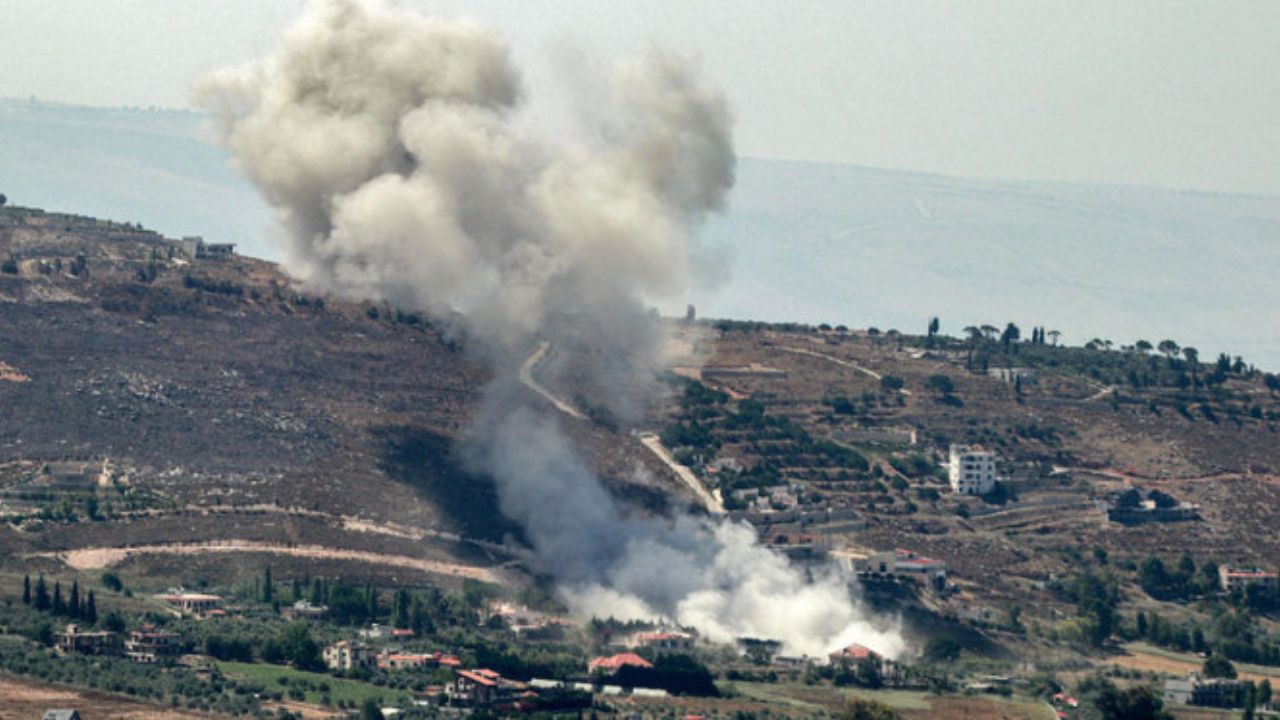
Plumes of smoke billowed from the site of the strike, which heavily damaged two nearby buildings and burnt a vehicle to a crisp, a photographer contributing to AFP reported.
The attack was Hezbollah’s first since an Israeli air strike killed its top commander Fuad Shukr on Tuesday evening, with leader Hassan Nasrallah saying operations would resume on Friday morning.
Nasrallah warned his group was bound to respond to the killing of Shukr.
His death was followed hours later Wednesday, by the killing of Hezbollah ally Hamas’s chief Ismail Haniyeh in a strike in Tehran, which Iran and Hamas have blamed on Israel. Israel has declined to comment on his killing.
The genocide in Gaza since October has killed at least 542 people on the Lebanese side, most of them fighters but also including 114 civilians, according to an AFP tally.
At least 22 soldiers and 25 civilians have been killed on the Israeli side, including in the annexed Golan Heights, according to army figures.
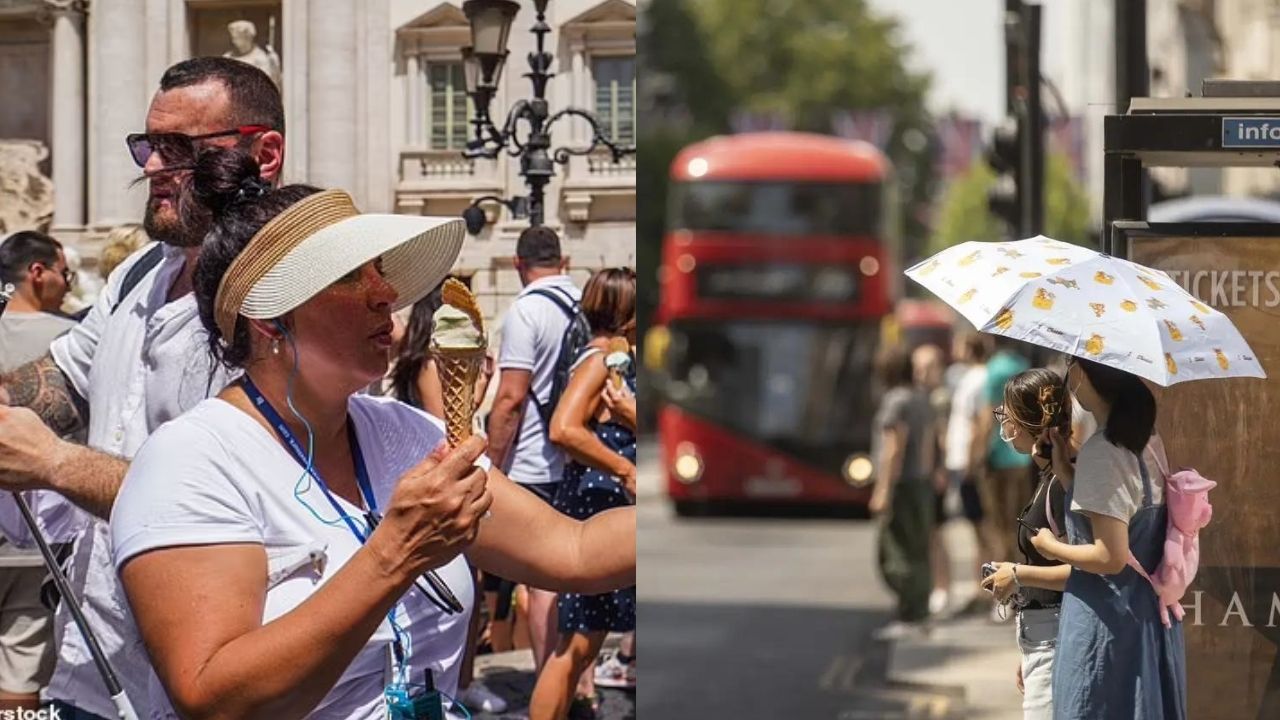
COPENHAGEN: Extreme heat kills over 175,000 people a year in Europe, where temperatures are rising quicker than the rest of the globe, the World Health Organisation’s (WHO) European branch said on Thursday.
Of the some 489,000 heat-related deaths recorded each year by the WHO between 2000 and 2019, the European region accounts for 36 per cent or, on average, 176,040 deaths, the WHO said.
The health body noted that temperatures in the region are “rising at around twice the global average rate.” The WHO’s European region comprises 53 countries, including several in Central Asia.
“People are paying the ultimate price,” Hans Kluge, the WHO’s regional director for Europe, said in a statement. According to the WHO, there has been a 30pc increase in heat-related mortality in the region over the past two decades.
“Temperature extremes exacerbate chronic conditions, including cardiovascular, respiratory, and cerebrovascular diseases, mental health, and diabetes-related conditions,” Kluge said. The regional director added that extreme heat can particularly be a problem for elderly people and an “additional burden” for pregnant women.
The WHO noted that “heat stress” — when the human body can no longer maintain its temperature — “is the leading cause of climate-related death” in the region. According to the WHO, the number of heat-related deaths is set to “soar” in the coming years as a result of global warming.
“The three warmest years on record” for the region “have all occurred since 2020, and the ten warmest years have been since 2007,” Kluge said. On July 25, UN Secretary-General Antonio Guterres warned that humanity was suffering from an “extreme heat epidemic,” and called for action to limit the impacts of heat waves intensified by climate change.
Scorching China
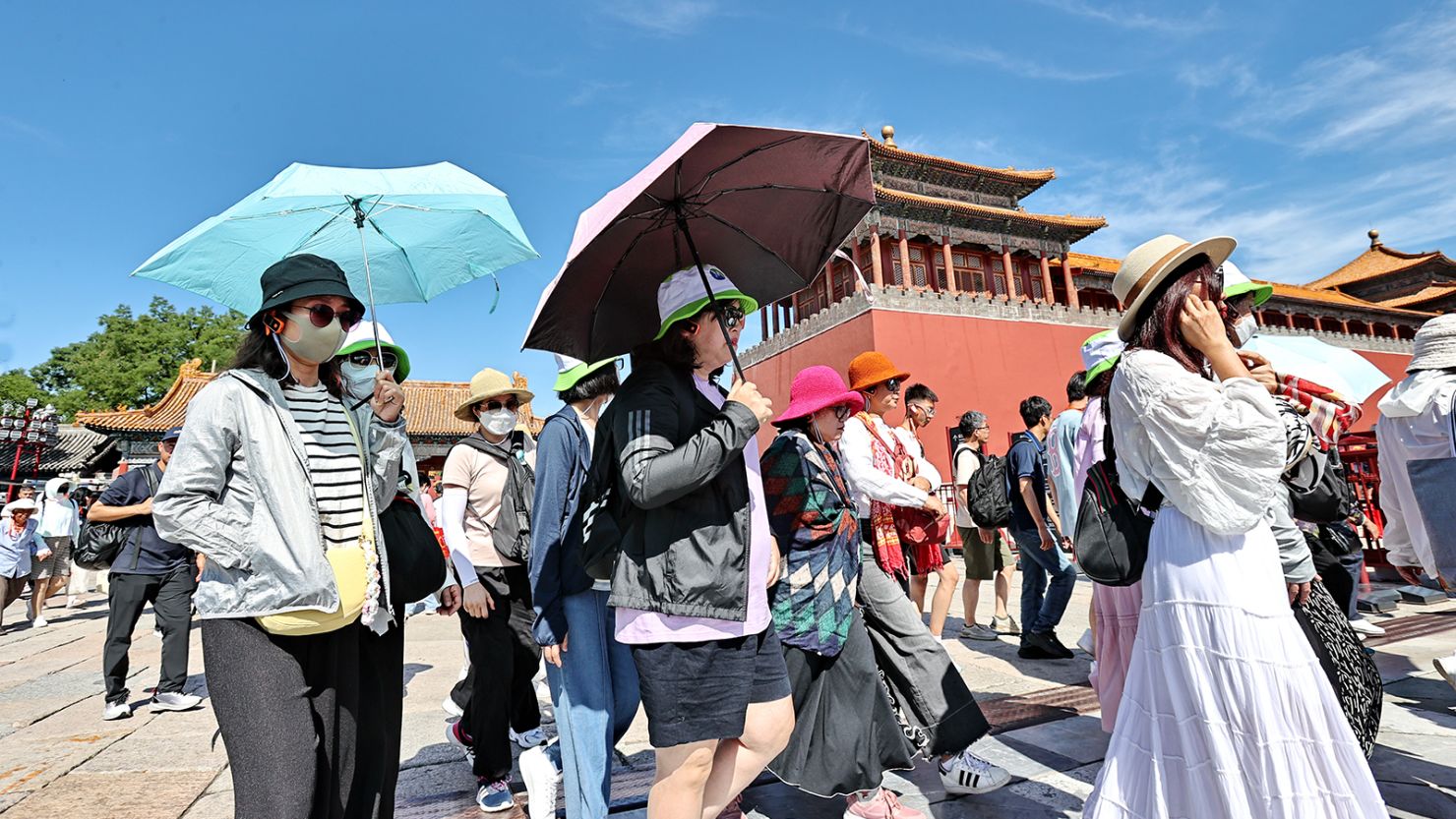
Chinese weather authorities said on Thursday, July was the country’s hottest month since records began six decades ago, as extreme temperatures persist across the globe. China is the world’s biggest emitter of the greenhouse gases that scientists say are driving climate change and making extreme weather more frequent and intense.
Heatwaves this summer have scorched parts of northern China, while torrential rains have triggered floods and landslides in central and southern areas. Last month was “the hottest July since complete observations began in 1961, and the hottest single month in the history of observation”, the national weather office said on Thursday.
The weather office said the average air temperature in China in July was 23.21°C, exceeding the previous record of 23.17°C in 2017. The mean temperature in every province was also “higher than the average for previous years,” with the southwestern provinces of Guizhou and Yunnan logging their highest averages.
It forecast that the mercury would continue to climb in eastern regions this week, including Shanghai, where a red alert for extreme heat was in place.
“Next week will be more of the same. It’s like being on an iron plate,” wrote one user of the Weibo social media platform in response to the megacity’s heat warning.
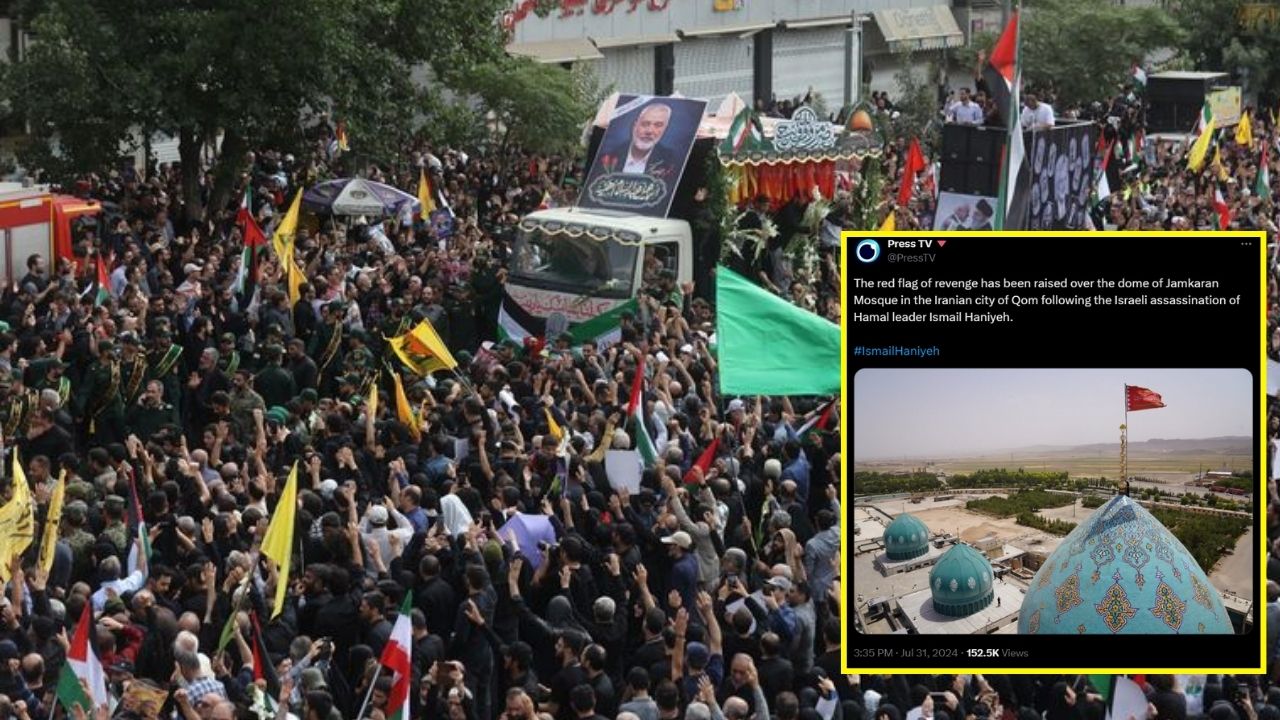
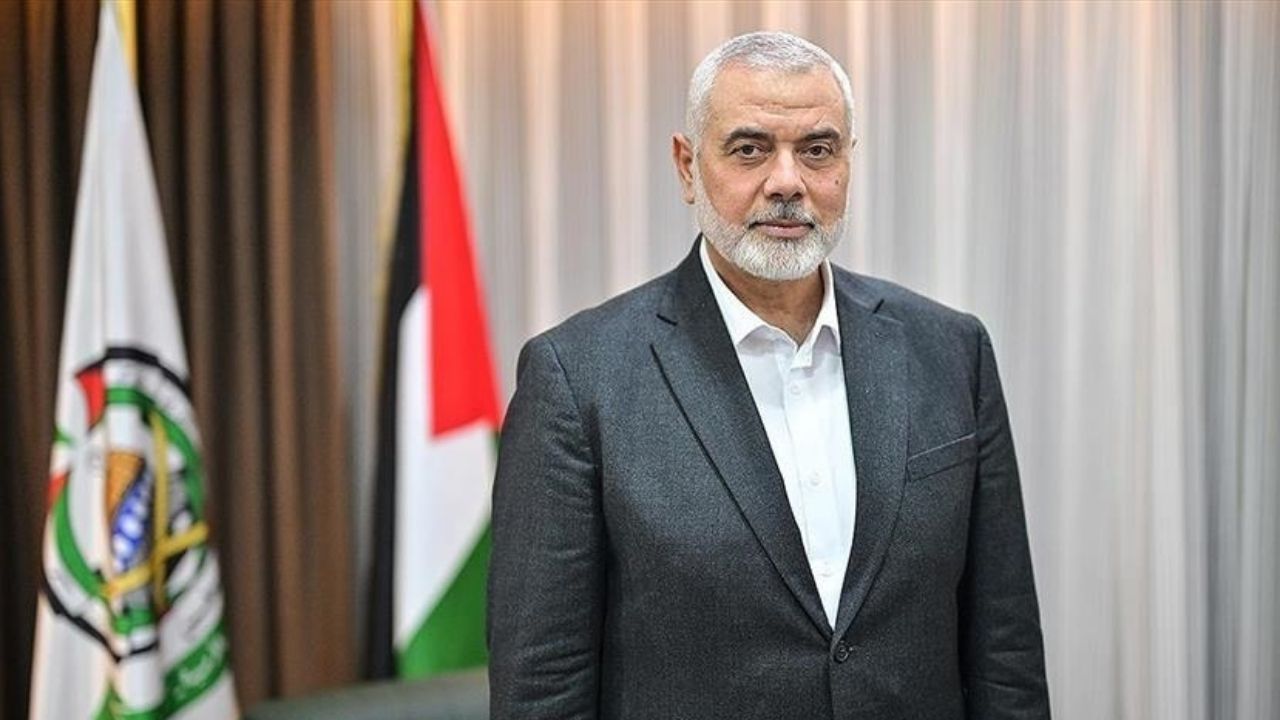
Iran held funeral processions on Thursday amidst calls for revenge after the killing of Hamas political chief Ismail Haniyeh in a strike in Tehran blamed on Israel.
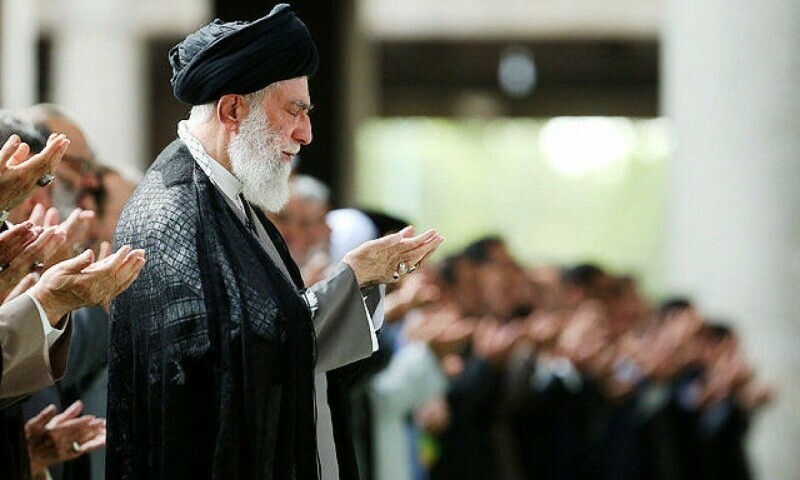
The Islamic Republic’s supreme leader Ayatollah Ali Khamenei led prayers for Haniyeh ahead of his burial in Qatar, having earlier threatened a “harsh punishment” for his killing.
The Supreme Leader of Iran Ayatollah Ali Khameini leads the funeral prayers for Hamas political chief Ismail Haniyeh in Tehran on August 1. — IRNA
In Tehran’s city centre, thousands of mourning crowds carrying posters of Haniyeh and Palestinian flags gathered for the ceremony at Tehran University before a procession, according to an AFP correspondent.
Haniyeh’s death was announced the day before by Iran’s Revolutionary Guards, who said he and his bodyguard were killed in a strike on their accommodation in the Iranian capital at 2:00am on Wednesday.
It came just hours after Israel targeted and killed top Hezbollah commander Fuad Shukr in a retaliatory strike on the Lebanese capital Beirut, sending fears of a wider regional conflict soaring in the fallout from the Israel-Hamas conflict in Gaza.
Israel has declined to comment on the Tehran strike.
Iran’s state TV showed the coffins of Haniyeh and his bodyguards covered in Palestinian flags during the ceremony attended by senior Iranian officials. President Masoud Pezeshkian and Islamic Revolutionary Guard Corps chief, General Hossein Salami, were present.
Senior Hamas figure Khalil al-Hayya, the movement’s foreign relations chief, vowed during the funeral ceremony that “Ismail Haniyeh’s slogan, ‘We will not recognise Israel,’ will remain an immortal slogan” and “we will pursue Israel until it is uprooted from the land of Palestine.”
Iran’s conservative parliamentary speaker Mohammad Bagher Ghalibaf said Iran “will certainly carry out the supreme leader’s order (to avenge Haniyeh.)” “It is our duty to respond at the right time and in the right place,” he said in a speech with crowds chanting “Death to Israel, Death to America!”
‘Our duty’
The caskets, with a black-and-white pattern resembling a Palestinian keffiyeh scarf, were borne on a flower-bedecked truck through leafy streets where cooling water mists sprayed the flag-waving crowds.
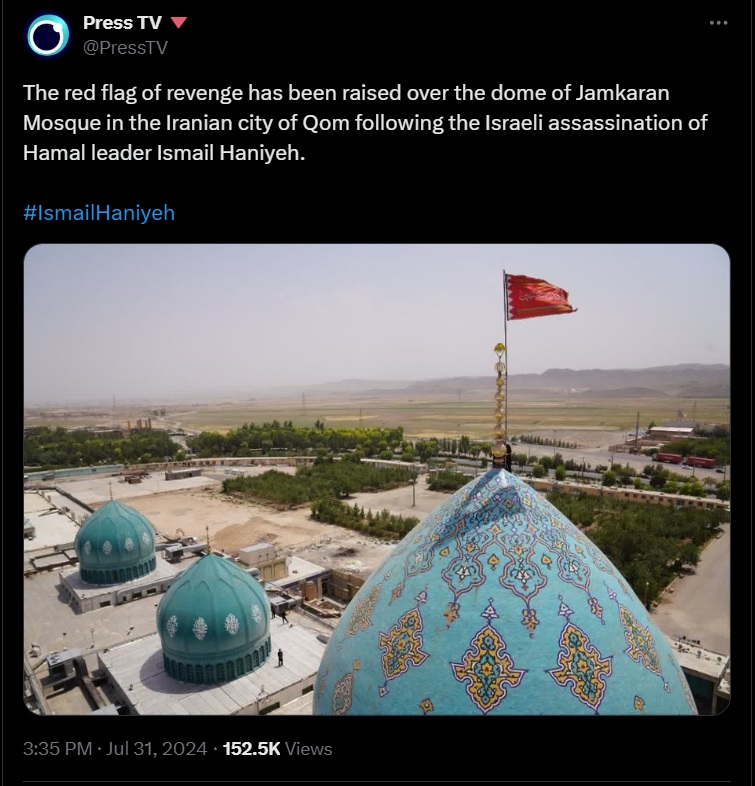
Khamenei, who has the final say in Iran’s political affairs, said after Haniyeh’s death that it was “our duty to seek revenge for his blood as he was martyred in the territory of the Islamic Republic of Iran”.
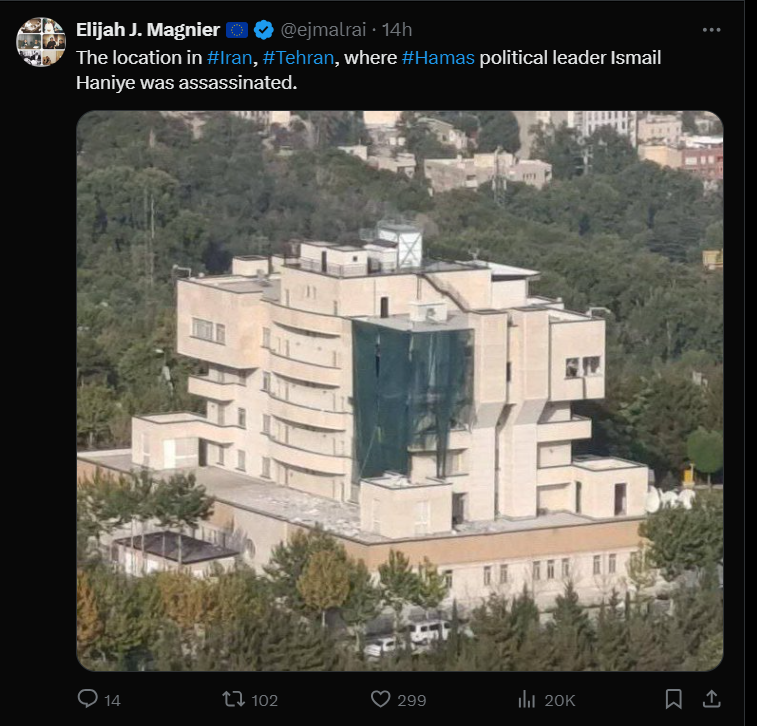
The Islamic Republic has not yet officially published any information on the exact location of the strike.
Pezeshkian said on Wednesday that “the Zionists (Israel) will soon see the consequences of their cowardly and terrorist act”.
The international community, however, called for de-escalation and a focus on securing a ceasefire in Gaza — which Haniyeh had, according to a Hamas official previously, accused Israel of obstructing.
UN Secretary-General Antonio Guterres said the strikes in Tehran and Beirut represented a “dangerous escalation”. All efforts, he said, should be “leading to a ceasefire” in Gaza and the release of hostages taken during Hamas’s October 7 attack on southern Israel which began nearly 10 months of fighting.
The prime minister of key ceasefire broker Qatar said Haniyeh’s killing had thrown the whole mediation process into doubt. “How can mediation succeed when one party assassinates the negotiator on the other side?” Sheikh Mohammed bin Abdulrahman Al-Thani said in a post on the social media site X.
US Secretary of State Antony Blinken on Thursday called on “all parties” in the Middle East to “stop escalatory actions.” Earlier he said a ceasefire in Gaza was still the “imperative”, though White House National Security Council spokesman John Kirby said the twin killings of Haniyeh and Shukr “don’t help” regional tensions.
Tensions inflamed
While Iran has blamed the attack on its arch-foe, Israel has declined to comment on Haniyeh’s death. It did, however, claim the killing of Shukr, whom it blamed for a weekend rocket strike that killed 12 youths in the Israeli-annexed Golan Heights.
The killings come with regional tensions already inflamed by fighting in Gaza, a conflict that has drawn in Iran-backed militant groups in Syria, Lebanon, Iraq, and Yemen.
One of those groups, Yemen’s Houthi rebels, “declared three days of mourning” for Haniyeh, with political leader Mahdi al-Mashat expressing “condolences to the Palestinian people and Hamas” over his killing, according to the group’s Saba news agency.
The United Nations Security Council also convened an emergency meeting Wednesday at Iran’s request to discuss the strike.
Hamas has for months been indirectly negotiating a truce and hostage-prisoner exchange deal with Israel, in talks facilitated by Egypt, Qatar, and the United States, but with Haniyeh killed, the situation is back to square one.
Analysts told AFP that Haniyeh was a moderating influence within the Islamist group, and that while he would be replaced, the dynamics within Hamas could change.
Israeli Prime Minister Benjamin Netanyahu has vowed to destroy Hamas in retaliation for the October 7 attack that ignited conflict in Gaza.
That attack resulted in the deaths of 1,197 people, mostly civilians, according to an AFP tally based on official Israeli figures. Hamas also seized 251 hostages, 111 of whom are still held captive in Gaza, including 39 the military says are dead.
Concern grew among Israelis over the fate of those still held in Gaza. Haniyeh’s killing “was a mistake as it threatens the possibility of having a hostage deal,” said Anat Noy, a resident of the coastal city of Haifa.
Israel’s retaliatory campaign against Hamas has killed at least 39,445 people in Gaza, according to the territory’s health ministry.
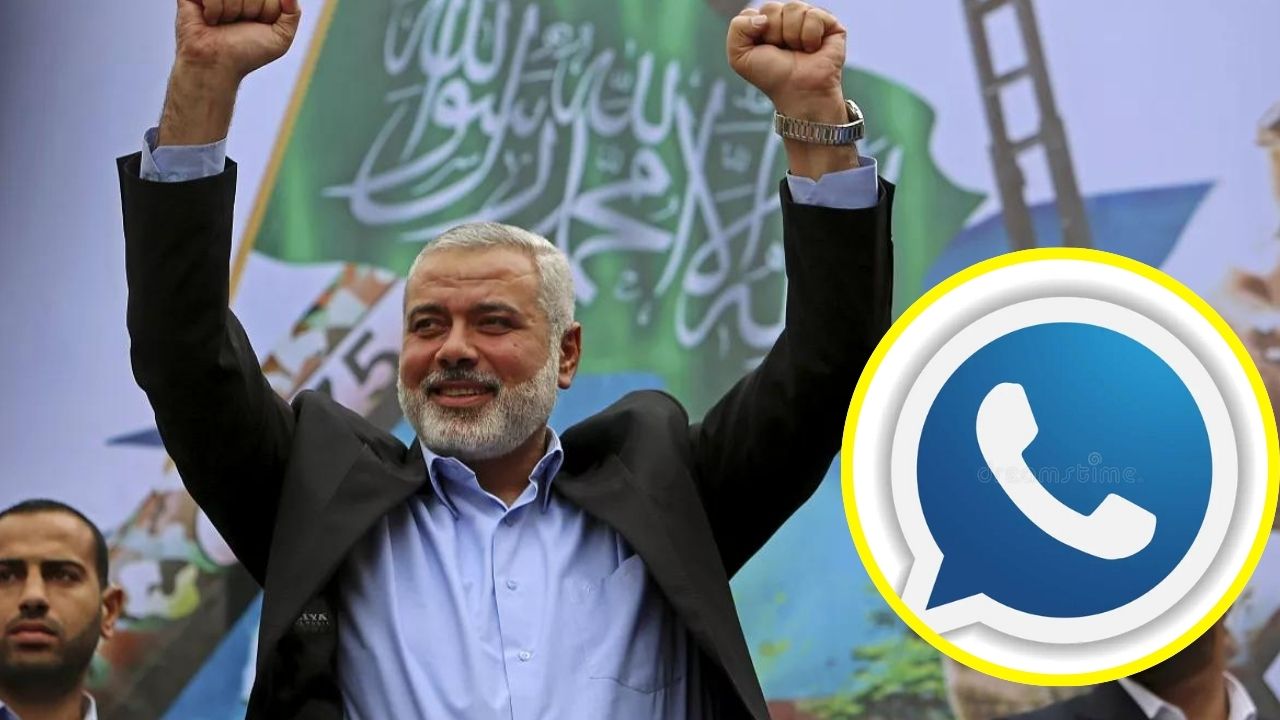
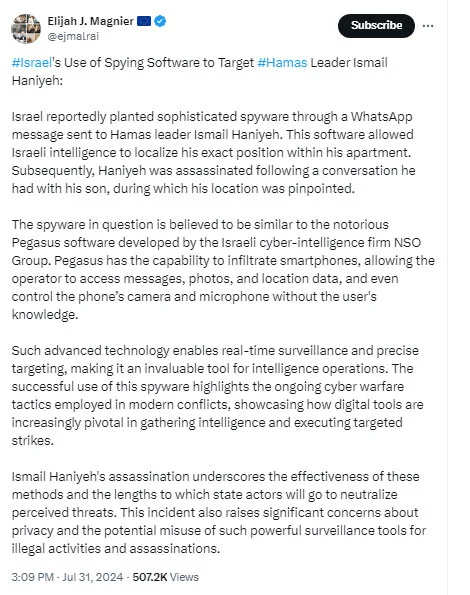
Military analyst for the Middle East, Elijah J. Magnier, has explained how Israel reached the location of Hamas leader Ismail Haniyeh in Tehran, invading the tight security of the Revolutionary Guards.
In a Twitter post, he said that Israel tracked Ismail Haniyeh through a spying software similar to the infamous Pegasus.
Israel planted the latest spyware in Ismail Haniyeh’s WhatsApp message, after which the spy software told the Israeli intelligence his location. “Israel reportedly planted sophisticated spyware through a WhatsApp message sent to Hamas leader Ismail Haniyeh. This software allowed Israeli intelligence to localize his exact position within his apartment. Subsequently, Haniyeh was assassinated following a conversation he had with his son, during which his location was pinpointed,” Elijah claimed.
Shedding light on the spy software, Elijah opined that it is the same as Pegasus, which once made headlines for its potential for surveillance. “The spyware in question is believed to be similar to the notorious Pegasus software developed by the Israeli cyber-intelligence firm NSO Group. Pegasus has the capability to infiltrate smartphones, allowing the operator to access messages, photos, and location data, and even control the phone’s camera and microphone without the user’s knowledge.”
In a press conference after the martyrdom of Hamas leader Ismail Haniyeh in the Iranian capital, Tehran, Hamas spokesperson Khalil Haya said that Haniyeh was neither in a secret location in Iran nor isolated from the people. Killing people with such intelligence cannot be called success.
Khalil said that Haniyeh was martyred with the help of a missile. The results of the complete investigation are awaited. However, media reports say that those who were with Haniyeh said that the missile broke the window of the room and hit him directly.
Ismail Haniyeh, head of the Palestinian resistance organization Hamas, has been killed in an Israeli attack in Tehran, the capital of Iran.
According to foreign media reports, Hamas has confirmed Haniyeh’s death in Tehran, where he had gone to attend the swearing-in ceremony of the Iranian president.
Hamas has stated that those responsible for the attack on the head of Hamas will be punished.
A missile was fired around 2:00 pm (Israeli time) in Tehran, where Ismail Haniyeh was with his bodyguard, Israeli media has reported.
Ismail participated in the Gaza ceasefire talks as a negotiator and was appointed as the head of Hamas in 2017. He lived in Turkey and Qatar to avoid travel restrictions in Gaza.
More than 55,000 Canadian Sikhs voted in the Calgary Khalistan Referendum, dedicated to nine pro-Khalistan Canadian Sikhs who were assassinated by the Indian army in an armed clash.
The families of different Sikh separatist leaders flew in to cast votes and show support for the Khalistan referendum.
Geo’s Murtaza Ali Shah reported that Gurpatwant Singh Pannun, a New York attorney and founder of Sikhs For Justice (SFJ), addressed the charged crowd and vowed to bombard the Indian Independence Day, held on August 15, with the Khalistan Referendum campaign from Red Fort to Ranchi. Pannun said that the SFJ, through a global referendum campaign, has equipped every Sikh household with a “powerful bomb that will only explode during Khalistan Referendum voting to liberate Punjab from Indian occupation.”
The choice is yours; either kill your enemy or kill the Indian system, said Pannun to a roaring crowd of thousands waiting to cast a vote in the Khalistan Referendum. He said: “SFJ’s choice of weapon is vote while India’s Modi is using violence to stop Khalistan Referendum. At present, pro-Khalistan Sikhs are not going to kill anyone in retaliation. Still, SFJ is going to kill the Indian system that is responsible for the genocide of Sikhs and the genocide of Punjab. In 1929, Shaheed Bhagat Singh bombarded the Indian legislative assembly to liberate India from British rule.”
Following Pannun’s speech, the Punjab Referendum Commission (PRC) announced to the crowd that the next phase of the Khalistan Referendum would take place in New Zealand in a few months.
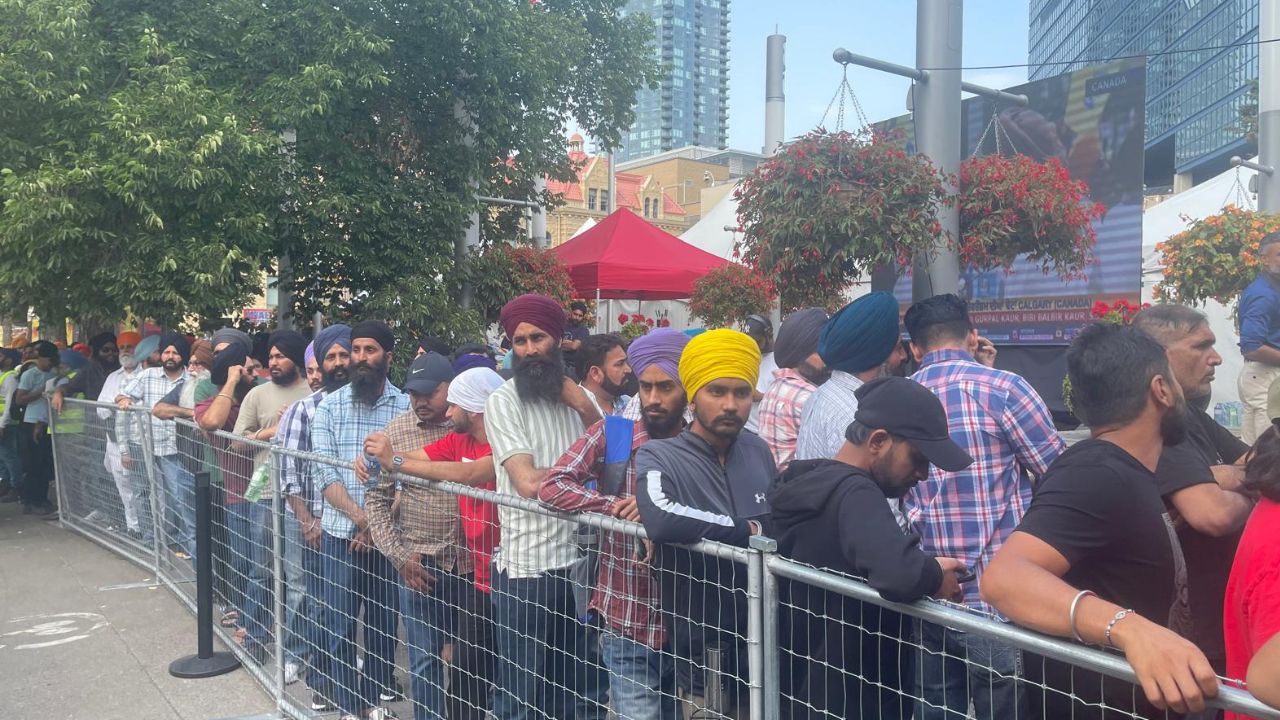
Thousands of Sikhs queued from 4 am till 6 am at Calgary’s iconic Municipal to participate in the Khalistan Referendum, voting for creating an independent state of Khalistan for the Sikh nation. The nine Canadian national Sikhs assassinated by India for their political beliefs are Shaheed Lakhbir Singh Rode, Shaheed Bhupinder Singh Kooner, Shaheed Harjinder Singh Para, Shaheed Talwinder Singh Parmar, Shaheed Surinder Singh Shinder Commando, Shaheed Balbir Singh Khaira, Shaheed Jathedar Hardeep Singh Nijjar, Shaheed Mohinder Singh Kooner and Shaheed Surinder Singh Ravi.
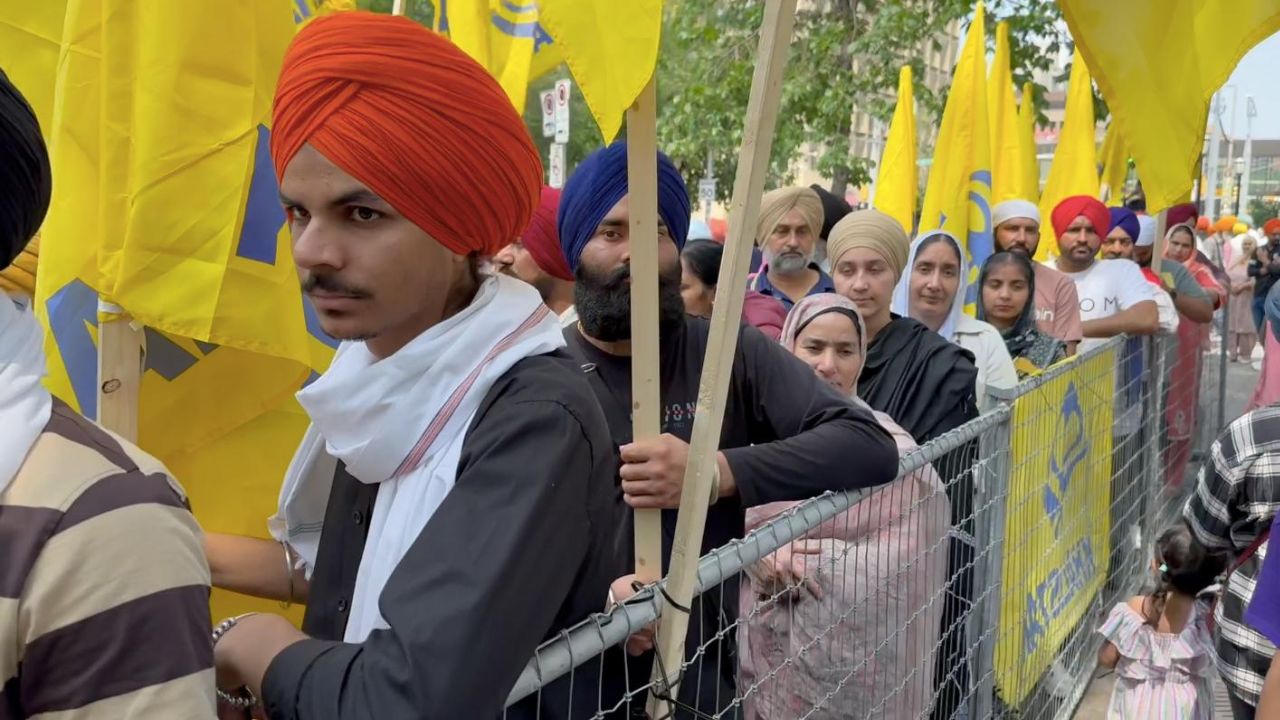
Sikhs who gathered outside the city hall were carrying flags of Khalistan. The road outside has been decorated with large posters of Sikhs who embraced martyrdom for the Sikh causes – and are revered by the Sikhs across the world. The banners carried pictures of Sikh heroes and paid tribute to them.
Throughout the day, Calgary’s town hall echoed with slogans of “Khalistan Zindabad”, “Punjab banal ga Khalistan”, “Delhi banal ga Khalistan,” Rajasthan banal ga Khalistan”, Modi, stop terrorism against Sikhs”, India is a terrorist state”. The Sikhs said they will adhere to the principle set by their Gurus and will always look up the examples set by Sikh freedom fighters, including Hardeep Singh Nijjar, who was assassinated last year by Indian agents in Surrey.
Veteran Khalistani leaders and President of the Council of Khalistan, Dr Bakhshish Singh Sandhu, said the turnout had amazed everyone. “The queue at one point stretched to nearly four kilometres. This is the measurement of Sikhs’ desire for freedom from India.
All the voting phases in the Khalistan Referendum are being held under the guidance and supervision of a panel of non-aligned direct democracy experts from the Punjab Referendum Commission (PRC). The Commission’s approved third-party staff conducts the whole voting process, from registration to supervision of ballot boxes and sealing the ballots at the end of the voting day to maintain the highest level of transparency. The PRC is conducting the voting on the question of “Should Indian Governed Punjab Be An Independent Country?” with two options of “Yes” and No”.
The Khalistan Referendum voting started on October 31, 2021, from London, UK, and has so far been held in several countries and cities across the UK: Geneva, Switzerland; Rome and Milan (Italy); the Australian cities of Melbourne, Brisbane, and Sydney; the American cities of San Francisco and Sacramento; the Canadian cities of Brampton, Mississauga, Malton (Ontario), Surrey Vancouver (British Columbia), and now Calgary.
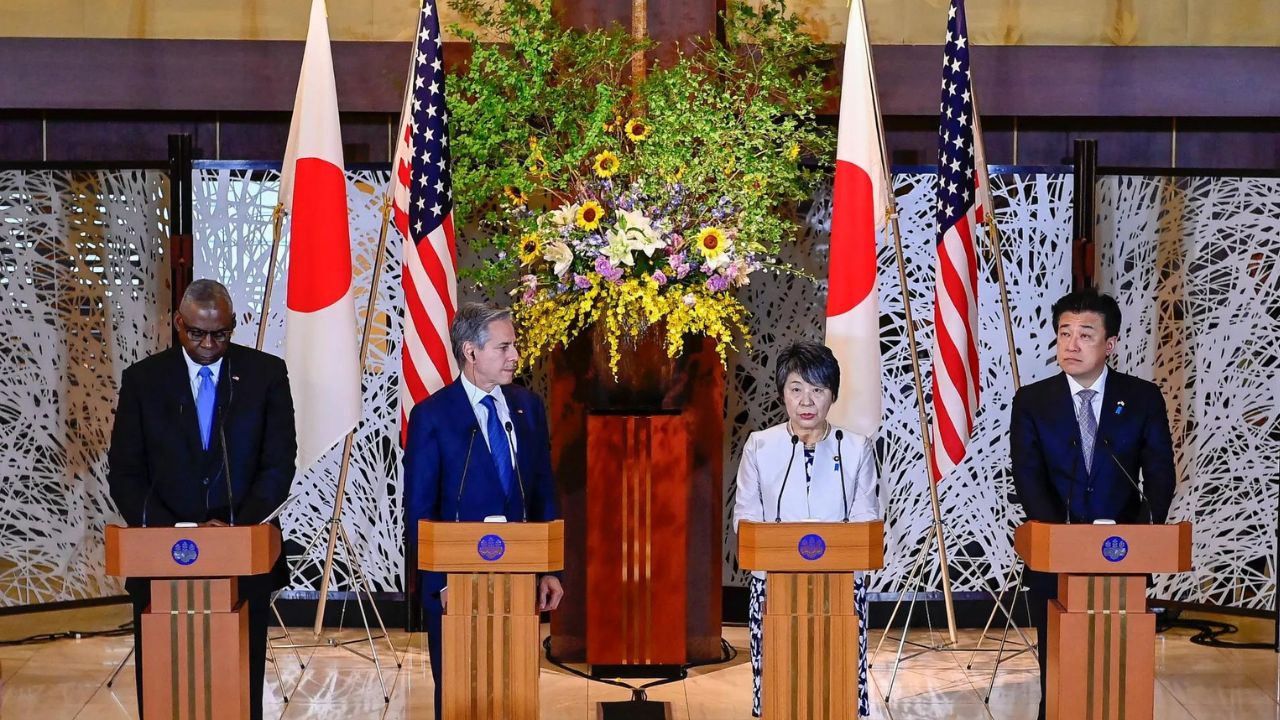
Beijing on Monday warned the United States and Japan to “stop creating imaginary enemies” after the countries lashed out against China’s actions in the South China Sea in Tokyo talks.
“We strongly urge the US and Japan to immediately stop interfering in China’s internal affairs and stop creating imaginary enemies,” foreign ministry spokesman Lin Jian said.
Following talks in the Japanese capital on Sunday, the US and the hosts slammed Beijing’s “destabilizing actions” in the South China Sea while also condemning Russia’s growing military cooperation with China and North Korea.
US Secretary of State Antony Blinken, Defense Secretary Lloyd Austin and their Japanese counterparts “reiterated their strong objections to the PRC’s unlawful maritime claims, militarization of reclaimed features, and threatening and provocative activities in the South China Sea”, a joint statement said, using an acronym for China.
China’s “destabilizing actions in this region include unsafe encounters at sea and in the air, efforts to disrupt other countries’ offshore resources exploitation, as well as the dangerous use of Coast Guard and maritime militia vessels”, the communique added.
They accused China of “intensifying attempts to unilaterally change the status quo by force or coercion in the East China Sea” and that Chinese “foreign policy seeks to reshape the international order for its own benefit at the expense of others”.
China’s Lin on Monday said the joint statement “disregards facts, mixes up right and wrong maliciously attacks China’s foreign policy”.
He added the communique “crudely meddles in China’s internal affairs, maliciously attacks and smears China on maritime issues, makes thoughtless remarks on China’s normal military development and defence policy, exaggerates and kicks up a fuss about the China threat, and maliciously hypes up regional tensions”.
“China deplores and firmly opposes this,” Lin said.
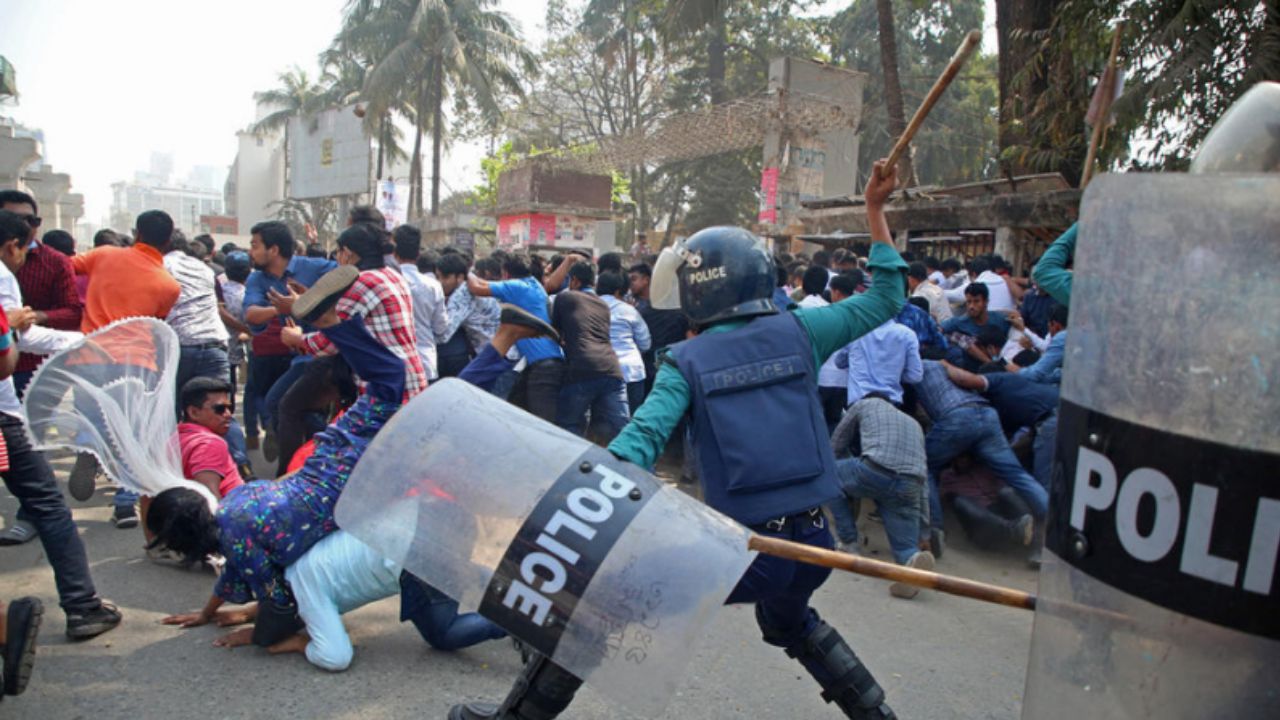
Bangladeshi police detectives on Friday forced the discharge from the hospital of three student protest leaders blamed for deadly unrest, taking them to an unknown location, staff told AFP.
Nahid Islam, Asif Mahmud and Abu Baker Majumder are all members of Students Against Discrimination, the group responsible for organising this month’s street rallies against civil service hiring rules.
At least 195 people were killed in the ensuing police crackdown and clashes, according to an AFP count of victims reported by police and hospitals, in some of the worst unrest of Prime Minister Sheikh Hasina’s tenure.
All three were patients at a hospital in the capital, Dhaka, and at least two of them said their injuries were caused by torture in earlier police custody.
“They took them from us,” Gonoshasthaya hospital supervisor Anwara Begum Lucky said. “The men were from the Detective Branch.”
She added that she did not want to discharge the student leaders, but the police had pressured the hospital chief to do so.
The trio’s student group suspended fresh protests at the start of this week, saying they wanted the reform of government job quotas but not “at the expense of so much blood.”
The pause was due to expire earlier on Friday but the group had given no indication of its future course of action.
Three senior police officers in Dhaka all denied that the trio had been taken from the hospital and into custody on Friday.
Garment tycoon arrested
Police said on Thursday that they had arrested at least 4,000 people since the unrest began last week, including 2,500 in Dhaka.
On Friday, police said they had arrested David Hasanat, the founder and chief executive of one of Bangladesh’s biggest garment factory enterprises.
According to its website, the Viyellatex Group employs more than 15,000 people, and the Daily Star newspaper estimated its annual turnover at $400 million last year.
Dhaka Police inspector Abu Sayed Miah said Hasanat and several others were suspected of financing the “anarchy, arson and vandalism” of last week.
PM Hasina continued a tour of government buildings that had been ransacked by protesters on Friday, visiting state broadcaster Bangladesh Television, which was partly set ablaze last week.
“Find those who were involved in this,” she said, according to state news agency BSS. “Cooperate with us to ensure their punishment. I am making this call to the nation.”
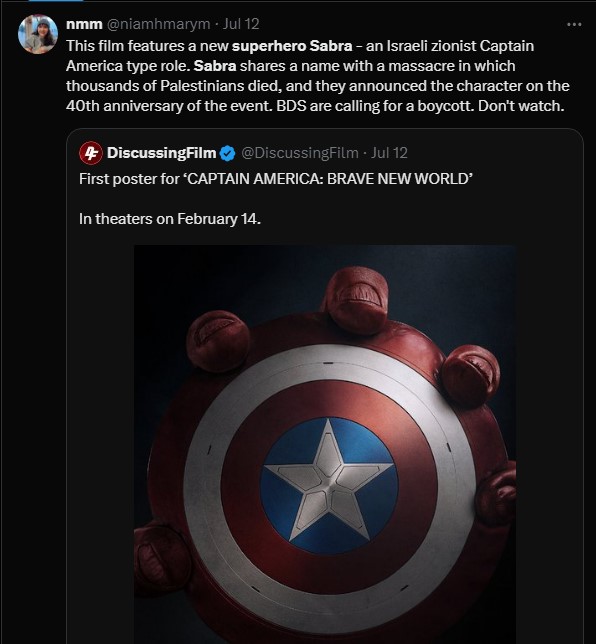
The global anti-Israel movement led by BDS (Boycott, Divestment and Sanctions ) and other pro-Palestinian groups are calling for a boycott of the Disney and Marvel film Captain America: Brave New World, featuring Israeli comic-book superhero Sabra (Ruth Bat Seraph).
On July 12, Marvel dropped the first teaser for the film, set to release next February, which portrays Sabra as a “high-ranking US government official” instead of a Mossad agent, which she is in the comics.
The change has come in the context of critique that was showered upon Marvel after it announced that the character will be part of the new movie. The character of Sabra was first introduced in the 1980s Hulk comics but Marvel studios has said that it would be “taking a new approach to the character.”
While this change of approach is criticised by pro-Israel factions, it was also heavily lambasted by pro-Palestinian groups. In a social media post, BDS stated: “Palestinians call for intensifying pressure on Disney and Marvel to drop anti-Palestinian character.”
“We call for boycotting Disney+ subscriptions, Marvel merchandise and all screenings of Captain America: Brave New World,” the BDS National Committee, Jewish Voice for Peace, and Movement for Black Lives collectively posted. “Disney’s superficial changes to the character cannot erase its decades-long complicity in Israeli propaganda,” the post added.
The slider, posted by BDS, emphasised that “By reviving this racist character in any form, Marvel is promoting Israel’s brutal oppression of Palestinians.”
The criticism is also deeply rooted in the casting of Shira Haas, who has previously volunteered for the genocidal Israeli military even though she was exempted due to “stunted growth” because she suffered from a form of cancer while she was a toddler. She voluntarily enlisted herself in the Israel Defence Forces (IDF) Military Band and theatre unit.
“The character has long glorified violence against Palestinians, working for the Israeli government and military, which are now annihilating Palestinians in Gaza,” the post elaborated.
A user on X shared that “(Marvel) has announced the character on the 40th anniversary of the event. BDS are calling for a boycott. Don’t watch.”
Another user shared her stance by writing, “Just a reminder now that a new Deadpool & Wolverine trailer was released that Marvel is being boycotted just like McDonald’s and Starbucks because the next Captain America movie is going to have an Israeli superhero, Sabra, played by a literal IDF soldier, Shira Haas.”
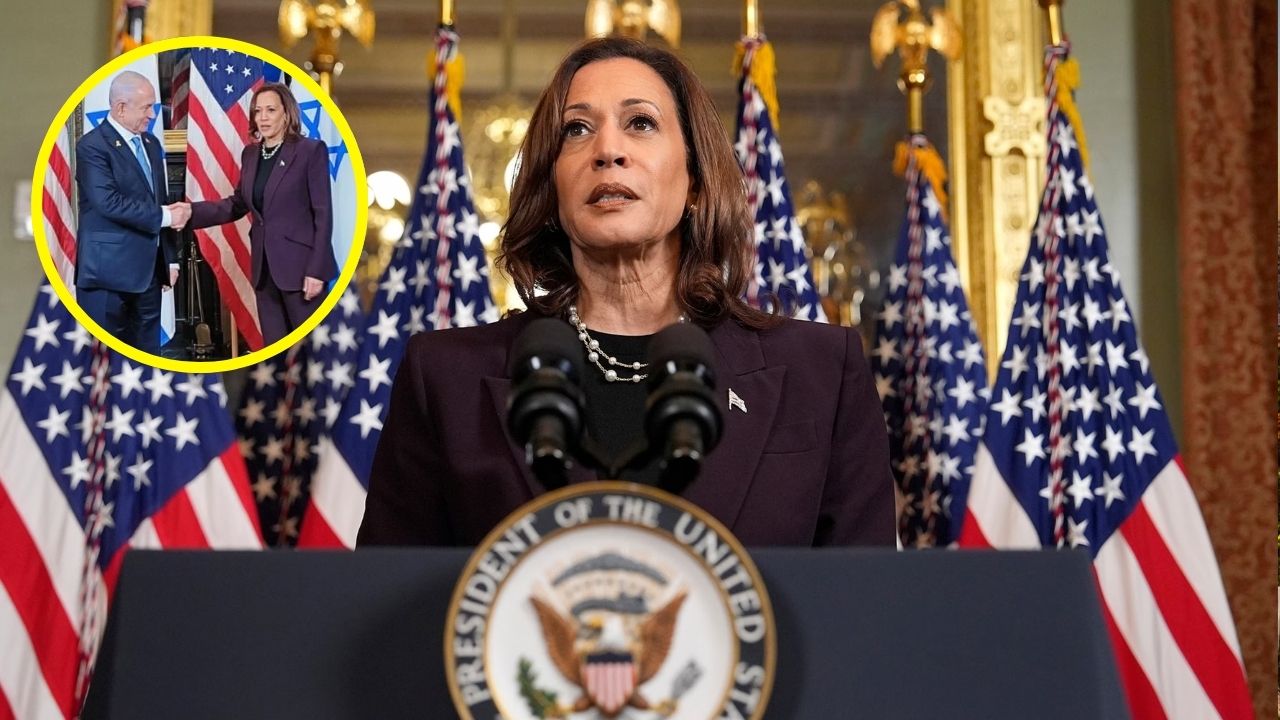
United States Vice President Kamala Harris, who is now running for candidacy in the upcoming presidential election, has asserted that she will not remain “silent” on the suffering in Gaza.
“What has happened in Gaza over the past nine months is devastating. The images of dead children and desperate hungry people fleeing for safety, sometimes displaced for the second, third or fourth time,” Harris said while speaking to reporters following her meeting with Israeli Prime Minister Benjamin Netanyahu in Washington DC.
At the same time, she maintained that “Israel has a right to defend itself”, deeming Hamas as a “brutal terrorist organisation” that led to the “war” and had carried out ‘“horrific acts of sexual violence”.
Harris later added that “We cannot look away in the face of these tragedies [in Gaza]. We cannot allow ourselves to become numb to the suffering and I will not be silent.”
She also urged the creation of a Palestinian state, further calling for Netanyahu and Hamas to accord a ceasefire and hostage release deal to end a war that has killed “far too many” civilians.
“As I just told Prime Minister Netanyahu, it is time to get this deal done,” she said.