Category: FOREIGN

  • Thousands in heatwave-hit Bangladesh pray for rain

    Thousands in heatwave-hit Bangladesh pray for rain

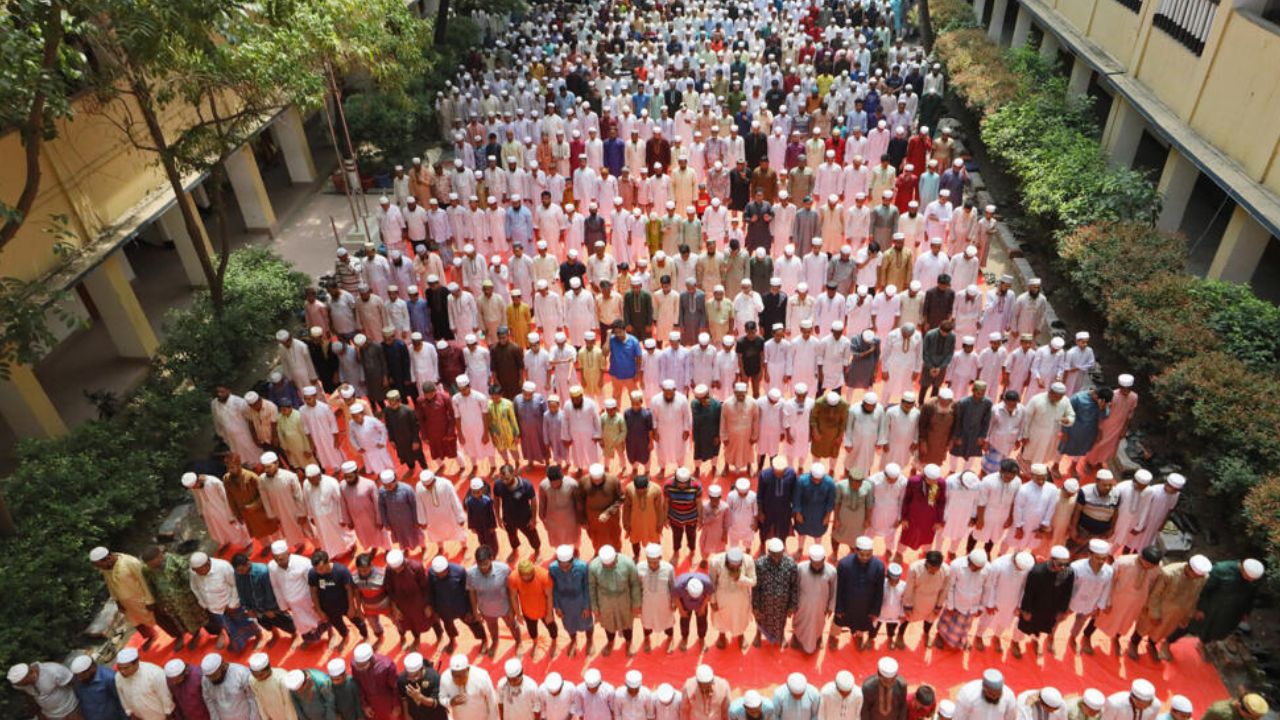
    Dhaka (AFP) – Thousands of Bangladeshis gathered to pray for rain on Wednesday in the middle of an extreme heatwave that prompted authorities to shut down schools around the country.

    Extensive scientific research has found climate change is causing heat waves to become longer, more frequent and more intense.

    Bangladesh’s weather bureau says that average maximum temperatures in the capital Dhaka over the past week have been 4-5 degrees Celsius (39-41 degrees Fahrenheit) higher than the 30-year average for the same period.

    Muslim worshippers gathered in city mosques and rural fields to pray for relief from the scorching heat, which forecasters expect to continue for at least another week.

    “Praying for rains is a tradition of our prophet. We repented for our sins and prayed for his blessings for rains,” Muhammad Abu Yusuf, an Islamic cleric who led a morning prayer service for 1,000 people in central Dhaka, told AFP.

    “Life has become unbearable due to lack of rains,” he said. “Poor people are suffering immensely.”

    Police said similarly sized prayer services were held in several other parts of Bangladesh.

    The country’s largest Islamist party, Jamaat-e-Islami, issued a statement calling its members to join the prayer services planned for Wednesday and Thursday.

    Authorities ordered all schools last week to cancel classes until the end of the month.

    Temperatures across Bangladesh have reached more than 42C (108F) in the past week.

    “April is usually the hottest month in Bangladesh. But this April has been one of the hottest since the country’s independence (in 1971),” government forecaster Tariful Newaz Kabir told AFP.

    Kabir said fewer rainstorms than average for the period had contributed to the heat.

    “We expect the high temperature will remain until the end of this month,” he said.

    Hospitals in the southern coastal district of Patuakhali had recorded local outbreaks of diarrhoea due to higher temperatures and the resulting increased salinity of local water sources, state medical officer Bhupen Chandra Mondal told AFP.

    “The number of diarrhoea patients is very high this year,” he said. “This is all linked to climate change.”

  • He hippo in Japan zoo turns out to be a she

    He hippo in Japan zoo turns out to be a she

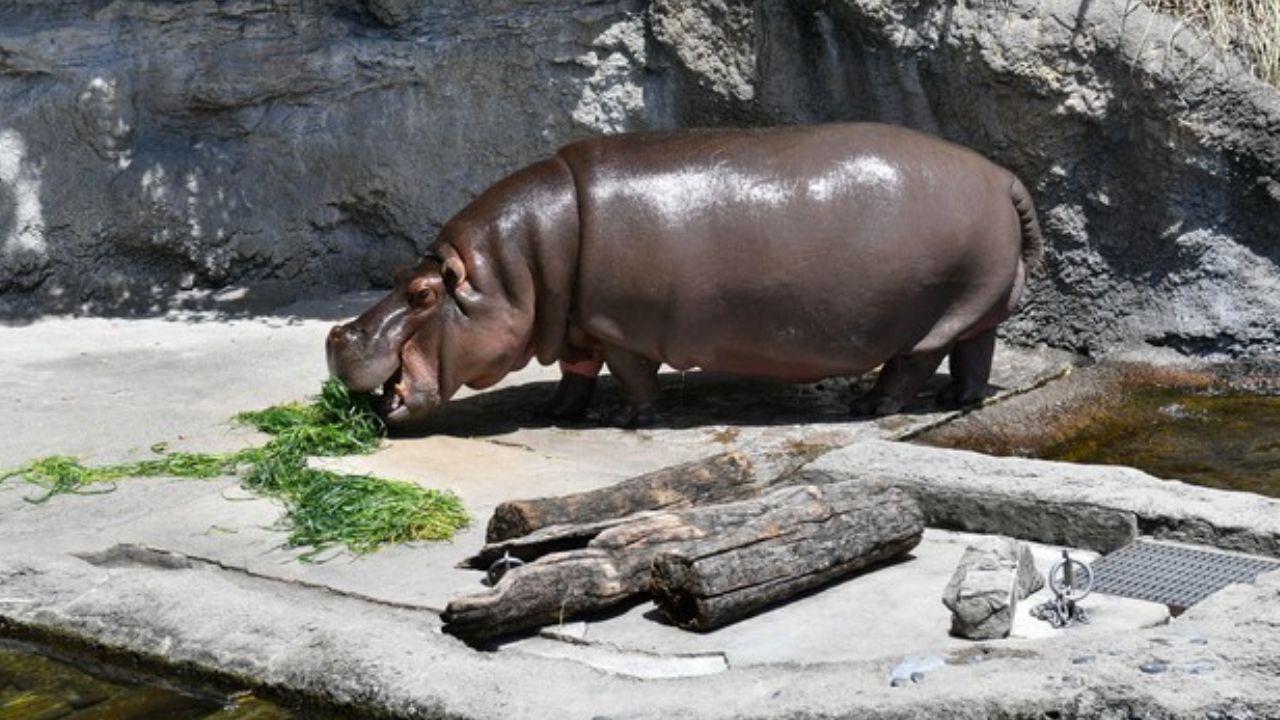
    Tokyo (AFP) – Betrayed by its DNA and unmanly toilet habits, a hippopotamus in Japan thought for seven years to be a he is in fact a she, the zoo where the wallowing giant lives said Tuesday.

    The 12-year-old came to Osaka Tennoji Zoo in 2017 from the Africam Safari animal park in Mexico, where officials attested on customs documents that the then five-year-old was male.

    But zookeepers long scratched their heads, a spokeswoman told AFP.

    In particular, Gen-chan did not display the typical male hippo behaviour of splattering faeces around while defecating — with a propeller-like tail motion — in order to mark territory.

    Nor did it make courtship calls to females and zookeepers were unable to visually identify any male genitalia, a dangerous task in such a large and potentially aggressive beast.

    “Therefore, we requested a DNA test at an external institution, and the result showed it was female,” the zoo said in a statement posted last week.

    “We will keep doing our best to provide comfortable environment to Gen-chan, so everyone, please come and see,” it said.

  • Tensions flare at US universities over Gaza protests

    Tensions flare at US universities over Gaza protests

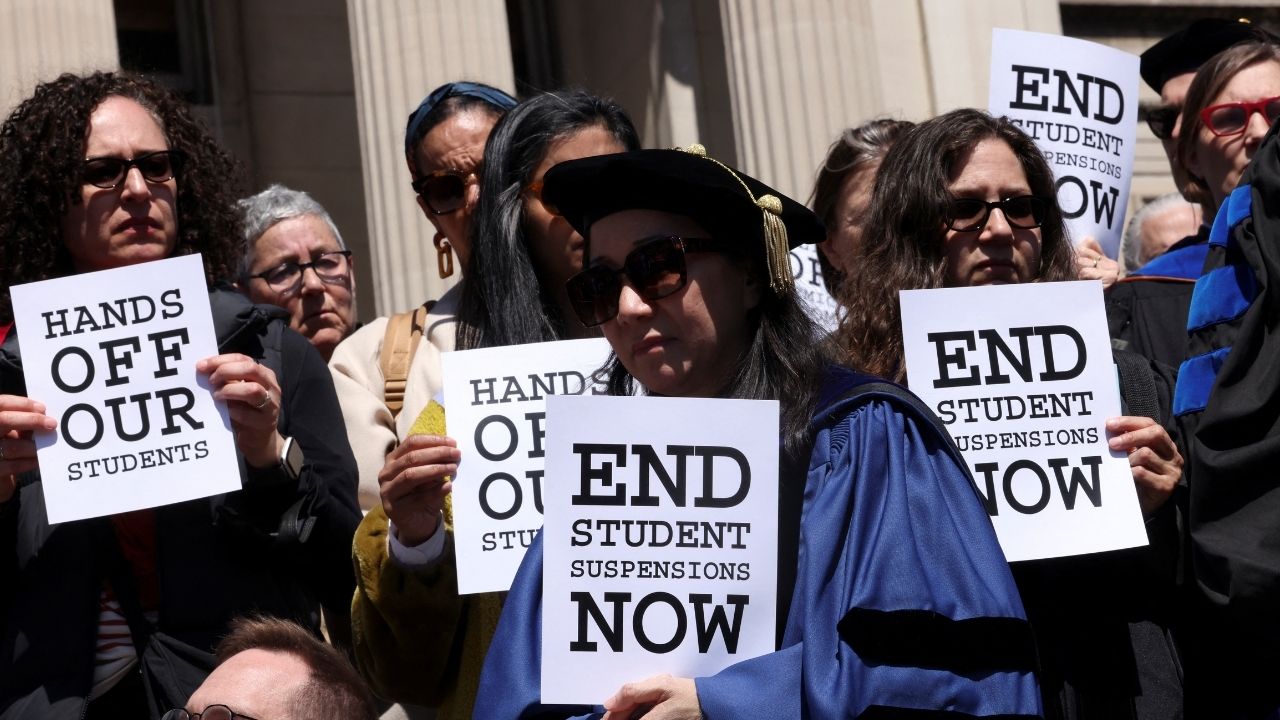
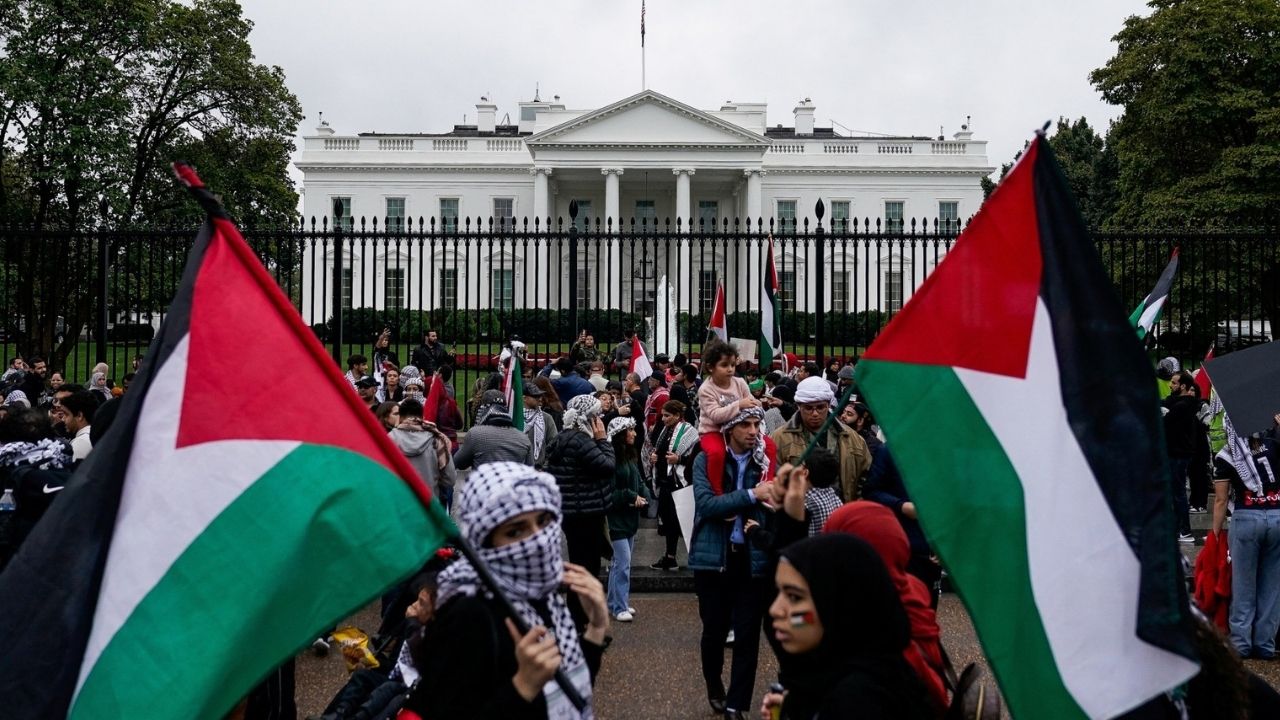
    New York, United States – Tensions flared between pro-Palestinian student protesters and school administrators at several US universities Monday, as in-person classes were cancelled and demonstrators arrested.

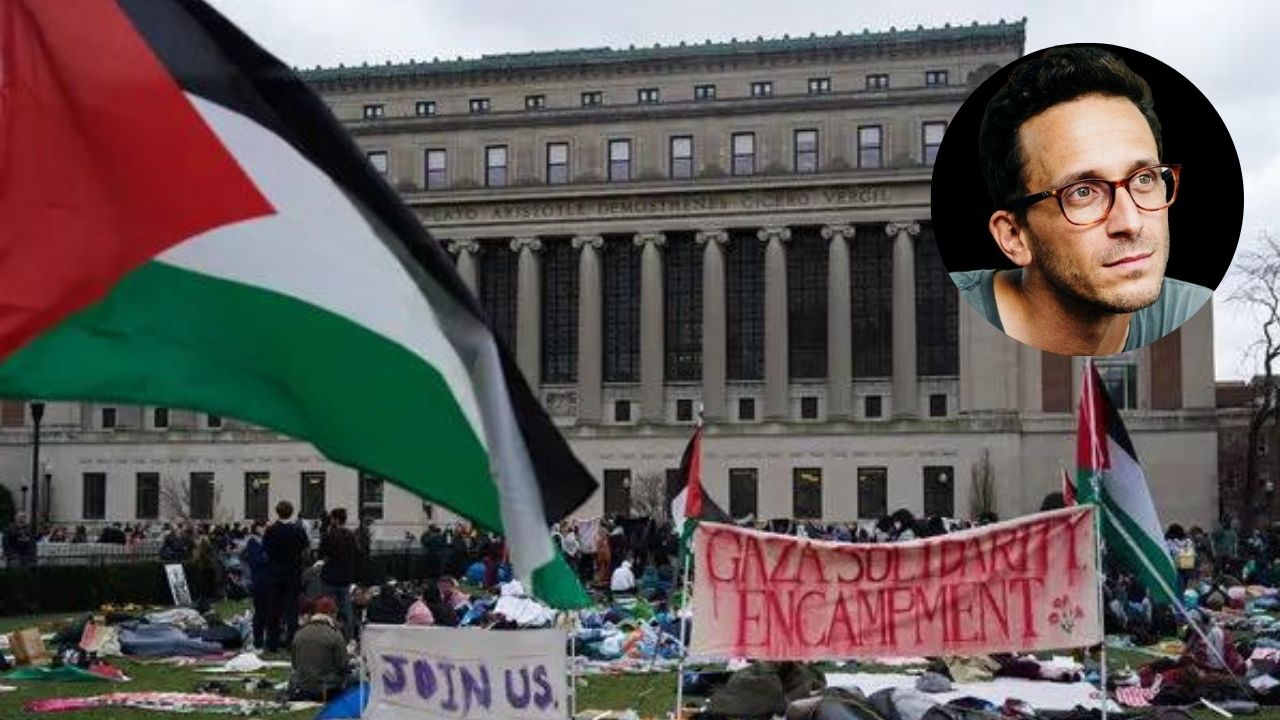
    The protests, which began last week at Columbia University with a large group of demonstrators establishing a “Gaza Solidarity Encampment” on school grounds, have spread to other campuses, including Yale, MIT and others.

    Some Jewish students at Columbia have reported intimidation and anti-Semitism amid the days-long protest, which is calling for the prestigious New York institution to divest from companies with ties to Israel.

    Classes were moved online Monday, with university president Nemat Shafik calling for a “reset” in an open letter to the school community.

    “Over the past days, there have been too many examples of intimidating and harassing behavior on our campus,” she said.

    “Anti-Semitic language, like any other language that is used to hurt and frighten people, is unacceptable and appropriate action will be taken.

    “To deescalate the rancor and give us all a chance to consider next steps, I am announcing that all classes will be held virtually on Monday,” she added.

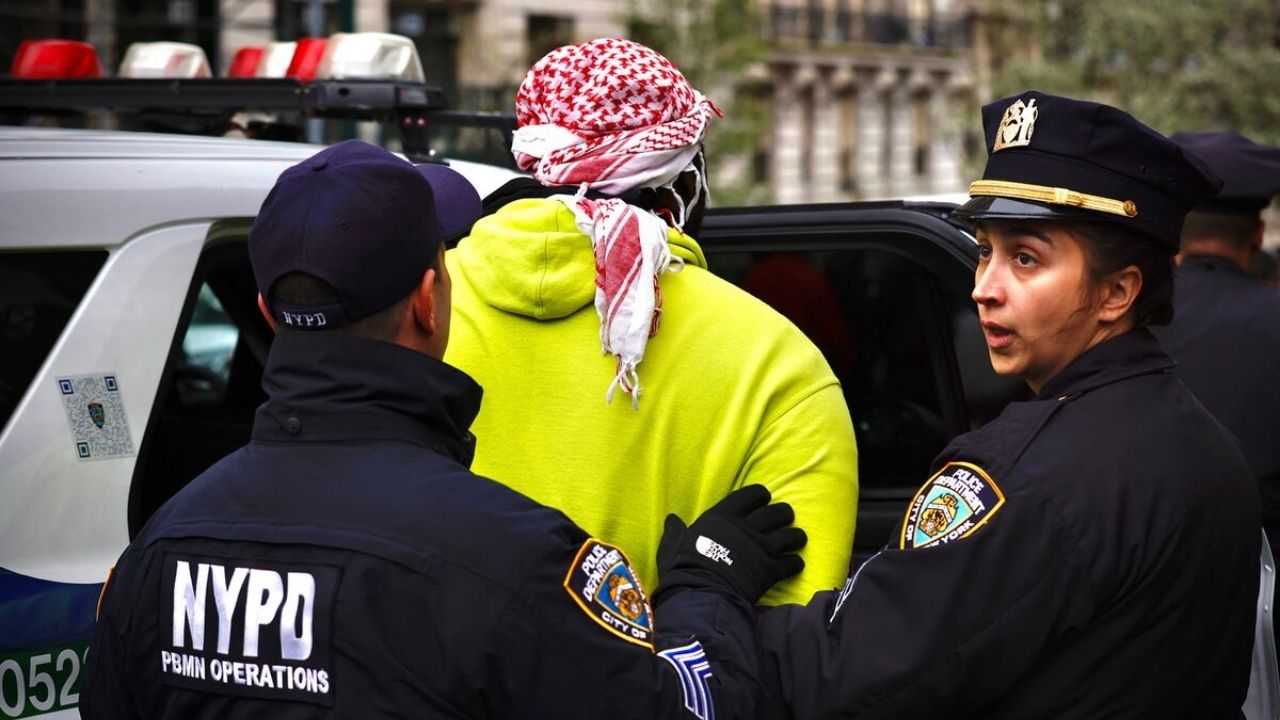
    Last week, more than 100 protesters were arrested after university authorities called the police onto the private campus Thursday, a move that seemingly escalated tensions and sparked a greater turnout over the weekend.

    Mimi Elias, a social work student who was arrested, told AFP on Monday: “We are going to stay until they talk to us and listen to our demands.”

    “We don’t want anti-Semitism or Islamophobia. We are here for the liberation of all,” Elias said.

    Joseph Howley, an associate professor of classics at Columbia, said the university had reached for the “wrong tool” by involving police, which had attracted “more radical elements that are not part of our student protests.”

    “You can’t discipline and punish your way out of prejudice and community disagreement,” Howley told AFP.

    Disciplinary action

    As the holiday of Passover began Monday night, social media images appeared to show pro-Palestinian Jewish students holding traditional seder meals inside the protest areas on multiple campuses, including at Columbia.

    Further downtown, police began detaining protesters who had set up their own encampment at New York University at around 8:30 pm, the New York Times reported, after the school called the students’ behavior “disorderly, disruptive, and antagonizing.”

    There were also demonstrations at MIT, the University of Michigan and Yale, where at least 47 people had been arrested on Monday after refusing requests to disperse.

    “The university made the decision to arrest those individuals who would not leave the plaza with the safety and security of the entire Yale community in mind,” the Ivy League university said in a statement.

    At Harvard, university officials on Monday suspended the Palestinian Solidarity Committee, the student group said on Instagram.

    They were ordered to “cease all organizational activities” for the rest of the term, or risk permanent expulsion after holding an unregistered demonstration last week, student newspaper the Harvard Crimson reported, citing an email to the group.

    Universities have become the focus of intense cultural debate in the United States since Hamas’s October 7 attack and Israel’s overwhelming military response, as a humanitarian crisis grips the Palestinian territory of Gaza.

    President Joe Biden on Monday said he condemned “the anti-Semitic protests.”

    “I also condemn those who don’t understand what’s going on with the Palestinians,” he told reporters, without further details.

    hg/amz/bjt/des/caw/mtp

    © Agence France-Presse

  • World’s largest private firms fail to set climate targets: report

    World’s largest private firms fail to set climate targets: report

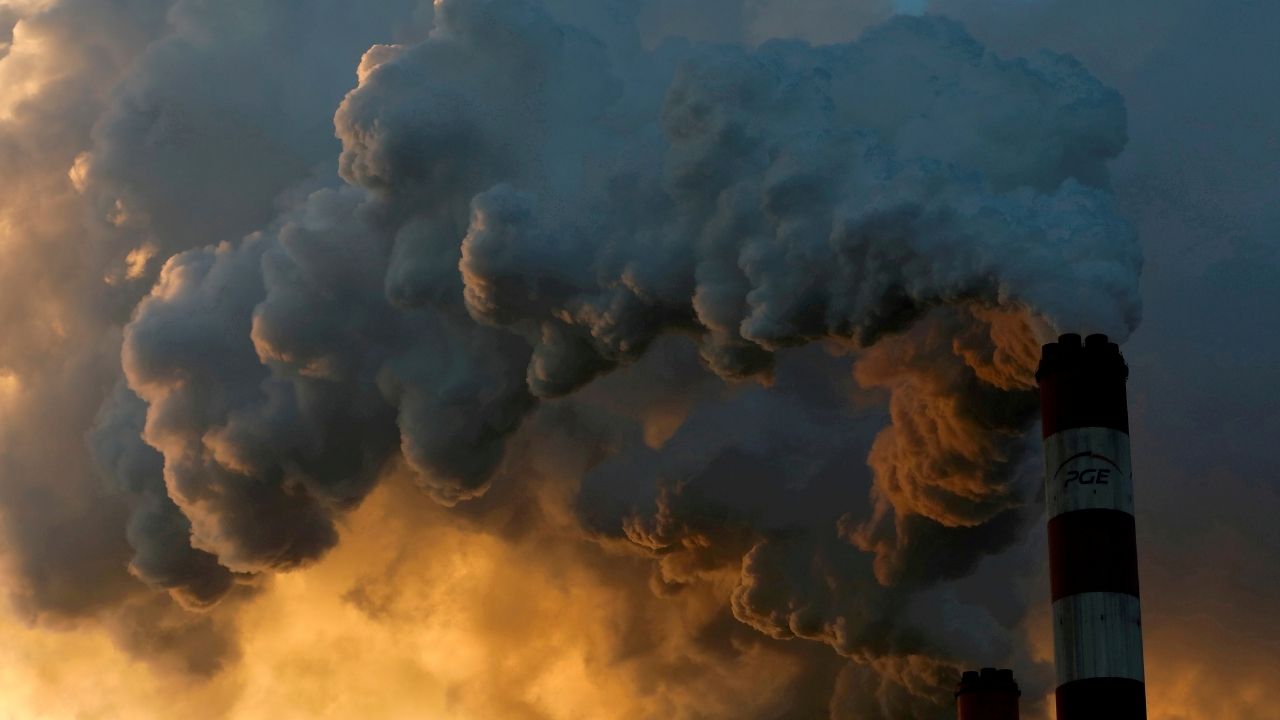
    Paris, France – Only 40 of the world’s 100 largest private firms have set net-zero carbon emissions targets to fight climate change, according to a report released Monday, lagging far behind public companies.

    But for the world to meet the 2015 Paris Agreement to limit global warming 1.5 degree Celsius, all companies need to reduce their planet-heating emissions, the report by the group Net Zero Tracker noted.

    The lack of market and reputational pressures on private firms compared to those publicly-listed, along with an absence of regulation are to blame for their slow uptake of climate commitments, John Lange of Net Zero Tracker told AFP.

    “I think things are changing on all three of those fronts,” he added.

    The report compared 200 of the world’s largest public and private companies based on their reported emissions reductions strategies and net-zero targets.

    It found that only 40 of the 100 private firms assessed had net zero targets, compared to 70 of 100 publicly-listed companies.

    Of the private companies that have set targets, just eight have published plans on how they will meet them.

    “A pledge without a plan is not a pledge, it is a naked PR stunt,” the report said.

    Regulations coming

    Only two firms — furnishing giant Ikea and US engineering giant Bechtel — ruled out using controversial carbon credits to achieve their net-zero goals, the report said.

    Carbon credits allow businesses to offset their emissions by directing money toward a project that reduces or avoids emissions, such as protecting forests, but critics say they allow companies to keep polluting.

    Meanwhile, none of the eight fossil fuel companies included in the report was found to have a net-zero target, compared with 76 percent of the sector’s largest public firms.

    There was also little improvement in the figures compared with a previous analysis done in 2022, “despite a massive uptick in regulation around the world”, Lang said.

    Several jurisdictions including the United Kingdom have adopted climate disclosure regulations.

    Others have regulations on the horizon, with business hubs of California and Singapore requiring greenhouse gas emissions reporting from 2027.

    The European Union also introduced two climate regulations — the Corporate Sustainability Reporting Directive (CSRD) and the Corporate Sustainability Due Diligence Directive (CSDDD) — which will soon require thousands of large companies to report their climate impacts and emissions, and to take action to curtail them.

    “We’re trying to get private firms to understand what’s coming for them,” Lang said.

    ‘Trickledown effect’

    The EU policies will have far-reaching effects in particular, targeting firms not only based in the bloc but those that may be headquartered elsewhere with branches or subsidiaries within the member states.

    Yet two European private firms, including French hypermarket chain E. Leclerc, were singled out in the report for having set any emissions reduction targets.

    E.Leclerc told AFP that the company has made efforts toward more sustainable practises like eliminating the use of single-use plastic bags, and is “committed to setting near-term company-wide emissions reduction targets”.

    But with the enforcement of EU regulations looming, firms will not be able to “dodge” climate targets much longer, Sybrig Smit of the NewClimate Institute told AFP.

    “It’s actually quite watertight. If companies want to do business in Europe, they are going to have to face the consequences,” she said.

    The firms analysed account for roughly 23 percent of the global economy, with the majority based in either China, the United States or EU states — the biggest emitters of greenhouse gases, Lang said.

    Any changes the firms make to meet new regulations will have substantial benefits for the environment.

    “They have such a trickledown effect. Whenever such a big company is implementing something real, it will have a huge effect on the rest of the sector that they operate in,” Smit said.

    giv/cw

    © Agence France-Presse

  • No freedom of speech in American universities

    No freedom of speech in American universities

    Many people have lost jobs for views that contradict mainstream US approach towards Israel and Palestine, despite a strong movement of solidarity with Palestine.

    Palestinian solidarity activists faced monitoring and restricted mobility on campus as administrators heightened security measures. Many felt unwelcome, with reports of harassment against Muslim women, including spitting and hijab removal.

    Students for Justice in Palestine, the leading pro-Palestinian campus group, has been suspended from several universities, including Columbia, Brandeis, George Washington, and Rutgers since October 7. Accusations against the group include alleged support for Hamas, disruption of classes, and intimidation of other students. None of the charges have been proved.

    In late October, the chancellor of the State University System of Florida issued a letter to school presidents, directing them to “deactivate” chapters of Students for Justice in Palestine across the state. Civil rights groups assert that this directive blatantly violates the First Amendment.

    At Brandeis University, known for its public endorsement of free speech, a pro-Palestinian student group was prohibited from campus due to statements made by its national leadership.

    Meanwhile, at the University of Vermont, plans for a Palestinian poet Mohammed el-Kurd to speak were canceled after students raised concerns about alleged antisemitism, prompting the school to withdraw the venue.

    The board of the Harvard Law Review in mid-Nomber, 2023, decided against publishing an article by Rabea Eghbariah – Palestinian scholar and human rights lawyer – who had asserted that the situation in Gaza should be considered under the framework of genocide as laid down by the United Nations.

    At the University of Pennsylvania, the progressive Jewish student group Penn Chavurah planned to screen the documentary “Israelism” since July but postponed it in October due to proximity to a Hamas attack. The film, made by American Jews reevaluating their views on Israel after visiting the country, has sparked controversy on campuses. Although initially denied approval for a late November screening, the group attempted to secure space through the university’s Middle East Center. However, administrators warned of potential disciplinary action if they proceeded with the screening of “Israelism.”

    Hunter College too, cancelled the screening.

    In December 2023, University of Pennsylvania President M. Elizabeth Magill stepped down following a widely criticized congressional hearing.

    Magill, along with her counterparts from MIT and Harvard, consistently emphasized that their response would be contingent on the “context.” However, they faced criticism for failing to outright condemn any expressions advocating for the genocide of Jews.

    Students at Harvard have reportedly expressed their concern of the consequences of speaking out for Palestinians – even if it is expressing their views in class.no freedom of speech in maerican unis etc.

  • ‘Conspiracy theorist’ sets self on fire outside Trump trial

    ‘Conspiracy theorist’ sets self on fire outside Trump trial

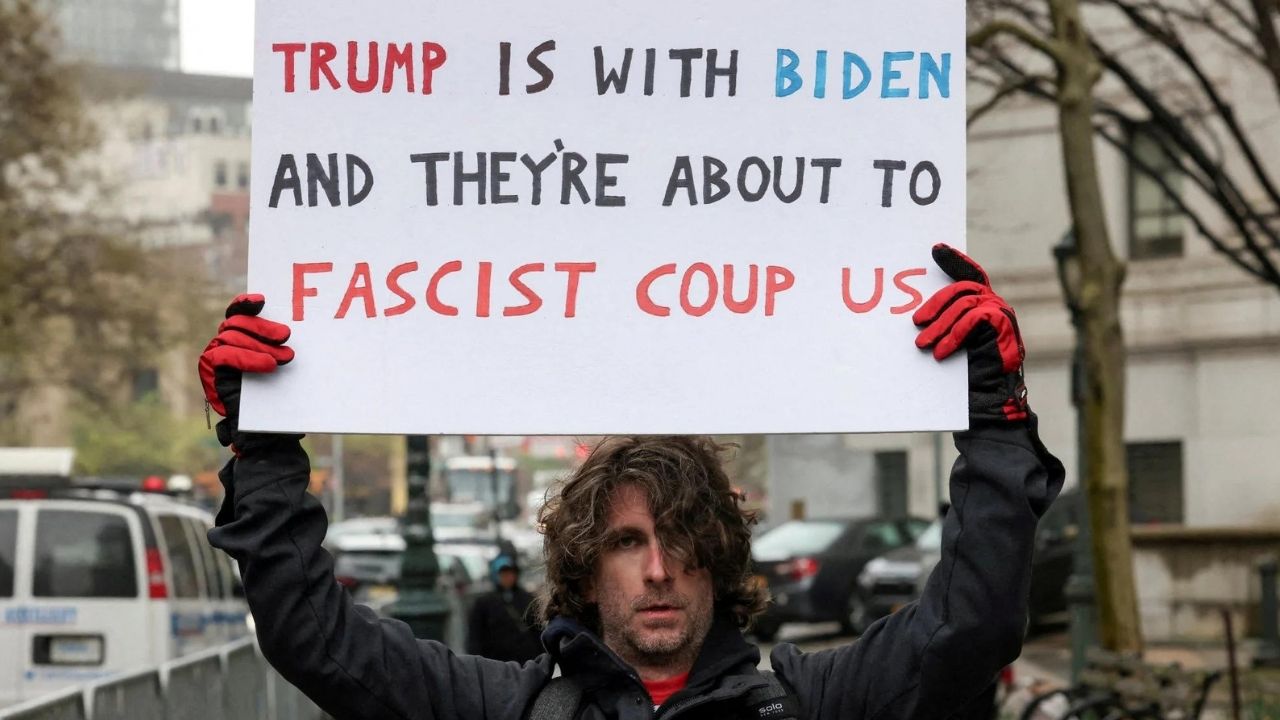
    A man set himself ablaze Friday outside the court where Donald Trump is standing trial, throwing pamphlets that police said contained conspiracy theories before he was taken to a hospital in critical condition.

    Police named the man as Maxwell Azzarello from St Augustine, Florida and said the pamphlets he sought to disseminate “seem to be propaganda-based.”

    “(They were) almost like a conspiracy theory type of pamphlet, some information in regards to Ponzi schemes, and the fact that some of our local educational institutes are a front for the mob,” NYPD chief of detectives Joseph Kenny told reporters.

    “His condition is not good, but as of now he is still alive.”

    Deputy police commissioner Tarik Sheppard said “we just right now labelled (him) a sort of conspiracy theorist, and we’re going from there.”

    Burning clothes were strewn in the park, which was locked down by authorities, while ambulances lined up nearby on standby, an AFP correspondent at the scene saw, describing a strong smell of burning chemicals.

    Laura Kavanagh, the New York City fire commissioner, said four officers were lightly injured in the incident. She described Azzarello’s condition as “critical.”

    Video seemingly taken by witnesses and posted on social media showed a person standing engulfed in flames, then falling to the ground as police officers, including one with a fire extinguisher, rushed to beat out the blaze.

    A witness who gave his name as Dave, 73, told AFP he saw a man throwing pamphlets before dousing himself with an unspecified liquid and lighting himself on fire.

    TV reporters described the incident unfolding moments after the full panel of 12 jurors and six alternates was selected for the trial of the former president in a hush money cover-up case.

    A CNN reporter described a heavy stench of burning flesh in the aftermath of the blaze.

    Hearings in the case resumed after lunch despite the incident. Trump declined to respond to questions about Azzarello as he returned to court after the break.

    The self-immolation happened in a park opposite the 100 Centre Street courthouse, which has been used by authorities to corral protesters, both pro-Trump and anti-Trump, as well as well as by some members of the media.

    Trump’s criminal trial, the first of a former president, is being conducted amid tight security in a 15th floor courtroom swarming with Secret Service officers as well as court police.

  • Israeli professor in America gets slammed by internet for Islamophobia

    Israeli professor in America gets slammed by internet for Islamophobia

    A professor in the Management Division of Columbia Business School, Shai Davidai, has been under fire by the academia and students who have been vocal against the Zionist narrative at American universities as Israel’s genocide in Gaza continues to get condemned.

    In a recent post on his social media pages, he uploaded a video of a Muslim leading Jummah prayer at Columbia University, saying, “Let the world know”, in an effort to portray the act as regressive or extreme.

    Here is how people responded

Twitter embed code generator
Loading…
Twitter embed code generator
Loading…
Twitter embed code generator
Loading…
Twitter embed code generator

Background

Supporters of professor Davidai, led by the #EndJewHatred movement, staged a protest on Wednesday urging University President Minouche Shafik to resign, alleging insufficient protection for Jewish students.

The protest followed Shafik’s testimony at a House Committee hearing titled “Columbia in Crisis: Columbia University’s Response to Antisemitism.”

Davidai, in his address, has accused Shafik of dishonesty and called for her resignation, pledging to ensure the safety of Jewish and non-Jewish communities in collaboration with future university leadership.

On the other hand, hundreds of students from Columbia University and outsiders have been demonstrating and have set up and an encampment.

Shafik authorised police to clear tents, stating that they have breached the university’s rules and policies by holding unauthorised demonstrations as well as not engaging with administrators.

The police have arrested more than 100 pro-Palestinian student protesters at New York’s Columbia University Thursday, a day after the president of the prestigious school was grilled in Congress over accusations of anti-Semitism on campus.

  • A hundred pro-Palestinian protesters arrested at New York’s Columbia University

    A hundred pro-Palestinian protesters arrested at New York’s Columbia University

    Police arrested more than 100 pro-Palestinian student protesters at New York’s Columbia University Thursday, a day after the president of the prestigious school was grilled in Congress over accusations of anti-Semitism on campus.

    “NYPD officers moved in to ensure the safety of the campus, the students and the staff made more than 108 arrests, and the NYPD ensured that there was no violence or injuries during the disturbance,” New York Mayor Eric Adams said during a press conference.

    The arrests and dismantling of tents that had been erected Wednesday also attracted a crowd of other demonstrators in support, according to an AFP journalist.

    According to The New York Times, the daughter of Democratic Representative Ilhan Omar was among those detained and she has been ordered to appear in court.

    The students were calling for the school, which has an exchange program with Tel Aviv University, to boycott all activities associated with Israel in light of the country’s war with Hamas and the ensuing humanitarian crisis in Gaza.

    University president Nemat Shafik requested police intervention to disperse the protesters, who she said had violated campus security regulations.

    Universities have become the focus of intense cultural debate in the United States since the October 7 attack and Israeli genocide in Gaza, as many students’ pro-Palestinian sentiments drew accusations of anti-Semitism.

    Congressional Republicans have taken up the issue, calling the presidents of the University of Pennsylvania and Harvard University to testify, and Harvard’s president Claudine Gay resigned shortly after.

    Shafik herself appeared in Congress Wednesday, where she said “anti-Semitism has no place on our campus.”

  • Oil jumps, equities fall as Israeli attacks fan MidEast fears

    Oil jumps, equities fall as Israeli attacks fan MidEast fears

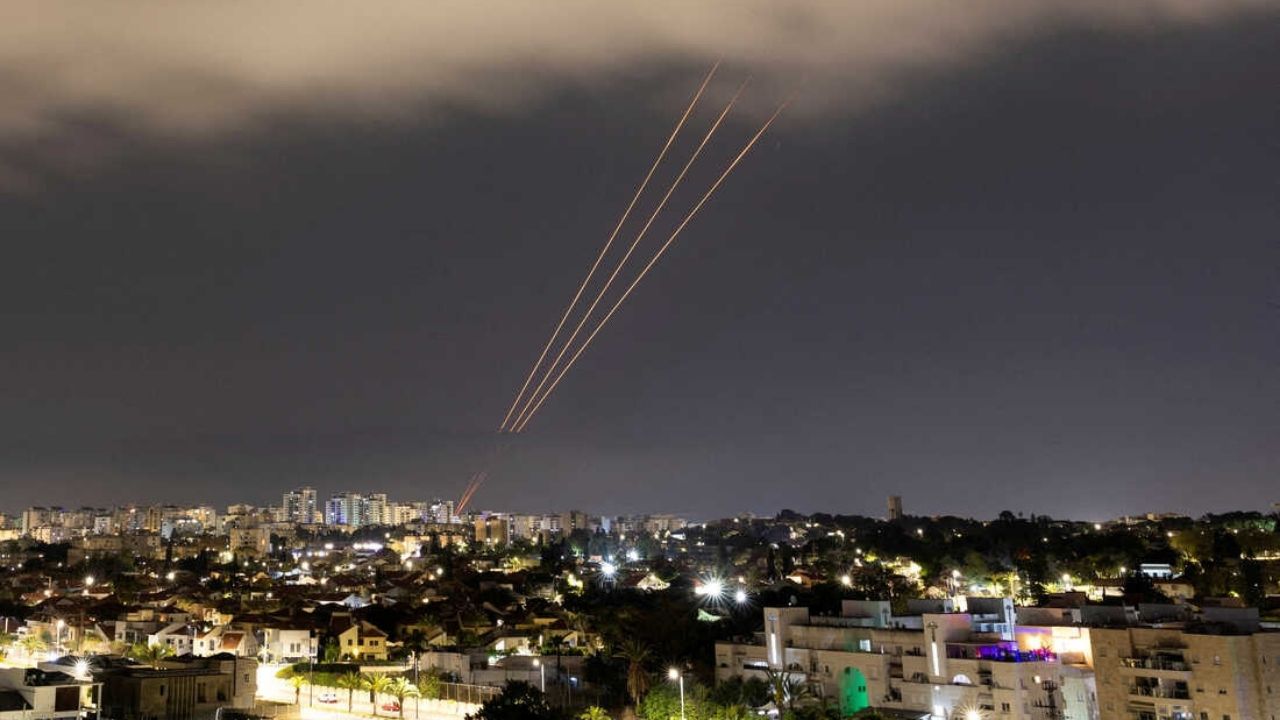
    Hong Kong, China – Oil prices rallied and equities fell Friday as reports said explosions had been heard in Iran and Syria, fuelling fears of an escalation of the Middle East crisis after last weekend’s retaliatory missile attack on Israel by Tehran.

    The reports followed another batch of data indicating the US economy remained in rude health and compounded concerns that the Federal Reserve will hold off cutting interest rates this year or even hike them again.

    Traders have been on edge since Saturday’s barrage by Iran, which Israel’s army chief General Herzi Halevi warned would be met with a response.

    Leaders in Tehran said the strike was a legitimate response to a deadly attack on an Iranian embassy building in Damascus that it blames on Israel.

    Iran’s Fars news agency reported “three explosions” were heard near Qahjavarestan, near Isfahan airport and the 8th Shekari army airbase, while space agency spokesman Hossein Dalirian said “several” drones had been “successfully shot down”.

    Dalirian said on social media platform X there were “no reports of a missile attack”.

    Nuclear facilities in Isfahan were reported to be “completely secure”, the Tasnim news agency said.

    ABC and CBS News reported the strikes had been carried out by Israel, quoting US officials.

    There was no immediate comment from the White House or Pentagon, and the Israeli military told AFP: “We don’t have a comment at this time.”

    The news sent shivers through markets, with crude briefly surging as much as four percent on worries about supplies from the oil-rich region, while fears of a regional conflict saw equities tumble.

    However, the gains were pared as Iran appeared to play down the matter. Tasnim denied the reports and said the Isfahan nuclear facility was safe, while the International Atomic Energy Agency added that it had not been damaged.

    Asia equities fell but were well off their early lows.

    Tokyo plunged more than two percent and Taipei shed more than three percent, while there were also losses in Hong Kong, Sydney, Shanghai, Singapore, Seoul, Wellington, Manila, Mumbai, Bangkok and Jakarta.

    London, Paris and Frankfurt were also in the red.

    The rush for safety also saw the yen rally against the dollar and gold jump back past $2,400, while US Treasuries climbed.

    “It is now clear that the escalating shadow warfare between Israel and Iran… has finally ignited the powder keg in the Middle East, and we have moved decisively out of the shadows and into the glaring light of open conflict,” said Stephen Innes of SPI Asset Management.

    “It should be noted that this is not a staged response to an Iranian drone attack but rather an indication that we have entered a new phase of this conflict, one that is likely to have significant and far-reaching consequences for Middle East peace and least of all risk markets.”

    The mood among traders was already downbeat as they contemplated the prospect of the Fed staying pat on interest rates this year following data showing jobless claims came in below expectations while a gauge of business activity hit a two-year high.

    Meanwhile, Atlanta Fed boss Raphael Bostic said inflation is “too high” and he felt there was no need to cut borrowing costs until later in the year.

    “I’m comfortable being patient,” he added.

    New York Fed chief John Williams and governor Michelle Bowman also said they saw fewer reductions than expected, if at all, this year.

    Michael Landsberg, of Landsberg Bennett Private Wealth Management, said: “We are firmly in the camp of no rate cuts in 2024.

    “We believe investors should prepare for a higher-for-longer regime when it comes to both inflation and interest rates.”

    Key figures around 0810 GMT

    West Texas Intermediate: UP 1.4 percent at $83.85 per barrel

    Brent North Sea Crude: UP 1.1 percent at $88.10 per barrel

    Tokyo – Nikkei 225: DOWN 2.7 percent at 37,068.35 (close)

    Hong Kong – Hang Seng Index: DOWN 1.0 percent at 16,224.14 (close)

    Shanghai – Composite: DOWN 0.3 percent at 3,065.26 (close)

    London – FTSE 100: DOWN 0.7 percent at 7,825.73

    Dollar/yen: DOWN at 154.40 yen from 154.67 yen on Thursday

    Euro/dollar: DOWN at $1.0643 from $1.0645

    Pound/dollar: DOWN at $1.2429 from $1.2438

    Euro/pound: UP at 85.64 pence from 85.57 pence

    New York – Dow: UP 0.1 percent at 37,775.38 (close)

    – Bloomberg News contributed to this story –

    dan/sco

    © Agence France-Presse

  • Hindu nationalist Modi the favourite as India votes

    Hindu nationalist Modi the favourite as India votes

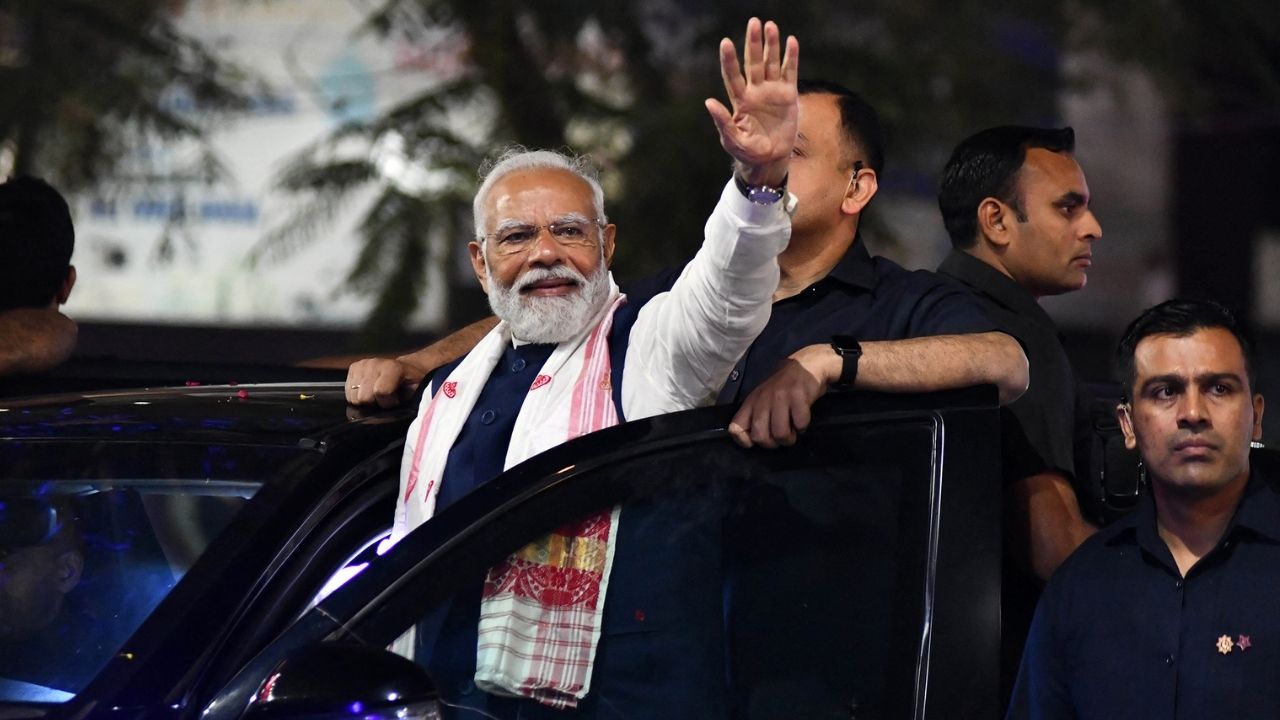
    India began voting Friday in a six-week election with an all but assured victory for Hindu nationalist Prime Minister Narendra Modi, as a weakened opposition is pushed to the sidelines.

    A total of 968 million people are eligible to take part in the world’s biggest vote — a staggering logistical exercise that critics say follows a concerted effort to delegitimise rivals.

    A long and winding queue was patiently assembled outside a polling station in the Hindu holy city of Haridwar, on the banks of the Ganges river, even before the booths opened.

    “I am here because I am happy about the direction the country is headed,” said autorickshaw driver Ganga Singh, 27. 

    “I will vote keeping in mind not personal welfare but the country’s prosperity.”

    Modi, 73, remains resoundingly popular after a decade in office that has seen India rise in diplomatic clout and economic power, as well as efforts by his government to bring the country’s majority faith in ever closer alignment with its politics.

    “I urge all those voting… to exercise their franchise in record numbers,” he wrote in a social media post on X as the election began. 

    “Every vote counts and every voice matters!”

    Modi has already led the ruling Bharatiya Janata Party (BJP) through two landslide victories in 2014 and 2019, forged in large part by his appeals to the Hindu faithful.

    This year, he presided over the inauguration of a grand temple to the deity Ram, built on the grounds of a centuries-old mosque razed by Hindu zealots.

    “The nation is creating the genesis of a new history,” Modi told the thousands gathered for the ceremony, among them Bollywood celebrities and cricket stars.

    Construction of the temple fulfilled a long-standing demand of Hindu activists and was widely celebrated across India with back-to-back television coverage and street parties.

    ‘Pattern of repression’ 

    Analysts have long expected Modi to triumph against a fractious alliance of more than two dozen parties that have yet to name a candidate for prime minister.

    His prospects have been further bolstered by several criminal probes into his opponents and a tax investigation this year that froze the bank accounts of Congress, India’s largest opposition party.

    Opposition figures and human rights organisations have accused Modi’s government of orchestrating the probes to weaken rivals. 

    “We have no money to campaign, we cannot support our candidates,” Rahul Gandhi, the most prominent Congress leader, told reporters in March.

    “Our ability to fight elections has been damaged.”

    Congress dominated Indian politics for nearly seven decades following independence and remains the only opposition party with a nationwide presence.

    In Haridwar, Gabbar Thakur, who photographs tourists by the Ganges for a living, turned out early to vote. 

    “I am here because I am upset with the government,” he said. “The so-called development hasn’t reached where I live.”

    Modi’s tenure has seen India overtake former colonial ruler Britain as the world’s fifth-biggest economy, and Western nations lining up to court a prospective ally against regional rival China’s growing assertiveness.

    In doing so, they have sidestepped concerns over the taming of India’s once-vibrant press and restrictions on civil society that have seen rights groups like Amnesty severely curtail their local operations.

    Last year, the tax office raided the BBC’s local offices weeks after the British broadcaster aired a documentary questioning Modi’s role in 2002 religious riots that killed around 1,000 people, most of them Muslims.

    While India is constitutionally secular, the country’s 220 million-strong Muslim community and other minorities have felt threatened by the rise of Hindu nationalist fervour.

    Modi’s time in office had seen “a pattern of repression to undermine democracy and civic space”, rights group CIVICUS said in a Wednesday report.

    Opposition alliance 

    Modi’s BJP is challenged by an alliance of more than two dozen parties that have come together in an electoral bloc.

    It has accused Modi’s government of using law enforcement agencies to selectively target its leaders and undermine its campaign.

    Among them is Delhi chief minister Arvind Kejriwal, arrested last month and still in custody on allegations his party received kickbacks in return for liquor licences.

    Gandhi — the scion of India’s most famous political dynasty, whose father, grandmother and great-grandfather all served as prime minister — was briefly disqualified from parliament last year after being convicted of criminal libel.

    The 53-year-old has criticised the government for democratic backsliding and its chest-thumping Hindu nationalism.

    On Friday, his Congress party urged voters to end “hatred and injustice” as polls opened.

    “Your one vote can put an end to inflation, unemployment, hatred and injustice,” it said on social media platform X.

    But Gandhi has already led Congress to two defeats against Modi and his efforts to dent the premier’s popularity have failed to register with voters.

    Published opinion polls are rare in India, but a Pew survey last year found Modi was viewed favourably by nearly 80 percent of the public.

    Voting will be staggered over seven stages between April 19 and June 1, with more than a million polling stations across India.

    Ballots will be counted all at once on June 4 and are usually announced on the same day.