Category: FOREIGN

  • Israel bombs Gaza during Eid despite US rebuke

    Israel bombs Gaza during Eid despite US rebuke

    GAZA STRIP: Israeli strikes hit Gaza on Wednesday as Muslims marked the end of the holy fasting month of Ramzan and after US President Joe Biden labelled Israel’s approach to the war a “mistake”.

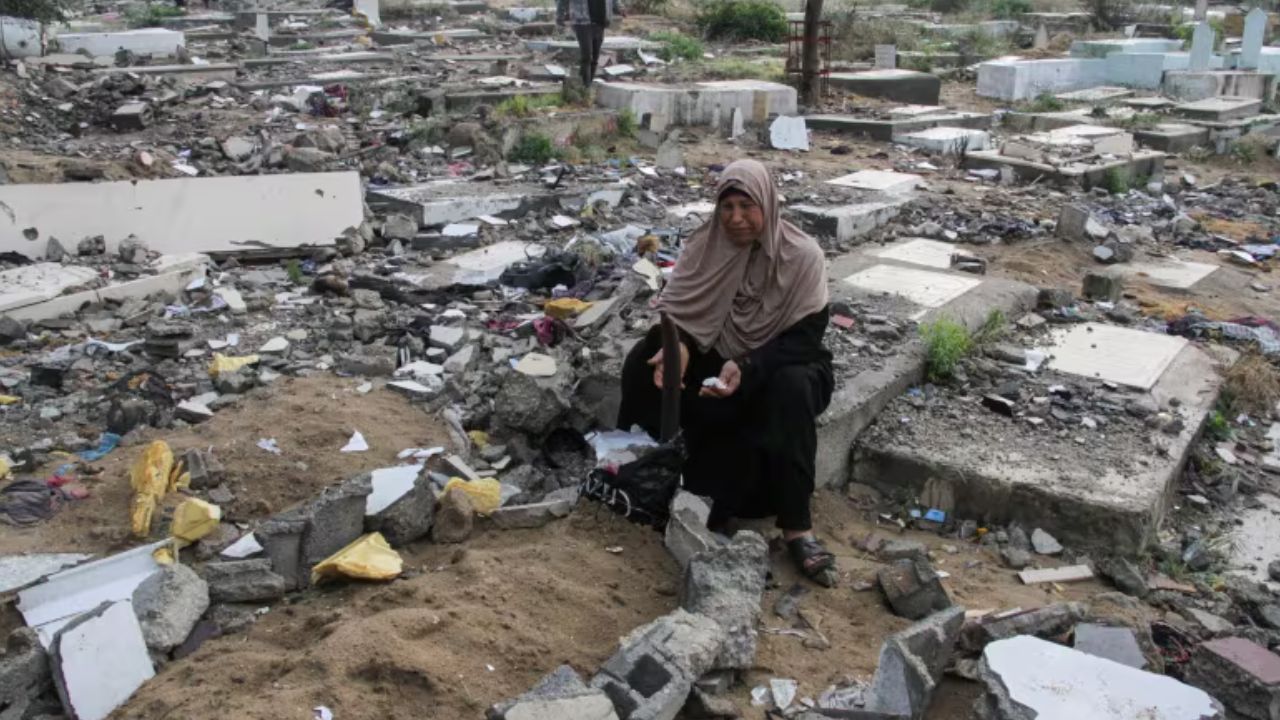
    Palestinians gathered for morning prayers on the first day of the Eid al-Fitr holiday amid the ruins of Gaza, which has been devastated by more than six months of war since October 7.

    Tens of thousands also flocked to Israeli-annexed east Jerusalem’s Al-Aqsa mosque compound where one worshipper, nurse Rawan Abd, said: “It’s the saddest Eid ever… you could see the sadness on people’s faces.

    “Usually we come to Al-Aqsa to celebrate, this year we came just to support each other,” the 32-year-old said at Islam’s third holiest site, which is also revered by Jews as the Temple Mount.

    Israeli forces kept up combat operations and air strikes on Gaza a day after Prime Minister Benjamin Netanyahu vowed no let-up in the campaign to destroy Hamas and bring home the hostages.

    Netanyahu insisted on that “no force in the world” would stop Israeli troops from entering Gaza’s far-southern city of Rafah which is packed with displaced Palestinians.

    His threat came amid ongoing talks in Cairo involving US, Egyptian and Qatari mediators for a truce and hostage release deal.

    Biden, voicing his growing frustration with hawkish Netanyahu, issued some of his sternest criticism yet of the war, which has brought mass civilian casualties and widespread suffering.

    “I think what he’s doing is a mistake,” Biden told Spanish-language TV network Univision in an interview that aired Tuesday night after being recorded last week. “I don’t agree with his approach.”

    He urged Netanyahu to “just call for a ceasefire, allow for the next six, eight weeks, total access to all food and medicine going into the country.”

    ‘Famine-like conditions’

    The war broke out with October 7 against Israel, which resulted in the deaths of 1,170 people, mostly civilians, according to Israeli figures.

    Palestinian also took about 250 hostages, 129 of whom remain in Gaza, including 34 the Israeli army says are dead.

    Israel’s retaliatory offensive has killed at least 33,360 people in Gaza, mostly women and children, according to Gaza’s health ministry.

    Another 14 people were killed – including small children – in a strike on a home in Nuseirat camp in central Gaza, the health ministry said.

    The army said Wednesday that “Israeli troops are continuing to operate in the central Gaza Strip and killed a number of terrorists over the past day”.

    It added that aircraft had “struck dozens of terror targets in the Gaza Strip, including military sites, launchers, tunnel shafts and infrastructure.”

    Israel has imposed a siege that has deprived Gaza’s people of most food, water, fuel, medicines, and other essential goods.

    Humanitarian groups have accused Israel of using starvation as a weapon of war in Gaza, where UN experts say half the population is facing “catastrophic” food insecurity.

    Washington’s recent tougher line with Israel, its main ally in the region, has brought some results, according to the US Agency for International Development.

    Recent days had seen a “sea change” in aid deliveries, said USAID administrator Samantha Power, with Israel reporting 468 trucks entering from Egypt on Tuesday.

    However, Power stressed that Israel needs to do more, saying that “we have famine-like conditions in Gaza, and supermarkets filled with food within a few kilometres away” in southern Israel.

    Washington has also resumed funding to the UN agency for Palestinian refugees after cutting it weeks ago after Israel claimed that some UNRWA staff took part in the October 7.

    ‘It will be punished’

    Hamas has said it is studying the latest proposal for a truce. A framework being circulated would halt fighting for six weeks and see the exchange of about 40 hostages for hundreds of Palestinian prisoners.

    However, Hamas has so far also publicly insisted on a full withdrawal of Israeli ground forces and a permanent ceasefire – demands Israel has rejected outright.

    US National Security Advisor Jake Sullivan said Tuesday that Israel had to “take some steps forward” while Hamas’s public statements had been “less than encouraging”.

    The US State Department has however also warned Israel that “a full-scale military invasion of Rafah would have an enormously harmful effect” on civilians and “would ultimately hurt Israel’s security”.

    US Secretary of State Antony Blinken said Tuesday he had no indication of an “imminent” assault on the city, where around 1.5 million Palestinians are sheltering.

    Blinken also said he doubted Israel would attack Rafah before a delegation is set to visit Washington next week.

    Regional tensions have surged amid the Gaza war, and Israel was widely blamed for an April 1 strike on arch foe Iran’s consulate in Damascus that killed seven Revolutionary Guards.

    Iran’s supreme leader Ayatollah Ali Khamenei warned Israel that “the evil regime made a mistake in this regard. It must be punished and will be punished.”

    Israeli Foreign Minister Israel Katz swiftly replied with a Persian-language post warning that “if Iran attacks from its territory, Israel will respond and attack Iran.”


  • 150 Jewish celebrities show support for director’s pro-Palestine Oscars speech

    150 Jewish celebrities show support for director’s pro-Palestine Oscars speech

    More than 150 Jewish creatives have signed an open letter supporting Oscar Winner Jonathan Glazer’s pro-Palestine Oscars speech.

    The British filmmaker, Jonathan Glazer, who won the Best International Feature Oscar for his film ‘The Zone of Interest’, has been at the centre of an ongoing debate in Hollywood. He was under fire for his pro-Palestine speech at the Oscars. Glazer, who is Jewish himself, has now received support from heavyweight names.


    Jonathan Glazer’s speech is continuing to become one of the Oscars’ most debated and polarizing moments after many media outlets called it “anti-semitic”
    While accepting Best International Feature for his Holocaust film The Zone of Interest, Glazer drew a parallel between his film and the current conflict in Gaza: “Right now, we stand here as men who refute their Jewishness and the Holocaust being hijacked by an occupation, which has led to conflict for so many innocent people – whether the victims of October the 7th in Israel or the ongoing attack on Gaza – all the victims of this dehumanisation…”

    Now, the director has received fresh and welcome support through a new letter, whose signatories include major Jewish creatives like Nan Goldin, Joaquin Phoenix, Tom Stoppard, Elliott Gould, Debra Winger, Joel Coen, Emma Seligman, Nicole Holofcener, and Boots Riley.


    They are among more than 150 Jewish creatives who have signed the open letter supporting Glazer’s Oscars speech, writing that they were “alarmed to see some of our colleagues in the industry mischaracterize and denounce his remarks”.


    “In his speech, Glazer asked how we can resist the dehumanization that has led to mass atrocities throughout history,” read the letter. “For such a statement to be taken as an affront only underscores its urgency.”


    The letter also criticized the earlier condemnations of Glazer, saying they “have a silencing effect on our industry, contributing to a broader climate of suppression of free speech and dissent, the very qualities our field should cherish.”


    “We should be able to name Israel’s apartheid and occupation – both recognized by leading human rights organizations as such – without being accused of rewriting history.”


    The letter concluded: “We stand with all those calling for a permanent cease-fire, including the safe return of all hostages and the immediate delivery of aid into Gaza, and an end to Israel’s ongoing bombardment of and siege on Gaza.”

  • Israel’s Netanyahu says ‘there is a date’ for Rafah invasion

    Israel’s Netanyahu says ‘there is a date’ for Rafah invasion

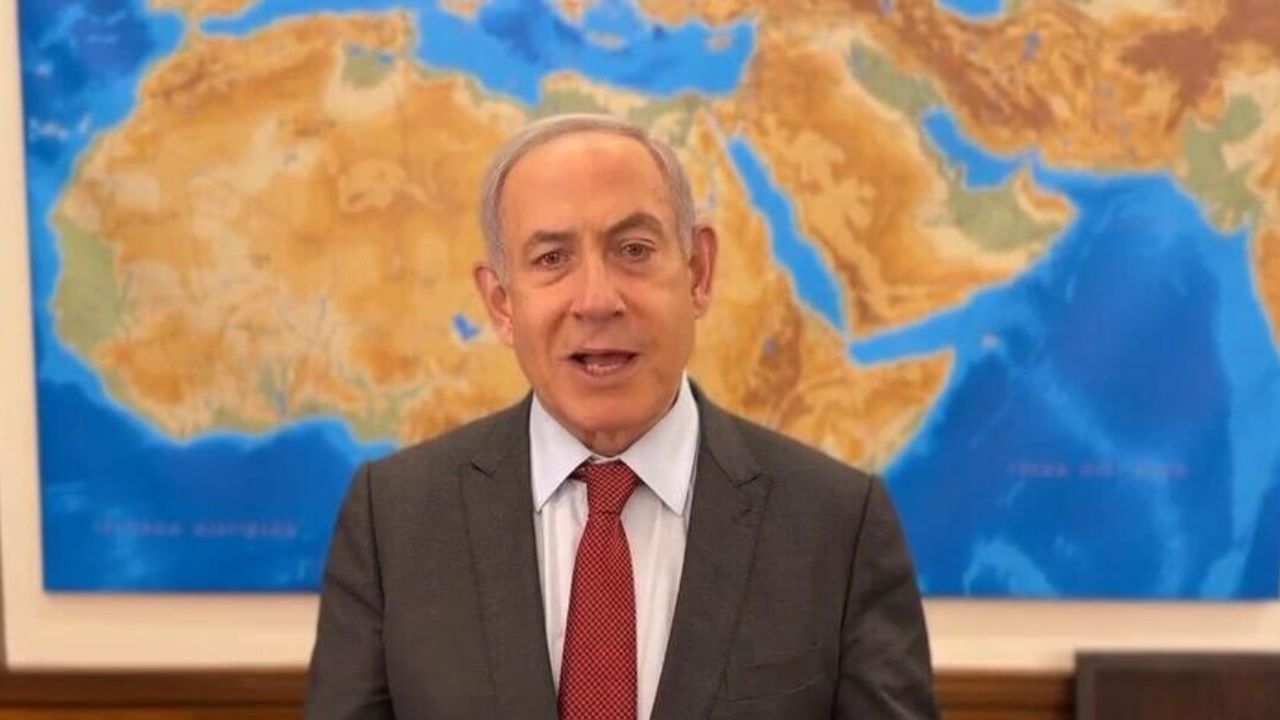
    Israeli Prime Minister Benjamin Netanyahu said Monday that a date has been set for a ground offensive in Rafah, which Israel says is one of the last Hamas strongholds in Gaza.

    Around 1.5 million Gazans are sheltering in the city, which has so far not experienced a large-scale Israeli ground assault.

    Netanyahu did not say when the invasion would occur but reiterated that victory over Hamas militants “requires entry into Rafah and the elimination of the terrorist battalions there.

    “It will happen — there is a date,” he said in a video statement.

    He was speaking as talks in Cairo over a Gaza ceasefire and hostage deal appeared to be gathering momentum.

    Netanyahu is under pressure at home from his far-right coalition partners who are angry at talk of a truce as well as Israel pulling its troops out of southern Gaza on Sunday.

    “Today I received a detailed report on the talks in Cairo,” Netanyahu said.

    “We are working all the time to achieve our goals, primarily the release of all our hostages and achieving a complete victory over Hamas.”

    The White House said on Monday that negotiators in the Egyptian capital had presented Hamas with a proposal for a ceasefire in the Gaza Strip and a hostage deal.

    “Now it’s going to be up to Hamas to come through,” it said, describing the talks as “serious”.

    Israeli genocide in Gaza has killed at least 33,207 people, mostly women and children, according to the health ministry.

  • China to criminally try three minors for child murder

    China to criminally try three minors for child murder

    China will put three minors on trial for allegedly murdering another child, a provincial prosecutor said Monday, in a case that has shocked the nation and sparked public debate over the treatment of juvenile offenders.

    The three suspects, all aged under 14 at the time of the murder, are accused of bullying a middle-school classmate surnamed Wang over a long period before killing him last month.

    The grim details of the case, in which the killers reportedly buried Wang’s body in an abandoned greenhouse, drew public attention to how the law deals with juveniles accused of serious crimes.

    In 2021, China lowered its age of criminal responsibility from 14 to 12 for “special cases” such as inflicting death by “extremely cruel means”.

    The Hebei case is thought to be one of the first to apply the lower age limit.

    The provincial prosecutor said Monday it had received a police request last month to criminally try the suspects, surnamed Zhang, Li and Ma.

    It said it had concluded that the three were between 12 and 14 when they “intentionally committed murder, causing the death of the victim Wang”.

    “The circumstances were serious and they should be held criminally responsible,” the provincial office said, adding that the country’s top public prosecutor had reviewed the decision.

    “While handling cases strictly in accordance with the law, the procuratorial organs will… further strengthen the prevention and treatment of juvenile crimes,” the provincial prosecutor continued.

    Under Chinese law, murder is punishable by imprisonment or the death penalty.

  • Swiss farmers dump dead sheep in protest against rising number of wolves

    Swiss farmers dump dead sheep in protest against rising number of wolves

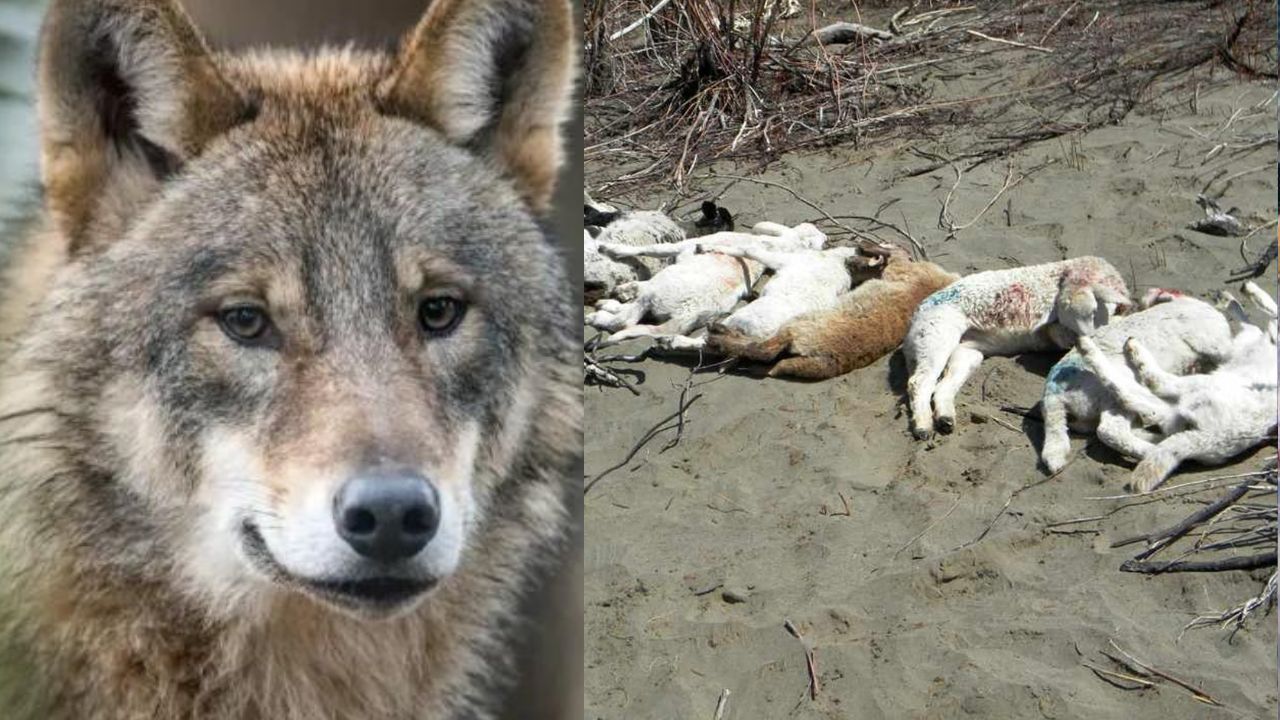
    Swiss sheep farmers on Saturday dumped the bodies of animals killed by wolves in front of a regional government building, demanding more action against the predators, Swiss media reported.

    Around a dozen breeders came from the Saint-Barthelemy area in the western Swiss canton of Vaud to lay out the carcasses of 12 sheep in front of the regional government headquarters in Lausanne, the Chateau Saint-Maire.

    “These sheep were killed last night,” Eric Herb, a member of a Swiss association demanding the regulation of big predators, was quoted as saying by the Keystone-ATS news agency.

    “It is really time to act.”

    “We are sick of this. We want the wolf killed,” agreed Patrick Perroud, a farmer and butcher from the nearby municipality of Oulens.

    “Cohabitation is not possible. Our territory is too small,” he told Keystone-ATS.

    The protesters told the news agency that wolves had killed 17 sheep in the same area late last month, two earlier this week and 13 overnight to Saturday.

    “The breeders have played nice until now, but this time it was too much,” Herb said.

    The protesters were planning to increase the pressure on the Vaud government environment minister, Vassilis Venizelos of the Green Party, he said.

    One of the protesters’ banners read: “Vassilis step down”, Keystone-ATS reported.

    The breeders had briefly negotiated with regional police before being allowed to lay down the animal carcasses on tarpaulin in front of the Chateau.

    Participants in the protest, which was supported by the regional chapter of the far-right Swiss People’s Party — Switzerland’s largest party — lamented that they were losing sleep.

    “We have to check on our animals every night,” one was quoted as saying.

    After being wiped out more than a century ago, wolves have in recent decades begun returning to Switzerland and to several other European countries.

    Since the first pack was spotted in the wealthy Alpine nation in 2012, the number of packs swelled to 32 last year, with around 300 individual wolves counted.

    Nature conservation groups have hailed the return as a sign of a healthier and more diverse ecosystem.

    But breeders and herders complain of attacks on livestock and have been ramping up demands to cull more wolves.

    Swiss authorities last year relaxed the rules for hunting the protected species, and decided to allow large preventative culls in the most affected cantons but swift legal actions put those plans partially on ice.

    The debate in several parts of Europe about wolves rose up the political agenda in September.

    In an open letter to the European Commission, eight leading conservation groups said there were ways to make coexistence easier between humans and large wild animals like wolves.

    “Damage to livestock is often linked to the lack of adequate supervision and/or physical protection,” they said. They pointed to strategies such as “the training of dogs to protect herds, education of herders, tools and technical solutions to deter wolves”.

  • World food prices rise for first time in seven months: FAO

    World food prices rise for first time in seven months: FAO

    Global food prices rose in March, the first increase since July, pulled higher by cooking oil prices despite the cost of grains continuing to ease, the UN’s Food and Agricultural Organization said Friday.

    The FAO’s overall Food Price Index climbed 1.1 percent over the month to stand at 118.3 points in March 2024. On an annual comparison it was 7.7 percent lower.

    The sub-index for vegetable oils jumped by 8.0 percent over the month to reach a one-year high. The FAO said prices for palm, soy, sunflower and rapeseed oils all climbed higher.

    Rising palm oil prices were driven by seasonal drops in output in leading producing nations that coincided with strong demand in Southeast Asia, while demand from the biofuel sector pulled up soy oil prices.

    Dairy prices rose by 2.9 percent in March on a monthly basis, while meat prices climbed 1.7 percent.

    Meanwhile, cereals prices slid 2.6 percent on a monthly basis, while sugar prices fell 5.4 percent.

    Food prices reached a record high after Russia invaded agricultural power Ukraine in February 2022 but have dropped since then.

    Last month’s uptick comes as inflation has slowed dramatically in many countries but a recent rebound in global oil prices has sparked concern it may persist at a level that could discourage central banks from cutting interest rates.

  • Palestinian Muslims mark sad and tense ‘holiest Ramadan night’ in Jerusalem

    Palestinian Muslims mark sad and tense ‘holiest Ramadan night’ in Jerusalem

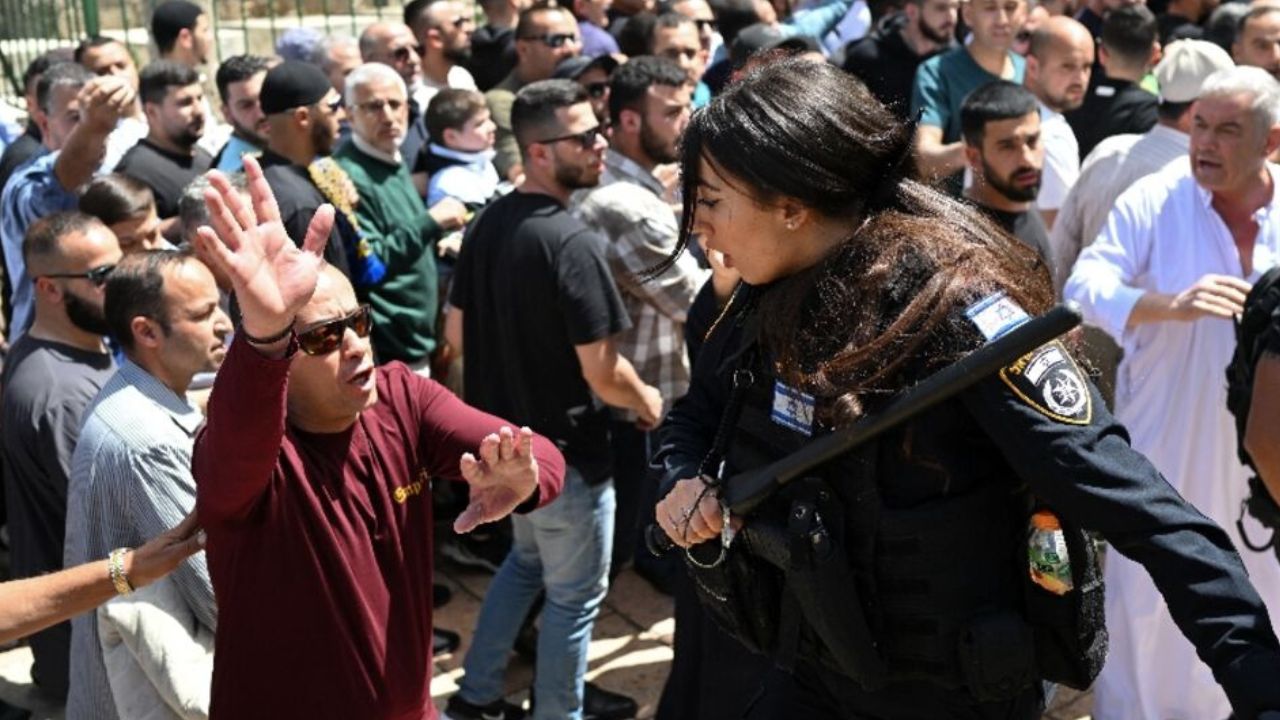
    Palestinian Muslims marked a tense and sombre last Friday of Ramadan in Jerusalem as Israeli police controlling the entrance to the Al-Aqsa mosque – the third holiest site in Islam – attacked worshippers.

    Some 120,000 people descended on the shrine, which dominates the Old City, officials said, with grand mufti Muhammad Ahmad Hussein urging the faithful to brave the heavy police presence because of the war in Gaza.

    Adli al-Agha, 53, from Jerusalem, told AFP that many people “had to flee dawn prayers” after Israeli police deployed a mini-drone spraying tear gas to disperse people chanting “Glory to God”.

    “In our soul and our blood, we sacrifice for you Al-Aqsa,” worshippers declared, according to Agha.

    Police said they arrested eight people for inciting terrorism.

    Yasser Basha, from Tulkarem in the Israeli-occupied West Bank, said police were restricting entrance to the mosque to the old and the very young. Only men over 55 and women over 50 were being allowed inside, he said.

    “If it wasn’t for the war, things would have been much easier,” he added.

    Friday also marks Laylat al-Qadr (“The Night of Destiny”), the spiritual climax of the Muslim holy month, which commemorates the moment the archangel Gabriel first appeared to Prophet Mohammed and began revealing the Koran.

    It is the night when Muslims believe their prayers are most likely to be granted, a festive moment while children stay up late and shops stay open till the small hours.

    But many Palestinians are not in the mood to celebrate and are praying for an end to the war in Gaza after almost six months of bloodshed.

    Sameeha Al Qadi, 55, who had come from near Bethlehem, said Jerusalem “is sad and has lost its light — we all feel what is going on in Gaza. We can’t escape it for a minute.”

    This year there are few Ramadan decorations or lights in the Holy City, with Palestinians instead having a bitter coffee and a date — traditionally to mark mourning — on Tuesdays and Wednesdays, when feasts are usually held.

    “There is sweet nothing about the feast this year. People are not celebrating,” said Sabah, 54, some of whose relatives have been killed in Gaza.

    “Everything is bitter in my mouth. It is so painful at this time which is all about family.”

    Easter was similarly subdued last weekend for Palestinian Christians.

    Adnan Jafar, 60, a sweet maker in the Old City, said usually in Ramadan his shop is at its busiest.

    “But I have never had a Ramadan like this. And we all know why. (Gaza) is not just affecting us, it is affecting the whole world.”

    Israeli genocide in Gaza has killed at least 33,091 people since October 7, mostly women and children, according to the territory’s health ministry.

  • Meta to start labeling AI-generated content in May

    Meta to start labeling AI-generated content in May

    Facebook and Instagram giant Meta on Friday said it will begin labeling AI-generated media beginning in May, as it tries to reassure users and governments over the risks of deepfakes.

    The social media juggernaut added that it will no longer remove manipulated images and audio that don’t otherwise break its rules, relying instead on labeling and contextualization, so as to not infringe on freedom of speech.

    The changes come as a response to criticism from the tech giant’s oversight board, which independently reviews Meta’s content moderation decisions.

    The board in February requested that Meta urgently overhaul its approach to manipulated media given the huge advances in AI and the ease of manipulating media into highly convincing deepfakes.

    The board’s warning came amid fears of rampant misuse of artificial intelligence-powered applications for disinformation on platforms in a pivotal election year not only in the United States but worldwide.

    Meta’s new “Made with AI” labels will identify content created or altered with AI, including video, audio, and images. Additionally, a more prominent label will be used for content deemed at high risk of misleading the public.

    “We agree that providing transparency and additional context is now the better way to address this content,” Monika Bickert, Meta’s Vice President of Content Policy, said in a blog post.

    “The labels will cover a broader range of content in addition to the manipulated content that the Oversight Board recommended labeling,” she added.

    These new labeling techniques are linked to an agreement made in February among major tech giants and AI players to cooperate on ways to crack down on manipulated content intended to deceive voters.

    Meta, Google and OpenAI had already agreed to use a common watermarking standard that would invisibly tag images generated by their AI applications.

    Identifying AI content “is better than nothing, but there are bound to be holes,” Nicolas Gaudemet, AI Director at Onepoint, told AFP.

    He took the example of some open source software, which doesn’t always use this type of watermarking adopted by AI’s big players.

    Meta said its rollout will occur in two phases with AI-generated content labeling beginning in May 2024, while the removal of manipulated media solely based on the old policy will cease in July.

    According to the new standard, content, even if manipulated with AI, will remain on the platform unless it violates other rules, such as those prohibiting hate speech or voter interference.

    Recent examples of convincing AI deepfakes have only heightened worries about the easily accessible technology.

    The board’s list of requests was part of its review of Meta’s decision to leave a manipulated video of US President Joe Biden online last year.

    The video showed Biden voting with his adult granddaughter, but was manipulated to falsely appear that he inappropriately touched her chest.

    In a separate incident not linked to Meta, a robocall impersonation of Biden pushed out to tens of thousands of voters urged people to not cast ballots in the New Hampshire primary.

    In Pakistan, the party of former prime minister Imran Khan has used AI to generate speeches from their jailed leader.

  • Israeli fire ‘most likely’ killed woman hostage on Oct 7: Army

    Israeli fire ‘most likely’ killed woman hostage on Oct 7: Army

    An Israeli investigation found Friday that an Israeli woman who had been seized during the October 7 attack was “most likely” killed when a combat helicopter fired on her kidnappers’ vehicle.

    Efrat Katz and most of the militants in the vehicle were killed when the Israeli aircraft fired on them on October 7, the army investigation said.

    The helicopter “fired at a vehicle that had terrorists in it, and which, in retrospect, based on the testimonies, also had hostages in it,” the army said in a statement.

    “As a result of the fire, most of the terrorists manning the vehicle were killed, and most likely, Efrat Katz … was killed as well.”

    The “tragic and unfortunate” event occurred at a time of “fighting and conditions of uncertainty,” Israeli Air Force chief Tomer Bar said in the statement.

    “The commander of the air force did not find fault in the operation by the helicopter crew, who operated in compliance with the orders in a complex reality of war.”

    The army statement said the mistake occurred because surveillance systems could not distinguish hostages from kidnappers once in a vehicle, and that “the shooting was defined as shooting at a vehicle with terrorists”.

    Katz, 68 at the time of Hamas’s attack on southern Israel, was kidnapped from the Nir Oz kibbutz close to the Gaza border.

    Her daughter Doron Katz-Asher and her two children were taken hostage during the attack, but were later released on November 24.

    Katz’s partner Gadi Moses and his ex-wife Margalit Moses were also taken hostage during the attack. She was later released but Gadi is believed to remain in captivity in Gaza and still alive.

    The Hamas attack resulted in the death of 1,170 Israelis and foreigners, most of them civilians, according to an AFP tally of Israeli official figures.

    Palestinian militants took more than 250 hostages, of whom 130 remain in Gaza, including 34 the Israeli army says are dead.

    Israeli genocide in Gaza has killed at least 33,091 people since October 7, mostly women and children, according to the health ministry in the Hamas-run territory.

  • Israel increases Gaza aid; admits ‘mistakes’ in aid worker deaths

    Israel increases Gaza aid; admits ‘mistakes’ in aid worker deaths

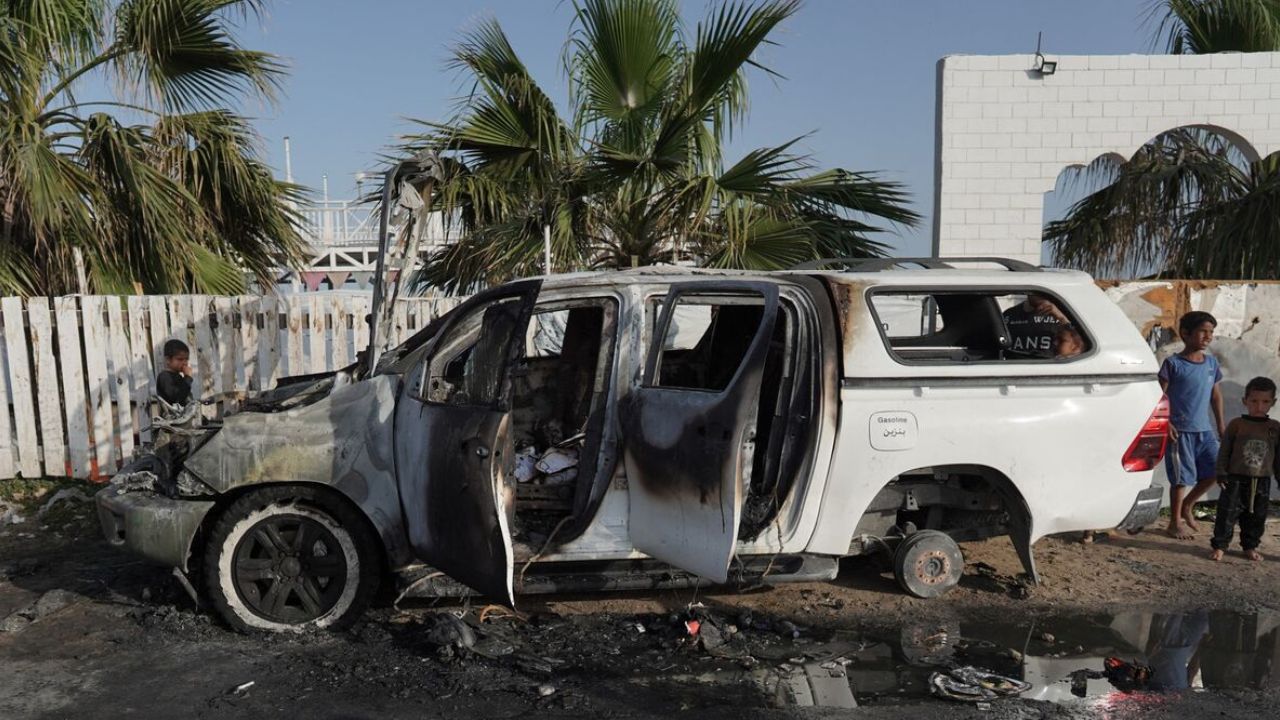
    TEL AVIV: The Israeli army on Friday admitted a series of errors and violations of its rules in the killing of seven aid workers in Gaza, saying it had mistakenly believed it was “targeting armed Hamas operatives”.

    The two brigade officers who ordered the drone strikes, a colonel and a major, are being fired, the army said, and its Southern Command chief reprimanded.

    It was a rare confession of wrongdoing by Israel in its nearly six-month war against Hamas in the Gaza Strip, where the health ministry of the Hamas-ruled territory says more than 33,000 people, mostly civilians, have been killed.

    The victims — an Australian, three Britons, a North American, a Palestinian and a Pole — were killed Monday night in three strikes over four minutes by an Israeli drone as they ran for their lives between their three vehicles, the military said.

    The US-based charity for which they worked, World Central Kitchen, demanded an independent inquiry, and Poland called for a “criminal” probe after the military’s announcement.

    The drone team who killed the aid workers made an “operational misjudgement of the situation” after spotting a suspected Hamas gunman shooting from the top of one of the food trucks the aid workers were escorting, an internal Israeli military inquiry found.

    Senior Israeli officers showed reporters clips from drone footage of what they said was a “Hamas operative” joining the US-based World Central Kitchen (WCK) convoy.

    Although the roofs of the three aid workers’ vehicles were emblazoned with WCK logos, retired Israeli general Yoav Har-Even, who is leading the investigation, said the drone’s camera could not see them in the dark.

    “This was a key factor in the chain of events,” he said.

    The aid group has said its team was travelling in a “de-conflicted” area at the time of the strike. “Despite coordinating movements with the (Israeli army), the convoy was hit as it was leaving the Deir al-Balah warehouse,” WCK said.

    The army said aid was moved at night to avoid deadly stampedes by hungry Gazans.

    The aid workers’ deaths “outraged” US President Joe Biden who demanded Israeli Prime Minister Benjamin Netanyahu order steps toward an “immediate ceasefire”.

    Israel later said it would allow “temporary” aid deliveries into northern Gaza, where the United Nations has warned of imminent famine.

    Har-Even admitted that “the three air strikes were in violation of standard operating procedures”.

    But he argued that “the state of mind” of the Israeli drone commanders “was that they were striking cars that had been seized by Hamas” after they thought one passenger was carrying a gun rather than a bag.

    “One of the commanders mistakenly assumed the gunmen were inside the vehicles and were Hamas terrorists,” the army said in a statement.

    US Secretary of State Antony Blinken said it was “very important that Israel is taking full responsibility for this incident.”

    The aid workers were killed after they had overseen the unloading of a ship carrying 300 tonnes of food aid from Cyprus to a warehouse inland.

    But as they drove south at 11:09 pm on April 1 the drone “struck one car, and identified people running out of the car and entering the second car,” Har-Even said.

    “They decided to hit it, which was against standard operating procedures. Then they struck the third car.”

    Asked by AFP, the general was not able to explain what happened to the “Hamas gunman” on the truck but he conceded they had been mistaken to think armed Hamas suspects had joined the WCK aid workers in the three pickups.

    “It is a tragedy. It is a serious mistake that we are responsible for,” Israeli military spokesman Daniel Hagari told reporters. “That shouldn’t have happened.”

    Har-Even said it was a breakdown in communication in the chain of military command which may have led to the strikes.

    He said that WCK had provided all the information necessary, but it was not passed down.

    “The biggest mistake was that (the drone team) didn’t have the coordination plan,” he said. “Their belief was the vehicles were Hamas, based on operational misjudgement and misclassification.”