Category: FOREIGN

  • Turks Up In Arms Over Killing Of Stray Cat

    Turks Up In Arms Over Killing Of Stray Cat

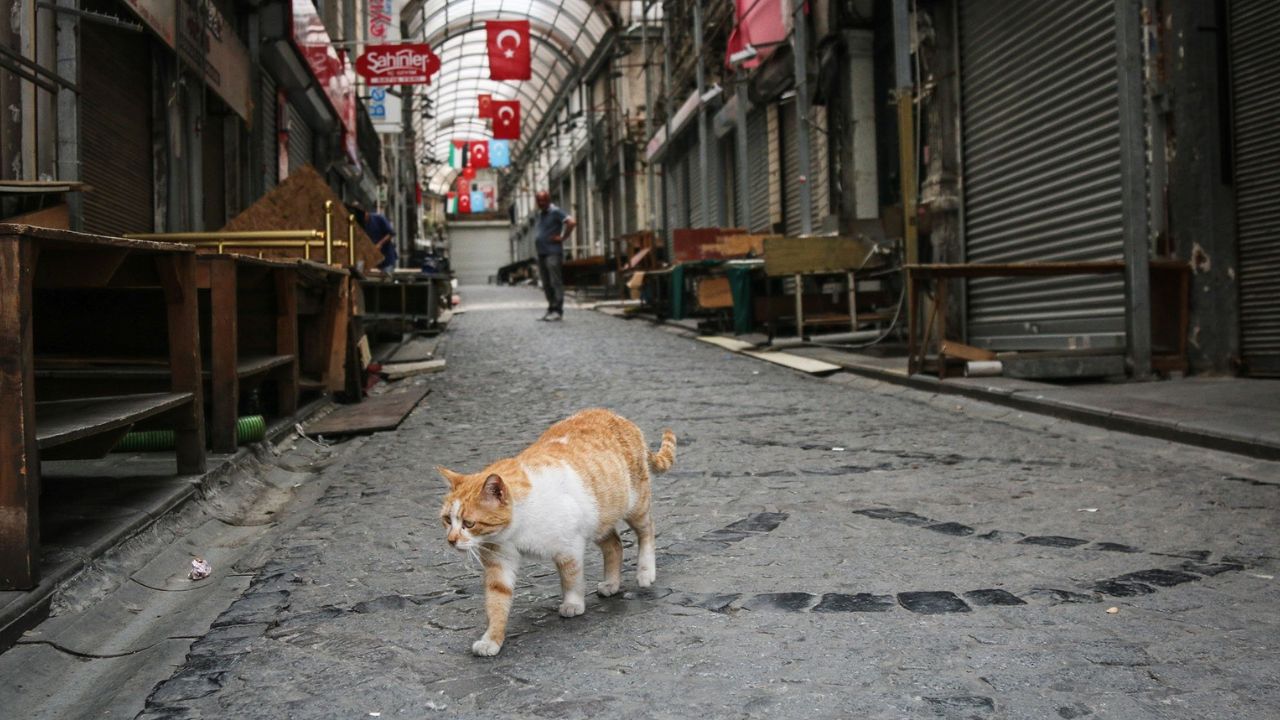
    The killing of a stray cat in Istanbul has triggered petitions, protests and death threats, pushing the president to intervene and the courts to retry the culprit.

    On January 1, Ibrahim K. was caught on a security camera in the lobby of the building where he lived kicking to death a stray cat named Eros that his neighbours regularly fed.

    He was sentenced in early February to 18 months in jail but was then released for good behaviour, sparking indignation among animal welfare groups and a section of the public in Turkey, whose large stray cat population is often fed and sheltered.

    Some 320,000 people signed an online petition demanding a stiffer sentence and in late February the justice ministry said Ibrahim K. would be retried after it received a night-time call from President Recep Tayyip Erdogan saying he was taking a “personal” interest in the case.

    Ibrahim K. was retried on Wednesday in a court building where hundreds of people thronged the corridors and the atmosphere was tense.

    The judges increased his sentence by one year but did not order him to be detained, ignoring the demands of animal welfare groups and internet trolls who have sent him death threats.

    One animal rights group is to appeal, saying Ibrahim K. should be jailed for the maximum four years allowed by law.

    On Thursday, the hashtag #JusticeforEros (#ErosicinAdalet) was trending on X, formerly Twitter, in Turkey and several major newspapers, including Hurriyet, splashed pictures of the dead cat on their front pages.

    Hurriyet carried several articles about Eros and “Ibrahim the killer”.

    Several celebrities have joined the Justice for Eros appeal, including Argentinian footballer Mauro Icardi, the star striker at Istanbul giants and reigning Turkish champions Galatasaray.

  • Palestinian leader names adviser Mohammed Mustafa as PM

    Palestinian leader names adviser Mohammed Mustafa as PM

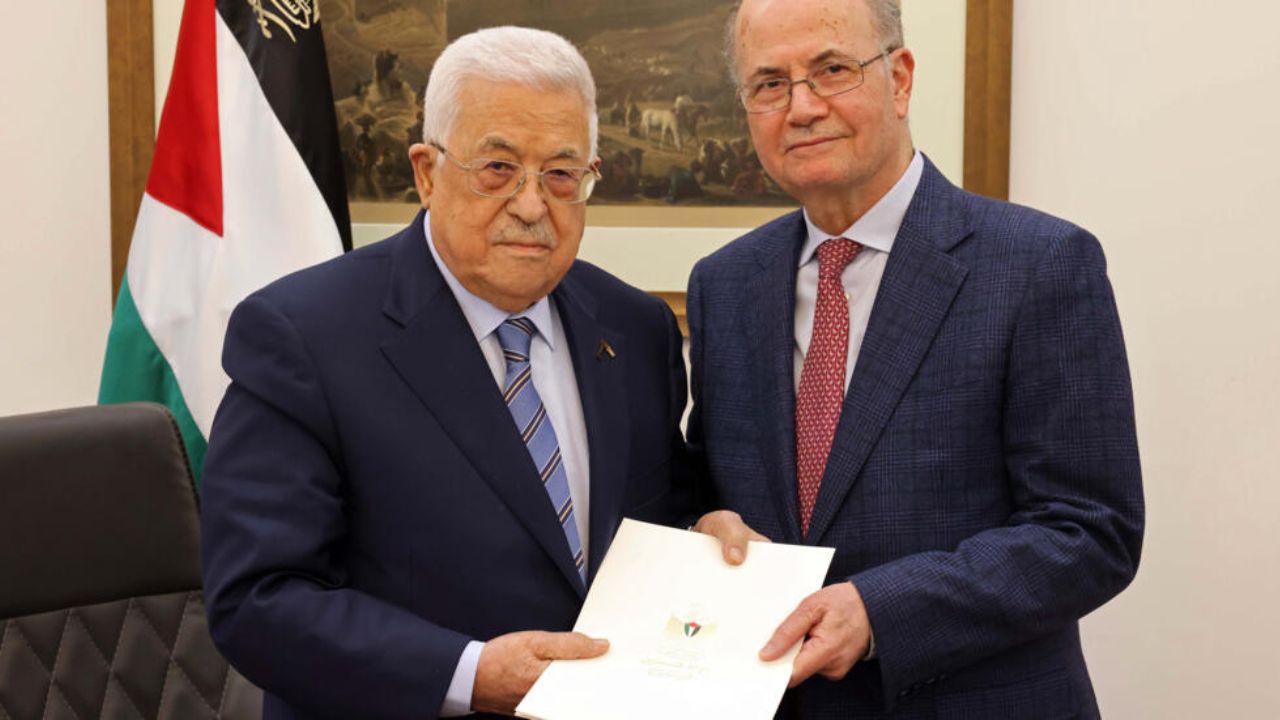
    Ramallah (Palestinian Territories) (AFP) – Palestinian president Mahmud Abbas has appointed Mohammed Mustafa, a long-trusted adviser on economic affairs, as prime minister, the official Wafa news agency said on Thursday.

    Mustafa’s appointment comes less than three weeks after his predecessor, Mohammed Shtayyeh, resigned, citing the need for change after the October 7 attacks leading to Israeli genocide in Gaza.

    The 69-year-old now faces the task of forming a new government for the Palestinian Authority, which has limited powers in parts of the Israeli-occupied West Bank.

    Since 2007, control of the Palestinian territories has been divided between Abbas’s Palestinian Authority in the West Bank and Hamas in the Gaza Strip.

    Mustafa, who studied at George Washington University in the United States, is an independent executive committee member of the Palestine Liberation Organisation — dominated by the ruling Fatah movement.

    He has served as deputy prime minister for economic affairs, held a board seat at the Palestine Investment Fund and worked in a number of senior positions at the World Bank.

    He has also advised the Kuwaiti government and the sovereign wealth fund of Saudi Arabia, the Public Investment Fund.

    Mustafa was also involved in reconstruction efforts in Gaza after Israel’s 2014 invasion.

    ‘Right-hand man’

    Mustafa’s appointment represents an attempt to bolster Palestinian institutions and “close some loopholes in the Palestinian Authority” at a time when Abbas is “under siege and under pressure” from Israel and the United States, Palestinian analyst Abdul Majeed Sweilem told AFP.

    Mustafa would likely be seen as “acceptable to the Americans as he follows a liberal approach,” Sweilem added.

    The White House on Thursday welcomed Mustafa’s appointment, calling on him to deliver “credible and far-reaching reforms” as he prepares his cabinet.

    “A reformed Palestinian Authority is essential to delivering results for the Palestinian people and establishing the conditions for stability in both the West Bank and Gaza,” National Security Council spokesperson Adrienne Watson said in a statement.

    Yet Khalil Shaheen, political analyst and writer, said Mustafa’s closeness to Abbas limits prospects for major change.

    “In the end, the man (Mustafa) remains the right-hand man of President Abbas… Abbas wants to say that he supports reforms, but they remain under his control,” Shaheen said.

    The Israeli military offensive after October 7 in Gaza has killed at least 31,341 people, most of them women and children, according to the territory’s health ministry.

    During the war, violence in the West Bank has flared to levels unseen in nearly two decades.

    Israeli troops and settlers have killed at least 430 Palestinians in the West Bank since the Gaza war began, according to the health ministry in Ramallah.

    The United States and other powers have called for a reformed Palestinian Authority to take charge of all Palestinian territories after the end of the war.

    Israeli Prime Minister Benjamin Netanyahu’s government has rejected postwar plans for Palestinian sovereignty.

    Shortly after Shtayyeh’s resignation in late February, Palestinian factions including Hamas and Fatah participated in talks hosted by Russia that addressed the war in Gaza and post-war plans.

    Afterwards the factions said in a statement they would pursue “unity of action” in confronting Israel.

  • Israeli general in Gaza criticises political leaders

    Israeli general in Gaza criticises political leaders

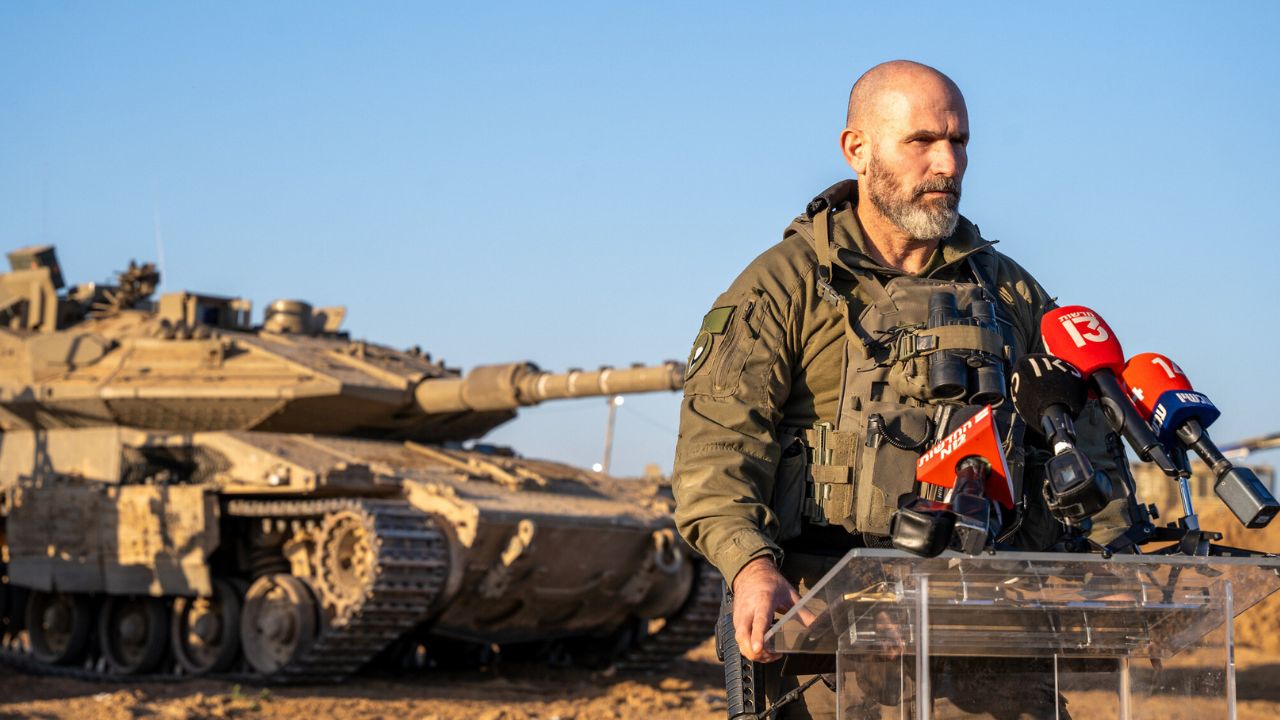
    An Israeli general leading troops in Gaza has delivered rare public criticism of the country’s political leadership, demanding it “be worthy” of the soldiers fighting against Hamas in the Palestinian territory.

    Brigadier General Dan Goldfus, head of the 98th division deployed in Gaza’s main southern city of Khan Yunis, also appeared to enter into a row over exempting ultra-Orthodox Jews from military service.

    He was subsequently summoned by the military leadership for his comments, which breached a long-standing taboo on uniformed officers publicly wading into politics.

    “You must be worthy of us,” Goldfus said of his country’s leaders, in comments broadcast on Israeli television on Wednesday.

    He called for Israeli politicians “to push aside the extreme, and adopt togetherness” in the Gaza following October 7 attacks.

    The general vowed that military commanders and soldiers would take responsibility for their actions.

    Prime Minister Benjamin Netanyahu has so far stopped short of assuming personal responsibility for Israel’s intelligence failures on October 7 and said any official investigations must take place after the war.

    “We will not run from responsibility. We bow our heads in light of our reverberating failure on October 7, but at the same time are leading forward,” the general said.

    Since Israel launched a ground offensive in Gaza on October 27, 249 soldiers have been killed in the Palestinian territory, according to the military.

    Addressing Israel’s political leaders, Goldfus called on them to ensure that “everyone takes part” in enlisting in the armed forces, in an apparent reference to ultra-Orthodox Israeli men being exempt from national service — a contentious political issue.

    Most Jewish men are required by law to serve in the Israeli military, but members of the ultra-Orthodox minority — known in Hebrew as Haredim — have long been given sweeping exemptions.

    Since the October 7 attack, public frustration over the exemption has resurfaced, adding pressure on Netanyahu’s governing coalition, which relies on ultra-Orthodox allies staunchly opposed to drafting Haredi men.

    Neither Netanyahu nor Defence Minister Yoav Gallant publicly responded to Goldfus’s remarks.

    Some lawmakers voiced their approval while others expressed dissatisfaction with the general making political statements of any kind.

    Yoav Segalovitz, a centrist opposition lawmaker, told Kan public radio on Thursday that “a uniformed officer needs to talk only about what’s related to his decisions or take off the uniform”.

    Writing in the Yedioth Ahronoth newspaper, columnist Nahum Barnea said that “with all respect to the heartfelt sentiments of the esteemed officer, fighting in Gaza doesn’t give him the right or the authority to express a position on political matters”.

    Israel’s offensive in Gaza has killed at least 31,341 Palestinians since October 7, mostly women and children, according to the health ministry.

  • South Africa to arrest citizens fighting alongside Israeli forces in Gaza

    South Africa to arrest citizens fighting alongside Israeli forces in Gaza

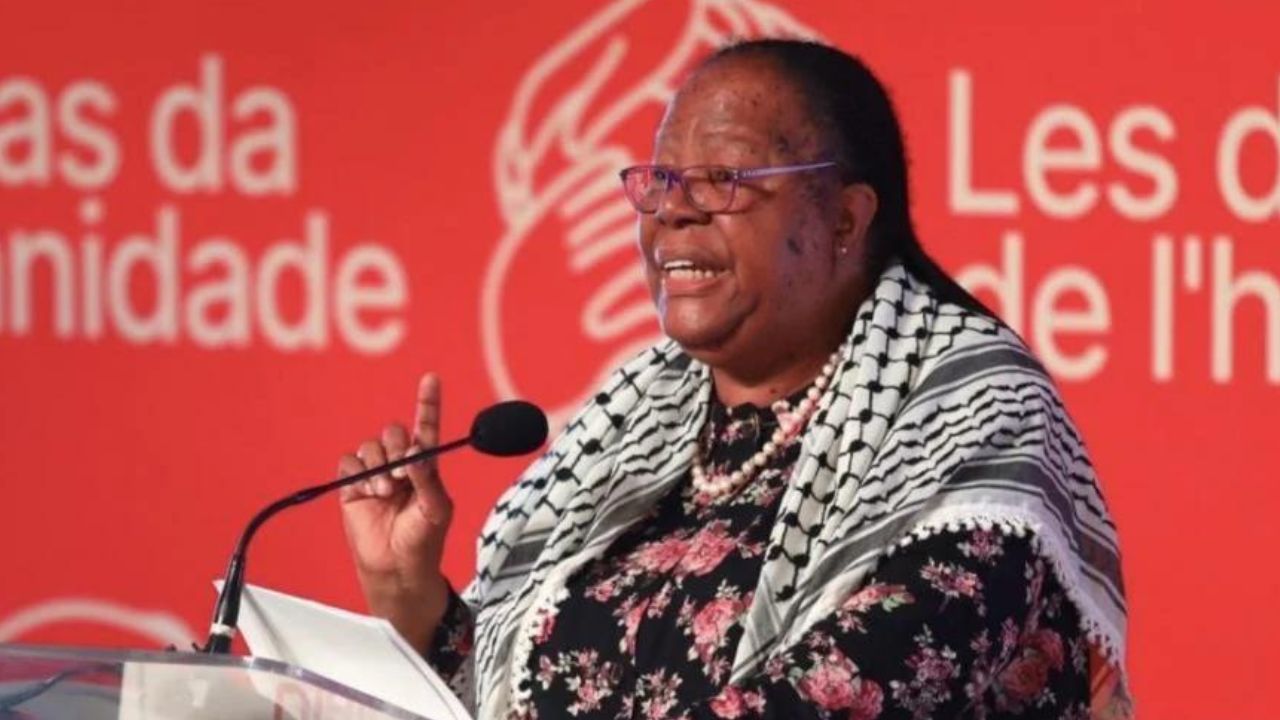
    South Africa’s foreign minister Naledi Pandor has said that citizens who are fighting in the Israeli armed forces or alongside them in Gaza will be arrested when they return home.

    Naledi, part of South Africa’s governing African National Congress party, passed the policy statement earlier this week at a Palestinian event. “I have already issued a statement alerting those who are South African and are fighting alongside or in the Israeli Defense Forces: We are ready. When you come home, we are going to arrest you,” Pandor said, to rapturous applause from the audience.


    The minister asked people to protest outside the embassies of what she called the “five primary supporters” of Israel and its military action in Gaza. She didn’t name them but almost certainly was referring to the United States, the U.K., and Germany among others.


    Those with dual South African-Israeli citizenship could be stripped of their South African citizenship, she said further.


    Pandor’s comments represent an apparent hardening of the government’s stance.


    It’s not clear how many South African citizens have fought for Israel during the current war in Gaza. South Africa has a significant Jewish population of around 70,000 people, as reported by the Associated Press.


    The South African government is a vocal supporter of the Palestinian people and a critic of Israel. Back in December, the foreign ministry had said that the South African government was concerned that some of its citizens or permanent residents had joined the IDF to fight in Gaza and warned that they could face prosecution if they hadn’t been granted permission to do so under South Africa’s arms control laws.

    Pandor asked audience members at the Palestinian solidary event this week to make posters with the words “Stop Genocide” and protest outside the embassies of what she called the “five primary supporters” of Israel.

    “Don’t only come to this dinner. Be visible in the support of the people of Palestine,” she said.


    The recent statement by the minister is a proof that the Government may deal with these citizens iron-handedly for going against the state’s policy.

    Read more: All you need to know about South Africa’s genocide case against Israel at ICJ

  • At least 60 Afghans killed by weeks of intense snow, rain

    At least 60 Afghans killed by weeks of intense snow, rain

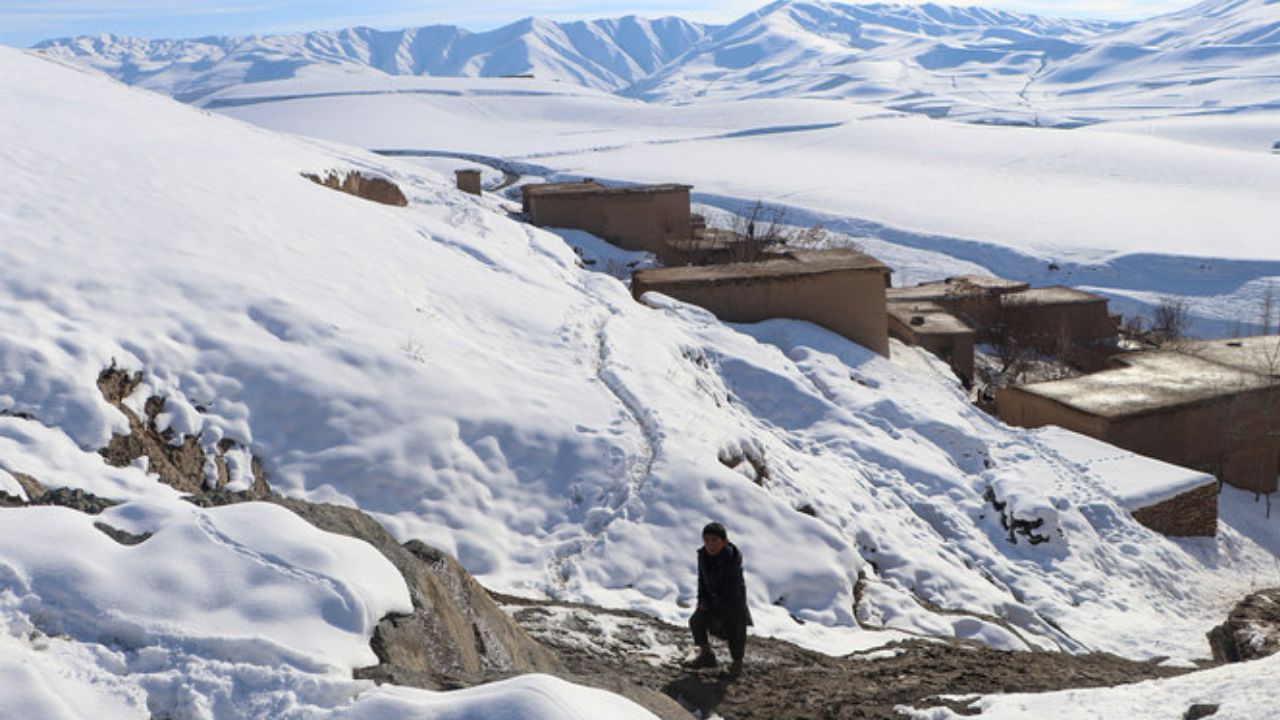
    At least 60 people have been killed by heavy rain and snow in Afghanistan over the past three weeks, the government’s disaster ministry said Wednesday.

    Afghanistan has been parched by an unusually dry winter, but the end of the season is normally a time when deadly bad weather — particularly floods — batter communities.

    “Because of the snow and rains unfortunately sixty compatriots have been martyred and 23 people injured” since February 20, ministry spokesman Janan Sayeq said in a video statement.

    About 1,645 houses have been totally or partially ruined and nearly 178,000 livestock killed, he added.

    Since the collapse of the US-backed government and the return of the Taliban, foreign aid to Afghanistan has shrunk dramatically, undermining the already impoverished nation’s ability to respond to disasters.

    Western Herat province — still reeling from a succession of devastating earthquakes in October — has been hit by flash floods after heavy rain since Monday evening.

    Five members of the same family were killed Tuesday when the roof of their home collapsed in the provincial capital of Herat city, disaster management official Abdul Zaher Noorzai told reporters.

    Provisional data showed about 250 houses had been destroyed and vast tracts of farmland flooded, he added, saying aid should begin arriving on Thursday.

    Like many other houses in the area, the one that caved-in on the five relatives had been damaged in a series of earthquakes five months ago, local imam Naqibullah told AFP.

    The trio of quakes — starting on October 7 — killed nearly 1,500 and left some 30,000 homes totally or partially destroyed, according to the United Nations.

  • UN aid agency in Gaza hit by Israel, injuries reported

    UN aid agency in Gaza hit by Israel, injuries reported

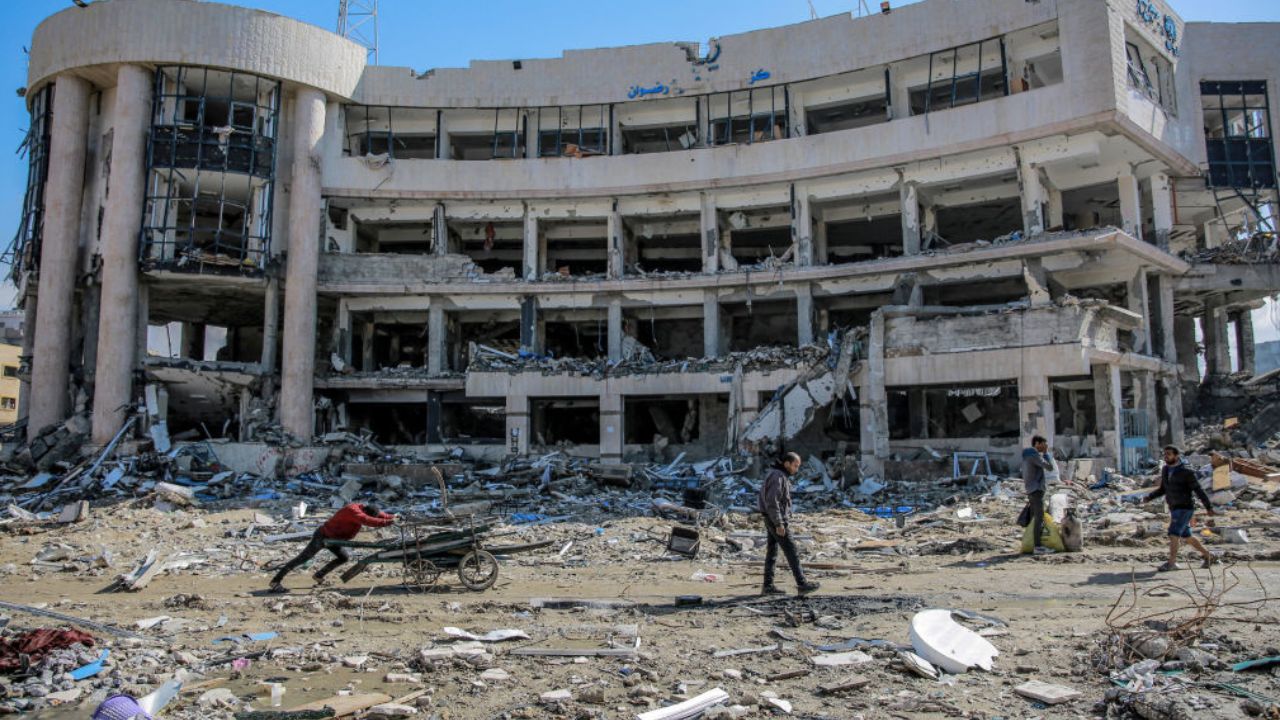
    The United Nations agency for Palestinian refugees said one of its aid warehouses in the war-ravaged Gaza Strip was “hit” on Wednesday, wounding scores of people.

    “At least one UNRWA staff member was killed and another 22 were injured when Israeli forces hit a food distribution centre in the eastern part of Rafah” in southern Gaza, the agency said in a statement.

    The health ministry in Gaza Strip earlier had said four people were killed in the “bombing of the warehouse”.

    Wednesday’s incident comes amid mounting concern about worsening humanitarian conditions in Gaza, where Israel has carried out military operations since October intended to eliminate the Hamas militant group.

    “Today’s attack on one of the very few remaining UNRWA distribution centres in the Gaza Strip comes as food supplies are running out, hunger is widespread and, in some areas, turning into famine,” said UNRWA chief Philippe Lazzarini.

    He also said the UN had shared coordinates of the facility with the Israeli army on Tuesday.

    An UNRWA spokeswoman said the facility was used “to distribute much-needed food and other lifesaving items to displaced people in southern Gaza”.

    At least 165 UNRWA employees have been killed since the beginning of the war on Gaza, Wednesday’s UNRWA statement said.

    “More than 150 UNRWA facilities were hit, some totally destroyed, among them many schools,” it said.

      ‘How can they bombard us?’ 

     An AFP photographer saw victims of the strike on Wednesday arriving at Al-Najjar hospital in Rafah, at least one of whom was identified by other people at the hospital as a UN employee.

    Witnesses said the strike compounded security fears in Rafah, which is overcrowded with 1.5 million mostly displaced people, further marring the normally festive Muslim fasting month of Ramazan which began on Monday.

    “It’s an UNRWA centre, expected to be secure,” said Rafah resident Sami Abu Salim.

    “Some came to work to distribute aid to the people in need of food during the holy month of Ramazan. Suddenly, they were struck by two missiles.”

    Hasan Abu Auda, displaced from Beit Hanoun in northern Gaza, said people had come to the warehouse “to sustain themselves for their daily meals”.

    “It’s Ramazan today,” he said. “How can they bombard us during the month of Ramazan?”

    Israel’s aggressive military campaign in Gaza has killed at least 31,272 people, mostly women and children, according to the health ministry in the Hamas-run territory.

    Gaza’s dire food shortages after more than five months of war have resulted in 27 deaths from malnutrition and dehydration, most of them children, the ministry says.

    Cumbersome Israeli security checks on all cargoes entering the territory slow down the delivery of aid, and some trucks are sent back when they are found to contain forbidden items, aid workers say.

    Israeli authorities say bottlenecks are caused by aid piling up on the Palestinian side as there are not enough trucks to distribute it.

  • Nearly 230,000 children, new mothers risk dying of hunger in Sudan: NGO

    Nearly 230,000 children, new mothers risk dying of hunger in Sudan: NGO

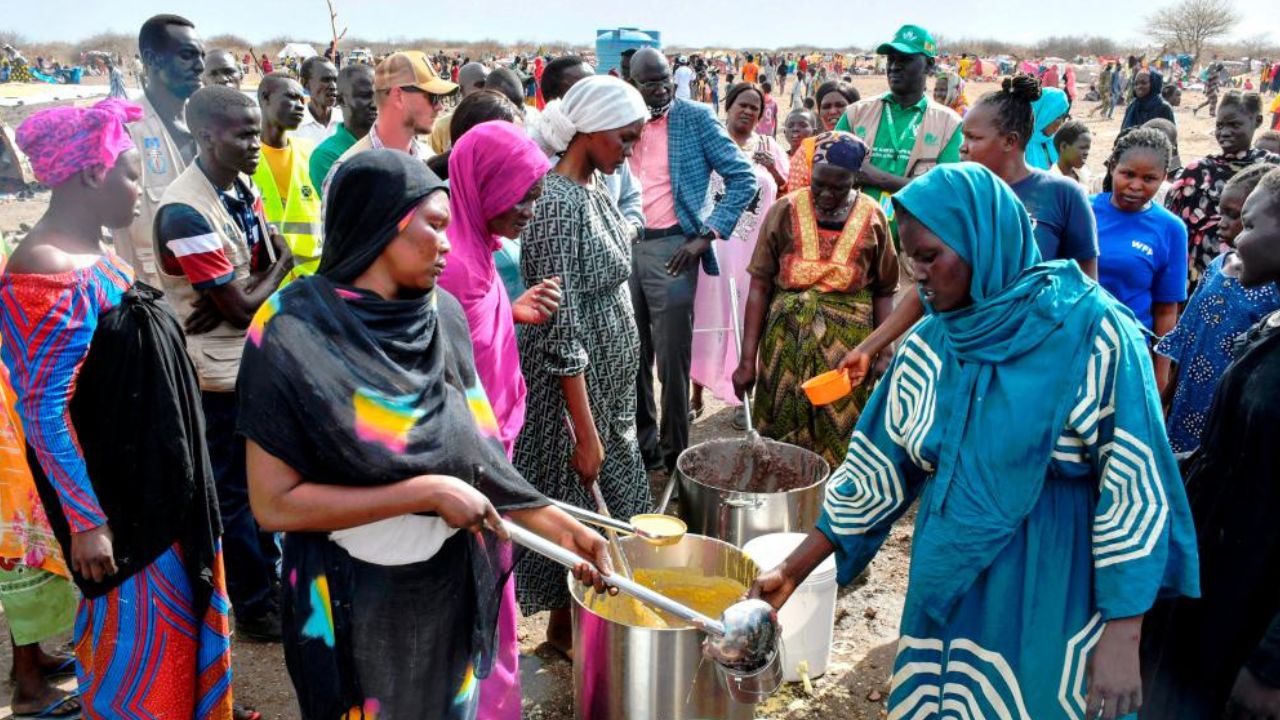
    Without critical action, nearly 230,000 children and new mothers in war-ravaged Sudan are “likely to die from hunger”, Save the Children warned on Wednesday.

    Nearly 11 months of fighting between the forces of two rival generals has killed thousands and displaced eight million people in the northeast African country, the United Nations says.

    The bombing and destruction of fields and factories have plunged Sudan into “one of the worst” nutrition situations in the world, said Arif Noor, Save the Children’s country director in Sudan.

    “Nearly 230,000 children, pregnant women and new mothers could die in the coming months,“ the British non-governmental organisation said.

    The charity said “more than 2.9 million children in Sudan are acutely malnourished and an additional 729,000 children under five are suffering from severe acute malnutrition — the most dangerous and deadly form of extreme hunger”.

    It warned “about 222,000 severely malnourished children and more than 7,000 new mothers are likely to die” under the current levels of funding which “only covers 5.5 percent” of Sudan’s total needs.

    The United Nations’ World Food Programme sounded the alarm on Sudan this month, warning the war risked triggering the world’s largest hunger crisis.

    The conflict, which experts have warned could last years, is being fought between Sudan’s army chief Abdel Fattah al-Burhan and Mohamed Hamdan Daglo, his former deputy and commander of the paramilitary Rapid Support Forces (RSF).

    Noor warned the situation would only worsen as the consequences of the current fighting take hold.

    “No planting last year means no food today. No planting today means no food tomorrow. The cycle of hunger is getting worse and worse with no end in sight — only more misery,“ he said.

    Already, more than half of all Sudanese, including 14 million children, require humanitarian assistance to survive, the United Nations says.

    The UN has described a “climate of sheer terror”, reporting the use of heavy artillery in densely populated urban areas, sexual violence as a weapon of war, the destruction of hospitals and schools.

    The United States has accused both sides of war crimes and alleged the RSF has carried out ethnic cleansing and crimes against humanity.

    A report before the UN Human Rights Council details gross violations and abuses of international human rights law and possible war crimes.

    Earlier in March, the UN’s human rights chief Volker Turk called the conflict a “living nightmare” and said it had “slipped into the fog of global amnesia”.

    The conflict has driven 18 million people into food insecurity, including five million who are only one stage away from famine.

    Humanitarian organisations have been prevented from entering Sudan or moving freely and have come under attack by both sides. – AFP

  • China warns proposed TikTok ban will ‘come back to bite’ US

    China warns proposed TikTok ban will ‘come back to bite’ US

    Beijing (AFP) – Beijing warned on Wednesday that a proposed ban on Chinese-owned video-sharing app TikTok would “inevitably come back to bite the United States”.

    The US House of Representatives is set to vote later Wednesday on a bill that would force the app to cut ties with its Chinese owner or get banned in the United States.

    The legislation is the biggest threat yet to the video-sharing app, which has surged to huge popularity across the world while raising fears among governments and security officials over its Chinese ownership and potential subservience to the Communist Party in Beijing.

    Ahead of the vote, foreign ministry spokesperson Wang Wenbin condemned the proposed ban.

    “Although the United States has never found evidence that TikTok threatens US national security, it has not stopped suppressing TikTok,” he said.

    “This kind of bullying behaviour that cannot win in fair competition disrupts companies’ normal business activity, damages the confidence of international investors in the investment environment, and damages the normal international economic and trade order,” he added.

    “In the end, this will inevitably come back to bite the United States itself,” Wang said.

    The vote is likely to occur at 10:00 am (1400 GMT) and is expected to pass overwhelmingly in a rare moment of bipartisanship in politically divided Washington.

    The fate of the bill is uncertain in the Senate, where key figures are against making such a drastic move against an hugely popular app that has 170 million US users.

    President Joe Biden will sign the bill, known officially as the “Protecting Americans from Foreign Adversary Controlled Applications Act,” into law if it comes to his desk, the White House has said.

    TikTok staunchly denies any ties to the Chinese government and has restructured the company so the data of US users stays in the country, the company says.

    TikTok CEO Shou Zi Chew is in Washington, trying to shore up support to stop the bill.

    “This latest legislation being rushed through at unprecedented speed without even the benefit of a public hearing, poses serious Constitutional concerns,” wrote Michael Beckerman, TikTok’s vice president for public policy, in a letter to the bill’s co-sponsors seen by AFP.

  • Teenager on bicycle stabs two Israelis at West Bank checkpoint

    Teenager on bicycle stabs two Israelis at West Bank checkpoint

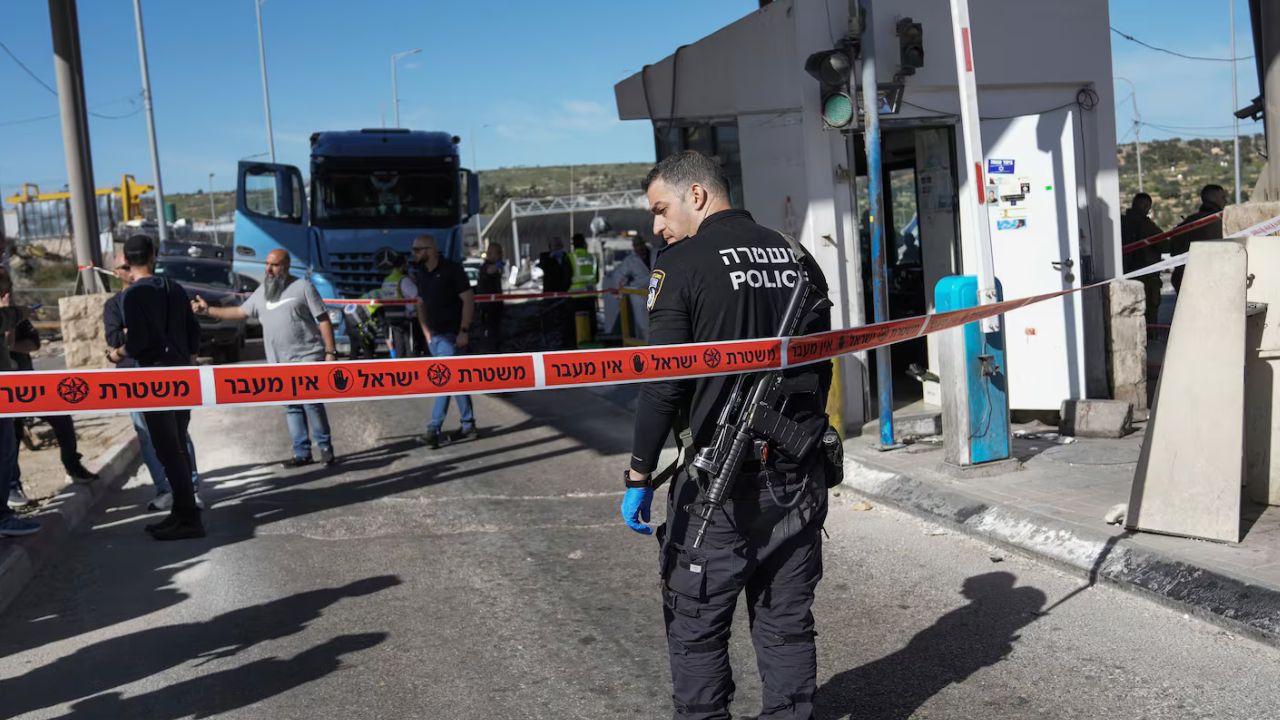
    A 15-year-old boy riding a bicycle stabbed two Israeli security personnel at a checkpoint in the occupied West Bank on Wednesday before he was “neutralised,” police said.

    The attack occurred at around 8:15 am (0615 GMT) at the Tunnels checkpoint south of Jerusalem when the teenager arrived on a bicycle, the force said in a statement.

    “When security forces at the crossing attempted to check him, the terrorist drew a knife and began stabbing the forces present at the scene,” the police said.

    “An armed civilian guard immediately engaged with the terrorist, and simultaneously IDF (army) forces at the location responded with precise gunfire neutralising the terrorist.”

    Two security personnel were wounded in the stabbing, the police said. It was unclear whether the attacker had been killed.

    The knife attack comes a day after a 12-year-old Palestinian boy died after being shot by Israeli border police at a refugee camp in Israeli-annexed east Jerusalem.

    Rami Hamdan al-Halhuli, 12, suffered a fatal gunshot wound during clashes between residents of the Shuafat refugee camp and police, who said the child had aimed fireworks at them.

    Hundreds of extra police have been deployed in the Old City of east Jerusalem since the Muslim fasting month of Ramadan began on Monday.

    myl-jd/kir

    © Agence France-Presse

  • ‘Katespiracy’ explodes after UK royal photo gaffe

    ‘Katespiracy’ explodes after UK royal photo gaffe

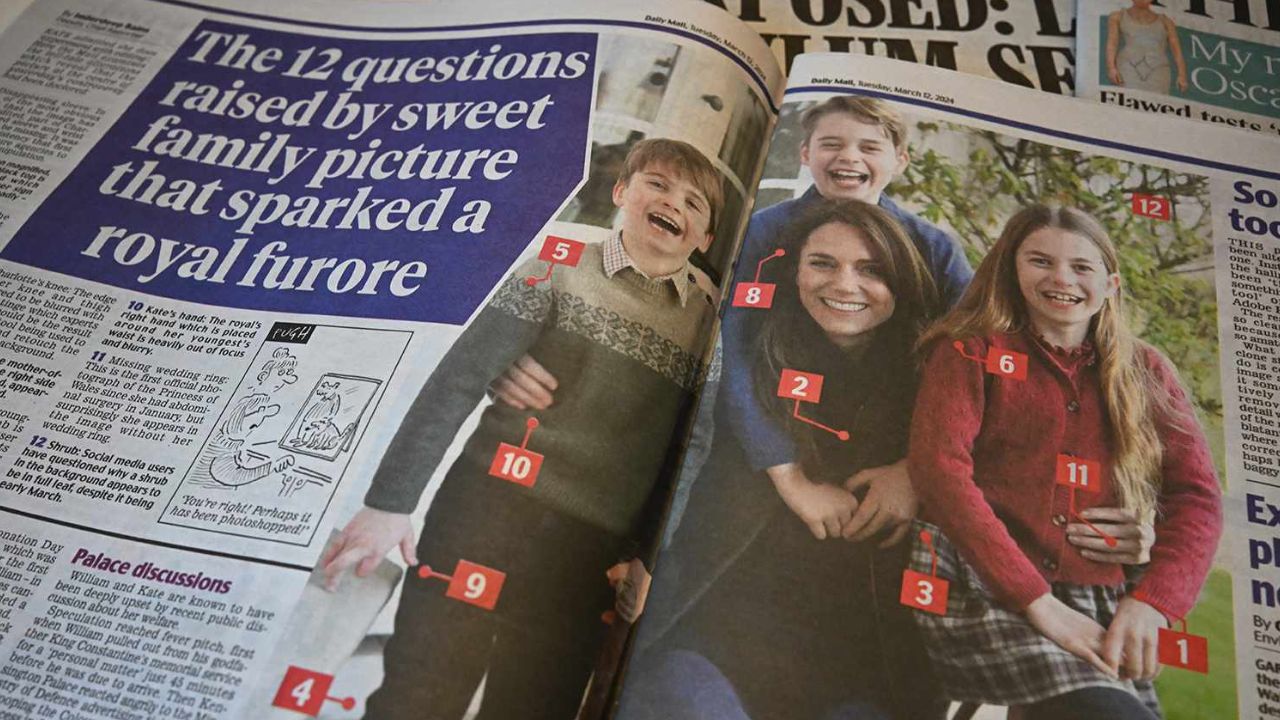
    The picture was meant to douse speculation about the whereabouts and health of Britain’s Catherine, Princess of Wales, but instead her manipulated image unleashed a torrent of internet-breaking rumors and conspiracy theories.

    The storm in the royal tea pot erupted after Kate, 42, on Monday apologized and admitted to editing a palace-issued photograph of herself with her three children after the altered image was withdrawn by news agencies including AFP.

    The fiasco gave way to a fresh swirl of speculation about the British royal — dubbed online as “Katespiracy” — laying bare the fragility of the digital landscape in the age of rampant disinformation that has eroded trust and turned social media users into amateur sleuths.

    The internet guessing game had already begun after the princess was not seen in public since attending a Christmas Day church service and underwent abdominal surgery in January.

    Amid a vacuum of information, online posts speculated whether her marriage to William, heir to the British throne, was on the rocks. Others pondered whether Kate was recovering from an eating disorder or the cosmetic procedure known as a Brazilian butt lift — while some wondered whether she were even alive.

    Proof of life landed on Sunday, when the palace released a photograph they said was recently snapped by William, but eagle-eyed social media users began tearing it apart for inconsistencies, such as a misaligned zipper on Kate’s jacket.

    The inconsistencies were so clear that several global news agencies, including AFP, pulled the picture from publication.

    Then the rumor mill began spinning even faster after the princess declared in a statement that, whoops, she had edited the photograph — without disclosing the reasons for doing so or what she had edited out.

    “The moral of the editing of the royal picture is simple. Tell all,” wrote Guardian newspaper columnist Simon Jenkins.

    “At this stage, privacy does not work. It breeds rumour, gossip and fabrication.”

    Internet rabbit holes

    That is exactly what happened. Social media exploded with memes exploring what the palace was hiding.

    “Every family hides a secret,” read the text inscribed in one photo swirling on Twitter, now X, designed as a promo for a fictitious Netflix show titled: “Royal Conspiracy. The disappearance of Kate Middleton.”

    Kensington Palace declined to release an unedited copy of the photograph, prompting social media detectives to go down new rabbit holes.

    Some observers called it the Streisand effect, royal edition — the palace secrecy and botched PR had made the speculation about Kate worse, leaving even those who typically steer clear of such gossip hooked.

    There were questions about whether or not it was actually Kate who had edited the image.

    Some turned to horticulturists, demanding to know the plant in the background of the altered photograph, as it looked suspiciously leafy for this time of the year in England.

    A breed of self-declared Kate Middleton Truthers demanded to know her whereabouts, while some speculated –- with a dash of humor — whether she had ditched her family to do an intensive Photoshop course.

    An entreaty from royal sympathizers seemingly went ignored as they insisted Kate was entitled to her privacy and should to be left alone.

    ‘Transparency’

    The manipulated image dropped at a time when concerns around false or misleading visual information are at an all-time high, particularly following the rapid advances in generative artificial intelligence.

    “People now feel a pervasive, low-grade disorientation, suspicion, and distrust,” US writer Charlie Warzel wrote in the Atlantic Monthly.

    “As the royal photo fiasco shows, the deepfake age doesn’t need to be powered by generative AI — a hasty Photoshop will do.”

    The furore also prompted many to ask whether British royals had altered images before, with media outlets such as CNN saying they were reviewing all handout photos previously provided by Kensington Palace.

    The climate of online distrust has spurred new calls for transparency, even among British royal family members with a long tradition of secrecy.

    Last month, King Charles III, Kate’s father-in-law, won plaudits for publicly announcing his cancer diagnosis.

    But many health experts faulted him for not declaring the type of cancer, a move that would have encouraged members of the British public to emulate him and get themselves examined.

    “If the royals really want to model important values to the nation, they should start by overhauling their approach to media in favour of transparency (and) scrupulous honesty,” Catherine Mayer, author of the book “Charles: The Heart of a King,” wrote on X.

    “They should stand against disinformation, not contribute to it.”