Category: FOREIGN

  • Has Kate left Prince William? Rumours take spotlight post edited photo controversy

    Has Kate left Prince William? Rumours take spotlight post edited photo controversy

    Twitter is having a riot with the recent controversy of Kate Middleton’s recent photo released by the Daily Mail.


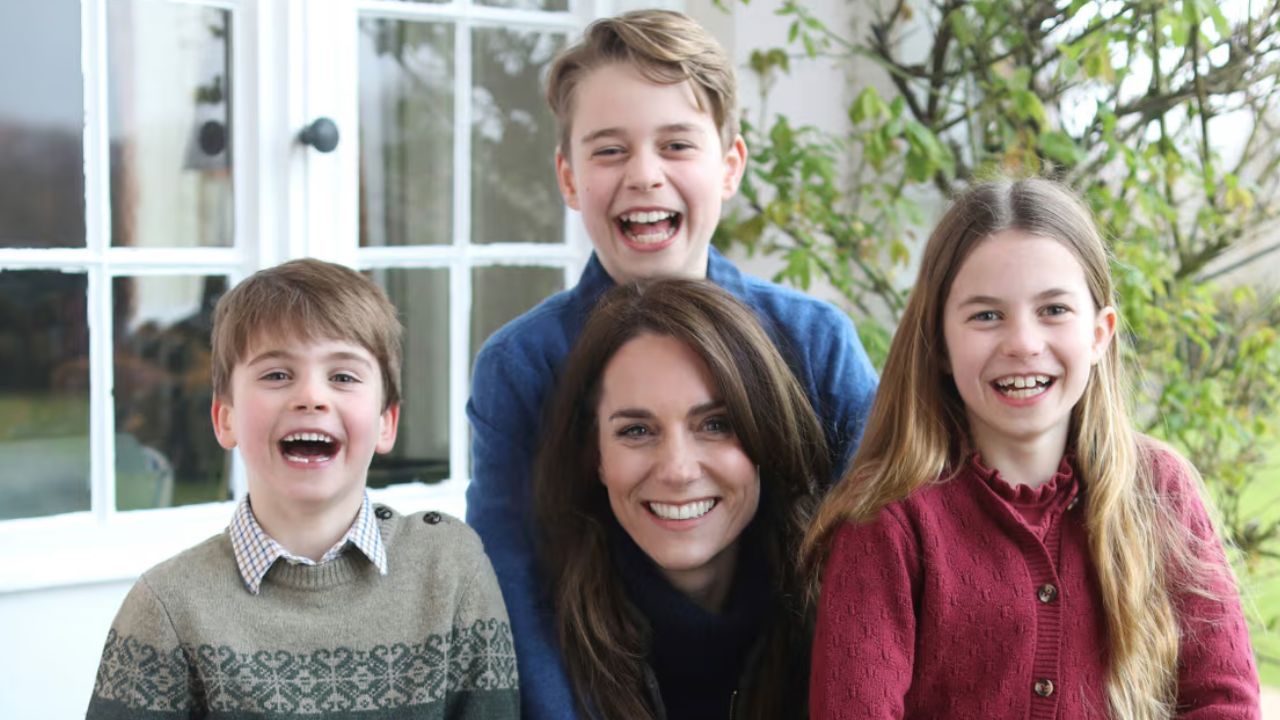
    It all started with Kate Middleton’s abdominal surgery after which she was not seen in the public eye. In the absence of more details, speculation grew and to put it to rest, the royal couple’s official X handle released a picture of the princess with her children.

    Major news agencies like AP, AFP, and Reuters pulled the image from their official sources because it was manipulated.


    A day later, an official apology was released through the same account in Kate Middleton’s name, apologizing for “any confusion” caused by the edited family picture. Hours after that, Daily Mail published a picture of Kate leaving Windsor Castle alongside her husband Prince William on March 11.


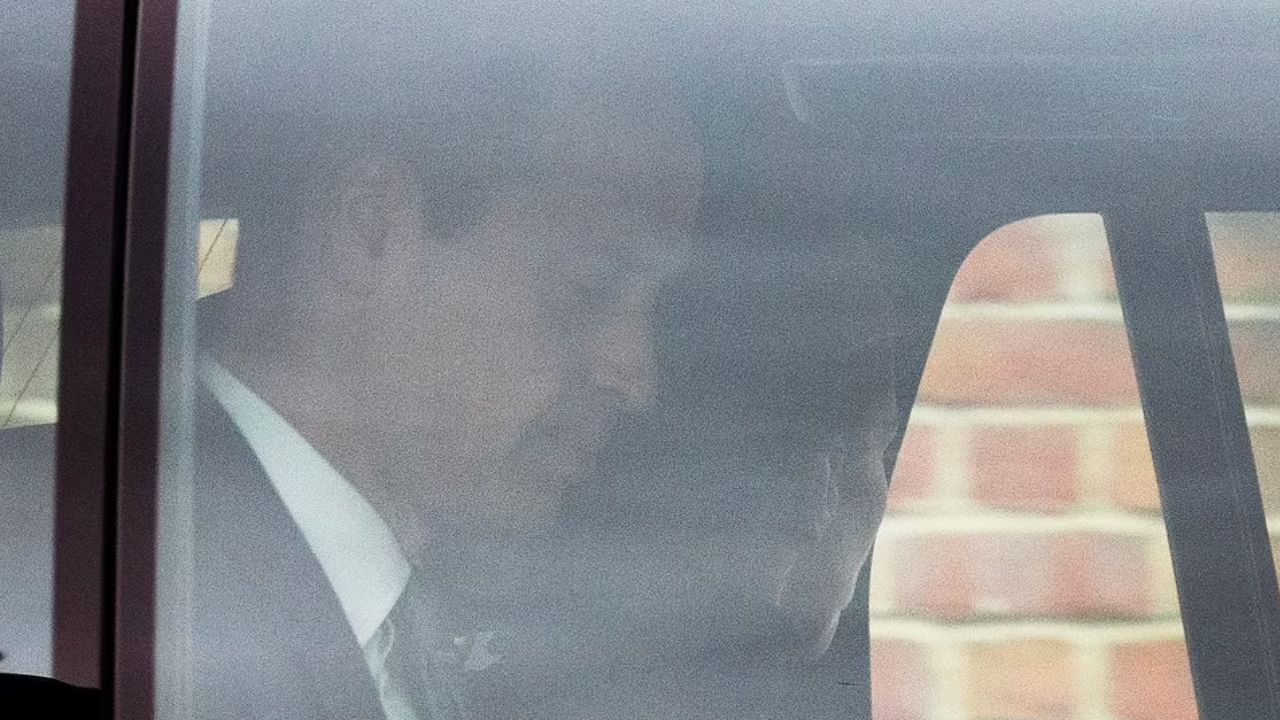
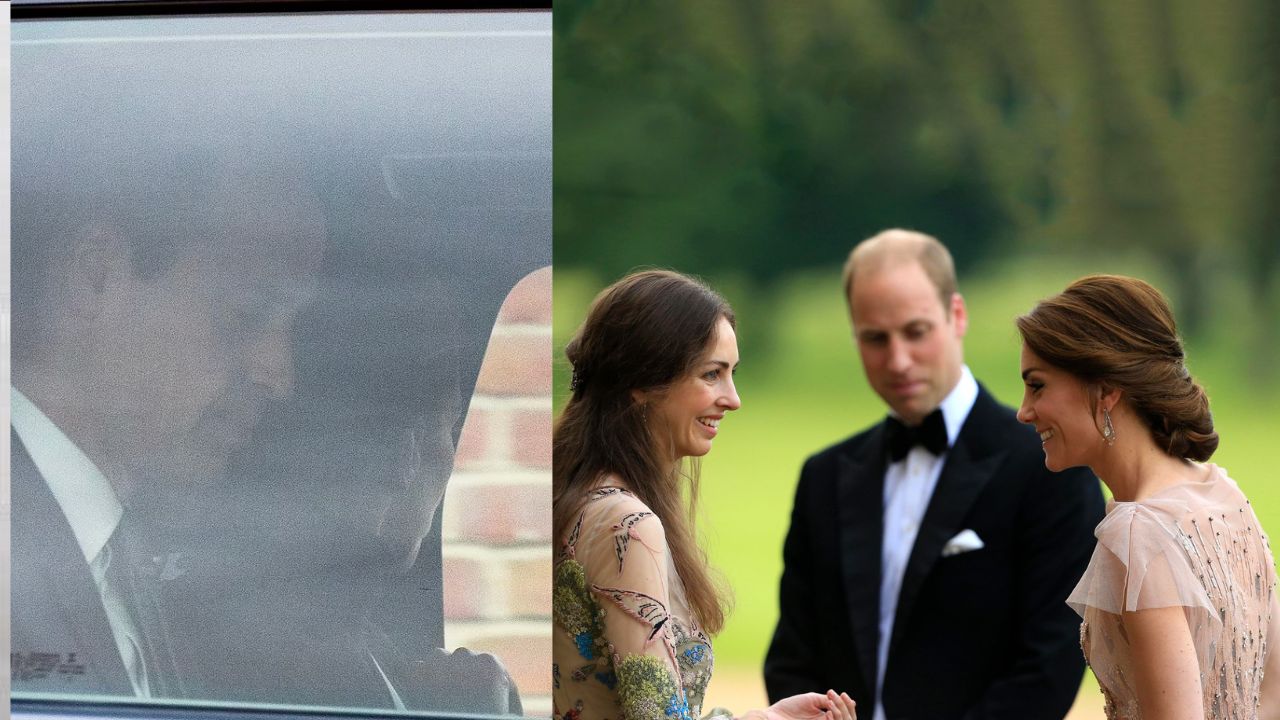
    The photos, published by the Daily Mail, showed the couple sitting next to each other in the backseat of a car as Kate looked out of her window. The prince was heading to the Commonwealth Day services while his wife, Kate, the princess of Wales, was heading to a ‘private’ appointment, the publication said.


    However, netizens on social media are coming up with diferent theories and rumors with the most prominent being the one that Kate has actually left the castle for good because her husband, Prince William is cheating on her. The rumored girlfriend of Princess William is Lady Rose Hanbury, 39, a former model and currently Marchioness of Cholmondeley, wife of David Rocksavage, 7th Marquess of Cholmondeley and mother of three.


    In a detailed feature, The Independent shared that Rose is a close friend of Kate Middleton and upon her insistence, Kate attended a music festival at her husband’s estate, Houghtan Hall. The festival was a disco music event in which Kate was labelled Duchess of Disco. After making headlines, Lady Rose was interviewed by various publications including The English Home.


    Known for her elite fashion sense, Lady Rose was said to be one of the best-dressed at Kate and William’s wedding.


    The same was suggested by British journalist and author Omid Scobie, considered very close to Prince Harry and Meghan Markle. He released a new book titled ‘Endgame: Inside the Royal Family and the Monarchy’s Fight for Survival’ in which he claimed that Prince William and Princess Kate Middleton distanced themselves from former friend Rose Hanbury since the rumours of an affair between her and the prince surfaced in 2019, as reported by Hindustan Times.
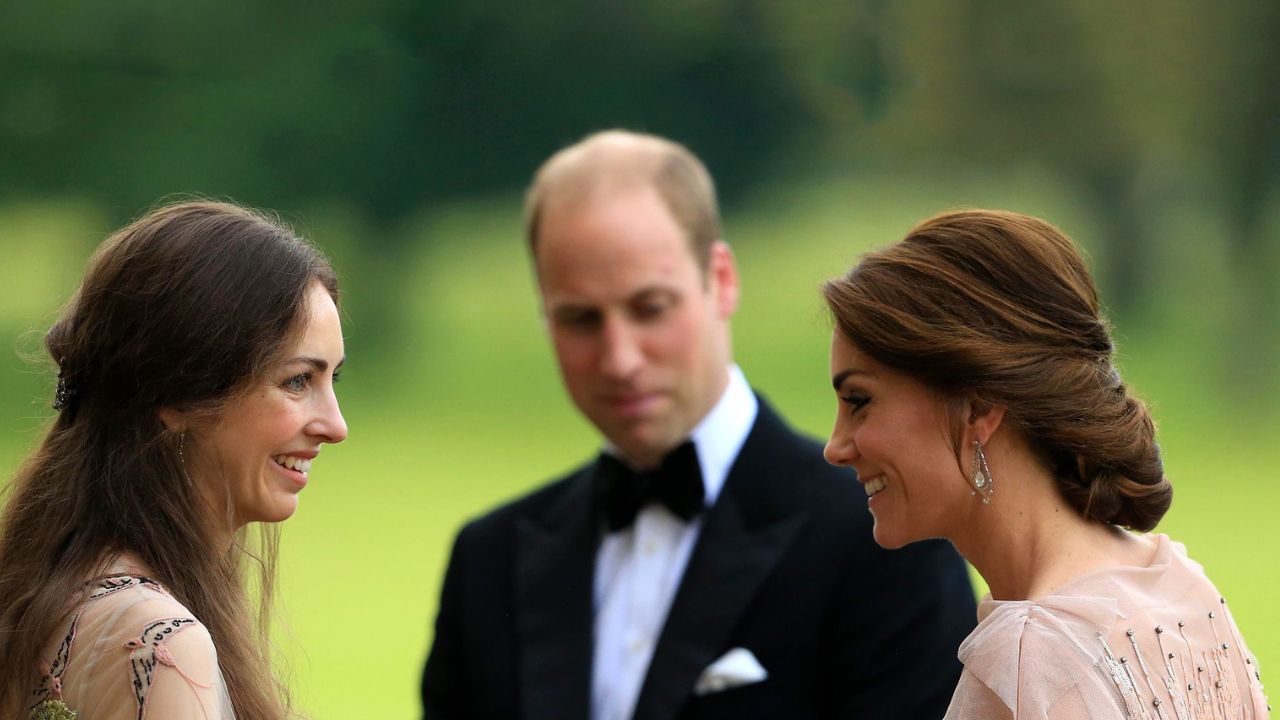

    Lady Rose was mentioned in several posts on X as social media was busy dissecting Kate’s photoshopped image with her three children.


    A user posted a thread about how the British publications are not protecting Kate but the prince himself because he has never been held accountable for anything in his life.


    Another pointed out how the image released by Daily Mail also seems manipulated because the colour of the wall behind them is not matching even in the same image.


    With a tinge of dark humour, a user posted a video of a man digging something with the caption, “William frantically digging Kate back up cause the photoshopped photo didn’t pass the sniff test”.


    A Twitter user posted, “what’s going with #KateMidelton face- did she have surgery of abdominals, or plastic surgery of face to look better?”
    People have been posting clips from the past where the two have been distanced, implying that there was trouble in paradise.


    Internet has been churning out memes about how first it was said that Prince clicked the photo with children and when the media protested, he put all the blame on Kate.

  • Hezbollah Launched Over 100 Rockets At Israeli Positions

    Hezbollah Launched Over 100 Rockets At Israeli Positions

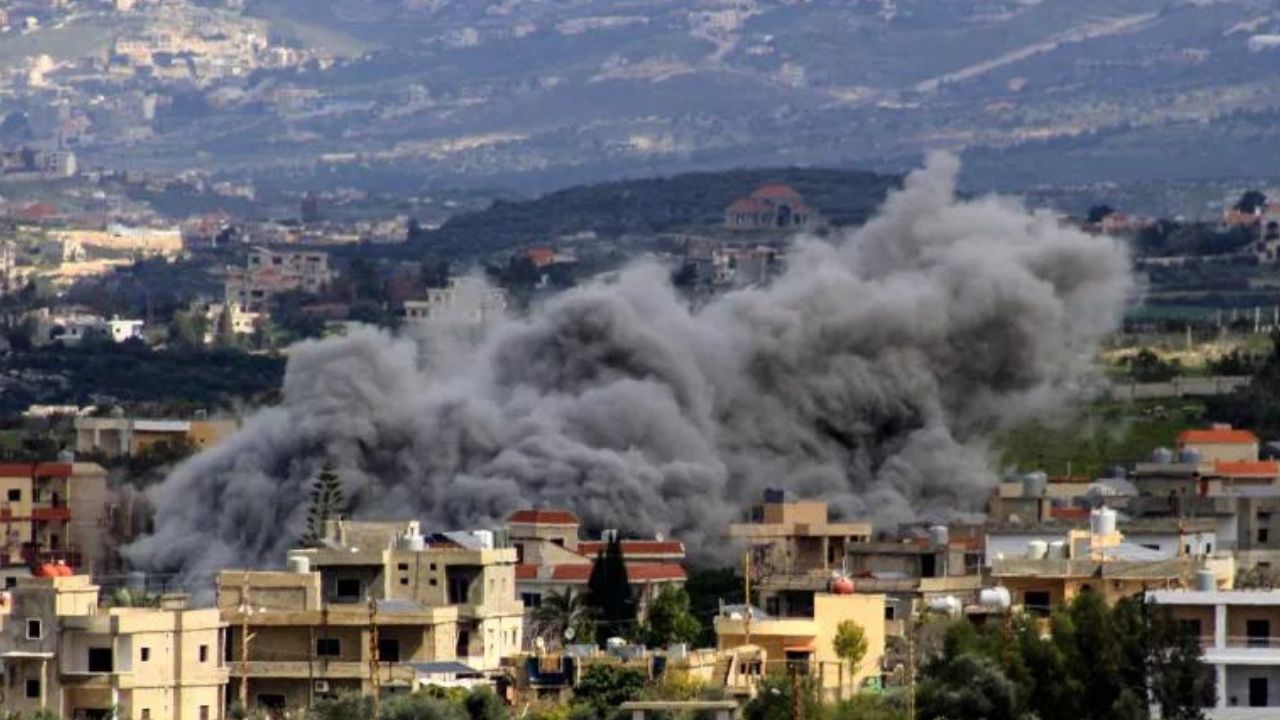
    Lebanon’s Hezbollah said Tuesday it launched over 100 rockets at Israeli military positions in retaliation for a strike on the country’s east that killed one person the day before.

    Hezbollah and Israel have exchanged near-daily cross-border fire since the genocide in Gaza erupted in October, but several Israeli strikes have recently hit Hezbollah positions further north, raising fears of a full-blown conflict.

    Hezbollah launched “more than a hundred katyusha rockets” Tuesday morning at two military bases in the occupied Golan Heights, the group said in a statement.

    This was “in response to the Israeli attacks on our people, villages and cities, most recently near the city of Baalbek and the killing of a citizen”, it added.

    On Monday, Israeli air strikes near Lebanon’s eastern city of Baalbek killed one person, in the second raid on the Hezbollah stronghold since cross-border hostilities began.

    The Israeli military confirmed its jets had hit two sites belonging to “Hezbollah’s aerial forces” in retaliation for strikes on the occupied Golan Heights over several days.

    On February 26, Israeli strikes targeted Baalbek, some 100 kilometres (60 miles) from the border, killing two Hezbollah members.

    Earlier on Tuesday, Hezbollah said its chief Hassan Nasrallah met with Khalil al-Hayya, a leading member of Hamas’s political bureau.

    They discussed ceasefire talks for the Gaza war, as well as attacks by Hamas’s regional allies to support its war efforts, the Hezbollah statement said.

    Nasrallah is due to give a televised speech on Wednesday.

    Hezbollah has repeatedly said it will only stop its attacks on Israel with a ceasefire in Gaza.

    But Israeli Defence Minister Yoav Gallant recently said any truce in Gaza would not change Israel’s goal of pushing Hezbollah out of southern Lebanon, by force or diplomacy.

    Since the increased Israeli attacks on Gaza following October 7, at least 317 people, mainly Hezbollah fighters but also 54 civilians, have been killed in Lebanon, according to an AFP tally.

    In Israel, at least 10 soldiers and seven civilians have been killed in the cross-border hostilities.

  • Kate and William spotted leaving Windsor Castle after apologising for photo manipulation

    Kate and William spotted leaving Windsor Castle after apologising for photo manipulation

    Hours after Kate Middleton apologized for “any confusion” caused by an edited family picture, she was photographed leaving Windsor Castle alongside husband Prince William on March 11.


    The photos, published by the Daily Mail, showed the couple sitting next to each other in the backseat of a car as Kate—who is reportedly recovering from abdominal surgery—looked out of her window. The prince was heading to the Commonwealth Day services while his wife, Kate, the princess of Wales, was heading to a ‘private’ appointment, the publication said.

    Earlier, Kate issued an apology over an altered official photo that saw news agencies, including AP and AFP pull the image from their systems.

    “Like many amateur photographers, I do occasionally experiment with editing. I wanted to express my apologies for any confusion the family photograph we shared yesterday caused,” Kate wrote in a statement.

    Background

    A recently released image of Kate Middleton, issued by Kensington Palace to put all rumors about her health to rest, has ended up creating new controversies.

    Various news agencies have issued notices not to use the image of Kate and her three children, including the Associated Press (AP), Reuters, Getty Images, and Agence France-Presse (AFP). All three on Sunday night withdrew it and told media outlets to “kill” the photo from their systems and archives because they believe that it has been manipulated.

    The AP said the photo had been withdrawn because upon “closer inspection, it appears that the source had manipulated the image” and the photo showed an “inconsistency in the alignment” of the left hand of Kate’s daughter, Princess Charlotte.

  • European Countries That Allow Assisted Dying

    European Countries That Allow Assisted Dying

    France could become the next European country to legalise assisted dying for the terminally ill under a proposal set out by President Emmanuel Macron.

    In an interview with two French newspapers he suggested that adults with full control of their judgement, suffering an incurable and life-threatening illness in the short-to-medium term and whose pain cannot be relieved should be able to “ask to be helped to die”.

    Several other European countries already allow the terminally ill to receive help to end their lives.

    Here is a round-up of the situation:

    In April 2002, the Netherlands became the first country in the world to legalise active euthanasia, whereby doctors administer lethal doses of drugs to patients suffering from an incurable condition.

    It also legalised assisted suicide, where patients can receive help to voluntarily take their own life.

    The Dutch law said the patient must have “unbearable suffering with no prospect of improvement” and must have requested to die in a way that is “voluntary, well considered and with full conviction”.

    In 2012, the Netherlands expanded the law to authorise euthanasia for over-12s in great suffering, provided they have parental consent, and in 2020 to patients with severe dementia, if the patient had requested the procedure while still mentally competent.

    The Dutch government in April 2023 also approved euthanasia for children under 12 after years of debate, permitting mercy deaths for young minors suffering “unbearably and without hope”.

    Belgium was the second country to adopt euthanasia and assisted suicide in May 2002, and with similar caveats to the Dutch.

    In 2014 it went further than the Netherlands by allowing terminally ill children of all ages to also request the procedure, with the consent of their parents.

    Fellow Benelux country Luxembourg decriminalised euthanasia and assisted dying in 2009, followed by Spain in June 2021, which legalised both practices.

    Portugal in May 2023 adopted a bill decriminalising euthanasia, despite strong opposition from President Marcelo Rebelo de Sousa, a devout churchgoer.

    The law legalised euthanasia for people in great suffering and with incurable diseases.

    Switzerland, which prohibits euthanasia, has for decades allowed assisted suicide, making it the go-to destination for patients from around Europe looking for assistance to end their suffering.

    The growth of so-called “suicide tourism” has caused much soul-searching in Switzerland but the authorities decided in 2011 against restricting the practice.

    Neighbouring Austria, a staunchly Catholic nation, also legalised assisted suicide in 2022 after its constitutional court ruled the country was violating citizens’ fundamental rights in making it illegal.

    Italy’s constitutional court by contrast in February 2022 rejected a bid to hold a referendum on decriminalising assisted dying, judging that such a vote would fail to protect the weakest.

    But the court ruled that it should not always be punishable to help someone with “intolerable” physical or psychological suffering to commit suicide.

    The issue is also the subject of renewed public interest in Britain. In 2015, MPs voted overwhelmingly against allowing assisted dying but over 150,000 people have signed a petition calling for a new debate and vote.

  • S. Korea starts procedures to suspend licences of 4,900 striking doctors

    S. Korea starts procedures to suspend licences of 4,900 striking doctors

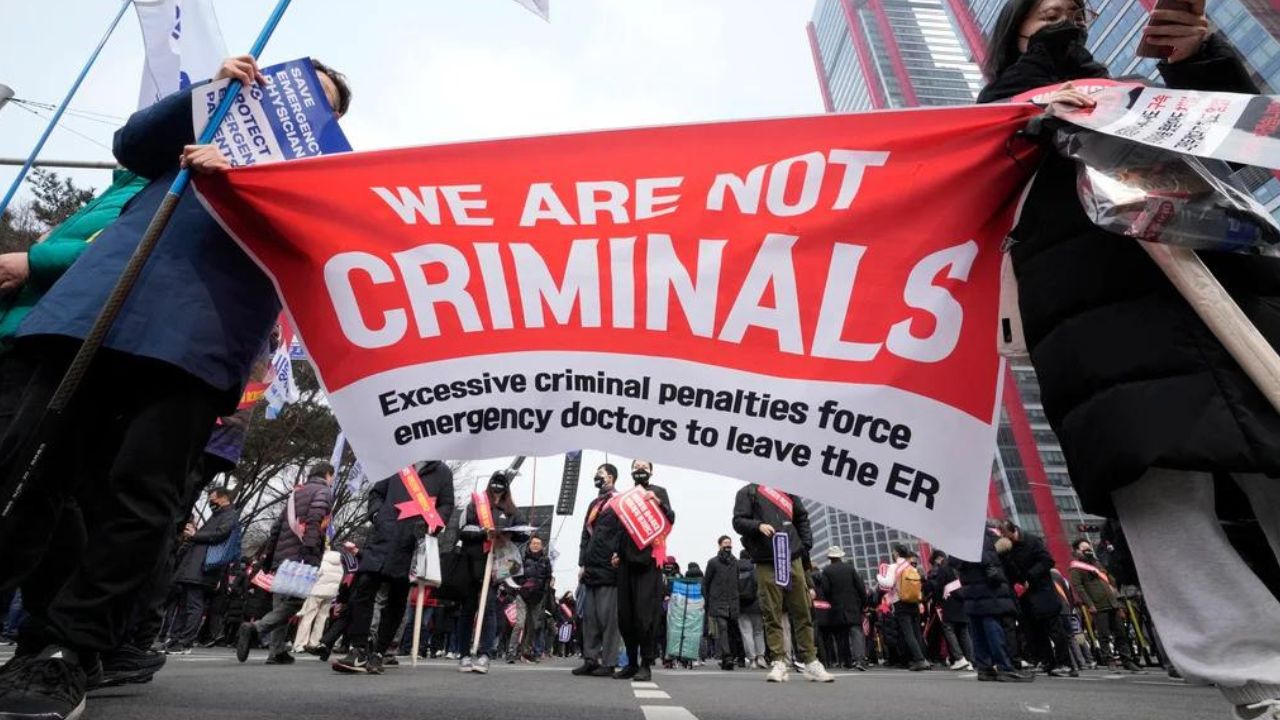
    South Korea said Monday it had started procedures to suspend the medical licenses of 4,900 junior doctors who have resigned and stopped working to protest government medical training reforms, causing health care chaos.

    The walkout, which started February 20, is over government plans to sharply increase the number of doctors, which it says is essential to combat shortages and South Korea’s rapidly aging population, while the medics argue it will erode service quality.

    Nearly 12,000 junior doctors — 93 percent of the trainee workforce — were not in their hospitals at the last count, despite government back to work orders and threats of legal action, forcing Seoul to mobilize military medics and millions of dollars in state reserves to help.

    The Health Ministry on Monday said it had sent administrative notifications — the first step to suspending the doctors’ medical licenses — to thousands of trainee doctors after they defied specific orders telling them to return to their hospitals.

    “As of March 8 (notifications) have been sent to more than 4,900 trainee doctors,” Chun Byung-wang, director of the health and medical policy division at the health ministry, told reporters.

    The government has previously warned striking doctors they face a three month suspension of their licenses, a punishment which, it says, will delay by at least a year their ability to qualify as specialists.

    Chun urged the striking medics to return to their patients.

    “The government will take into account the circumstance and protect trainee doctors if they return to work before the administrative measure is complete,” he said, indicating doctors who come back to work now could avoid the punishment.

    “The government will not give up dialogue. The door for dialogue is always open … The government will respect and listen to opinions of the medical community as a companion for the medical reforms,” he added.

    The government last week announced new measures to improve pay and conditions for trainee medics, plus a review of the continuous 36-hour work period, which is a major gripe of junior doctors.

    The strikes have led to surgery cancelations, long wait times and delayed treatments at major hospitals.

    Seoul has mobilized military doctors and earmarked millions of dollars of state reserves to ease service shortfalls, but has denied that there is a full-blown health care crisis.

    Military doctors will start working in civilian hospitals from Wednesday this week, Chun said.

    Under South Korean law, doctors are restricted from striking, and the health ministry has asked police to investigate people connected to the work stoppage.

    The government is pushing to admit 2,000 more students to medical schools annually from next year to address what it calls one of the lowest doctor-to-population ratios among developed nations.

    Doctors say they fear the reform will erode the quality of service and medical education, but proponents accuse medics of trying to safeguard their salaries and social status.

  • Aid boat readied as Israeli attacks in Gaza rage before Ramadan

    Aid boat readied as Israeli attacks in Gaza rage before Ramadan

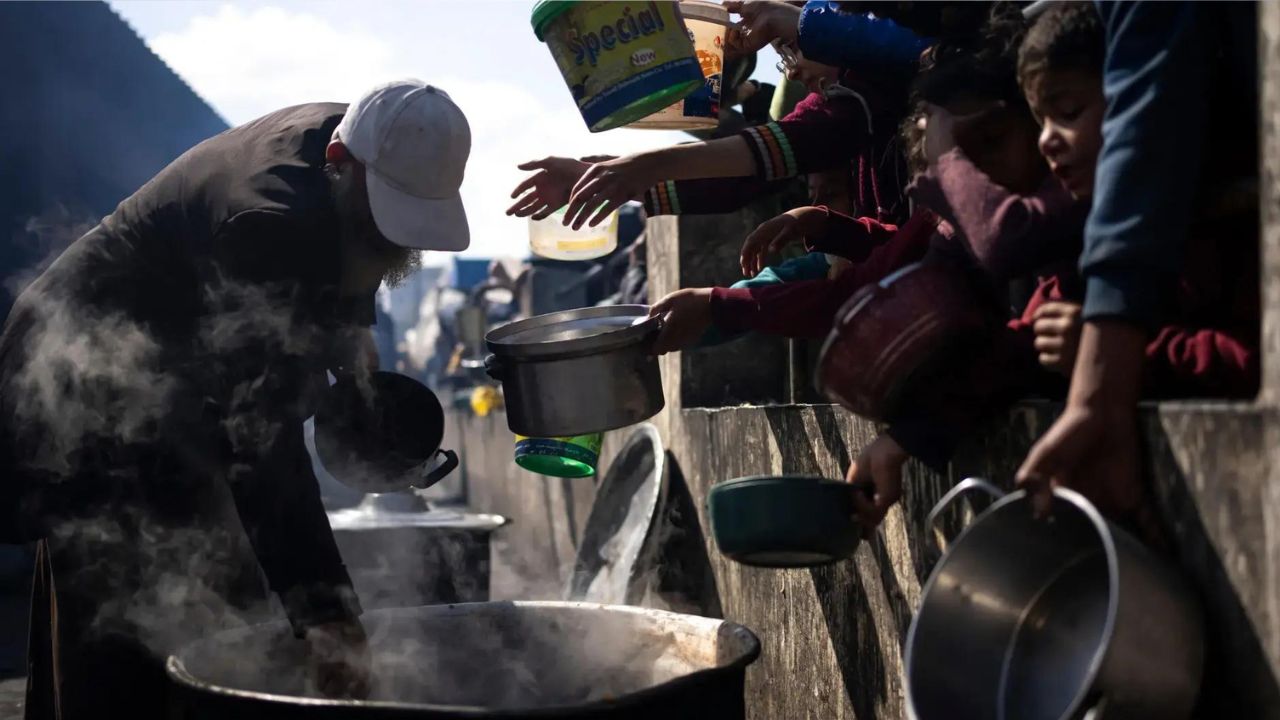
    Palestinian Territories – A boat laden with food for Palestinians in Gaza was “ready” to set sail from Cyprus, an NGO said Saturday, as Israeli military operations in Gaza raged.

    The sea route aims to counter aid access restrictions, which humanitarians and foreign governments have blamed on Israel, more than five months into the genocide which has left Gaza’s 2.4 million people struggling to survive.

    Hopes were fading fast for a pause in the fighting before Ramadan, which could begin as early as Sunday depending on the lunar calendar, as Israel accused Hamas of seeking to “inflame” the region during the Muslim fasting month.

    The United Nations has repeatedly warned of looming famine, particularly in north Gaza where no overland border crossings are open.

    In Rafah, in Gaza’s far south, “we can barely get water,” said displaced Palestinian woman Nasreen Abu Yussef.

    Roughly 1.5 million Palestinians have sought refuge in the city, where Atallah al-Satel said he wanted an end to the genocide.

    “We are just exhausted citizens,” said Satel, who had fled to Rafah from Khan Yunis.

    Spanish charity Open Arms said its boat, which docked three weeks ago in Cyprus’s Larnaca port, was “ready” to embark but awaits final authorisation.

    It would be the first shipment along a maritime corridor from Cyprus — the closest European Union country to Gaza — that the EU Commission hopes will open on Sunday.

    Open Arms spokeswoman Laura Lanuza told AFP that Israeli authorities were inspecting the cargo of “200 tonnes of basic foodstuffs, rice and flour, cans of tuna”.

    US charity World Central Kitchen, which has partnered with Open Arms, has teams in the besieged Gaza Strip who were “constructing a dock” to unload the shipment, Lanuza said.

    With ground access limited, countries have also turned to airdropping aid, although a parachute malfunction turned one delivery deadly on Friday.

    The health ministry in Gaza said three more children had died from malnutrition and dehydration, with the total number of such deaths now 23.

    ‘Only part of the solution’

    Another 82 people were killed in strikes over the previous day, the ministry said, bringing the number of deaths in Israel’s bombardment and ground offensive of Gaza to 30,960, mostly women and children.

    Israel’s campaign to destroy Hamas began after the movement’s October 7 attack on Israel resulted in about 1,160 deaths, mostly civilians, according to Israeli official figures.

    The UN’s World Food Programme has warned that the volume of aid that can be delivered by sea will do little if anything to stave off famine in Gaza.

    European Commission chief Ursula von der Leyen, in Larnaca on Friday, said a “pilot operation” would be launched in partnership with World Central Kitchen, supported by aid from the United Arab Emirates.

    A US effort for a “temporary pier” to receive aid off Gaza, which the Pentagon said would take up to 60 days to establish, builds upon the maritime corridor proposed by Cyprus, senior US officials said.

    Humanitarian workers and UN officials say easing the entry of trucks to Gaza would be more effective than aid airdrops or maritime shipments.

    The US military said it airdropped more than 41,000 meals into Gaza on Saturday, and Canada has said it too will join aerial aid delivery missions.

    But a steady flow of relief into Gaza was “only part of the solution”, said International Committee of the Red Cross chief Mirjana Spoljaric.

    The warring sides must do more to “safeguard civilian life and human dignity”, she said, decrying the “unacceptable” civilian death toll.

    ‘Tough’ truce talks

    After a week of talks with mediators in Cairo failed to produce a breakthrough, Hamas’s armed wing said it would not agree to a hostage-prisoner exchange unless Israeli forces withdraw.

    Israel has rejected such a demand.

    On Saturday, Prime Minister Benjamin Netanyahu’s office said Mossad spy agency chief David Barnea had met CIA director William Burns on Friday “as part of the ceaseless efforts to advance another hostage release deal”.

    US President Joe Biden acknowledged it would now be “tough” to secure a new truce deal in time for Ramadan.

    Saturday’s Israeli statement accused Hamas of “entrenching its positions like someone who is not interested in a deal and is striving to inflame the region during Ramadan”.

    Israeli military spokesman Daniel Hagari said Israel was preparing for “all possible operational scenarios” during the Muslim holy month.

    On the ground in southern Gaza, the Israeli army said fighting persisted in the area of Khan Yunis and Hamas authorities reported more than 30 air strikes overnight.

    Hamas chief Ismail Haniyeh called for the speedy distribution of aid to Gazans and for the full opening of border crossings “to end the siege of our people”.

    The war’s effects have been felt across the region, including off Yemen where Iran-backed Huthi rebels, who say they are acting in solidarity with Gazans, have repeatedly targeted ships plying the vital Red Sea trade route.

    US and allied forces shot down 28 one-way attack drones fired towards the Red Sea and Gulf of Aden on Saturday, the US military said, after one of the largest such rebel strikes.

    bur-srm/kir/ami

    © Agence France-Presse

  • Women’s Day: Palestinian Journalists that we need to know about

    Women’s Day: Palestinian Journalists that we need to know about

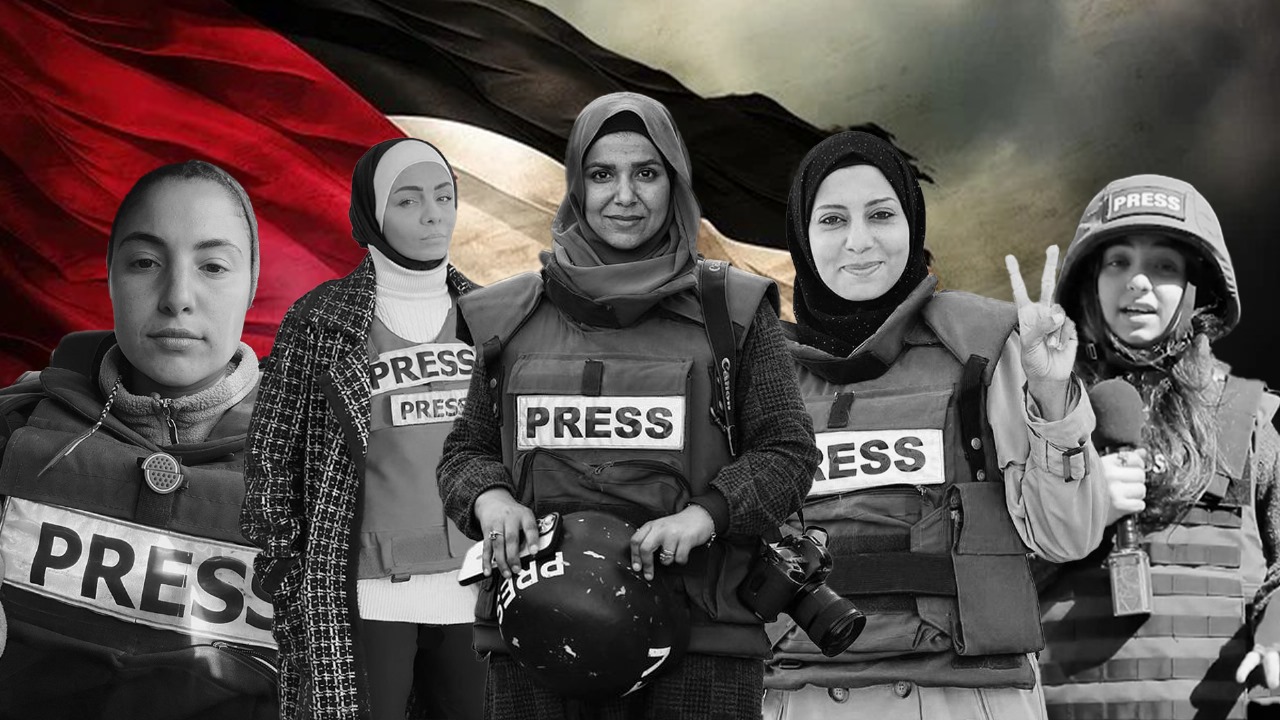
    Palestinian women in general and journalists, in particular, have set the bar with their resilience against what is now largely perceived as the most well-documented genocide of this century.


    This Women’s Day, the world paid tribute to their untiring efforts, yet it is important to mention here that it is not enough since the besieged strip has been wreaked for more than six months now.


    Palestinian journalists observed in real time the tragedy that women and children are experiencing due to the devastating war since October 7 last year.
    At least 63 women in Gaza are killed daily as a result of the Israeli war, with the majority being mothers, The UN Relief and Works Agency for Palestinian Refugees (UNRWA) reported on Friday.


    “On International Women’s Day, the women in Gaza continue to endure the consequences of this brutal war,” the agency shared. “At least 9,000 women have been killed, and many more are under the rubble,” the statement added.

    Hind Khoudary

    Hind Khoudary is one such face the world is now fully familiar with because of her on-ground reporting and the compassion she has shown over time. She was paid tribute to by her fellow journalist Ali Jadallah in an Instagram post where he praised her for her commitment to her profession and towards Gaza.

    However, he added, “As the ‘International Women’s Day’ is celebrated around the world on March 8th, Palestinian women start to work with the first hours of the day to provide for their families despite the difficulties experienced amid Israeli attacks.”


    Hind, 28-years-old, has been working in the media since 2017. In an interview with Anadolu, she pointed out that the current situation in the Gaza Strip affects all Palestinian women regardless of their professions.


    “While the world celebrates Women’s Day, Palestinian women are being displaced from their homes,” she said. “I am not just a journalist covering the war. Rather, I am a displaced person. I left my family and my husband and chose, despite the circumstances, to remain in Gaza and cover the war,” she added further.


    In one of her posts on Instagram, she shared how she doesn’t have clean clothes to wear anymore and how she struggles hard during her periods. “I am also wearing two pants above each other because I don’t have any joggers anymore. The last time I showered was ten days ago. On my period for the second time during the past 30 days and yet I am still standing despite all the cramps,” Hind wrote.

    Noor Hrazeen

    Noor is a TV presenter and a reporter who has been reporting about the ongoing situation in Gaza. She made a huge sacrifice by evacuating her children from Gaza just for them to be able to have food and water but she remained in Gaza to continue reporting about the havoc endured by Palestinians.


    In one of her posts, she wrote: “It’s hard to work in a location, where you know that there is dead bodies still stuck under the rubble. But it’s a story that should be told.”

    Roba Khaled

    Roba is a Palestinian journalist who has shown sheer commitment to her job even when her children were sick or when Israel was bombing buildings in real-time.

    Doaa Albaaz

    Doaa, 27, a photographer, reports the horrors befallen upon Gazans by the Israeli forces. “On International Women’s Day, we want to convey the image of women who are subjected to the most horrific massacres in Gaza,” she said in an interview with Anadolu.


    “During this war, the occupation targeted women, children, and innocent people,” she pointed out. “We lack everything, including privacy. There are no bathrooms, and we struggle to convey the real picture,” Baz asserted.

    Duaa Tuaima

    Duaa Tuaima is a photojournalist whose Instagram is a window that opens into the reality of the suffering in Gaza.

    She mostly documents the women and children of Gaza and how they are struggling to grapple with starvation and siege.

    Bisan Owda

    Bisan is another popular name. A storyteller and filmmaker by profession from northern Gaza, Bisan has been documenting the displacements, bombings, and genocide in Gaza from day one. Her vlogs and videos in collaboration with different platforms are raw and insightful. “Hi, this Is Bisan from Gaza and I am still alive” is the line she says at the beginning of every vlog and it is ironically sad and hopeful at the same time.


    In one of her videos, she featured an Israeli jet and said, “I grew up with this sound, it’s not new…”


    In another, she posted about living in fear since the war started. “For 150 days, I have been afraid of cement ceilings. I do not want to be crushed to death when a missile lands. I sleep in a tent, and I am like hundreds of thousands suffering cold at times, heat at times, and disease and hunger at other times,” she wrote in an Instagram post.

    Sumayya Wushah

    11-year-old war reporter Sumayya Wushah was featured in Al Jazeera’s videos as Gaza’s youngest journalist reporting about the destruction in a confident tone. She is inspired by Shireen Abu Akleh, the Al-Jazeera journalist who was killed by the Israeli army in 2022.


    The list could be longer. These journalists are inspiring women from all around the world for their strength and the cause they stand for.

  • On Women’s Day, the world did not forget Palestinian women

    On Women’s Day, the world did not forget Palestinian women

    Palestinian women took center-stage in internet discourse surrounding Women’s Day on Friday with artwork and rich tributes.

    Al-Jazeera wrote about the five most prominent women from Gaza. From doctors to activists, these are some of the women showing bravery amid Israel’s war on Gaza. These women include Bisan the journalist, Dr. Amira Al-Assouli who saved the life of a child from Israeli snipers by risking her own life, Nadina Abdullatif the child activist from Gaza, Deema Alswiti who caught the world’s attention after posting about her life in Gaza and Sara Alsaqqa, the first woman surgeon in Gaza who safely brought a child in the world while stuck in a room during Israeli bombing.


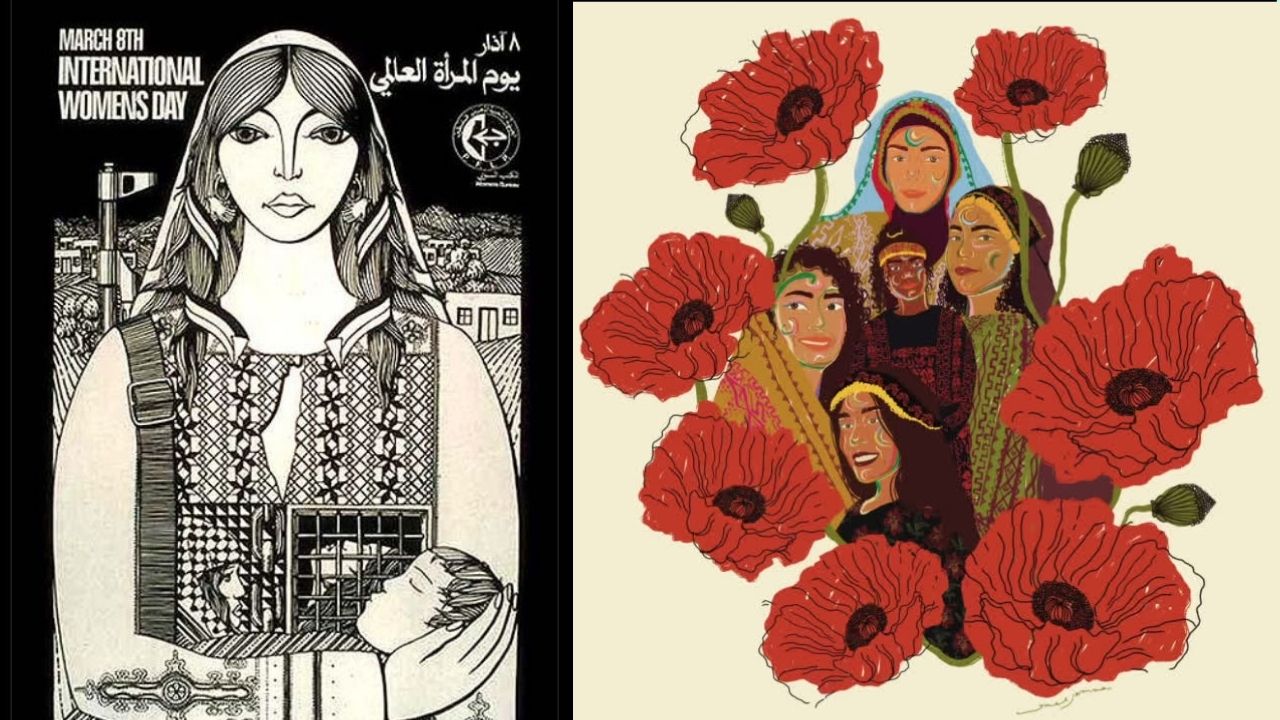
    Instagram digital art-related page Yael Jamina Illustration posted a beautiful art piece in “honour of the heroic women and girls of Palestine”.


    Palestinian-Greek athlete Samia Kallidis posted a heartfelt women’s day message for the women of Gaza and called out the world for the blatant hypocrisy.


    APAN, a Pro-Palestine Account on X, posted detailed profiles of Palestinian activists featuring Hind Khoudary, Ahed Tamimi, and Muna el’Kurd.


    Communist Pastors shared a women’s day poster with the caption, “The Palestinian woman: the guardian of the dream and the shield of the revolution.”


    A netizen shared a poster by award-winning artist Marc Rudin which was published by the Popular Front for the Liberation of Palestine in 1980.


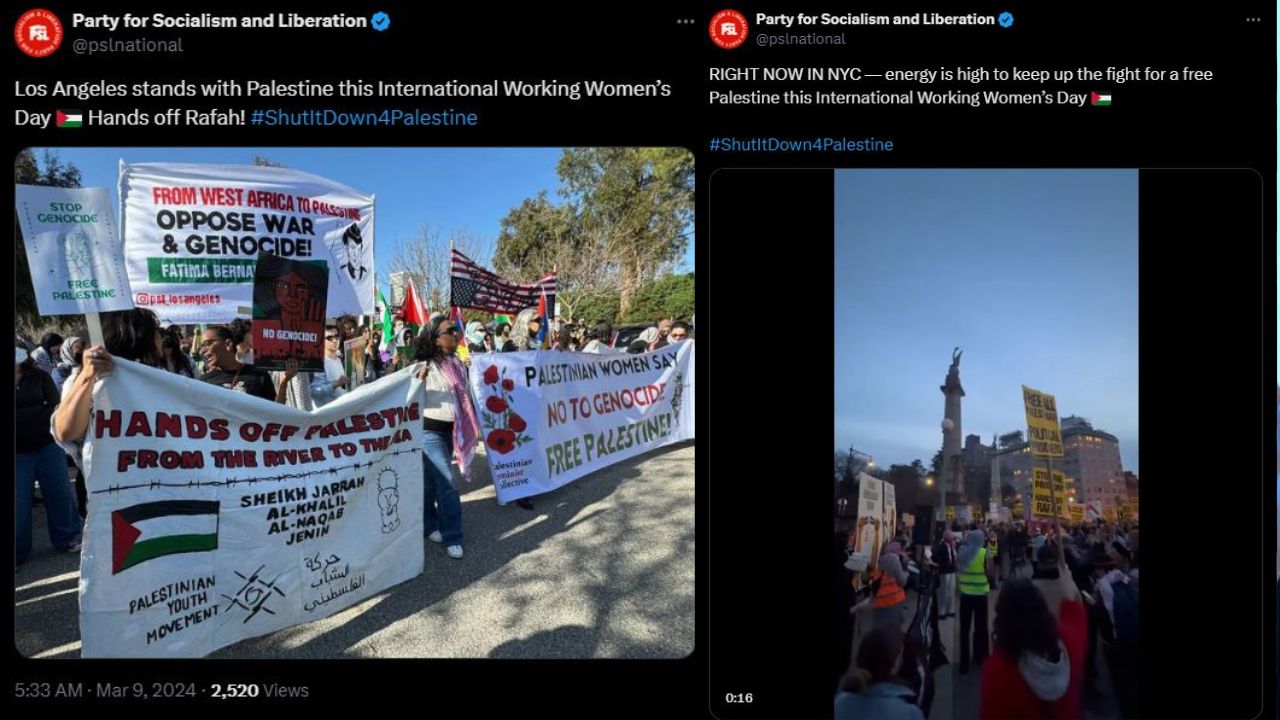
    Along with these beautiful art pieces, women all around the world took to roads for peaceful marches in commemoration of Women’s Day and raised slogans in solidarity with the oppressed women of Gaza.

  • Indian policeman beats Muslim men offering jummah on Delhi roadside

    Indian policeman beats Muslim men offering jummah on Delhi roadside

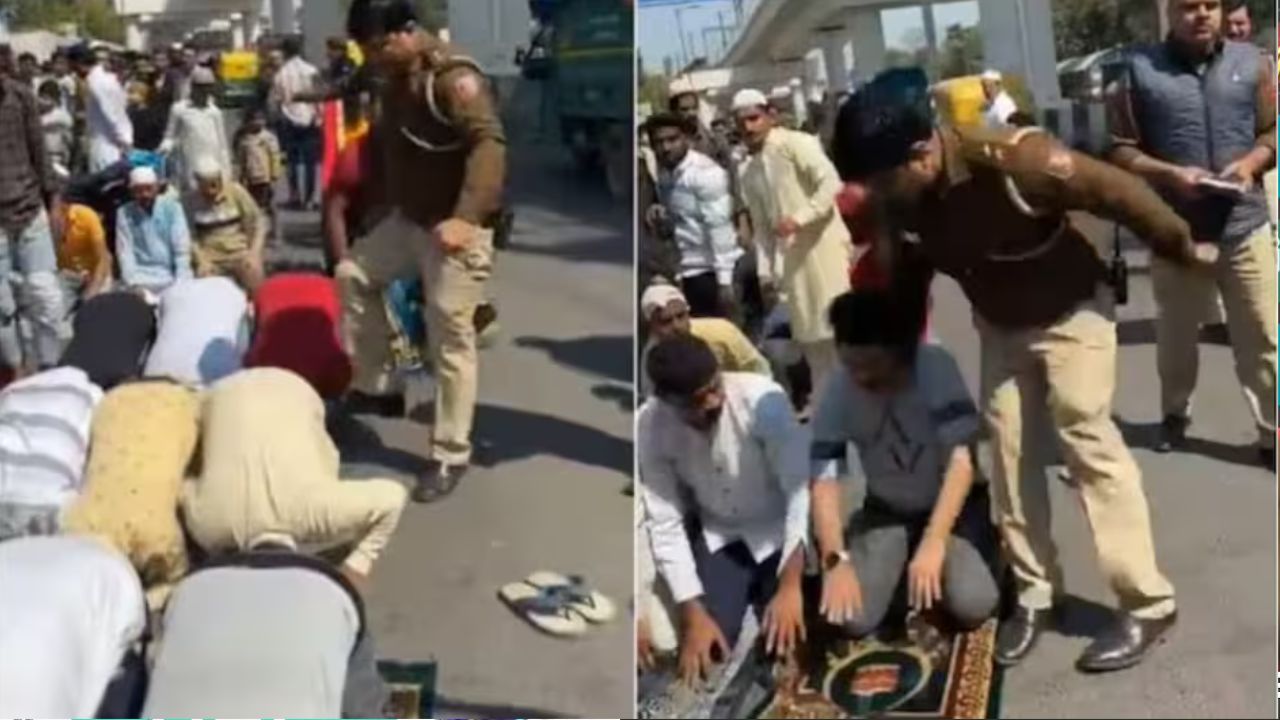
    A video of an Indian cop brutally beating Muslim men offering jummah prayers on the roadside in Delhi has gone viral. The video shows the policeman kicking and hitting Muslims who were kneeling down for sajdah (prostration).


    The incident took place in Delhi’s Inderlok area where a large number of Muslims gathered at a mosque on Friday, leading to several men praying on the road as the crowd overflowed the premises.


    Police officials arrived at the spot mid-prayers and started kicking and punching the Muslims. They can be heard telling the worshippers to vacate the place.
    The video shows one of them kicking and hitting the Muslims who were kneeling down for prayers. However, a crowd surrounded the cop and objected to his attitude, getting into a verbal brawl.


    Sharing the video of the incident, Congress Rajya Sabha MP Imran Pratapgarhi said, “What is this hatred that is filled in the heart of this soldier? Delhi Police is requested to file a case against this official under appropriate sections and terminate his service.”

    In an interview with Hindustan Times, Deputy Commissioner of Police (north) MK Meena said that an inquiry into the matter has been initiated. The official has been suspended with immediate effect and disciplinary action will also be taken, the DCP added.

  • India confirms citizen fighting with Russian army dead

    India confirms citizen fighting with Russian army dead

    India’s embassy in Moscow has confirmed the death of a citizen recruited by the Russian army, days after a relative said he had been sent to fight in Ukraine.

    Two years after Russia’s invasion began, tens of thousands of its soldiers have been killed in Ukraine and Moscow is on a global quest for more combatants. The foreign ministry in New Delhi said last month that it was working to secure discharges for around 20 Indian nationals “stuck” in the Russian army.

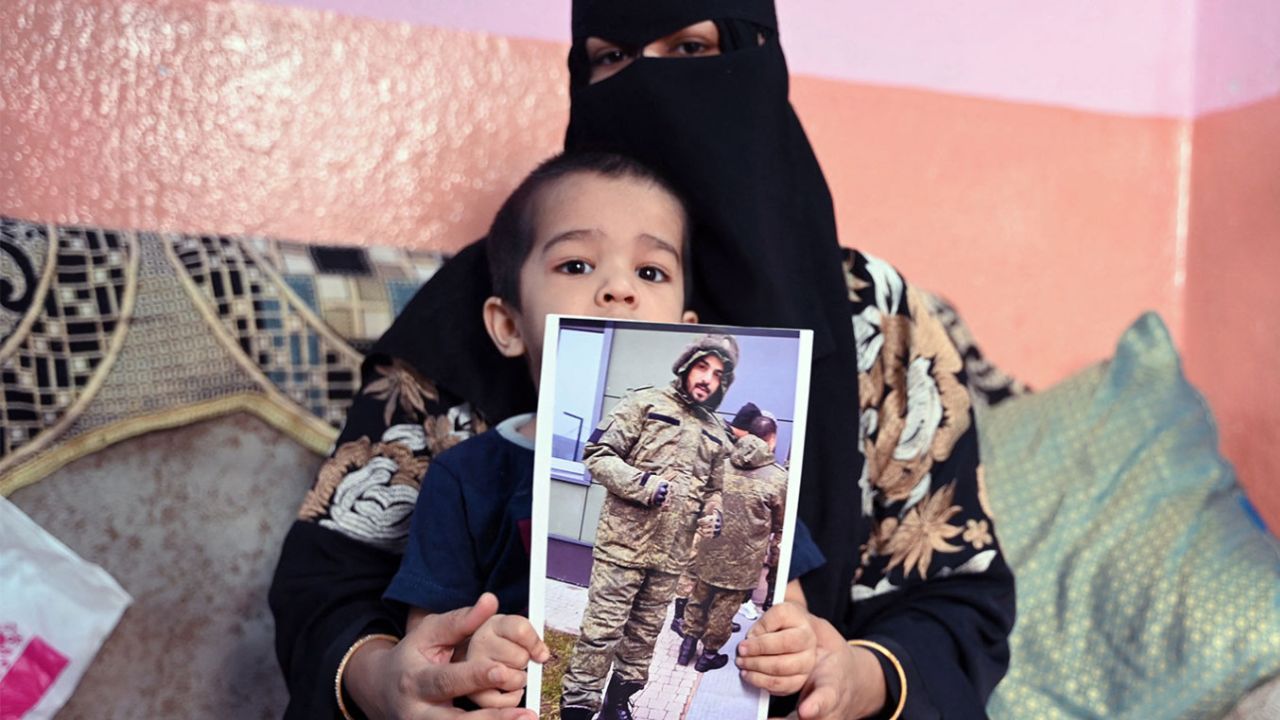
    The embassy did not state the circumstances behind Mohammed Asfan’s death but said it was in touch with his family and Russian authorities. “Mission will make efforts to send his mortal remains to India,” the embassy wrote on X, formerly Twitter.

    Asfan’s brother Mohammed Imran said in February that his sibling had been missing for nearly two months. Asfan had last called from the southern Russian city of Rostov-on-Don to say that he had been deployed to the frontlines, Imran had said.

    He said that another Indian soldier who managed to escape told his family that 30-year-old Asfan had been wounded by a bullet. Asfan is the first death confirmed by Indian authorities among its citizens serving with the Russian army and the second confirmed overall.

    A 23-year-old man from Gujarat state was killed in a Ukrainian airstrike while working as a “security helper”, local media reported last month, citing relatives and another Indian soldier at the frontlines.

    Several Indian recruits said last month that they were lured into joining up by promises of high salaries and a Russian passport before being shipped to the frontlines.

    The soldiers said they had been promised non-combatant roles but were trained to use Kalashnikov assault rifles and other weapons before being sent to Ukraine.