Category: FOREIGN

  • Egg on face of Modi’s India with highest bribery rate in Asia

    Egg on face of Modi’s India with highest bribery rate in Asia

    India has the highest bribery rate in Asia and the most number of people who use personal connections to access public services, according to a new report by Transparency International (TI).

    According to Global Corruption Barometer (GCB) Asia, nearly 50 per cent of those who paid bribes were asked to do so, while 32 per cent of those who used personal connections said they would not receive the service otherwise.

    The report is based upon the survey which was conducted between June 17 and July 17 this year in India with a sample size of 2,000.

    “With the highest bribery rate [39 per cent] in the region, India also has the highest rate of people using personal connections to access public services [46 per cent],” the report said.

    Bribery in public services continues to plague India. Slow and complicated bureaucratic process, unnecessary red tape and unclear regulatory frameworks force citizens to seek out alternate solutions to access basic services through networks of familiarity and petty corruption, the report said.

    “Both national and state governments need to streamline administrative processes for public services, implement preventative measures to combat bribery and nepotism, and invest in user-friendly online platforms to deliver essential public services quickly and effectively,” the report said.

    Although reporting cases of corruption was critical to curbing the spread, a majority of citizens in India, 63 per cent, think that if they reported corruption, they would suffer retaliation, it said.

    In several countries, including India, Malaysia, Thailand, Sri Lanka and Indonesia, sexual extortion rates are also high and more must be done to prevent sextortion and address specific-gendered forms of corruption, the report said.

    Sextortion is extorting money or sexual favours from someone by threatening to reveal evidence of their sexual activity through means like morphed images.

    In India, 89 per cent think government corruption is a big problem, 18 per cent offered bribes in exchange for votes and 11 per cent experienced sextortion or know someone who has.

    “About 63 per cent of surveyed people think the government is doing well in tackling corruption while 73 per cent said their anti-corruption agency is doing well in the fight against corruption,” it said.

    Based on fieldwork conducted in 17 countries, the GCB surveyed nearly 20,000 citizens in total.

    The report said the results showed that nearly three out of four people think corruption is a big problem in their country and the survey also found that nearly one in five people who accessed public services, such as health care and education, paid a bribe in the preceding year.

    This equates to approximately 836 million citizens in the 17 countries surveyed, it said.

    After India, Cambodia has the second-highest bribery rate at 37 per cent, followed by Indonesia (30 per cent) while the Maldives and Japan maintain the lowest overall bribery rate (2 per cent), followed by South Korea (10 per cent) and Nepal (12 per cent).

    “However, even in these countries, governments could do more to stop bribes for public services,” the report said.

    The report concluded by noting that daily experience with corruption and bribery remains alarmingly high, with nearly one in five citizens paying a bribe to access key government services, such as health care or education, and one in seven being offered a bribe to vote one way or another at elections.

    “In several countries, including India, Malaysia, Thailand, Sri Lanka and Indonesia, sexual extortion rates are also high and more must be done to prevent sextortion and address specific-gendered forms of corruption,” it said.

    The report further said that to provide victims of corruption with channels for redress, governments must ensure that bribery was criminalised and actively investigated and prosecuted.

    “Citizens must have access to safe and confidential reporting mechanisms and governments must do more to ease citizens’ fear of retaliation in reporting corruption. Despite these challenges, citizens are largely optimistic about the future and believe that ordinary people can make a difference in the fight against corruption,” the report said.

  • ‘Israeli PM secretly visited Saudi Arabia, met crown prince’

    Israeli media reported Monday that Prime Minister Benjamin Netanyahu flew to Saudi Arabia for a clandestine meeting with Crown Prince Mohammed bin Salman, which would mark the first known encounter between senior Israeli and Saudi officials.

    Hebrew-language media cited an unnamed Israeli official as saying that Netanyahu and Yossi Cohen, head of Israel’s Mossad spy agency, flew to the Saudi city of Neom on Sunday, where they met with the crown prince. The prince was there for talks with visiting US Secretary of State Mike Pompeo.

    A Gulfstream IV private jet took off just after 1740 GMT from Ben-Gurion International Airport near Tel Aviv, according to data from website FlightRadar24.com. The flight traveled south along the eastern edge of the Sinai Peninsula before turning toward Neom and landing just after 1830 GMT, according to the data. The flight took off from Neom around 2150 GMT and followed the same route back to Tel Aviv.

    The Israeli prime minister’s office did not respond to requests for comment.

    Pompeo traveled with an American press pool on his trip throughout the Mideast, but left them at the Neom airport when he went into his visit with the crown prince.

    Meanwhile, the Saudi foreign minister has denied reports of a meeting between MBS and Netanyahu, as per Reuters.

    While Bahrain, Sudan and the United Arab Emirates have reached deals under the Trump administration to normalise ties with Israel, Saudi Arabia so far has remained out of reach.

    King Salman long has supported the Palestinians in their effort to secure an independent state. However, analysts and insiders suggest his 35-year-old son, Crown Prince Mohammed bin Salman, likely is more open to the idea of normalising relations without major progress in the moribund peace process.

    The kingdom approved the use of Saudi airspace for Israeli flights to the UAE, a decision announced the day after Jared Kushner, Trump’s son-in-law and senior adviser, met with Prince Mohammed in Riyadh. Bahrain normalizing ties also suggest at least a Saudi acquiescence to the idea, as the island kingdom relies on Riyadh.

    Israel has long had clandestine ties to Gulf Arab states that have strengthened in recent years as they have confronted a shared threat in Iran.

  • IN PICTURES: India celebrates Kamala Harris’ win

    Kamala Harris has made history as the first female, first black, and first Asian-American US vice-president-elect, and Indians are overjoyed.

    According to reports, people at Kamala’s ancestral village in southern India, celebrated her victory by bursting crackers, distributing sweets, and offering prayers of gratitude. People hailed her achievement as historic and a “proud moment” for the country.

    Some Indians also celebrated by laying rangoli designs in front of their houses.

    After the victory, Kamala’s sister Maya Harris, said that their mother, Shyamala Gopalan, “would have been beyond proud today.”

    Harris also paid tribute to her mother, Shyamala Gopalan Harris, an Indian immigrant, in her victory speech.

    Harris’ uncle, academic Balachandran Gopalan, said his late sister would have been proud of her daughter and that the family would converge in Washington from across the United States and from India, Canada and Mexico to witness her historic inauguration.

    “Her mother would have been very happy. She would have asked Kamala to continue what she’s doing,” the 79-year-old academic told AFP as a huge media contingent crowded outside his home.

    “Can you think of any other country where a first-generation immigrant would go to the highest office… It’s a lot of firsts. And at a major time in US history. And that she’s there as VP means a lot.”

    Gopalan added that he had further hopes for his trailblazing niece – including a presidential run.

    Kamala Harris was born on October 20 in 1964, in California. Her late mother Shyamala Gopalan migrated to the US from Tamil Nadu at the age of 19 to study at the University of California, while her father, Donald J Harris, moved to the US from Jamaica.

    Harris has often spoken about how her Indian grandfather, who was among millions of people who joined India’s independence movement, has shaped her values and helped inspire her ideals of justice.

    Meanwhile, several Bollywood celebrities including Sonam Kapoor and Kangana Ranaut also expressed their joy over Harris’ win.

  • Twitter reacts to ‘Pornhub popup’ during CNN’s live coverage of US election

    In a rather awkward incident, a Pornhub popup has allegedly appeared during CNN’s live coverage of the United States (US) presidential election.

    According to the details, as the neck-and-neck race for the key to the White House between Democratic challenger Joe Biden and American President Donald Trump stretches over four days now, someone at CNN seems to be in dire need of a distraction.

    A video doing rounds over the internet shows senior American journalist Wolf Blitzer commenting on the endless counting of votes in Pennsylvania while news anchor John King, who is said to not have slept for more than six hours since Tuesday, stands on the other side of the studio, in front of a big interactive screen.

    It isn’t later that King notices what is being claimed to be a Pornhub popup on the screen. A quick gesture and the alleged porn site label, perhaps visited at that moment by someone in the editorial office, disappears.

    The anchor is then seen giving someone a “death stare”, leaving netizens wondering if he knew who it was.

    WATCH VIDEO:

    https://twitter.com/PatrickSikler/status/1324645655055400961

    Here’s what Twitterati have to say about the episode:

    https://twitter.com/titancrising/status/1324658856396529665

    While some weren’t as amused…

    …some also said that the video was “fake“.

    https://twitter.com/lewiswake/status/1324655345369796609

    What do you think? Let The Current know in the comments

  • Pakistanis win the US elections with memes and jokes

    Pakistanis win the US elections with memes and jokes

    Barring the fact that a change in the White House may require a shift of policy in Islamabad and Pakistan will have to rethink its diplomatic ties with the US, Pakistanis are making the most of the US Elections 2020 with what they do best – making memes.

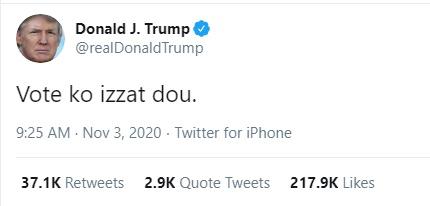
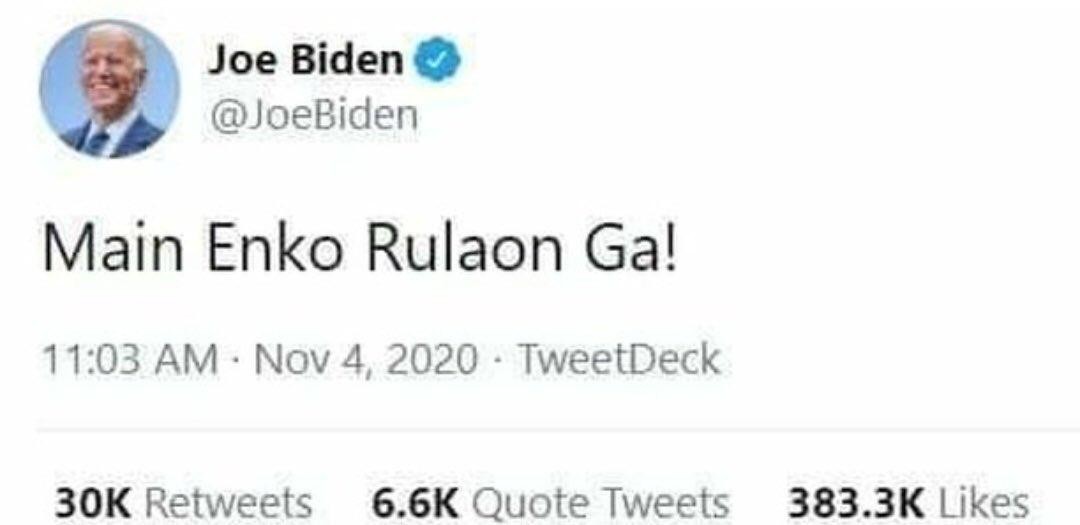
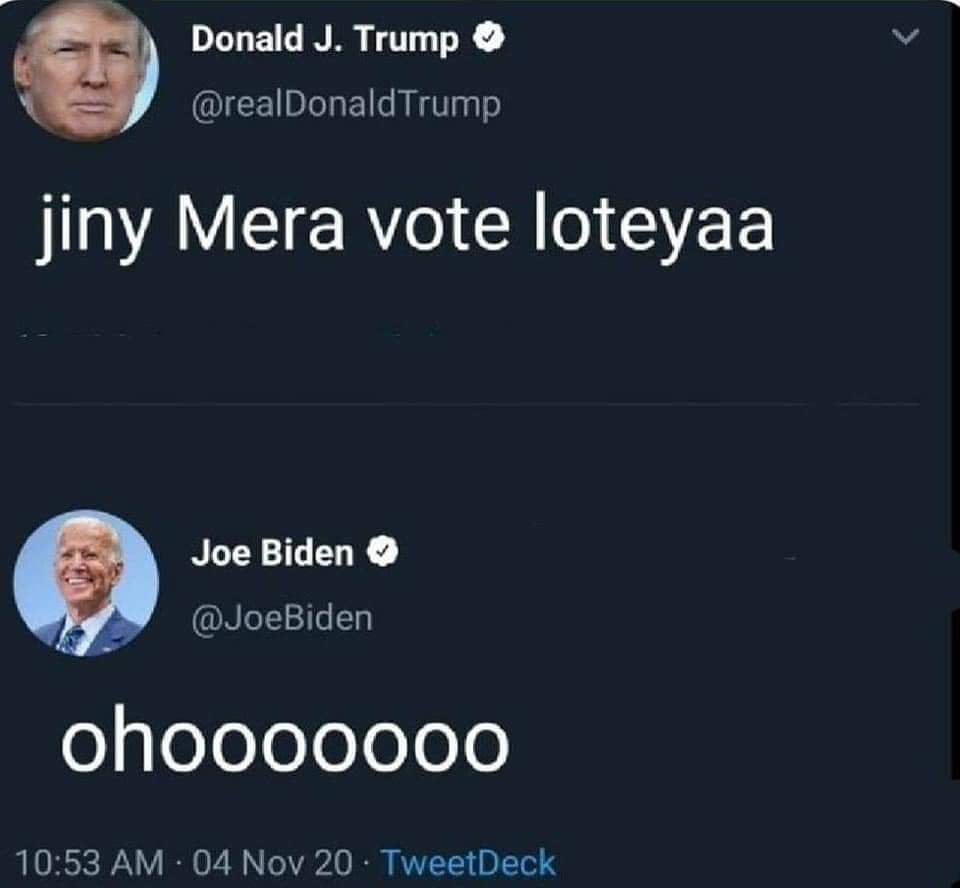
    As US citizens and Presidential candidates wait with bated breaths for the results, Pakistanis have been sharing memes and jokes on social media. From Trump asking ‘Vote ko izzat dou‘ to Biden saying ‘Mein Inko Rulaun Ga‘, Pakistani Twitter is lit with memes that are bound to tickle your funny bones.

    Check out some of the funniest memes below:

    https://twitter.com/thepakimon/status/1324199320351084545?s=20
    https://twitter.com/SuspendedBila/status/1324003390502948865?s=20
    https://twitter.com/SuspendedBila/status/1324258087755255809?s=20

    Read more – ‘Relax, it happens,’ former senator of ‘grape’ fame tells Donald Trump

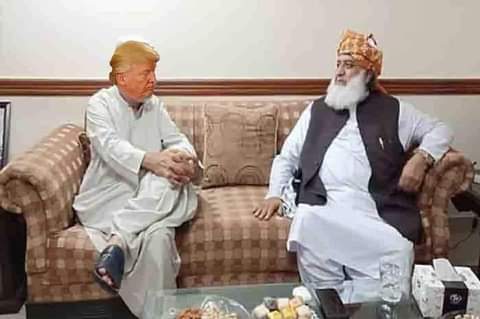
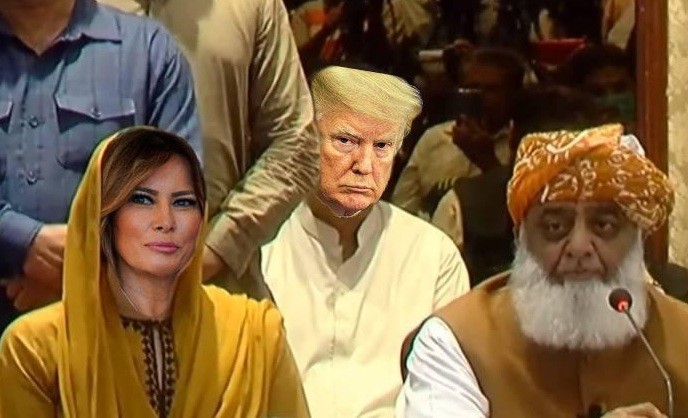
    Some netizens got creative with photoshop.

    Which meme is your favourite? Let us know in the comments below.

  • ‘Relax, it happens,’ former senator of ‘grape’ fame tells Donald Trump

    ‘Relax, it happens,’ former senator of ‘grape’ fame tells Donald Trump

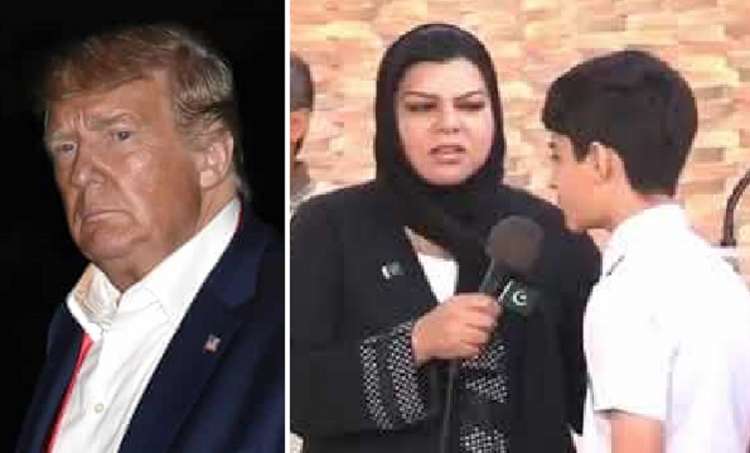
    Former Pakistan People’s Party (PPP) senator Sehar Kamran of “grape” meme videos fame has made headlines for telling United States (US) President Donald Trump to relax as the latter raises concerns over his looming loss in the race to White House.

    By the time this report was filed, Democratic challenger Joe Biden, according to Associated Press’ (AP) data, had secured 264 electoral votes against Trump’s 214. For a majority, 270 electoral votes are needed.

    With Trump taking to Twitter to launch a tirade against his opponent and cast doubts over the electoral process while adding to his laid groundwork for refusing to concede a loss now expected, the former parliamentarian from Pakistan has told him to relax.

    “Relax, it happens,” she wrote in response to a tweet by the incumbent American president.

    The former senator from Pakistan had earlier also tweeted to wish Trump’s rival Biden good luck.

    ‘GRAPE’:

    In September, Sehar responded to the viral clips doing the rounds on social media where some schoolchildren were seen telling what they would do for their country at an Independence Day event.

    The clips had gone viral on TikTok and not just in Pakistan. Sehar was seen encouraging the children in the clips and adding clarity to their statements — all in the spirit of patriotism.

    Speaking to NayaDaur, Sehar had said that the clips are from Pakistan International School in Jeddah, Saudi Arabia of which she was the principal ten years ago.

    “Everyone has the right to express their affection for the country and this is what my students at Pakistan International School Jeddah and I were doing in the video clip,” she said.

    One particular clip in which a child says that he would get into the army and “destroy India” had turned into memes and Sehar’s reaction to the student’s comment, “strong army, wow!”, had also taken the internet by storm.

    While a lot of people had also criticised her for “teaching the kids to promote hate”, another reaction of hers, “great”, had broken the internet as “grape”.

  • What would happen if Trump cries ‘dhandli’?

    What would happen if Trump cries ‘dhandli’?

    While Democratic challenger Joe Biden on Thursday seems to have quite a lead against United States (US) President Donald Trump in the race for the key to the White House, the latter, despite incomplete results from several battleground states, proclaimed victory on Wednesday.

    The premature move in spite of incomplete results from the said states, that could determine the outcome of the presidential election, confirmed worries Democrats had voiced for weeks that Trump would seek to dispute the election results, forcing Americans to consider an extraordinary scenario in which Trump refuses to concede his loss.

    The said move could set off any number of legal and political dramas in which the presidency could be determined by some combination of the courts, state politicians and Congress.

    Here are the various ways the election can be contested…

    LAWSUITS:

    Early voting data shows Democrats are voting by mail in far greater numbers than Republicans. In states such as Pennsylvania and Wisconsin that do not count mail-in ballots until Election Day, initial results appeared to favour Trump because they were slower to count mailed ballots.

    Democrats had expressed concern that Trump would, as he did on Wednesday, declare victory before those ballots could be fully tallied.

    A close election could result in litigation over voting and ballot-counting procedures in battleground states. Cases filed in individual states could eventually reach the US Supreme Court, as Florida’s election did in 2000, when Republican George W Bush prevailed over Democrat Al Gore by just 537 votes in Florida after the high court halted a recount.

    Trump appointed Amy Coney Barrett as Supreme Court justice just days before the election, creating a 6-3 conservative majority that could favour the president if the courts weigh in on a contested election.

    ELECTORAL COLLEGE:

    The US president is not elected by a majority of the popular vote. Under the constitution, the candidate who wins the majority of 538 electors (270 votes) known as the Electoral College, becomes the next president. In 2016, Trump lost the national popular vote to Democrat Hillary Clinton but secured 304 electoral votes to her 227.

    The candidate who wins each state’s popular vote typically earns that state’s electors. This year, the electors will meet on December 14 to cast votes. Both chambers of Congress will meet on January 6 to count the votes and name the winner.

    Normally, governors certify the results in their respective states and share the information with Congress.

    But some academics have outlined a scenario in which the governor and the legislature in a closely contested state submit two different election results. Battleground states of Pennsylvania, Michigan, Wisconsin and North Carolina all have Democratic governors and Republican-controlled legislatures.

    According to legal experts, it is unclear in this scenario whether Congress should accept the governor’s electoral slate or not count the state’s electoral votes at all.

    While most experts view the scenario as unlikely, there is historical precedent. The Republican-controlled Florida legislature considered submitting its own electors in 2000 before the Supreme Court ended the contest between Bush and Gore. In 1876, three states appointed “duelling electors,” prompting Congress to pass the Electoral Count Act (ECA) in 1887.

    Under the act, each chamber of Congress would separately decide which slate of “duelling electors” to accept. As of now, Republicans hold the Senate while Democrats control the House of Representatives, but the electoral count is conducted by the new Congress, which will be sworn in on January 3.

    If the two chambers disagree, it’s not entirely clear what would happen.

    The act says that the electors approved by each state’s “executive” should prevail. Many scholars interpret that as a state’s governor, but others reject that argument. The law has never been tested or interpreted by the courts.

    Another unlikely possibility is that Trump’s Vice President Mike Pence, in his role as Senate president, could try to throw out a state’s disputed electoral votes entirely if the two chambers cannot agree, according to Foley’s analysis.

    In that case, the ECA does not make clear whether a candidate would still need 270 votes or could prevail with a majority of the remaining electoral votes — for example, 260 of the 518 votes that would be left if Pennsylvania’s electors were invalidated.

    The parties could ask the Supreme Court to resolve any congressional stalemate, but it’s not certain the court would be willing to adjudicate how Congress should count electoral votes.

    ‘CONTINGENT ELECTION’:

    A determination that neither candidate has secured a majority of electoral votes would trigger a “contingent election” under the 12th Amendment of the Constitution. That means the House of Representatives chooses the next president, while the Senate selects the vice president.

    Each state delegation in the House gets a single vote. As of now, Republicans control 26 of the 50 state delegations, while Democrats have 22; one is split evenly and another has seven Democrats, six Republicans and a Libertarian.

    A contingent election also takes place in the event of a 269-269 tie after the election; there are several plausible paths to a deadlock in 2020.

    Any election dispute in Congress would play out ahead of a strict deadline — Jan 20, when the constitution mandates that the term of the current president ends.

    Under the Presidential Succession Act, if Congress still has not declared a presidential or vice presidential winner by then, the Speaker of the House would serve as acting president. Nancy Pelosi, a Democrat from California, is the current speaker.

    TRUMP LAYING GROUNDWORK:

    The president has suggested he may not accept the results of the 2020 election enough times to prompt alarm over whether he may actually be serious.

    Over the past six months, Trump has repeatedly refused to commit to a peaceful transition of power, when asked, and has claimed he will only lose if the election is rigged.

    Trump displayed the same non-commitment in 2016, but this year an expectation of delays in the result gives the president more scope to claim election results can’t be trusted, or even to claim victory before enough votes are counted.

    Back in July, Trump seemed to be laying the ground for potentially disputing the vote. In an interview with Chris Wallace on Fox News, largely remembered for Wallace confronting Trump with the “very hard” cognitive test, the president claimed to have taken — the test required the sitter to identify an elephant, an alligator and a snake — Wallace asked Trump if he would accept the election results.

    “I have to see,” Trump said. “Look – I have to see. No, I’m not going to just say yes. I’m not going to say no.”

    On other occasions he was happy to bring up the question himself.

    “The only way we’re going to lose this election is if the election is rigged,” Trump told the crowd at a rally in Oshkosh, Wisconsin, in August. “Remember that. That’s the only way we’re going to lose this election.”

    The president repeated the message in a rare White House news conference in September, and during the first presidential debate a week later.

  • Mumbai police detain Republic TV founder Arnab Goswami in suicide case

    Mumbai police detain Republic TV founder Arnab Goswami in suicide case

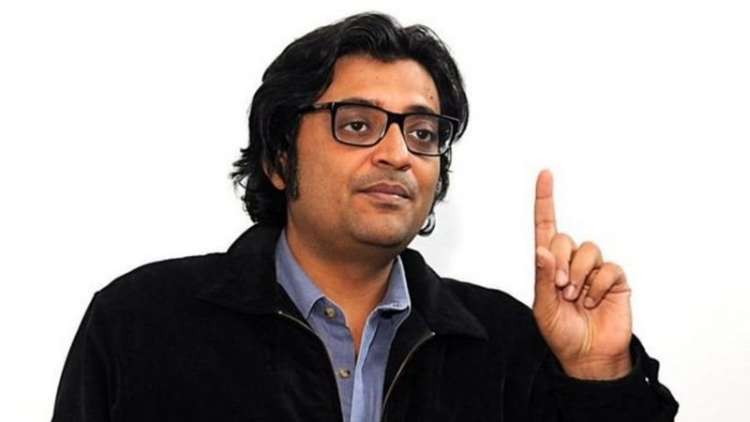
    Mumbai police have arrested Arnab Goswami, founder of Republic TV, for his alleged role in a two-year-old suicide case, prompting journalists to call this an assault on media freedom.

    Reports in India media stated the controversial anchorperson was detained for investigation over his alleged role in the death of an architect who designed his studio. Anvay Naik took his life in 2018 and his wife accused Goswami of not paying his fee.

    Goswami and Republic TV network deny the allegation.

    As the police team arrested Goswami from his house, videos making rounds on social media showed scuffles taking place between Goswami and the police team. The Republic TV also claimed that the police “manhandled” Goswami’s family members.

    The arrest of the Indian journalist known for his aggressive style of questioning has been denounced by the media professionals, who termed it an attack on press freedom.

    They said they would speak up for Arnab Goswami despite the fact that the latter failed to do so when his peers were targetted by the government.

    The Editors Guild of India, a body of India’s editorial leaders, also came forward to defend the journalist.

    Another journalist expressed concerns over the increase in attacks on press freedom.

  • US Presidential Race 2020: Twitter flags Trump’s tweet claiming effort to ‘steal election’

    US Presidential Race 2020: Twitter flags Trump’s tweet claiming effort to ‘steal election’

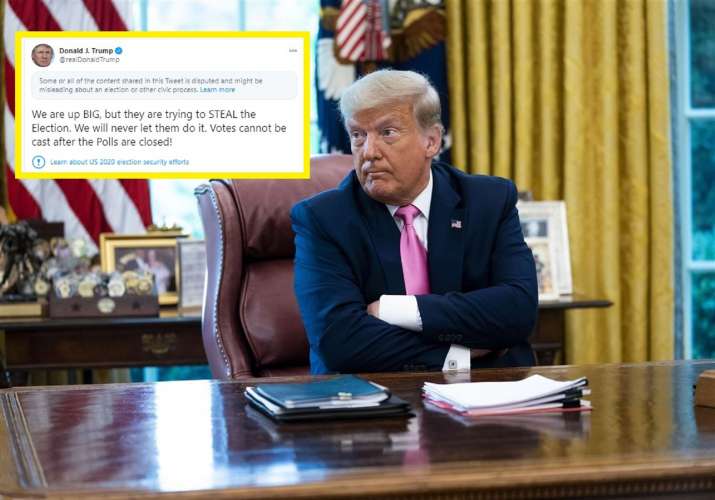
    Twitter has flagged United States (US) President Donald Trump’s tweet alleging an effort to “steal the election” as a neck-and-neck contest continues between the incumbent president and Democratic challenger Joe Biden for the key to the White House.

    “We are up BIG, but they are trying to STEAL the election. We will never let them do it. Votes cannot be cast after the polls are closed!” Trump had tweeted.

    A warning hiding the tweet read, “Some or all of the content shared in this tweet is disputed and might be misleading about an election or other civic process.”

    It, however, can be viewed by clicking on Twitter’s statement being displayed on Trump’s feed.

    US ELECTION UPDATE:

    By the time this report was filed, Trump had the lead over Democratic rival Joe Biden in the vital battleground of Florida and other US swing states, but Biden pinned his White House hopes on Arizona and a “blue wall” of three Rust Belt states that could take days to count their votes.

    Biden’s hopes for a decisive early defeat of Trump faded as the president took solid leads in Florida, Georgia, Ohio and Texas. Fox News projected Trump would win Florida, a must-win state in his quest for 270 Electoral College votes.

    Biden, 77, was eyeing the so-called “blue wall” states of Michigan, Wisconsin and Pennsylvania that sent Trump, 74, to the White House in 2016 for possible breakthroughs, although vote counting could stretch for hours or days there.

    Trump held early leads in those three states, but much of that was built on Republican-heavy Election Day voting. The counting of Democratic-heavy mail-in ballots in all three states was expected to take hours or days. In Wisconsin and Pennsylvania and much of Michigan, mail-in ballots were not processed until Election Day.

    Winning those three states would be enough to give Biden an Electoral College victory. Fox News projected Biden would win Arizona, another state that voted for Trump in 2016, giving him more options to get to 270 Electoral College votes.

    Even without Pennsylvania, Biden wins in Arizona, Michigan and Wisconsin, as well as a congressional district in either Maine or Nebraska, which apportion their electoral votes by district, would put him in the White House, as long as he also holds onto the states that Trump lost in 2016.

  • Biden wins California, Trump wins Florida; race close in other battlegrounds

    Biden wins California, Trump wins Florida; race close in other battlegrounds

    US President Donald Trump has defeated Democratic rival Joe Biden in the vital battleground state of Florida on Tuesday, while other competitive swing states that will help decide the election, including North Carolina, remained up in the air.

    Florida was widely seen as a must-win state for Trump in his quest for the 270 Electoral College votes needed to win the presidency. Electoral College votes are assigned to each state, in part based on their population.

    Biden won California, Oregon and Washington state, while President Donald Trump won Idaho.

    California, Oregon and Washington are all liberal states, while Idaho is conservative.

    California has 55 electoral votes, the biggest haul of any state. It’s also the home of Biden’s running mate, Senator Kamala Harris. She served as the San Francisco district attorney and the state’s attorney general before winning election to the Senate in 2016.

    Biden still has multiple paths to the 270 electoral votes he needs without Florida despite having spent lots of time and money trying to flip the state that backed Trump in 2016.

    Early wins

    Soon after the polling time ended, AP reported that President Trump had won Kentucky, and Biden had carried Vermont.

    There were also some predictable victories for each candidate, with Trump taking Alabama, Mississippi and Oklahoma and Biden winning Massachusetts, his home state of Delaware and Virginia, a former battleground that has become a Democratic stronghold.

    Trump also took West Virginia, South Carolina, Tennessee, Arkansas, Indiana, Louisiana, Nebraska, Nebraska’s 3rd Congressional District, North Dakota, South Dakota and Wyoming.

    Meanwhile, Biden won Connecticut, Illinois, Maryland, Massachusetts, New Jersey, Rhode Island, New Mexico, New York, the District of Columbia and Colorado.

    Voters, many wearing masks and maintaining social distancing to guard against the spread of the coronavirus, experienced long lines in a few locales and short waits in many other places. There were no signs of disruptions or violence at polling sites, as some officials had feared.

    The winner — who may not be determined for days — will lead a nation strained by a pandemic that has killed more than 231,000 people and left millions more jobless, racial tensions and political polarisation that has only worsened during a vitriolic campaign.

    Control of the Senate is at stake, too: Democrats needed to net three seats if Biden captured the White House to gain control of all of Washington for the first time in a decade. The House was expected to remain under Democratic control.

    A new anti-scaling fence was erected around the White House, and in downtowns from New York to Denver to Minneapolis, workers boarded up businesses lest the vote lead to unrest.

    With the worst public health crisis in a century still fiercely present, the pandemic — and Trump’s handling of it — was the inescapable focus for 2020.

    For Trump, the election stood as a judgment on his four years in office, a term in which he bent Washington to his will, challenged faith in its institutions and changed how America was viewed across the globe.

    Rarely trying to unite a country divided along lines of race and class, he has often acted as an insurgent against the government he led while undermining the nation’s scientists, bureaucracy and media.

    At the White House on Tuesday night, more than 100 family members, friends, donors and staff were set to watch returns from the East Room.

    Trump was watching votes come in upstairs in the residence with a few close aides. Most top campaign officials were monitoring returns from a “war room” set up in the Eisenhower Executive Office Building.

    Biden spent the day last-minute campaigning in Scranton, Pennsylvania, where he was born, and in Philadelphia with a couple of local stops in Wilmington, Delaware, where he was spending Election Night.

    The president began his day on an upbeat note, predicting that he’d do even better than in 2016. But during a midday visit to his campaign headquarters, he spoke in a gravelly, subdued tone.

    “Winning is easy,” Trump told reporters. “Losing is never easy, not for me it’s not.”

    Trump left open the possibility of addressing the nation on Tuesday night, even if a winner hadn’t been determined. Biden was also scheduled to give a nighttime speech from Wilmington.

    “I’m superstitious about predicting what an outcome’s gonna be until it happens […] but I’m hopeful,” said Biden. “It’s just so uncertain […] you can’t think of an election in the recent past where so many states were up for grabs.”

    With the coronavirus now surging anew, voters ranked the pandemic and the economy as top concerns in the race between Trump and Biden, according to AP VoteCast, a national survey of the electorate.

    Voters were especially likely to call the public health crisis the nation’s most important issue, with the economy following close behind. Fewer named health care, racism, law enforcement, immigration or climate change

    The survey found that Trump’s leadership loomed large in voters’ decision-making. Nearly two-thirds of voters said their vote was about Trump — either for him or against him.

    The momentum from early voting carried into Election Day, as an energised electorate produced long lines at polling sites throughout the country.

    Voters braved worries of the coronavirus, threats of polling place intimidation and expectations of long lines caused by changes to voting systems, but appeared undeterred as turnout appeared it would easily surpass the 139 million ballots cast four years ago.

    A report said that the US is on course to see the highest voter turnout in more than a century.

    No major problems arose on Tuesday, outside the typical glitches of a presidential election: Some polling places opened late, robocalls provided false information to voters in Iowa and Michigan, and machines or software malfunctioned in some counties in the battleground states of Ohio, Pennsylvania, Georgia and Texas.

    The cybersecurity agency at the Department of Homeland Security said there were no outward signs by midday of any malicious activity.

    The record-setting early vote — and legal skirmishing over how it would be counted — drew unsupported allegations of fraud from Trump, who had repeatedly refused to guarantee he would honor the election’s result.

    Referendum on Trump

    Supporters of both candidates called the election a referendum on Trump and his tumultuous first term. No US president has lost a re-election bid since Republican George H.W. Bush in 1992.

    Among the most closely contested states that are expected to determine the outcome are Pennsylvania, Florida, Wisconsin, Michigan, North Carolina, Arizona and Georgia, with Democrats hoping that Biden may even threaten Trump in states that once seemed certain to go Republican such as Ohio, Iowa and Texas.

    Trump is seeking another term in office after a chaotic four years marked by the coronavirus crisis, an economy battered by pandemic shutdowns, an impeachment drama, inquiries into Russian election interference, US racial tensions and contentious immigration policies.

    Biden is looking to win the presidency on his third attempt after a five-decade political career including eight years as vice president under Trump’s predecessor, Barack Obama.

    Biden has promised a renewed effort to fight the public health crisis, fix the economy and bridge America’s political divide. The country this year was also shaken by months of protests against racism and police brutality.