Category: FOREIGN

  • It’s here: What to watch on Election Day in US

    It’s here: What to watch on Election Day in US

    The US Election Day is finally here.

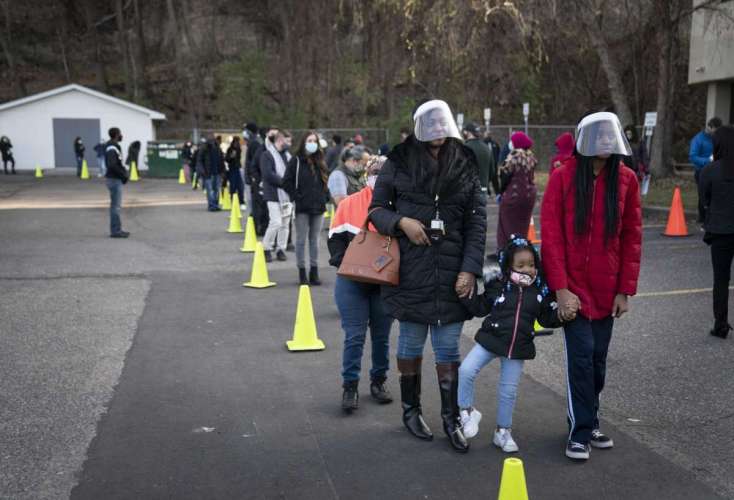
    Or at least what is still called Election Day, since nearly 100 million Americans had already cast ballots by Tuesday. That’s the result of an election system that has been reshaped by the worst pandemic in a century, prompting many voters to take advantage of advance voting rather than head to polling places in person at a time when coronavirus cases are rising.

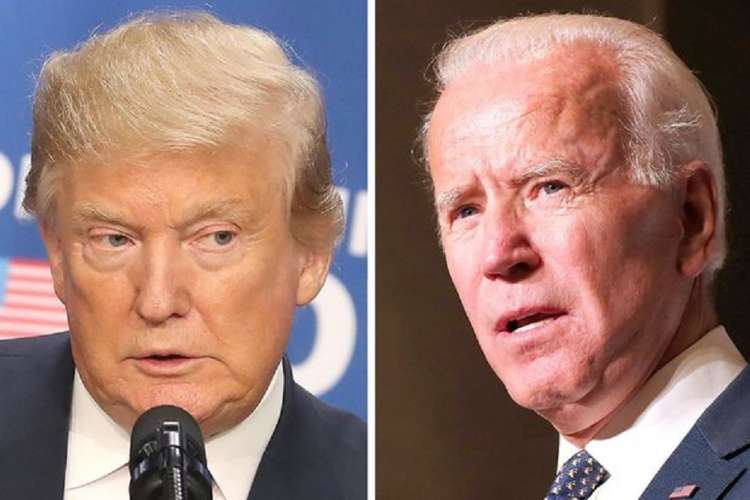
    Here’s what to watch as the final votes for US President Donald Trump and Democratic challenger Joe Biden are cast:

    What do Americans want from a president?

    Elections are always about where Americans want to steer the country. That’s especially true this year as the US confronts multiple crises and is choosing between two candidates with very different visions for the future.

    Trump has downplayed the coronavirus outbreak and panned governors — virtually all Democrats — who have imposed restrictions designed to prevent the spread of the disease. He has bucked public health guidelines by holding his signature campaign rallies featuring crowds of supporters — often unmasked — packed shoulder to shoulder.

    Biden has said he’d heed the advice of scientists. He’s pledged to work with state and local officials across the country to push mask mandates and has called on Congress to pass a sweeping response package.

    The candidates also hold distinctly different views on everything from climate change to taxes to racial injustice.

    Trump cast protests over systemic racism across the US this year as radical and has emphasised a “law and order” message to appeal to his largely white base. Biden acknowledges systemic racism, picked the first Black woman to appear on a major party’s presidential ticket and has positioned himself as a unifying figure.

    Whose turnout approach wins?

    The two parties took wildly different approaches to contacting voters amid the pandemic.

    Democrats stopped knocking on doors in the spring, going all-digital and phone. They resumed limited in-person contacts in September. Republicans continued traditional field work the entire campaign.

    The GOP can point to success in increasing their voter registration in battleground states. Democrats can point to their early voting success, including from notable slices of new voters. But only the final tally will vindicate one strategy or the other.

    Will voting be peaceful?

    Each major party can install official poll watchers at precincts. It’s the first time in decades Republicans could use the practice after the expiration of a court order limiting their activities. So it’s an open question how aggressive those official poll watchers will be in monitoring voters or even challenging eligibility.

    The bigger issue is likely to be unofficial “poll watchers” — especially self-declared militias. Voter intimidation is illegal, but Trump, in the Sept 29 presidential debate, notably refused to state plainly that he’d accept election results and instead said he is “urging my supporters to go into the polls and watch very carefully, because that’s what has to happen. I am urging them to do it.”

    In Michigan, where federal authorities recently arrested members of anti-government paramilitary groups in an alleged plot to kidnap Democratic Governor Gretchen Whitmer, the Democratic secretary of state tried to impose a ban on carrying firearms openly at a polling place. A Michigan judge struck down the order.

    Whiter the exurbs and smaller cities?

    Trump’s reelection depends on driving up his margins in rural areas and smaller towns and cities — those expansive swaths of red on the county-by-county results map from 2016.

    But acres don’t vote, people do, and Biden is casting a wide demographic and geographic net. His ideal coalition is anchored in metro areas, but he hopes to improve Democratic turnout among nonwhite voters and college-educated voters across the map.

    There are places where the competing strategies overlap: exurban counties — those communities on the edges of the large metropolitan footprints — and counties anchored by smaller stand-alone cities. Both campaigns will be closely watching places like Forsyth County, Georgia, where 2012 Republican nominee Mitt Romney won 80 per cent of the vote but Trump’s share dropped 10 points, and Montgomery County, Ohio, which flipped from Democrat Barack Obama to Trump.

    A 1968 redux? How about 1980?

    Trump spent considerable energy this year posturing as a “law and order” president, seeking to replicate 1968, when widespread unrest in the US benefited Republican Richard Nixon as he built his “silent majority”. But Nixon wasn’t the incumbent in 1968. In fact, the political atmosphere was so bad for President Lyndon Johnson that the Democrat didn’t seek reelection.

    Many Democrats and some Republicans are now pointing more at 1980, when Republican Ronald Reagan trounced President Jimmy Carter and the GOP flipped a whopping 12 Democratic Senate seats. Trump’s standing in the polls over 2020 has tracked only slightly above where Carter spent much of the 1980 election year, as he battled inflation, high unemployment and the Iran hostage crisis. But what appeared a tight race on paper as late as October turned into a rout. Even Democratic heavyweights like Indiana Senator Birch Bayh and South Dakota Senator George McGovern, once a presidential nominee, fell.

    It’s a more polarised era four decades later. But the lesson is that Trump would defy history to win reelection amid such a cascade of crises and voter dissatisfaction.

    When will the race be called?

    Absentee voting amid coronavirus has changed the vote-counting timeline, and there aren’t uniform practices for counting across the states. That makes it difficult to predict when certain key battlegrounds might be called.

    For example, Pennsylvania and Michigan — battlegrounds Trump won by less than 1 percentage point in 2016 — aren’t expected to have complete totals for days. Florida and North Carolina, meanwhile, began processing early ballots ahead of time, with officials there forecasting earlier unofficial returns. But those two states also could have razor-thin margins.

    Early returns, meanwhile, could show divergent results. Biden’s expected to lead comfortably among early voters, who tend to skew toward Democrats. Trump is likely to counter with a lead among Election Day voters. Depending on which counties report which batch of votes first, perennially close states could tempt eager partisans to reach conclusions that aren’t necessarily accurate.
  • Anti-France protests continue, as Macron seeks understanding

    Anti-France protests continue, as Macron seeks understanding

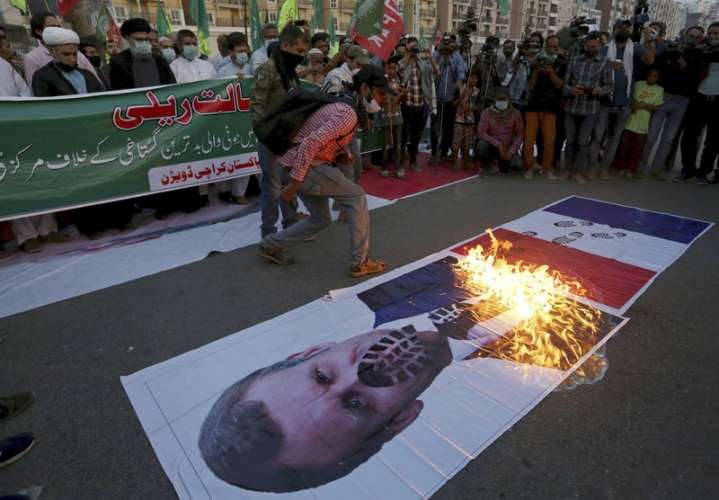
    Hundreds of protesters in Pakistan on Sunday burned effigies of France’s leader and chanted anti-French slogans, as President Emmanuel Macron tried to send a message of understanding to Muslims around the world.

    Smaller demonstrations in Lebanon, Turkey and India followed on anti-France protests across the Muslim world last week that were mostly led by Islamist groups, reported AP news agency.

    The renewed protests came after President Macron’s interview late Saturday in which he said that he understood the shock Muslims felt at caricatures depicting the Prophet Muhammad (PBUH). Macron was speaking with the Qatar-based Arabic TV station Al-Jazeera, where he also defended freedoms of expression and France’s secular values.

    Macron’s office said the interview was aimed at clarifying misunderstandings around France’s position and the president’s words which they say have been taken out of context.

    “I have never said that,” Macron told the Al-Jazeera interviewer, explaining that some false translations of his words in the media showed him to support the cartoons mocking Prophet Muhammad. “Those are lies.”

    Macron explained that all religions are subject to the freedom of expression and “these drawings.”

    “I understand and respect that people can be shocked by these cartoons,” he said. “But I will never accept that someone can justify the use of physical violence because of these cartoons. And I will always defend freedom of speech in my country, of thought, of drawing.”

    The interview set off a storm on social media, as many argued the Qatari station erred by giving space to the French President, whom they said failed to apologize for offending Muslims. Some criticized Macron for choosing Al-Jazeera, a station that has been at the center of political disputes between Arab Gulf nations and Turkey and viewed by many as giving airtime to hardliners and Islamist groups, outlawed in many countries in the Middle East.

    But for others, Macron’s appearance on Al-Jazeera was hailed as a success of the protest and boycott campaigns, which have forced the French president to address Muslims through an Arabic-speaking channel.

    The protests in Muslim-majority nations over the last week, and calls for boycotts of French products, began initially after Macron eulogized a French teacher in Paris who was decapitated for showing caricatures of the Prophet Muhammad in class. Two attacks followed on a group of worshippers in a church in Nice, and a Greek priest in Lyon.

    Islamist groups and hardliners around the Muslim world have rallied their supporters against the caricatures and the French government’s staunch secularist stance, keeping up protests over the last week targeting Macron.

    On Sunday in the Pakistani city of Karachi, hundreds of supporters of the main Islamist party, Jaamat-e-Islami, set an effigy of Macron on fire. The crowd of about 500 chanted against Macron and called for the boycott of French products.

    The crowd, which was smaller in number after larger rallies over the past days, marched toward the French Consulate in the city while security cordoned off the area.

    Earlier Sunday in Karachi, Shiite students marched for three kilometers (1.8 miles) chanting and pledging to sacrifice their lives for the honor of Islam and its prophet. Some 500 students, including a couple hundred women, dragged French flags on the floor and carried pictures of Macron. One banner depicted Marcon’s face with a big cross.

    “We condemn blasphemy of Islam and Prophet Muhammad by French President,” read a slogan scribbled on a French flag.

    The well-organized crowd wearing face masks were chanting praise for Prophet Muhammad.

    In central Pakistani city of Multan, hundreds of merchants rallied in a demonstration to call for a boycott of French products. The crowd also burned an effigy of Macron and chanted: “Muslims cannot tolerate blasphemy of their prophet” and “the civilized world should give proof of being civilized.”

    In Lebanon’s capital of Beirut, a dozen protesters marched to the French Embassy in the Lebanese capital, raising banners that read: “Anything but Prophet Muhammad,” and chanted in defense of Islam. Security was tight around the embassy.

    In Ahmedabad, a city in India’s Gujarat state, protesters pasted photographs of Macron onto streets overnight, leaving them for pedestrians and passing vehicles to go over on Sunday.

    Anti-France protests were held by Muslim groups on Friday in Mumbai, India’s financial and entertainment capital, and Bhopal, the capital of Madhya Pradesh state.

    Islamist groups on Sunday also held a rally in Istanbul.

    There has been tension between France and Turkey after Turkish President Recep Tayyip Erdogan questioned his French counterpart’s mental condition while criticizing Macron’s attitude toward Islam and Muslims.

  • Who will win the US presidential race?

    Who will win the US presidential race?

    Voters in the United States (US) will decide on November 3 whether Donald Trump remains in the White House for another four years.

    The Republican president is being challenged by Democratic Party nominee Joe Biden, who is best known as Barack Obama’s vice-president but has been in US politics since the 1970s.

    As election day approaches, polling companies will be trying to gauge the mood of the nation by asking voters which candidate they prefer.

    Biden is currently leading Trump in the national polls. The 10-poll average indicates that just over half of Americans intend to back Biden while Trump’s support trails this by around seven or eight points.

    BUT WHO WILL WIN?

    Trump triumphed in 2016 despite losing the popular vote, and pollsters misjudged the size of his support, so despite Biden’s lead, it is still difficult to predict who will win the keys to the White House.

    However, according to the latest polling averages, Biden’s lead over the incumbent is remaining solid despite a slight downfall in the wake of the US presidential debates and Trump’s diagnosis with coronavirus, The Telegraph reports.

    Who do you think will win the US presidential race?
    Donald Trump
    Joe Biden

    Biden’s polling average has remained above 50 per cent since October 4, and the Democratic nominee has consistently polled in the lead since the race began.

    If state polls are close to the final result, it suggests Biden is on course for gains in at least two swing states — Michigan and Wisconsin — and Arizona, which has been more likely to vote Republican in recent years.

    WHAT ELSE YOU NEED TO KNOW:

    In American politics, the term swing state refers to any state that could reasonably be won by either the Democratic or Republican presidential candidate by a swing in votes. These states are usually targeted by both major-party campaigns, especially in competitive elections.

    While Florida and Texas are too close to call — carrying 67 electoral college votes between them — Pennsylvania and its 20 votes for the presidency are leaning Democrat according to the latest polls.

    The electoral college is a process and not an actual place. To become president, what really counts is winning a majority of electoral votes. Each state has been allotted electoral votes based on the size of its population and whoever wins a particular state is expected to bag all the electoral votes allotted to that state.

    There are 538 electoral votes in total which means that a candidate needs to secure 270 to win.

    To put it simply, when the US public votes in the election, they are not voting for the president. Instead, they are voting for a group of people who will then choose the president and vice president.

    The word “college” here simply refers to a group of people with a shared task, BBC says. The electoral college meets every four years, a few weeks after election day, to carry out that task.

    Of the states that could go either way based on the latest polls, Iowa, Ohio, Pennsylvania and Florida all flipped to Donald Trump from the Democrats in the 2016 election, and his chances of retaining the presidency could rest on reclaiming victory here and holding on to Texas.

    Having voted Republican in every election since 2000, Texas is now a toss-up and could be pivotal to the final result.

  • Canada wants 1.2 million immigrants to accelerate economy

    Canada wants 1.2 million immigrants to accelerate economy

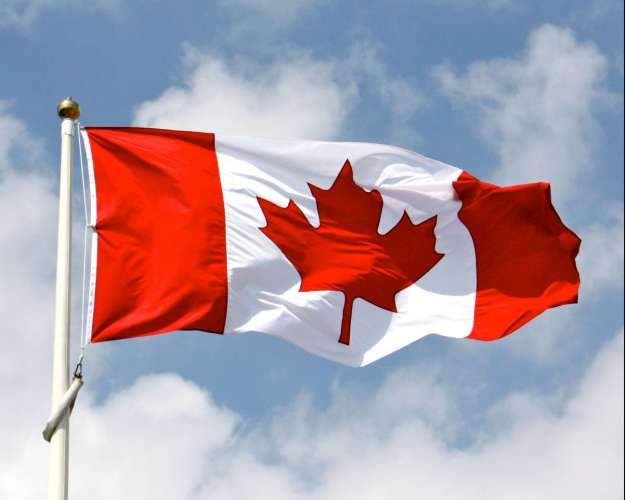
    Canada plans to bring in 1.2 million immigrants over the next three years to fill the gaps in its labour market and boost the economy, hard hit by the COVID-19 pandemic.

    Speaking to reporters in Ottawa, Immigration Minister Marco Mendicino said the federal government aims to accept 401,000 new permanent residents in 2021, another 411,000 in 2022, and then 421,000 in 2023.

    “Before the pandemic, our government’s goal to drive the economy forward through immigration was ambitious. Now it’s simply vital,” said Mendicino, who tabled the new immigration targets earlier in the day.

    Robert Falconer, a refugee and immigration policy researcher at the University of Calgary School of Public Policy, tweeted Friday that if the government meets its goals, the next three years will be “the highest years on record since 1911”.

    Canada’s immigration system has long been held up as a model, as it has historically brought in skilled workers as well as refugees and individuals seeking to reunite with family members already in the country.

    The country closed its borders to most immigrants in March due to COVID-19. Through August, it had settled 128,425 newcomers, Reuters news agency reported – less than half of the 341,000-person target it had set for 2020.

    The COVID-19 pandemic also has put glaring inequalities and longstanding problems with Canada’s immigration system under increased scrutiny.

    Many asylum seekers and refugees face poor working conditions, while several key industries in Canada, such as healthcare, food processing and farming, rely on workers whose precarious immigration status places them at risk of abuse.

  • VIDEO: Driver rams car into gate of Masjid al-Haram

    VIDEO: Driver rams car into gate of Masjid al-Haram

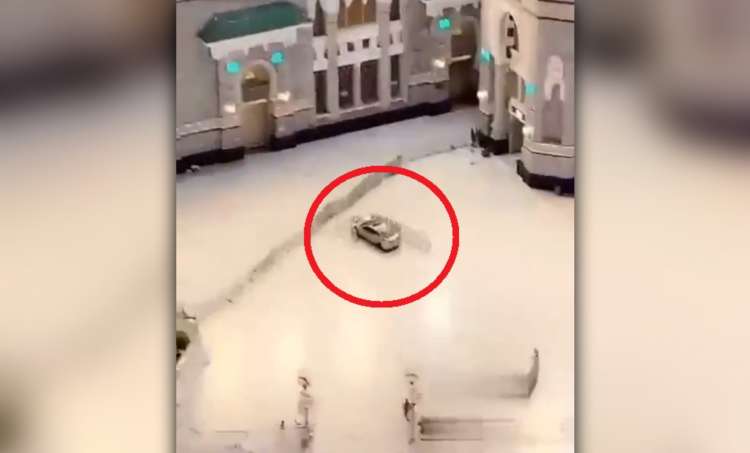
    A driver rammed his car into the outer-perimeter gate of Masjid al-Haram — the Grand Mosque in Makkah — late on Friday in an incident that did not cause any casualties, local media reported.

    Videos posted on social media showed the car plowing through plastic barricades in the outer courtyard of the mosque before driving straight into one of the large outer doors.

    Saudi newspaper Okaz reported that no civilians were injured in the crash, while other videos posted on social media showed a number of people pushing the vehicle away from the mosque complex.

    WATCH VIDEO:

    It said the driver, a Saudi citizen, was arrested and being referred to the public prosecutor for questioning.

    Saudi Arabia’s state-run channel Saudi Qur’an continued to broadcast live video from inside the mosque during and after the incident.

  • France: Woman beheaded inside church; two others dead, several injured

    France: Woman beheaded inside church; two others dead, several injured

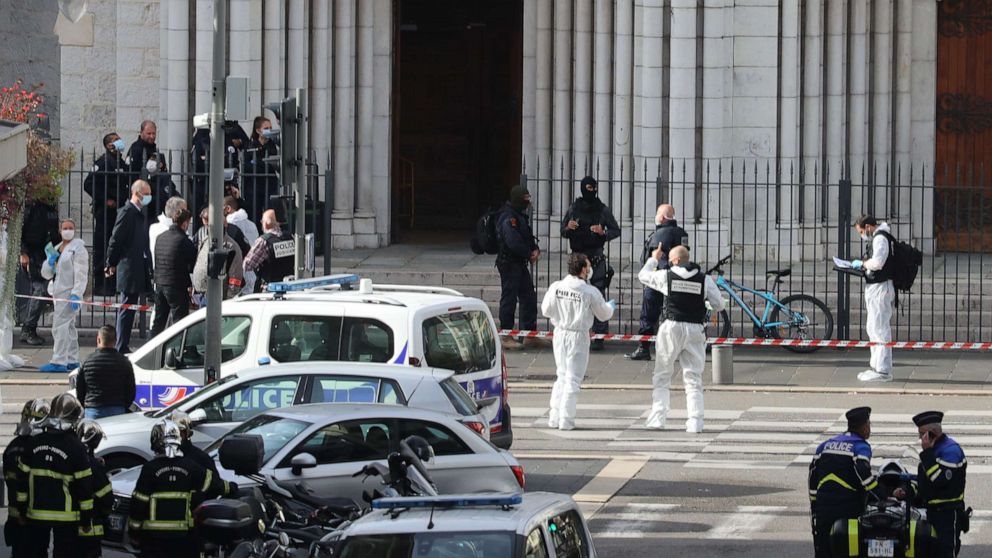
    A knifeman on Thursday beheaded a woman besides killing two others and injuring dozens of worshippers in an attack inside a church in Nice on the Côte d’Azur — the Mediterranean coast of southeastern France.

    According to reports, the killings happened at 9 am inside the Notre-Dame basilica in the city centre. There were unconfirmed reports in the French media that at least one of the victims had been beheaded.

    Police described the scene as a “vision of horror”.

    The attacker was shot and injured by police and was taken to hospital.

    READ: France urges Muslims to stop boycott of French products over blasphemous cartoons

    The mayor of Nice, Christian Estrosi, said the attacker had repeated “Allahu Akbar” several times while he was being arrested and handcuffed by police.

    He said a woman victim had been decapitated but he had no details of how the two others were killed.

    The attack comes less than two weeks after history teacher Samuel Paty, 47, was beheaded outside his high school after showing his class blasphemous caricatures, including one of Prophet Muhammad (PBUH) during a discussion on free speech.

    READ: Blasphemy protests: Qureshi wants non-existent Pakistani envoy back from France

    Police confirmed that three people had died in the attack.

    France’s anti-terrorist prosecutor has been brought in to investigate charges of “killing linked to a terrorist organisation”.

    President Emmanuel Macron is heading to Nice.

  • VIDEO: Egg on French president’s face over Islam remarks?

    French President Emmanuel Macron has come under criticism over his remarks on Islam after a teacher was beheaded on the streets of Paris allegedly for showing blasphemous cartoons to students.

    Amid this, a video of Macron having an egg thrown at his face as he is in conversation with some people is circulating on social media.

    WATCH VIDEO:

    The claim along with the video says Macron was attacked for his remarks on Prophet Mohammad (PBUH) and Islam, which have led to calls for a boycott of French products across the Muslim world.

    The Current has found the claim along with the video to be misleading. The video was shot in March 2017 in Paris days before the presidential elections in France, when Macron was a candidate for the top post.

    Using related keywords, we found some media reports carrying a similar video of the event, shot from a different angle.

    A report by Express says Macron was attacked by a protester with an egg when he was attending an agriculture show in Paris in March 2017.

    This was not the first time when Macron was egged. In 2016 too, an angry mob pelted eggs on Macron in Paris.

    So, it has been established that the video is more than three years old and has nothing to with Macron’s recent remarks on Islam.

    ‘WON’T GIVE INTO ISLAMIC RADICALS’:

    On Sunday, Macron tweeted, “We will not give in, ever to Islamic radicals.”

    “We do not accept hate speech and defend reasonable debate,” the French leader added.

    Calls to boycott French goods are already growing in the Arab world and beyond after Macron criticised Islamists and vowed not to “give up cartoons” depicting the Holy Prophet (PBUH).

    Macron’s initial comments, on Wednesday, had come in response to the beheading of a teacher, Samuel Paty, outside his school in a suburb outside Paris earlier this month, after he had shown the blasphemous cartoons during a class he was leading on free speech.

    With the French president pledging to fight “Islamist separatism”, which he said was threatening to take control in some Muslim communities around France, hashtags such as the #BoycottFrenchProducts in English and the Arabic #ExceptGodsMessenger trended across countries, including Pakistan, Kuwait, Qatar, Palestine, Egypt, Algeria, Jordan, Saudi Arabia and Turkey.

  • Police arrest beggar who owns five buildings, has over $190,000 in bank accounts

    Police arrest beggar who owns five buildings, has over $190,000 in bank accounts

    Police in Egypt have arrested a 57-year-old beggar who owns five buildings and has nearly 3 million Egyptian pounds ($191,164) in bank accounts, local media reported.

    The woman had feigned a leg amputation and used a wheelchair while begging in several provinces of the country, private newspaper Al Masry Al Youm reported.

    Police investigations revealed that she had been seen begging, claiming physical paralysis while sitting in a wheelchair. She was later seen walking on foot after finishing her rounds, according to eyewitnesses.

    Police also found that the offender, identified by her first name as Nafisa, does not suffer from any illness, and owns five residential buildings in the governorates of Gharbia and Qaliubia and nearly LE3 million in two banks, the report said.

    She was referred to public prosecution for questioning.

    Two weeks ago, police in Pakistan found Rs85,000 in a beggar’s bag who had lost his consciousness after a vehicle hit him.

    As per reports, the incident happened on Quetta’s Saryab road, where a motorcyclist allegedly hit the beggar, leaving him unconscious.

    He was taken Civil Hospital by police. While he was being treated for his wounds, his bag was checked to find out his identity. The beggar had been carrying Rs85,000 and some change. The bills were kept in a very organised manner, sorted by denomination and bound in separate bundles.

    Police said that the amount has been kept “safe” and will be returned to the beggar when he recovers.

  • France urges Muslims to stop boycott of French products over blasphemous cartoons

    France has urged Arab countries to stop calls for boycotts of French products, while President Emmanuel Macron vowed the country would never give in to “Islamic radicals”.

    The French Foreign Affairs Ministry said in a statement released on Sunday that in recent days there had been calls to boycott French products, notably food products, in several Middle Eastern countries as well as calls for demonstrations against France over the publication of satirical cartoons of Prophet Muhammad (PBUH).

    “These calls for boycott are baseless and should stop immediately, as well as all attacks against our country, which are being pushed by a radical minority,” the statement said.

    On Sunday, Macron tweeted, “We will not give in, ever to Islamic radicals.”

    “We do not accept hate speech and defend reasonable debate,” the French leader added.

    Calls to boycott French goods are already growing in the Arab world and beyond after Macron criticised Islamists and vowed not to “give up cartoons” depicting the Holy Prophet (PBUH).

    Macron’s initial comments, on Wednesday, had come in response to the beheading of a teacher, Samuel Paty, outside his school in a suburb outside Paris earlier this month, after he had shown the blasphemous cartoons during a class he was leading on free speech.

    With the French president pledging to fight “Islamist separatism”, which he said was threatening to take control in some Muslim communities around France, hashtags such as the #BoycottFrenchProducts in English and the Arabic #ExceptGodsMessenger trended across countries, including Pakistan, Kuwait, Qatar, Palestine, Egypt, Algeria, Jordan, Saudi Arabia and Turkey.

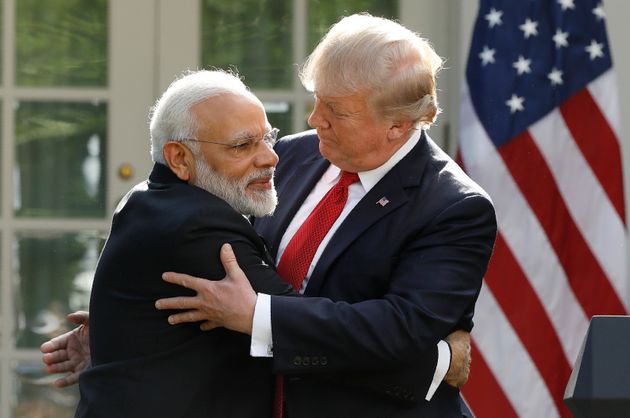
  • Howdy Modi: Trump calls India ‘filthy’ during final presidential debate

    Howdy Modi: Trump calls India ‘filthy’ during final presidential debate

    United States (US) President Donald Trump has described the air in India as “filthy” as he denounced Democratic rival Joe Biden’s plans to tackle climate change.

    At their second and final presidential debate, Trump renewed his criticism that action on climate change was unfair to the US.

    “Look at China, how filthy it is. Look at Russia, look at India — it’s filthy. The air is filthy,” Trump said at the debate in Nashville, adding, “I walked out of the Paris Accord as we had to take out trillions of dollars and we were treated very unfairly.”

    Trump has repeatedly blamed countries like India and China for not doing enough on climate change, labelling them as regions with air that is impossible to breathe. He has continuously argued that countries like China and India are benefiting the most from the Paris agreement.

    It is pertinent to mention here that the air in several cities in northern India is especially bad in winter months — November to February — when several factors, such as farmers burning crop stubble to clear their fields, vehicular and industrial pollution, festive fireworks and low wind speed, contribute to what doctors call a “deadly cocktail of poisonous gases”.

    Despite the spikes in air pollution year after year, few concrete steps have been taken to control it.

    https://youtu.be/g1vU8hVt1lU

    During the debate, Trump also charged that Biden’s climate plan was an “economic disaster” for oil states such as Texas and Oklahoma.

    Biden had said that climate change is “an existential threat to humanity. We have a moral obligation to deal with it.”

    “We’re going to pass the point of no return within the next eight to 10 years,” he said.

    The planet has already warmed by around one degree Celsius (34 degrees Fahrenheit) from pre-industrial levels, enough to boost the intensity of deadly heatwaves, droughts and tropical storms.

    Trump’s remarks come days before Secretary of State Mike Pompeo and Defense Secretary Mark Esper visit New Delhi for talks on building the growing US-India partnership.

    At the first presidential debate, Trump also spoke critically of India, questioning its coronavirus data amid criticism of Trump’s handling of the pandemic.

    Read more – The hideous face of India under Modi

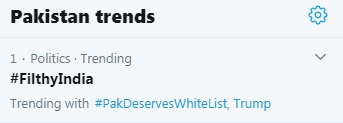
    Soon after Trump’s remarks, “filthy” and “Howdy! Modi” started trending on Twitter though many used the hashtag o highlight their concerns. The “Howdy, Modi!” event, held in Houston in September 2019 was attended by nearly 50,000 people. It was billed as one of the largest ever receptions for a foreign leader in the US and Mr Trump had called it a “profoundly historic event”.

    https://twitter.com/Su4ita/status/1319483073503744000?s=20
    https://twitter.com/dharmicverangna/status/1319537322291990530?s=20

    Meanwhile, #FilthyIndia is also trending on Twitter Pakistan.