Category: FOREIGN

  • Saudi Arabia to resume Umrah gradually from October 4

    Saudi Arabia will gradually resume the year-round Umrah pilgrimage from October 4, the interior ministry said on Tuesday, seven months after it was suspended because of the coronavirus pandemic.

    In the first stage, “6,000 citizens and residents within the Kingdom will be allowed to perform the umrah per day from October 4”, the ministry said in a statement published by the official Saudi Press Agency.

    Visitors from outside the Kingdom will be permitted from November 1, when Umrah’s capacity will be raised to 20,000 pilgrims per day, the ministry said.

    The Umrah, which refers to the Islamic pilgrimage to Makkah that can be undertaken at any time of year, attracts millions of Muslims from across the globe each year.

    The ministry said Umrah would be allowed to resume at full capacity once the threat of the pandemic is eliminated.

    Saudi Arabia suspended the Umrah in March and scaled back the annual Hajj over fears that the coronavirus could spread to the holiest cities.

    IN PICTURES: Hajj 2020

    The decision to resume Umrah was in response to the “aspirations of Muslims home and abroad” to perform the ritual and visit the holy sites, the interior ministry said.

    Saudi Arabia’s custodianship of Makkah and Madinah – two holiest sites – is seen as the Kingdom’s most powerful source of political legitimacy.

    The holy sites, which draw millions of pilgrims every year, are a key revenue earner for Saudi Arabia, which hopes to welcome 30 million pilgrims to the Kingdom annually by 2030.

  • Ex-foreign minister Khawaja Asif under fire for glorifying Taliban

    Ex-foreign minister Khawaja Asif under fire for glorifying Taliban

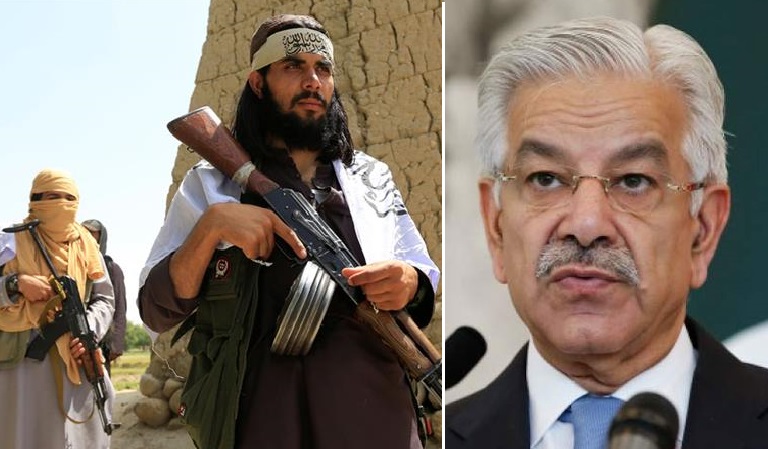
    As United States (US)-Taliban talks continue with the aim of achieving peace in Afghanistan, Pakistan Muslim League-Nawaz (PML-N) lawmaker and former foreign minister Khawaja Asif has glorified the fundamentalist political movement and military organisation in a statement that drew strong criticism.

    “You may have the power, but God is with us… Allah is great,” he wrote while tweeting a picture of Taliban leader Mullah Abdul Ghani Baradar with US Secretary of State Mike Pompeo.

    His statement wasn’t very well received by netizens who trained guns at the ex-foreign minister for having forgotten how the Taliban not only brutalised the people of Afghanistan but also harboured militants who targeted many, including Asif’s boss and former prime minister (PM) Nawaz Sharif.

    https://twitter.com/ZahirMoein/status/1305395808439799808

    Meanwhile, after nearly two decades of war that has killed tens of thousands, peace talks between the Afghan government and Taliban have opened in Doha.

    Key speakers at the opening ceremony at a hotel included Afghanistan’s High Council for National Reconciliation Chairperson Abdullah Abdullah, Mullah Baradar and Pompeo.

    The negotiations, where the two warring sides will sit face-to-face for the first time, will start today (Monday).

    For his part, Abdullah on Saturday spoke about seeking a dignified and lasting peace.

    “I believe that if we give hands to each other and honestly work for peace, the current ongoing misery in the country will end,” Abdullah said, calling for a “humanitarian ceasefire”.

  • VIDEO: Pangong Lake of ‘3 Idiots’ fame now a part of China?

    VIDEO: Pangong Lake of ‘3 Idiots’ fame now a part of China?

    Amid the ongoing border standoff between Chinese and Indian soldiers in Ladakh, it is being speculated that the Pangong Tso area under Indian control, and of Bollywood flick ‘3 Idiots’ fame, has been taken over by China.

    As per the details, a video clip of Chinese tourists enjoying a boat ride purportedly at the Pangong Tso Lake, which among many others was also shared by Indian National Congress (INC) leader Salman Nizami, has gone viral.

    Pangong Tso is an endorheic lake in the Himalayas. Situated at an elevation of 4,225 metres, it is 134 kilometres long and extends from Ladakh in India to the Tibetan Autonomous Region in China. Line of Actual Control (LAC) between China and India also passes through the Pangong Lake, effectively dividing it into two parts.

    India controls the 45 km-long western portions of the 135 km-long lake while the rest is under Chinese control. The picture-perfect lake is also the place where 3 Idiots’ ending with Aamir Khan, Kareena Kapoor and co was shot.

    “Chinese tourists in Ladakh’s Pangong Lake. Can someone ask ’56 inch’ Chowkidar [offensive comment apparently against Indian Prime Minister (PM) Narendra Modi] if Indians now need a visa to visit Pangong Lake?” Nizami tweeted.

    https://twitter.com/SalmanNizami_/status/1303254283207413765

    National convener of INC’s social media department, Saral Patel, also shared the video.

    It was retweeted by INC spokesperson Shama Mohamed with the comment, “Chinese tourists are apparently vacationing at Pangong Tso & PM [Narendra] Modi is still in agreement with China’s lie that there have been no incursions or annexation of Indian territory.”

    While there have been no official statements over the status of the lake from Beijing or New Delhi, it is likely that the videos being circulated have been shot on the Chinese side of the lake, which is reportedly open for tourists.

    Earlier, an advertisement video shared by some Twitter users had claimed that China will facilitate the return of international tourists to Pangong Tso.

    The 45-second footage on Twitter showed the scenic landscape of the Pangong Tso.

    The ad video, which has received several retweets, was uploaded by users who used both Mandarin and Chinese as the medium of communication. Although they appeared to be handles managed by Chinese nationals, it could not be confirmed as none of the accounts were verified by Twitter.

    https://twitter.com/evazhengll/status/1301555381810991111

    “You only need to take a Chinese visa to enjoy cold air, flocks of birds and blue water. We have also placed a monument on a place where movie 3 idiots was made. Come, visit and enjoy China,” one of the users tweeted.

    https://twitter.com/CNPakWW/status/1301557920472141828

    Even though the video appears to have been produced in China, it could not be ascertained whether the clip is new or old.

    However, Shen Shiwei, a Chinese journalist working for state-owned CGTN, tweeted that the lake was open for tourists for quite a long time.

    “Pangong Tso in China is open to tourists at home and abroad for quite a long time. The lake is near the Chinese national highway and is a good place for self-driving travel. We have a resort on the lake here,” he said.

  • Imame Kaaba wants Muslims to make peace with Jews; hints at normalisation of Saudi-Israel ties

    Imame Kaaba wants Muslims to make peace with Jews; hints at normalisation of Saudi-Israel ties

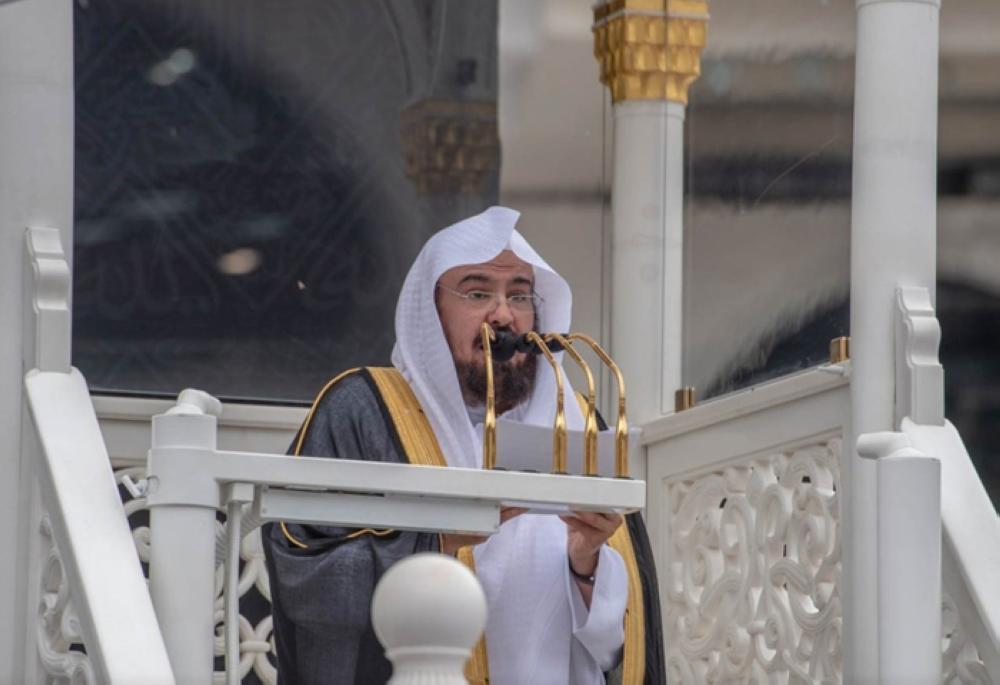
    A debate is continuing on social media ever since Abdulrahman al-Sudais, the Imam of the Grand Mosque of Makkah, hinted at possible normalisation of ties between Saudi Arabia and Israel during the Friday sermon.

    Imam Sudais is a senior religious leader in Saudi Arabia and is also the president of the General Presidency for the Affairs of the Two Holy Mosques.

    In his Friday sermon, Imam Sudais spoke of peace and kindness with non-Muslims, making specific reference to Jews. He highlighted the importance of Muslims respecting other faiths and underlined several stories about interactions between Jewish people and Prophet Mohammad (PBUH).

    He mentioned how the Prophet (PBUH) dealt with a Jewish neighbour who eventually converted to Islam and also advised people to remain loyal and obedient towards the leaders and authorities and to stay away from the “misguided factions and groups”.

    The Imam’s remarks about peaceful coexistence are not controversial in any way but the timing of the sermon amid geopolitical changes in the region has sparked an online debate as they came less than a month after the United Arab Emirates (UAE) — a close ally of the Kingdom in the Gulf — recognised Israel, leaving questions on Saudi Arabia’s next move in this regard.

    The statements have caused unrest among Muslims on social media who blame the cleric for exploiting the platform of Islam’s holiest mosque to make ground for the Saudi government.

    Here’s what Twitterati have to say about it:

    https://twitter.com/d_iplo/status/1301928122602971137

    While one user said that the sermon was against Imam Sudais’ traditional stance on the Al-Aqsa Mosque, another one shared the videos of two contrasting sermons of the Imam — one, in which he calls to save Al-Aqsa Mosque from the abomination of aggressors, and the second, which prepares the ground for acceptance of Israel.

    https://twitter.com/be4after/status/1302223008199774209
    https://twitter.com/aqadir23/status/1302557731362992129

    Muhammad al-Mukhtar al-Shinqiti, a Mauritanian author, saw the sermon as a misuse of the Grand Mosque to promote normalisation and call for the obedience of the “murderous rulers”.

    Have anything to add to this story? Let The Current know in the comments below.

  • French president refuses to condemn blasphemous caricatures of Holy Prophet (PBUH)

    French President Emmanuel Macron has defended the decision by Charlie Hebdo magazine to re-publish blasphemous caricatures of Prophet Muhammad (PBUH), saying “we have freedom of expression and freedom of belief”.

    But Macron, speaking on a visit to Lebanon on Tuesday, said it was incumbent on French citizens to show civility and respect for each other, and avoid a “dialogue of hate”.

    “It’s never the place of a president to pass judgment on the editorial choice of a journalist or newsroom, never. Because we have freedom of the press,” Macron said.

    The infamous French magazine is republishing the offensive caricatures, which unleashed a wave of anger in the Muslim world, to mark the start of the trial of alleged accomplices in the militant attack against it in 2015.

    Most cartoons were first published by a Danish newspaper in 2005 and then by Charlie Hebdo a year later.

    “We will never lie down. We will never give up,” Editor Laurent Sourisseau wrote in a piece to accompany the front cover that will be published in print on Wednesday.

    Twelve people, including some of the magazine’s cartoonists, were killed when Said and Cherif Kouachi stormed the Paris offices of Charlie Hebdo and sprayed the building with automatic gunfire.

    The Kouachi brothers and a third gunman who killed five people in the 48 hours that followed the Charlie Hebdo massacre were shot dead by police in different stand-offs, but 14 of their alleged accomplices go on trial on Wednesday.

    The decision to republish the offensive cartoons will be seen by some as a defiant gesture in defence of free expression.

    But others may see it as a renewed provocation by a magazine that has long courted controversy with its satirical attacks on religion.

    After the 2006 publication of the cartoons, people online warned the weekly would pay for its mockery. For Muslims, any depiction of the Holy Prophet (PBUH) is blasphemous.

  • Pakistan condemns burning of Holy Quran at anti-Islam protests in Sweden, Norway

    Pakistan condemns burning of Holy Quran at anti-Islam protests in Sweden, Norway

    The Foreign Office on Sunday strongly condemned recent incidents in Sweden and Norway in which copies of the Holy Quran were reportedly burnt, saying that “freedom of speech can’t justify religious hatred”, Dawn reported.

    In a statement issued on Twitter, FO spokesperson Zahid Hafeez Chaudhri further said:

    “The rise of such Islamophobic occurrences goes against the spirit of any religion.”

    “Ensuring respect for religious beliefs of others is a collective responsibility and is absolutely critical for global peace and prosperity,” Chaudhri added.

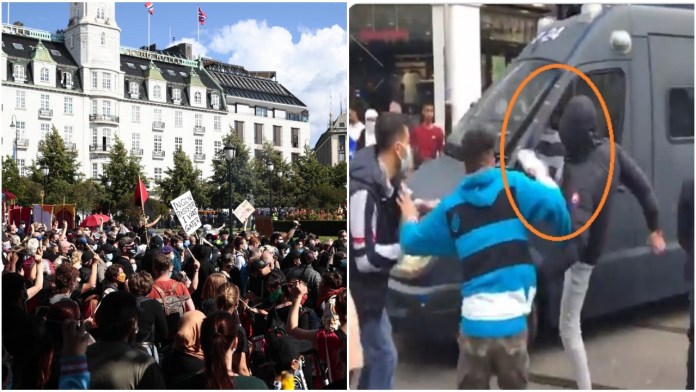
    A day earlier, a riot broke out in the southern Swedish town of Malmo, where at least 300 people had gathered to protest against anti-Islam activities, police said.

    Protesters were throwing objects at police officers and car tyres had been set on fire, a police spokesman said. Earlier in the day, a copy of the Quran had been burned in Malmo by right-wing extremists.

    The demonstrations had escalated in the same place where the Quran had been burned, the spokesman added.

    Daily Aftonbladet said several anti-Islam activities had taken place in Malmo on Friday, including three men kicking a copy of the Quran between them in a public square.

    Meanwhile, at an anti-Islam protest on Saturday in Oslo, Sweden — held by the far-right group Stop the Islamisation of Norway (SION) — a protester tore out pages of the Quran and spat on them, Anadolu Agency reported.

  • UAE dispatches fighter jets to support allies against Turkey

    UAE dispatches fighter jets to support allies against Turkey

    The United Arab Emirates (UAE) is once again deploying its air force in support of allied countries that share its strong opposition to Turkey’s attempts to extend its military reach in the Eastern Mediterranean and Libya.

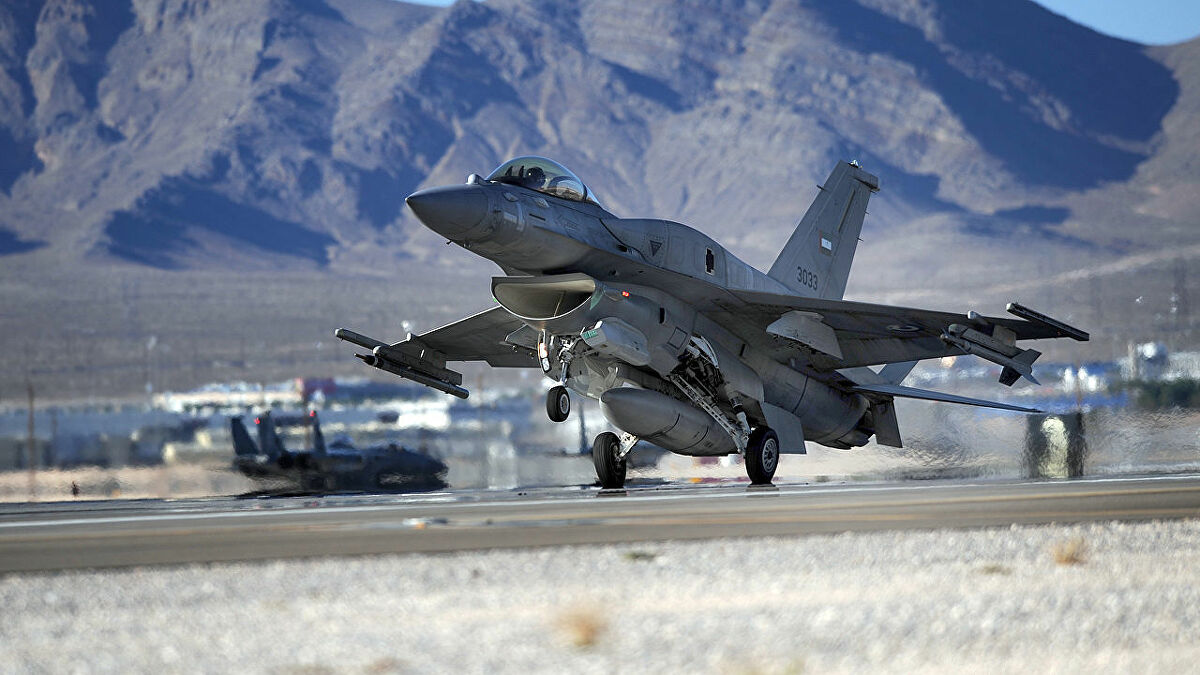
    The UAE is sending between two and four warplanes to the Greek island of Crete for joint training exercises with the Hellenic Air Force following talks between senior Greek and Emirati military officials. 

    The UAE’s air force previously participated in military exercises in Greece in 2019, with Emirati pilots flying alongside their Israeli counterparts, among others. 

    What’s notable about this deployment, however, is its timing. France has also just sent two Dassault Rafale jets to Crete in a show of support to Greece as its dispute with Turkey over gas and oil exploration and drilling rights in the Eastern Mediterranean and the delineation of maritime boundaries escalates.

    Turkey recently sent warships to escort a research ship for a drilling survey in waters claimed exclusively by Greece.

    On August 14, one of these warships suffered a minor collision with a Hellenic Navy warship that the Greek side said was an accident. On August 22, Turkish air and naval forces carried out exercises in the Aegean Sea that included F-16 jets in a show of force. 

    Turkey has a significantly larger air force than the UAE, as well as Greece, that consists of over 200 F-16s and 40 F-4 Phantoms. The UAE has over 70 F-16s and about 60 French-built Mirage 2000s. While smaller, the Emirati fleet flies more advanced F-16s than the Turks: the Block 60 one-seater E and two-seater F variants built especially for the UAE air force.

    Turkey and the UAE have been locked in an increasingly bitter cold war in recent years.

    Turkey’s incumbent ruling party, alongside its close ally Qatar, is a strong supporter and patron of Muslim Brotherhood groups across the region. The UAE and Saudi Arabia, on the other hand, strongly oppose the Brotherhood and support regimes that suppress it, such as President Abdel Fattah el-Sisi’s regime in Egypt. Both countries also began blockading Qatar in July 2017. Turkey and the UAE have also been on the polar opposite sides of regional proxy conflicts, most notably the one in Libya. 

    The UAE’s decision to send some fighter jets to demonstrate its support of Greece in its dispute with Turkey is another example of Abu Dhabi’s consistent opposition to Ankara’s regional policies in this multi-front cold war. 

    UAE allies Egypt and France also strongly oppose Turkey’s policies in the Eastern Mediterranean and support Greece. These policies also include Turkey’s drilling for natural gas in the Republic of Cyprus’ economic exclusion zone (EEZ) and its agreement with Libya’s UN-recognised Government of National Accord (GNA) to create an EEZ that claims huge swathes of the Mediterranean between their two distant coasts.

    Today, it’s still highly unlikely Turkey and the UAE jets will clash. Nevertheless, such a possibility cannot be totally dismissed out of hand so long as both rivals continuously find themselves facing each other down in tense flashpoints like the Eastern Mediterranean and volatile conflict zones like Libya.

    The article originally appeared on Forbes.

  • PM Imran declared Muslim world’s ‘Man of the Year’ by Jordanian institute

    PM Imran declared Muslim world’s ‘Man of the Year’ by Jordanian institute

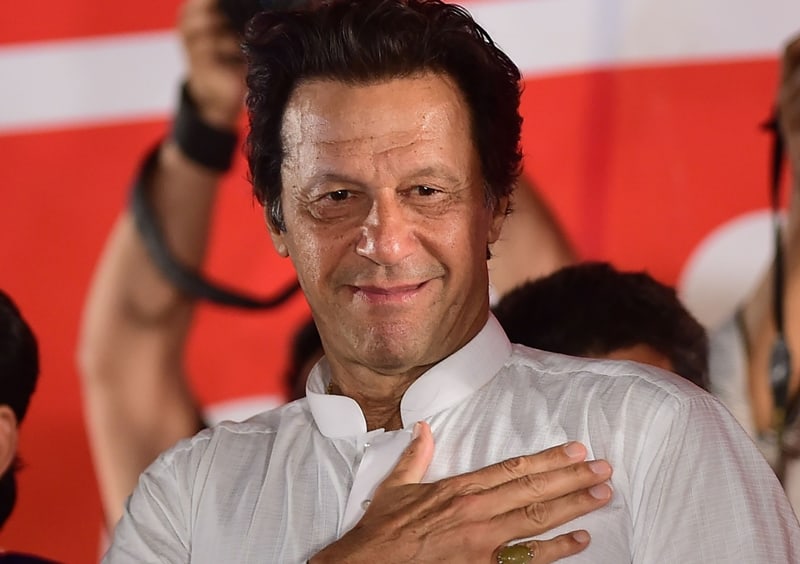
    Prime Minister (PM) Imran Khan has been declared as “Man of the Year” from the Muslim world, by the Jordan based Royal Islamic Strategic Studies Centre, an official said. “Jordan’s Royal Islamic Strategic Studies Centre named Prime Minister Imran Khan as ‘Man of the Year’ in its recent list of the most persuasive Muslims in the World”.

    In its latest edition “The World’s 500 Most Influential Muslims, 2020″ the center also named American Congresswoman Rashida Tlaib as “Woman of the Year”.

    Abdallah Schleifer, who is chief editor of “The Muslim 500” project, while declaring Khan as “Man of the year”, wrote that his quest for peace with neighboring India and his philanthropist work entitled him for the honor. Schleifer is Professor Emeritus of Journalism at the American University in Cairo.

    He added that he was impressed by Khan, launching a successful fund-raising campaign to establish a hospital devoted to treating cancer victims and research.

    Recalling Khan’s first address to the nation as prime minister in August 2018, the author said he genuinely wanted to normalise relations through trade, and settle the Kashmir dispute with India.

    “Khan also wrote three letters to India’s Prime Minister Narendra Modi calling for dialogue and lasting peace. Modi did not respond,” Schleifer noted.

    The centre also declared the US Congresswoman Rashida Tlaib, as the most prominent “Muslim Woman of the Year”.

    “American Congresswoman Rashida Tlaib (Democrat, Michigan) is this year’s Muslim 500 Woman of the Year,” the centre announced.

    She is the first Palestinian-American woman elected to the American Congress, as member of the House of Representatives, Royal Islamic Strategic Studies Centre said.

    The centre also included other top 50 influential Muslims personalities in its edition. They are Turkey’s President Recep Tayyip Erdogan, Emir of Qatar Sheikh Tamim bin Hamid Al-Thani, President Joko Widodo President of Indonesia, Sheikh Mohammed bin Zayed Al-Nahyan Crown Prince of Abu Dhabi, King Salman bin Abdul-Aziz Al-Saud King of Saudi Arabia, King Abdullah II Ibn Al-Hussein King of the Hashemite Kingdom of Jordan, King Mohammed VI King of Morocco and others.

    Eminent religious scholars Mufti Taqi Usmani and Maulana Tariq Jameel have also been named among the most influential Muslims.

    Maulana Tariq Jameel’s sermons focus on ‘self-purification, avoidance of violence, observance of Allah’s orders and pursuing the way of Holy Prophet Muhammad (Peace Be Upon Him).’ He has been named continuously as one of the 500 most influential Muslims in the world by the Royal Aal al-Bayt Institute for Islamic Thought in Jordan from 2013 to 2019.

    In 2019, the religious scholar stood 40th of a list ranking the world’s most “influential” Muslims. The annual publication was compiled by the Royal Islamic Strategic Studies Centre in Jordan and highlights people who are influential as Muslims. The publication defines influential as meaning “any person who has the power to make a change that will have a significant impact on the Muslim World”.

  • VIDEO: Dubai crown prince restricts access to his Mercedes SUV after bird builds nest on it

    VIDEO: Dubai crown prince restricts access to his Mercedes SUV after bird builds nest on it

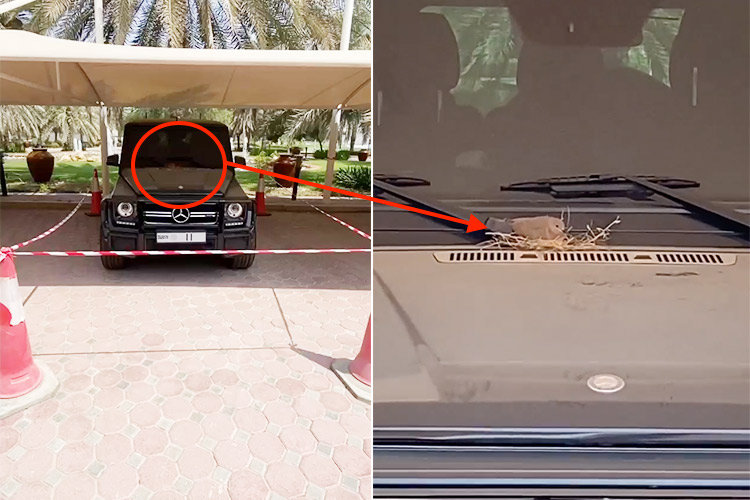
    Crown Prince of Dubai Sheikh Hamdan Bin Mohammed Bin Rashid Al Maktoum has cordoned off his car upon finding that a small bird had built a next on its hood, Gulf Today reported.

    As per the details, the crown prince on his Instagram shared a video of the bird nesting on his Mercedes-AMG G63 SUV parked within his residence in Dubai. 

    The video, which Sheikh Hamdan shot at a distance, shows the G-wagon cordoned off with red-and-white tape and he has told all personnel to stay away from the area so as to not disturb the bird.

    Reportedly an avid lover of nature, Sheikh Hamdan regularly shares his experiences across his social media platforms.

    Earlier this week, Hamdan shared videos and photos of the bird building the nest. Ever since, the royal has not been near his car and therefore told everyone to stay off the area.

    WATCH VIDEO:

    Hamdan Bin Mohammed bin Rashid Al Maktoum is the son of Sheikh Mohammed bin Rashid Al Maktoum and Sheikha Hind bint Maktoum bin Juma Al Maktoum, the senior wife of Mohammed. He is the second son of their 12 children and the fourth of his father’s children. Hamdan’s elder full brother was Sheikh Rashid bin Mohammed.

    He is popularly known as Fazza, the name under which he publishes his poetry, and which means “the one who helps” in Arabic.

    While the crown prince’s Instagram account with more than 10 million followers suggests his hobbies include animals, poetry, sports, photography and adventures, Hamdan Al Maktoum is also a licensed and a well-cultivated equestrian, a skydiver and a scuba diver. 

  • India continues celebrating arrival of Rafale jets that other countries dumped

    As India continues to celebrate the arrival of its Rafale jets, military experts are not only questioning its capabilities against United States (US) aircraft but are also raising questions why the Rafale jets failed to compete in the international arms markets and got dumped by a majority of nations.

    According to foreign media reports, Dassault’s Rafale was not India’s only choice as various other global firms expressed interest in the MMRCA tender. Six renowned aircraft manufacturers competed to bag the contract of 126 jets, which was hailed to be the largest-ever defence acquisition deal of India.

    The initial bidders were Lockheed Martin’s F-16s, Boeing’s F/A-18s, Eurofighter Typhoon, Russia’s MiG-35, Sweden’s Saab’s Gripen and Dassault’s Rafale.

    All aircraft were tested by the IAF and after careful analysis on the bids, two of them — Eurofighter Typhoon and Dassault Rafale — were shortlisted.

    Dassault received the contract to provide 126 fighter jets as it was the lowest bidder and the aircraft was said to be easy to maintain. After Rafale won the contract, the Indian side and Dassault started negotiations in 2012. Though the initial plan was to buy 126 jets, India scaled it down to 36, that too in fly-away condition.

    Despite boasting of awe-inspiring capabilities and selected by India after a mammoth testing & bidding process, the French origin jets didn’t see many buyers. Other than France and India, only Qatar and Egypt are using Rafale jets and that too in very limited numbers.

    As reported earlier by EurAsian Times, Russian aviation experts had claimed that Rafale jets would have been useless against the Chinese Airforce (PLAAF). The maximum speed of the Rafale jet is about Mach 1.8 compared to Chinese J-16s at Mach 2.2.

    The Rafale’s practical ceiling is also lower than the J-16s. Even in engine thrust, the Chinese J-16s aka Russian Su-35s are far superior to the French combat aircraft. Even if the Indian Air Force (IAF) was to deploy all 36 of its newly acquired jets, the technical superiority would still be on the side of China, claimed the Russian expert.

    The Rafale is one of the most expensive aircraft in the international market. India’s deal of 36 jets is worth Rs. 60,000 crores. Experts argue that the high cost is the result of many reasons including general inefficiency in the country’s defence sector, along with the small scale on which the Rafale is being produced in comparison to rival fighters such as the F-18, MiG-29 or F-35 due to which Rafale has not benefitted from economies of scale. This has contributed to its poor performance in the international markets.

    Rafale’s third buyer, India, previously proposed to acquire 126 jets under Make in India and not 36. However, it took five years for even the first five jets to arrive in India after Prime Minister Narendra Modi announced it in April 2015 during his trip to France.

    According to analysts, despite heavy marketing by the makers of Rafale, France’s relatively small and inefficient defence sector seems to have met its limit with the fighter program. The small production lines are unable to produce the aircraft quickly or efficiently and the French budget for research and development is smaller in contrast to the US or Russia.

    The aircraft is priced very steeply and most nations prefer to buy US jets not only because of the technical superiority but also to please the Americans instead of the French. The Rafales have seemingly lost the fight in the international market, despite boasting of excellent qualities.