Category: Global

  • Israel tops list of countries killing journalists in 2025

    Israel tops list of countries killing journalists in 2025

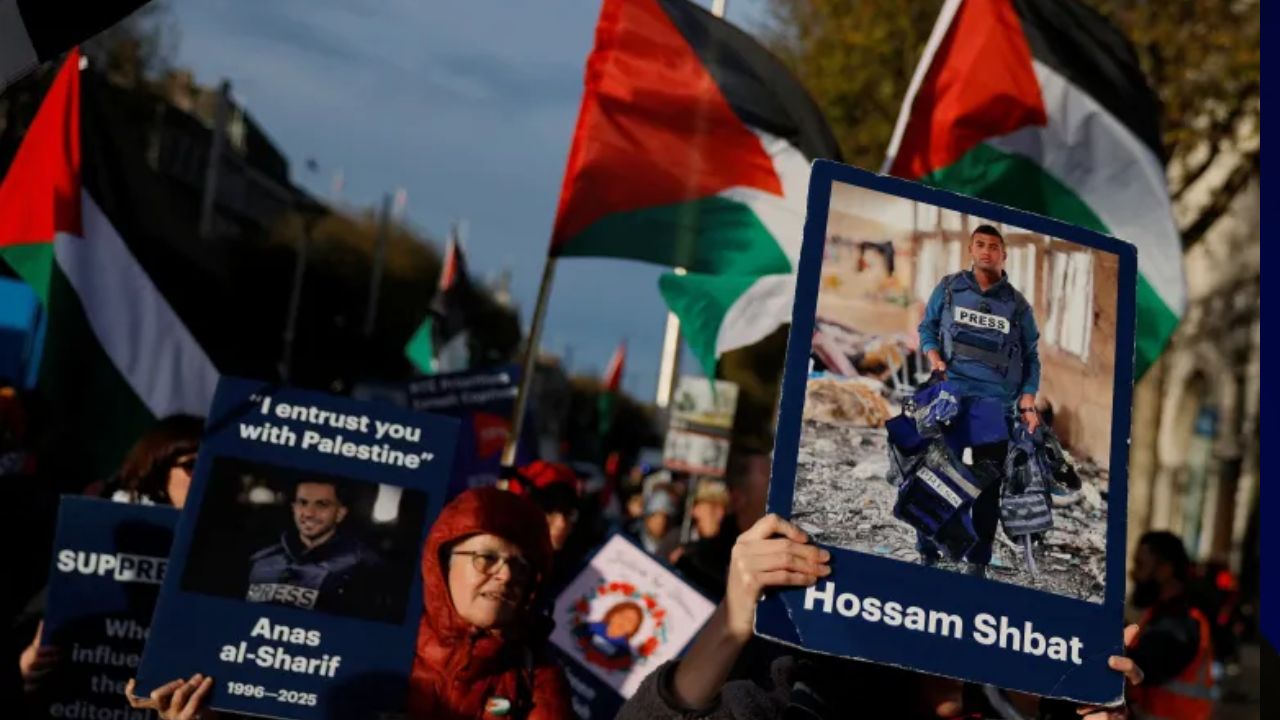
    Israel killed more journalists in 2025 than any other country, a report by Reporters Without Borders (RSF) has revealed.

    According to the report, Israeli forces – carrying out the genocide in Gaza – were responsible for the deaths of 29 Palestinian reporters. This marks the third consecutive year that Israel has been named the top killer of journalists.

    The annual report also revealed that 67 journalists were killed worldwide this year, which is one more than in 2024. Israeli forces were responsible for about 43 percent of those killings.


    “This is where the hatred of journalists leads!” said Thibaut Bruttin, RSF’s director general. “It led to the death of 67 journalists this year… not by accident, and they weren’t collateral victims. They were killed, targeted for their work.”


    Bruttin attributed the rise in journalist killings to the “failure” of international organisations to protect reporters in conflict zones, calling it a consequence of a global decline in the “courage of governments”. 

    “Journalists do not just die, they are killed.”

    It may be noted that the report comes months after a “double-tap” attack on a hospital in the southern part of the enclave resulted in the deadliest single attack in Gaza this year.


    Five journalists were killed in the attack in August, among whom were contributors to Reuters and The Associated Press, and photographer Mohammad Salama of Al Jazeera.

    According to monitoring site Shireen.ps, nearly 300 journalists and media workers have been killed in Israeli attacks in Gaza over 26 months of genocide, averaging about 12 journalists each month. 


    Israel continues to bar foreign reporters from Gaza, except for tightly controlled tours organised by the Israeli military, despite repeated calls from media and press freedom groups for access.


    Mexico ranked as the second most dangerous country for journalists in 2025 with nine deaths. Other high-risk countries include war-torn Ukraine, where three journalists were killed, and Sudan, which recorded four deaths over the year.


    RSF also tracks journalists imprisoned for their work. With 121 reporters detained, China tops the list, followed by Russia (48) and Myanmar (47).


    503 journalists were being held in 47 nations as of December 1. 

    Additionally, the organisation said that 20 journalists are presently being held hostage and that 135 journalists are missing in 37 countries.

  • BJP lawmaker threatens to turn mosque foundation into ‘graveyard for Muslims’

    BJP lawmaker threatens to turn mosque foundation into ‘graveyard for Muslims’

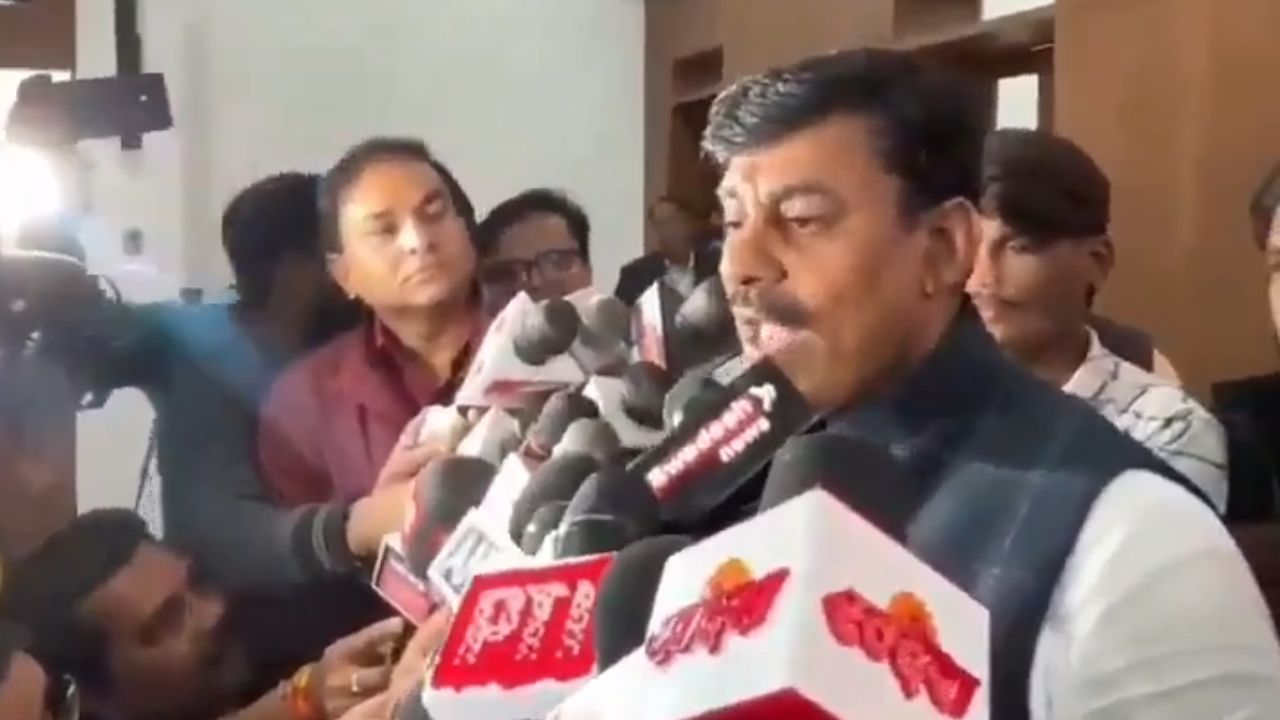
    Bharatiya Janata Party (BJP) Member of Legislative Assembly (MLA) Rameshwar Sharma from Bhopal’s Huzur constituency has sparked outrage with his threats targeting the minority Muslim community across the border.

    The politician, known for his history of anti-Muslim remarks, made the threats while responding to reports that Trinamool Congress (TMC) MLA Humayun Kabir laid the foundation for a Babri Masjid-style-mosque in Murshidabad.

    “The TMC MLA from West Bengal is talking about the bricks of the Babri Masjid. I want to tell that MLA, TMC, and Muslims that they should dig a strong foundation for the mosque because the Babri Masjid will not be built, but that foundation might be used to make their graves,” Sharma said.

    The statement came as Muslim communities across India observed December 6 as “Black Day” to mark the anniversary of the Babri Masjid demolition. Members of a hardliner Hindu organisation had on Dec 6, 1992, demolished the historic mosque in Ayodhya, triggering deadly communal violence across the country.

    This year, as Muslims commemorated the anniversary, Kabir laid the mosque foundation in Murshidabad. Hardliner Hindu organisations, including the ruling BJP, immediately criticised the TMC and the lawmaker.

    Sharma has a record of making threatening remarks against religious minorities. Earlier, he declared that anyone who praises Mughal emperor Aurangzeb “will be sent to the graveyard”.

  • Australia begins nationwide ban on social media users under 16 years of age

    Australia begins nationwide ban on social media users under 16 years of age

    Australia has implemented a new regulation that prohibits individuals under 16 from maintaining accounts on major social media platforms, resulting in millions of young users losing access to their profiles.

    According to the regulation, platforms such as Facebook, Instagram, Threads, X, YouTube, Snapchat, Reddit, Kick, Twitch, and TikTok are required to delete accounts belonging to users identified as under 16 and prevent new registrations. 


    Platforms failing to comply may face financial penalties. Officials have indicated they do not anticipate flawless execution at this phase, noting initial reports of some users under 16 bypassing facial age verification.

    All the platforms, with the exception of X, had confirmed their compliance prior to enforcement. Authorities stated they have engaged with X regarding compliance, but the platform has not specified its strategy to users.

    Another platform, Bluesky, indicated it would also prohibit users who are under 16.

    Young users spent the previous weeks undergoing age verification, changing phone numbers, and preparing for the deactivation of their accounts. An age-assurance firm based in Australia reported conducting hundreds of thousands of verifications before the ban took effect. This system was utilized by Snapchat.

    Parents have expressed various responses. One parent mentioned that their 15-year-old daughter felt “very distressed” because her friends were “age verified as 18 by Snapchat,” while she was recognized as under 16. Another parent noted that the ban prompted him to teach his child methods to circumvent restrictions using VPNs to create accounts that would evade detection.

    Some parents supported the ban, stating it provides a framework that would assist in keeping their child off the platforms.

    Prime minister Anthony Albanese remarked before the rollout that “from the beginning, we’ve acknowledged this process won’t be 100 percent perfect,” and added that “the fact that teenagers occasionally find a way to have a drink doesn’t diminish the value of having a clear, national standard.”

    Polling has indicated widespread support for raising the minimum age to 16, although some critics contend that the ban could alienate vulnerable teenagers or push them toward unregulated areas of the internet.

    The regulation has garnered interest from other nations, with several governments examining the framework. Officials will collect data from platforms, including the total number of eliminated accounts, the challenges companies are encountering, and the measures taken to prevent bypassing the rules.

    Regulators intend to evaluate whether platforms are making adequate efforts to adhere to the law. An independent review will assess the short-term, medium-term, and long-term impacts, including how the ban affects online behavior, offline activities, and potential migration to alternative platforms.

  • Four Afghan boys arrested for wearing Peaky Blinders-inspired clothes

    Four Afghan boys arrested for wearing Peaky Blinders-inspired clothes

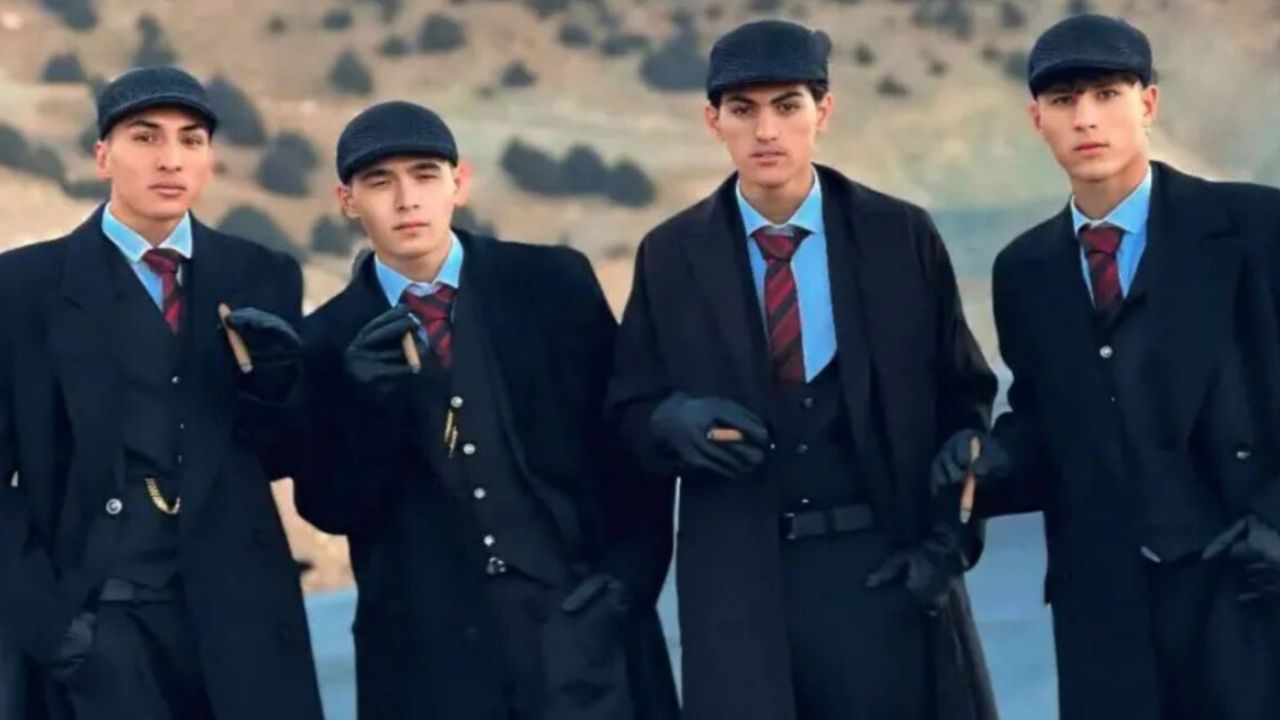
    Four young boys were arrested in Afghanistan’s Herat for wearing clothes inspired from the hit British TV series Peaky Blinders, Taliban authorities confirmed.

    Saif Ul Islam Khyber, a spokesperson for the Taliban’s Ministry for the Promotion of Virtue and Prevention of Vice, said that the arrests took place in Jebrail Township and the boys were charged for “promoting foreign culture”.

    According to Afghan media, pictures of the young boys wearing long coats, flat caps and attire similar to the Shelby family from the show (Peaky blinders) had been making the rounds on Afghan social media.

    The young boys claimed in a YouTube interview that they enjoyed the style because of the show and that they received positive feedback from the locals. 

    One of them stated that he intended to eventually showcase cultural clothing from different ethnic communities in Afghanistan.

    However, Taliban authorities deemed the attire “contrary to Islamic values and Afghan culture”. A video released by the ministry showed one of the arrested youths expressing regret over his clothing choice.

    Previous arrests by the Taliban over alleged dress code violations indicate the authorities are continuing their crackdown on foreign-inspired fashion.

  • UN urges Taliban to let Afghan women return to work

    UN urges Taliban to let Afghan women return to work

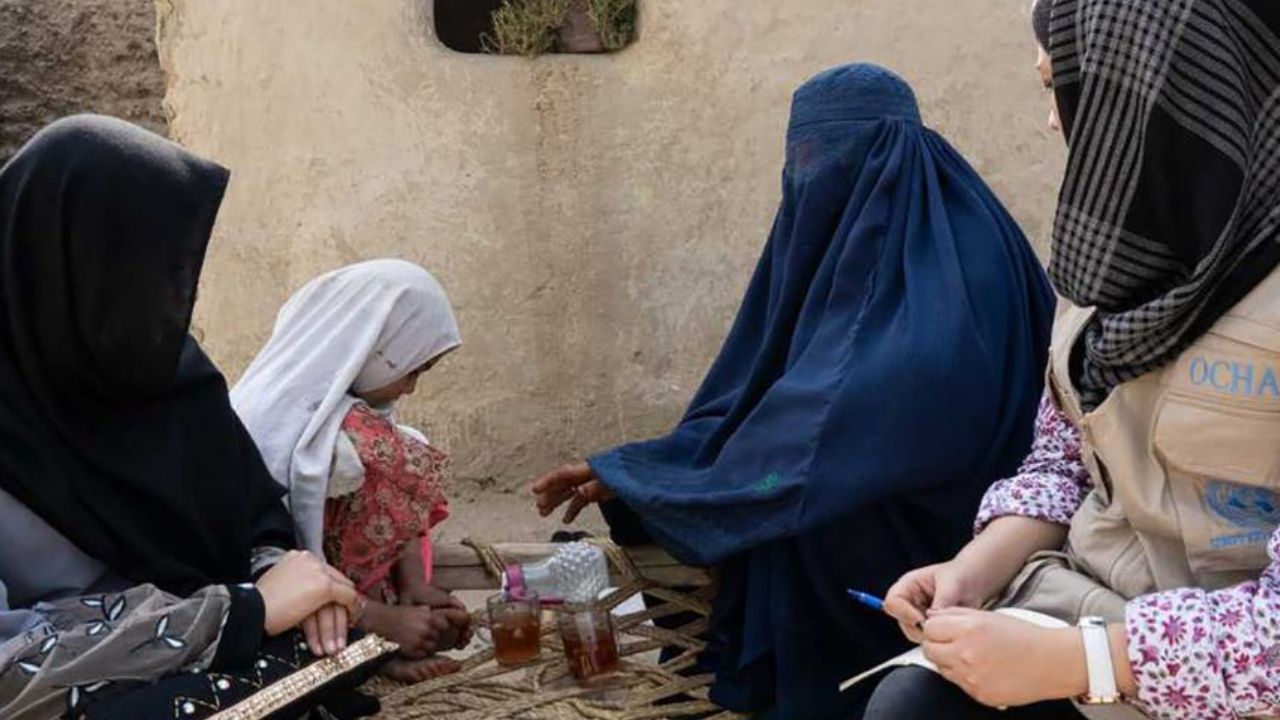
    The United Nations (UN) has urged Taliban authorities in Afghanistan to lift their ban on women working at UN offices, warning that the restriction is putting “life-saving services” at risk.

    Afghan women have experienced numerous restrictions since the Taliban took control in 2021, including restrictions on a majority of jobs, school attendance beyond the age of 12 and going to public places like parks and beauty salons.

    In September, the Taliban began barring female UN staffers from entering office premises.

    “We call for the ban on Afghan women staff and contractors from entering United Nations premises to be reversed, and for their safe access to offices and the field,” said UN Women Special Representative in Afghanistan Susan Ferguson.

    Ferguson emphasised the broader consequences of the restriction, pointing out that “the longer these restrictions remain in place, the greater the risk to these life-saving services” and emphasising that the actions go against the UN’s commitment to equality and human rights.

    Reports quoted sources as claiming that several hundred employees were currently impacted despite the UN not disclosing the precise number of women affected. 

    According to Ferguson, these women have been working remotely for the last three months, helping Afghan migrants deported from Pakistan and Iran as well as victims of recent fatal earthquakes.

    Describing their contributions as “indispensable”, Ferguson said, “Only through their presence can we reach women and girls safely and provide culturally appropriate assistance.”

    While the Taliban authorities did not immediately comment on the matter, the UN refugee agency halted financial aid for Afghan returnees in September of last year, citing difficulties in interviewing and gathering data on more than half of the female returnees.

  • Canada removes Syria from list of ‘state sponsors of terrorism’

    Canada removes Syria from list of ‘state sponsors of terrorism’

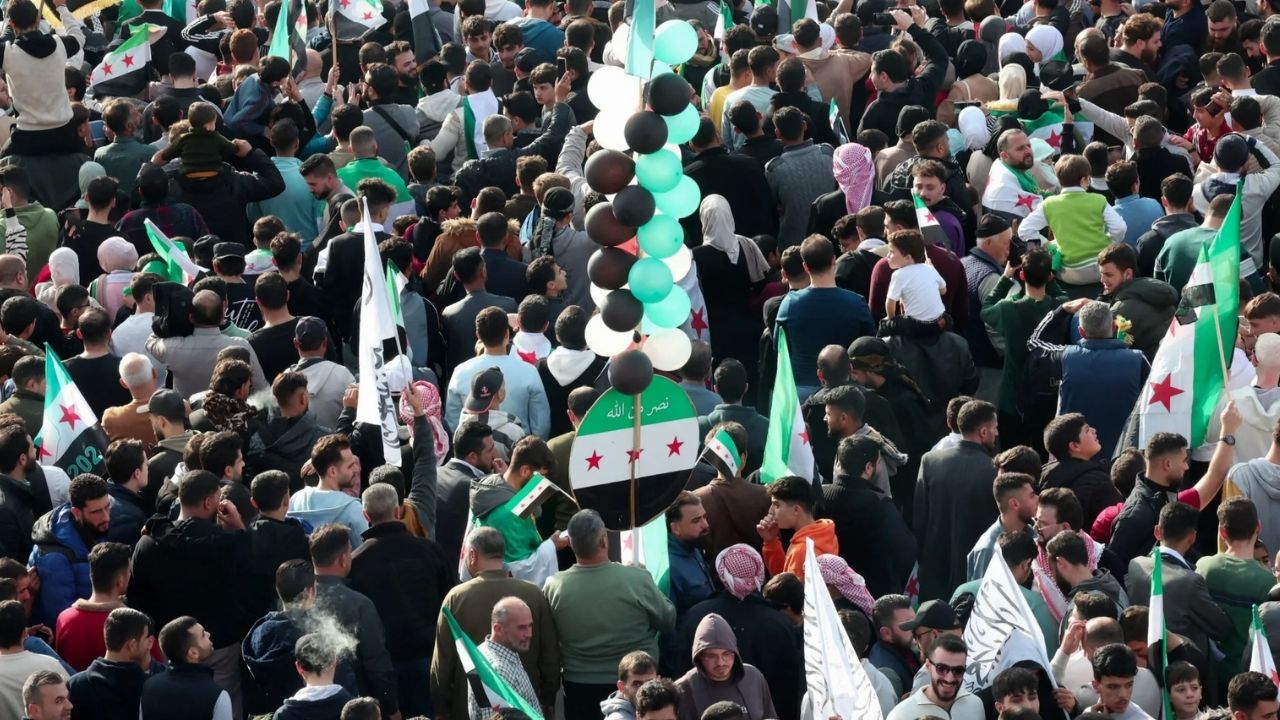
    Canada has removed Syria from its list of states that support terrorism, following a similar move by the United States (US) and citing efforts by Syrian President Ahmed al-Sharaa’s government to advance the country’s stability.

    The announcement on Friday came as Syria prepares to mark one year since the toppling of longtime ruler Bashar al-Assad. Canada’s foreign ministry also revoked the terrorist designation for Hayat Tahrir al-Sham (HTS), the group that led the alliance which helped remove al-Assad.

    In a statement, the ministry said the decisions were “not taken lightly”. 

    “These measures are in line with recent decisions taken by our allies, including the United Kingdom and the United States, and follows the efforts by the Syrian transitional government to advance Syria’s stability, build an inclusive and secure future for its citizens, and work alongside global partners to reinforce regional stability and counter terrorism.”

    Canada had listed Syria as a state supporter of terrorism in 2012 after al-Assad’s crackdown on pro-democracy protests plunged the country into civil war. 

    HTS had been widely sanctioned over its links to al-Qaeda, but several Western states have delisted the group to allow better collaboration with the new Syrian government.

    Since assuming power, Syria’s new leaders have sought to break from their violent past and present a more moderate image to both Syrians and foreign powers. 

    The ministry said it will continue to maintain sanctions on 56 Syrian individuals, including former officials from al-Assad’s government and members of the toppled ruler’s family.

    The US partially suspended sanctions against Syria in June and extended the suspension in November, following talks between al-Sharaa and US President Donald Trump at the White House. 

    Days before that meeting, the US had declared that al-Sharaa was no longer a “specially designated global terrorist”.

    Al-Sharaa, who once led al-Qaeda’s branch in Syria, split from the group in 2016. Since removing al-Assad, he has further reinvented his image, dropping the alias Abu Mohammed al-Julani and promoting a tolerant and inclusive Syria.

    Earlier this year, the interim leader addressed the United Nations General Assembly, saying his country is “reclaiming its rightful place among the nations of the world”.

    He has also worked to strengthen economic ties with the US and the European Union.

  • Israeli strikes resume despite direct talks with Lebanon

    Israeli strikes resume despite direct talks with Lebanon

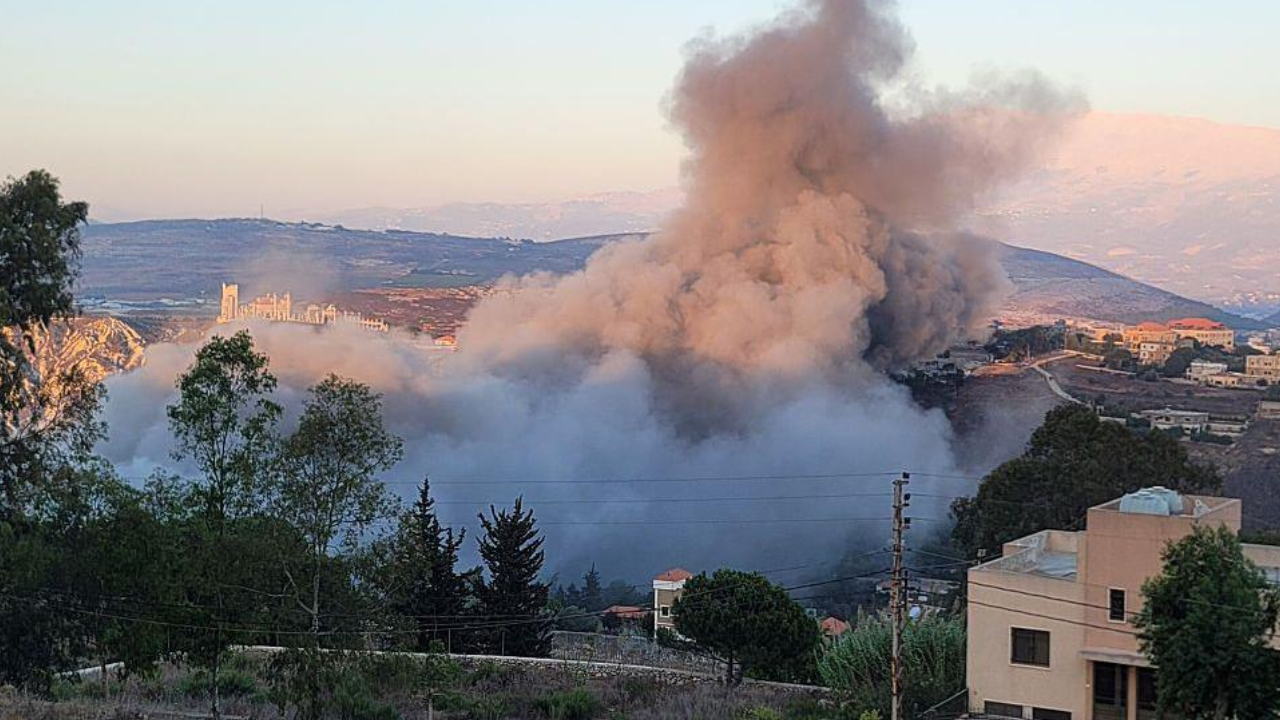
    Israeli aircraft targeted areas in southern Lebanon on Thursday, following a rare in-person meeting between Israeli and Lebanese officials the previous day.

    The airstrikes focused on locations that the Israeli military alleged were used by Hezbollah for weapon storage.

    Residents living in Mjadel, Baraachit, Jbaa, and Mahrouna received orders to evacuate areas close to what Israel identified as storage sites associated with Hezbollah. The Israeli military stated that these locations breached the existing ceasefire agreement and affirmed that operations would persist “to eliminate any threat.” There was no immediate reaction from Lebanese authorities.

    The airstrikes came about after Israel accused Hezbollah of reestablishing its positions near the border. Israeli officials have contended that Lebanese authorities failed to enforce the stipulations of the ceasefire agreement, which includes limiting Hezbollah’s presence south of the Litani River.

    The agreement, brokered by the US and France, required Israel to withdraw its forces from the southern region while Hezbollah was to relocate its fighters and weapons north of the river. Hezbollah and its allies have resisted this aspect of the agreement.

    Israel has kept several forward positions and ramped up air operations in recent weeks. Following the ceasefire that began in November 2024, which ended over a year of conflict, cross-border hostilities had decreased; however, near-daily strikes resumed as allegations regarding Hezbollah’s activities intensified.

    The airstrikes on Thursday occurred shortly after representatives from both sides met in Naqoura. This discussion took place at the headquarters of the UN peacekeeping force Unifil during a session of the ceasefire monitoring committee, which had previously included only military representatives from the US, France, Lebanon, Israel, and Unifil. This marked the first time civilian representatives from Israel and Lebanon participated.

    A statement from Israeli Prime Minister Benjamin Netanyahu’s office indicated that the talks “occurred in a positive atmosphere” and that both sides intended to formulate proposals for potential economic collaboration. 

    Additionally, the statement emphasized Israel’s stance that Hezbollah’s disarmament was a prerequisite.

    Lebanese Prime Minister Nawaf Salam said in a press conference that Lebanon is still “far” from achieving any political normalization with Israel. He mentioned that the main aim of the Naqoura meeting was to ease tensions rather than to discuss a larger agreement.

    Salam outlined Lebanon’s priorities as putting an end to hostilities, securing the release of Lebanese prisoners held by Israel, and ensuring the withdrawal of Israeli forces from Lebanese land. He also expressed Lebanon’s willingness to allow the deployment of American and French forces to assist in verifying measures aimed at disarming Hezbollah.

    Currently, a UN Security Council delegation is present in Lebanon to assess advancements concerning the ceasefire.

  • 13-year-old Afghan boy publicly executes murderer; 80,000 spectators

    13-year-old Afghan boy publicly executes murderer; 80,000 spectators

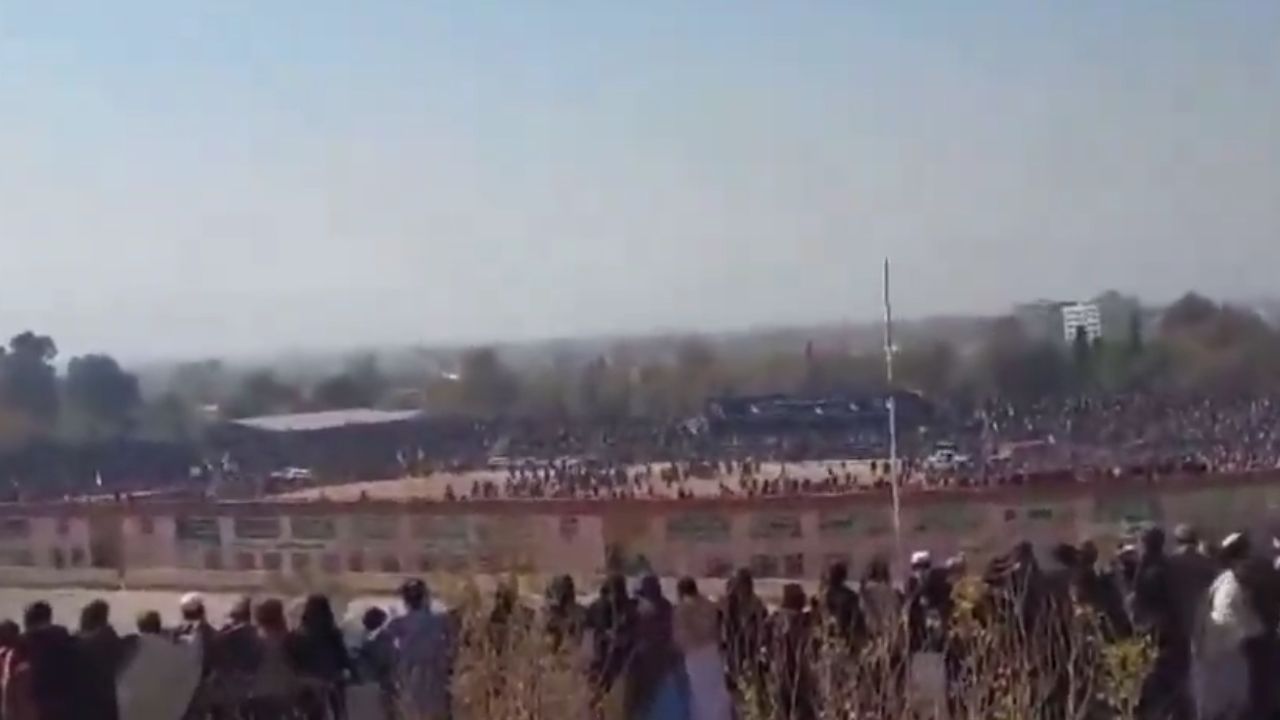
    A 13-year-old Afghan boy publicly shot and killed the man who murdered his family, in an execution carried out under Taliban rule and witnessed by a crowd of over 80,000 people in Afghanistan’s southeastern Khost province.

    According to foreign reports, a huge crowd of men filled a sports stadium to watch the execution, which human rights activists condemned as inhuman and cruel. The Taliban barred spectators from bringing camera phones, but footage recorded from outside the stadium showed tens of thousands gathered for the spectacle.

    The man, identified as a resident of Paktia province, was convicted along with two others of killing 13 members of the boy’s family, including women and children. 

    Afghanistan’s three-tier court system, the lower court, the appeals court, and the Supreme Court, upheld the death sentence, and Taliban supreme leader Hibatullah Akhundzada gave final approval.

    According to the Supreme Court, relatives of the victims were offered the option to forgive the convicted man, which would have spared his life. They refused, choosing the death penalty. 

    Khost police spokesperson Mustaghfir Gorbaz said the execution was carried out by a family member of the victims.

    The Supreme Court said prayers were offered at the end of the gathering, calling for stronger national security, improved access to justice, and strict implementation of Islamic law.

    Executions for two other men convicted in the same case are pending because all heirs of the victims were not present. 

    This marks the 11th execution since the Taliban returned to power and reinstated their hardline interpretation of Sharia, under which crimes such as murder, adultery and theft can result in execution, amputation or flogging.

    Since taking over in 2021 after the withdrawal of US and NATO forces, the Taliban have also banned Afghan women and girls from secondary school, universities and most jobs.

  • 19 countries face US immigration freeze; Pakistan not on the list

    19 countries face US immigration freeze; Pakistan not on the list

    The US government has declared a suspension on all immigration applications, encompassing green cards and US citizenship, for individuals from 19 non-European nations, citing concerns related to national security and public safety.  

    The policy impacts countries that experienced partial travel bans in June, intensifying the administration’s stance on immigration. 

    Among the nations listed are Afghanistan, Somalia, and 16 others.  

    An official memorandum connects the decision to the recent assault on US National Guard members in Washington DC, where an Afghan man was apprehended as a suspect. One National Guard member lost their life, while another sustained critical injuries.  

    Donald Trump has recently condemned Somalis, labeling them as “garbage” and asserted that “we don’t want them in our country.”


    Since resuming office in January, he has prioritized immigration enforcement, deploying federal agents to major US cities and denying asylum seekers at the US-Mexico border.  

    The memorandum indicates a stronger emphasis on legal immigration, framing it as an issue of national security while placing the blame for current policies on former President Joe Biden.  

    Countries that have faced the most stringent restrictions in June including a complete halt on entries with limited exceptions are Afghanistan, Burma, Chad, the Republic of the Congo, Equatorial Guinea, Eritrea, Haiti, Iran, Libya, Somalia, Sudan, and Yemen.  

    Additional countries impacted by the pause, which were previously under partial restrictions, consist of Burundi, Cuba, Laos, Sierra Leone, Togo, Turkmenistan, and Venezuela.  

    The new policy halts pending applications and mandates that all immigrants from these nations undergo a comprehensive re-review process, which may include an interview and, if needed, a follow-up interview to thoroughly evaluate any national security and public safety risks.  

    The memorandum further references crimes allegedly perpetrated by immigrants, including the assault on National Guard members.  

    Sharvari Dalal-Dheini, senior director of government relations for the American Immigration Lawyers Association, noted that the organization has received notifications of cancelled oath ceremonies, naturalization interviews, and adjustment of status interviews for individuals from the countries affected by the travel ban.

  • Video of Trump dozing off during cabinet meeting goes viral

    Video of Trump dozing off during cabinet meeting goes viral

    US President Donald Trump faced fresh scrutiny this week after a video showed him fighting sleep during a cabinet meeting at the White House. 

    The clip quickly went viral on social media, sparking another round of questions about his age and health. 

    Trump appears to doze off several times in the video, leaning forward and back in his chair during the two hour and 18 minute meeting. 

    Viewers pointed out that the 79-year-old president seemed to struggle to keep his eyes open while cabinet members discussed their performance.

    Ironically, Trump began the meeting by criticising media coverage that highlighted age related challenges he faces.

    When asked if the president had fallen asleep, White House Press Secretary Karoline Leavitt said Trump listened with “full attention” and led the meeting.

    This is the second time in a month that cameras caught Trump dozing during an official event. On November 6, he briefly shut his eyes in the Oval Office, which led to more debate in the US media about his fitness and stamina.

    Trump has expressed frustration over this coverage in recent days. The White House released results of his doctor’s “advanced imaging tests” and described his overall health as “excellent.”