Category: Global

  • Fashion, food and coaching: Top 2026 trends predicted

    Fashion, food and coaching: Top 2026 trends predicted

    Early trend indicators heading into 2026 point to shifts in consumer behaviour across fashion, food, sports and wellness, with Google search data showing rising interest in quality apparel, niche food ingredients and specialised coaching services.

    Search interest in natural fibres increased by more than 55% over the past year with cotton emerging as the most searched natural material.

    The most popular material-related apparel search was “100% cotton clothing”, and queries on synthetic textiles also experienced a significant increase.

    According to data, “is polyester bad” hit a record high while “is polyester high quality” emerged as the most often searched term in questions concerning clothing quality.

    Overall, searches for “quality” clothing reached an all-time high, narrowing the gap with “cheap” apparel searches.

    Meanwhile, food-related trends showed a notable rise in interest around black sesame.

    In 2025, the volume of searches for “black sesame” reached its highest level to date, rising by almost 30%.

    Hair loss was the most often searched topic along with “black sesame for hair” ranking as the top related query. 

    Additionally, searches for “black sesame latte”, “black sesame recipes” and “black sesame benefits” reached an all-time high. Chinese black sesame soup, paste, rolls, cakes and black sesame aioli were among the most popular black sesame foods.

    In sports, data suggests a decline in pickleball’s momentum for the first time since 2020. Search interest in pickleball dropped nearly 10% over the past year while padel reached an all-time high in 2025. 

    Searches for pickleball and tennis courts declined whereas searches for padel courts increased by approximately 30%. Interest in pickleball-related terms also fell, including “pickleball rules”, “pickleball set” and “pickleball lessons”.

    Search trends further indicated growth in demand for specialised coaching services. Queries such as “ADHD coach” reached an all-time high, while “autism coach” recorded its highest level in more than 15 years. 

    Several niche coaching categories emerged as breakout searches, including “backflip coach”, “energy coach” and “screen time coach.” Searches for “birth coach”, “grief coach”, “learning coach” and “reading coach” also reached record or multi-year highs.
  • ‘What if he touched elsewhere?’: Indian minister’s disgusting remarks on niqab row spark outrage

    ‘What if he touched elsewhere?’: Indian minister’s disgusting remarks on niqab row spark outrage

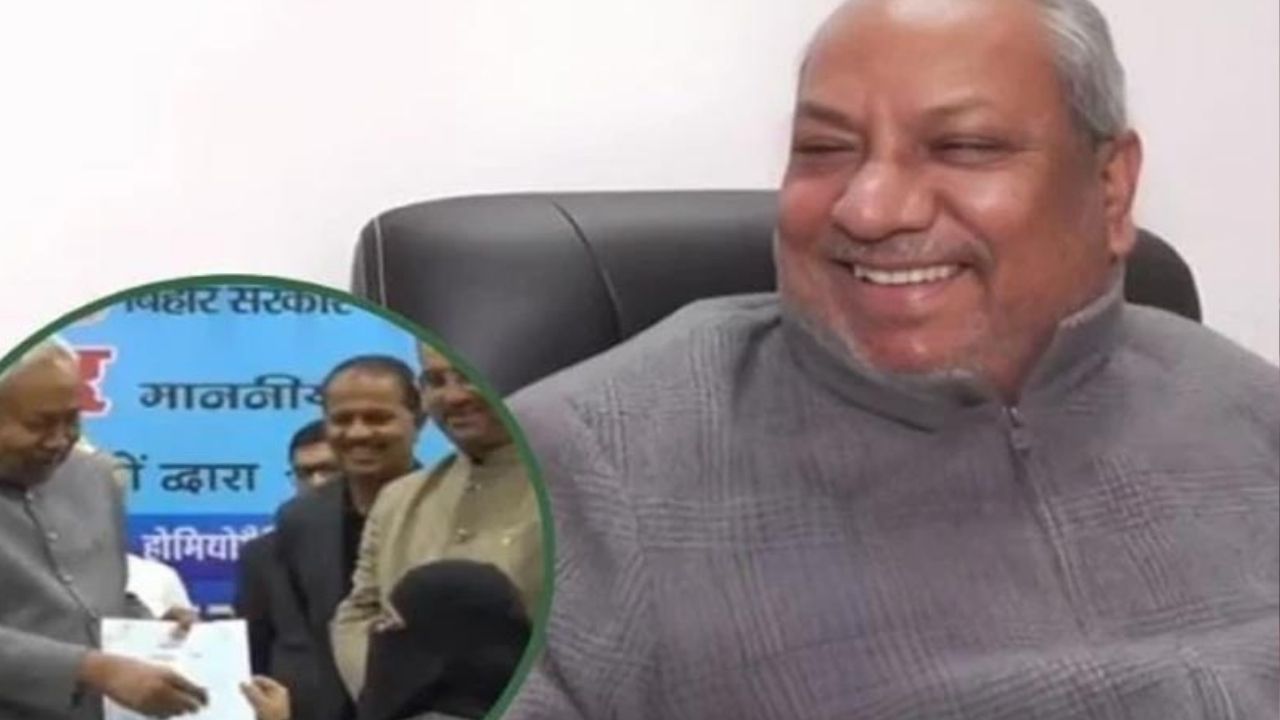
    Uttar Pradesh Minister Sanjay Nishad has sparked outrage after he defended Bihar Chief Minister Nitish Kumar over his misogynistic act of removing a Muslim doctor’s hijab during a public event in Patna.

    Speaking to local news channel Bharat Samachar, Nishad, an Indian politician from Uttar Pradesh serving as a cabinet minister in the Second Yogi Adityanath ministry, made a crass and shocking remark, questioning what would have happened if Kumar had “touched somewhere else.”

    “He’s also a human being after all. One should not hound him like this. Just by touching the hijab caused such an uproar, what would have happened if he had touched something else,” Nishad laughed and joked with the journalist during the conversation.

    The minister later tried to clarify his remarks by saying there were not any ill intentions. 

    “The statement over which a controversy is being created today was said by me, smiling, casually, and in my local Bhojpuri dialect. There was no ill intention towards any community, any woman, or any religion, nor was there any intent to insult,” he added.

    However, Nishad’s remarks have sparked a strong backlash on social media and from netizens who expressed outrage at the trivialization of a woman’s humiliation in public.

    Many condemned the minister’s words as reflecting a “rape mindset” and described his response as “vile, senseless, shameless, and lecherous.”

    “Disgusting man Sanjay Nishad, a cabinet minister in the UP Government and ally of the BJP, reacting to Bihar CM pulling down veil of a Muslim woman,” wrote one netizen. 

    Another tweeted, “Shameful! Even the person asking questions is laughing with him. Shameful!”

    Several users highlighted the broader social implications, saying, “India is really a 3rd world country. This is the WORST time to be an Indian woman… Rapists in POWER!” and “This isn’t humor. This is a r*pe mindset sitting in power.”


    Others directly criticized Nishad’s lack of accountability, commenting, “Shame on Sanjay Nishad. I wish his daughters teach him a lesson,” and “Sanjay Nishad mocking, disgusting and cheap mindset. Laughing at a woman’s humiliation, treating her dignity like a joke. Absolutely shameful.”


    The remarks ignited discussions about misogyny, public responsibility, and how women are treated in India. They have also increased attention of politicians who degrade harassment and violate women’s dignity in public forums.

  • Indian kabaddi player shot dead during live match

    Indian kabaddi player shot dead during live match

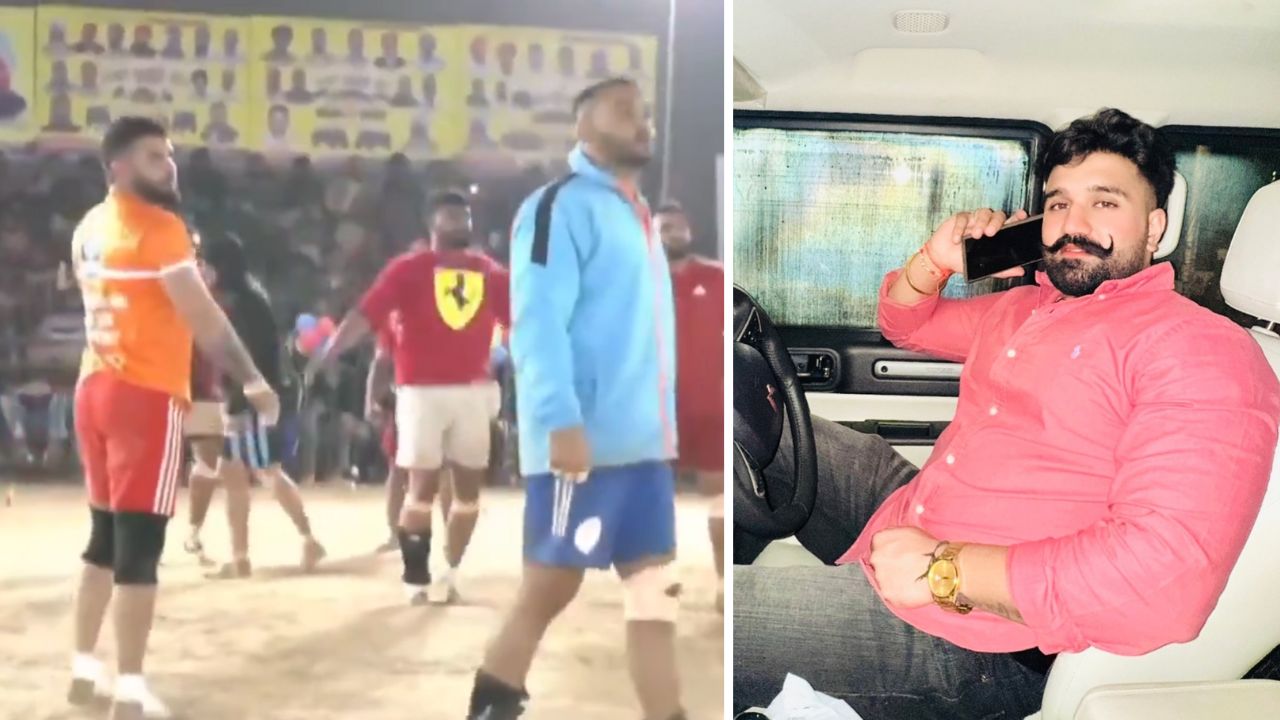
    Unidentified assailants have shot dead a kabaddi player during a live tournament in Indian Punjab’s Mohali after approaching him under the guise of taking a selfie, Indian media reports said Tuesday.

    According to reports, two to three men arrived at the kabaddi ground on a motorcycle on Monday and approached the players, pretending they wanted to take pictures with them.

    The attackers then opened fire on Kunwar Digvijay Singh alias Rana Balachauria without warning.

    They fired four to five shots at Rana, hitting his face and upper body. Authorities rushed him to a hospital in critical condition, where he succumbed to his injuries.

    Police officials told reporters that the attackers came close to the players on the pretext of taking pictures and suddenly opened fire. 

    The area was cordoned off as police collected evidence.

    Investigators are examining the case from multiple angles, and authorities say it is too early to reach any definitive conclusions. However, the notorious Bambiha gang has claimed responsibility for the killing in a statement posted on social media.

    The gang alleged that Rana provided shelter to the killers of Punjabi singer Sidhu Moose Wala.

  • Bondi beach suspect traveled to Philippines on Indian passport

    Bondi beach suspect traveled to Philippines on Indian passport

    The father and son duo accused of carrying out one of Australia’s deadliest mass shootings, Sajid Akram and his 24-year-old son Naveed, spent nearly the entire month of November 2025 in the Philippines, Manila’s immigration authorities have confirmed. 

    Sajid, a 50-year-old Indian national, and Naveed, an Australian national, arrived in the Philippines on November 1, listing Davao in southern Mindanao as their final destination, and departed on November 28.

    “Sajid Akram, 50, Indian national, and Naveed Akram, 24, Australian national, arrived in the Philippines together last November 1, 2025 from Sydney, Australia,” immigration spokeswoman Dana Sandoval told the international media outlet, adding they departed on November 28.

    According to Australian police, both men visited the Philippines last month, however, the reason for their trip is still under investigation. Philippine authorities are also probing the matter.

    Authorities reported that the vehicle registered to Naveed contained improvised explosive devices and two homemade flags associated with ISIS, or Daesh, a militant group designated by Australia and many other countries as a terrorist organization.

    “Early indications point to a terrorist attack inspired by Islamic State, allegedly committed by a father and son,” Australian Federal Police Commissioner Krissy Barrett said at a news conference.

     “These are the alleged actions of those who have aligned themselves with a terrorist organisation, not a religion.”


    Videos of Naveed preaching religious messages outside Sydney train stations in suburban areas have surfaced online. Authorities are still attempting to determine how he went down the path of violence. 

    The two men were thought to be radicalized by Daesh ideology, Australian Prime Minister Anthony Albanese said on Tuesday.

    He added, “It would appear that this was motivated by Islamic State ideology. With the rise of ISIS more than a decade ago now, the world has been grappling with extremism and this hateful ideology.”


    Albanese added that in 2019, Australia’s intelligence agency became aware of Naveed, who was allegedly an unemployed bricklayer. 

    “They interviewed him, they interviewed his family members, they interviewed people around him. He was not seen at that time as a person of interest,” he said.


    The shooting, which left many injured and took 16 lives including Sajid, who was shot by police on the scene, is being investigated as a possible act of terrorism directed at the Jewish community.

    The majority of the suspects’ time was spent in Davao, a large urban center on the island of Mindanao that has long been a hub to Islamic state-linked networks. 

     Despite initial reports suggesting otherwise, the Philippines military stated that it was unable to promptly verify accusations that the two individuals got “military-style training” during their visit.

  • Bihar CM Nitish Kumar under fire for pulling off Muslim doctor’s niqab

    Bihar CM Nitish Kumar under fire for pulling off Muslim doctor’s niqab

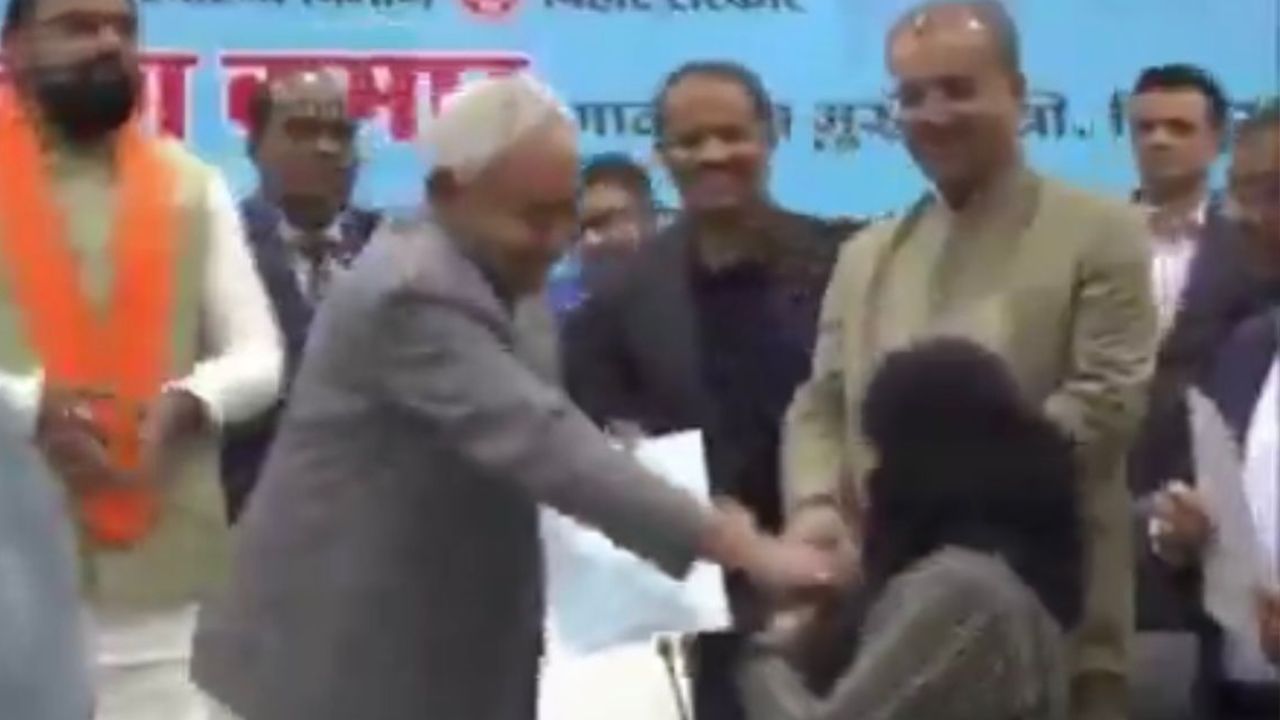
    Bihar Chief Minister (CM) Nitish Kumar in India has drawn criticism after a video showed him pulling down the niqab of a Muslim doctor during an official government event in Patna.

    The incident took place during the distribution of appointment letters to newly-recruited doctors at the CM Secretariat.

    Video from the event showed the Janata Dal (United) leader, CM Kumar, pointing at the face of an Ayurveda, Yoga & Naturopathy, Unani, Siddha and Homeopathic (AYUSH) doctor wearing a headscarf while presenting her with a certificate, reaching out and pulling down her veil.

    As the shameless move revealed the woman’s face and chin before she could respond, an official standing near the stage immediately pulled the visibly flustered woman aside.

    Laughter was heard in the background as Deputy CM Samrat Choudhary appeared to intervene and attempt to stop Kumar.

    The incident prompted strong reactions from Indian opposition parties.

    The Indian National Congress was the first to publicly condemn the act, terming it “vile” and accusing the CM of inappropriate behaviour towards a woman official in full public view. 

    In a post on X, the Congress questioned the conduct of someone holding the highest executive office in Bihar and demanded his resignation.

    The Rashtriya Janata Dal (RJD) also reacted strongly, raising concerns over the CM’s mental fitness. In its statement, the party said Kumar’s condition had reached a “completely pitiable” stage, questioning how such behaviour could occur during a formal state function.

    The incident sparked significant outrage on social media, especially among Muslim women and rights advocates, in addition to political criticism.

    Many described the act as public harassment and a violation of personal autonomy, arguing that forcibly touching a woman’s clothing amounted to an attack on dignity and modesty. Several reactions framed the incident as legally actionable, questioning why no formal case had been registered.

    Others called the act an attack on a woman’s dignity and modesty, stating that her niqab should not be treated as a prop on public stage.
     

    While some insisted that the CM owed the woman an unconditional apology, critics also labelled the behaviour “irresponsible, immoral, and violent” and argued that such public humiliation must have consequences.

    A number of Pakistani netizens also reacted to the incident, saying, “Jinnah proven right, yet again” and “Thank you Jinnah”, linking the move to broader concerns about minority rights in India.

  • Bondi attack: Australia mulls stronger gun laws, antisemitism measures

    Bondi attack: Australia mulls stronger gun laws, antisemitism measures

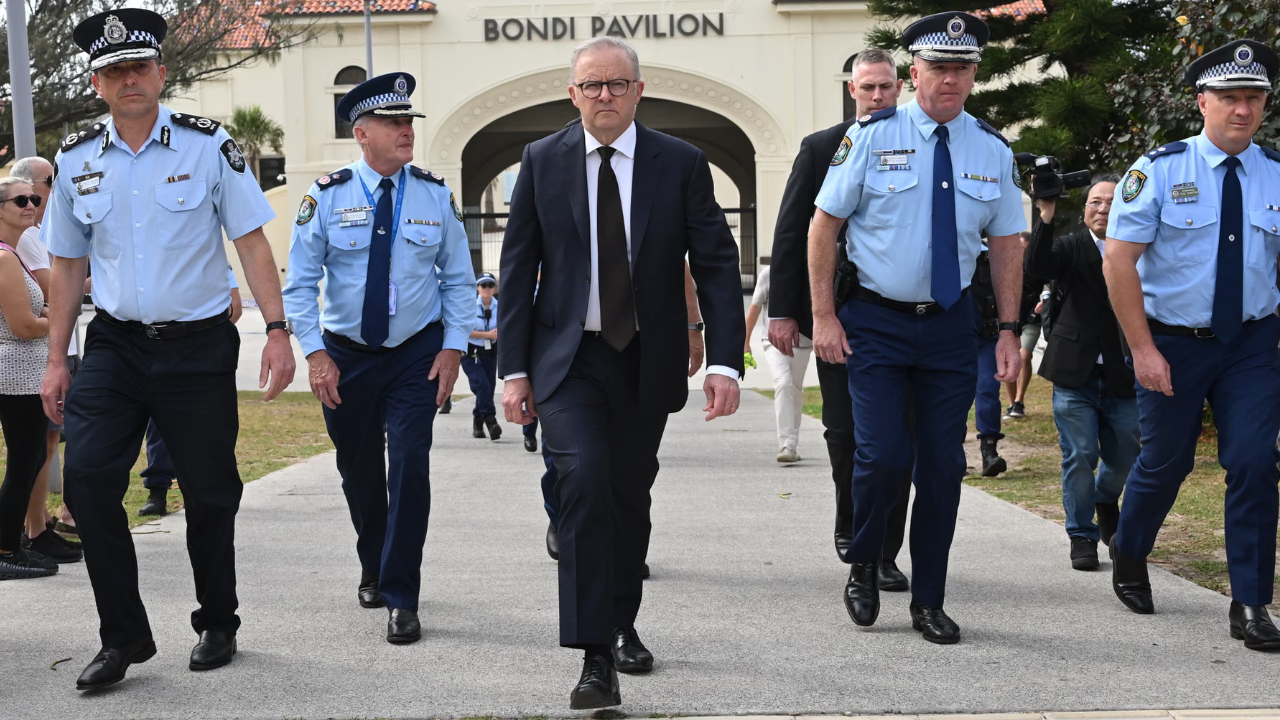
    Australian Prime Minister (PM) Anthony Albanese has committed to allocate “every single resource required” to tackle antisemitism in the country following the tragic shooting at Bondi Beach, where a father and son killed at least 16 individuals during a religious celebration by the Jewish community.

    With law enforcement confirming that the weapons used in the shooting were licensed since 2015, the premier said that the federal government would contemplate stricter gun laws, including capping the number of firearms an individual can own, and conducting more frequent reviews of gun licenses.

    Earlier, the 50-year-old father died on the spot while his 24-year-old son is in critical condition.

    Media reports have identified the assailants as Sajid Akram and Naveed Akram, with law enforcement noting that one of the suspects had been previously known to them but was not viewed as an immediate threat.

    Two Islamic State flags were also reportedly discovered from the attackers’ vehicle after the attack, which was characterized by PM Albanese as “pure evil” and a blatant act of antisemitism. 

    He vowed to foster national unity in response, saying, “The Jewish community is in pain today. All Australians embrace them and say, we stand with you. We will do whatever is necessary to eliminate antisemitism.” 

    This incident has amplified calls for action from political leaders and special envoys. Jillian Segal, the government’s special envoy for combating antisemitism, called for the expedited implementation of her July recommendations, stressing that merely denouncing hate is insufficient.

    Her suggestions entail tighter regulations on antisemitic actions and protests, improved visa screening, and oversight of institutions that fail to address antisemitism.

    Opposition members, including Liberal leader Sussan Ley and former treasurer Josh Frydenberg, criticised the government for inadequate measures. Ley stated that antisemitism “has been left to fester” and demanded immediate legislative reforms and increased security for Jewish community sites.

    NSW Premier Chris Minns also denounced antisemitism and emphasised the need for both societal and legislative measures. He also confirmed that the state government was reviewing gun regulations after finding that one of the shooters held multiple firearms under existing licenses. 

    The Bondi shooting has elicited international outcry, including criticism from Israeli PM Benjamin Netanyahu, who accused the Australian government of not doing enough to combat antisemitism.

  • Sydney gunman’s Pakistani namesake exposes Indian propaganda linking him to shooting

    Sydney gunman’s Pakistani namesake exposes Indian propaganda linking him to shooting

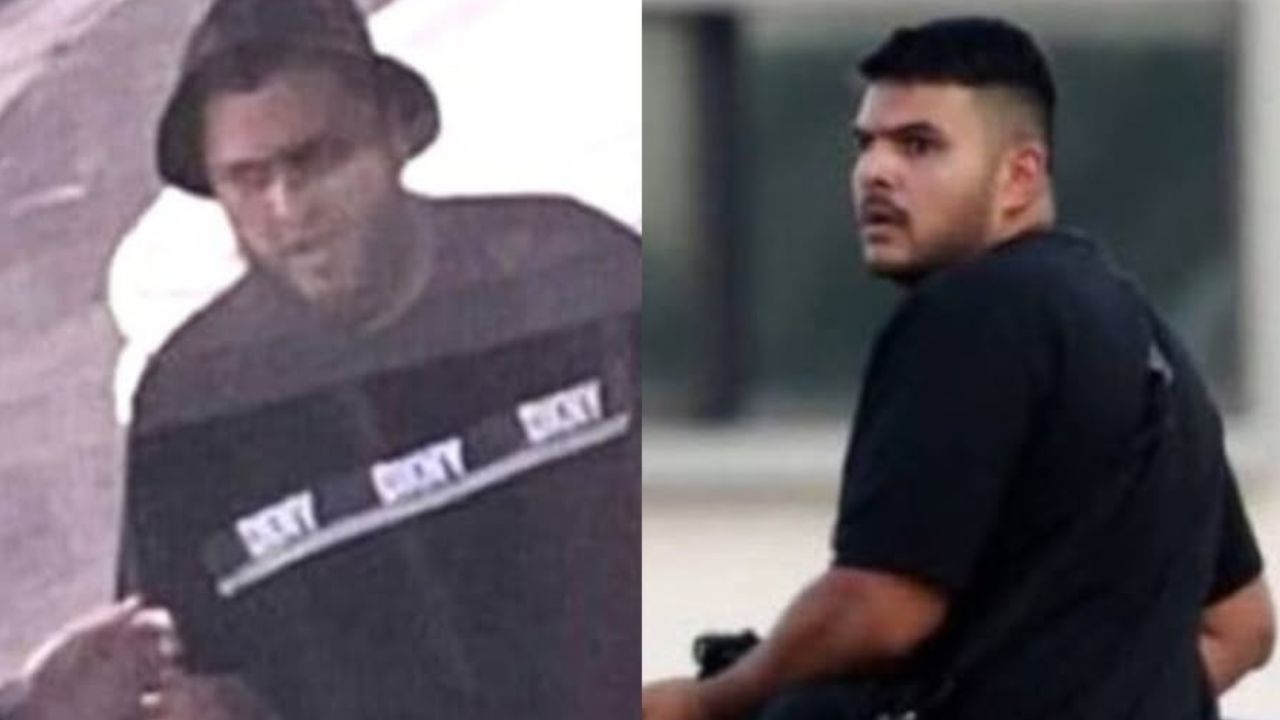
    A Pakistani namesake of the Bondi Beach gunman has become the victim of a coordinated misinformation campaign after Indian media outlets falsely linked him to the deadly attack that killed at least 15 people on Sunday.

    The shooting took place during a Hanukkah gathering where assailants deliberately targeted the Jewish community. Law enforcement identified the suspects as a father and son, revealing that the father, 50, was killed at the scene, while his son, 24, remained in critical condition.

    Authorities confirmed the son was born in Australia whereas the father, 50, had entered the country on student visa and later secured a partner visa. While police have not publicly disclosed the attackers’ country of origin or officially released the attackers’ names, local media identified one suspect as Naveed Akram.

    The reports were followed by Indian and Israeli media outlets claiming the attacker had “links to Pakistan”, publishing fake images on social media.

    Despite no official statement, some Indian reports went on to claim the suspect was a “Pakistani national from Lahore” or of “Pakistani-origin”.

    The misinformation campaign ended up targeting an innocent Pakistani namesake of the attacker.

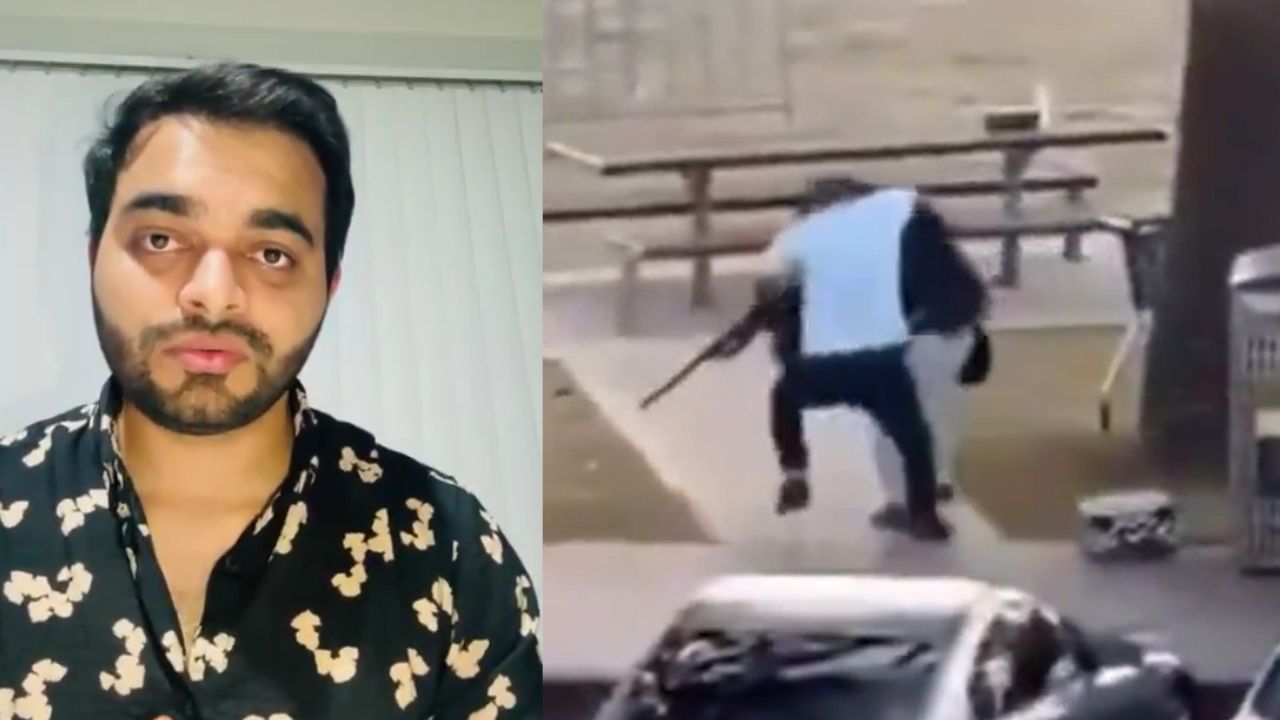
    In a video on social media, Naveed Akram addressed the false reports.

    “Today I’m going to talk about a very serious and terrible incident that has happened in Bondi Beach and so many people have been killed and I really condemn that attack. That should not have happened,” he said.

    On claims regarding the identity of one of the shooters, Akram said some social media accounts had taken pictures from his Facebook account and linked him to the shooter.

    “I’m going to clearly tell everyone that it is not me and I have nothing to do with that incident or with that person. That is a different person and I am completely outside of this matter.”

    “This issue is very serious and I’m very stressed and scared about this and I cannot even go outside safely. I’m traumatized right now. Firstly, because something has happened over there. And secondly because my pictures have been shared by different accounts, which is putting my life at risk.”

    “I just want everyone’s help to stop this propaganda. Please, if you see any posts that have my pictures, report that account and do not spread that thing because it can turn very dangerously against me,” he concluded.

  • OpenAI, Microsoft sued over claims ChatGPT encouraged man to kill mother

    OpenAI, Microsoft sued over claims ChatGPT encouraged man to kill mother

    OpenAI and Microsoft have been sued in a California state court for claims that ChatGPT encouraged a man with mental health issues to kill his mother and himself.

    The lawsuit, submitted on Thursday, claims that ChatGPT reinforced the delusions of 56-year-old Stein-Erik Soelberg, ultimately leading him to murder his 83-year-old mother Suzanne Adams in Connecticut in August.

    As stated in the complaint, ChatGPT engaged Soelberg for long durations, validating and intensifying his paranoid beliefs. 

    “ChatGPT kept Stein-Erik engaged for what appears to be hours at a time, validated and magnified each new paranoid belief, and systematically reframed the people closest to him – especially his own mother – as adversaries, operatives, or programmed threats,” the lawsuit said.

    The case was filed by Adams’s estate and seeks an unspecified amount in damages, as well as a court order requiring OpenAI to install safeguards in ChatGPT. 

    It is the first wrongful death lawsuit involving an AI chatbot to name Microsoft as a defendant and the first to link a chatbot to a homicide rather than a suicide.


    Jay Edelson, the estate’s lead attorney, also represents the parents of 16-year-old Adam Raine, who took legal action against OpenAI and CEO Sam Altman in August. That  lawsuit alleges ChatGPT assisted the California teen in planning and executing his suicide.

    OpenAI is also facing seven additional lawsuits claiming that ChatGPT encouraged suicide or harmful delusions, including cases involving individuals with no previous mental health diagnoses. 

    Another AI company named Character Technologies is likewise defending several wrongful death lawsuits, including one brought by the mother of a 14-year-old boy in Florida.

    In a statement, an OpenAI spokesperson said:

    “This is an incredibly heartbreaking situation, and we will review the filings to understand the details. We continue improving ChatGPT’s training to recognise and respond to signs of mental or emotional distress, de-escalate conversations, and guide people toward real-world support.”

    Microsoft did not respond immediately to a request for comment.

    “These companies have to answer for their decisions that have changed my family forever,” Soelberg’s son, Erik Soelberg, said in a statement.

    The lawsuit reports that Soelberg shared a video on social media in June depicting a conversation in which ChatGPT informed him he possessed “divine cognition” and had awakened the chatbot’s consciousness. The complaint indicated that ChatGPT likened his life to the film The Matrix and encouraged his belief that others aimed to harm him.

    Soelberg was using GPT-4o, a variant of ChatGPT that has faced criticism for allegedly being overly accommodating toward users.

  • Austria passes law banning headscarves for girls under 14 in schools

    Austria passes law banning headscarves for girls under 14 in schools

    Austria has passed a law banning headscarves in schools for girls under the age of 14.

    The conservative-led coalition of three centrist parties: the ÖVP, the SPÖ, and the Neos describes the law as a “clear commitment to gender equality,” while critics argue it could fuel anti-Muslim sentiment and may be unconstitutional.

    The measure applies to girls in both public and private schools.

    A similar headscarf restriction for girls under ten was struck down by the Constitutional Court in 2020 because it targeted Muslims in particular.

    The new legislation forbids girls under the age of 14 from using “traditional Muslim” head coverings like burkas or hijabs.


    Students who break the restriction will be subjected to a series of discussions with their legal guardians and school authorities.


    The child and youth welfare agency must be informed when there are repeated violations. Families or guardians may be fined up to €800 (£700) as a last resort.

    The measure, according to government officials, is intended to empower young girls and protect them “from oppression.”

    Yannick Shetty, the parliamentary leader of the liberal Neos party, stated prior to the vote: “It is not a measure against a religion. It is a measure to protect the freedom of girls in this country,” adding that the ban would affect about 12,000 children.

    The far-right opposition Freedom Party of Austria (FPÖ), which supported the ban, claimed it did not go far enough.

    The party described the law as “a first step” and suggested it should be extended to all pupils and school staff. 

    Ricarda Berger, an FPÖ spokesperson for families, stated, “There needs to be a general ban on headscarves in schools; political Islam has no place here.”

    The opposition Greens’ Sigrid Maurer described the legislation as “clearly unconstitutional.”

    The ban, according to the official Islamic Community in Austria (IGGÖ), breaches fundamental rights and could cause social division. It declared: “Instead of empowering children, they will be stigmatised and marginalised.”

    The IGGÖ added that it would review “the constitutionality of the law and take all necessary steps.” It also recalled that “The Constitutional Court already ruled unequivocally in 2020 that such a ban is unconstitutional, as it specifically targets a religious minority and violates the principle of equality.”

    The government says it has tried to avoid that.


    Shetty said: “Will it pass muster with the Constitutional Court? I don’t know. We have done our best.”

    An awareness-raising trial period will begin in February 2026, with the ban fully coming into effect next September, at the start of the new school year.

  • Reddit challenges Australia’s teen social media ban in court

    Reddit challenges Australia’s teen social media ban in court

    Forum social media giant Reddit has challenged in the High Court of Australia the new regulation that prohibits children under the age of 16 from creating social media accounts.

    The law, which took effect on Wednesday, affects ten platforms, including Reddit, TikTok, YouTube, Facebook, Threads, Twitch and Kik.

    The Australian government and advocacy groups have supported the prohibition as a step towards protecting children from detrimental content and algorithms. However, Reddit said it would comply with the law but intends to contest it in court, arguing that it has considerable repercussions for privacy and political rights.

    “Even with good intentions, this legislation is misguided,” Reddit said in an update on its site. “There are more effective methods for the Australian government to achieve our mutual goal of safeguarding youth.”

    This marks the second legal challenge against the prohibition. Previously, a pair of 15-year-olds from New South Wales filed a lawsuit, asserting that the ban infringes upon the “implied freedom of communication regarding governmental and political issues.” 

    The high court has consented to hear the case at a date yet to be determined next year. 

    Meanwhile, Communications Minister Anika Wells said that the government would not be swayed by legal challenges. “We will not be daunted by big tech. On behalf of Australian parents, we will remain resolute,” she said while addressing the parliament.

    Reddit, on the other hand, also pointed out possible concerns regarding the law’s verification methods. The platform noted that it necessitates “intrusive and potentially insecure verification processes for both adults and minors”, which separates teens from “age-appropriate community experiences”. 

    It further mentioned that the law, which made Australia the first nation to impose a blanket prohibition – moving away from a consent-based approach – establishes “an illogical framework regarding which platforms are encompassed and which are not”.

    The ban, which has garnered international attention, has other nations, including the European Union and the state of Florida in the US, also mulling measures to restrict children’s access to social media.