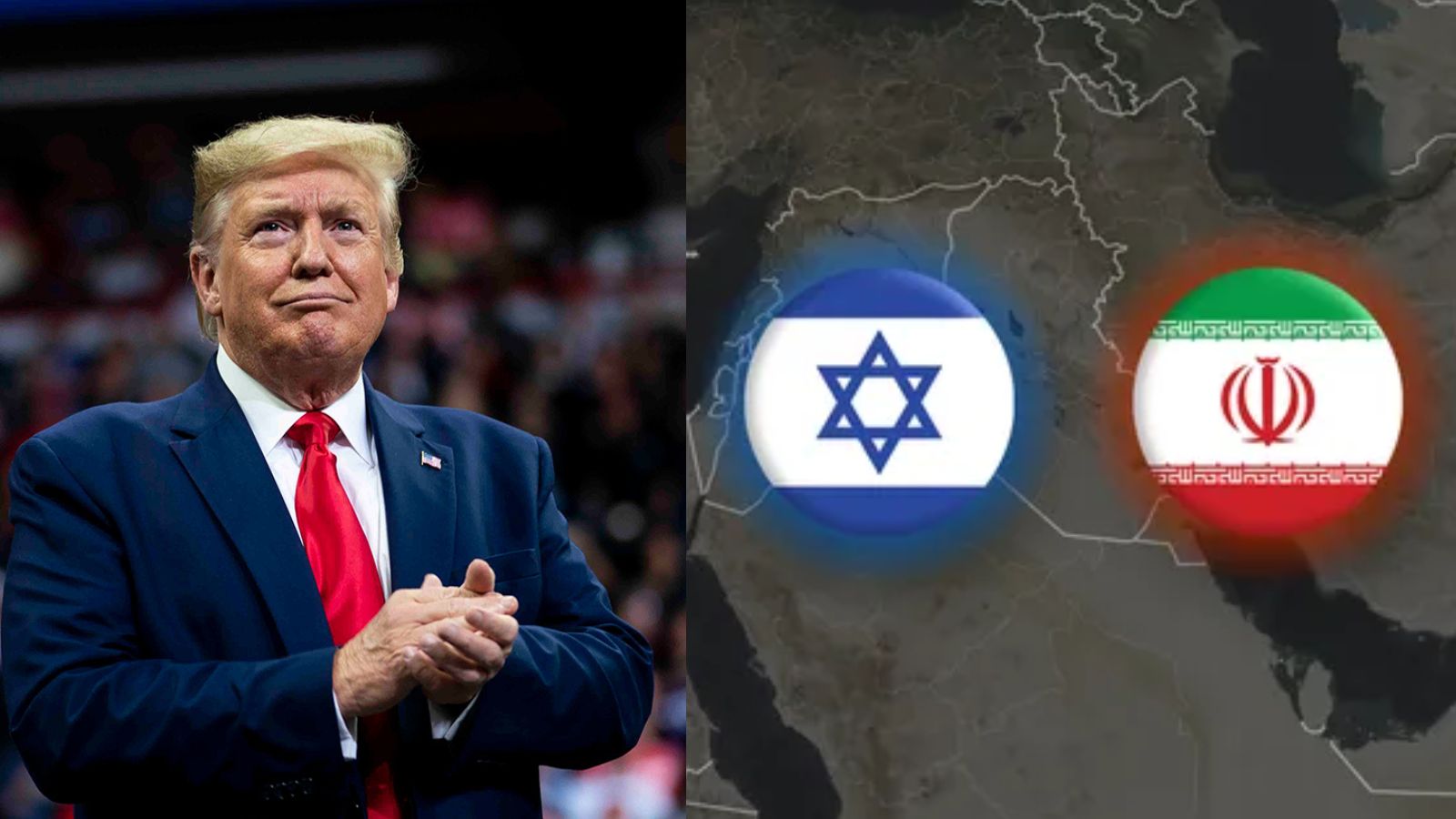
Category: Global

  • Trump thinks Gaza ceasefire possible within next week

    Trump thinks Gaza ceasefire possible within next week

    United States (US) President Donald Trump said on Friday he believes a ceasefire in the Gaza may be reached “within the next week”.

    Speaking to reporters during an event celebrating a Congo-Rwanda accord in the Oval Office, the US president stated that he believes a ceasefire is close, pointing out that he had just been talking to some of the people involved in attempting to reach a ceasefire between Israel and Hamas.

    President Trump said that there is a “terrible” situation going on in Gaza, adding, “We are supplying a lot of money, food, and aid to those areas.”

    “We are not involved in it; however, we are involved because so many people are dying,” he said, noting, “I look at those crowds of people that have no food, no anything.”

    By the end of May, the US president’s Middle East envoy, Steve Witkoff, proposed a 60-day ceasefire, noting that Hamas would release 10 living hostages and the remains of 18 dead hostages who were taken to Gaza. 

    Under the proposal, it was advised that Israel would release 125 “life sentence” prisoners, 1,111 Palestinian detainees and 180 killed Palestinians as part of the deal.

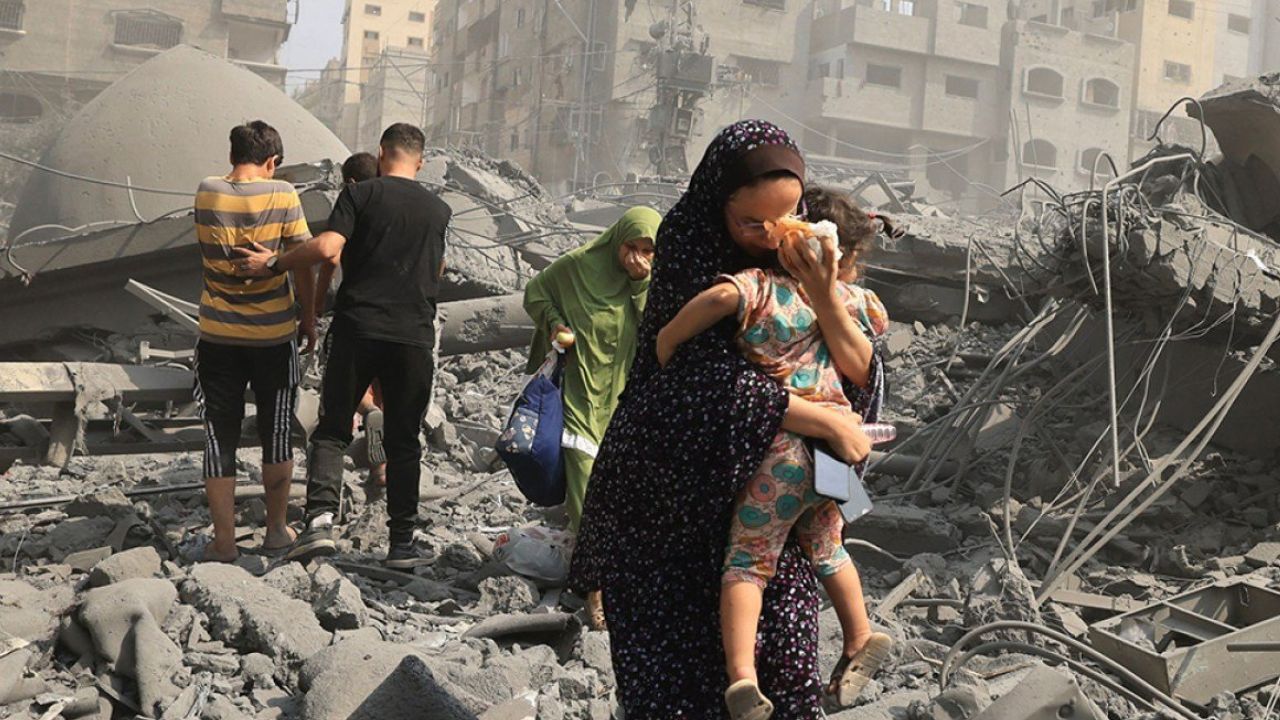
    Israel has carried out genocide in Gaza with at least 56,000 people dead, most of them women and children.

  • Drugs found in US flour bags sent to Gaza

    Drugs found in US flour bags sent to Gaza

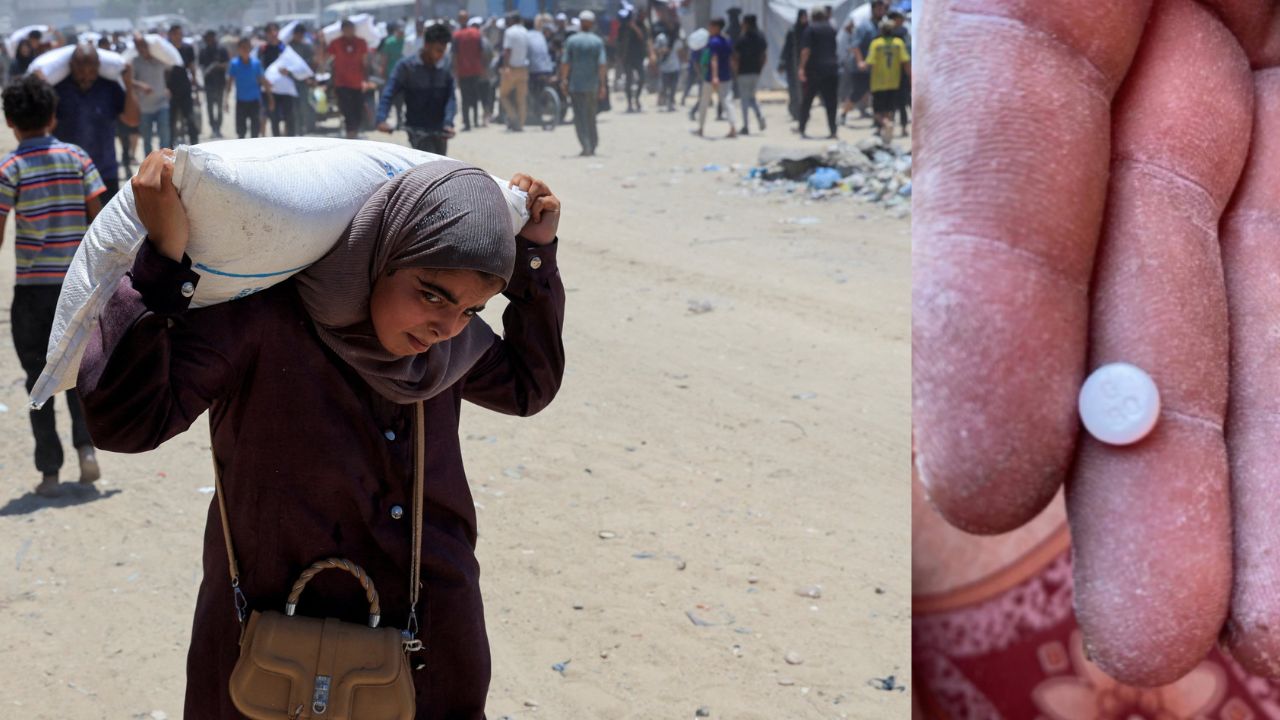
    Palestinian authorities in Gaza said on Friday that they found narcotic pills inside flour bags sent from the United States to the Israeli-besieged enclave.

    In a statement, Gaza’s government media office said people discovered Oxycodone, a strong prescription painkiller, inside the flour bags they received from aid distribution points run by the US in Gaza. Officials warned that the pills may have been crushed or mixed into the flour on purpose, which they called a serious threat to public health.

    The media office blamed Israel for what it called a “heinous crime” meant to spread addiction and break apart Palestinian society from within. The statement said using drugs like this is part of the ongoing genocide against Palestinians and called it a “soft weapon in a dirty war against civilians.”

    Israel has recently set up four aid distribution points in southern and central Gaza. According to Israeli media, the plan is to encourage Palestinians to move from northern Gaza to the south. However, this plan was opposed by the international community and the UN, which see it as a way for Israel to get around the normal UN aid process.

    Since May 27, Israeli forces have killed at least 549 Palestinians and wounded over 4,000 near aid centers and UN food trucks. Despite global calls for a ceasefire, Israel’s military genocide in Gaza has continued since October 2023, killing more than 56,300 Palestinians, most of them women and children.

    Last November, the International Criminal Court issued arrest warrants for Israeli Prime Minister Benjamin Netanyahu and former Defense Minister Yoav Gallant for war crimes and crimes against humanity in Gaza. 

    Israel also faces a genocide case at the International Court of Justice over its actions in the enclave.

  • Influencer announces his own death in emotional farewell video

    Influencer announces his own death in emotional farewell video

    Tanner Martin, an American social media influencer from Utah, US, announced his own death through a heartfelt pre-recorded video shared on his social media account.

    According to media reports, Tanner was from the state of Utah. In 2020, at the age of 25, he was diagnosed with stage 4 colorectal cancer. Following the diagnosis, he began documenting his daily life and health journey on social media.

    He battled cancer for five years. Following his death, his wife shared a pre-recorded video on his social media account.

    “If you’re watching this video, it means I have passed away,” he says in the video.

    In the emotional message, Tanner reflected on his life and explained why he chose to pre-record the news. “My life was very difficult. I decided to make this video to announce my death because I saw someone else do it a while ago,” he said.

    “I think this is a great opportunity to express my thoughts. Life is an incredible thing. I really enjoyed living it. You should, too. I loved meeting people who lived life to the fullest, and I truly believe there is something beyond this world,” he added.

    Tanner also shared that a GoFundMe campaign had been created to support his wife and their baby daughter, AmyLou. 

    He said the fundraiser would help replace his income, pay for babysitting, school, and even AmyLou’s wedding in the future. “These are all things Shay and I would have done together. If I’m gone, it is going to be very hard for her to manage alone,” he said.

    The fundraiser encourages people to donate whatever they can, whether it is one dollar or more, to help “Tanner’s two greatest loves, Shay and AmyLou, move forward with hope and security.” 

    Since the campaign launched, it has raised more than $505,000, crossing the original goal of $250,000. Due to the overwhelming support, the goal has now been raised by another $400,000.

  • Over 3,150 Indians evacuated from Iran under Operation Sindhu

    Over 3,150 Indians evacuated from Iran under Operation Sindhu

    India has repatriated over 3,150 citizens from Iran under Operation Sindhu, launched in response to rising tensions following Israeli strikes on Iranian nuclear sites earlier this month.

    The Ministry of External Affairs announced that a special flight carrying 296 Indian nationals, along with four  Nepalese, arrived in New Delhi from Mashhad on June 25. The total number of Indians evacuated since the operation’s commencement is now at 3,154.

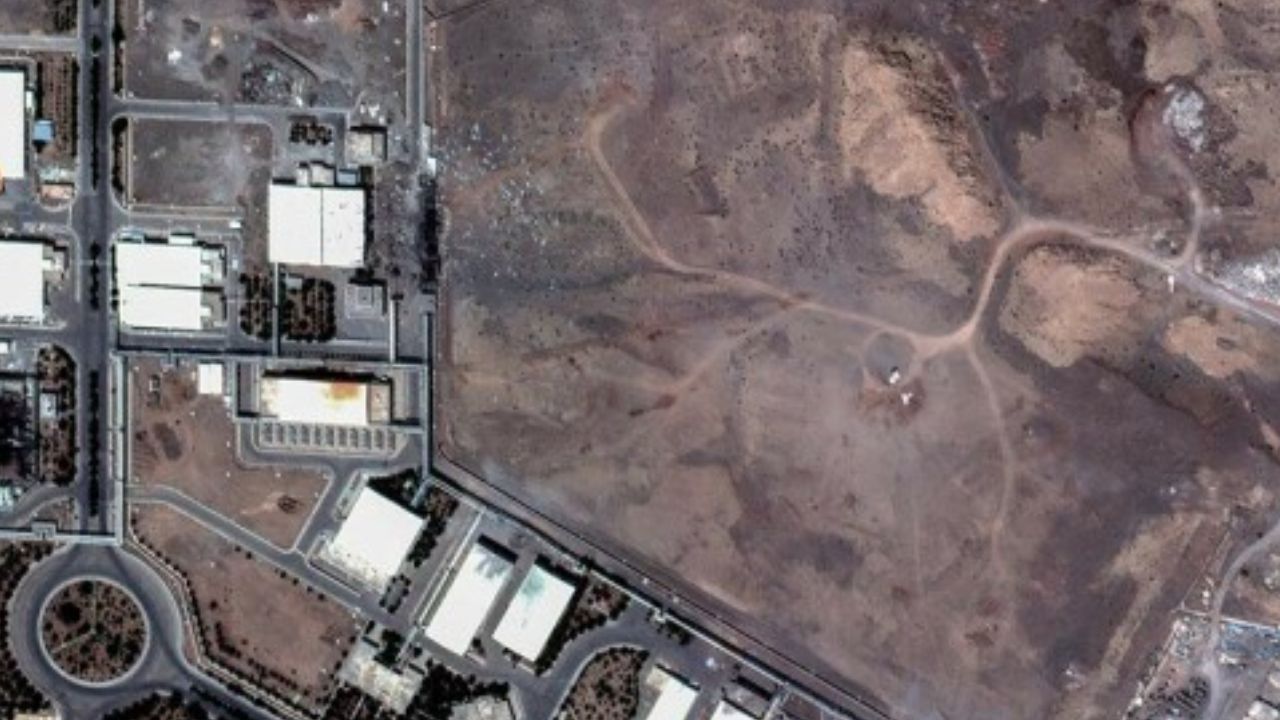
    The evacuation operation was announced by the Indian government on June 18, following the escalation between Iran and Israel after Israeli airstrikes targeted multiple nuclear and military sites in Fordow, Natanz, and Isfahan.

    The initial group of evacuees consisted of 110 Indian students who made the journey by road to Armenia. They were flown from Yerevan and arrived in New Delhi on June 19. Indian authorities have also arranged flights from main Iranian cities such as Tehran, Mashhad, and Isfahan, collaborating with local organisations.

    Evacuees include students, professionals, and travellers who found themselves in Iran during the escalation. Citizens from Nepal stuck in Iran have also been catered to through this operation as part of regional collaboration.

    The repatriation has taken place amidst a 12-day military confrontation between Iran and Israel that began on June 13 and led to widespread missile and drone attacks. While both countries claimed success after the exchange, early assessments by US intelligence suggest that Iran’s nuclear programme suffered temporary disruptions rather than long-term setbacks.

    A ceasefire was established with the involvement of the US, which came into effect on June 24. Israel has removed airspace restrictions, and both nations have shown a willingness to maintain the truce, despite some isolated claims of violations emerging from each side.

    Operation Sindhu is ongoing as a preventive measure amidst fears that the current pause in hostilities might not endure for long. Indian authorities continue to closely monitor the situation.

  • US tells American women ‘not to travel alone’ in India

    US tells American women ‘not to travel alone’ in India

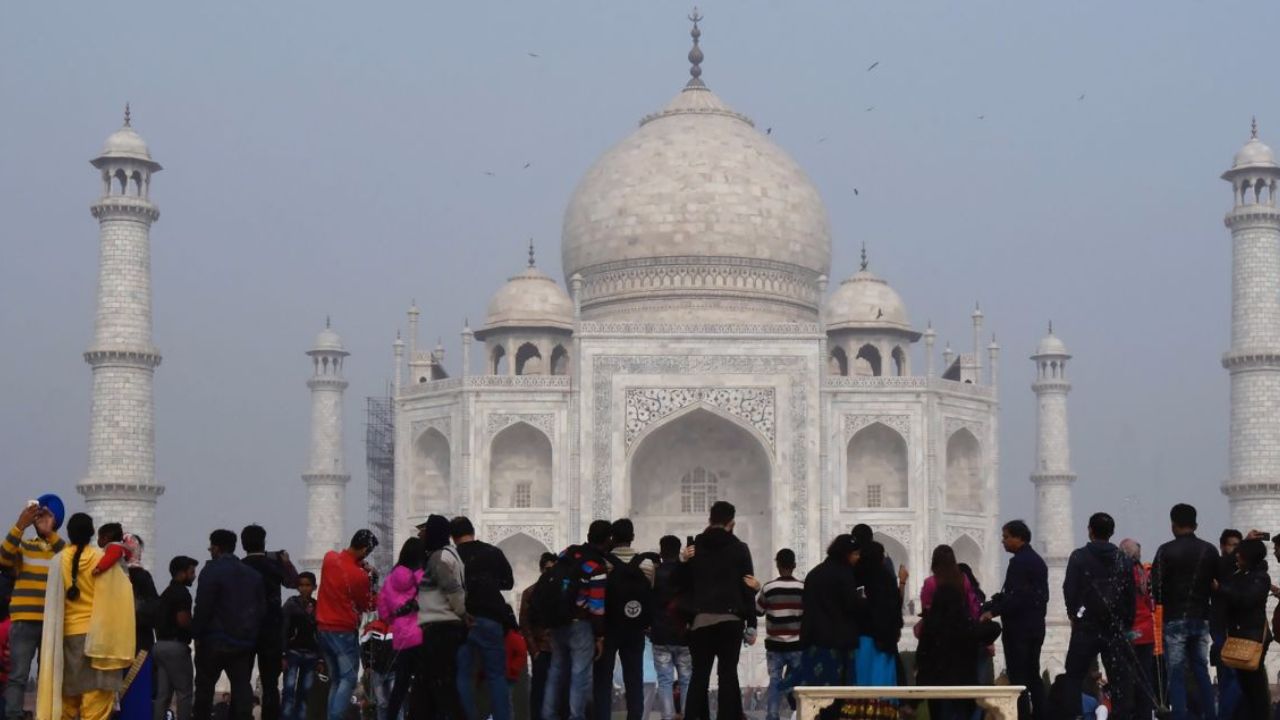
    The US State Department has recently updated a travel advisory for India, urging travellers to “exercise increased caution” due to “crime and terrorism”.

    “Rape is one of the fastest-growing crimes in India. Violent crimes, including sexual assault, happen at tourist sites and other locations,” the advisory read.

    Foreigners often face challenges and concerns while visiting India. In a harrowing incident, a 30-year-old French national in Udaipur for an advertisement shoot was allegedly raped earlier this week by a member of an event management firm, according to Indian media reports.

    NDTV quoted Udaipur Superintendent of Police (SP) Yogesh Goyal as saying, “On Sunday evening, some French tourists were at a restaurant called Greek Farm with some employees of an event management company. They had a meal together and also consumed drinks. The survivor has said that she went in the car with one Siddharth (also known as Pushparaj Ojha), who then took her to his hotel room and sexually assaulted her.”

    The travel advisory said that terrorists may attack with little or no warning, adding, “They target tourist locations, transportation hubs, markets/shopping malls, and government facilities.”

    “The US government has limited ability to provide emergency services to US citizens in rural areas. These areas stretch from eastern Maharashtra and northern Telangana through western West Bengal. Due to risks, US government employees working in India must obtain special authorisation to travel to these states,” the advisory said.

    Specifying the do’s and the don’ts, the advisory cautioned its citizens to not carry out a satellite phone or a Global Positioning System (GPS) device in India, as it’s illegal in the country and may result in a penalty of $200,00 or jail time of up to three years, noting, “Do not travel alone especially if you are a woman.”

    “We highly recommend that you buy insurance before you travel. Check with your travel insurance provider about evacuation assistance, medical insurance, and trip cancellation coverage.”

    Indian Illegally Occupied Jammu and Kashmir (IIOKJ) was mentioned for extra caution, as the advisory listed out some spots where US government employees should not travel without prior permission.

    The advisory informed the travellers that violence occurs in tourist spots in “Kashmir Valley: Srinagar, Gulmarg, and Pahalgam”, adding that the Indian government does not allow foreign tourists to visit certain areas along the LOC. 

    It instructed the tourists to not travel to Central and East India due to “terrorism” as Naxalites are active in a large area of India that spans from eastern Maharashtra and northern Telangana through western West Bengal.

    “US government employees working in India also need approval to travel to the eastern region of Maharashtra and the eastern region of Madhya Pradesh. US citizens are advised not to cross the India-Nepal border by land due to the risk of immigration related detention and fines,” it said.

    Regarding Manipur, the advisory further advised the US employee against travelling in the state, saying they must get “prior approval before visiting Manipur”.

  • Trump declares Iran nuclear victory, Intel says otherwise

    Trump declares Iran nuclear victory, Intel says otherwise

    A preliminary U.S. intelligence assessment has concluded that recent American airstrikes on Iran’s nuclear facilities have only delayed, but not destroyed, its nuclear program despite President Donald Trump’s claims as a fragile ceasefire took hold between Iran and Israel.


    According to the Defense Intelligence Agency report, underground facilities were mostly intact although the entrances to two uranium-enrichment sites were sealed.

    Three people familiar with the findings said that Iran’s enriched uranium stockpile was not destroyed and that some centrifuges were undamaged.


    The strikes, carried out over the weekend, marked the U.S entry into the 12-day Iran-Israel conflict. A ceasefire was declared by President Donald Trump at 0500 GMT on Tuesday, after days of escalating military exchanges.


    Trump had claimed that the U.S. use of 30,000-pound bombs had “obliterated” Iran’s nuclear program. 

    He reiterated the point in a Truth Social post on Tuesday morning:

    “FAKE NEWS CNN, TOGETHER WITH THE FAILING NEW YORK TIMES, HAVE TEAMED UP IN AN ATTEMPT TO DEMEAN ONE OF THE MOST SUCCESSFUL MILITARY STRIKES IN HISTORY. THE NUCLEAR SITES IN IRAN ARE COMPLETELY DESTROYED! BOTH THE TIMES AND CNN ARE GETTING SLAMMED BY THE PUBLIC!”

    U.S. officials told the United Nations Security Council, however, that the strikes had “degraded” Iran’s nuclear infrastructure.

     According to one source, because a large portion of the program is underground, it might have only been delayed the program by one or two months. 

    Iran maintains that the goal of its nuclear research is to produce energy for civilian use.

    Despite its fragility, the ceasefire prompted Israel and Iran to lift civilian restrictions on Tuesday. Israel resumed regular operations, including at Ben Gurion Airport, while Iran reopened its airspace. 

    Markets responded with a global rally as oil prices dropped, reflecting reduced fears of disruption in the Gulf.

    Israeli Prime Minister Benjamin Netanyahu declared: 

    “We have removed two immediate existential threats to us: the threat of nuclear annihilation and the threat of annihilation by 20,000 ballistic missiles.” 


    According to Iranian media, Iranian President Masoud Pezeshkian also claimed a “great victory” and assured Saudi Crown Prince Mohammed bin Salman that Tehran was ready to resolve tensions with the United States.


    The conflict began on June 13 when Israel launched a surprise offensive targeting Iranian nuclear facilities and top military commanders.

     Iran retaliated with a barrage of missiles on Israeli cities and military bases in the largest escalation since the 1980s Iran-Iraq war.

    Iran reported 610 deaths and over 4,764 injuries from Israeli airstrikes. Iran’s missile response killed 28 Israelis, the first time its air defenses were breached on this scale.

    Tensions lingered after the ceasefire announcement, as both nations accused each other of early violations.
     

    Trump, before departing for a NATO summit, expressed frustration:

    “I’ve got to get Israel to calm down now,” he said.

    “Iran and Israel had been fighting so long and so hard that they don’t know what the f*** they’re doing.”

     Israeli officials said that in response for Iranian missiles fired after the ceasefire began, a radar facility close to Tehran was hit. 

    Iran denied firing any missiles at that time and claimed Israel continued its strikes well beyond the agreed window.


    The administration continued talks with Iranian counterparts, and Trump personally brokered the ceasefire with Israeli Prime Minister Netanyahu, according to U.S. sources.

    Both countries said they would uphold the ceasefire as long as the other did not break it.

    Iran’s military command also warned Israel and the U.S. to learn from the “crushing blows” it delivered during the conflict. Israeli military chief Eyal Zamir said the current phase of the conflict had ended but added that operations against Iran-backed militants in Gaza would resume.

  • Trump plays deft hand with Iran-Israel ceasefire but doubts remain

    Trump plays deft hand with Iran-Israel ceasefire but doubts remain

    Israel, Iran and Trump himself all declared victory after 12 days of conflict that culminated Saturday in the United States bombing Iran’s key nuclear sites.

    After facing criticism — even within his base — for breaking his campaign promises against military intervention abroad, Trump was able to show a quick way out, and to portray himself, despite the bombing, as a peacemaker.

    “I don’t think the Israeli government was able to sustain a long-term war, but I think the main factor here was President Trump. He did not want to see a new war in the region break out under his watch,” said Will Todman, a senior fellow at the Middle East program at the Center for Strategic and International Studies.

    “That is what changed the calculation for Israel and for Iran as well.”

    Trump startled even close aides and allies by announcing the ceasefire on social media late Monday — the middle of the night in the Middle East — just after Iran fired missiles at a US base in Qatar, in what appeared to be a choreographed response as the rockets were easily shot down.

    Trump chose not to retaliate against Iran and on Tuesday, returned to his electronic bully pulpit to urge Israel to abort new attacks on Iran.

    Iran needed an off-ramp as it suffered its worst assault since the 1980-88 war with Iraq. Trump also appeared to offer incentives to sanctions-bound Iran by suggesting an easing of US pressure on China to stop buying Iranian oil.

    Israel’s military, while proving itself to be the region’s strongest, has been stretched by campaigns in Gaza, Syria and Lebanon, and with Iranian strikes this month, the Israeli population endured the most prolonged, deadly air attacks seen in decades.

    After Israeli Prime Minister Benjamin Netanyahu hailed Trump’s intervention, the president’s warning Tuesday likely also showed him the limits to US support, Todman said.


    What was achieved?

    Trump hailed his intervention as a monumental success, although critics have long warned that an attack could make Iran rush, more clandestinely, to a nuclear bomb.

    While Trump claimed Iran’s nuclear program was “obliterated,” a classified report found that the US bombing did not destroy the core parts of the three nuclear sites, according to CNN and The New York Times.

    Brian Katulis, a senior fellow at the Middle East Institute, said it’s too early to know if the ceasefire would hold, either.

    He said that Gulf Arab powers, led by well-connected Qatar, did the hard work of quiet diplomacy as they sought a return to calm in their region.

    “Trump vocally used his troll power to try to restrain the actions of Israel and Iran, but that matters less compared with the role that these countries continuously play,” Katulis said of Gulf Arab states.

    Katulis, who worked on the Middle East for former president Bill Clinton, said the Trump administration’s tactical military operations, combined with “a heavy dose of strategic communications” confused Americans and global actors alike “about what it is we’re actually trying to get done.”


    Showing heft at home

    One area where Trump’s diplomacy had clear — if short-term — benefits was at home.

    A prolonged US military campaign “had the potential to really fracture President Trump’s own base of support,” said Jonathan Panikoff, a senior fellow at the Atlantic Council.

    But now, “my guess is the majority of his MAGA and other Republican base will stay relatively unified, even if they were unthrilled in some quarters,” he said.

    While traditional hawks of Trump’s Republican Party largely cheered the Iran strikes, they were widely but not universally denounced by rival Democrats.

    Annelle Sheline, who resigned from the State Department to protest policies under former president Joe Biden and is now at the Quincy Institute for Responsible Statecraft, said it was critical for Trump to enforce the ceasefire.

    She noted Israel has bombed Lebanon and Gaza during truces, saying Netanyahu believed he enjoyed “America’s unconditional support.”

    “Trump demonstrated that he can rein in Israel when he chooses to do so. Now he must do the same to insist on a ceasefire in Gaza,” she said.

  • Muslim socialist newcomer stuns America to become New York mayor

    Muslim socialist newcomer stuns America to become New York mayor

    New York City Democrats chose 33-year-old Muslim socialist Zohran Mamdani as their mayoral candidate in Tuesday’s elections, stunning his opponent, former New York governor Andrew Cuomo.

    “Tonight was not our night,” Cuomo, a political veteran who was vying to come back from a sexual harassment scandal, told supporters at an election night party.

    “I called him, I congratulated him… he won.”

    In what appears to be the left-leaning city’s rebuke of the Democratic party’s veteran moderates — and New York’s rarely claimed native son, Republican US President Donald Trump — Mamdani led with 43 percent of the vote with 95 percent of ballots counted, city officials reported.

    The party’s primary contest featured almost a dozen candidates seeking to become mayor of the biggest US city, where registered Democrats outnumber Republicans three to one.

    Voters cast ballots during a smothering heatwave before polls closed at 9:00 pm (0100 GMT Wednesday), but results may take time to finalize.

    The contest is ranked-choice, with voters asked to select five candidates in order of preference, and neither Cuomo nor Mamdani claimed the required majority Tuesday.

    If no candidate wins 50 percent of the vote, election officials begin eliminating lowest-ranking candidates and recounting, a process that can take days.

    With the Democrats reeling nationally from Trump’s presidential election last year, the high-profile city race has done little to calm party nerves.

    But Mamdani’s upbeat campaign, built with youthful social media savvy and campaign promises to improve the city’s affordability, appears to have resonated with voters.

    Cuomo stepped down as New York governor four years ago after multiple women accused him of sexual harassment. He was also accused of mismanaging the state’s response to the Covid pandemic.

    Staunchly pro-Israel Cuomo led in polls for most of the race, with massive name recognition as the son of another New York governor, as well as support from powerful centrist figures including former president Bill Clinton.

    Mamdani, meanwhile, is backed by the Democratic Socialists of America — the kind of niche, leftist affiliation that might work in the Big Apple but many analysts warn against.

    The fact that Mamdani speaks out for Palestinians and has accused Israel of “genocide” also makes him a prime target for Trump.

    His supporters include two favorite Trump foils — fiery leftist Senator Bernie Sanders and progressive congresswoman Alexandria Ocasio-Cortez, who both congratulated Mamdani on Tuesday.

    “Billionaires and lobbyists poured millions against you and our public finance system. And you won,” Ocasio-Cortez wrote on X.

    Sanders posted on X to say: “You took on the political, economic and media Establishment — and you beat them.”

    Curtis Sliwa, the Republican candidate, said Mamdani “is too extreme for a city already on edge.”

    He added on X: “This is not the time for radical politics. It is time for real leadership. I have fought for this city my whole life. Not for fame or power but because I believe in the people who live here… Let’s win this on November 4th!”

    Voters told AFP they saw the ballot as an opportunity to guide party politics.

    “I see it as a referendum of the Democratic Party, whether we lean more towards the centrist candidate, who’s maybe from a different generation of politicians and people in society, or a younger, left-leaning, more ambitious, idealistic party,” voter Nicholas Zantal, 31, said.

    – Big ideas, low experience –

    Currently a New York state assemblyman representing the borough of Queens, Mamdani stands out for his energetic campaigning style and eye-catching policy proposals that include freezing rent for many New Yorkers, providing free bus service, and universal childcare.

    And in a wildly expensive city, where a three-bedroom apartment can easily cost $6,000 a month, he has surged from behind.

    “Tomorrow is ours if we want it,” Mamdani, who was born in Uganda and is of Indian descent, said late Monday in a social media post. “We are on the cusp of toppling a political dynasty, and delivering a New York everyone can afford.”

    Voter Eamon Harkin, 48, said prices were his “number one issue.”


    “What’s at stake is primarily the affordability of New York,” he said.

    But Sheryl Stein, who works in tourism marketing, was skeptical.

    “I like youth,” she said. But Mamdani having “no experience and no proven track record to run the largest city in this country and one of the largest in the world, is pretty scary.”

    The confirmed winner of the Democratic Party nomination will face several contenders in November — including the current, scandal-plagued mayor, Eric Adams, who is a Democrat but has vowed to run again as an independent.
  • ‘Stop the attack’; Trump raised his voice at Netanyahu in tense call

    ‘Stop the attack’; Trump raised his voice at Netanyahu in tense call

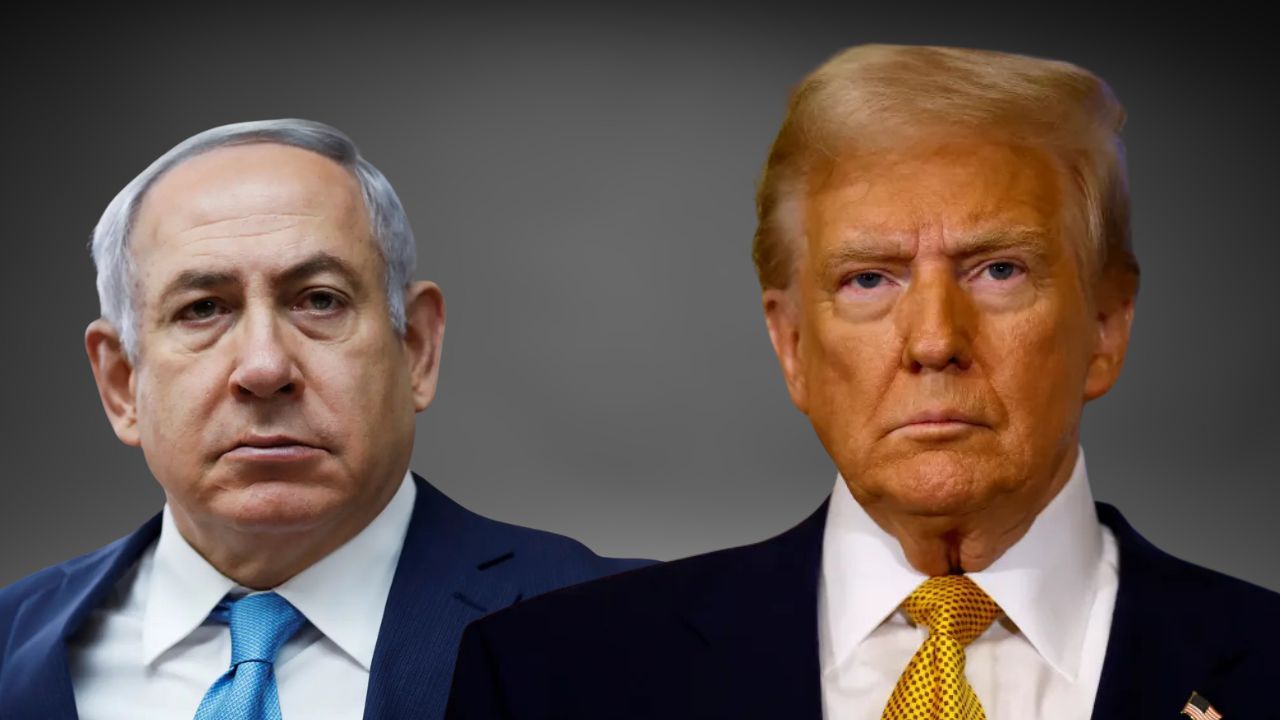
    United States (US) President Donald Trump held a telephonic conversation with Israeli Prime Minister (PM) Benjamin Netanyahu minutes before Israeli Air Force (IAF) fighter jets were supposed to launch a strike on Iran on Tuesday, The Jerusalem Post has reported.

    Citing a source familiar with the development, Jerusalem Post said that US President Trump raised his voice at the Israeli PM, telling him, “Stop the attack.”

    The report claims that Netanyahu could not say much during the call, though he repeatedly expressed gratitude to Trump.

    “It was a tough conversation between Netanyahu and President Trump. Trump viewed this as a personal achievement and made it clear that no one, absolutely no one, would undermine it,” The Jerusalem Post quoted the source as saying.

    Following the call, IAF pilots were directed to cease the attack that would have threatened the fragile ceasefire. As a compromise, Israel struck a radar station near Tehran, far from the originally planned targets, said the Post.

    On Tuesday, after the ceasefire was announced by the US president, Israeli forces alleged that Tehran fired a missile at Tel Aviv, an accusation Iran vehemently rejected.

    However, despite clarification from Iran, Israel had vowed to respond with more strikes in Iranian cities.

    Speaking to reporters outside the White House before departing for the North Atlantic Treaty Organisation (NATO) summit on Tuesday morning, Trump rebuked both Israel and Iran, saying that both sides “violated the ceasefire”. 

    Using a four lettered word, he said, “We basically have two countries that have been fighting so long and so hard that they don’t know what the f*** they are doing, you understand that?”

    “Israel, as soon as we made the deal, dropped a load of bombs the likes of which I’d never seen before, the biggest load that we’ve seen. I’m not happy with Israel … I’m not happy with Iran either, but I’m really unhappy if Israel is going out this morning,” a visibility angry Trump stated. 

    Following the statement, he wrote on Truth Social on the same day that Israel is not going to attack Iran, adding, “the ceasefire is in effect.”


    The conflict between Iran and Israel began when the latter, on June 13, launched strikes in the former’s cities, killing its top commanders and nuclear scientists.

    Israel said that it wanted to remove any chance of Tehran developing nuclear weapons. Israel itself is widely assumed to have nuclear weapons, which it neither confirms nor denies.

    Iran says its nuclear programme is for peaceful purposes only. Iranian officials have repeatedly said they do not plan to develop nuclear weapons but will pursue its right to nuclear energy and research.

  • Trump says Iran-Israel ceasefire in force

    Trump says Iran-Israel ceasefire in force

    US President Donald Trump said a ceasefire between Iran and Israel was in force on Tuesday, urging both sides to “not violate it” on the 12th day of the war between the two arch-foes.

    “THE CEASEFIRE IS NOW IN EFFECT. PLEASE DO NOT VIOLATE IT!” he wrote on his Truth Social platform.

    The US leader had earlier said the truce would be a phased 24-hour process beginning at around 0400 GMT Tuesday, with Iran unilaterally halting all operations first. He said Israel would follow suit 12 hours later.

    Israeli rescuers said four people were killed in an Iranian strike, after state media in the Islamic republic reported waves of missiles were headed toward Israel.

    Neither Iran nor Israel have confirmed the agreement touted by Trump on ending the conflict that has killed hundreds in Iran and two dozen in Israel.

    Only hours before Trump’s latest announcement, Iranian Foreign Minister Abbas Araghchi had said that “as of now, there is NO ‘agreement’ on ceasefire or cessation of military operations”.

    “However, provided that the Israeli regime stops its illegal aggression against the Iranian people no later than 4 am Tehran time, we have no intention to continue our response afterwards,” he said on social media.

    But Israel’s army said sirens were activated in northern Israel — where moments before Iran’s state broadcaster IRIB reported a wave of missiles were headed.

    At least four people were killed in the multi-wave Iranian missile attack shortly before the staggered ceasefire announced by Trump was meant to enter into force, emergency services and the military said.

    The Magen David Adom rescue service said three people were pronounced dead at the scene of a strike in the southern city of Beersheba while a fourth was added in an update to its figures.

    Explosions also continued to rock Tehran overnight, with blasts in the north and centre of the Iranian capital described by AFP journalists as some of the strongest since the conflict broke out.

    Any cessation in hostilities would come as a huge relief to world leaders frantic about an escalation in violence igniting a wider conflagration.

    The adversaries had been swapping missile fire since Israel carried out surprise “preemptive” strikes against Iran on June 13, targeting nuclear and military sites, and prompting Trump to warn of a possible “massive” regional conflict.

    – Strikes on US base –

    The US leader’s truce announcement came hours after Iran launched missiles at the largest US military facility in the Middle East — Al Udeid Air Base in Qatar — in a move Trump shrugged off as “very weak.”

    Calling for a de-escalation, Trump said Tehran had given advance notice of the barrage.

    Iran’s National Security Council confirmed having targeted the base “in response to the US aggressive and insolent action against Iran’s nuclear sites and facilities”.

    But it added that the number of missiles launched “was the same as the number of bombs that the US had used” — a signal that it had calibrated its response to be directly proportional rather than escalatory.

    “This was calibrated and telegraphed in a way that would not result in any American casualties, so that there is an off ramp for both sides,” Ali Vaez, a senior advisor at the International Crisis Group, told AFP.

    The offensive came after the United States joined its ally Israel’s military campaign against Iran, attacking an underground uranium enrichment centre with massive bunker-busting bombs and hitting two other nuclear facilities overnight Saturday into Sunday.

    As international concern mounted that Israel’s campaign and the US strikes could ignite a wider conflict, French President Emmanuel Macron insisted that “the spiral of chaos must end” while China warned of the potential economic fallout.


    – ‘Blatant aggression’ –

    Iran said its assault in Qatar wasn’t targeting the Middle Eastern neighbour, but the government in Doha accused Tehran of “blatant aggression” and claimed its right to a “proportional” response.

    Iran’s state media quoted the Revolutionary Guard Corps announcing that six missiles had hit Al Udeid, which had been evacuated beforehand, according to the Qataris.

    The broadside was made up of “short-range and medium-range ballistic missiles,” a US defence official said.

    AFP reporters heard blasts in central Doha and in Lusail, north of the capital, on Monday evening, and saw projectiles moving across the night sky.

    Iranians gathered in central Tehran to celebrate, images on state TV showed, with some waving the flag of the Islamic republic and chanting “Death to America”.

    Qatar earlier announced the temporary closure of its airspace in light of “developments in the region”, while the US embassy and other foreign missions warned their citizens to shelter in place.

    Israeli strikes on Iran have killed more than 400 people, Iran’s health ministry has said. Twenty-four people have died in Iran’s attacks on Israel, according to official figures.