Category: Global

  • Ben & Jerry’s cofounder removed from Senate after Gaza protest

    Ben & Jerry’s cofounder removed from Senate after Gaza protest

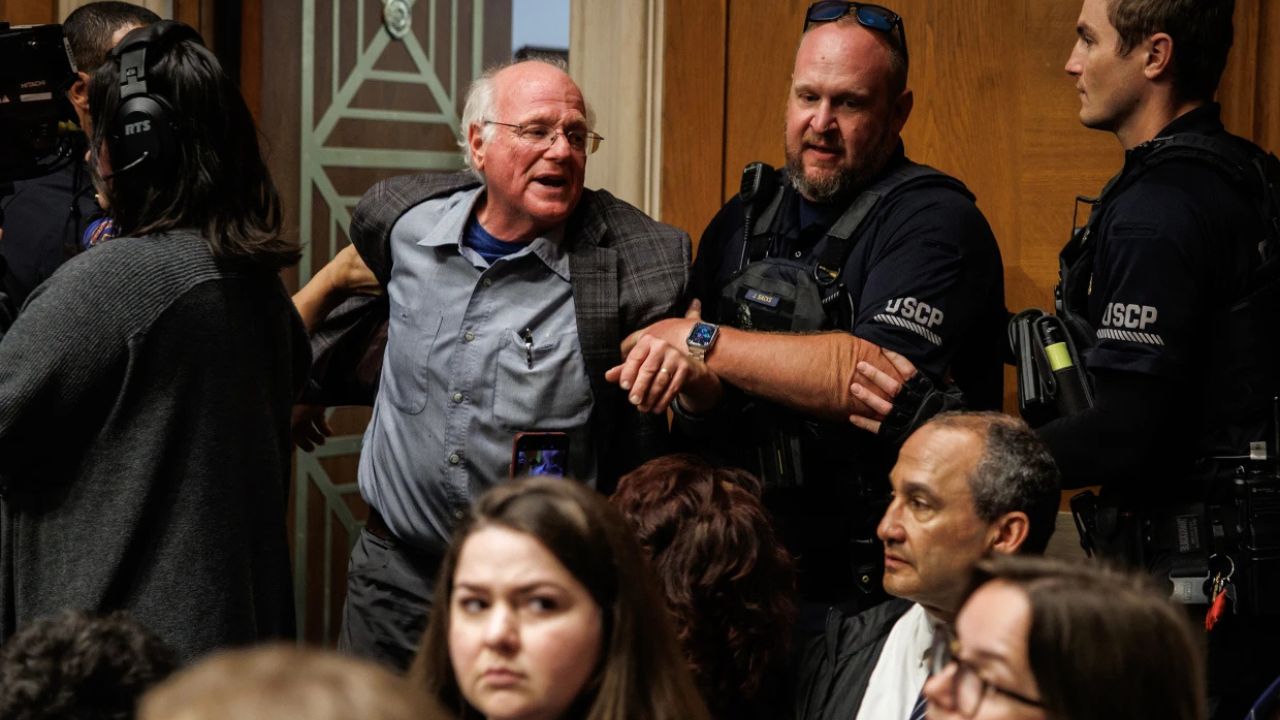
    Ben Cohen, co‑founder of Ben & Jerry’s ice cream and a longtime progressive activist, told AFP he was speaking for millions of Americans outraged by the “slaughter” in Gaza after his removal from a US  Senate hearing on Wednesday.

    Cohen, 74, was among a group of protesters who startled Health Secretary  Robert F Kennedy Jr. by interrupting his testimony about his department’s budget proposal.

    Shouting that “Congress pays for bombs to kill children in Gaza” while lawmakers move to slash Medicaid — the health insurance program for low‑income families — the businessman and philanthropist was placed in handcuffs by Capitol Police.

    He urged senators to press Israel to let food reach “starving kids” as he was led away.

    “It got to a point where we had to do something,” Cohen said in an interview after his release, calling it “scandalizing” that the US approved “$20 billion worth of bombs” for Israel even as social programs are squeezed back home.

    “The majority of Americans hate what’s going on, what our country is doing with our money and in our name,” he said.

    US public opinion toward Israel has become increasingly unfavorable, especially among Democrats, according to a Pew Research Center Poll last month.

    Beyond the spending, Cohen framed the issue as a moral and “spiritual” breach.

    “Condoning and being complicit in the slaughter of tens of thousands of people strikes at the core of us as far as human beings and what our country stands for,” he said, pointing to the fact that the United States pours roughly half its discretionary budget into war‑related spending.

    “If you spent half of that money making lives better around the world, I think there’d be a whole lot less friction.”

    Invoking a parenting analogy, he added: “You go to a three-year-old who goes around hitting people and you say ‘Use your words.’ There’s issues between countries but you can work them out without killing.”

    A longtime critic of Israeli policy, Cohen last year joined prominent Jewish figures in an open letter opposing the pro‑Israel lobby AIPAC. “I understand that I have a higher profile than most people and so I raise my voice, it gets heard. But I need you and others to understand that I speak for millions of people who feel the same way.”

    Israel intensified the genocide of Palestinians in Gaza after the October  7, 2023, attack by Hamas, which resulted in the deaths of 1,218 people on the Israeli side, mostly civilians, according to an AFP tally based on official figures.

    Israeli military aggression has killed at least 52,928 people in Gaza, mostly civilians, according to figures from the territory’s Hamas-run health ministry.

    Gaza is at “critical risk of famine,” with the entire population facing a food crisis after more than two months of an Israeli aid blockade, and 22 percent facing a humanitarian “catastrophe,” a UN-backed food security monitor warned this week.
  • Gaza rescuers say Israeli strikes kill at least 29 near hospital

    Gaza rescuers say Israeli strikes kill at least 29 near hospital

    Gaza rescuers said Israeli strikes close to a hospital in the  Palestinian territory killed at least 29 people Tuesday, after Prime Minister Benjamin Netanyahu announced the military would enter Gaza “with full force” in the coming days.

    The release of 21-year-old Israeli-American Edan Alexander, who had been in Hamas captivity since their October 2023 attack on Israel, offered a brief pause in the fighting on Monday.

    But the strikes resumed amid fierce new criticism of Israel’s tactics in the genocide.

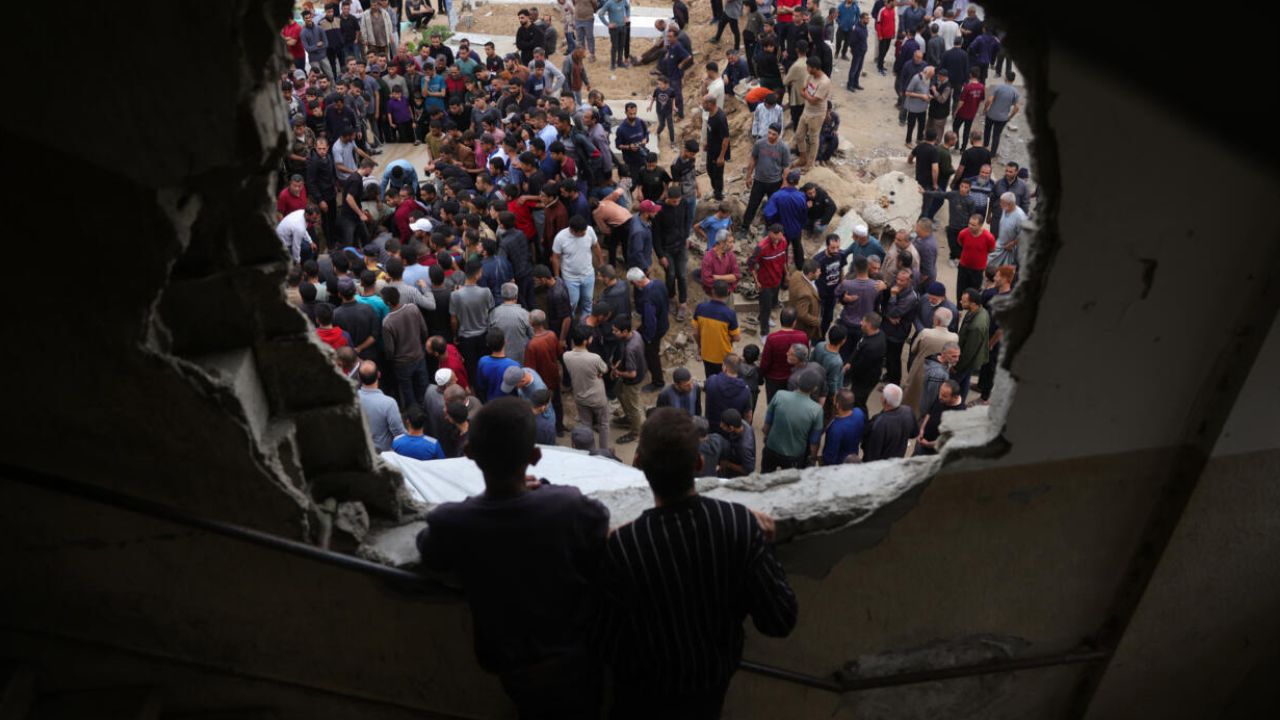
    Gaza’s civil defence agency said at least 29 people were killed in Israeli strikes Tuesday around the European hospital in Khan Yunis. The Israeli military said it hit a Hamas “command and control centre”.

    AFPTV footage showed large craters gouged into the ground and cracks in the courtyard outside the hospital. A damaged bus was lodged in one hole.

    “Everyone inside the hospital — patients and wounded alike — was running in fear, some on crutches, others screaming for their children, while others were being dragged on beds,” Amro Tabash, a local photojournalist, told AFP.

    Earlier, the military said it had struck Hamas militants inside “a command and control centre” at Nasser Hospital, also in Khan Yunis.

    Gaza’s health ministry said that strike killed two people. One of the dead was journalist Hassan Aslih, the civil defence said.

    Israel had accused Aslih of participating in Hamas’s October 7, 2023 attacks.

    “In the very coming days, we are going in with full force to complete the operation,” Netanyahu was quoted as saying in a statement released on Tuesday.


    – ‘Under fire’ –

    “Completing the operation means defeating Hamas. It means destroying Hamas,” Netanyahu had said in the remarks made late Monday.

    “There will be no situation where we stop the war. A temporary ceasefire might happen, but we are going all the way.”

    The Israeli warnings came amid new condemnation of its genocide tactics.

    UN relief chief Tom Fletcher called on the UN Security Council to take action “to prevent genocide” in Gaza as he gave a scathing account of Israel’s actions in the  territory.

    “Will you act — decisively — to prevent genocide and to ensure respect for international humanitarian law?” he said to UN ambassadors in New York.

    In Paris, President Emmanuel Macron said that Netanyahu’s actions in blocking aid to Gaza were “shameful”.

    Late Tuesday, the Israeli military urged civilians in several parts of northern Gaza to evacuate after it intercepted “two projectiles” fired from the territory.

    The armed wing of Hamas ally Islamic Jihad claimed responsibility for rocket fire into Israel, which has been rare in recent weeks.

    Israel resumed major operations across Gaza on March 18 amid a deadlock over how to proceed with a January 19 ceasefire.

    The Israeli government this month approved plans to expand its offensive, with officials talking of retaining a long-term presence in Gaza.

    Israel says that its renewed bombardments are aimed at forcing Hamas to free hostages.

    Netanyahu credited Alexander’s release on Monday to a combination of “our military pressure and the political pressure exerted by (US) President (Donald) Trump.”

    This has been rejected by Hamas which has revealed it was engaged in direct talks with Washington on a ceasefire in Gaza.

    Netanyahu thanked Trump for helping in the release and said he would be sending negotiators to Qatar on Tuesday to discuss remaining captives.


    – ‘Over 50 percent will leave’ –

    Trump arrived in Saudi Arabia on Tuesday to start a Gulf tour that will also take him to Qatar and the United Arab Emirates.

    Netanyahu said late Monday that Israel was working to find countries willing to take in Palestinians from the Gaza Strip.

    Israeli ministers have seized on a proposal initially floated by Trump for the voluntary departure of Gazans to neighbouring countries such as Jordan or Egypt, which have flatly rejected the proposal.

    “We’ve set up an administration that will allow them (Gaza residents) to leave but… we need countries willing to take them in. That’s what we’re working on right now.” Netanyahu estimated that “over 50 percent will leave” if given the option.

    The Israel’s genocide against Palestinians in Gaza, since October 7, 2023, has killed at least 52,908 people in Gaza, mostly civilians, according to data from the Hamas-run health ministry.

  • Hindutva trolls mad at Trump for brokering peace with Pakistan

    Hindutva trolls mad at Trump for brokering peace with Pakistan

    US President Donald Trump has brokered peace between nuclear-armed warring neighbours Pakistan and India, but that has not stopped the wrath of right-wing Hindutva trolls. 

    The candid American President has once again stirred controversy — this time by suggesting that India and Pakistan should “have a nice dinner together,” a remark that has sparked strong reactions across India.

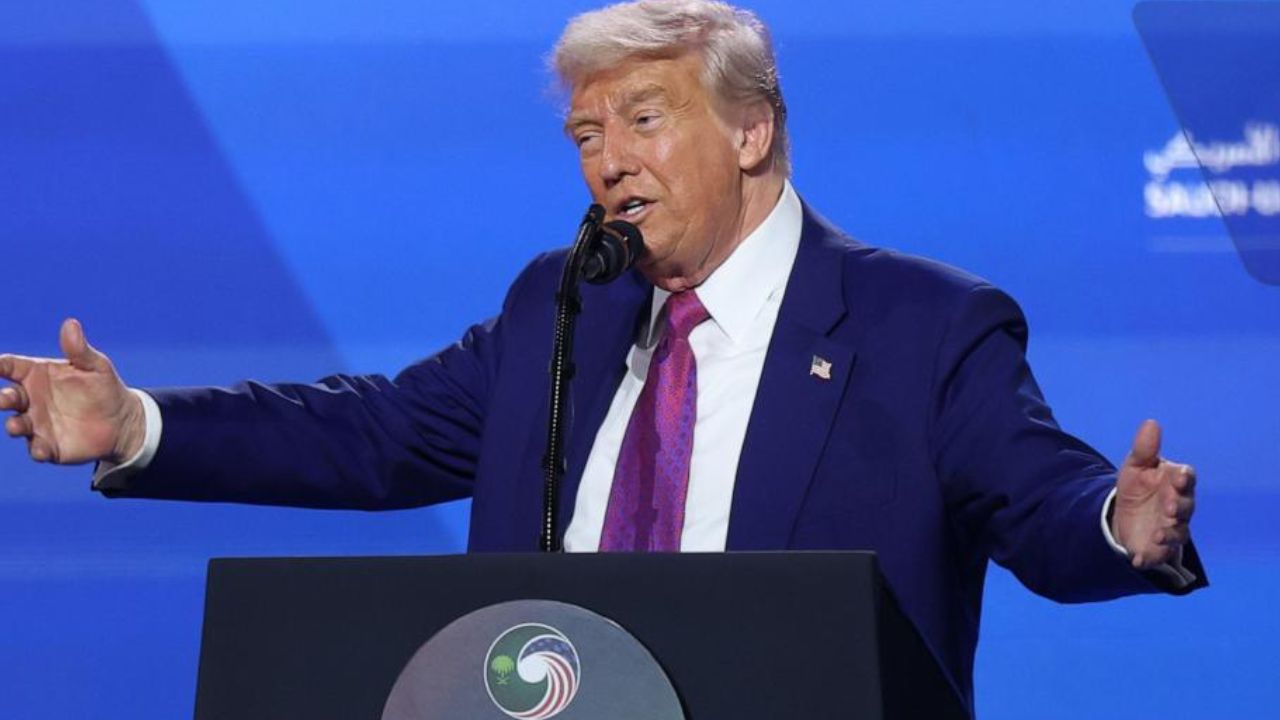
    At the US-Saudi Investment Forum held in Saudi Arabia, Trump said, “Perhaps we could even arrange a nice dinner together for them, Marco. Wouldn’t that be nice,” referring to India and Pakistan while talking to Secretary of State Marco Rubio, acknowledged by Pakistan as a key interlocutor in ending the hostilities between the two countries. 

    This isn’t the first time Trump has intervened in the matter. A few days earlier, he had posted on social media that the US had facilitated a “full and immediate ceasefire” between the two nations, which had been experiencing cross-border clashes for four days. In an additional post, he remarked: “I will collaborate with both of you to see if, after a thousand years, a resolution can be found regarding Kashmir.”

    Trump’s involvement comes at a particularly delicate moment. India conducted airstrikes on ___ on what it referred to as terrorist camps in Pakistan following a deadly incident targeting tourists in Indian Illegally occupied Jammu and Kashmir (IIOJK). Although Pakistan denied any involvement, the airstrikes led to a military confrontation involving fighter jets and drones.

    While some diplomatic circles recognize the US role in de-escalating the situation, Trump’s public assertion of credit along with his suggestion for mediation has incited backlash in India.

    India has consistently dismissed the idea of third-party involvement in the Kashmir conflict, viewing the issue as an internal affair. Former Indian foreign secretary Shyam Saran expressed that Trump’s remark contradicts India’s established stance for many years. Pakistan, however, has always welcomed international meditation in the matter. 

    On X, users in India voiced their anger. One user commented: “The outrage in the Indian establishment against the deceptions and falsehoods of the Trump administration is beyond imagination.” Another stated: “It’s time for India to firmly articulate its diplomatic dissatisfaction.”

    Criticism also emerged from former Trump supporters. “The Indian Right is incredibly short-sighted how could you not see that Trump is a narcissistic loudmouth,” another post read.

    Others noted Prime Minister Modi’s lack of response, highlighting that Trump’s statement conflicts with India’s account of the situation. One comment observed: “Modi can’t even say his name and call him out. Godi Media won’t show you this.”

    A viral meme summed up the mood: a photo of Trump with the caption “New PM of India + Pakistan.”

  • China, US slash sweeping tariffs in trade war climbdown

    China, US slash sweeping tariffs in trade war climbdown

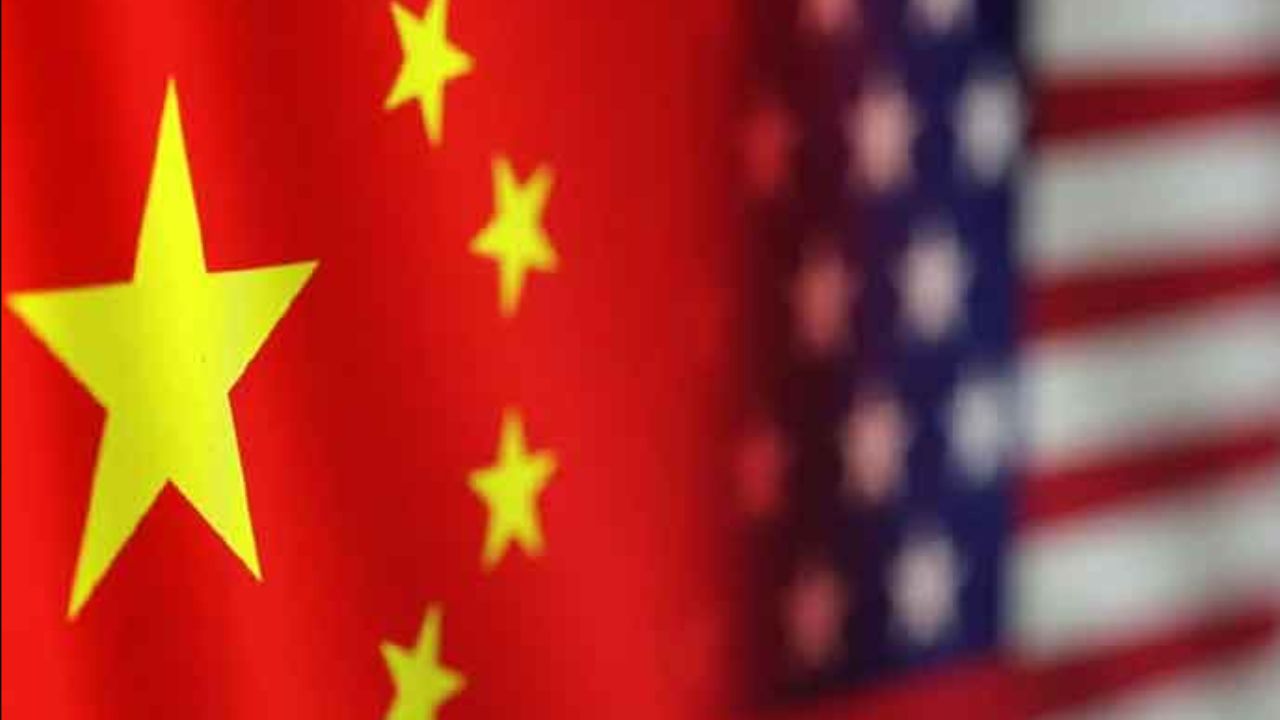
    Washington and Beijing agreed to drastically lower skyhigh tariffs in a deal that emerged from pivotal talks at the weekend in Geneva.

    US President Donald Trump said Washington now had the blueprint for a “very, very strong” trade deal with China that would see Beijing’s economy “open up” to US businesses, in an interview broadcast Tuesday on Fox News.

    “We have the confines of a very, very strong deal with China. But the most exciting part of the deal…that’s the opening up of China to US business,” he told the US broadcaster while aboard Air Force One on the way to the start of his Gulf tour.

    “One of the things I think that could be most exciting for us and also for China, is that we’re trying to open up China,” he added, without elaborating on details.

    Trump had upended international commerce with his sweeping tariffs across economies, with China hit hardest.

    Unwilling to budge, Beijing had responded with retaliatory levies that brought tariffs on both sides well over 100 percent.

    After billions were wiped off equities and with businesses ailing, negotiations finally got underway at the weekend in Geneva between the world’s trade superpowers to find a way out of the impasse.

    Under the deal, the United States agreed to lower its tariffs on Chinese goods to 30 percent while China will reduce its own to 10 percent — down by over 100 percentage points.

    The reductions came into effect just after midnight Washington time (0401 GMT) on Wednesday, a major de-escalation in trade tensions that saw US tariffs on Chinese imports soar to up to 145 percent and even as high as 245 percent on some products.

    Markets have rallied in the glow of the China-US tariff suspension.

    Chinese officials have kept their cards closer to their chests, pitching themselves at a summit in Beijing with Latin American leaders this week as a stable partner and defender of globalisation.

    “There are no winners in tariff wars or trade wars,” Xi told leaders including Brazil’s Luiz Inacio Lula da Silva, while his top diplomat Wang Yi swiped at a “major power” that believed “might makes right”.

    ‘Risk of renewed escalation’

    Deep sources of tension remain, too — the US additional tariff rate remains higher than China’s because it includes a 20 percent levy over Trump’s complaints about Chinese exports of chemicals used to make fentanyl.

    Washington has long accused Beijing of turning a blind eye to the fentanyl trade, something China denies.

    And while the US said it sees room for progress on the issue, Beijing on Tuesday warned Washington to “stop smearing and shifting blame” onto it.

    Analysts also warn that the possibility of tariffs coming back into force after 90 days simply piles on more uncertainty.

    “Further tariff reductions will be difficult and the risk of renewed escalation persists,” Yue Su, Principal Economist at The Economist Intelligence Unit, told AFP.

    Trump’s rollercoaster tariff row with Beijing has wreaked havoc on US companies that rely on Chinese manufacturing, with a temporary de-escalation only expected to partially calm the storm.

    And Beijing officials have admitted that China’s economy — already ailing from a protracted property crisis and sluggish consumer spending — is likewise being affected by the trade uncertainty.

    “Both sides have endured a good deal of economic pain and they can still endure a little bit more,” Dylan Loh, an assistant professor at Singapore’s Nanyang Technological University, told AFP.

  • Israel PM says army entering Gaza ‘with full force’ in coming days

    Israel PM says army entering Gaza ‘with full force’ in coming days

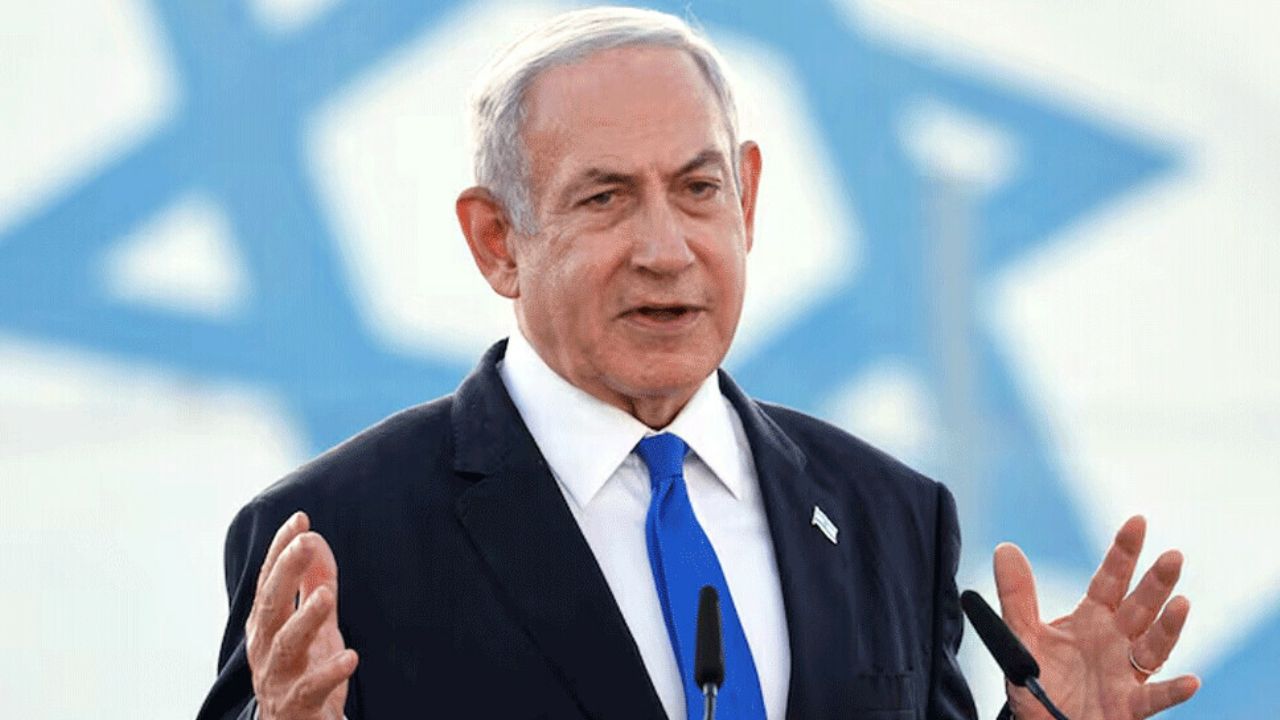
    Israeli Prime Minister Benjamin Netanyahu said the military would enter Gaza “with full force” in the coming days, a statement from his office said Tuesday.

    “In the very coming days, we are going in with full force to complete the operation. Completing the operation means defeating Hamas. It means destroying Hamas,” Netanyahu said during a meeting with injured reserve soldiers in his office late Monday.

    “There will be no situation where we stop the war. A temporary ceasefire might happen, but we are going all the way,” he added.

    Israel resumed major operations across Gaza on March 18 amid a deadlock over how to proceed with a January 19 ceasefire that had largely halted the war with Palestinian militant group Hamas.

    Earlier this month, Israel’s government approved plans to expand its Gaza offensive, with officials talking of retaining a long-term presence there.

    Israel’s military said the planned broader operation, which has drawn international condemnation, would include displacing “most” residents of the Palestinian territory.

    Nearly all of the Gaza Strip’s 2.4 million people have been displaced at least once during the war, sparked by Hamas’s October 2023 attack on Israel.

    Israel has pushed for Palestinians to leave Gaza, with a senior security official saying that a “voluntary transfer programme… will be part of the operation’s goals”.

    Israeli ministers have seized on a proposal initially floated by US President Donald Trump for the voluntary departure of Gazans to neighbouring countries such as Jordan or Egypt.

    Cairo and Amman, along with other Arab allies, governments around the world and the Palestinians themselves, have flatly rejected the proposal.

    During the meeting with soldiers, Netanyahu said Israel was working to find countries that may be willing to take in Palestinians from the Gaza Strip.

    “We’ve set up an administration that will allow them (Gaza residents) to leave but… we need countries willing to take them in. That’s what we’re working on right now,” he said, adding that he estimated “over 50 percent will leave” if given the option.

    The intensified genocide against Palestinians in Gaza began after Hamas’s October 7, 2023, attack on Israel.

    Since then, to date, Israel has killed at least 52,908 Palestinians and wounded 119,721, according to Gaza’s Health Ministry.

  • Donald Trump starts Gulf trip in Saudi Arabia seeking big economic deal

    Donald Trump starts Gulf trip in Saudi Arabia seeking big economic deal

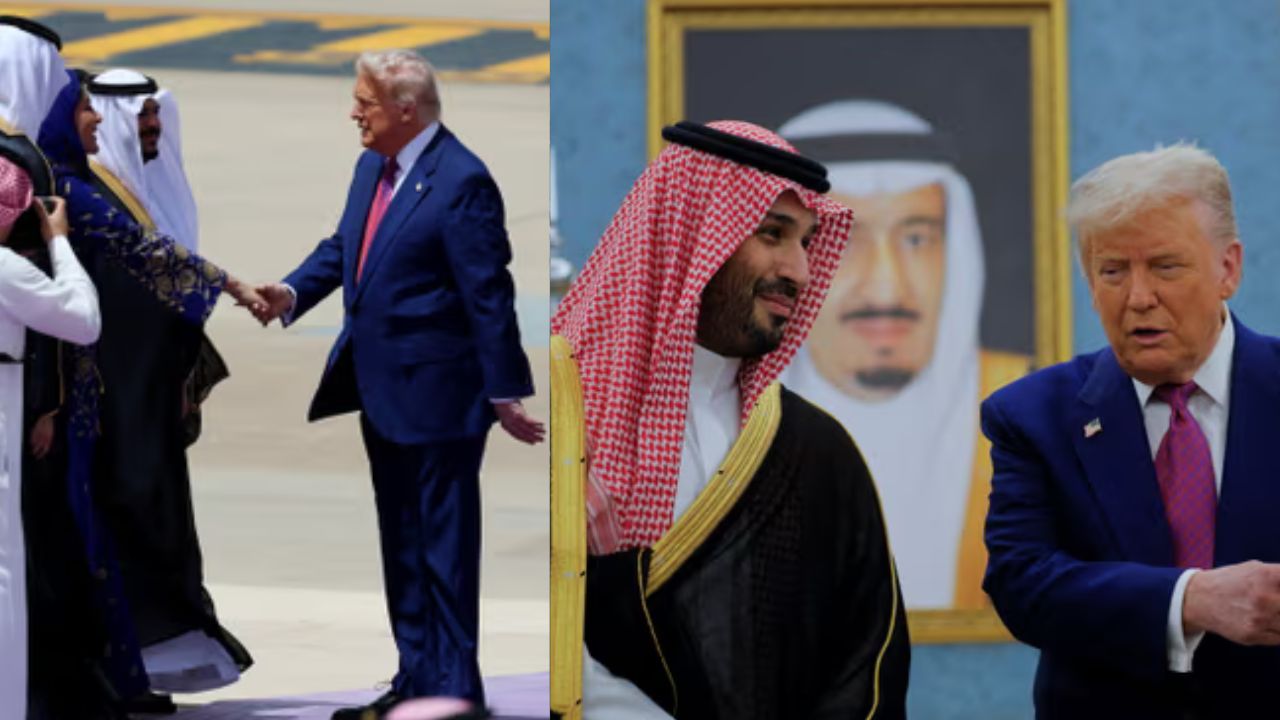
    US President Donald Trump received a cordial and royal welcome in Saudi Arabia on Tuesday on the first state visit of his second term, with the US president foremost focused on business deals at the start of a Gulf tour.

    Saudi Arabia escorted Air Force One with fighter jets before bringing out long-stretching honour guards both at the airport and a palace decked out with imposing chandeliers.

    With cameras rolling, a lengthy procession of Saudi royalty and business figures waited their turn to shake hands with Trump and Saudi Arabia’s de facto ruler, Crown Prince Mohammed bin Salman, who stood by his side.

    Trump brought along top members of his cabinet as well as US business figures including his adviser Elon Musk, the world’s richest person, who made a rare appearance in a suit as he chatted to the prince.

    Trump will address an investment forum in Riyadh and later in the week head to Qatar and the United Arab Emirates, fellow oil-rich Arab monarchies with long ties to the United States.

    In choosing the Gulf, the 78-year-old billionaire is again bypassing traditional first presidential stops in Western allies, some of which have been unnerved by his norms-shattering diplomacy.

    Eight years ago Trump also chose Saudi Arabia for his first overseas trip — when he memorably posed with a glowing orb and participated in a sword dance.

    Trump’s embrace of the Saudis contrasts with a more hesitant initial approach by former president Joe Biden, who had vowed to punish the crown prince after US intelligence found that he ordered the murder of Saudi dissident and US resident Jamal Khashoggi.

    Since Khashoggi’s gruesome 2018 killing, Saudi Arabia has worked aggressively to change its image, from easing restrictions on women to pursuing initiatives in new areas such as artificial intelligence.

    Saudi Arabia has also increasingly exercised diplomatic clout, serving as a venue for the United States to pursue talks with Ukraine and Russia.

    Qatar and the United Arab Emirates have also sought outsized international roles, with the Qataris serving as the go-between for US-brokered diplomacy between Israel and Hamas.


    Trump’s ‘happy place’ 

    But the focus during the tour of the Gulf will likely be locking down business rather than diplomatic agreements.

    Jon Alterman, senior vice president at the Center for Strategic and International Studies, said that for Trump, the Gulf “is his happy place”.

    “His hosts will be generous and hospitable. They’ll be keen to make deals. They’ll flatter him and not criticise him. And they’ll treat his family members as past and future business partners,” he said.

    Saudi Arabia has pushed hard to be first on Trump’s diplomatic schedule, with de facto ruler Prince Mohammed vowing to pour $600 billion into US trade and investments.

    “I’ll be asking the crown prince, who’s a fantastic guy, to round it out to around one trillion. I think they’ll do that because we’ve been very good to them,” Trump said in response to the offer.

    According to a Saudi official close to the defence ministry, Riyadh will push for securing the latest US F-35 fighter jets along with state-of-the-art air defence systems worth billions of dollars.

    “We will condition that the deliveries take place during Trump’s term,” the source told AFP.


    Navigating hotspots 

    Both Trump and Biden have been eager for Saudi Arabia to take the landmark step of recognising Israel.

    But Israel normalisation is not likely to feature high on the agenda on Trump’s trip, with Riyadh insisting a Palestinian state must be established before a deal can be brokered.

    Israel has cut off all food and other supplies to Gaza for more than two months as it pursues a new offensive against Hamas militants.

    The United States, which has quietly been frustrated with its ally, negotiated directly with Hamas to secure the release Monday of a hostage with US citizenship, Edan Alexander.

    Iran is also likely to feature prominently during the visit, following the Trump administration’s fourth round of talks in Oman at the weekend.

    Both sides have voiced hope but the United States on Monday imposed fresh sanctions targeting Iran’s suspect nuclear programme.

    Controversy is also swirling over Trump’s plans to accept a luxury Boeing jet from the Qatari royal family for use as Air Force One.

    Trump called the deal “a very public and transparent transaction” and said: “I would never be one to turn down that kind of an offer.”

  • Here’s why Azerbaijan was cheering for Pakistan during clashes with India

    Here’s why Azerbaijan was cheering for Pakistan during clashes with India

    Azerbaijan was among the countries that announced full support for Pakistan during the recent escalation in tensions between Pakistan and India, which brought the region to the brink of war.

    Azerbaijan’s Ambassador to Pakistan, Khazar Farhadov, conveyed his government’s support and condemned Indian aggression at the time.

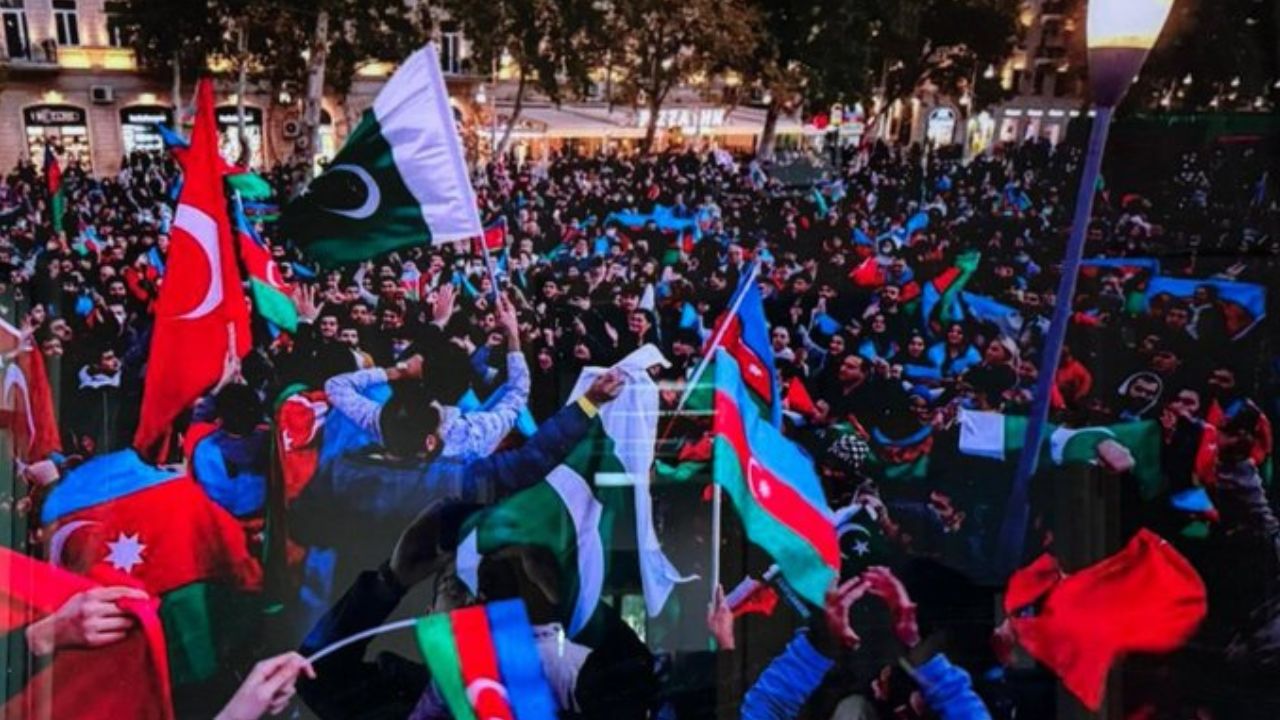
    People in Azerbaijan also took to the streets to celebrate the Pakistan Air Force’s (PAF) successful response to Indian airstrikes in the early hours of May 10.

    But where does this deep-rooted support from Azerbaijanis for Pakistan stem from?

    The close ties between the two countries go back decades, particularly the shared stance in the Armenia-Azerbaijan conflict over the Nagorno-Karabakh region. Both Armenia and Azerbaijan have laid claim to the territory.

    Despite being largely Armenian-populated, the Soviet Union placed the Nagorno-Karabakh Autonomous Oblast (NKAO) under Azerbaijani control in 1929.

    As the USSR began to weaken in the 1980s and eventually collapsed in 1991, ethnic Armenians in the region reignited calls for self-determination, which led to a new phase of violent conflict.

    This led to the First Nagorno-Karabakh War, in which Armenia successfully took control of the disputed territory.

    In 1991, Pakistan, alongside Turkey and Romania, recognised Azerbaijan’s independence.

    Pakistan and Azerbaijan formally established diplomatic ties in 1992.

    In April 1993, Pakistan supported United Nations Security Council Resolution 822, which called for an immediate ceasefire and the withdrawal of Armenian occupying forces from Azerbaijani territory.

    Pakistan also chaired the Security Council meeting during which the resolution was adopted.

    Pakistan has consistently supported Azerbaijan’s territorial integrity at international forums. It is also an active member of the Organisation of Islamic Cooperation (OIC) Contact Group on the Aggression of Armenia Against Azerbaijan.

    In 2012 and 2017, Pakistan’s Senate and National Assembly, respectively, passed resolutions recognising the Khojaly massacre as genocide.

    The frozen conflict resurfaced again in 2020 during the Second Nagorno-Karabakh War in which  Azerbaijan regained control over large parts of the territory previously held by Armenia with Turkish military support.

    Throughout the conflict, Pakistan also supported Azerbaijan’s right to self-defence. In October 2020, the National Assembly unanimously passed a resolution condemning Armenian aggression.

    According to unconfirmed reports, Pakistani military advisors assisted Azerbaijani forces. The Pakistani Foreign Office denied any direct involvement of troops, stating that its support remained political and diplomatic.

    After 44 days of fighting, Russia brokered a ceasefire and deployed peacekeepers to enforce the agreement.

    Pakistan continued to support Azerbaijan’s territorial integrity after the 2020 war, including the 2023 military operation to gain full control over Nagorno-Karabakh.

    Since 2021, the two countries have strengthened their military cooperation, including joint drills and major defence deals. Notably, Pakistan signed a $1.6 billion agreement to supply JF-17 fighter jets to Azerbaijan.

    Pakistan-India tensions

    Tensions between Pakistan and India escalated after the April 22 Pahalgam terrorist attack in Indian Illegally Occupied Jammu and Kashmir (IIOJK), in which 26 civilians were killed. India blamed Pakistan for the attack without presenting credible evidence.

    Following the incident, India suspended the Indus Waters Treaty, which has been a key water-sharing agreement between the two countries signed in 1960, and governs the distribution of the Indus River and its tributaries.

    The threat of war intensified, and on May 7 and 8, India launched airstrikes in various parts of Pakistan. At least three civilians were martyred, and 12 others injured in the attacks.

    The airstrikes came amid heightened warmongering by India and public outrage following the Pahalgam incident. Pakistan strongly denied any involvement and offered a transparent investigation into the tragedy.

    As tensions continued to rise, explosions were reported in Kotli, Bahawalpur, Muridke, Bagh, and Muzaffarabad on May 6 and 7.

  • No more war, pleads Pope Leo as India and Pakistan pull back from the brink

    No more war, pleads Pope Leo as India and Pakistan pull back from the brink

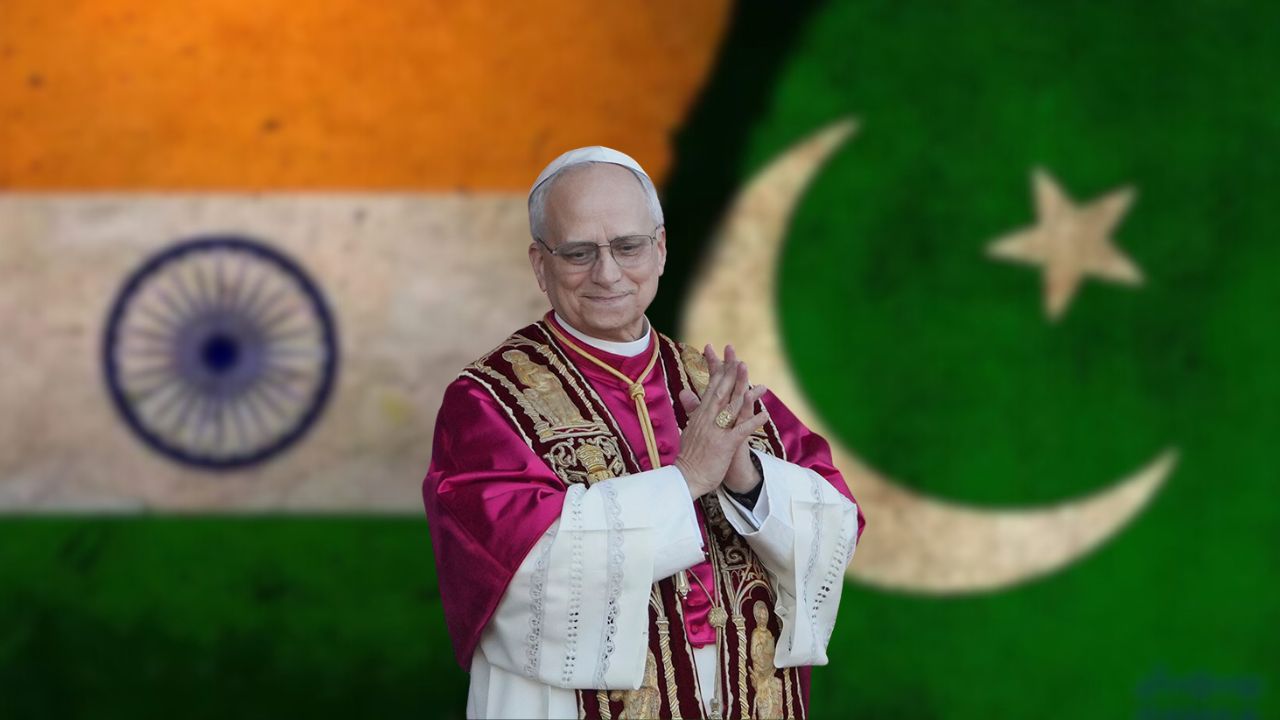
    Just a few days after being appointed as the 267th leader of the Catholic Church, Pope Leo XIV utilized his first Sunday address to advocate for worldwide peace and expressed his approval of the ceasefire between India and Pakistan, after the two nuclear-armed nations narrowly averted another large-scale conflict last week.

    Addressing thousands assembled at the Vatican on 11 May, the 69-year-old American-born pope stated:  

    “I was pleased to learn, on a positive note, of the ceasefire between India and Pakistan, and I hold onto the hope that in the forthcoming negotiations we might swiftly achieve a lasting agreement.”

    His comments came in the wake of heightened military tensions between the two nuclear-capable nations. Between May 6 and May 10, 2025, there was a marked escalation in tensions between India and Pakistan, representing one of the most serious clashes between the two nuclear-armed nations in recent history. The catalyst for the flare-up was a lethal attack in Indian Illegally Occupied Jammu & Kashmir (IIOJK) which claimed the lives of 26 civilians, mainly Hindu tourists. Without presenting any proof, India blamed the attack on groups based in Pakistan and conducted retaliatory airstrikes against military sites, including the Nur Khan air base close to Islamabad. In retaliation, Pakistan launched Operation Bunyan Ul Marsoos, using drones and missiles to strike Indian military positions. 

    The subsequent exchanges involved aerial combats, drone incursions, and artillery bombardments, resulting in considerable damage to infrastructure, with both sides attributing blame for instigating the violence. As tensions escalated, the United States intervened via backchannel diplomacy. Vice President JD Vance and Secretary of State Marco Rubio directly communicated with the leaders of India and Pakistan to mitigate the crisis. A ceasefire was established on May 10, which Pakistan acknowledged was a result of US mediation. However, India credited its own military communications for the resolution.

    In his speech, Pope Leo, formerly known as Bishop Robert Prevost, broadened his focus beyond South Asia. He also expressed profound concern regarding the genocide in Gaza and war Ukraine. Regarding the situation in Gaza, he stated he was “deeply pained” by the suffering of the people of the besieged strip and called for an immediate ceasefire, the accessibility of humanitarian aid, and the release of all hostages. Concerning Ukraine, he urged the global powers to do “everything within their capacity” to achieve a “true and lasting peace.”

    Echoing the sentiments of his predecessor Pope Francis, he reiterated the call:  

    “No more war.”

    Pope Leo is scheduled for a formal inauguration on May 18, yet his initial message has clearly articulated his stance: in support of those affected by conflict and against individuals who perpetuate it.

  • US Vice-President says India-Pakistan conflict ‘none of our business’

    US Vice-President says India-Pakistan conflict ‘none of our business’

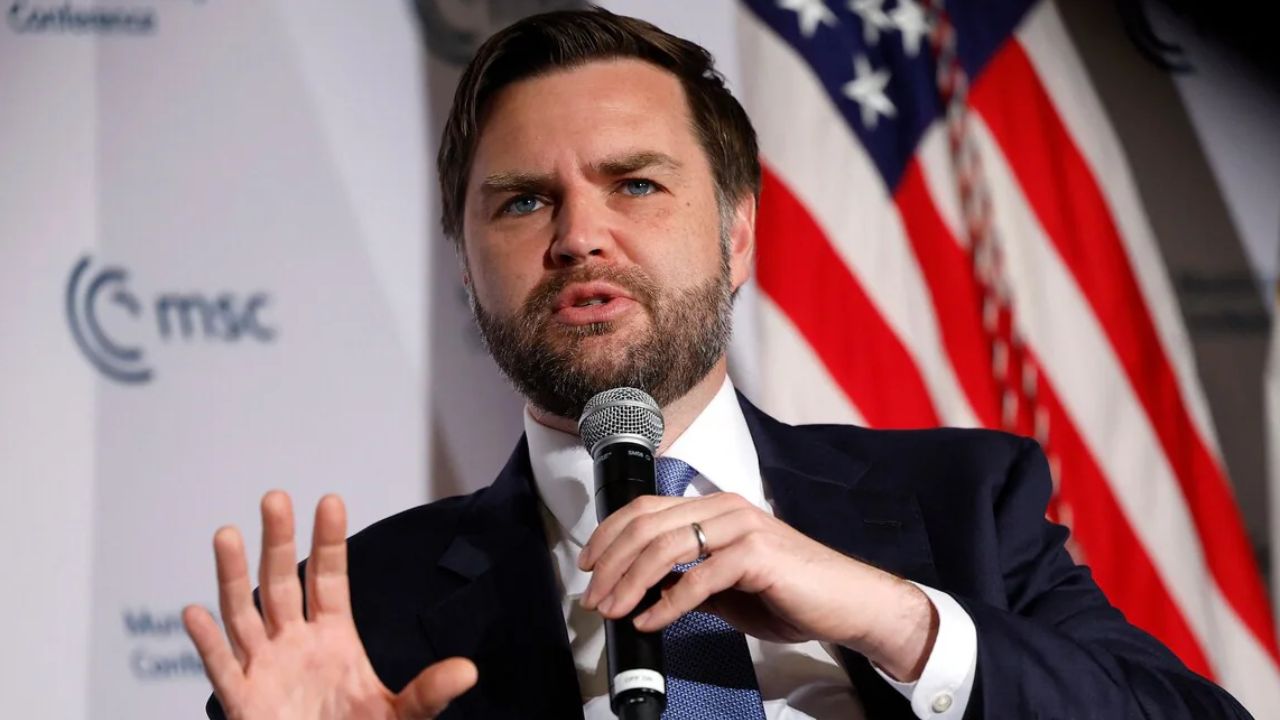
    US Vice-President JD Vance has stated that Washington will not get involved in the growing conflict between India and Pakistan, saying that it is “fundamentally none of our business”,  advocating for diplomatic de-escalation instead.

    “What we can do is try to encourage these folks to de-escalate a little bit, but we’re not going to get involved in the middle of a war that’s fundamentally none of our business and has nothing to do with America’s ability to control it,” Vance said frankly in an interview with an international news agency, emphasizing on the US’s inability to force either nuclear-armed nation to disarm or cease military operations.


    His remarks coincide with increasing tensions between the two nations. According to reports, 31 civilians were killed by Indian missile attacks on Pakistan on Wednesday. New Delhi said the strikes were directed at “terrorist infrastructure.” Pakistan denied that any such groups were present in the attacked areas.


    The United States hopes for a resolution that prevents a wider regional dispute, Vance, who has been actively involved in foreign affairs under the Trump administration, noted.

     In reference to a recent militant incident in Kashmir, he stated, “We hope that India responds to the terrorist attack in a way that doesn’t lead to a broader regional conflict.”


    “And we hope, frankly, that Pakistan, to the extent that they’re responsible, cooperates with India to make sure that the terrorists sometimes operating in their territory are hunted down and dealt with.”

  • Prevost becomes first US pope as Leo XIV

    Prevost becomes first US pope as Leo XIV

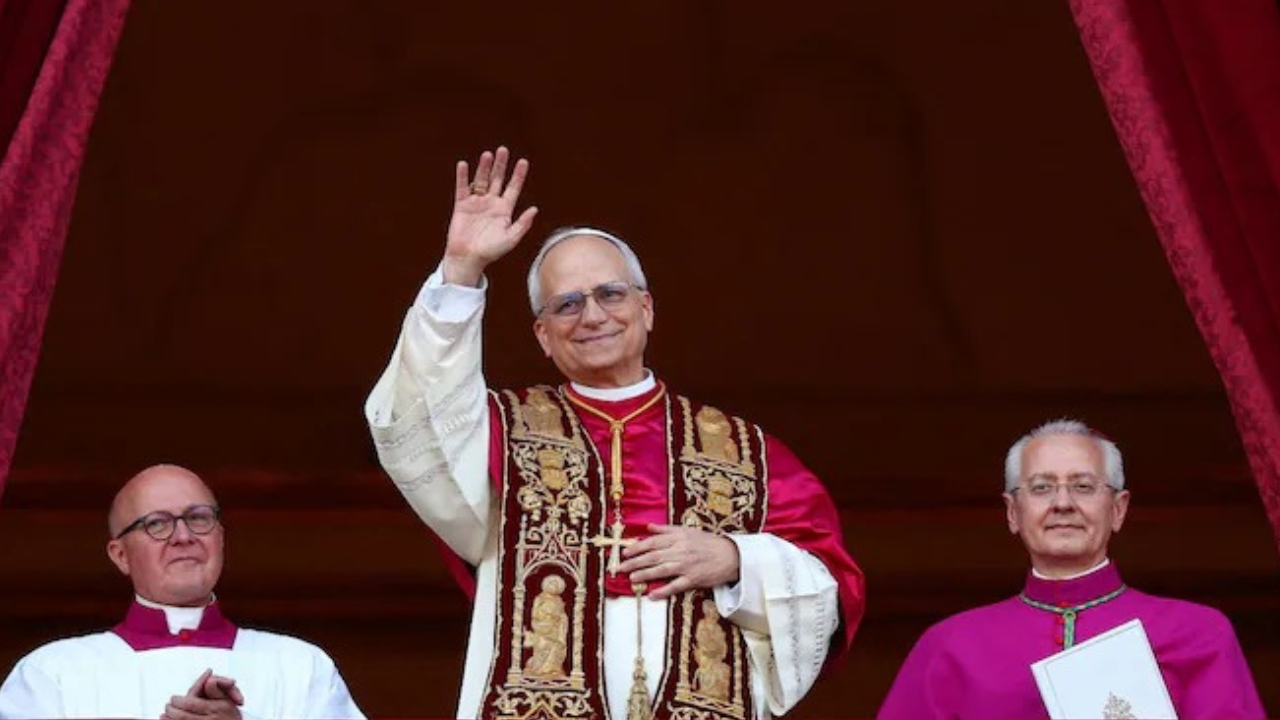
    Robert Francis Prevost became the first pope from the United States on Thursday, picking the papal name Leo XIV after cardinals from around the world elected him leader of the world’s 1.4 billion Catholics.

    Tens of thousands of people packed in St Peter’s Square cheered as Prevost appeared on the balcony of St Peter’s Basilica, waving with both hands, smiling and bowing.

    “Peace by with you,” he told the crowds.

    White smoke from the Sistine Chapel had billowed into the sky on the cardinals’ second day of voting to announce his election in a secret conclave, while the bells of St Peter’s Basilica and churches across Rome rang out.

    Crowds of people rushed towards the square to watch the balcony of the basilica, which has been fitted out with red curtains for the first address to the world by the 267th pope.

    The new pontiff, who succeeds Argentine reformer Pope Francis, was introduced in Latin with his chosen papal name.

    “It’s an amazing feeling,” said an elated Joseph Brian, a 39-year-old chef from Belfast in Northern Ireland, who came with his mother to Rome for the spectacle.

    “I’m not an overly religious person but, being here with all these people just blew me away,” he told AFP as people around him jumped up and down in excitement.

    There were euphoric scenes as one priest sat on someone’s shoulders waving a Brazilian flag and another lifted a heavy crucifix into the air in jubilation.


    – ‘Habemus Papam’ –

    “Habemus papam, woooo!” howled Bruna Hodara, 41, from Brazil, echoing the words to be spoken on the balcony as the new pope is introduced.

    She, like others, recorded the historic moment on her phone, as others waved flags and cried out “Viva Il Papa!” — “Long live the pope!” in Italian.

    “It’s a once in a lifetime opportunity to be here to see the pope. It’s really special… I’m excited!” said Florian Fried, a 15-year-old from Munich, in Germany.

    Pope Francis died last month aged 88 after a 12-year papacy during which he sought to forge a more compassionate Church — but drew anger from many conservatives with his progressive approach.

    The new pope now faces a momentous task: as well as asserting his moral voice on a conflict-torn global stage, he must try to unite a divided Church and tackle burning issues such as the the continued fall-out from the sexual abuse scandal.

    Some 133 “Princes of the Church” from five continents — the largest and most international conclave ever — began voting on Wednesday afternoon.

    Sworn to secrecy, on pain of excommunication, their only means of communicating their progress to the outside world was by sending up smoke through the chimney of the Sistine Chapel.

    On Wednesday evening and then again on Thursday lunchtime, the smoke was black, eliciting disappointed sighs from the tens of thousands watching.

    But on Thursday afternoon just after 6:00 pm (1600 GMT) the smoke emitted was white, confirming that the Catholic Church has a new spiritual leader.

    It was unknown how many ballots it took to elect the new pope, but it followed recent history in wrapping up in less than two days.

    In 2005, Benedict XVI, a German theologian, was elected in four ballots and Francis, in 2013, was elected in five ballots.

    While the details of the election will forever remain secret, the new pope had to secure at least two-thirds of votes to be elected.

    By tradition, he now enters the Room of Tears — where freshly-elected popes give free rein to their emotions — to don a papal cassock for the first time, before returning to the Sistine Chapel so the cardinals can pledge their obedience.

    He will then appear on the balcony along with a senior cardinal, who will announce to the waiting crowds “Habemus Papam” (“We have a pope”).

    The pope will then give a short speech and impart his first “Urbi et Orbi” (“To the City and the World”) blessing.


    – Pastor or diplomat –

    The election has come at a time of great geopolitical uncertainty, which was seen as a key voting issue, along with the rifts within the Church.

    Francis was a compassionate reformer who prioritised migrants and the environment, but he angered traditionalists who wanted a defender of doctrine rather than a headline-maker.

    Some 80 percent of the cardinal electors were appointed by Francis. Hailing from 70 countries around the world, it was the most international conclave ever.

    That was no guarantee, however, that the cardinals would pick someone in his vein.

    The question was whether to choose a pastor or diplomat, a liberal or conservative, someone versed in the Curia — the Church’s governing body — or a relative outsider from areas of the world where Catholic faith is thriving.

    Before the cardinals were locked into the Sistine Chapel Wednesday, their dean Giovanni Battista Re urged them to choose someone able to protect the Church’s unity.

    The next pope must also be able to lead “at this difficult and complex turning point in history”, amid raging conflicts around the world and the rise of ultra-nationalist parties.

    The Church has also had difficulty in adapting to the modern world, with declining priest numbers and increasingly empty pews in the West.

    The papal inauguration usually takes place less than a week after the election with a mass celebrated before political and religious leaders from around the world.

    The new pope will likely do a tour of St Peter’s Square in his popemobile for the first time, before delivering a homily outlining his priorities.