Category: Global

  • Tourist helicopter crash in India kills all six onboard

    Tourist helicopter crash in India kills all six onboard

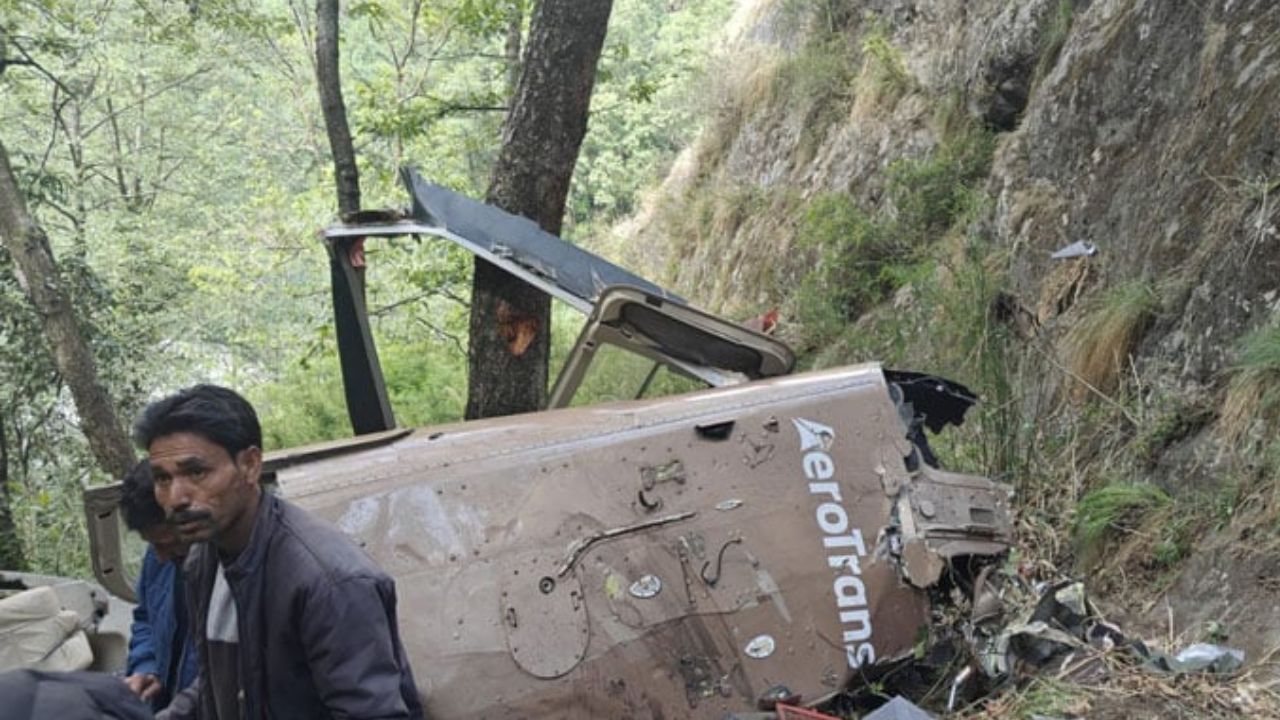
    A tragic helicopter crash in India’s Uttarkashi district claimed the lives of all six people onboard the aircraft on Monday morning.

    According to Indian media reports, the helicopter was heading toward a local tourist destination when it suddenly crashed. The exact cause of the accident is still under investigation.

    Uttarakhand Chief Minister Pushkar Singh Dhami expressed deep grief over the incident. In a statement shared on social media, he extended heartfelt condolences to the families of the victims and directed local authorities to provide full support and assistance.

    The crash has sent shockwaves across the region, especially as the area is a popular destination for tourists seeking spiritual and natural retreats.

  • Rafale’s market crashes, JF-17 manufacturer’s stock price soars after Indian debacle

    Rafale’s market crashes, JF-17 manufacturer’s stock price soars after Indian debacle

    International defence stocks have reacted noticeably after India launched Operation Sindoor, striking at least six targets in Pakistan and Azad Kashmir early Wednesday morning. ⁠

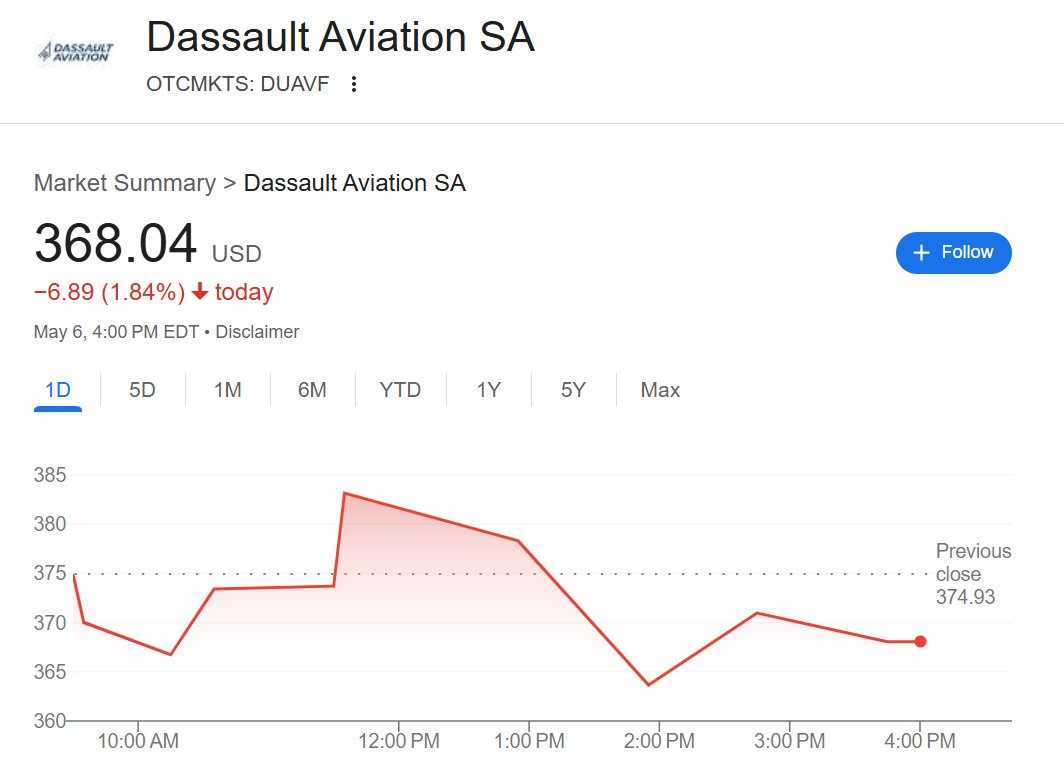
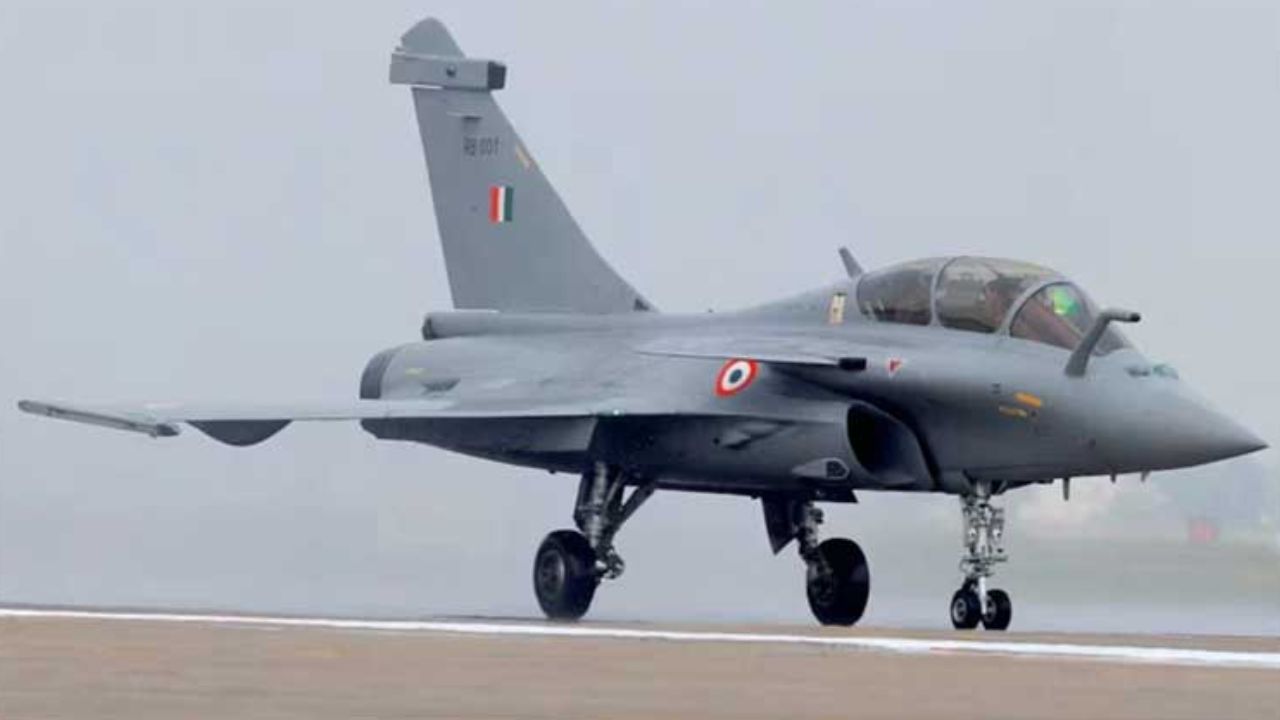
    France’s Dassault Aviation saw a 6% drop in share value, while China’s Chengdu Aircraft Corporation (CAC) recorded an 11.85% surge.

    Dassault Aviation, the French manufacturer of Rafale jets, saw its share value fall by 6% following reports of the aircraft losses. In contrast, China’s CAC, which produces the JF-17 and J-10 jets used by the Pakistan Air Force, recorded an 11.85% rise in its share price.

    According to Inter-Services Public Relations (ISPR), India launched airstrikes shortly after midnight on several locations in Pakistan, including Kotli, Bahawalpur, Muridke, Bagh, and Muzaffarabad. The strikes resulted in the martyrdom of at least 26 citizens and injuries to 46 others. The attack followed heightened tensions after the April 22 Pahalgam incident in Indian Illegally Occupied Jammu and Kashmir (IIOJK), where 26 Indian tourists were killed. India accused Pakistan of involvement but has yet to provide any evidence to support the claim.

    In retaliation, the Pakistan Air Force shot down three Rafale jets operated by the Indian Air Force. According to international media outlets, a total of six Indian warplanes were downed in the encounter.

    ISPR Director General Lt Gen Ahmed Sharif Chaudhry confirmed that Pakistan had responded to the Indian strikes and had downed five Indian Air Force jets, including three Rafale fighter aircraft. He also stated that an Indian Army brigade headquarters and a military post in the Dhundial sector along the Line of Control (LoC) were targeted and destroyed.

    “All of our air force jets are airborne,” said the ISPR DG. “This is a shameful and cowardly attack that was carried out from within India’s airspace. Pakistan will respond to this provocation at a time and place of its choosing.”

    The situation remains tense, with both sides on high alert and conducting damage assessments. Further statements from both governments and military spokespersons are expected in the coming hours.

  • Huge dust storm sweeps into Iran, affecting millions

    Huge dust storm sweeps into Iran, affecting millions

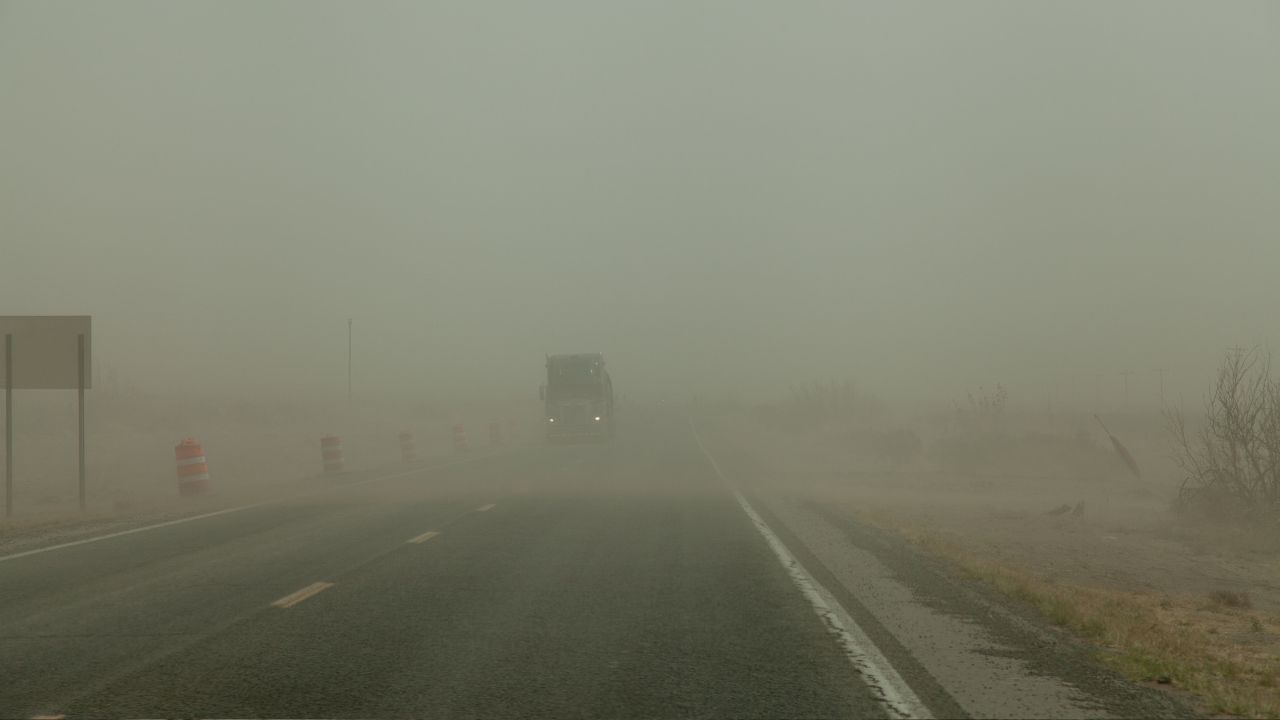
    Iranian authorities ordered schools and offices closed in seven western provinces Tuesday as a dust storm swept in from neighbouring Iraq, with around 13 million people told to stay indoors.

    Khuzestan, Kermanshah, Ilam and Kurdistan provinces were all affected, and state television cited local officials as blaming the closures on high levels of accumulated dust.

    Government and private offices also shut in several provinces including Kermanshah and Ilam, as well as Khuzestan in the southwest.

    Zanjan in the northeast and Bushehr in the south were also hit.

    Bushehr, nearly 1,100 kilometres (680 miles) south of Tehran, was given an Air Quality Index of 108 on Tuesday, rated “poor for sensitive groups”.

    That figure is more than four times higher than the concentration of air microparticles deemed acceptable by the World Health Organization.

    Iran’s meteorological authorities said the conditions were caused by “the movement of a large mass of dust from Iraq towards western Iran”.

    State television reported low visibility in some areas and urged residents to remain inside and to wear face masks if they had to go out.

    Last month, a similar dust storm in Iraq grounded flights and sent thousands of people to hospital with breathing problems.

    On Monday, Iran’s IRNA state news agency reported that more than 240 people in Khuzestan province had been treated for respiratory issues because of the dust.

  • Gazans struggling to survive as Israel plans for ‘conquest’

    Gazans struggling to survive as Israel plans for ‘conquest’

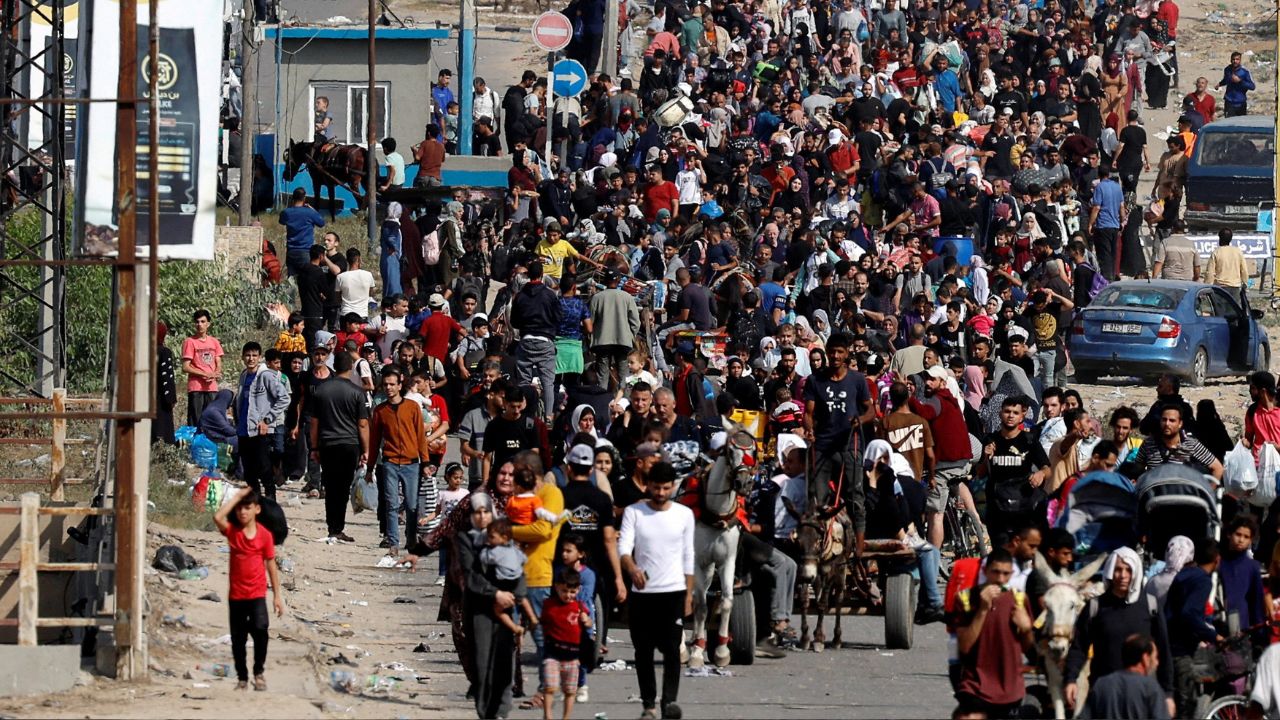
    Israel’s plan for the “conquest” of Gaza has sparked renewed fears, but for many of the territory’s residents, the most immediate threat to their lives remains the spectre of famine amid a months-long Israeli blockade.

    The plan to expand military operations, approved by Israel’s security cabinet overnight, includes holding territories in the besieged Gaza Strip and moving the population south “for their protection”, an Israeli official said.

    But Gaza residents told AFP that they did not expect the new offensive would make any significant changes to the already dire humanitarian situation in the small coastal territory.

    “Israel has not stopped the war, the killing, the bombing, the destruction, the siege, and the starvation — every day — so how can they talk about expanding military operations?” Awni Awad, 39, told AFP.

    Awad, who lives in a tent in the southern Gaza city of Khan Yunis after being displaced by Israeli evacuation orders, said that his situation was already “catastrophic and tragic”.

    “I call on the world to witness the famine that grows and spreads every day,” he said.

    The UN’s World Food Programme (WFP) in late April said it had depleted all its foods stocks in Gaza due to Israel’s blockade on all supplies since March 2.

    Aya al-Skafy, a resident of Gaza City, told AFP her baby died because of malnutrition and medicine shortages last week.

    “She was four months old and weighed 2.8 kilograms (6.2 pounds), which is very little. Medicine was not available,” she said.

    “Due to severe malnutrition, she suffered from blood acidity, liver and kidney failure, and many other complications. Her hair and nails also fell out due to malnutrition.”

    Umm Hashem al-Saqqa, another Gaza City resident, fears her five-year-old son might face a similar fate, but is powerless to do anything about it.

    “Hashem suffers from iron deficiency anaemia. He is constantly pale and lacks balance, and is unable to walk due to malnutrition,” she told AFP.

    “There is no food, no medicine, and no nutritional supplements. The markets are empty of food, and the government clinics and pharmacies have nothing.”

    ‘Distract the world’

    Gaza City resident Mohammed al-Shawa, 65, said that Israel’s new military roadmap changes little as it already controls most of Gaza.

    “The Israeli announcement about expanding military operations in Gaza is just talk for the media, because the entire Gaza Strip is occupied, and there is no safe area in Gaza,” he said.

    The UN’s Office for the Coordination of Humanitarian Affairs (OCHA) estimates that 69 percent of Gaza has now been either incorporated into one of Israel’s buffer zones, or is subject to evacuation orders.

    That number rises to 100 percent in the southern governorate of Rafah, where over 230,000 people lived before the genocide but which has now been entirely declared a no-go zone.

    “There is no food, no medicine, and the announcement of an aid distribution plan is just to distract the world and mislead global public opinion,” Shawa said, referring to reports of a new Israeli plan for humanitarian aid delivery that has yet to be implemented.

    “The reality is that Israel is killing Palestinians in Gaza by bombing, shooting, or through starvation and denial of medical treatment,” he said.

    Israel says that its renewed bombardments and the blockade of Gaza are aimed at forcing Hamas to release hostages held in the territory.

    Israeli Finance Minister Bezalel Smotrich praised the new plan for Gaza on Monday and evoked a proposal previously floated by US President Donald Trump to displace the territory’s residents elsewhere.

    The far-right firebrand said he would push for the plan’s completion, until “Hamas is defeated, Gaza is fully occupied, and Trump’s historical plan is implemented, with Gaza refugees resettled in other countries”.

  • Widow of Indian naval officer killed in Pahalgam attack becomes target of right-wing trolls

    Widow of Indian naval officer killed in Pahalgam attack becomes target of right-wing trolls

    Just days after tying the knot, Indian naval officer Lieutenant Vinay Narwal and his spouse Himanshi Swami went to Indian occupied Kashmir for their honeymoon. On April 22, Narwal was among 26 individuals killed in an attack in Pahalgam. Reports indicate that he was allegedly questioned about his religion before being fatally shot.

    As the Indian nation grieved the attack, images of Himanshi Narwal sitting next to her husband’s body became a symbol of collective mourning. However, what transpired next triggered a cascade of attacks against the young widow.

    In her first public statement following the attack, Himanshi said: “We do not want to oppose Muslims or Kashmiris. Our only desire is for peace — nothing else.” Her comments, intended to mitigate tensions, emerged during a time when online outrage was escalating. Many had begun equating the attackers with entire communities, particularly Muslims and Kashmiris.

    Rather than receiving support, Himanshi became a target of right-wing Hindutva nationalists. She faced trolling for her remarks, was accused of “virtue signaling,” and labeled a “publicity seeker,” placing her at the heart of harsh social media backlash.

    Some extremist users on X questioned her loyalty to the country and doubted her mourning. A viral post alleged she had connections with “Kashmiri radicals” and ridiculed her for having previously joked about wearing a hijab. Others went further, with one calling her a “JNU liberal, tukde tukde gang,” and declaring she shouldn’t receive “a single penny from the government.” Another claimed her secular views were due to “an affair with a Kashmiri Muslim,” and speculated that she would soon file false legal cases against her in-laws and resume dating her ex.

    One particularly vicious post read: “She saw Vinay’s death as an opportunity to climb the social and political ladder. She will become the face of Wire, Scroll, Washington Post & used by anti-India elements.” Another said, “You think she is innocent? She is not even sad. She started virtue signalling even before Lieutenant Vinay’s funeral pyre got settled.”

    The attacks turned deeply personal — with one post even suggesting that she should forfeit her late husband’s pension. In response, the National Commission for Women (NCW) released a statement denouncing the trolling. “Targeting a woman for her opinions or her personal life is unacceptable,” the Commission stated, emphasizing that disagreements should remain within “constitutional boundaries.”

    NCW Chairperson Vijaya Rahatkar also commented on the matter, affirming that while individuals may disagree with Himanshi’s perspective, resorting to personal abuse to silence her is intolerable.

    Some users pointed out that the trolling is indicative of a far bigger rot in the Indian society.

    At the same time, others on X have spoken up in her defense. One user wrote:

    “Dear Himanshi,
    Stay strong. You’ve lost your husband — you know the pain of deep, irreparable loss. And yet, in the midst of your grief, you still speak of peace and calm. Your appeal is thoughtful and courageous, a reflection of true humanity. Many need to learn from your strength.”

  • Pope Francis leaves one final gift for the children of Gaza

    Pope Francis leaves one final gift for the children of Gaza

    The late Pope Francis Jorge Mario Bergoglio (late), one of the most staunch supporters of ending Israel’s genocide in Gaza, has left one last gift for the children of the besieged strip.

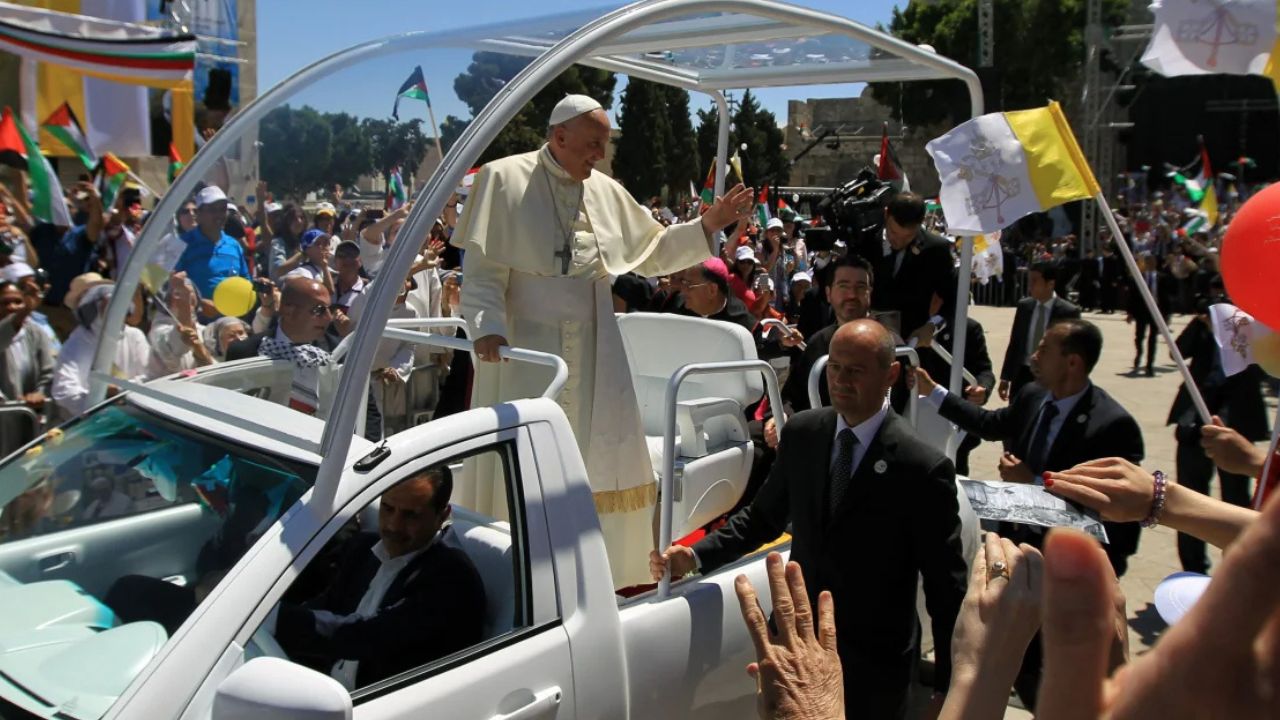
    One of the late Pontiff’s popemobiles, open roof vehicles used by the head of the Church to mingle with followers, is being transformed into a mobile health unit for the children of Gaza, Vatican News reported on Sunday.

    The repurposed popemobile is being outfitted with equipment for diagnosis, examination, and treatment, including rapid tests for infections, diagnostic instruments, vaccines, suture kits, and other life-saving supplies, Vatican News reported while citing Caritas, a Catholic aid network in Jerusalem.
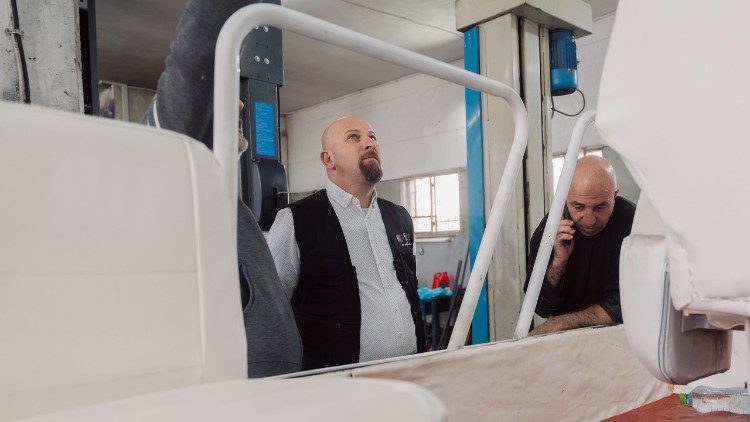
    In one of his final wishes before his passing, Francis entrusted the popemobile used during his 2014 pilgrimage to the Holy Lands to Caritas, Vatican News said, to help respond to the dire humanitarian situation in Gaza.

    Francis asked that the vehicle be used to help injured and malnourished children in the war-torn Palestinian enclave.

    “Children are not numbers. They are faces. Names. Stories. And each one is sacred,” Vatican News quoted Pope Francis as often claiming.

    The mobile health unit will be staffed by doctors, medics and will reach children in the most isolated corners of Gaza once humanitarian access to the strip is restored.

    “With the vehicle, we will be able to reach children who today have no access to health care—children who are injured and malnourished,” Secretary General of Caritas Sweden, Peter Brune, said in a press release.

    “This is a concrete, life-saving intervention at a time when the health system in Gaza has almost completely collapsed,” he further said.

    “It’s not just a vehicle…It’s a message that the world has not forgotten about the children in Gaza,” Brune added.

    Secretary General of Caritas Jerusalem, Anton Asfar, stated, “This vehicle represents the love, care and closeness shown by His Holiness for the most vulnerable, which he expressed throughout the crisis.”

    Meanwhile, welcoming the final gift of Pope Francis, the State of Palestine’s Ministry of Foreign Affairs, in a post on X (formerly Twitter) on Sunday, said, “Palestine has lost a loyal friend and a steadfast supporter of our people’s rights and a true messenger of peace and justice.”

    “He departed this world while calling for an end to the crimes of genocide, displacement, and annexation committed against our people at a time when the world failed to protect the children of Gaza,” the ministry added.

    As of May 3, 2025, the Genocide in Gaza has claimed the lives of 52,495 Palestinians, while 1163 Israelis have been killed.

    Read More: Hospitalised Pope Francis still makes nightly call to Gaza

    In February 2024, despite being admitted at hospital and quite unwell, Pope Francis was still making his nightly call to Gaza from his hospital bed. 

    Sometimes the Pope uses a video call and sometimes a text message to stay in touch with a small Catholic parish in the Gaza strip. Reverend Gabriel Romanelli, the priest of the church in Gaza, confirmed to Vatican News that the Pope calls every night at 8 pm Palestine time, maintaining the almost daily contact he begun when Israel started its onslaught on the Gaza strip. 

    “Although we had a blackout in the whole area of Gaza City, he insisted and managed to contact us with a video call,” the Reverend told the Vatican media outlet, adding that the Pope inquires about the parishioners and gives blessings. 

    A video of the Pope saying “Asalam o Alaikum” to Muslims present at the church went viral a few weeks ago. Francis, the first Jesuit head of the Roman Catholic Church, has been a vocal opponent of Israel’s war on Gaza, going so far as to suggest that the occupying country must be investigated for war crimes. 

    He has also called Israel’s actions in the besieged strip “terrorism”, pleading for an end to the genocide multiple times. 

    The vocal opposition warned him the wrath of powerful Zionists, including the entire Israeli government, however, the Pope has not budged from his point of view. 

    In April 2025, Pope Francis delivered his last speech on Easter Sunday at the Vatican’s St Peter’s Square.

    Here is some text of his final public address, as released by the Vatican

    “From the empty tomb in Jerusalem, we hear unexpected good news: Jesus, who was crucified, ‘is not here, he has risen’ (Lk 24:5). Jesus is not in the tomb, he is alive!

    Love has triumphed over hatred, light over darkness and truth over falsehood. Forgiveness has triumphed over revenge. Evil has not disappeared from history; it will remain until the end, but it no longer has the upper hand; it no longer has power over those who accept the grace of this day.

    I express my closeness to the sufferings of Christians in Palestine and Israel, and to all the Israeli people and the Palestinian people. The growing climate of anti-Semitism throughout the world is worrisome. Yet at the same time, I think of the people of Gaza, and its Christian community in particular, where the terrible conflict continues to cause death and destruction and to create a dramatic and deplorable humanitarian situation.

    I appeal to the warring parties: call a ceasefire, release the hostages and come to the aid of a starving people that aspires to a future of peace!

    In the passion and death of Jesus, God has taken upon himself all the evil in this world and in his infinite mercy has defeated it. He has uprooted the diabolical pride that poisons the human heart and wreaks violence and corruption on every side. The Lamb of God is victorious! That is why, today, we can joyfully cry out: ‘Christ, my hope, has risen!’ (Easter Sequence).

    The resurrection of Jesus is indeed the basis of our hope. For in the light of this event, hope is no longer an illusion. Thanks to Christ — crucified and risen from the dead — hope does not disappoint! Spes non confundit! (cf. Rom 5:5). That hope is not an evasion, but a challenge; it does not delude, but empowers us.

    Let us pray for the Christian communities in Lebanon and in Syria, presently experiencing a delicate transition in its history. They aspire to stability and to participation in the life of their respective nations. I urge the whole Church to keep the Christians of the beloved Middle East in its thoughts and prayers.

    I also think in particular of the people of Yemen, who are experiencing one of the world’s most serious and prolonged humanitarian crises because of war, and I invite all to find solutions through a constructive dialogue.”
  • Trump imposes tariffs on ‘foreign’ films, putting Hollywood into tailspin

    Trump imposes tariffs on ‘foreign’ films, putting Hollywood into tailspin

    US President Donald Trump has opened a new front in his ongoing tariff disputes — this time targeting the film industry. In a passionate statement posted on Truth Social on Sunday, the former president announced a 100 percent tariff on all movies made outside the United States, contending that foreign governments are undermining the American film sector through aggressive incentives and subsidies.

    Describing it as a “National Security threat,” Trump stated that this is “a concerted effort by other Nations” to take over U.S. productions and use storytelling as “messaging and propaganda.” He asserted that he had instructed the Commerce Department and the U.S. Trade Representative to start implementing the tariffs right away. “We want movies made in America, again!” he wrote in all caps. 

    Nevertheless, no specific details were given on how or when these tariffs would be put into action. It is also uncertain whether the tax would affect streaming content, theatrical releases, or solely films produced by non-American studios. The Motion Picture Association has not yet responded, while Hollywood executives were reportedly grappling to understand the implications. 

    The announcement arrives at a challenging moment for the U.S. film industry, which has already experienced a 40 percent decline in production in Los Angeles over the last ten years, according to FilmLA. An increasing number of Hollywood studios including Disney, Universal, and Netflix — are now shooting films in countries like Canada, the UK, Australia, and New Zealand, attracted by generous tax incentives and production advantages. 

    Research indicates that about half of all U.S. film and TV expenditures on major projects in 2023 were spent overseas. Furthermore, California has slipped to sixth among the most favored global filming locations  trailing Toronto, London, Vancouver, Central Europe, and Australia. 

    Governments in Australia and New Zealand reacted quickly to Trump’s announcement. Australia’s Home Affairs Minister Tony Burke expressed that his government would support the Australian screen industry “unequivocally.” New Zealand Prime Minister Christopher Luxon mentioned that his government was awaiting more information but stressed their continued advocacy for their domestic film sector. 

    This is not the first occasion Trump has connected culture with politics. In January, he appointed Jon Voight, Sylvester Stallone, and Mel Gibson as “special envoys” to help rejuvenate Hollywood, which he referred to as “a great but very troubled place.” Their objective? To restore Hollywood “back—bigger, better, and stronger than ever before!” 

    However, the proposed tariffs have drawn caution from trade specialists. William Reinsch, a former senior Commerce Department official, warned that retaliation from other nations could severely damage Hollywood exports. “The retaliation will kill our industry. We have a lot more to lose than to gain,” he remarked, doubting that a national security argument would be sustainable.

    The consequences may already be in motion. In April, China the world’s second-largest film market — reduced its quota for U.S. films, citing American tariff misuse. The China Film Administration cautioned that these actions would tarnish the reputation of American films among local viewers and further diminish their import rates.

    As Trump intensifies his protectionist economic strategy with certain tariffs on Chinese goods reaching as high as 245 percent, the global entertainment sector is being drawn into a tense trade conflict. Whether this policy revitalizes domestic filmmaking or further isolates Hollywood remains to be determined

  • ‘Devastated’ Prince Harry says no UK return but seeks reconciliation

    ‘Devastated’ Prince Harry says no UK return but seeks reconciliation

    Prince Harry said Friday he wanted to reconcile with Britain’s royal family, but was “devastated” at losing a court battle over his security that meant he felt unable to return to the country with his family.

    Visibly upset, Harry revealed to the BBC that his father King Charles III no longer speaks to him over the security issue and after he published a memoir critical of the royals, and urged Prime Minister Keir Starmer to intervene.

    “Of course some members of my family will never forgive me for writing a book. Of course they will never forgive me for lots of things. But… I would love for reconciliation,” he said.

    The prince, also known as the Duke of Sussex, stepped down from royal family duties in 2020, and moved to the United States with his wife Meghan and son Archie, who is about to turn six.

    King Charles III’s youngest son has been embroiled in a years-long court battle after the UK government downgraded his security.

    But he told the BBC from California that he did not want any more legal struggles, suggesting he would not go to the Supreme Court.

    “Life is precious. I don’t know how much longer my father has… he won’t speak to me because of this security stuff,” Harry said.

    Charles was diagnosed with an unspecified cancer in February 2024 and has been receiving weekly treatment.

    Harry reportedly only found out from the media that his 76-year-old father had been briefly hospitalised with ill-effects from his treatment in April.

    The prince, 40, said he was “devastated” by Thursday’s court judgement, which threw out his bid to restore fully his police protection while visiting Britain.

    “It’s impossible for me to take my family back to the UK safely,” he said.


    – ‘Sense of grievance’ –

    In response to the court decision, a Buckingham Palace spokesperson said: “All of these issues have been examined repeatedly and meticulously by the courts, with the same conclusion reached on each occasion.”

    Harry was not present for the judgement when Judge Geoffrey Vos dismissed the appeal, saying the duke’s “sense of grievance” had failed to translate into a legal argument.

    Harry’s security was now a “more bespoke, and generally lesser, level of protection than when he was in the UK”, Vos said.

    This, however, did not “of itself give rise to a legal complaint”, he added.

    Since moving to California, Harry and Meghan have had a second child, Lilibet, born in 2021.

    The government committee that handles protection for royals and public figures in 2020 decided he would not receive the same level of publicly funded protection when in Britain as he did previously.

    After losing a High Court case challenging the decision, the prince was allowed to launch an appeal against the interior ministry.

    His lawyers argued Harry was singled out for “unjustified and inferior treatment” and that the committee did not fully assess the security threats when downgrading his protection.


    – ‘I miss the UK’ –

    Harry, whose older brother Prince William is heir to the throne, has long been haunted by the 1997 death of his mother Princess Diana in a high-speed car crash as she tried to escape paparazzi photographers in Paris.

    The prince has blamed the press for the tragedy and cited intense media scrutiny as one of the reasons he and Meghan stepped back five years ago.

    The prince admitted to the BBC: “I miss the UK,” adding: “It’s really quite sad that I won’t be able to show… my children my homeland.”

    In the two-day appeal hearing last month, Harry’s lawyers said the Sussexes had been threatened by Al-Qaeda and involved in a “dangerous car pursuit with paparazzi” in New York, as an example of the security dangers he faces.

    His lawyer Shaheed Fatima said the prince’s “safety… security and… life” were at stake.

    Harry called Thursday’s court decision a “good old-fashioned establishment stitch up” and accused the Royal household of influencing the ruling.

    “This all comes from the same institutions that preyed upon my mother,” he said in a statement Friday.

    While Harry has maintained a low profile since 2020, Meghan has boosted her public presence this year, launching a podcast and Netflix series and making a return to social media.

  • Israel brings fire near Jerusalem ‘under control’, reopens roads

    Israel brings fire near Jerusalem ‘under control’, reopens roads

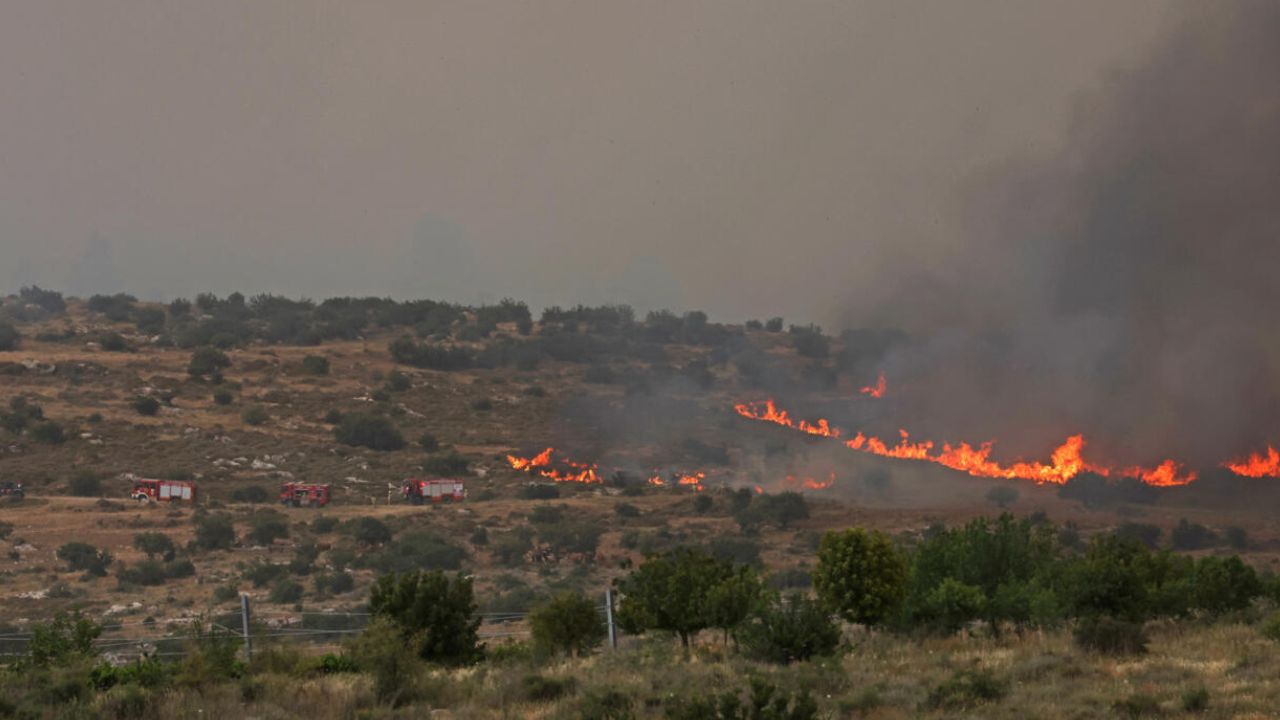
    Bushfires that erupted near Jerusalem were largely brought under control on Thursday, authorities said, with major roads reopened and firefighting teams still tackling lingering hotspots.

    The blaze, which ignited along the main Jerusalem–Tel Aviv highway on Wednesday, prompted widespread evacuations and road closures as firefighters battled through the night to contain what officials have called the largest fire in a decade.

    “The fire is under control,” said Shlomi Harush, a senior official with the firefighting service.

    “There are only hotspots left… all teams remain deployed across the affected areas,” he told AFP, warning that strong winds could still reignite the flames.

    In Latrun, approximately 25 kilometres (15.5 miles) from Jerusalem, smoke continued to rise near a monastery as firefighters sprayed water on smouldering embers, according to an AFP journalist on the scene.

    Civilians also came out to help douse the fire.

    “We used water hoses connected to homes and municipal taps installed along the streets,” Ahmad Ibrahim, a resident of Abu Ghosh village, told AFP.

    “We acted out of concern for the community, trying to stop the fire from spreading and endangering residents or their homes.”

    Earlier, the fire service reported that 163 ground crews and 12 aircraft had been mobilised to fight the blaze, which has scorched an estimated 13,000 hectares of forest, according to police.

    Prime Minister Benjamin Netanyahu had warned late Wednesday that the flames could reach Jerusalem, declaring the situation a “national emergency”.

    Police confirmed on Thursday that all major routes, including the Jerusalem-Tel Aviv corridor, had been reopened.

    “All routes have been reopened to traffic,” they said in a statement, adding that residents of the evacuated Mavo Horon settlement had been allowed to return.

    Authorities were also instructed to expedite the return of other displaced residents.


    – Authorities ‘weren’t ready’ –

    While several Independence Day events scheduled for Wednesday evening were cancelled, celebrations resumed on Thursday despite the ongoing firefighting operations.

    National Security Minister Itamar Ben Gvir has hinted that arson may be behind the fires.

    The Times of Israel reported that Netanyahu told a function in Jerusalem on Thursday that authorities were “holding 18 people at the moment who are suspected of arson, one of whom was caught in the act”.

    While wildfires are not unheard of in Israel this time of year in the past, they are not considered a regular occurrence.

    Rescue agency Magen David Adom said it treated 23 people on Wednesday, mostly for smoke inhalation and burns.

    Seventeen firefighters were injured, according to public broadcaster Kan.

    The Israeli military said its personnel were helping in Jerusalem and other central districts.

    Engineering vehicles were deployed “to form lines to prevent the fire from spreading”, it said in a statement, with the air force also assisting and around 50 firetrucks dispatched.

    Fanned by strong winds, the fires spread rapidly through wooded areas on Wednesday, prompting evacuations from at least five communities, police said.

    “It’s just very sad because we knew the weather, we kind of knew that would happen, and still we feel like they weren’t ready enough with the big planes that can drop large amounts of water,” evacuee Yuval Aharoni, 40, told AFP on Wednesday.

    “A lot of police arrived, a lot of firefighters, but it didn’t really help. The fire had already completely taken over the whole area here,” student Yosef Aaron said from the side of a highway, flames visible in the distance.

    Late Wednesday, the foreign ministry said firefighting aircraft were expected to arrive from Croatia, France, Italy, Romania and Spain to join the operation.

    Cyprus and Serbia also announced they were sending firefighting helicopters to Israel.

  • Israeli drones strike Gaza aid ship near Malta, 30 humanitarians issue SOS

    Israeli drones strike Gaza aid ship near Malta, 30 humanitarians issue SOS

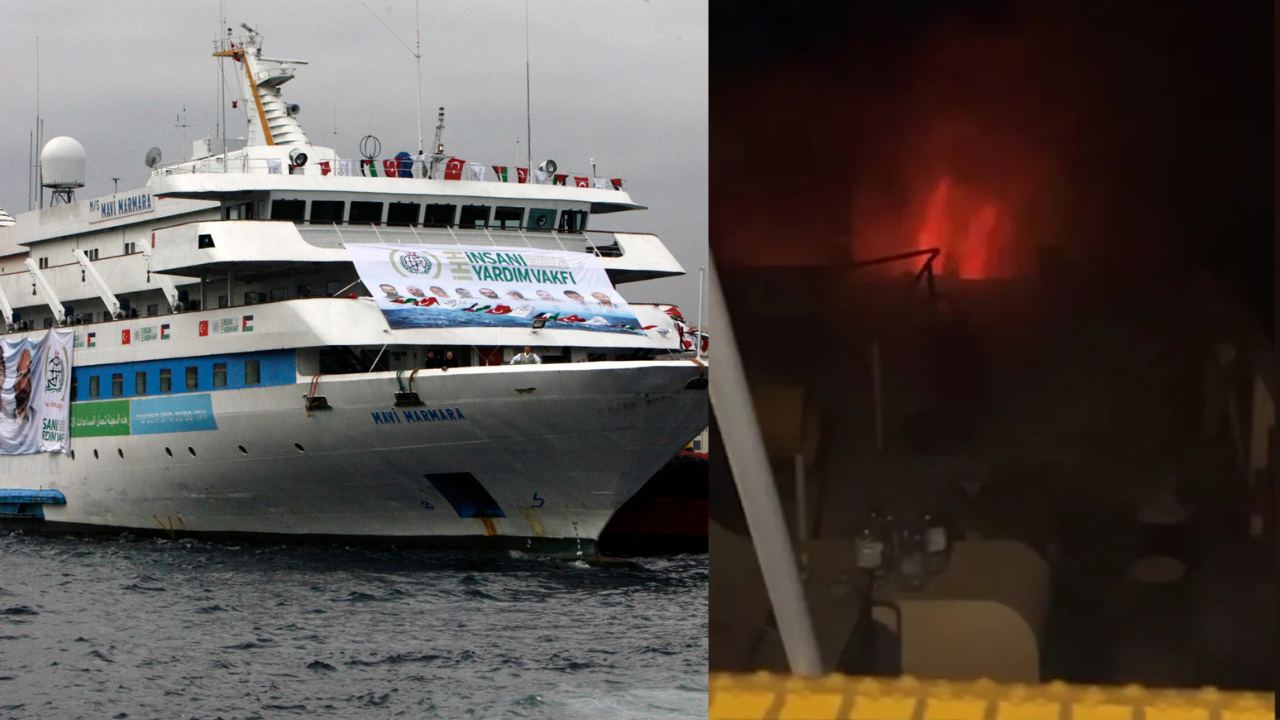
    A humanitarian flotilla, a fleet of ships carrying 30 human rights activists delivering supplies to Gaza, was struck by Israeli military drones in the early hours of Friday, just outside Maltese territorial waters.

    The incident occurred at approximately 00:23 local time, when two drone strikes hit the vessel, damaging its hull and generator. The strikes caused the ship to start taking on water, placing the lives of those aboard in immediate danger. The crew sent out an urgent SOS distress call as the situation deteriorated.

    The vessel, part of the Freedom Flotilla Coalition, was operating in international waters about 14 nautical miles from Malta when it was attacked. Despite issuing multiple distress signals, only Cyprus responded by sending rescue boats. 

    The Freedom Flotilla Coalition denounced the attack on social media, describing it as a “war crime” and an “act of piracy”, and called for swift action from the Maltese government and the international community.

    The flotilla was heading to deliver aid to Gaza, where Palestinians are currently subjected to genocide, ongoing Israeli airstrikes, and a blockade. Organisers indicated that the mission was conducted under a media blackout to reduce the risk of Israeli disruption. Those on board maintained that the ship was clearly identified as a humanitarian vessel and was unarmed, intended solely to deliver vital aid to Gaza’s civilian population.

    This attack comes at a time when Israel is also facing severe wildfires affecting several areas, including near Jerusalem. These wildfires have prompted evacuations, emergency alerts, and a state of distress across the nation. Despite the domestic crisis, Israel’s military actions in Gaza, now extending to international waters, have continued unabated.

    In Gaza, the humanitarian crisis is worsening rapidly. Since the onset of the genocide following the October 2023 attacks, Israeli airstrikes and the blockade have caused widespread destruction, leaving more than 52,000 Palestinians dead, at least 118,000 injured and millions displaced.

    The region is facing critical shortages of food, medicine, and essential supplies. Human rights organisations and various governments have denounced these actions as genocidal, calling for international accountability over ongoing human rights violations.

    The Freedom Flotilla Coalition, active since 2010, has persistently challenged the naval blockade on Gaza by sending humanitarian aid via sea. This recent strike on the Freedom Flotilla, just outside Maltese waters, marks a serious escalation, not only in Gaza but also internationally, as Israel’s military activities continue to draw condemnation from the global community.

    The situation remains urgent, and pressure is mounting worldwide for immediate measures to ensure the safety of humanitarian workers and the delivery of aid to Gaza. As of now, the ship is still taking on water, with Cyprus the only nation to respond to the SOS call.