Category: Lifestyle

  • Emeralds, rubies and diamonds: report reveals jewels stolen from India by British Empire

    Emeralds, rubies and diamonds: report reveals jewels stolen from India by British Empire

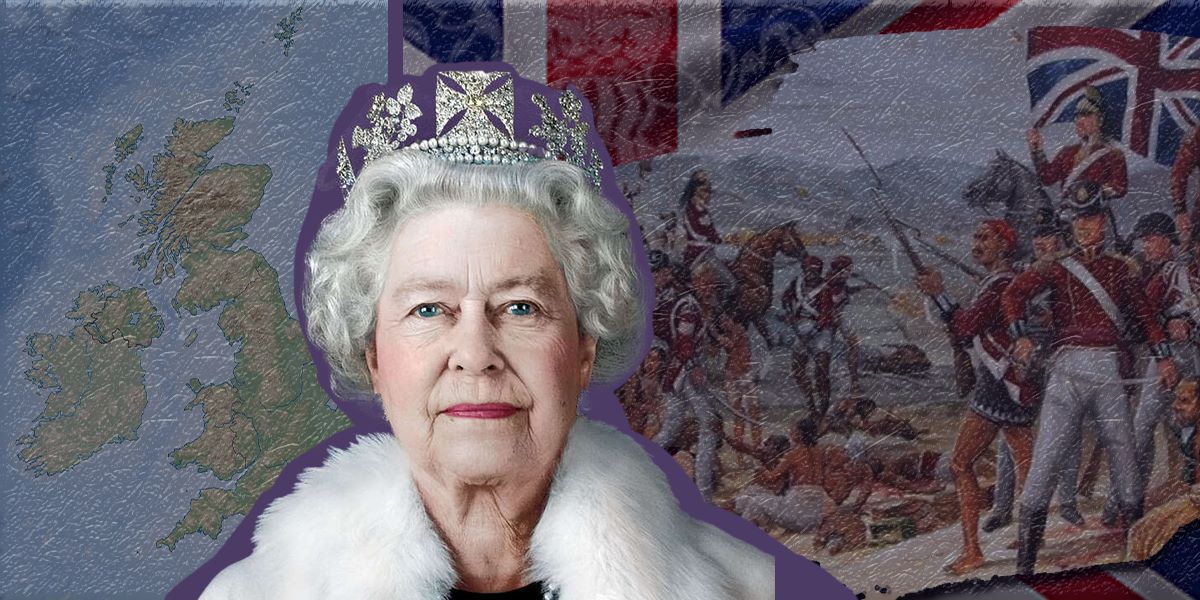
    As part of their ‘Cost Of The Crown’ series, investigating the British Royal Family’s wealth and finances, The Guardian has extracted a 46 page report from the Indian government which provided details of jewelry and other precious items stolen by the colonial British Empire during their reign over the sub-continent. Most of the gifts were handed over as gifts to Queen Victoria, the reigning monarch at the time.

    The investigation was commanded by the late Queen Elizabeth II’s grandmother, Queen Mary, to find out about the origins of her jewels.

    The report details the names of the jewels as well as their colonial origins and how they were stolen by the East India Company.

    1 Koh-i-Noor
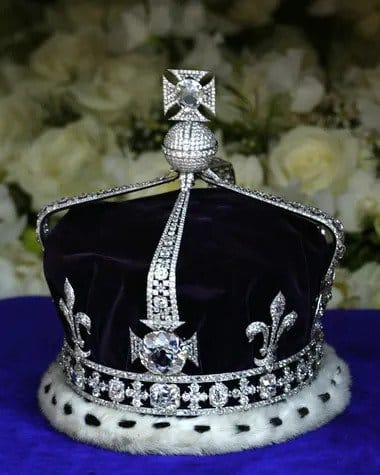
    The legendary diamond Koh-i-Noor was taken from Maharaja Ranjit Singh’s kitty. The ruler of Lahorr had signed a treaty of friendship with the British in 1831, and six years later the then Governer-General of India, George Eden, and his sister, Fanny, visited him at his palace. The Guardian writes that Fanny had later written about Singh’s diamond collection, detailing how he decorated his horses with the finest diamonds she had ever seen:

    “If ever we are allowed to plunder this kingdom, I shall go straight to their stables.”

    in 1849, Singh and his heir, Duleep, were forced to sign over Punjab to the British army, who stole all of his jewels as a part of their conquest, along with the Koh-i-Noor.

    The diamond is part of the Imperial Collection, imbedded into Queen Elizabeth, the Queen Mother’s crown, worn by consorts.

    2 The Timur Ruby gemstone
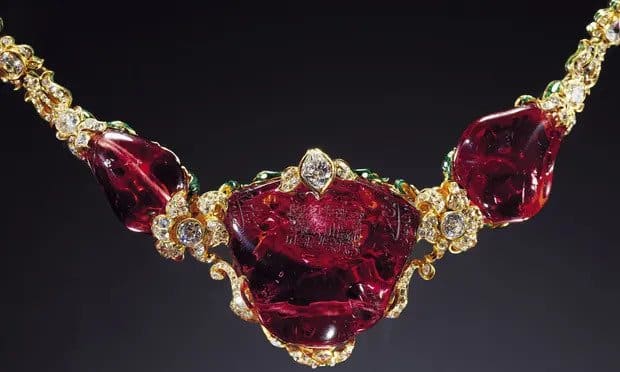
    Named after Timur, the founder of Timurind Empire in Central Asia, the gemstone is etched with the names of the five men who owned it: Jahangir (1569-1627), the 4th Mughal Emperor, Shah Jehan (1592-1666), the 5th Mughal Emperor, Farrukhsiyar (1685-1719), the 10th Mughal Emperor; Nader Shah (1688-1747), Shah of Iran; and Ahmad Shah Durrani (1722-1772), King of Afghanistan.

    By 1813, the gemstone was under the possession of Maharaja Ranjit Singh, who ruled over the Sikh Empire, and later was passed down to his heir Maharaja Sher Singh. From there, the necklace was inherited by his brother Duleep Singh, who became Maharaja when he was only five years old.


    During 1948- 49, when the British Empire waged wars over the Sikh Empire, the East India Company took over Punjab and forced the then ten-year-old Maharaja to hand over his possessions. Duleep Singh was placed under a Scottish guardian, isolated from contacting his fellow countrymen.

    3 Pearl necklace
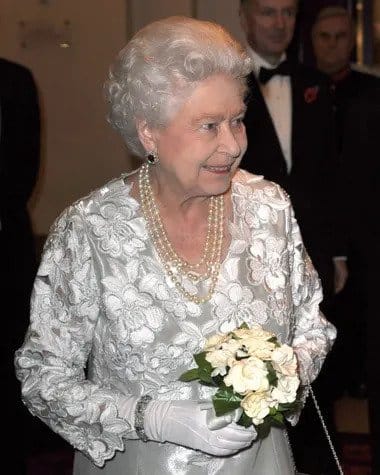
    Comprising of 244 pearls and a clasp of two magnificent rubies, the necklace had originally belonged to a ruler in Punjab, until it was stolen by the British. Queen Elizabeth II was spotted wearing this necklace at the Royal Opera House in London to celebrate her diamond jubilee.

    4 Emerald girdle of Maharaja Sher Singh
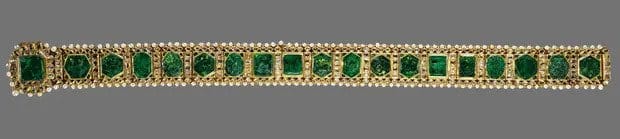
    The gold girdle inlaid with 19 emeralds first came to the public’s attention during Buckingham Palace’s celebration of Prince Charles’ 70th birthday, with a display of his favorite pieces from the royal collection. The item had previously belonged to an Indian Maharaja, Sher Singh, who used it to decorate his precious horses.
  • 13-year-old commits suicide over bad haircut

    13-year-old commits suicide over bad haircut

    Trigger warning: Suicide/Self-harm

    A 13-year-old boy in India has committed suicide after a barber cut his hair extremely short.

    As per Indian media news reports, the incident took place in Indian state Maharashtra.

    The boy committed suicide by jumping from the window of a bathroom.

    Media reports state that the boy was unhappy about his hair being cut short and not according to what he wanted. His parents tried to calm him down but the boy remained unsatisfied.

    The boy went to the bathroom and allegedly jumped out of the windo when all the family members of his family had gone to sleep.

  • Girl swallows mobile during fight with brother

    Girl swallows mobile during fight with brother

    An 18-year-old Indian girl swallowed a cell phone during an argument with her brother to keep him from getting to it.

    The siblings were reportedly fighting over the gadget when the sister decided no one was going to have it. The girl was rushed to hospital after she experienced severe abdominal pain and vomiting. She underwent a surgery in the hospital where the phone was safely removed from her stomach.
    The girl received ten stitches in a two-hour long surgery.


    The physician who examined the girl said that he had encountered such a case for the first time. He further requested parents to stay cautious while handing over cellphones to their children.

  • Royals made about £2 million by selling horses given as gifts

    King Charles III and Queen Elizabeth II have profited almost £2 million from the sale of horses given by notable statesmen including Sheikh Mohammed bin Rashid al-Maktoum of Dubai, Prince Faisal of Saudi Arabia and Qatar’s al-Thani family, The Guardian has reported.


    These were private presents, Buckingham Palace has claimed.


    The late Queen had a history of accepting gifts of horses; during a state visit to West Germany in 1978, she was given two horses. Questions are being raised about guidelines for royal family for accepting gifts.

    Sheikh Mohammed bin Rashid al-Maktoum, the Emir of Dubai and Prime Minister of the United Arab Emirates, is by far the queen’s most benevolent supplier of racing and breeding stock. At least 34 horses presented to the royals appear to have come from him.

    Estimate, who handed the queen one of her most cherished victory on the track in the 2013 Gold Cup at Royal Ascot, is said to have been among the five horses Prince Shah Karim al-Husseini, the Aga Khan, gifted to the royal family.


    Elizabeth received a total of 41 horses that competed in races during the past 15 years, racing in royal colours, according to a Guardian study.


    Over the past ten years, 29 of them were put up for auction in public and brought in a total of £1.93 million.

  • Family welcomes first baby girl born after 138 years

    Family welcomes first baby girl born after 138 years

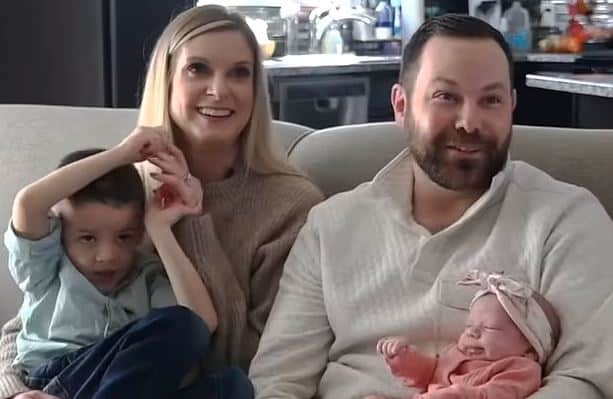
    A couple in the United States (US) became parents to the first girl born in the father’s family after a gap of 138 years.

    Carolyn, the mother of the baby girl, knew what she was getting into when she married her husband, Andrew, 10 years ago.


    He told her upfront that his family had not produced a female child since 1885.

    The couple has named their daughter Audrey. The father said it was really hard to come up with a name because they never thought of a girl name before.
    The mother of the baby girl said that the arrival was “even more special” because their daughter was “worth the wait and all the struggles.”

    The couple said they experienced a miscarriage in 2021, so when they found out a year later that they were pregnant with another child they were thankful but cautious.

  • Here are the key features of Pakistan’s first mental health app ‘Humraaz’

    Here are the key features of Pakistan’s first mental health app ‘Humraaz’

    Prime Minister’s strategic reforms initiative for the mental wellbeing of citizens, has launched a mobile/web based application named ‘Humraaz’ along with an integrated helpline -1166- in collaboration with Ministry of Health Services, Regulations and Coordination, World Health Organisation (WHO), National Information Technology Board (NITB) and Federal Directorate of Immunization.


    The application is available in both Google and Apple stores and the toll free helpline is also active.

    More than 140 psychologists/psychiatrists have registered in the initiative, out of which almost 60 plus are Psychiatric Resident Doctors and Counsellors. Appointments are booked based on availability/preferred time slots of the psychologists/psychiatrists.

    More than 30 government psychologists/psychiatrists are onboard for providing free consultation services to citizens having mental health concerns and thoughts of self-harming.

    Registration of Doctors (Psychologists/ Psychiatrists) will remain open – the profiles are reviewed and approved by the Panel of Experts of Ministry of National Health Services Regulations and Coordination.

    Here are the key features of the application:
    • Guided and principle based counselling and psychotherapy sessions

    • Daily activities monitoring

    • 24/7 connection with professionals

    • International standard knowledge base

    • ChatBot (including self-assessment)

    • WhatsApp support appointment booking

    • Support groups of people for sharing of experiences.

    Salman Sufi, the Head of Prime Minister’s Strategic Reforms Unit, while talking exclusively to The Current said, “The government of Pakistan has recognized that trust in mental health professionals is a major barrier to seeking help, and has taken steps to address this issue. One such initiative is the government’s new mental health application for citizen’s wellbeing called “Humraaz.”


    Explaining that the application provides users with access to mental health professionals and resources, Sufi stressed that it aims to increase awareness about mental health issues and reduce stigma.

    He continued by saying that the government is working to ensure that mental health professionals are adequately trained and qualified to provide high-quality care, through setting rigorous standards for education, licensure, and accreditation, and providing ongoing training and professional development opportunities.


    “These efforts will help to increase trust in mental health professionals and encourage more people to seek the help they need.”


    While answering a question about the protection of user data Sufi said, “Ensuring the privacy and security of users’ data is a top priority for the government of Pakistan’s Humraaz mental health application. To achieve this, the government has implemented strict data protection policies and procedures, including using secure servers, encrypting data, and limiting access to user information to authorized personnel only.”

    In addition, the government has also appointed a dedicated team to monitor the application’s security and respond to any potential threats or breaches, Sufi elaborated. “These measures will help to safeguard the sensitive data of users and protect their privacy and wellbeing,” he said.

  • Eid shopping: Markets in Lahore to remain open till 1am

    The Lahore High Court (LHC) has approved an extension of market hours for the provincial capital, Samaa has reported. The decision has been taken keeping in mind that Eid-ul-Fitr is now around the corner and shoppers will throng markets.

    Justice Shahid Karim was informed during the hearing of a petition to reduce smog in the city that most people go for shopping after Iftar.


    He was also informed that the business community would lose money if marketplaces weren’t allowed to stay open until late at night. After hearing the arguments, the court allowed extension of market timings in Lahore.

    Previously, the markets in Punjab’s capital were allowed to stay open till 10pm.


  • Restaurant bans customers from using smartphones while dining

    A Japanese ramen restaurant has announced that it will not allow customers to use their phones while dining.

    The restaurant’s owner, Kota Kai, put the ban in place last month after observing that patrons who were using their phones to view videos took the longest to begin eating.

    He claims that the thin, millimetre-wide noodles in his restaurant can rapidly turn mushy. According to Kai, even a quick film could cause a discernible impact in the ramen’s flavour.

    “It’s painful for me to see the ramen that I put my soul into making get ruined right before my eyes,” he said.

    Kai stated that he likes to deal with the clients directly as opposed to displaying posters about the phone restriction.

    “When the seats are full and I see people stopping eating while staring at their smartphones, I tell them (to stop),” he added.

  • 14-year-old girl delivers baby after rape by brother, father, DNA of baby matches with brother

    14-year-old girl delivers baby after rape by brother, father, DNA of baby matches with brother

    Trigger Warning: Sexual violence

    A 14-year-old girl was allegedly raped by her father and brother, Humaira Kanwal reports for BBC Urdu.

    The girl, a resident of Azad Kashmir, was taken to hospital by her mother after she complained of stomach pain. Doctors discovered that the girl is pregnant and about to give birth. 

    The hospital staff decided to report the case to the police, but the girl delivered the baby before officers could arrive at the facility to record her statement. 

    Investigation has revealed that the victim has alleged that both her brother and father raped her several times during the last few months. The DNA of the baby she has birthed matches that of her brother’s. 

    While talking to the BBC, the investigation officer said that both the father and brother of the girl were arrested and after the completion of physical remand, they are now in jail on judicial remand. In statements given to the police, the brother and father have confessed to raping the girl.


  • Snake on a plane: Pilot makes emergency landing after finding cobra on board

    A South African pilot had to make an emergency landing after discovering a cobra under his seat. The poisonous snake was five feet long.
    “To be truly honest, it’s as if my brain did not register what was going on,” Rudolph Erasmus, the pilot said to BBC.


    “I told them: ‘Listen, the snake is underneath my seat. It is inside the cockpit, so we are going to have to execute a landing as fast as possible,” said Erasmus while talking about how he handled the situation.


    He first thought the cold feeling on his back was his water bottle, however as he turned to the left and looked down, “I saw the cobra receding its head backwards underneath the seat.”

    The plane was going from Bloemfontein to Pretoria. Along with the serpent, the private aircraft, a Beechcraft Baron 58, was carrying four passengers.