Category: Lifestyle

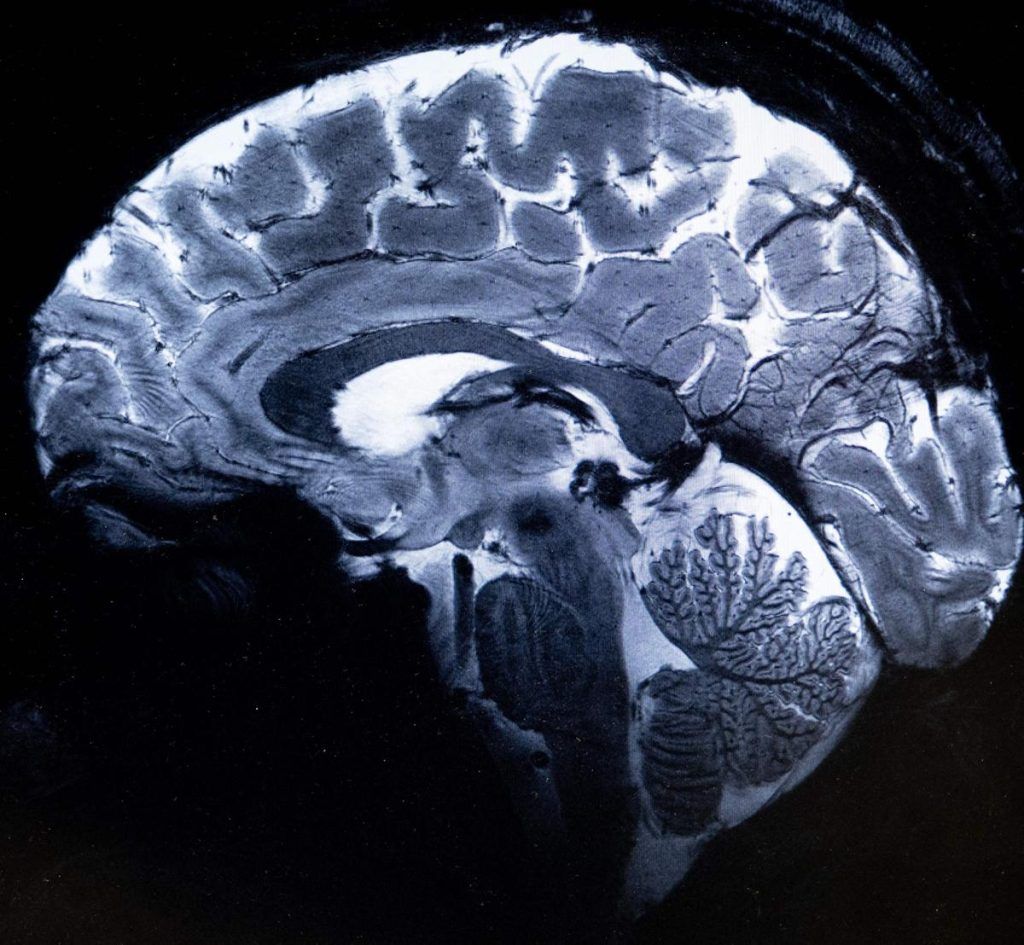
  • World’s most powerful MRI scans first images of human brain

    World’s most powerful MRI scans first images of human brain

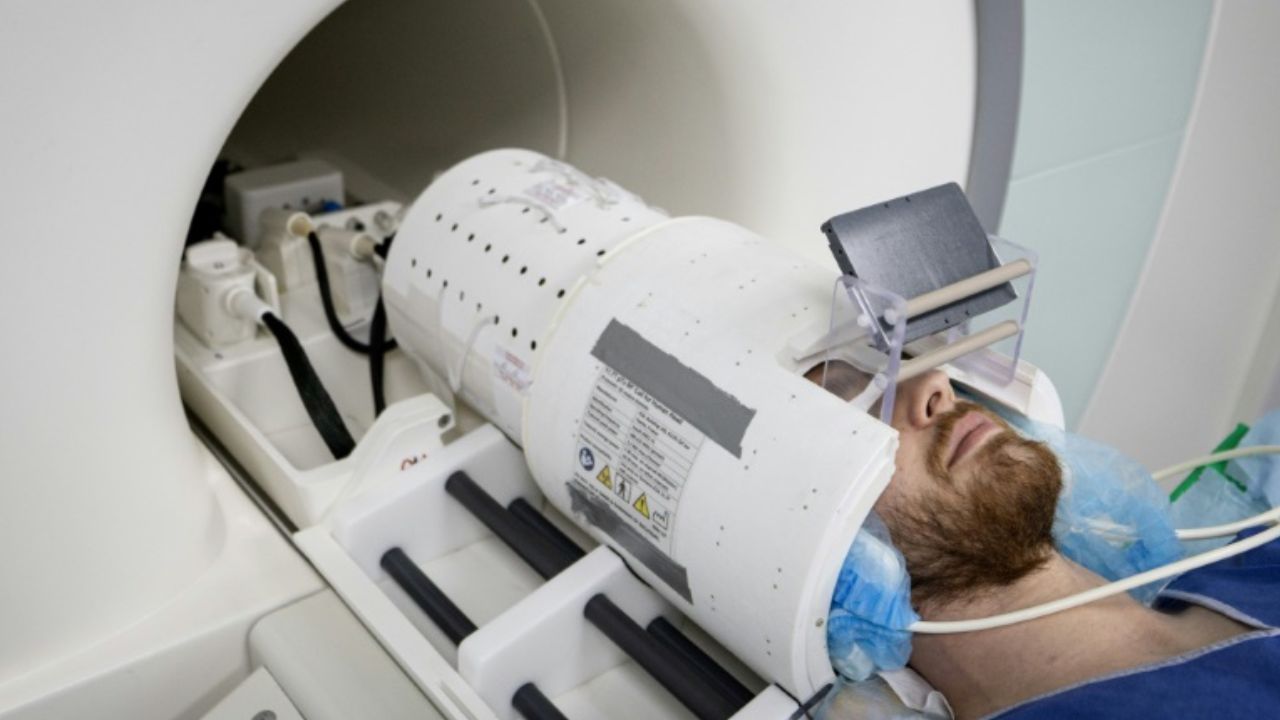
    The world’s most powerful MRI scanner has delivered its first images of human brains, reaching a new level of precision that is hoped will shed more light on our mysterious minds — and the illnesses that haunt them.

    Researchers at France’s Atomic Energy Commission (CEA) first used the machine to scan a pumpkin back in 2021. But health authorities recently gave them the green light to scan humans.

    Over the past few months, around 20 healthy volunteers have become the first to enter the maw of the magnetic resonance imaging (MRI) machine, which is located in the Plateau de Saclay area south of Paris, home to many technology companies and universities.

    “We have seen a level of precision never reached before at CEA,” said Alexandre Vignaud, a physicist working on the project.

    The magnetic field created by the scanner is a whopping 11.7 teslas, a unit of measurement named after inventor Nikola Tesla.

    This power allows the machine to scan images with 10 times more precision than the MRIs commonly used in hospitals, whose power does not normally exceed three teslas.

    On a computer screen, Vignaud compared images taken by this mighty scanner, dubbed Iseult, with those from a normal MRI.

    “With this machine, we can see the tiny vessels which feed the cerebral cortex, or details of the cerebellum which were almost invisible until now,” he said.

    France’s research minister Sylvie Retailleau, herself a physicist, said “the precision is hardly believable!”

    “This world-first will allow better detection and treatment for pathologies of the brain,” she said in a statement to AFP.

    Lighting up the brain’s regions

    Inside a cylinder that is fives metres (16 feet) long and tall, the machine houses a 132-tonne magnet powered by a coil carrying a current of 1,500 amps.

    There is a 90-centimetre (three-foot) opening for humans to slide into.

    The design is the result of two decades of research by a partnership between French and German engineers.

    The United States and South Korea are working on similarly powerful MRI machines, but have not yet started scanning images of humans.

    One of the main goals of such a powerful scanner is to refine our understanding of the anatomy of the brain and which areas are activated when it carries out particular tasks.

    Scientists have already used MRIs to show that when the brain recognises particular things — such as faces, places or words — distinct regions of the cerebral cortex kick into gear.

    Harnessing the power of 11.7 teslas will help Iseult to “better understand the relationship between the brain’s structure and cognitive functions, for example when we read a book or carry out a mental calculation,” said Nicolas Boulant, the project’s scientific director.

    On the trail of Alzheimer’s

    The researchers hope that the scanner’s power could also shed light on the elusive mechanisms behind neurodegenerative diseases such as Parkinson’s or Alzheimer’s — or psychological conditions like depression or schizophrenia.

    “For example, we know that a particular area of the brain — the hippocampus — is implicated in Alzheimer’s disease, so we hope to be able to find out how the cells work in this part of the cerebral cortex,” said CEA researcher Anne-Isabelle Etienvre.

    The scientists also hope to map out how certain drugs used to treat bipolar disorder, such as lithium, distribute through the brain.

    The strong magnetic field created by the MRI will give a clearer image of which parts of the brain are targeted by lithium. This could help identify which patients will respond better or worse to the drug.

    “If we can better understand these very harmful diseases, we should be able to diagnose them earlier — and therefore treat them better,” Etienvre said.

    For the foreseeable future, regular patients will not be able to use Iseult’s mighty power to see inside their own brains.

    Boulant said the machine “is not intended to become a clinical diagnostic tool, but we hope the knowledge learned can then be used in hospitals”.

    In the coming months, a new crop of healthy patients will be recruited to get their brains scanned.

    The machine will not be used on patients with conditions for several years.

  • Google to delete incognito search data to end privacy suit

    Google to delete incognito search data to end privacy suit

    San Francisco (AFP) – Google has agreed to delete a vast trove of search data to settle a suit that it tracked millions of US users who thought they were browsing the internet privately.

    If a proposed settlement filed Monday in San Francisco federal court is approved by a judge, Google must “delete and/or remediate billions of data records” linked to people using the Chrome browser’s incognito mode, according to court documents.

    “This settlement is an historic step in requiring dominant technology companies to be honest in their representations to users about how the companies collect and employ user data, and to delete and remediate data collected,” lawyer David Boies said in the filing.

    A hearing is slated for July 30 before Judge Yvonne Gonzalez Rogers, who is to decide whether to approve the deal that would let Google avoid a trial in the class-action suit.

    The settlement calls for no cash damages to be paid but leaves an option for Chrome users who feel they were wronged to sue Google separately to get money.

    The suit originally filed in June of 2020 sought at least $5 billion in damages.

    “We are pleased to settle this lawsuit, which we always believed was meritless,” Google spokesman Jorge Castaneda said in a statement.

    “We are happy to delete old technical data that was never associated with an individual and was never used for any form of personalization.”

    The object of the lawsuit was the “Incognito Mode” in the Chrome browser that plaintiffs said gave users a false sense that what they were surfing online was not being tracked by the Silicon Valley tech firm.

    But internal Google emails brought forward in the lawsuit demonstrated that users using incognito mode were being followed by the search and advertising behemoth for measuring web traffic and selling ads.

    The lawsuit, filed in a California court, claimed Google’s practices had infringed on users’ privacy by intentionally deceiving them with the incognito option.

    The original complaint alleged that Google had been given the “power to learn intimate details about individuals’ lives, interests, and internet usage.”

    “Google has made itself an unaccountable trove of information so detailed and expansive that George Orwell could never have dreamed it,” it added.

    The settlement requires Google, for the next five years, to block third-party tracking “cookies” by default in Incognito Mode.

    Third-party cookies are small files which are used to target advertising by tracking web navigation and are placed by visited sites and not by the browser itself.

    No cookies?

    Google earlier this year began limiting third-party cookies for some users of its Chrome browser, a first step towards eventually abandoning the files that have raised privacy concerns.

    Google announced in January 2020 that it would begin eliminating third-party cookies within two years, but the start has been delayed several times amid opposition from web media publishers.

    Cookies have recently been subject to greater regulation, including the European Union’s General Data Protection Regulation introduced in 2016 as well as regulations in California.

  • PPP’s Ali Madad Jattak caught mistreating female professors on video

    PPP’s Ali Madad Jattak caught mistreating female professors on video

    A video of Ali Madad Jattak, a senior politician from Quetta affiliated with Pakistan Peoples Party (PPP) has emerged online where he was seen talking to women protestors in a raised voice. The women were protesting against the government on the issue of delayed salaries.


    “That is why you can’t feel the pain,” the protesting professor sitting at the ground was seen saying as Ali related that his own mother and sister will never be sitting like this. As the woman argued, he says out loud, “Khabardar”. His assistant can also be seen admonishing the woman and asking her to behave herself.


    The incident happened during a protest demonstration organized by teachers and the staff of the university, who have been enduring a three-month delay in their salaries.


    The protesters, voicing their grievances outside the Balochistan Assembly on Monday, sought a resolution to the salary delays. The assembly speaker sent Ali Madad Jattak and other officials for negotiations. However, tensions erupted when Jattak reportedly adopted an aggressive attitude and resorted to using abusive language towards the protesting professor Tatara Achakzai.


    The distressing incident triggered outcry on social media platforms, prompting Chief Minister Mir Sarfaraz Bugti to intervene. In an effort to redeem the situation, Bugti extended apologies on behalf of Jattak and sought forgiveness from the aggrieved female teachers, reported Quetta Voice.

  • In a first, two First Ladies at presidential palace in a Senegal

    In a first, two First Ladies at presidential palace in a Senegal

    In the closing moments of the electoral campaign, Senegal’s president-elect Bassirou Diomaye Faye stepped onto the stage holding the hands of both his wives Marie and Absa.

    It was an unprecedented sight in the national politics of the West African country and a clear choice by the first-round winner who promises radical change.

    Polygamy is a traditional and religious practice firmly anchored in the culture of Senegal where the overwhelming majority is Muslim.

    Marie Khone, who until now had never been in the spotlight, comes from the same village as 44-year-old Faye. They married 15 years ago and have four children.

    He married his second wife Absa just over a year ago.

    “It’s the ultimate recognition of the tradition of polygamy at the top of the state, with a situation that will reflect Senegalese reality,” sociologist Djiby Diakhate said.

    Many men praise the practice while women tend to remain “mistrustful”, he added.

    Polygamy has long stirred controversy and the public appearance by BDF, as he is known, with his two wives at his side cheered on by thousands of his supporters has made it a top talking point in the media, online and at home, sparking diverse reaction.

    “Being a second wife suits me better than being a first,” well-known singer Mia Guisse said proudly in a video that recently went viral.

    Reputed sociologist Fatou Sow Sarr said on X, formerly Twitter, that “polygamy, monogamy, polyandry are matrimonial models determined by the history of every nation”.

    “These models are now in competition with homosexual marriage,” he added, in a country where homosexuality is punishable by between one and five years in jail.

    “I really think that the West has no legitimacy to judge our cultures,” Sarr added in a follow-up message on X.

    Nevertheless, many Senegalese women say they find polygamy hypocritical and unfair, while the UN Human Rights Committee said in a 2022 report that it amounted to discrimination against women and should be ended.

    – ‘Totally new’ situation –

    In her 1979 novel “So Long a Letter”, Senegalese author Mariama Ba was fiercely critical of polygamy, depicting the pain and loneliness of a woman after her husband took a second, younger wife.

    Many popular TV series in recent years, like “Mistress of a Married Man” or “Polygamy”, have explored the ups and downs of family life in polygamous households.

    Former culture minister and history professor Penda Mbow said the matrimonial situation at the presidential palace now is “totally new”.

    “Until now, there was only one First Lady. This means the entire protocol must be reviewed,” he added.

    Polygamy is widespread in Senegal particularly in rural areas and is considered a way of widening one’s family.

    Islam permits men to take up to four wives providing they have the financial means. In such a case, it calls for equal, alternating time spent with the wives, of between two and three days.

    – ‘Strong signal’ –

    Many marriages are not registered in Senegal, making it difficult to say exactly how many are polygamous.

    But according to a 2013 report by the national statistics and demographics agency, 32.5 percent of married Senegalese people were in a polygamous union.

    The average age of the women at the time of their marriage was 40.4 years old and 52.9 for men, the report said.

    Diakhate, the sociologist, said Faye had sent a “strong signal so that other men also accept their polgygamy and so that they demonstrate transparency like him”.

    He said there was “undoubtedly a will” to end hidden polygamy- known in the Wolof language as Takou Souf — which he added would be “a good thing for the economy of the country and for the matrimonial situation”.

    In response to detractors, the incoming president, who won 54.28 percent in the March 24 vote, shows nothing but pride in his family situation.

    “I have beautiful children because I have wonderful wives. They are very beautiful. I give thanks to God they are always fully behind me,” he said during the presidential race.

  • New initiatives to protect sensitive information, prevent cyber attacks

    New initiatives to protect sensitive information, prevent cyber attacks

    The federal government has formed the National Computer Emergency Response Team to protect sensitive information and prevent cyber attacks.

    NCERT will protect digital assets, sensitive information and critical infrastructure.

    According to a notification of the Ministry of IT, NCERT has been formed as per PECA and CERT rules. The Cyber Security for Digital Pakistan project was declared a National CERT, which had been running for several years.

    The NCERT will play a role in detecting and preventing cyber attacks. For this, along with the appointment of experts, the purchase of necessary software and hardware has already been done.

    NCERT will work on creating awareness, research and development related to cyber attacks while a separate website for National Cert has also been launched.

    The Cyber Security for Digital Pakistan project has been running for several years, and it was run by the National Telecommunication and Information Security Board.

  • Tigress injures two near Multan as it escapes during transportation

    Tigress injures two near Multan as it escapes during transportation

    A Bengal tigress which was being transported from Lahore to Multan by an animal dealer, Muhammad Adnan, ran away from its cage into the fields near Multan in the early hours of Sunday, DAWN has reported.

    The age of Bengal tigress is reportedly about two years and its value is Rs5-6 million.

    Punjab Wildlife Department Multan Deputy Director Sheikh Zahid told Dawn’s Shoaib Ahmed that the tigress was being carried in a pick-up in a cage. The incident happened when the pick-up got stuck in a muddy track on Bosan Road behind the Multan Public High School.

    The cage got opened when the vehicle jerked to get out of the mud. The owner, Muhammad Adnan, called 15 but the police told him to contact the wildlife department.

    The furious tigress ran into the fields and reportedly injured two persons, including a wildlife official. However, the injuries were mild. The Punjab Wildlife Department officials and a DHA Multan Zoo vet were involved in the operation to catch the tigress. It was tranquilised by a DHA Multan Zoo vet.

    Animal dealer Adnan was fined Rs221,000 by the wildlife department under the Punjab Wildlife Act 1974. The tigress has been returned to the owner on payment of the fine, told Sheikh Zahid.

    Punjab Wildlife and Parks Department Director General Mudassar Riaz Malik talked to the media. To a question why tigers and lions had not yet been categorised in Schedule 3 of the Punjab Wildlife Department, the DG said he had called a meeting on Monday (today) to set standards and regulate the issue of keeping tigers and lions in breeding farms and houses only. “Such animals fall in Schedule 3 and it is prohibited to keep them domestically,” he added.

    Malik was asked if these animals were put in Schedule 3, what would happen to the private breeding farms having a huge number of lions and tigers. To this he responded it’s a crucial issue that would be discussed in the meeting besides all other aspects and possible licensing of such animals. To yet another question, Mr Malik said the meeting would also discuss either a new schedule or a new law.


    The wildlife DG said the Captive Wildlife Management Committee had got rules approved by the cabinet and new law would be introduced under these rules.

  • Transgenders to be allotted separate rooms in KP hospitals

    Transgenders to be allotted separate rooms in KP hospitals

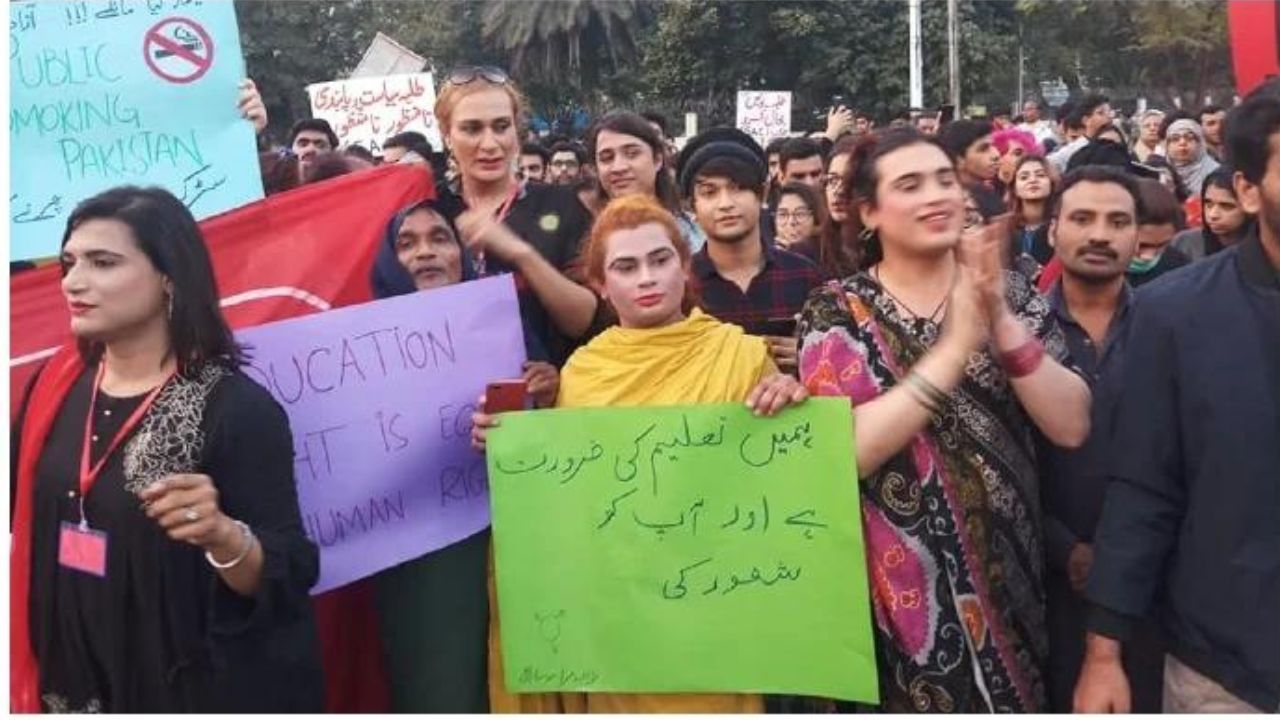
    Chief Minister Khyber Pakhtunkhwa Ali Amin Gandapur has decided to allocate separate rooms for transgenders in all the district headquarter hospitals of the province, reports Geo.

    Governor Ghulam Ali and Chief Minister Ali Amin Gandapur had a meeting in which the problems faced by transgenders were discussed. It was decided in the meeting that a separate cemetery will be allocated for their burials. Separate rooms for transgenders will be allocated in each district headquarters hospital .

    Gandapur said that further steps will also be taken to solve all other problems faced by transgenders.

  • Behind closed wallets; The cycle of financial abuse of house help in Pakistan

    Behind closed wallets; The cycle of financial abuse of house help in Pakistan

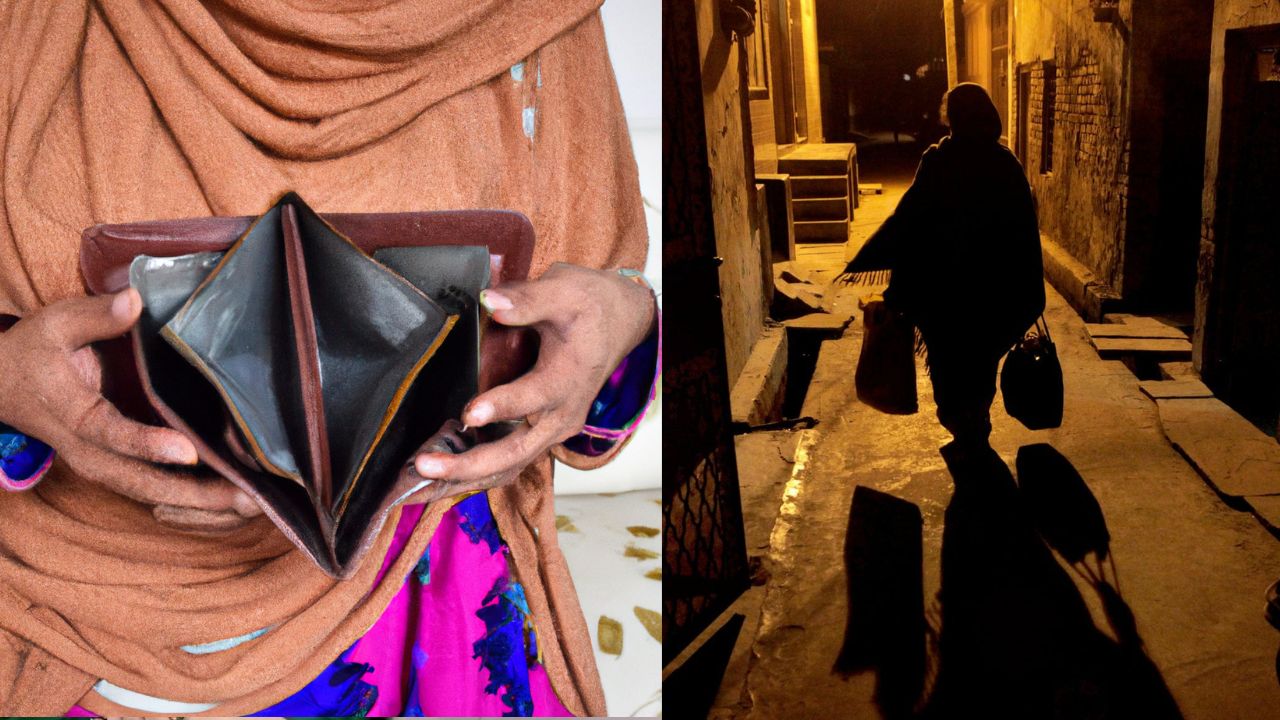
    Sonia, a 27-year-old woman, and mother of a 5-year-old daughter works as a house help. In eight years of married life, her husband has never had a stable job, nor does he bother to find work on a daily wage basis.

    Sonia has been paying off loans taken by her husband, Afzal, and her in-laws. In the initial months of her marriage, she sold whatever she had to buy a motor rickshaw for her husband so that they could have a source of daily income. Within no time Afzal sold the vehicle, taking additional loans to marry off Sonia’s sister-in-law.

    The debt piled up to 150,000 rupees. Sonia was working in two homes at that point, earning Rs20,000 from one for cooking food twice a day and Rs5,000 from the other for cleaning and washing the dishes. This was their sole family income in which they had to do grocery, pay the bills, feed their daughter and themselves, and look after the in-laws in addition to buying medicine for her mother-in-law.

    When she reminded her husband that he was supposed to work too if they wanted to get rid of the loans, she was beaten not only by Afzal but by his family too. From here started a never-ending cycle of financial exploitation and physical abuse. She endured two miscarriages due to the beatings and excessive work. She sometimes thinks that things would’ve been different if her father was alive.

    “I don’t blame my parents. This is what happens to people in our class. I just think that maybe if my father was alive, I would’ve had the option to tell him everything and he might have allowed me to take divorce and go back to my home. I don’t have that option anymore. I must live and survive here. I have a kid now. I can’t leave her,” she said while sobbing.

    Sonia is not the only one who goes through this cycle. I called up as many people as I could in different parts of Pakistan, family, friends, colleagues, acquaintances, and strangers to ask about their house help. Every woman had a similar story. A drug-addicted husband, an abusive husband, a husband who doesn’t work and keeps taking loans which the wife must pay. A never-ending circle of exploitation, harassment, and abuse.

    “There are very few people who respect us. It is not easy to clean someone’s dirt or wash their dishes with days-old rotten food. It is embarrassing to ask them for additional money to pay off loans. Sometimes I even have to take a loan from one person to pay off the previous one and the cycle goes on,” Sonia elaborated while talking about how draining her routine is as she does all the house chores and then works in the homes of other people too.

    She doesn’t want her daughter to end up like her. Instead she desires an education for her child, better career options. But whenever she brings the topic up, Afzal doesn’t take it seriously. He even spent the money they were given by different people to help finance their daughter’s education. Sometimes it was Eid gifts for sisters, other times it was a loan given to a friend. Sonia never got her money back.

    Doctor Ramish Fatima, who works in the periphery of Multan, details how such cases are quite normal and how these women suffer especially during their pregnancies. “These women keep working till the last month of their pregnancy and they must go back to work a few days after giving birth because they must pay off loans. If they fail to do so, they are beaten by their in-laws. In some cases, husbands work on minimum wages, but mostly don’t as they are drug addicts, and they physically abuse their wives after being intoxicated,” she explained.

    Ramish has been working in the periphery for over seven years now and most of the time she has dealt with such emergency cases. As a feminist and human rights activist, she believes that the solution to these problems is education and financial independence. She further emphasizes the importance of systemic upgrades and overall behavioral change in society towards women.

    Punjab Domestic Workers Act was enacted in 2019 throughout the province to regulate their terms of employment and working conditions of service, to provide them social protection and ensure their welfare, and to provide for the matters ancillary.
    The act states that “No child under the age of 15 years shall be allowed to work in a household in any capacity” while every other day we see cases of severe physical abuse and sexual exploitation against underage domestic workers.

    In the same manner, this act requires every employer to issue a letter of employment showing the terms and conditions of employment including nature of work and amount of wages.

    Regarding registration of Domestic Workers and Employers, this act states, “Every domestic worker, to benefit from the fund, shall make an application for registration in a manner as prescribed by the Governing Body, and every such domestic worker shall be provided by the Governing Body with a security number and identity card, which shall be renewable after completion of every three years. Provided that none of the domestic workers shall be eligible to get more than one security number and identity card. Every employer shall make an application for registration in a manner as prescribed by the Governing Body, and every such employer shall be provided with a registration number, which shall be renewable after completion of every three years.”

    Hiba Akbar, a lawyer who teaches at LMUS, believes that such laws are made to just get done with the binding of international treaties without any intention of implementing it.

    “Every time we see a shocking case of abuse of domestic workers we talk about laws but a law already exists. How many domestic workers are paid minimum wage? How many workers and employers are registered? Does anyone even know where they can register,” she questions. If the government was serious about implementation, she stresses, they would’ve made all the information public and ensured the safety and security of domestic workers.

    She further argues that financial abuse comes from employers too who believe that giving their house help food and clothes once in a while, that too of substandard quality, won’t help them in breaking the cycle of financial abuse and recurring loans.

    In 2023, Kashf Foundation, a registered Non-Banking Microfinance Company regulated by the Securities and Exchange Commission of Pakistan which started in 1996, gave 140,572 Easy Loans ranging from 10,000 to 35,000 rupees for short periods, as per their annual report.

    Their research in 2023 on low-income households highlighted that income spent on meeting food expenses has increased from 30% of their income in 2018 to 45% of their income in 2023 while earnings didn’t keep pace with the increase in food prices in real terms.

    Gender and Financial Inclusion expert Zainab Saeed explains that Pakistan has one of the lowest rates of financial inclusion in the world and only 7 percent of Pakistani women are financially included.

    She further says that most of the loans by microfinance institutions aren’t interest-free but have a service charge. Most microfinance institutions borrow money to lend money in addition to the cost of funds and running operations. Akhuwat, an interest-free loan program usually for small businesses, doesn’t solely focus on women but caters to women clients as well.

    “Turnaround times vary across institutions- for example Kashf is two days, you get the loan in two days. Other institutions have different turnarounds, like for Akhuwat, it is 10 to 30 days depending on what the set date for disbursement is in the month. Instant credit or nano loans like Jazz Cash have higher interest rates,” she says while emphasizing that a lot of women don’t even know how to use apps like Jazz Cash.

    As far as requirements are concerned, most of these institutions lend money to those who have their computerized national identity cards (CNIC), some require guarantors while others might demand post-dated cheques.

    When asked about how surety regarding on-time paybacks is made, Zainab said, “It is a trust-based environment so most people tend to pay back their loans on time. People don’t want to be blacklisted from Credit Information Bureau. Some institutions also go for appraisals like Kashf did a very detailed credit appraisal with household cash flows and that helped them to turn in the credibility of the loan.”

    For defaulters, there is legal recourse available but tending to civil courts given the judicial system of Pakistan is not the best solution. Generally, there are very few non-performing loans in the world of microfinance banks, as per Zainab. People end up paying back, some institutes take action to make an example out of it but they usually don’t end up taking that route.

    As these are not interest-free loans, ‘interest rate may vary from flat 25 to 30 percent’ which might seem high but, “the way the repayment is structured allows people to repay,” explains Zainab. “They Usually do monthly repayments. For instance, for a 10 thousand rupees loan, they are paying back 12 thousand 500 rupees. It is then 1000 to 1100 rupees a month. With microfinance institutions, there is a lot of transparency regarding installment dates and amounts which is lacking in other places,” she added.

    As a country with a low literacy rate and even lower financial inclusion of women in Pakistan, the path of loans, financial independence, and empowerment still seems like a far-fetched dream.
  • Heatwaves to last longer amidst climate change

    Heatwaves to last longer amidst climate change

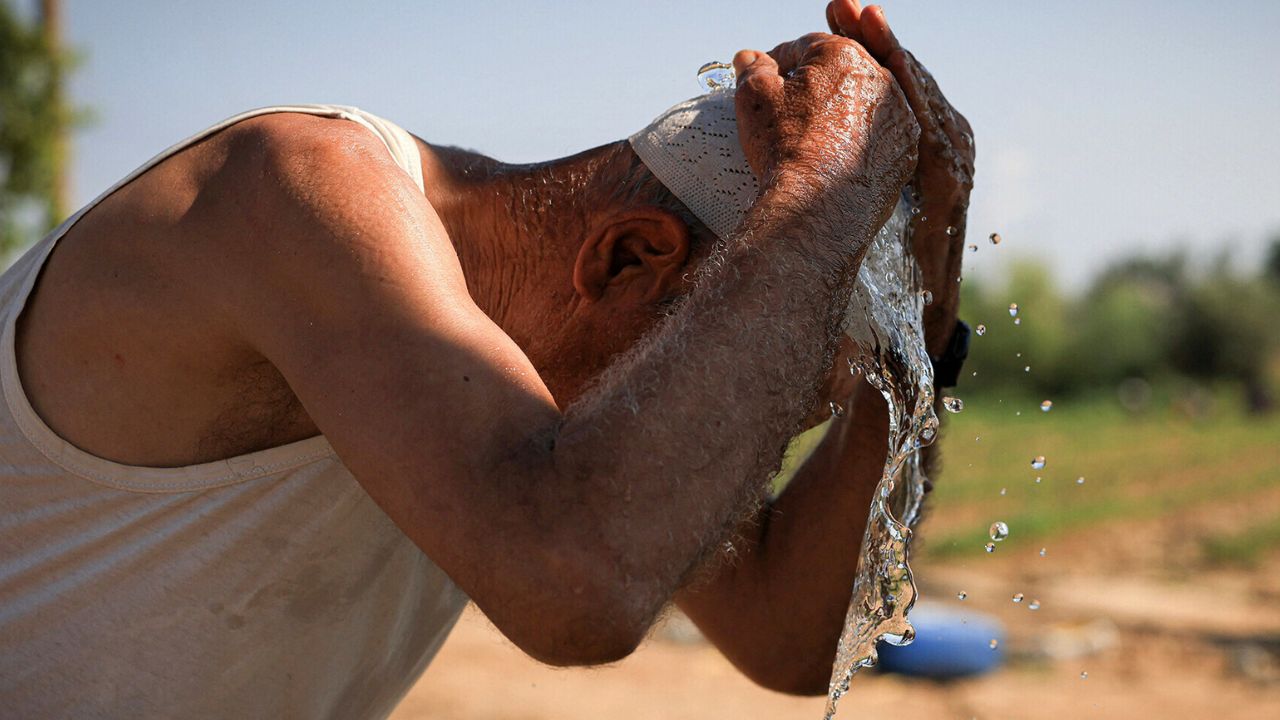
    Climate change is causing heat waves to slow to a crawl, exposing humans to extreme temperatures for longer than ever before, a study published in Science Advances said Friday.

    While previous research has found climate change is causing heat waves to become longer, more frequent and more intense, the new paper differed by treating heat waves as distinct weather patterns that move along air currents, just as storms do.

    For every decade between 1979 to 2020,  researchers found heat waves slowed down by an average of five miles (eight kilometers) an hour per day.

    “If a heatwave is moving slower, that means heat can stay in a region longer, so that has effects on communities,” senior author Wei Zhang of Utah State University told AFP.

    The researchers divided the world into three dimensional-grid cells and defined heat waves as a million square kilometer zones where temperatures reached at least the 95th percentile of the local historical maximum temperature. They then measured their movement over time in order to determine how fast the hot air was moving.

    They also used climate models to determine what the results would have looked like absent human-caused climate change, and found manmade factors loomed large.

    “It’s pretty clear to us that a dominant factor here to explain this trend is anthropogenic forcing, the greenhouse gas,” said Zhang.

    The changes have accelerated in particular since 1997 and in addition to human causes, weakening upper atmospheric air circulation may play a part, the paper said.

    The duration of heat waves also increased, from an average of eight days at the start, to 12 days during the last five years of the study period.

    “The results suggest that longer-traveling and slower-moving large contiguous heat waves will cause more devastating impacts on natural and societal systems in the future if GHG keep rising, and no effective mitigation measures are taken,” the authors wrote.

    Zhang said he was worried by the disproportionate impacts on less-developed regions.

    “In particular, cities that don’t have enough green infrastructure or not many cooling centers for some folks, in particular for the disadvantaged population, will be very dangerous,” he warned.

    la-ia/mdl

    © Agence France-Presse

  • ‘Shame on you Biden’; Pro-Palestine protestors interrupt glamorous presidential fundraiser

    ‘Shame on you Biden’; Pro-Palestine protestors interrupt glamorous presidential fundraiser

    Pro-Palestine protesters interrupted President Joe Biden‘s conversation with his predecessors, Barack Obama and Bill Clinton, at a glamorous fundraiser in New York for the Presidential re-election campaign.

    The disruption isn’t surprising, given that many of Biden’s events have seen protestors calling for a ceasefire in the war on Gaza. This time, according to a pool report, one of the protesters was yelling obscenities about a nuclear war with Russia. Other protesters interrupted over the situation in Gaza.
    Once the show began, Biden, Obama, and Clinton were each interrupted multiple times by Gaza protesters inside the hall, laying bare the unrest within the Democratic Party that hangs over the election.


    “Blood on your hands,” some yelled, at one point prompting Obama to snap back. “You can’t just talk and not listen. That’s what the other side does.”

    Video clips show pro-Palestinian demonstrators accosting people on the street in New York City after they attended the reelection fundraiser for US President Joe Biden.


    Biden exclaimed, “There are too many innocent victims, Israeli and Palestinian. We’ve got to get more food and medicine, supplies into the Palestinians. But we can’t forget, Israel is in a position where its very existence is at stake. You have to have all those people. They weren’t killed. They were massacred. They were massacred.” This enraged the protestors as they started calling out the President.


    “How dare you talk about the innocent deaths of Palestinians. Palestinians are dying right now because of your actions,” a protestor was seen yelling as he was taken into custody by the security.

    Another woman was seen shouting, “Shame on you Joe Biden”.


    A leading New York pro-Palestinian group, Within Our Lifetime, was among those organizing protests, billed as the “Flood Manhattan For Gaza” rally.
    The group issued a call to supporters ahead of the fundraiser, writing on X: “GENOCIDE JOE HAS GOT TO GO! Protesting genocide Joe, Barack Obama, and Bill Clinton outside their democratic fundraiser at Radio City Music Hall!,” reports USA Today.


    In an interview with Al Jazeera, a protestor named Cheryl was seen saying, “I won’t be voting for Biden, for sure, I mean, even if he stopped the war right now, just for what the Palestinian people have suffered, I can’t”.