Category: National

  • Indian media claims phone calls from Pakistan, Turkiye near New Delhi blast site

    Indian media claims phone calls from Pakistan, Turkiye near New Delhi blast site

    Authorities have traced calls from Pakistan and Turkiye near the site of the deadly New Delhi blast, Indian media reports have claimed.

    Although no official statement has so far been released by the Indian government, a report by india.com said that police found 68 suspicious mobile numbers active near Sunheri Bagh’s parking and the blast site, with calls traced from Pakistan and Turkiye.

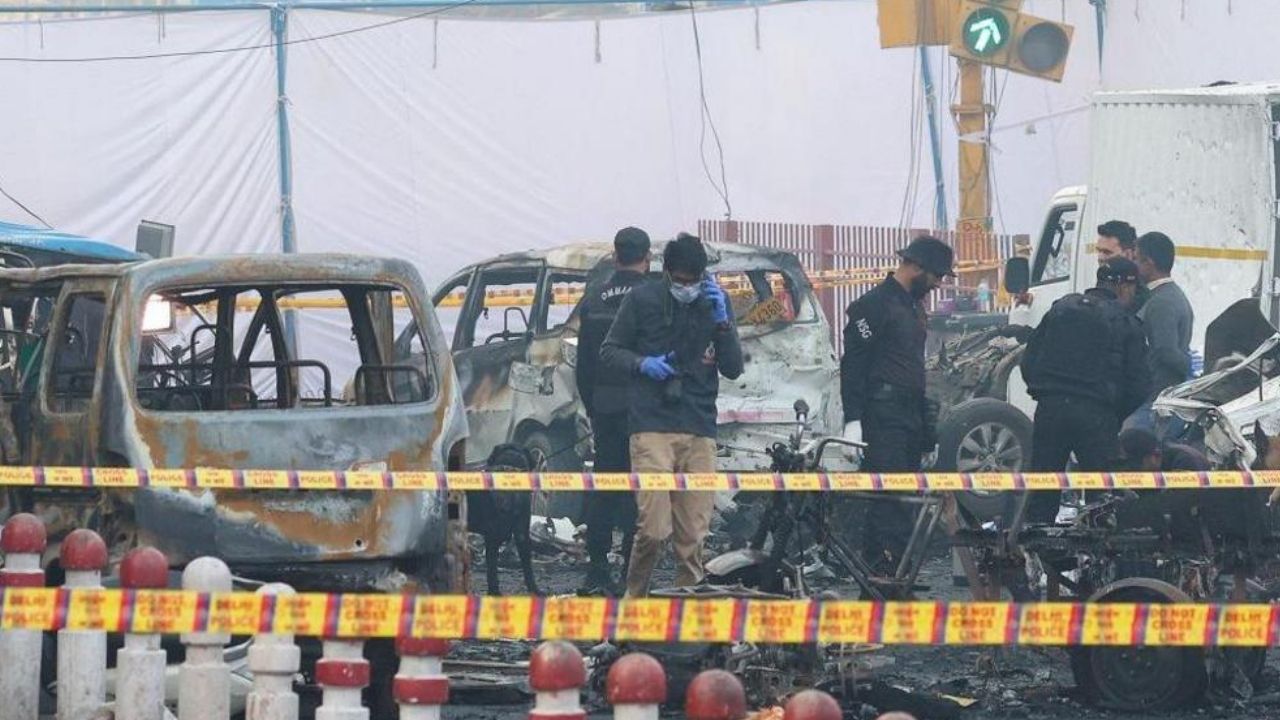
    At least 15 people were killed and 20 others injured when a car exploded near the historic Red Fort in the Indian capital on Nov 10.

    Amid conflicting reports on the nature of the explosion, Indian government on Nov 12 declared the incident a terrorist act, however, it refrained from its usual practice of directly blaming Pakistan.

    Delhi Police said there were two to three people inside the car at the time of the explosion and preliminary police findings also indicated that the blast may have been a possible suicide attack.

    As probe continues, the report by india.com claimed that data from nearby towers revealed unusual activity before the blast, and phone mapping showed 187 phones active within 30 meters of the car that exploded after remining parked for over three hours.

    It merits a mention that this is not the first time India is reportedly linking a terror incident to neighbouring Pakistan, as earlier this year both countries engaged in military clashes after cross-border Indian aggression rooted in similar allegations following the Pahalgam attack.

    Experts, however, believe that India has this time cautiously steered away from its earlier practice of immediately blaming Pakistan for any terror activities because of the thrashing it took in May.

    “It took 48 hours for the Modi regime to admit that the Delhi blast that killed 10 was a terror attack. No more chest thumping, mo more crude jingoism, no more threats to Pakistan [sic],” Indian-Swedish Peace and Conflict expert Ashok Swain wrote in a post on X.


    The cost might have been the loss of six or seven fighter jets “but at least some sanity has come to India’s Hindutva crowd”, he went on to add in reference to the clashes that erupted in response to India’s cross-border aggression after the Pahalgam attack.


    At least six Indian jets were shot down by Pakistan on the night of May 7 in what was termed one of the biggest aerial confrontations since World War II. The beyond-visual-range battle had followed days of cross-border skirmishes that ended with a United States (US) brokered ceasefire as Pakistan destroyed several Indian military targets in retaliatory strikes.
  • After Dawn, Lahore Police caught using ChatGPT for social media posts

    After Dawn, Lahore Police caught using ChatGPT for social media posts

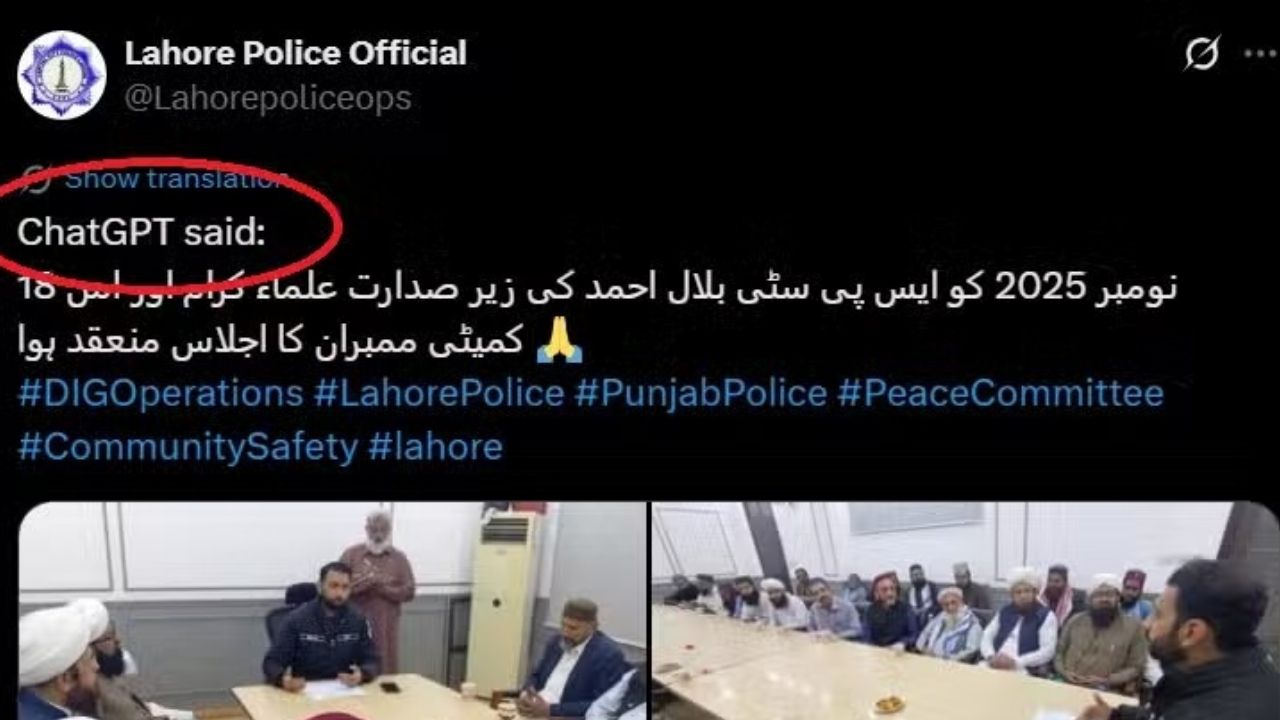
    Days after English daily Dawn was trolled for using AI to edit news articles, the official X account of Lahore Police has been caught using OpenAI’s ChatGPT for social media posts.

    As per the details, the police department on X posted an update about a meeting with local religious scholars, complete with photos of officers and community members seated around a long conference table, but started with “ChatGPT said:”.

    The post that remained publicly visible and unedited by the time this report was filed, showed that the text was copied directly from ChatGPT without removing the prompt header.

    Just last week Dawn made waves on social media after a surprising slip-up in its Business section.

    In an article discussing the recent surge in auto sales, an AI-generated note from ChatGPT was accidentally printed, sparking an outpouring of reactions online. The note, which was clearly intended as an internal message, read:

    “If you want, I can also create an even snappier ‘front-page style’ version with punchy one-line stats and a bold, infographic-ready layout — perfect for maximum reader impact. Do you want me to do that next?”

    The mistake quickly went viral, with people flocking to platforms like X (formerly Twitter), Facebook, and LinkedIn to share their amusement and surprise.

    Meanwhile, some took the moment to reflect on the increasing role of AI in the media industry. A digital media expert remarked, “This is why AI can help, but you still need humans to read things before they go out. A lesson learned today.”

    The incident also sparked discussions about the future of journalism. Several commenters raised concerns about the risks of relying too heavily on AI in newsrooms, with one noting, “It’s funny, but also kind of terrifying. How many more errors like this are lurking out there as AI plays a bigger role in newsrooms?”

    While some found humor in the mistake, others saw it as a cautionary tale about the need for thorough editorial oversight, especially as AI tools continue to play a larger role in content creation.

    Dawn later corrected the story on its website and added an editorial note acknowledging the error.

    “This newspaper report was originally edited using AI, which is in violation of Dawn’s current AI policy. The policy is also available on our website. The report also carried some junk, which has now been edited out. The matter is being investigated. The violation of AI policy is regretted. — Editor,” the note read.

  • Top regional commander among 15 India-backed terrorists killed in KP ops

    Top regional commander among 15 India-backed terrorists killed in KP ops

    Security forces have killed 15 India-backed terrorists in two intelligence-based operations (IBOs) in Khyber Pakhtunkhwa (KP), the Inter-Services Public Relations (ISPR) reported Tuesday.

    According to the military’s media-wing, the operations, launched on confirmed reports of presence of Fitna al-Khawarij militants, targeted hideouts in Kulachi, Dera Ismail Khan and Datta Khel, North Waziristan on November 15 and 16.

    Fitna al-Khawarij is the name used by the state to refer to Indian-sponsored and banned Tehreek-i-Taliban Pakistan (TTP).

    Forces killed 10 terrorists in Kulachi and another five in Datta Khel. The killed terrorists included commander Alam Mehsud, who led the India-backed network in the region.

    Prime Minister (PM) Shehbaz Sharif, in a statement on his official X account, praised the successful actions.

    “Under the vision of determination and stability, the security forces are achieving great successes against terrorism. The nation stands firmly with Pakistan’s forces in this war. We remain committed to eliminating terrorism in every form,” read the statement.

    It may be noted that the ops come a week after ISPR reported that security forces had killed at least 24 terrorists in three separate encounters across KP and Balochistan.

  • FAKE VIDEO: Viral CCTV of girl offering lollipop to robber is not real

    FAKE VIDEO: Viral CCTV of girl offering lollipop to robber is not real

    The viral video that showed a young girl offering her lollipop to a robber is not real, The Current has confirmed through a deep dive of the internet using different frames, from what was claimed to be CCTV footage.

    As per the details, the video that started doing rounds in WhatsApp groups on Sunday evening went on to garner tens of millions of views as it was reshared and aired by leading mainstream media outlets.

    The undated video, with fake timestamps among other digital prints, to make it look more like CCTV footage, showed a robber entering a store located at an undisclosed location. He was then seen assaulting the shopkeeper, forcing him to pay up at gunpoint.

    As the robber was about to leave, the video showed a young girl, claimed to be the shopkeeper’s minor daughter, offering the masked man her lollipop. Seeing this, the robber returned the shopkeeper’s valuables, patting the girl on her head and leaving the store empty-handed.

    With the video going viral on social media, netizens were left divided over its authenticity. While a few said it seemed scripted, hundreds of thousands of others praised the “kind-heartedness” of the robber, whom, social media users said “seemed to have been forced into a life of crime”.

    Amid conflicting claims, The Current reverse-searched the purported CCTV footage using different frames and uncovered that the video was, in fact, fake.

    As per the details of The Current’s findings, the video was produced by a YouTube channel named Kamran Team Official, which has over 80,000 subscribers. The channel has at least 172 videos, most of which are scripted or edited CCTV videos ranging from humour to social messaging.

    While most videos on the channel have hundreds of thousands of views, some have garnered views upwards of a whopping five million.

    Taking a detailed look at the channel’s content, The Current also discovered that the store from the robbery video had repeatedly been featured in various videos, and so were the actors, as well as the toy gun.

    You can view the channel’s content here: 

    Click here

  • ‘Sexual abuse, manipulation’: Captured militant reveals how TTP tricks youngsters into terror attacks

    ‘Sexual abuse, manipulation’: Captured militant reveals how TTP tricks youngsters into terror attacks

    A captured terrorist, Ehsanullah s/o one Abdul Janan, has revealed shocking details of how Fitna al-Khawarij – a term used by the state for terrorists belonging to the banned Tehreek-i-Taliban Pakistan (TTP) – tricks young people into anti-state activities in Pakistan. 

    A video released by security agencies showed Ehsanullah revealing to investigators how militants use religious rhetoric to radicalise youths and manipulate them into carrying out terrorist activities against Pakistan’s armed forces.

    Revealing he worked as a facilitator to several key TTP commanders for three years, Ehsanullah confessed to helping commanders Badri, Mushtaq, Grenade and Islamuddin. He said these men deliberately spread false propaganda, claiming that Pakistani forces comprise of “non-believers”.

    Even though, he added, they themselves are the real khawarij.

    These militants, Ehsanullah said, launched several attacks, including one on a police station using armoured vehicles and tanks. “Worse, they coerced young men into committing grave sins like sexual abuse and dishonourable acts, all under the guise of advancing their ideological goals,” he revealed.

    Ehsaanullah said his perspective changed once he saw how the Pakistani army genuinely followed Islamic morals. “When I saw the army’s faith and discipline… I understood they have true ethics,” the captured militant said, adding he saw military personnel praying five times a day.

    The video comes as Pakistan’s war on terror continues amid a spike in terror incidents across the country.

    It also follows a suicide attack on a district court in Islamabad killed 12 people and injured 27 others. Jamaat-ul-Ahrar, a faction of the Pakistani Taliban, claimed responsibility.

    The attack in the federal capital was the first in three years, with the last suicide attack occurring in December 2022.

    However, other parts of the country, particularly the bordering provinces of Balochistan and Khyber Pakhtunkhwa, have seen a sharp increase in terror attacks since the Afghan Taliban grabbed power in 2021.

    The cross-border attacks from Afghanistan resulted in intense clashes between the forces from Pakistan and Afghanistan last month.

    Pakistan killed over 200 Taliban fighters and India-backed militants in retaliatory actions after they resorted to unprovoked firing along the border.

    The two countries agreed to a fragile ceasefire after week-long clashes, but failed to finalise its details during several rounds of negotiations that collapsed earlier this month.

  • Govt signals further amendments may be on the cards as judicial resignations continue

    Govt signals further amendments may be on the cards as judicial resignations continue

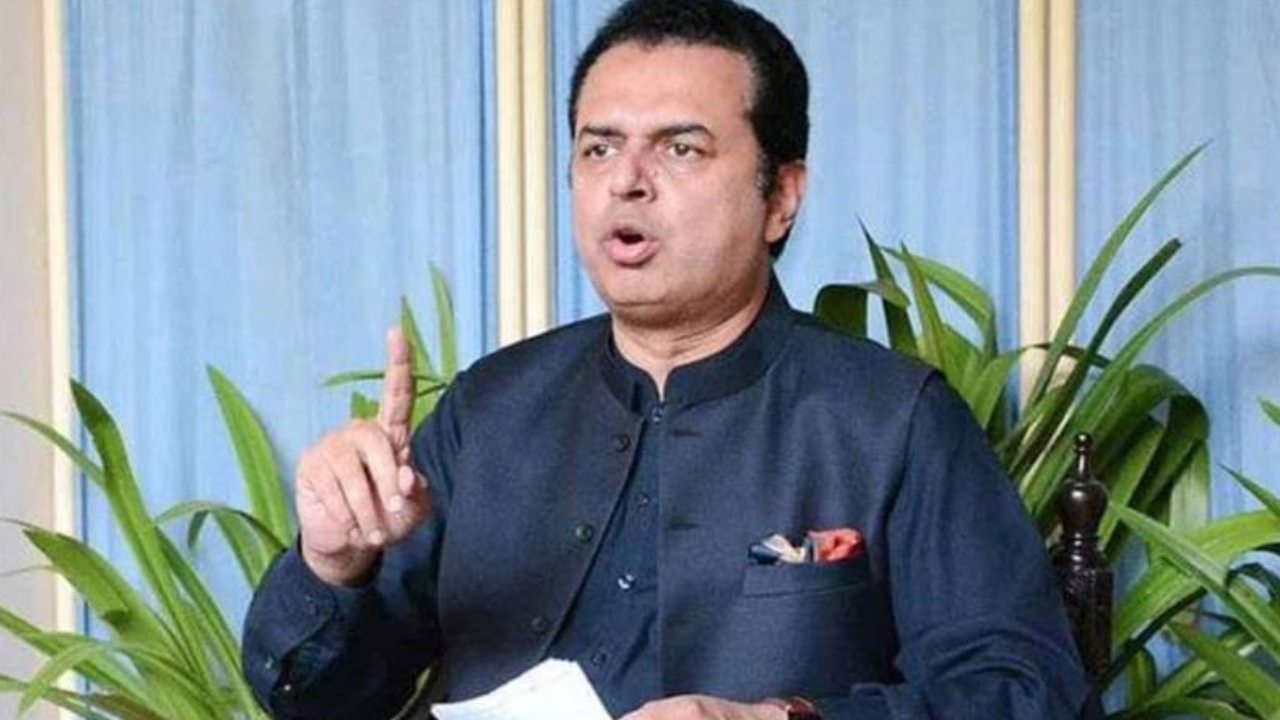
    Minister of State for Interior Talal Chaudhry stated on Sunday that the government, along with its coalition partners, is prepared to propose another constitutional amendment if necessary to ensure stability. 

    He noted that parliament has the authority to modify the Constitution, and this power could be utilized again should circumstances require it.

    While addressing a gathering in Faisalabad, Chaudhry remarked that the 26th and 27th Amendments have fostered stability, and future amendments would follow a similar protocol. 

    He emphasized that parliament will collaborate with other political parties whenever an amendment is warranted, asserting that the legislature should be acknowledged as the exclusive authority for such decisions.

    In response to inquiries about judges resigning after the enactment of the 27th Amendment, Chaudhry dismissed their resignations, attributing them to political motivations rather than constitutional issues. 

    He emphasized that judges swear an oath to the Constitution and do not function as a collective that resigns whenever changes are made by parliament. He reiterated that the Constitution embodies the collective will of parliament and the populace, rather than the individual preferences of members of the judiciary.

    He mentioned that all judiciary-related matters, including salaries and responsibilities, are within the jurisdiction of parliament. He characterized the resignations as being associated with rulings he deemed political in nature. 

    He also referenced previous court proceedings, including a comment made by former Chief Justice Umar Ata Bandial during cases involving Imran Khan, noting that the broader context has shifted since that time.

    Chaudhry pointed out that there has been significant utilization of suo motu powers in the past, claiming they were employed to unseat elected prime ministers and target governments. He stated that the amendments enacted by parliament were a direct response to that historical pattern.

    Regarding the Pakistan Tehreek-e-Insaf (PTI) party’s choice to abstain from the forthcoming by-elections in Faisalabad, he noted that the party tends to avoid elections where it anticipates facing opposition. 

    Additionally, he mentioned that security measures for the elections have been finalized through collaboration between the Election Commission of Pakistan and security agencies.

    The minister spoke at a press conference held at the Sunni Rizvi Mosque, where he gained support for his brother Bilal Badar Chaudhry in the by-elections. He expressed gratitude to Pir Faiz Rasool Rizvi for the endorsement, indicating that it would significantly influence various constituencies. He conveyed that religious institutions continue to provide guidance to communities and affect decision-making processes.

    Chaudhry also passed remarks regarding provincial matters, stating that the Khyber Pakhtunkhwa (KP) administration has been instructed to operate within constitutional boundaries. 

    He contrasted this with the progress taking place in Punjab under Chief Minister Maryam Nawaz, highlighting initiatives in the areas of transport, water, energy, housing, and infrastructure.

  • ‘Bushra Bibi received tips from intelligence officials, passed them on to Imran Khan as predictions’

    ‘Bushra Bibi received tips from intelligence officials, passed them on to Imran Khan as predictions’

    British news and current affairs journal The Economist has narrated “a story circulating in Pakistan” to claim how former first lady Bushra Bibi relayed information from intelligence sources to Imran Khan, presenting them as “revelations about the future”.

    In an article titled ‘The mystic, the cricketer and the spy: Pakistan’s game of thrones’ on Khan’s marriage to his spiritual adviser, The Economist quoted “rumours” to revisit the political influence attributed to Bushra, her relationship with her husband, and the controversies that shaped the former premier’s time in power. 

    It said that intelligence officers conveyed tips to one of Bushra’s pirs, who would relay them to her, and she would then share the same with Khan.

    “According to the rumours, the officer would, for example, give one of Bushra Bibi’s pirs advance notice about which politician was about to be arrested. Bushra Bibi would then tell Khan that she had received a revelation about the future. When the event she predicted came to pass, Khan would be amazed at his wife’s perspicacity and conclude she did indeed have a direct line to God,” The Economist stated.

    While it added that “man rumours in Pakistan turn out not to be true, and much about this story remains opaque”, it quoted a senior Pakistani intelligence officer, speaking off the record, describing the broad outlines of the influence operation to 1843.

    “People close to Khan are convinced it happened,” The Economist said, also quoting former Pakistan Tehreek-e-Insaf (PTI) leader and federal minister Faisal Vawda, who said this was how Khan started to get blinded.

    “It’s unclear from these accounts whether Bushra Bibi would have known she was being used in this way — it’s quite possible that she didn’t,” the publication wrote.

    It also detailed accounts from family members and former household staff, recounting claims by her former husband about concerns over her closeness to Khan, the couple’s eventual marriage in 2018, and allegations — denied by PTI — that she engaged in black magic and exercised significant influence over political and personal decisions.

    With both Khan and Bushra Bibi in prison on corruption charges, speculation continues within the PTI ranks about her potential influence on the former’s decisions regarding possible political compromise. The Economist report noted that opinions within the party vary, with some senior figures urging Khan to stand firm while others believe Bushra Bibi may encourage a negotiated path forward.

  • Peshawar top court bans use of KP govt resources for personal, political use

    Peshawar top court bans use of KP govt resources for personal, political use

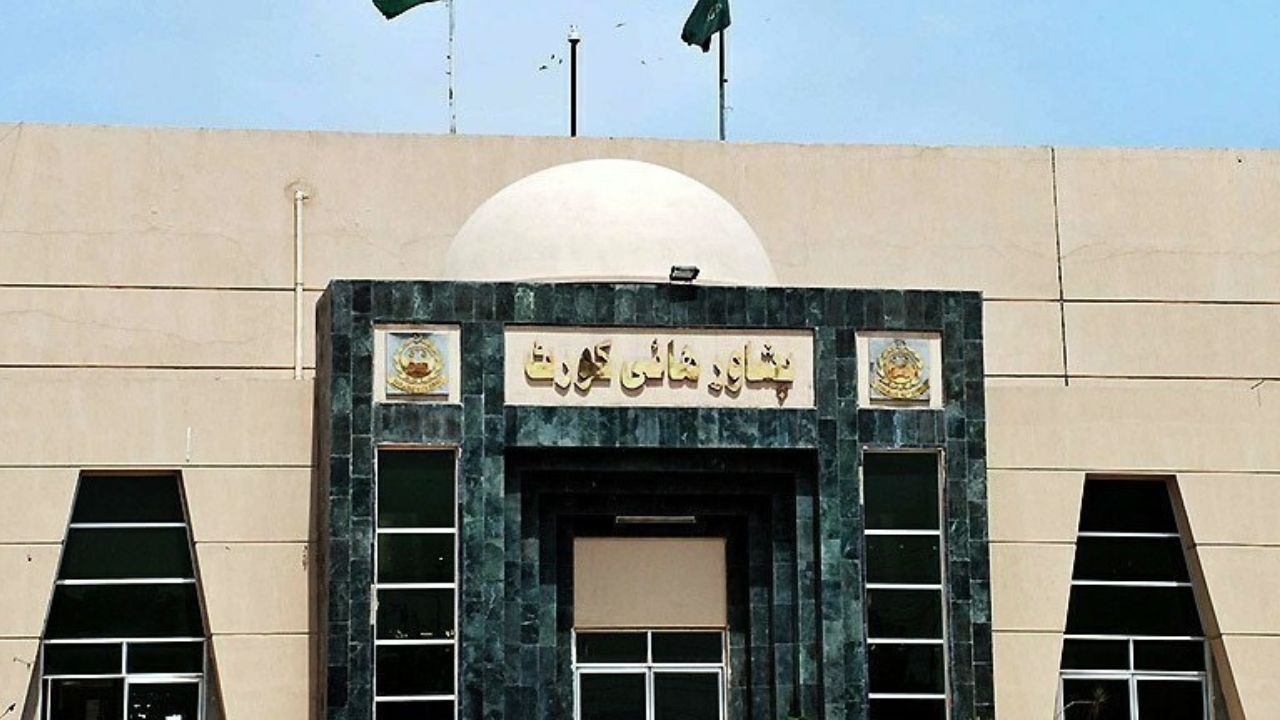
    The Peshawar High Court (PHC) has banned the use of Khyber Pakhtunkhwa (KP) government resources, including official vehicles, for personal or political use.

    Reports quoted a court order as saying that the provincial administration was banned from using official vehicles without authorisation as it was “misconduct and abuse of authority”.

    “This court is of the view that the use of official vehicles, machinery, or any other government resources for participation in, or facilitation of, political gatherings, protest rallies, or long marches constitutes a blatant misuse of public property and authority,” read the PHC order.

    It further stated that the practice was not only violating public trust but also undermining the concept of neutral governance.

    “Public resources, including official vehicles and heavy machinery, are procured and maintained from the public exchequer for the sole purpose of performing official duties and providing services to the citizens in accordance with law,” the order said, adding that the diversion of public resources for political purposes undermined the sanctity of the public office and affected public confidence in the impartiality of the administration.

    Stating that nobody holding public office could employ government resources for partisan or personal use, the PHC ruled that Articles 4 (right of individuals to be dealt with in accordance with law), 5 (loyalty to state and obedience to Constitution and law) and 25 (equality of citizens) of the Constitution implied that public resources could not be used by any one party or individual “to the disadvantage of others”.

    “In a democratic system governed by the rule of law, the state must maintain strict separation between official functions and political activities,” the order read.

    “The use of government vehicles or personnel in political events conveys an impression of state endorsement or complicity in partisan matters, which is impermissible,” it said, ordering the KP government to ensure that “no official vehicle, machinery, or manpower under their control is deployed, used, or permitted to be used for any protest, long march, rally, or political activity of any nature”.

    It may be noted that the order comes a year after a petition against the KP government in November 2024 sought a ban on the use of government vehicles like fire engines during the ruling Pakistan Tehreek-e-Insaf’s (PTI) long march to Islamabad.

    It said that the provincial government had used government resources from the local government department that government officials had been mobilised to join the march.

  • Foreign Office says doesn’t know about PM’s tourism coordinator meeting Israeli official in London

    Foreign Office says doesn’t know about PM’s tourism coordinator meeting Israeli official in London

    The Foreign Office (FO) has said it had “no information” regarding reports that Pakistani businessman and Prime Minister (PM) Shehbaz Sharif’s Coordinator on Tourism Sardar Yasir Ilyas had interacted with an Israeli official in London.

    The clarification during the FO’s weekly press briefing came after a viral video on social media showed Ilyas shaking hands and conversing with director general (DG) of Israel’s Ministry of Tourism, Michael Izhar-Kov.

    The video was reportedly recorded at the World Travel Market held in London from November 4 to 6, 2025. Israeli journalist Rai Kais first shared it on X, claiming Pakistan had been mentioned among countries that could join an international force in Gaza.

    However, London-based journalist Murtaza Ali Shah suggested the encounter was unplanned, stating that “a group of individuals from Israel visited the Pakistan Pavilion unannounced and met the Pakistani delegation without introducing themselves”.

    “I have no information on this meeting. The gentleman you referred to is a public figure. I would request you to ask him about the meeting,” FO spokesperson Tahir Hussain Andrabi said when asked about the viral video during the briefing.

    Andrabi went on to say he had not seen the report or had any information on a meeting between the premier’s adviser or any public figure with an Israeli representative.

    “I can assure you that if such a meeting or interaction took place, it was certainly without authorisation by the government,” he said.

  • Supreme Court’s Justice Musarrat Hilali refuses appointment to Federal Constitutional Court

    Supreme Court’s Justice Musarrat Hilali refuses appointment to Federal Constitutional Court

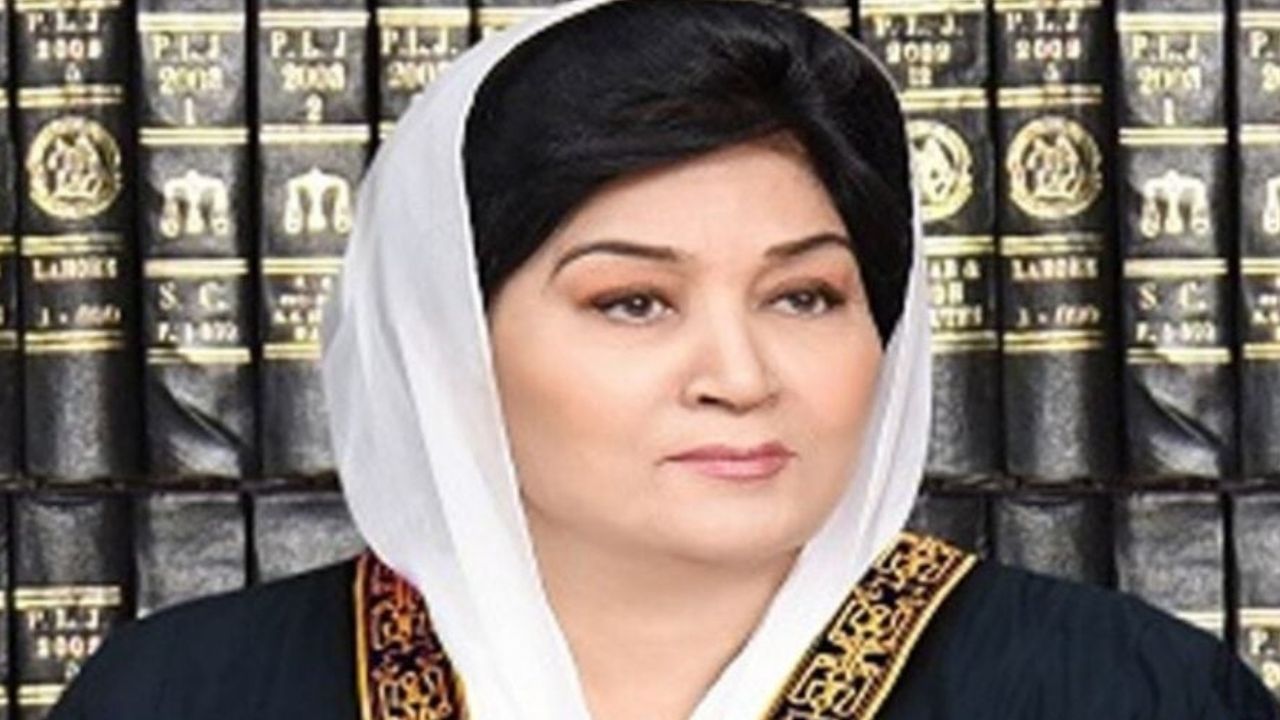
    Justice Musarrat Hilali of the Supreme Court (SC) has refused appointment to the newly-established Federal Constitutional Court (FCC) over health concerns, reports said Friday.

    A private media outlet quoted sources as claiming that Justice Hilali was under consideration for appointment to the FCC but expressed her unwillingness to serve.

    The refusal came a day after Justice Hilali’s bench was also delisted due to health issues.

    It merits a mention that the report comes a day after both houses of Parliament approved the 27th Constitutional Amendment, paving way for the creation of the FCC.

    The FCC would be headed by its own chief justice and staffed by an equal number of judges from each of Pakistan’s four provinces as well as from Islamabad. It would adjudicate in disputes between governments, either the federal government and a state government or when different state governments clash.

    Judges of the FCC would retire at 68, unlike SC judges, who retire at 65. The FCC chief justice’s tenure would be capped at three years.

    On the recommendation of Prime Minister (PM) Shehbaz Sharif, Justice Ameenuddin has been appointed as the court’s first chief justice.

    Meanwhile, senior puisne judge Mansoor Ali Shah and apex court Justice Athar Minallah have tendered their resignations from their posts.

    Both the judges forwarded their resignations to President Asif Ali Zardari following the enactment of the much-touted 27th Constitutional Amendment.

    In his 13-page-long resignation, Justice Shah termed the amendment as “a grave assault on the Constitution of Pakistan”, which “dismantles the Supreme Court of Pakistan, subjugates the judiciary to executive control, and strikes at the very heart of our constitutional democracy”.

    In his resignation letter, Justice Minallah registered protest against the amendment, declaring that the Constitution he swore to protect “no longer exists”.

    He wrote that his oath as a judge was not merely to a constitution in form, but to “the Constitution in spirit.” He said that despite his repeated attempts to believe otherwise, “what is left of it is a mere shadow — one that breathes neither its spirit, nor speaks the words of the people to whom it belongs”.

    Justice Minallah also revealed that prior to the passage of the amendment, he had written to the chief justice expressing serious concerns about its implications for the constitutional order. However, he lamented that his fears had now been realised “against a canvas of selective silence and inaction”.