Category: National

  • Three Pakistani schools make global mark in World’s Best School Prizes

    Three Pakistani schools make global mark in World’s Best School Prizes

    Three Pakistani schools have earned appearance on the prestigious World’s Best School Prizes. 

    The list, introduced by T4 Education in 2022 following the  COVID-19 pandemic, recognises schools implementing innovative approaches to create meaningful change both in and beyond classrooms.

    The winners of the five categories – Community Collaboration, Environmental Action, Innovation, Overcoming Adversity, and Supporting Healthy Lives- will be selected by a judging panel based on set criteria. 

    To choose the winner of the “Community Choice Award,” a public vote will be held for each of the 50 finalist schools. 

    Following their announcement in October, the winners will be invited to share their experiences with global education leaders at the World Schools Summit, scheduled to take place in Abu Dhabi, United Arab Emirates, from November 15-16.


    The World’s Best School Prize shortlist for Overcoming Adversity includes Sanjan Nagar Public Education Trust Higher Secondary School, a charity-run primary and secondary school based in Glaxo Town on Feroz Pur Road in Lahore.

     According to the statement, the school has implemented the Primary Years Programme (PYP) and International Baccalaureate (IB) curricula, employing an inclusive, inquiry-based approach to provide marginalized children with the essential 21st-century skills they need.


    In the Community Collaboration category, the Juniper Campus in Quetta’s Beaconhouse College Program has been named as a finalist. 

    To provide youngsters in underprivileged rural areas with hands-on STEM education, the school has launched Science Gaari, a mobile, student-led science lab.


    Nordic International School in Lahore has also been shortlisted in the Community Collaboration category. 

    The school fosters a healthy learning environment by promoting a culture of kindness and actively involving parents in their children’s academic journey.
  • Pakistan’s hybrid model doing ‘wonders’, says Kh Asif

    Pakistan’s hybrid model doing ‘wonders’, says Kh Asif

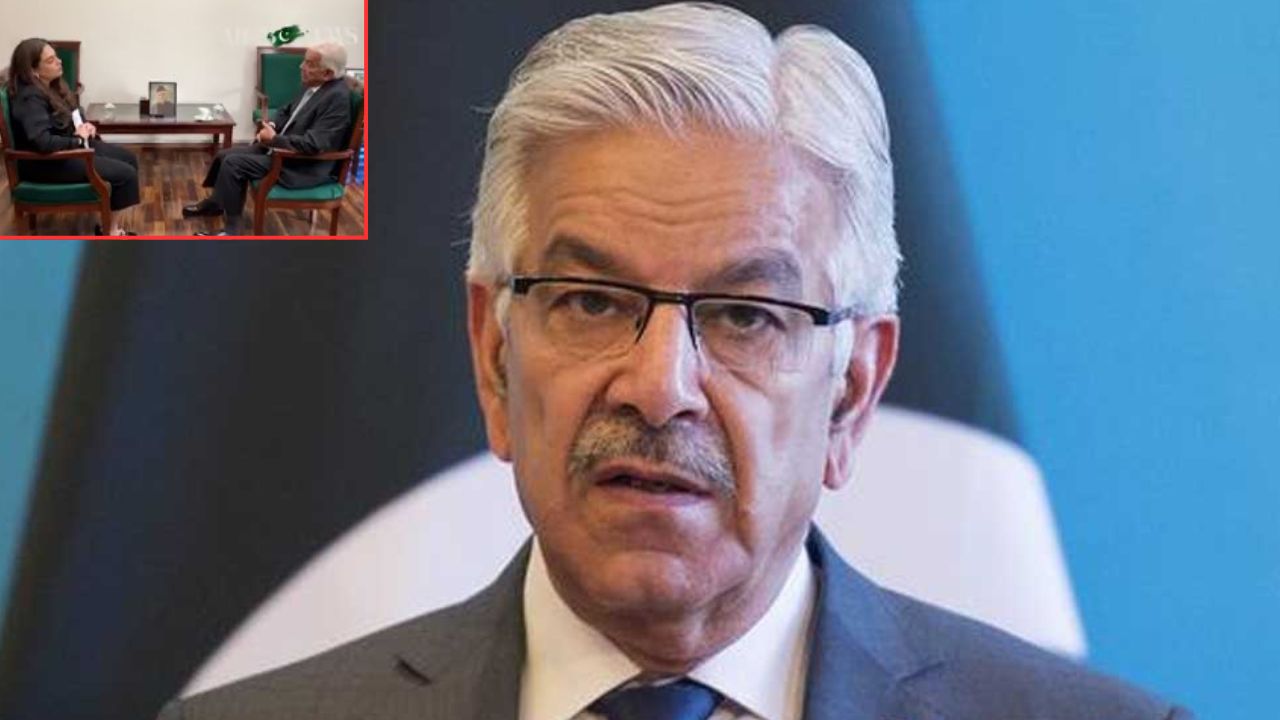
    Defence Minister Khawaja Asif, during an interview with Arab News on Friday, said that Pakistan’s hybrid model is “doing wonders”.

    The defence czar described the country’s governance as a “hybrid model” in which military and civilian leaders share power and accepted that the government system is “not ideal democratic”, adding that “This arrangement, the hybrid arrangement, is doing wonders”.

    He opined that if “this sort of [hybrid] model” was adopted way back in the 90s, “things could have been much, much better”. 

    Asif later said that owing to the confrontation between the establishment and political government, the progress of democracy in Pakistan has been retarded.

    When asked whether it has been accepted that the only way to avoid the confrontation between the establishment and the political governance is to have a hybrid model, Asif responded, “There is a hybrid model till we are out of the woods, as far [as] our economic, governance problems are concerned. It’s not constitutionally formalised. However, it is a de facto formalisation of the situation.”


    When asked whether in this hybrid model, the establishment has more power, Asif replied, “not correct”.

    Rather, he defined the hybrid model as “mutual” understanding between the establishment and political leadership, explaining, “We have the co-ownership of the power structure.”

    Asif maintained that military leadership “very genuinely” listens to the political leadership, adding, “There is no superimposed system or superimposed organisation on [PM] Shehbaz Sharif, which dictates [to] him and he acts accordingly. Shehbaz Sharif is making his decisions independently and in regular consultation with the establishment on all levels.”

    Ruling out the existence of differences of opinion between the military leadership and political leadership, Asif said that there was no moment when the decisions were not made unanimously with total agreement.

    Meanwhile, the defense minister, in a post on X on Thursday, linked the country’s achievements on global, regional, and economic fronts to the “current hybrid model of governance”, referring to the recent Islamabad-New Delhi standoff and improvement in the Pakistan-US ties.

    Terming the meeting of the army chief with the US president a “significant milestone”, Asif wrote on X, “There has never before been an example of a US president inviting and meeting a Pakistani army chief.”

    He added that this is the most significant turning point in the 78-year history of Pakistan-US relations, stressing that the revival of the national economy and India’s defeat became possible due to Premier Shehbaz Sharif and Field Marshal Munir.

  • ‘Fantastic plane’: Indian analyst slams own air force, says JF-17 better than Tejas

    ‘Fantastic plane’: Indian analyst slams own air force, says JF-17 better than Tejas

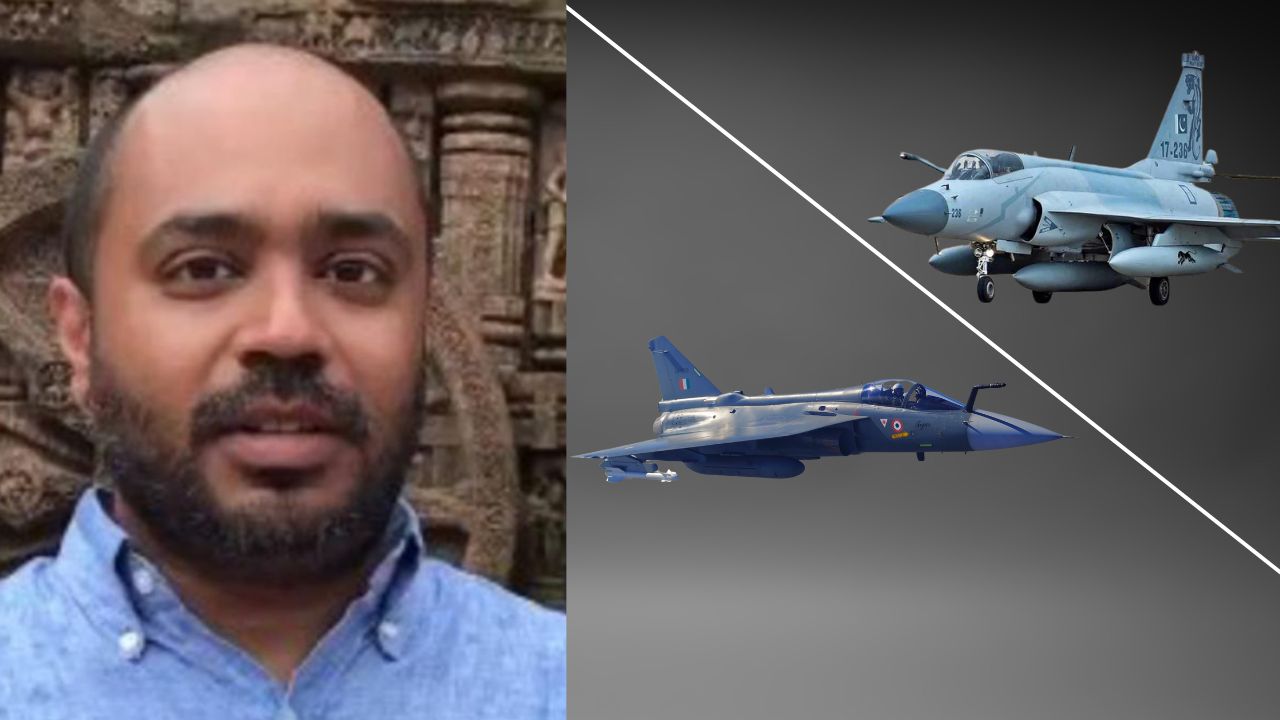
    Indian commentator Abhijit Iyer has said that even Pakistan’s JF-17 Block 1 single-engine light fighter jets are more advanced than Indian-made Tejas MK 1A fighter jets.

    During a live session on YouTube, Iyer was asked by a viewer to comment on the capabilities of the Tejas MK 1A versus JF 17 Block 3. In response, Mitra said, “Even the JF-17 Block 1 is better than the Tejas MK Block 3.”

    “Babus cannot manufacture planes,” he said, adding that they could not even “make the industry profitable”.

    He went on to say that Pakistan had full knowledge about the Indian Air Force (IAF).

    “I know the guy who is in charge of integration in Pakistan […] they taught me more about the Indian Air Force than any IAF person taught me about the IAF,” Iyer said and added that it spoke to the level of knowledge that Pakistanis have.

    He also slammed India for not being cognizant of its air force shortcomings. “They [Pakistani] know their weaknesses… we don’t know our weaknesses. We live in a delusion.”

    Commenting on the JF-17 Block 3 fighter jet, a joint production between Pakistan and China, he said it was a “fantastic plane”.

    The statements come amid reports that India is yet to make a deal with foreign countries about the export of its Tejas fighter jets while a $4.2 billion deal for the acquisition of JF-17 Thunder Block III aircraft was recently signed between Azerbaijan and Pakistan.

    According to reports, Azerbaijan is expanding its initial purchase of JF-17 Thunder Block III fighter jets, increasing the number from 16 to a striking 40 units. In February 2024, Baku signed a $1.6 billion contract to acquire 16 JF-17 advanced multirole aircraft, which were reportedly delivered in September of the same year.

    Reports said that the deal marked a significant enhancement of Azerbaijan’s aerial capabilities and deepened its defence cooperation with Pakistan. The latest agreement positions Pakistan among Azerbaijan’s top military suppliers, alongside Turkey, Russia, and Israel.

  • Israeli professor says ‘next target’ could be Pakistan’s nuclear programme

    Israeli professor says ‘next target’ could be Pakistan’s nuclear programme

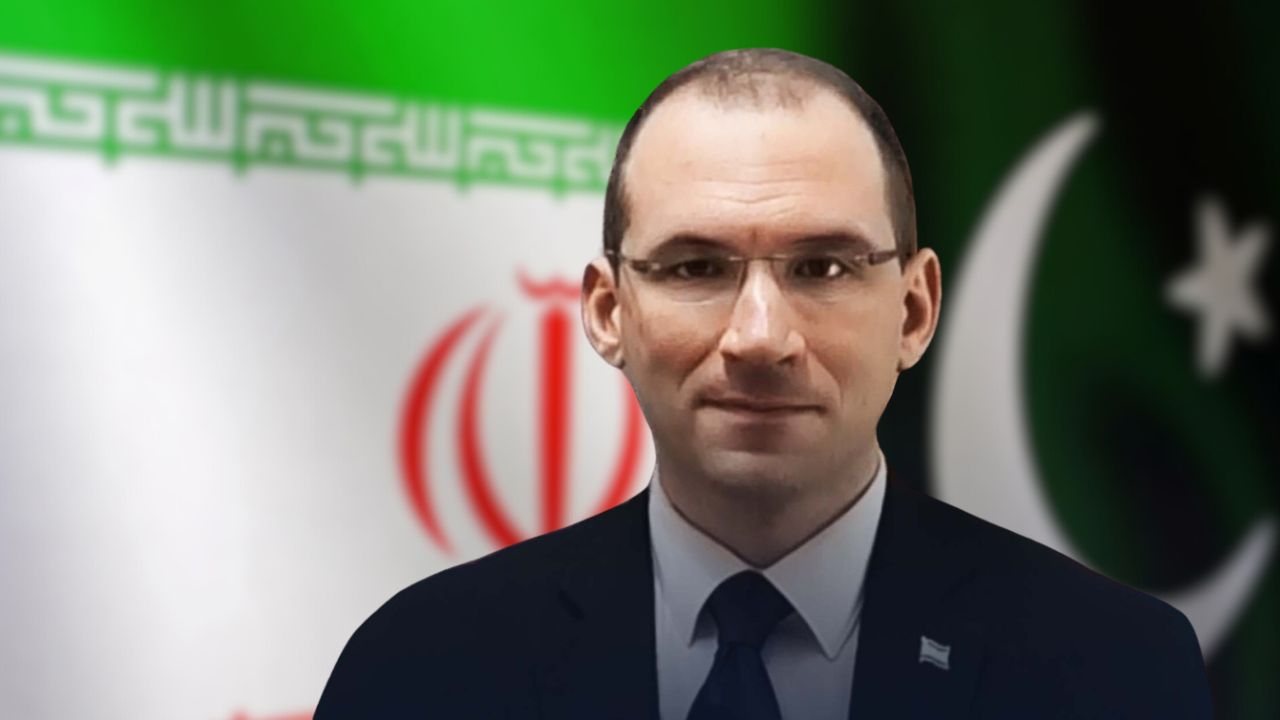
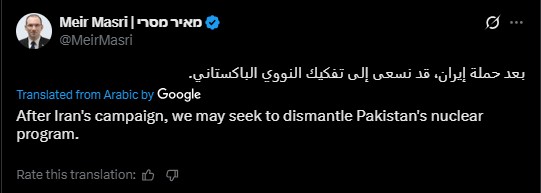
    With regional tensions at an all-time high as the Iran-Israel conflict continues for the seventh consecutive day, Israeli author, Hebrew University professor and military reservist Meir Masri has said that Tel Aviv, following its campaign against Tehran, could go on to dismantle Pakistan’s nuclear programme.

    “After Iran’s campaign, we may seek to dismantle Pakistan’s nuclear programme,” Masri wrote in a post on X (formerly Twitter).

    While no Pakistani official has reacted to the statement as of yet, it comes a day after Pakistan’s Deputy Prime Minister (PM) Ishaq Dar dismissed claims that Islamabad would carry out a nuclear attack on Israel if Iran was to targeted with weapons of mass destruction.

    “Our nuclear programme is only a deterrent for Pakistan’s security,” the deputy premier told a private media outlet. He went on to say that it was Pakistan’s stated policy since May 28, 1998, that its nuclear programme was only a deterrent.

    Dar, who is also the foreign minister, also said that even though Pakistan was not a signatory to the Non-Proliferation Treaty (NPT), it abided by its principles. “We have not signed the NPT because our position has always been that we would consider doing it if India does it too,” he said.

    Meanwhile, hundreds have been killed and thousands injured in the clashes between Iran and Israel.

    Citing Washington-based group Human Rights Activists, the Washington Post has reported that the death toll in Iran has reached 585 with another 1,326 wounded. The group added that it had identified 239 of those killed in Israeli strikes as civilians and 126 as security personnel.

    On the Israeli side, 24 people have so far been killed, more than 800 have been injured and over 3,800 have been evacuated from their homes, Israeli Prime Minister (PM) Benjamin Netanyahu’s office said Thursday.

    With the number of casualties continuing to rise and global leaders stressing the need for ceasefire, Iranian Supreme Leader Ayatollah Ali Khamenei has warned the US of “irreparable damage” if it intervenes, declaring that Tehran itself would “never surrender”.

    Khamenei’s latest statement, which was released by state-owned media, comes amid fears that the US could soon be entering the conflict with strikes on Iran.

  • ‘Pakistan knows Iran very well, better than most’: Trump following meeting with COAS Munir

    ‘Pakistan knows Iran very well, better than most’: Trump following meeting with COAS Munir

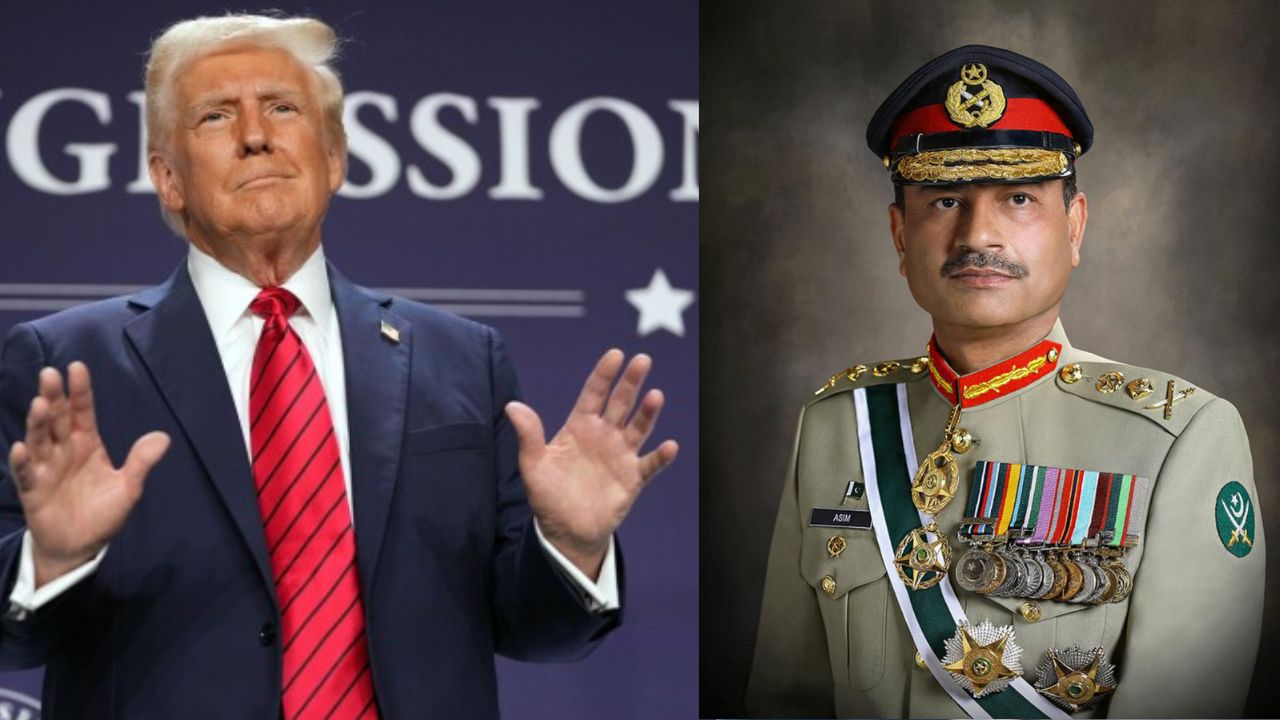
    US President Donald Trump met with Field Marshal Chief of Army Staff (COAS) Syed Asim Munir in the White House’s Cabinet Room on Wednesday.

    Speaking to reporters after the meeting, President Trump was asked whether the discussions included the ongoing Iran-Israel conflict.

    In response, he said: “They [Pakistan] know Iran very well, better than most, and they’re not happy about anything. It’s not that they’re bad with Israel. They know them both, actually, but they know Iran better. He [Field Marshal Munir] agreed with me.”

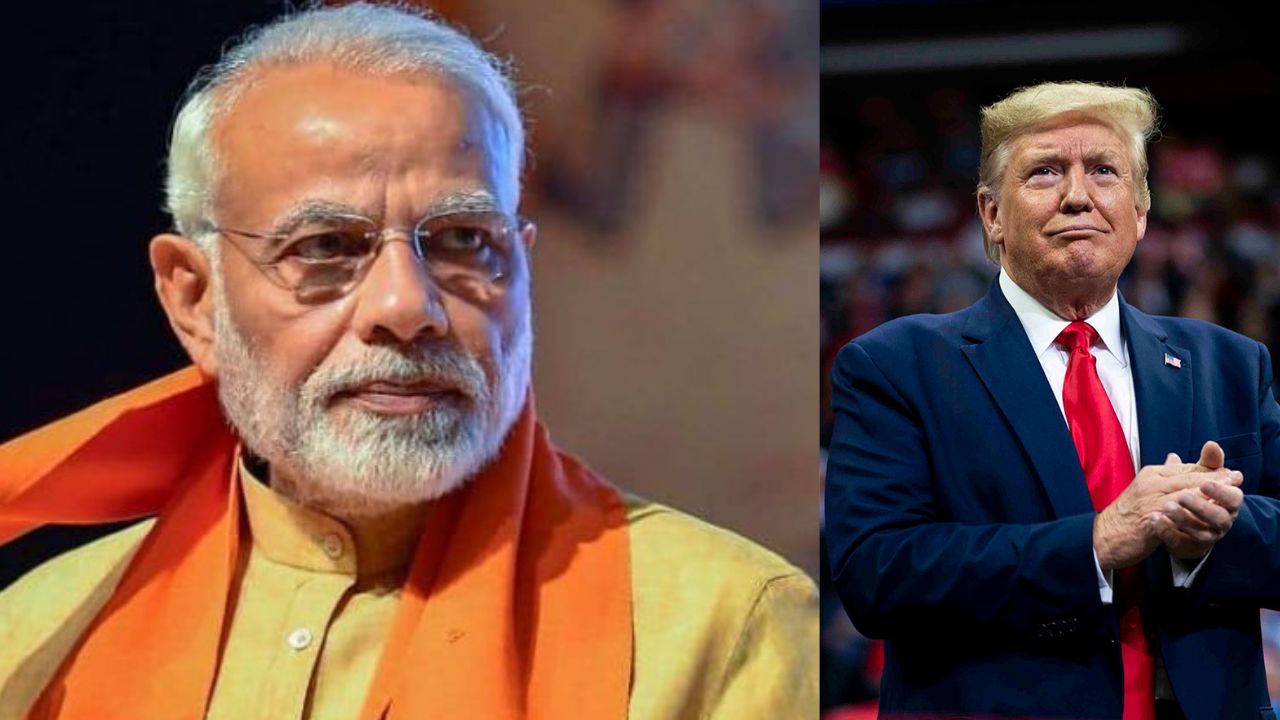
    President Trump also thanked Field Marshal Asim Munir for not going to war with India, and expressed similar gratitude to Indian Prime Minister (PM) Narendra Modi, whom he said had met with him “a few days ago.”

    “These two very smart people decided not to keep going with a war that could have been a nuclear war. Pakistan and India are two big nuclear powers,” he added.

    President Trump also reveal that the US is working on a trade deal with Islamabad and New Delhi.

    Field Marshal Asim Munir has become the first serving Chief of Army Staff (COAS) to hold a one-on-one meeting with a sitting US president. It also marks the first time a serving Pakistani army chief, without holding political office or ruling under martial law, has been formally received at this level.

    Meanwhile, just hours after Indian Foreign Secretary Vikram Misri stated in a video message that Prime Minister Modi had a 35-minute phone call with the U.S. president, during which Modi reportedly said the US had no role in mediating between Pakistan and India, President Trump dismissed the claim.

    Speaking to reporters on the White House lawn later that day, Trump asserted that it was, in fact, he who had stopped the war.

    He said, “Well, I stopped a war … I love Pakistan. I think Modi is a fantastic man. I spoke to him last night. We’re going to make a trade deal with Modi of India. But I stopped the war between Pakistan and India.”

  • Careem bids farewell to Pakistan

    Careem bids farewell to Pakistan

    After almost 10 years of operations, ride-hailing app Careem is shutting down its services in Pakistan in July this year but has said that it will stick around in a “different role.”

    Mudassir Sheikha, co-founder and CEO of Careem, took to LinkedIn to post about “a new chapter” for the company. 

    “It is with a heavy heart that I share this update: Careem will suspend its ride-hailing service in Pakistan on July 18,” Sheikha said, adding that it was “an incredibly difficult decision.”

    “The challenging macroeconomic reality, intensifying competition, and global capital allocation made it hard to justify the investment levels required to deliver a safe and dependable service in the country.

    “In the end, the Careem Rides team had to make this tough call,” he wrote.

    He referred to the ride suspension as “the end of an ironic chapter — one built with purpose, grit and a ton of relentless hustle”.

    Sheikha pointed out several remarkable accomplishments of Careem while functioning in Pakistan, such as providing safe rides on demand, allowing women to travel with strangers, and promoting the use of smartphones and digital payments in daily life.


    He praised his team for creating a service that millions of people in Pakistan depend on “to move and earn”.  

    Sheikha mentioned that while ride-hailing is finishing, Careem’s presence in Pakistan will persist in a new capacity.

    “Careem Technologies (the spinout building the Everything App) will continue to build from Pakistan for the region.”

    Sheikha mentioned that around 400 Careem employees from various departments, including engineering, are working on developing the Everything App and its range of services (food and grocery delivery, payments, etc.).


    Careem officially entered the Pakistani market in October 2015, providing a website, an app, and a helpline for customers to request rides. It currently operates in 12 countries in the Middle East and North Africa, as well as in Turkiye and Pakistan.

  • Five Jaffar Express coaches derail after explosion on track

    Five Jaffar Express coaches derail after explosion on track

    An explosion on the railway track in Jacobabad has derailed five coaches of the Jaffar Express.

    According to Railways Police, five coaches of the train derailed following the explosion near Jacobabad’s vegetable market.

    No casualties have so far been reported, police said, adding that operations had however been suspended since after the explosion.

    Jacobabad Senior Superintendent of Police (SSP) Saddam Hussein Khaskhaili said that bomb disposal squad was determining the nature of the explosion and an investigation into the incident was underway.

    It merits a mention that while the nature of the explosion remained unknown by the time this report was filed, the incident comes months after armed men attacked Jaffar Express in Balochistan.

    In March 2025, a group of terrorists launched an attack on a train en route to Peshawar, Khyber Pakhtunkhwa (KP), from Quetta, the capital of Balochistan, carrying over 400 passengers. Following the assault, the terrorists took passengers hostage.

    In a statement, the Inter Services Public Relations (ISPR) said that intelligence reports have unequivocally confirmed that the attack was orchestrated and directed by terrorist ringleaders operating from Afghanistan, who remained in direct communication with the attackers throughout the incident.

    Director General (DG) ISPR Lieutenant General Ahmed Sharif Chaudhry, while speaking to a private media channel minutes after the completion of the rescue operation, claimed that security forces had eliminated all 33 Balochistan Liberation Army (BLA) terrorists who had hijacked the Jaffar Express. However, 21 passengers were martyred by the terrorists before the clearance operation commenced, he said.

    The military’s media wing spokesperson detailed that the army, air force, Frontier Corps (FC), and Special Services Group had participated in the operation and successfully recovered the hostages.

  • Here’s what Trump, Modi talked about before US President meets COAS Asim Munir

    Here’s what Trump, Modi talked about before US President meets COAS Asim Munir

    Indian Prime Minister (PM) Narendra Modi held  a 35-minute telephonic conversation with United States (US) President Donald Trump on Wednesday, telling the latter that the ceasefire in May was made between New Delhi and Islamabad without any mediation by the US, Indian Foreign Secretary Vikram Misri has said in a video statement.

    Misri quoted the Indian premier as telling Trump that “India has never accepted mediation, does not and will never do so.” He said that Modi further told Trump that the decision by India and Pakistan to halt military actions last month was made directly during talks between the armies of the two sides.

    Additionally, the diplomat said that Modi made it clear to Trump that in the entire episode of the four days of military clashes between the two nuclear-armed countries in last month, issues such as the “India-US trade deal or mediation by the US between India and Pakistan” were not discussed “at no time [or] at any level”.

    The Indian PM’s denial comes after the US president has multiple times reiterated that he, using the trade option, brokered the ceasefire between the two countries, which, according to him, were on the brink of a potential nuclear war last month.

    Following the US president’s statement on Truth Social on May 10, in which he announced the ceasefire brokered by the US, Islamabad extended thanks to Trump, acknowledging his role in brokering the ceasefire between the two countries. 

    However, India has repeatedly objected to Trump’s role in the understanding made between India and Pakistan to stop the hostilities that erupted after New Delhi launched illegitimate strikes on the night of May 6-7, targeting civilians in Pakistan in response to the Pahalgam militant attack in held Kashmir on April 22 that killed 26 civilians.


    The Indian foreign secretary said that a meeting between Modi and Trump was scheduled on the margins of the G7 Summit but couldn’t be held when the US President returned to America early. “Subsequently, at the request of President Trump, the two leaders spoke on the phone today,” he maintained.

    The diplomat said that New Delhi also made it clear that it would “respond to Pakistan’s bullet with a cannon shell”, adding that on the night of May 9, US vice president JD Vance called Modi, telling him that Pakistan “could launch a major attack on India”. 

    He reiterated that the decision to halt military action was made directly between India and Pakistan, through existing channels of the two armies, adding that PM Modi stressed that “India has never accepted mediation, does not and will never do so. There is complete political consensus in India on this issue”.

  • ‘Childish’: Indian netizens slam Modi’s mumbling joke with Macron

    ‘Childish’: Indian netizens slam Modi’s mumbling joke with Macron

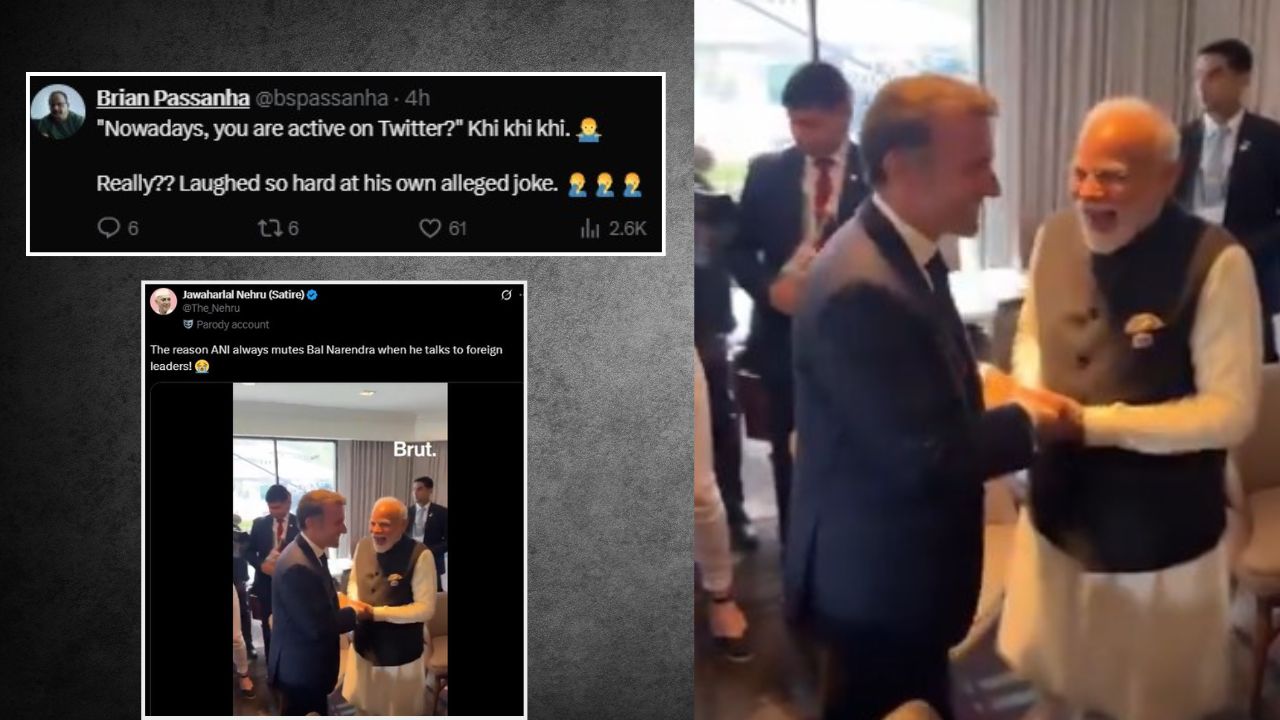
    Indian Prime Minister (PM) Narendra Modi’s fumbling and awkward attempt on Tuesday to crack a joke with French President Emmanuel Macron on the sidelines of the G7 Summit in Kananaskis, Canada, left internet users mocking the Indian premier.

    The G7 (Group of Seven) comprises Canada, France, Germany, Italy, Japan, the United Kingdom, and the United States. The European Union also takes part. The group was formed in the 1970s to discuss world economy and now also focus on areas like climate, health, trade, and global security.

    The G7 holds a summit once a year, hosted by one of the members. 

    As Modi hugged Macron, he appeared to crack a joke; however, his words weren’t clearly understood. “Now you are active on Twitter (sic),” he seemed to mumble, leaving many unsure of what he actually said and meant.

    The Indian premier then laughed heartily at his own joke, while Macron appeared visibly confused, unsure of what the Indian premier meant. Internet users were quick to react to the awkward moment, poking fun at Modi.

    “Isko lagta hai aise pagalon ki tarah kuch bhi mumble kar k joke maarunga, candid moment lagega.. Sideways camera mein hi dhyan rehta hai (He thinks if he mumbles something like a madman, it’ll come off as a joke. As if it’ll look like a candid moment… His focus remains only on the camera). Everyone feels embarrassed to be around him,”


    “Body language is childish,” one social media user wrote. Another said, “’Nowadays, you are active on Twitter?’ Khi khi khi. Really?? Laughed so hard at his own alleged joke.”

    “As per his Twitter post, in dono ne planet ke betterment ke liye baat ki (According to his X post, both talked about the betterment of the planet),” pointed out another netizen.

    Sharing a short clip of the video, one user sarcastically took a jibe at ANI as well as at the Indian PM. “The reason ANI always mutes Bal Narendra when he talks to foreign leaders!”

    One tweet read: “Oh my god he can’t speak even basic English?? And he is the PM of 140 billion people.”

    “How fake this person Modi is… Always in full mode to flatter the western leaders by hugging them etc but how rude& arrogant he remains with the eastern world. Too much frank behavior with the world leaders looks extremely awkward (sic),” another tweet stated.

  • Hunza hotel fined Rs1.5 million for ‘releasing sewage into Attabad Lake’

    Hunza hotel fined Rs1.5 million for ‘releasing sewage into Attabad Lake’

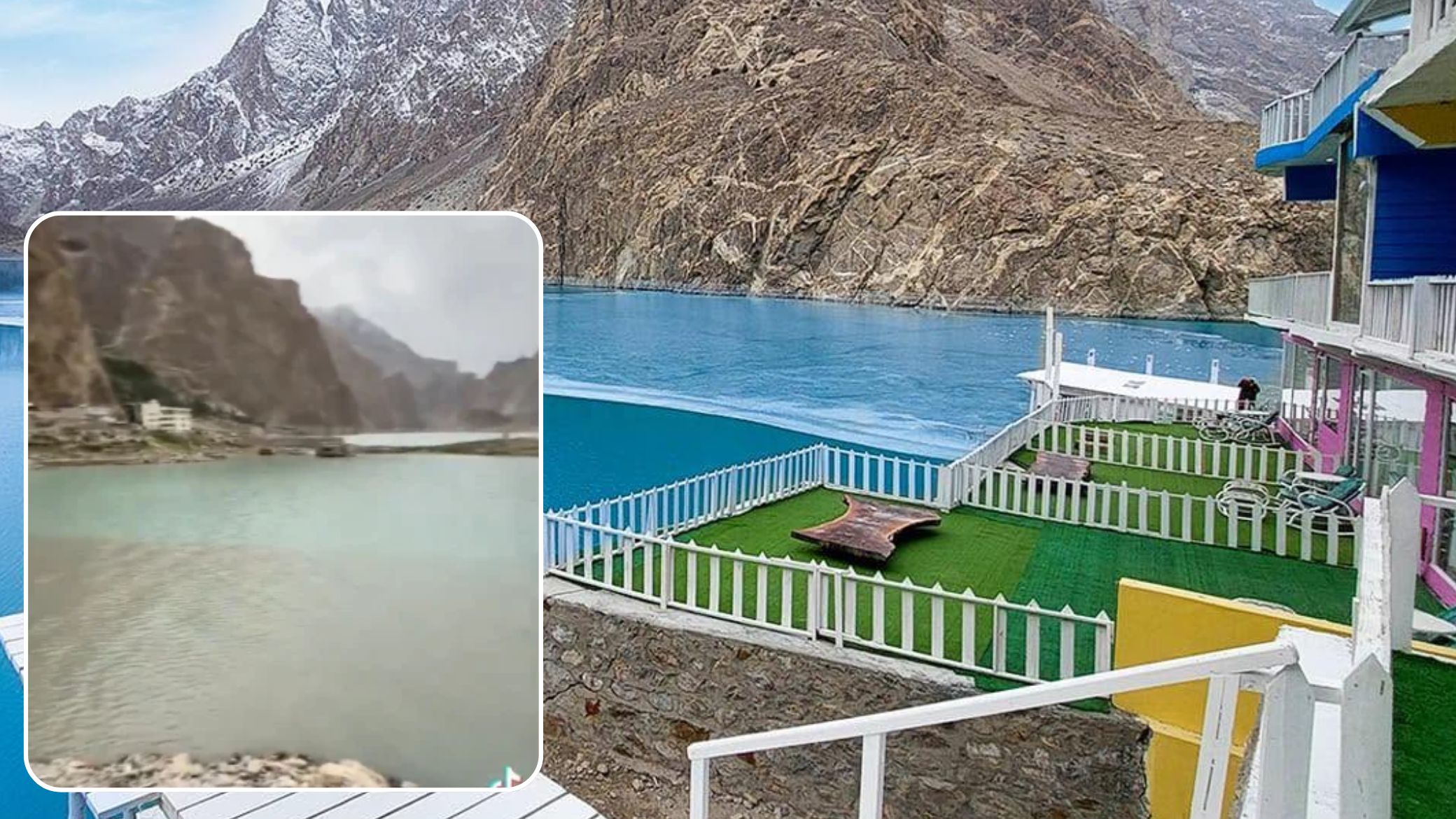
    A viral video by British travel vlogger George Buckley has prompted immediate action from Gilgit-Baltistan authorities against Luxus Hunza, a private hotel located near Attabad Lake. Buckley posted a video on social media alleging that the hotel was releasing untreated sewage into the lake, resulting in brown-colored water and a foul smell in the area.

    In the video, Buckley also cited a local resident who claimed the lake was being polluted by the hotel’s waste system. The video quickly gained traction online, sparking public outrage among environmentalists, tourists, and concerned citizens.

    In response to the backlash, officials from the Gilgit-Baltistan Environment Department and the deputy commissioner of Hunza conducted a surprise inspection of the hotel. They confirmed that several manholes were damaged and fined the hotel Rs1.5 million. Authorities also gave the hotel one week to upgrade its sewage system under environmental regulations.

    Luxus Hunza, in response to the allegations, denied any wrongdoing and issued a detailed statement on social media.

    “Attabad Lake formed in 2010. Before Luxus Hunza opened its doors to tourists in 2019, no one had experienced this majestic lake up close. This lake has been home for us for the last six years. It is the reason and purpose of our existence. To dump sewage water into the lake would be like desecrating our own house. We have never nor will we ever dump a single liter of waste water into Attabad Lake,” the hotel stated.

    Defending themselves, the hotel described the muddy appearance of the water as natural, explaining: “The adjacent water streams coming from the mountains have natural sediments like mud, rocks and minerals. When these Turbid water streams mix with the blue lake water, this causes the muddy/cloudy appearance of water seen near Luxus Hunza. This phenomenon is known as confluence, where two separately flowing water bodies meet. If one of the water bodies is high in turbidity, then this causes a muddy/cloudy water surface at the point of confluence. This phenomenon is more pronounced during the summer times which is why every summer Luxus Hunza is falsely accused of dumping waste water into the lake. Hope this helps. If you have any further questions please DM us.”

    The hotel maintains that its waste management system complies with all regional environmental regulations.