Category: Opinion

  • Guilty – of being a woman

    Guilty – of being a woman

    Likening women to uncovered candy or screaming about the virtues of the hijab or issuing thoughtless circulars regarding schoolgirls and what they should wear — none of these can be solved by a quick-fix order from a government.

    I don’t know about you but I’m not particularly keen on being likened to a lollipop — or any other candy, really. But, judging by social media posts and general attitudes towards harassment and women’s bodies, men in Pakistan seem very (disturbingly) comfortable with being likened to the house fly or the common ant.

    In keeping with the way women are seen (as candy that needs to be covered up, in case you didn’t get the idea), a week or so back schoolgirls in Haripur were instructed to cover up lest something unfortunate were to happen to them.

    “Instruct all students to use gown/abaya or chador to veil/conceal/cover up their-self in order to protect them from any unethical incident.” With these words, District Education Officer (DEO) Samina Altaf put the onus of sexual harassment or anything else that comes under ‘unethical incident’ on young girls. Altaf’s Haripur circular was followed by one for Peshawar. The usual debates ensued on social and traditional media and — as is now pretty much what is expected from this government — the circulars were taken back.

    That the original notification was issued by a woman needs to be unpacked in a whole other article, but let’s just say that the patriarchy and right-wing morality we all grew up with is not confined to one gender and needs to be fought from within.

    Child rights organisation Sahil has said that from January to June in the current year, 1,304 cases of sexual abuse of children have been reported by the media in the country, which means that at least seven children are abused daily in Pakistan. Let the numbers sink in: seven children every single day are either raped or sodomised or otherwise abused — and some are then even murdered. That is not a joke and no number of inane circulars can help correct this without some deeper corrective measures.

    We live in a country where a district in Punjab — Kasur — has almost become synonyms with child abuse, and yet nothing seems to be done about it other than some ineffectual and bizarre reshuffling in the police order. We live in a country where colleges in a big city like Karachi find it perfectly normal to police girls clothing by checking if the kameez/shirt they’re wearing covers their posterior. We live in a country where the only solution to child rape is the death penalty for the rapist (which is not a deterrent) but never a campaign to raise awareness regarding child sexual abuse or sexual harassment generally.

    It is not odd then that in this same country we would have a ‘#HijabIsProtection’ Twitter trend soon after the Hairpur/Peshawar circulars and smack in the middle of three fresh cases of abuse and murder in Kasur. The only thing that reinforces is the absolutely incorrect belief that covering up is the solution to harassment — whether in school, on the street or at home. And it reinforces all the guilt, shame, fear that women here (and in other parts of the world too) grow up with when it comes to their bodies and what harassment is all about (hint: it has nothing to do with what you’re wearing).

    Likening women to uncovered candy or screaming about the virtues of the hijab or issuing thoughtless circulars regarding schoolgirls and what they should wear — none of these can be solved by a quick-fix order from a government. We need a change in attitudes, in the way women are perceived and what little girls are taught about themselves and their ‘virtue’. That requires a change in how society sees ‘safety’. And that then requires a change in how the state perceives issues of security and safety — not of the state but of the people it is meant to serve.

    You will not protect our little girls and boys by asking girls to cover up, or asking parents to employ guards at homes and at school. That’s not deterrence, that’s fear and state’s incompetence. You will not protect our little girls and boys just by hanging one rapist and thinking your work’s done. It’s not. The monsters created by a sick society won’t go away if you just close your eyes. We need your eyes open, your minds working and your people — state representatives — doing much more than issuing ill-thought-out circulars.
  • Crippling state: Striving for a polio-free Pakistan

    The commitment to eradicating polio from Pakistan is now a national cause led by the prime minister himself.

    The question that I ask myself every day since assuming office is that Pakistan’s polio programme is 25 years old, but why haven’t we been able to eradicate polio till this day?

    The answer is complicated, to say the least.

    My days and nights are consumed in brainstorming strategies and constructing innovative methodologies on how to reach all the children of Pakistan consistently, so one day in the near future I can hand over the keys of the Emergency Operation Centre (EOC); the headquarters of the polio eradication in Pakistan, to the prime minister and we raise the flag of a polio-free Pakistan.

    To begin explaining the scope of the problem, it’s important to understand the enemy you are dealing with. The poliovirus is ferocious and with evil-intelligence leaves crumbs behind for us to follow. One of our biggest mistakes has been taking its bait, fighting it in territories that it poses to be its home. While it has kept us engaged fighting its proxies, it has multiplied and expanded its arsenal to the extent that we now have to revise our strategy to counter it, more aggressively in it is home. We have had 158 cases of polio in the last five years, and 64 this year alone.

    To me, the number of cases is not mere statistics or a reputation hazard, but these figures represent actual children that have been paralysed for life. We must acknowledge it for what it really is — a daunting and horrific reality of what this virus is capable of, and a stark reminder of just how urgently we need to bring polio to an end.

    But the cases are a mere symptom of the number of children we are missing in every polio campaign — this is where the real problem begins.

    The current outbreak the country is facing was not unpredictable. The Independent Monitoring Board (IMB), one of the highest bodies that evaluate the success of the strategies countering the poliovirus, had predicted the outbreak a year earlier than it actually happened.

    The fact is that the data being collected during polio eradication campaigns had been misleading operational priorities. The number of children recorded as ‘missed’ aided by fake finger markings has had disastrous connotations on campaign quality and in return has not accurately reflected ground realities leaving hundreds and thousands of children unvaccinated and vulnerable to the virus. The root cause of which boils down to the communities resistance to being vaccinated.

    This past year saw an upsurge of anti-vaccine propaganda spreading like wildfire on social media platforms. As time went on, community distrust in the programme fueled by propaganda ended up sparking catastrophic incidents like the one in Peshawar on April 22, 2019. Consequently, motivation levels of polio eradication teams dwindled as refusals to the vaccine continued to spike across the nation.

    I am no newcomer to the programme. I have been associated with polio eradication efforts for over eight years. In all that time I’ve seen people committing the same mistakes over and over again, with my voice unheard. It was immediately clear to me that our traditional approaches had failed. We had to think out of the box and the transformation had to happen soon.

    To this end, I am proud to say that the Pakistan Polio Eradication Programme has worked long and hard over these past few months to adapt to the growing myriad of challenges and to transform and re-vitalise its efforts to bring polio to a halt.

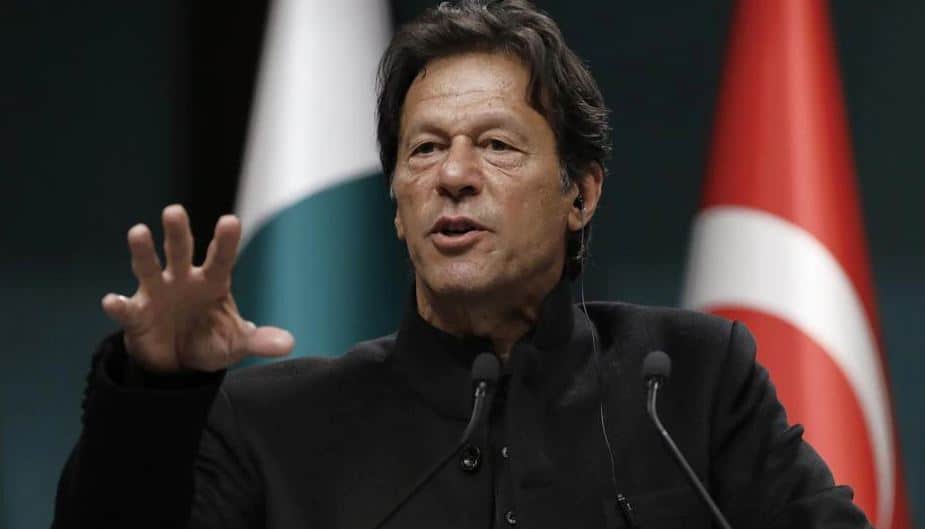
    The commitment to eradicating polio from Pakistan is now a national cause led by none other than the prime minister of Pakistan, Imran Khan, himself. Such is the commitment that the premier asks for text updates on an almost daily basis and this goes all the way down, right to the frontline workers.

    To make the requisite changes for the desired impact, I have been personally involved in the review of the entire programme structure. This review has already identified many of the operational deficiencies embedded within the programme, including issues with programme structures and has reconfirmed the fault-lines that were evident to everyone but were never fixed.

    But, I believe that there needs to be an accountability framework that not only measures our success but also guarantees that everyone is accounted for their assigned role and nobody is allowed to play with the future of our children.

    A 24/7 WhatsApp helpline has also been established to provide direct responses to all parent and caregiver queries, concerns and complaints. Any and all queries, concerns or complaints are logged by the programme, responded to instantaneously, or then forwarded to district officials for remedial follow-up. The Polio Helpline is being initiated in the following months as a 24/7 call centre as well.

    I also believe that one of the biggest hindrances to the success of the polio programme is the way it is perceived in the eyes of the masses. For this, my team is working with the most creative minds in this country to design and launch a Perception Management Initiative which does not only aim to counter propaganda and helps builds trust within the community but aims at creating demand for the polio vaccine, which has been only a topic of several discourses but not been achieved to date.

    I am confident that this transformation of the programme will deliver the results we desperately need. I reassure all Pakistani citizens that I along with my team will not sit idle until Pakistan is certified polio-free.

    The writer is prime minister’s focal person on polio. He tweets at @babarbinatta.

  • Why We March

    Why We March

    We march because the climate crisis is existential. It involves us all, but not individually.

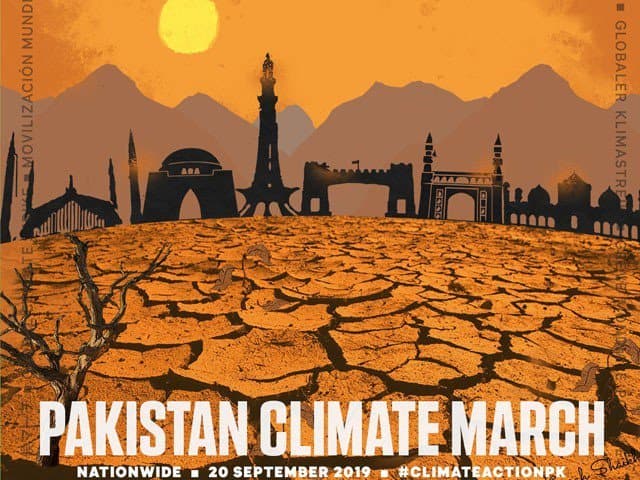
    The United Nations General Assembly (UNGA) is to convene on September 27.  One week ahead of the run-up to the assembly, children, students, environmental activists, NGOs and the civil society are conducting a ‘Climate March’ to draw attention to the crisis.

    Not just in New York, but in hundreds of cities across the globe.

    Why? The facts are staggering. Since agreeing to reduce greenhouse gas (GHG) emissions through the United Nations Framework Convention on Climate Change (UNFCCC) in 1992, the world has only produced more GHGs.

    Global temperatures are increasing, with each month breaking historical records; carbon concentrations in the atmosphere have shot over 400 parts per million – not seen in the past 850,000 years. Back then, there was a species extinction event.  With animal, bird, insect and plant varieties in rapid decline, we are now facing the sixth extinction event.

    Just this year, there were wildfires in the arctic – something that has never happened before – and the scale of the ice melt in Greenland – 12.5 billion tonnes in one day in July, which wasn’t supposed to happen until 2070.

    We are seeing the global climate tilt and lose balance before our eyes; hence, the march.

    We are marching because the everyday discourse in Pakistan doesn’t register the climate crisis. People don’t know how bad it is or will be.

    Consider this: the half-degree difference between the limit of 1.5°C temperature increase envisioned by the Paris Agreement of 2015 and the 2°C limit envisaged by the Kyoto Protocol, means approximately 150 million deaths by 2060. That’s more than the lives lost in all the wars and battles fought in the 20th Century. And most of these deaths will be due to air pollution resulting from GHG emissions produced in the metropolitan areas of Asia and Africa.

    So unless we deal with the smog and air quality in North India, many of those 150 million lives will be lost in Pakistan and India.

    We are marching because of climate justice. By far, the responsibility of historical GHG emissions rests in the Global North, and within the hands of only a dozen or so businesses that have made, to paraphrase Greta Thunberg, obscene amounts of money by destroying the earth.

    Pakistan must stand strong with other countries and demand historical GHG inequity be addressed, but that does not relieve the country or us from our duty in the battle against the climate crisis.

    Both Pakistan and Pakistanis must realise that climate justice is just as much about equity between countries as the equity within countries. The climate crisis, worldwide, will play out not just between rich and poor countries, but between the rich and poor within every country.  The poor in Pakistan are especially vulnerable.  Nearly a quarter of the population lives below or close to the poverty line. For so many of our brothers and sisters, a climate event is all that stands between them and one meal a day.

    We march because it’s time to declare a climate emergency. We march because the climate crisis is not an “elite” issue in Pakistan or the responsibility of the developed world.  We march because students, environmental activists, academics and civil society in 22 of Pakistan’s cities are marching.  They prove that the climate crisis is well-known, that our population isn’t stupid and that the folks responsible for running the show should take the climate crisis seriously rather than focusing on the circus presently employed.

    We march, finally, because the climate crisis is existential. It involves us all, but not individually. The capitalist, consumerist and fossil fuel-driven economy that has brought us to the brink is too much for individual actions alone. The climate crisis needs collective political action. And it needs it now.

    Join the climate march at 3 pm on Friday (September 20).

    The writer is an environmental lawyer and member of the Pakistan Climate Change Council. To learn more about the march, follow @ClimateMarchPk on all social media platforms.

  • Managing Pakistan’s water

    Managing Pakistan’s water

    Water wastage is high and agricultural yields are low. We are also among the 10 countries with the lowest access to clean water.

    Water is a resource that has been taken granted for centuries. People think it’s an abundant and limitless, but this faulty perception is changing and it’s about time. We’re running out of fresh water… and fast.  

    According to a World Bank report published in January 2019, the country is “well-endowed” with water but “water wastage is high and agricultural yields are low”. This, according to the report, is because of bad management of available water resources.

    We are also among the 10 countries with the lowest access to clean water, according to a study “The Water Gap — The State of the World’s Water 2018”, by WaterAid. About 21 million out of the total population of 207 million do not have access to clean water.

    “Pakistan is facing severe challenges; industrialisation and the demands of agriculture, depleted and increasingly saline groundwater, rapid urbanisation and drought have all taken their toll,” says the report.

    What adds to the problem is the outdated water infrastructure. The lack of reservoirs and the dilapidated existing facilities mean that our ability to store water is way lower than what is needed.

    Pakistan has clearly a lot to make up for in almost each of the areas identified above. Compared to the United States (US) and China where 40% and 65% of freshwater withdrawals are used for agriculture, respectively; in Pakistan, the figure exceeds 90%.

    The government clearly needs to have a well-thought-out policy in place with proper implementation to ensure that the scales do not tilt in one stakeholder’s favor. There are sectors where urgent interventions are merited because they use up the most water the most notable being the agriculture sector.

    Intensive irrigation not just wastes water but also increases the risk of over-irrigation leading to low crop yield. Since most of the farmers are practicing agriculture the way their forefathers did, the government and private sector need to work together to help the farmers adapt to more responsible irrigation techniques.

    Another area is intensive water use industries like textile, leather and sugarcane to name a few. The world over, industries are looking to reduce their water footprint. For example, Levi Strauss & Co. recently announced that it would reduce its water use for manufacturing by 50%, especially in water-stressed areas by 2025. Abercrombie & Fitch has also pledged a 30% water reduction by 2022.

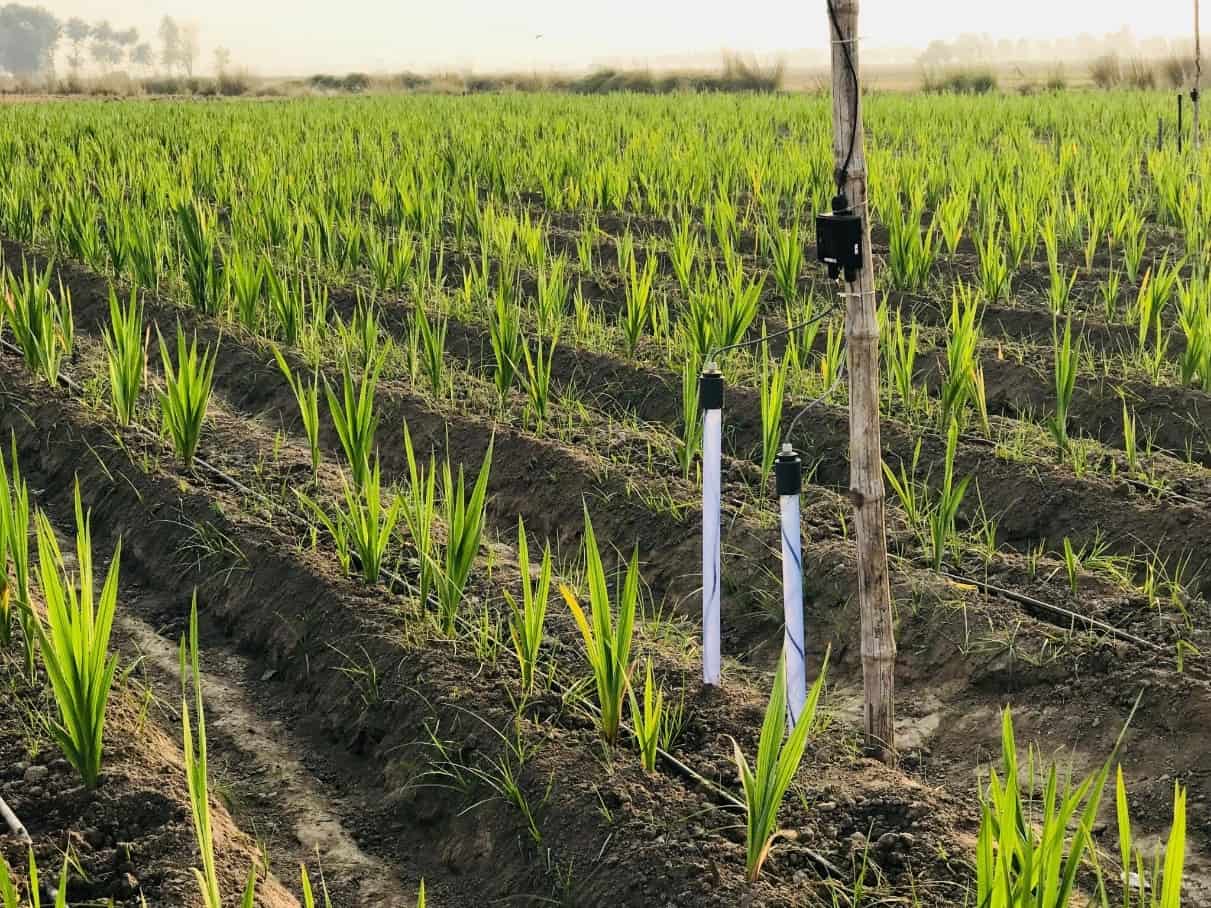
    There are food and beverage companies who are trying to work on reducing water waste, not just in their own processes but also outside their fence. A leading name in these efforts is that of Nestlé Pakistan, which under its “Caring for Water” initiative is helping farmers move on from water-intensive irrigation practices and take up high-efficiency irrigation systems like drip and sprinkler irrigation.

    The company claims that it has helped save more than 300 million litres of water in two years by promoting drip irrigation on about 107 acres of land. Their aim is to help save 400 million litres by the end of 2019. In addition, the company has also developed smart soil sensors. The sensor detects the level of soil moisture sensors and send real-time data to the farmers helping them to save water (about 12%), avoid crop stress and ultimately increase yield.

    The company has developed cheap versions of the sensor with the help of the Lahore University of Management Sciences’ (LUMS) Centre for Water Informatics and plans to scale the project up this year.

    We need positive initiatives like these, which involve different partners working together on various aspects of the water challenges to help address them. The multiple and cross-sectoral challenges beg collective solutions.

    It’s only with a collective approach that we can ensure effective water management, which requires planning, developing and distributing water in such a way that all the competing demands (agriculture, access to safe drinking water, daily use, biodiversity etc) for water are met and it is allocated on an equitable basis to satisfy everyone’s demands.

  • Prime Minister Imran Khan: the leader we deserve

    Prime Minister Imran Khan: the leader we deserve

    PM Imran’s efforts are opening doors to the world – be it in terms of image-building or investment; with his farsightedness and consistent efforts, Khan is marking a time in history.

    From the chants of Capital One Arena to the high-end meetings with the United States (US) president, members of the US congress, business tycoons and investors, it goes without saying that Prime Minister (PM) Imran Khan’s US visit was a resounding success.

    His achievements resonated across the globe with worldwide Twitter trends, which astounded the international audience for a good three days. On the one hand, the Pakistani nation lauded his assertive meeting with President Trump, highlighting sensitive issues like Kashmir and the Afghan war.

    He was also admired for his honest and charismatic personality, which conveniently attracted overseas Pakistanis as well as the US business community.

    For decades, investors avoided Pakistan due to lack of trust in its leadership. However, Khan’s one visit has altered that perception.

    One can see that in the confidence reflected by US Senator Lindsay Graham’s tweet, which said: “Khan and his government represents the best opportunity in decades to have a beneficial strategic relationship with US.”

    In his next tweet, he said: “Tremendous business opportunities exist between Pakistan and the US through a free trade agreement tied to our mutual security interests.”

    In addition to government level summits, meeting with senior American business executives from Bower Group and US-Pakistan Business Council also took place. Discussions on business plans and investment opportunities in Pakistan were carried out, which further assured investor’s faith in Khan’s leadership.

    Businessmen, who previously never considered investing in Pakistan, expressed their inclination towards the very same country. For example, business tycoon Shahid Khan, who is the owner of the Jacksonville Jaguars of the National Football League (NFL), Fulham F.C. of the English Football League Championship, and runs Flex-N-Gate (an automobile parts manufacturer company), had a meeting with the premier.

    Bearing in mind that Shahid Khan had been frequently approached by Pakistan’s former leadership, both Nawaz and Zardari, for talks but were denied attention, this very well-known and well-respected businessman not only exchanged his suggestions with PM Imran, but on his way out, shared his pleasure and belief in Khan’s honest efforts for the country in the following words:

    “I have hope, I think the future of Pakistan is going to be fabulous with Imran Khan. It is proud to be Pakistani again. Imran Khan is greater than life and the best thing that happened to Pakistan, at least in my lifetime.”

    PM Imran’s efforts are opening doors to the world – be it in terms of image-building or investment; with his farsightedness and consistent efforts, Khan is marking a time in history.

    Uniting the Muslim nations, showing solidarity with Kashmiris, instigating social justice and ensuring people’s prosperity, these are only a few accomplishments that are painting an image of Pakistan which will benefit generations to come.

    Any author’s views do not reflect that of The Current

  • Mad King

    Mad King

    From intimidating accountability watchdogs, telling the judiciary how to do its job, to placing increasingly fascist restrictions on press, Imran Khan has reached levels of desperation that seem unprecedented

    We have been here before. A government, drunk on its newfound power, now finds itself in unfamiliar territory where it has to lead a nation and not just tear down all that holds that country upright.

    An opposition, being oppressed, harassed and victimised for speaking to the aspirations of the people, at whose will, it serves. It’s not new. It’s a vicious cycle that has revisited this country one too many times now.

    The 2018 general election was among the most tainted in this country’s history, the impact of which the nation now suffers. The country is in the grip of an economic crisis that can only be described as a financial Armageddon, corruption is ironically at its peak, a glimpse of which has been seen in the recent report put forth by the Asian Development Bank (ADB) on the Peshawar BRT project.

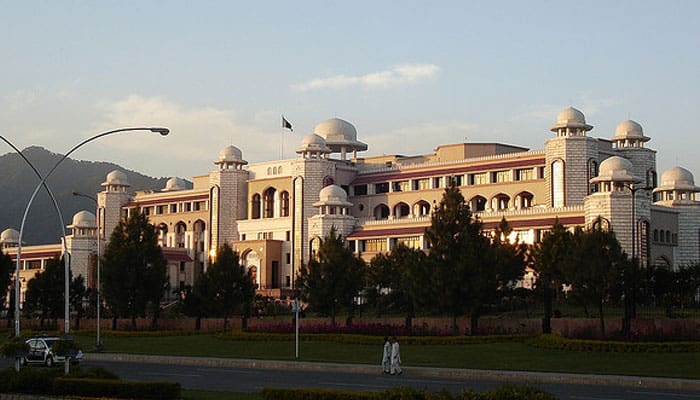
    In the Prime Minister’s (PM) House, our own version of the Mad King has begun to unravel. In an attempt to distract everyone from how the country’s economy has continued to unravel under his watch, he has decided to demolish every institution we hold dear in the country.

    From threatening and intimidating the country’s accountability watchdogs, telling the judiciary how to do its job, to placing increasingly fascist restrictions on the press in Pakistan, Imran Khan has reached levels of desperation that seem unprecedented.

    Why though? Why this sudden surge in desperation on the part of the PM?

    Nawaz Sharif has been unfairly put behind bars. The top tier leadership of the Pakistan Muslim League-Nawaz (PML-N) is being threatened day in day out with mala fide cases in an attempt to shut them up.

    Why is the government so spooked that it continues to up the ante and show its ill intent when despite its reservations and grievances over the election process, the opposition has on various occasions declared its intentions to let the Pakistan Tehreek-e-Insaf (PTI) remain in power and complete its term?

    What perturbs the government is that it can see the writing on the wall. Going forward, electoral politics will revolve around the next generation of voters — the youth — and at present, no one has shown to connect with the youth of this country quite like Maryam Nawaz.

    People know her as the current force that has kept the party going in her father’s absence, but what people do not realise is that she has been there for quite some time now.

    When Nawaz was in exile during Gen (r) Pervez Musharraf-led military rule, it was Maryam who pushed and encouraged her father to return to the country because she believed the people needed her father’s leadership. Now she is burdened with the responsibility to fight for her family and her party.

    She has been burdened with the responsibility to fight for all of us… for the very democratic soul of the country.

    The Mad King fears his government will fall apart once and for all as his false claim of representing the youth nears collapse. It is for this very reason that his government is going to ridiculous lengths to try and harass the opposition.

    What he needs to remember is that we have been here before. And inevitable is that authoritarians have time and time again fallen from their positions of power and been forced to feel the unforgiving wrath of the will of the people.

    That wave, let’s call it a tsunami, is building up, making its way to sweeping away the PTI government and its politics.

    Any author’s views do not reflect that of The Current

  • LHR’s Howdy vs KHI’s CFU: The Steak at Stake?

    LHR’s Howdy vs KHI’s CFU: The Steak at Stake?

    The pain is real. Every Pakistani will moan about the lack of decent steak in their city. The overachievers will post selfies of themselves and their meat at Le Relais de Venise L’Entrecote in Paris or London and the home Masterchefs will complain about how the local butcher can’t tell a sirloin from a T-bone.

    “Please, don’t order your steak well done or medium well,” said Khurram, the main man at CFU in Karachi.

    Arey, kyun?” I asked, just for ainween.

    Ziadti hai humare meat kay saath,” he responded.

    Khurram says that to everyone apparently and urges them to try his steak style. And so we did, Brazilian style.

    The small restaurant that serves around 25 people for dinner, is Karachi’s answer to a premium steak house. Though it’s no Wagyu, it’s local meat is dry aged for more than 20 days.

    It’s a small, dreamy, low lit place, with tables seated so close to each other, that if you don’t speak with the strangers sitting next to you, it would be rude. Though it can get awkward if the guest next to you is someone you know – you automatically feel this need to ask them to join you – you’re sitting close enough. Definitely not a place for a first date with someone you’ve been day dreaming about.

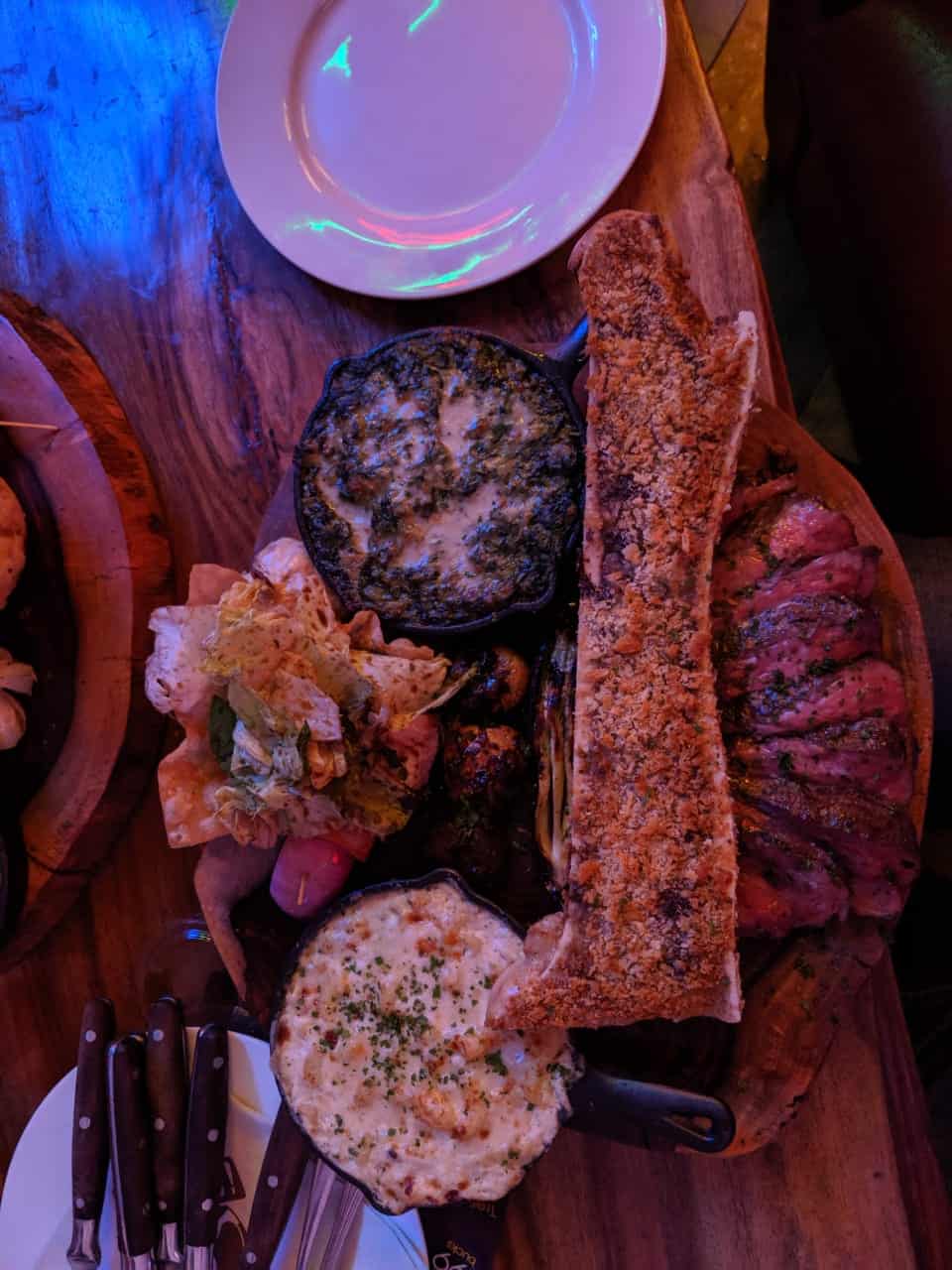
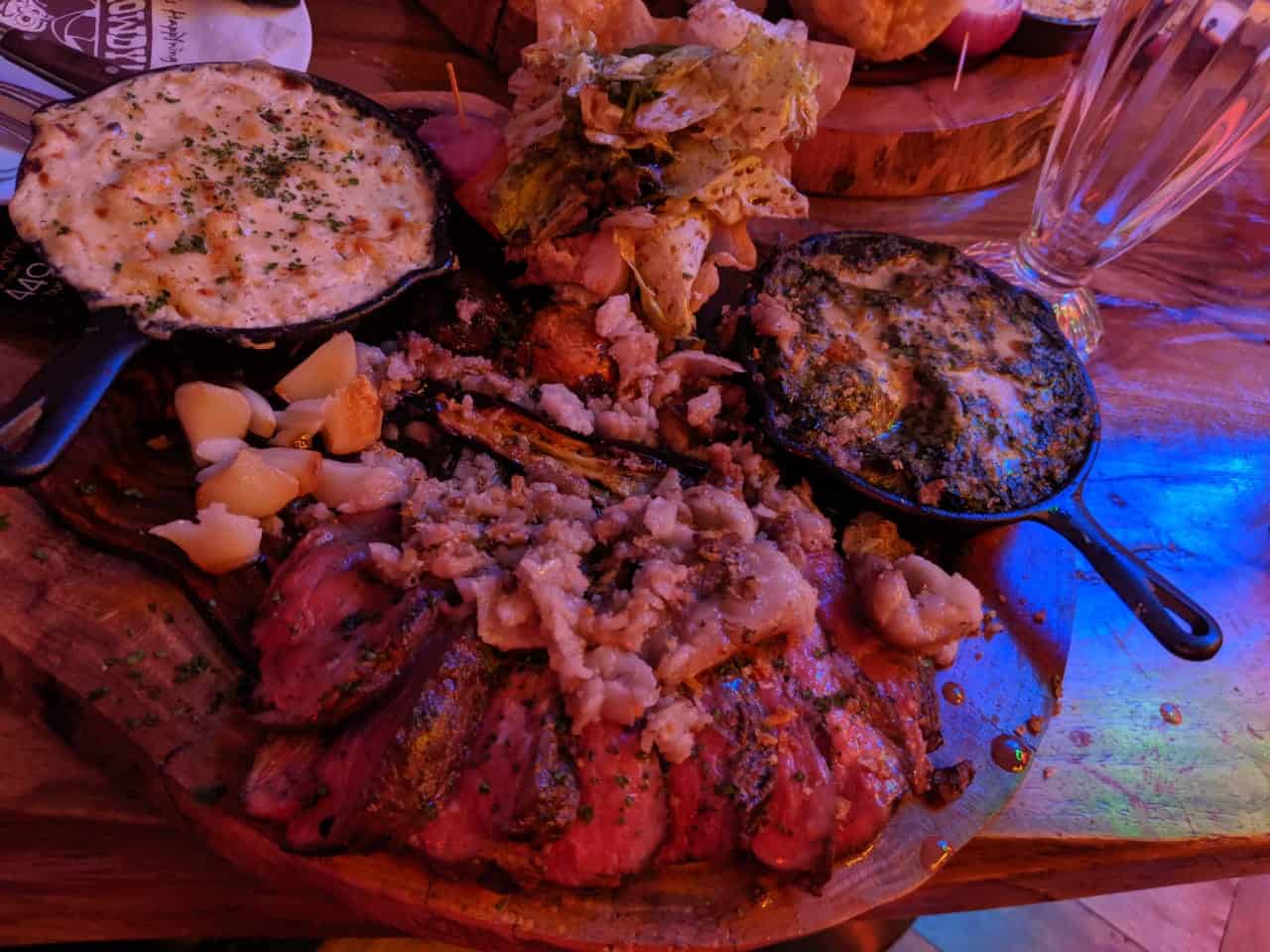
    Was it the steak of my dreams? Definitely not. But was it the best in Karachi? 100 percent. Tender, juicy, melt in your mouth, fantastically seasoned. It came on a large wooden platter with roasted garlic, (a trend that Okra began), grilled veggies, mushrooms, creamed spinach and potato wedges. Looked good and tasted great; a rarity to be honest.

    On the other hand, Lahore’s food scene is largely based on inspiration. I’ve had steak in Lahore that tried to copy the famous secret steak sauce of Le Relais de Venise L’Entrecote (didn’t come close), and I’ve sat in a booth at Howdy’s, the burger joint, before it became the next big steak place of Lahore.

    Launching their steak platter just a short while ago, I was incredibly apprehensive about trying it out. Mostly because their burger had been terribly mediocre. But pulled into the best restaurant scam (CFU and Howdy are both guilty) of limited seats, months long wait, and aged for days steak, it was a must-try.

    Priced at the same 2500 per head damage as CFU, with just 25 steaks available a day, like CFU, and using local meat, like CFU, the comparison begged to be made.

    Did it beat it’s Karachi inspiration? Sadly, no. But is it the best steak in Lahore? Yes.

    The steak was good, tender and juicy, but terribly under-seasoned. The sides ate up the steak, making it difficult to focus on what to eat.

    A loud, big restaurant, they haven’t limited their seating but have limited their steaks. Noisy, with kids jumping around, it’s got life in it’s environment; but not in the best of ways.

    The difference between Lahore and Karachi screams in the appearance of their food. CFU is classic Karachi. Small, uptight, and contemptuous, Karachiites tend to think of themselves as connoisseurs – and the food is usually proof that some of them are. Preferring quality over quantity, you can serve a Karachiite delicious morsels and they will leave happy.

    I didn’t know where to look on the wooden block. At the Mac and Cheese, which needed more pepper, the massive bowl of creamed spinach, which was mediocre, the giant bone of marrow, the roasted garlic, the perfect mushrooms or the large green salad. It was a classic comparison. Lahore would not pay 2500 for just a steak. They needed a buffet to go along with it.

    CFU and Howdy will both be busy for many more months to come and Howdy’s steak is a welcome addition to Lahore’s food scene. It is bound to create many more inspired joints, perhaps pushing local butchers to produce cuts steak lovers crave, push local restaurants to do more with local products, and tempt selfies at CFU and Howdy instead of the Parisian dream.

  • FREAKONOMICS!

    FREAKONOMICS!

    We are all freaked out!

    No one knows what is happening… no one knows what will happen… but we are all freaked out!

    Dollar floats and soars as freely as Imran Khan’s sky-high claims of rectifying the economy in the past, buying gold is the gossip of old times, stock market plunges are a routine matter. Basic necessities are now luxuries, taxes are piling up these days more quickly than the fats on one’s bones, education was never free, but wasn’t even as expensive as of today.

    Jobs are scant. Health facilities are sparse. Incomes and earnings getting more and more exiguous. The economy is shrinking, debt is accumulating, investors are wary, traders are worried, farmers are distraught, businessmen depressed and youth distressed.

    Everyone is caught up in a whirlpool of stress and strain, yet the Khan government assures us on a daily basis: “All is well… all will be well”.

    Either it’s the innocence, ignorance or some blind inference that we still sustain some hope in the current regime. Probably, we are left with no other option. Probably we still want to test Khan’s delivery.

    Either it’s the incompetence of the government or it’s the incompetence of the collective social judgement. We are in a state of love and hate relationship with Khan — exactly like our cricket team. On a rare, unexpected occasion; it delivers something and we are all cheering up.

    Most of the times we are let down, crestfallen; yet we have no other option. Do we?

    Opposition, on the other hand, the prime task of which is to safeguard the public interests and to keep an eye on government functioning, is failing to perform too. Though we see a lot of brouhaha and hubbub by the opposition parties in the National Assembly these days as the budget session goes on, it fails to substantially affect the smooth passage and approval of the finance bill.

    Reason: united we stand, divided we “sit”.

    This division was quite obvious at the opposition’s All Parties Conference (APC) convened two days back in Islamabad when the joint communiqué lacked any solid and affirmative strategy.

    The ostensible joint opposition had a clear difference of opinion and strategy between Pakistan People’s Party (PPP) and Maulana’s Jamiat Ulemae Islam-Fazl (JUI-F); between within Pakistan Muslim League-Nawaz (PML-N) of Shehbaz Sharif versus Maryam Nawaz; between smaller parties and PPP plus PML-N.

    So far the synthetic joint opposition is granting more benefit than inflicting any harm upon Khan’s government. Under the cloud of thunderous claims by the opposition, it all seems to rain down well upon the government.

    Khan smartly managed to politically “epoxy-fy” disgruntled Muttahida Qaumi Movement-Pakistan (MQM-P) and Balochistan National Party-Mengal (BNP-M), hence securing not just the sanction of Budget 2019-20, but acquiring a few months’ more time to stabilise his administration.

    Opposition can rely upon mere verbosity via pressers, media talks, statements and tweets till then. And we are all left at the mercy of tight economic clenching till then.

    October is the new November, they say.

    No one knows what is happening… no one knows what will happen… but we are all freaked out!