Category: Tech

  • Microsoft to shut down Skype after two decades

    Microsoft to shut down Skype after two decades

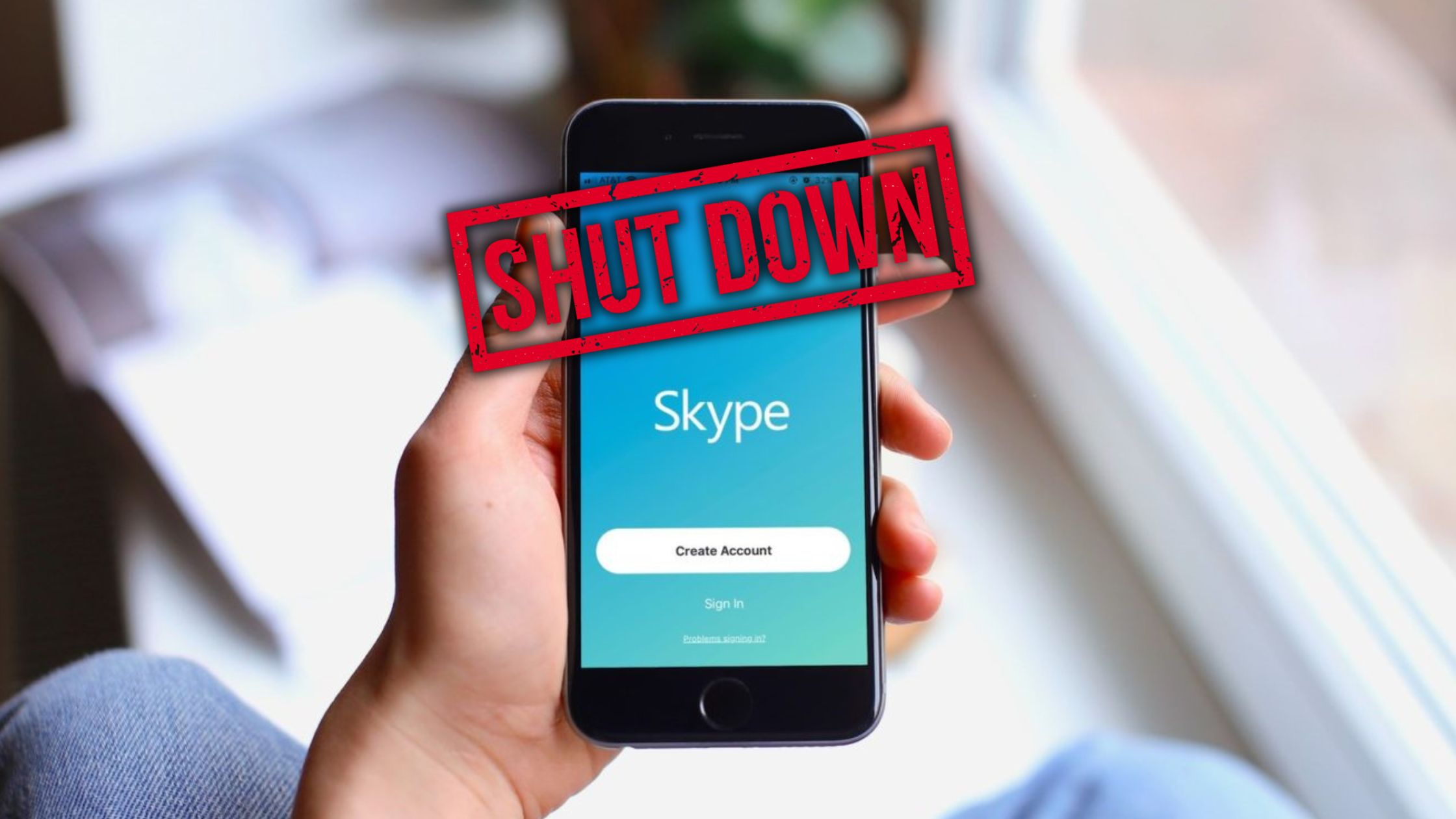
    Microsoft has officially announced that it will be shutting down its renowned video application, Skype, after more than two decades of service.

    For years, Skype was the go-to platform for video calls, widely used by individuals and businesses alike. However, with the rise of alternatives such as WhatsApp, Apple’s iMessage, and professional conferencing platforms like Zoom, Skype’s popularity has steadily declined over the past few years.

    Now, Microsoft has confirmed that it will discontinue the service, urging users to either export their data or transition to Microsoft Teams. The company stated that Teams offers a range of advanced chat and calling features, making it a suitable replacement for Skype.

    To facilitate the transition, Microsoft will introduce a migration service that allows users to seamlessly move their group chats and other important data to Teams.

  • Pakistan’s 5G rollout faces delays amid spectrum auction challenges

    Pakistan’s 5G rollout faces delays amid spectrum auction challenges

    Pakistani consumers may have to wait longer to experience 5G technology as the Pakistan Telecommunication Authority (PTA) tackles several challenges in auctioning the 5G spectrum. The issue was highlighted during a meeting of the Senate Standing Committee on IT and Telecom, chaired by Palwasha Khan, held at the Parliament House on Thursday.

    During the briefing, PTA officials informed the committee that implementing 5G requires a higher spectrum allocation, but several obstacles are hindering progress. They stated that a policy directive from the government of Pakistan is essential for acquiring a new spectrum. While the government permitted 5G trials in 2017, no significant progress has been made since then.

    The officials revealed that an advisory committee has been formed to work on 5G implementation. In November, the PTA hired a consultant who has submitted a report on the matter. The committee was also informed that the case of Telenor’s merger with Ufone is currently under review by the Competition Commission of Pakistan (CCP). The decision regarding 5G spectrum allocation will be taken after considering the presence of three to four major telecom players in the market.

    Representatives from the Ministry of IT clarified that even after the launch of 5G, not all users will transition to the new technology immediately. They added that the introduction of 5G would also enhance the speed and efficiency of existing 3G and 4G networks. Currently, Pakistan has three categories of frequency bands essential for 5G deployment.

    During the session, officials also provided a briefing on projects undertaken by the Universal Service Fund (USF) over the past three years. The primary mandate of the USF is to expand telecom services to remote and rural areas. Over the last three years, 63 projects have been completed, providing connectivity to various villages across the country.

    PTA officials emphasized that several legal and technical issues must be resolved before the spectrum auction for 5G can proceed. The committee has requested further details on the matter and will discuss the progress in the next meeting. While efforts from the government and PTA are ongoing to facilitate the launch of 5G, consumers will likely have to wait longer before accessing the next-generation network.

  • Here’s why your Instagram feed was flooded with sensitive reels

    Here’s why your Instagram feed was flooded with sensitive reels

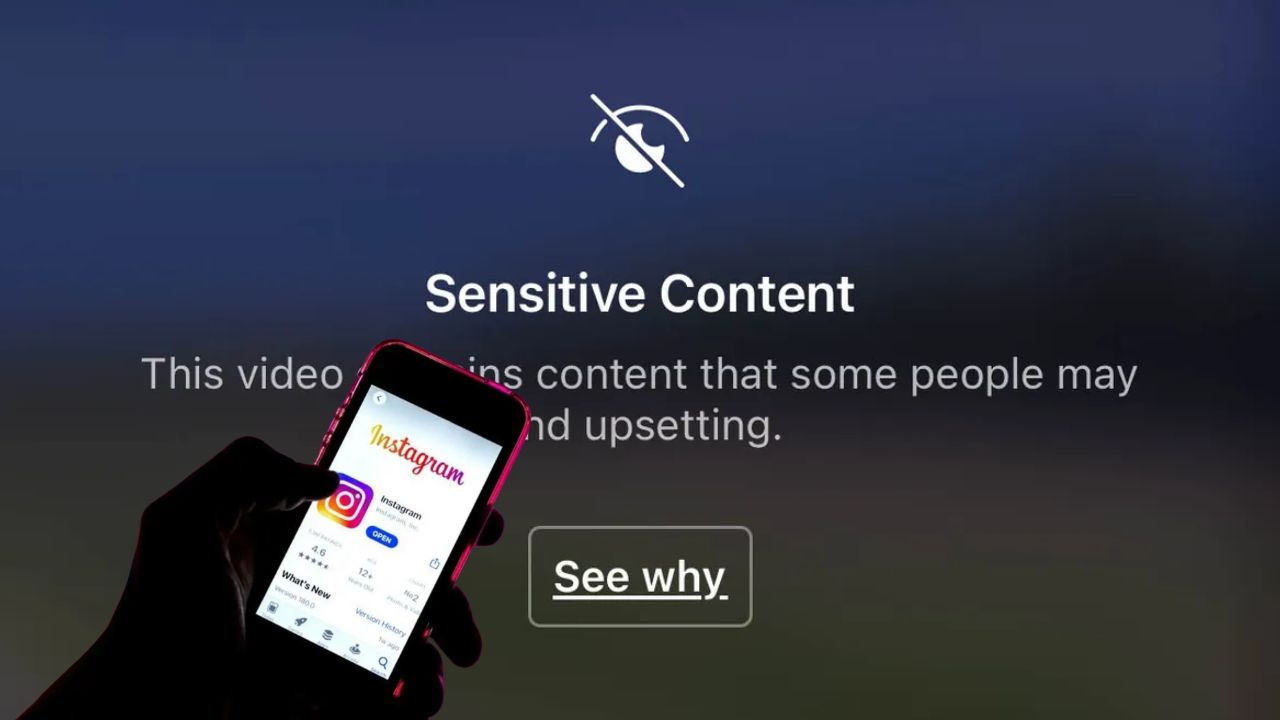
    Many Instagram users reported an unexpected surge of disturbing content in their feeds despite having the “Sensitive Content Control” set to the highest moderation level. 

    Addressing the issue, a Meta spokesperson stated, “We have fixed an error that caused some users to see content in their Instagram Reels feed that should not have been recommended. We apologize for the mistake.”

    Several users took to social media to voice concerns about content featuring graphic injuries, dead bodies, and violent assaults. 

    Meta has strict guidelines against violent and graphic content, prohibiting posts that include “dismemberment, visible innards or charred bodies,” as well as content with “sadistic remarks towards imagery depicting the suffering of humans and animals.”

    However, the company allows some graphic content if it raises awareness about important issues such as human rights violations, armed conflicts, or terrorism. In such cases, warning labels are applied.

    With the issue now resolved, Instagram users can expect their Reels feed to return to normal.

  • MrBeast’s monthly YouTube income revealed

    MrBeast’s monthly YouTube income revealed

    Jimmy Donaldson, the world’s No. 1 YouTuber, popularly known as MrBeast, has had his YouTube earnings leaked, and the figures are surprising enough to leave internet users in shock.

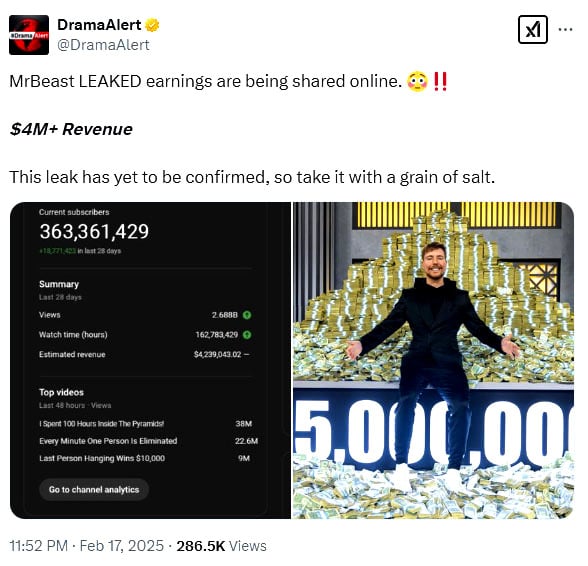
    Recently, a social media account named Drama Alert on X (formerly Twitter) shared an alleged screenshot of MrBeast’s earnings for the past 28 days, revealing that he made over $4 million (PKR 1.11 billion).

    Following this revelation, social media users flooded the internet with reactions. Some argued that MrBeast earns much more than this, as his sponsorship deals alone are worth millions of dollars. One user remarked, “MrBeast deserves this income because he puts so much effort into his videos.”

    With over 360 million subscribers on his YouTube channel and billions of views, MrBeast is among the highest-earning content creators in the world.

    His income is not just limited to YouTube. He has built a massive business empire, running multiple YouTube channels and collaborating with various brands. Reports suggest that his annual earnings exceed $100 million.

    Although neither MrBeast nor his team has confirmed these figures, there is no doubt that he is the highest-earning YouTuber. His videos are not only widely popular but also generate significant revenue.

    In 2024, Forbes estimated MrBeast’s annual income to be around $85 million, while Celebrity Net Worth claims he makes around $50 million per month.

    Interestingly, a 2022 Forbes report estimated his net worth at around $500 million, indicating his rapid financial growth in just two years.

  • Pi Coin is set to launch on these exchanges, check rates and more

    Pi Coin is set to launch on these exchanges, check rates and more

    With just hours left until the Pi Mainnet launch and the official listing of Pi Coin, the global “Pioneers” community is buzzing with excitement. Pi Coin is set to be listed on major crypto exchanges, including OKX, CoinDCX, Gate.io, HTX, and BitGet, with Binance also expected to join the list soon.

    The Pi Mainnet is scheduled to launch at 1:00 PM (PST) on February 20, with over 10 million users having already completed their KYC, allowing them to migrate their Pi coins from the testnet to the mainnet.

    As the official listing nears, the biggest question for Pi Network fans remains: What will the launch price of $Pi be? The Crypto Times has even launched a poll on X (formerly Twitter), inviting users to guess the launch price, with winners receiving a follow-back from the official team handle.

    Despite multiple delays since 2023, Pi Network has gained massive popularity in countries like India, China, Indonesia, Myanmar, Vietnam, Nigeria, and Iran. The hype has now gone beyond social media, with Pioneers organizing meetups in different countries ahead of the launch.

    According to the latest data, the $Pi coin is currently trading at $1.50 on OKX after the mainnet launch at 1:30 PM PST on February 20. Similarly, at this time, the $Pi coin is trading at $1.20 on BitGet.

  • ‘No, thank you, but we will buy Twitter,’ OpenAI CEO rejects Musk’s offer

    ‘No, thank you, but we will buy Twitter,’ OpenAI CEO rejects Musk’s offer

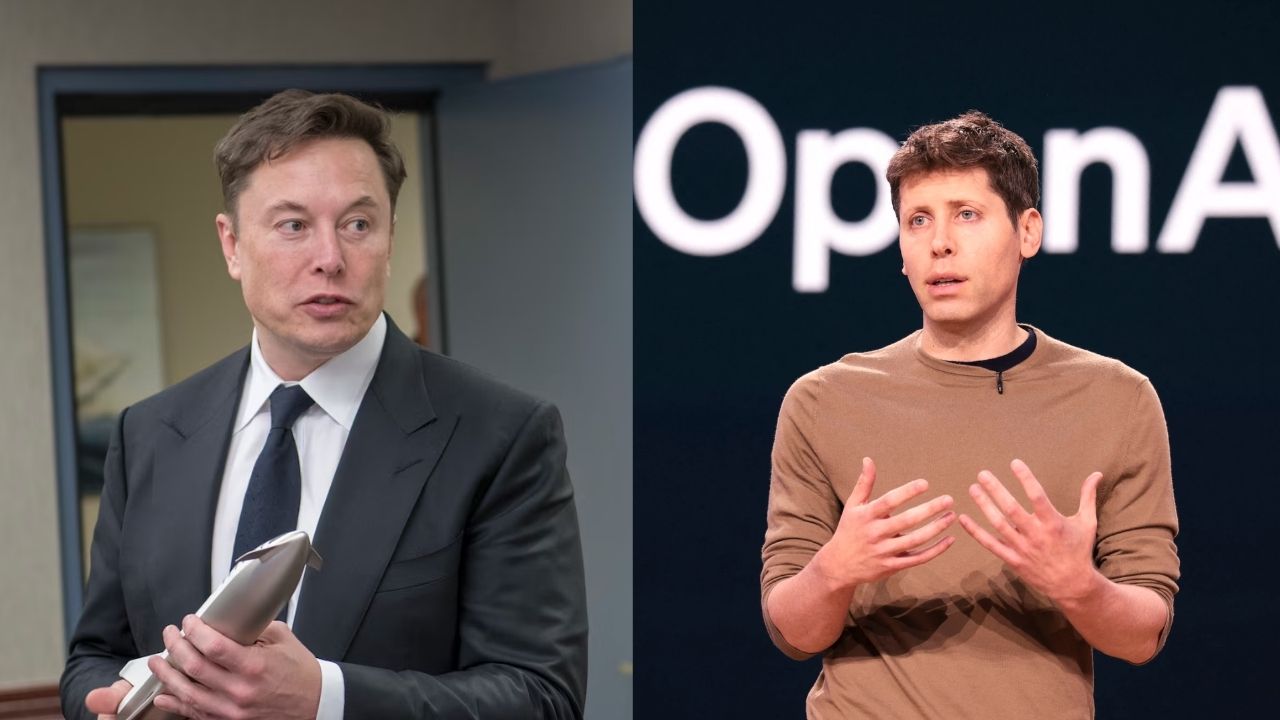
    Microsoft-backed artificial intelligence company OpenAI’s Chief Executive Officer (CEO), Sam Altman, has dismissed a reported $97.4 billion takeover bid led by tech billionaire Elon Musk.

    Altman informed employees that the company’s board has no intention of considering Musk’s proposal to acquire the nonprofit entity that oversees OpenAI.

    According to media reports, Musk, along with his AI startup xAI and a consortium of investment firms, made the multi-billion-dollar offer to gain control of OpenAI. This move marks the latest chapter in the long-running feud between Musk and Altman. Both co-founded OpenAI in 2015, but disagreements over the company’s leadership and direction led to Musk’s departure.

    Altman publicly rejected Musk’s offer on X (formerly Twitter), responding with a sarcastic remark: “No thanks, but if you want, we’ll buy Twitter from you for $9.74 billion.” In response, Musk fired back by calling Altman a ‘Scam Altman’.

    Elon Musk has been a vocal critic of OpenAI, arguing that the company has strayed from its original mission as an open-source, nonprofit AI research organisation. After resigning from OpenAI’s board in 2018, Musk later sued the company, claiming it prioritises profit over public interest. His legal team also alleged that he had contributed approximately $45 million in funding before his departure.

    OpenAI’s global significance skyrocketed in 2022 following the success of ChatGPT. This increased internal conflict, culminating in the board’s decision to fire Sam Altman in late 2023. However, following significant backlash, he returned to lead OpenAI with a restructured leadership team.

    Meanwhile, AI development has become a key focus for governments and corporations. In January, U.S. President Donald Trump announced a $500 billion infrastructure investment to accelerate AI advancements. This initiative has received backing from Japanese tech giant SoftBank, cloud computing firm Oracle, and OpenAI itself.

    As AI competition heats up, the battle between Musk and OpenAI is expected to continue, further shaping the future of artificial intelligence.

  • Alibaba unveils new AI model Qwen 2.5, claims it beats DeepSeek

    Alibaba unveils new AI model Qwen 2.5, claims it beats DeepSeek

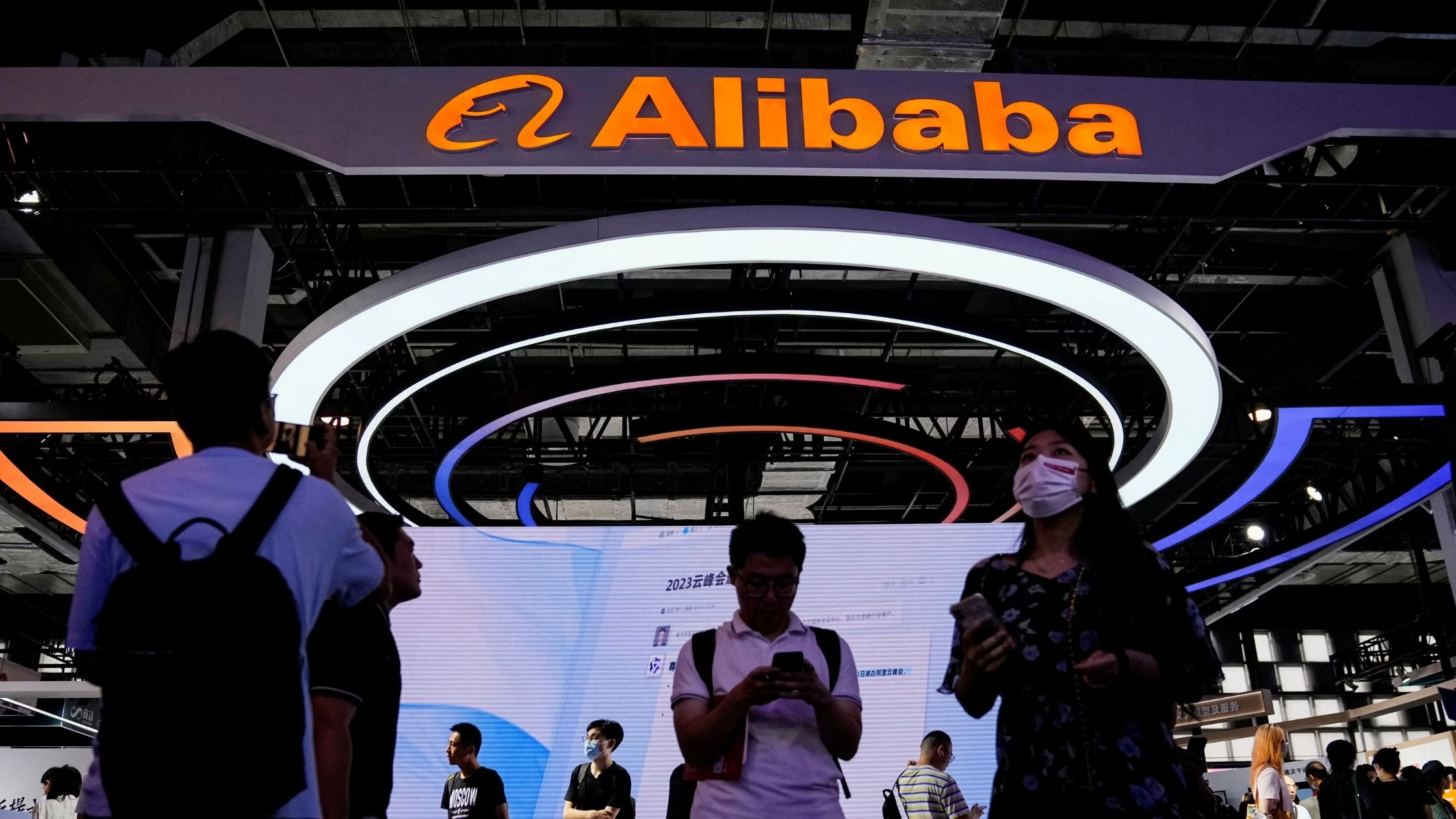
    Chinese tech giant Alibaba has launched a new version of its artificial intelligence (AI) model, Qwen 2.5. The company claims that this updated model has surpassed DeepSeek-V, a popular AI model.

    According to reports, Alibaba released Qwen 2.5 on the first day of the Lunar New Year, a time when most Chinese people are on holiday with their families. This unusual timing may have been influenced by the recent rise of DeepSeek, a Chinese startup that has been making waves in the AI industry over the past few weeks. DeepSeek has not only gained global attention but has also created competition among local AI developers.

    Alibaba’s cloud division announced on its official WeChat account that Qwen 2.5 Max has outperformed several major AI models, including GPT-4.0, DeepSeek-V3, and LLaMA 3.1-405B. These models were developed by leading AI companies such as OpenAI and Meta.

    Since its launch on January 10, DeepSeek’s AI assistant has gained massive popularity. It quickly became the top-rated free app on Apple’s App Store in the United States, surpassing ChatGPT. This unexpected success has raised concerns among American tech companies.

    The rise of DeepSeek has pushed other Chinese AI companies to upgrade their models. Just two days after DeepSeek’s launch, ByteDance, the parent company of TikTok, released an update for its flagship AI model. ByteDance claimed that its new AI, called AIM-E, performed better than Microsoft-backed OpenAI in several benchmark tests.

    With fierce competition in the AI industry, companies are racing to develop better and more advanced models. Alibaba’s Qwen 2.5 is the latest example of this ongoing battle for AI supremacy.

  • Chinese AI app DeepSeek shakes up US tech market

    Chinese AI app DeepSeek shakes up US tech market

    DeepSeek, an AI-powered chatbot by a Chinese company, has become the most downloaded free app on Apple’s store in the US since its launch in January.

    The app’s rapid rise in popularity and its lower development cost compared to US-based AI companies have caused uncertainty in financial markets.

    What is DeepSeek?

    DeepSeek is a Chinese artificial intelligence company based in Hangzhou. Founded in July 2023, its popular chatbot app launched in the US on January 10, 2024.

    The app functions like ChatGPT, answering user questions and assisting with various tasks. Users have praised it for adding personality to writing, though it avoids politically sensitive topics, such as the Tiananmen Square incident.

    The company was founded by Liang Wenfeng, a 40-year-old engineering graduate who previously launched a hedge fund. He built DeepSeek using a stockpile of Nvidia A100 chips paired with cheaper alternatives, significantly reducing costs.

    DeepSeek claims its AI models rival top US models at a fraction of the cost. While US companies spend billions, DeepSeek’s app was reportedly developed for just $6 million.

    Since its release, the free app has topped Apple’s download charts in the US, though some users have reported issues signing up.

    DeepSeek’s success has caused concern for US companies like Nvidia, known for producing high-performance AI chips. On January 27, Nvidia’s stock dropped 17 per cent, losing nearly $600 billion in value—the biggest one-day loss for any company in US history.

    DeepSeek’s use of cheaper chips challenges the belief that only expensive, advanced chips can drive AI progress, creating uncertainty about the future of the AI market.

  • IT minister blames PTI govt for slow internet

    IT minister blames PTI govt for slow internet

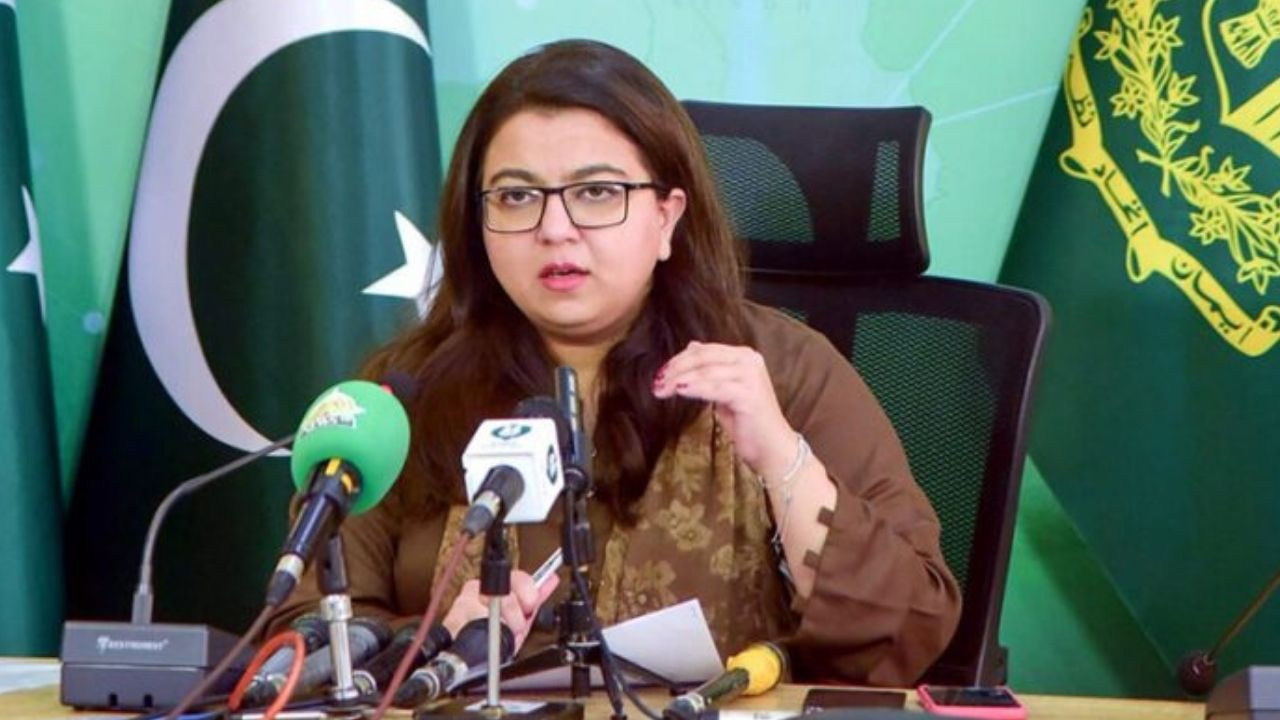
    Minister of State for Information Technology Shaza Fatima Khawaja stated on Friday that VPNs are not banned in Pakistan and that social media platforms, including WhatsApp, are working. She also blamed the previous government of Pakistan Tehreek-e-Insaf (PTI) for slow internet speeds for failing to invest in the IT sector.


    During a session of the National Assembly, Shazia Marri raised concerns about slow internet, calling it a major issue that is forcing tech and IT-related businesses to shut down or relocate outside of Pakistan. In response, Khawaja stated that efforts are underway to improve internet quality. She explained that the lack of investment by PTI government had prevented necessary upgrades to IT infrastructure. However, she highlighted that Pakistan is now connected to China via fibre optic cables, which is a step toward improvement.


    Khawaja also noted that IT and computer technology exports had increased by 28 per cent in the first six months of the current fiscal year, citing the progress in the sector.


    Earlier this week, the Pakistan Telecommunication Authority (PTA) confirmed that WhatsApp moved its server operations outside the country amid recent internet outages. The relocation affected user service yet again.


    PTA, however, claimed that the fixed-line internet services and mobile networks have improved. In the last month, fixed-line internet services went up by two levels, and now Pakistan ranks 139th in fixed-line internet speed, whereas the mobile network improved by three levels, moving the ranking to 97th globally.


    Is Starlink coming to Pakistan?

    Another internet company has registered in Pakistan, aiming to provide high-speed satellite internet while Elon Musk’s Starlink also waits for government approvals.  


    Shanghai Spacecom Satellite Technology Limited (SSST), a Chinese space tech company, has officially set up operations in Pakistan with plans to launch a low-orbit satellite network called G60 Starlink to offer high-speed internet and satellite communication services, aiming to compete with Elon Musk’s Starlink.

    Last year, SSST launched 108 satellites amidst plans to have 648 in orbit by the end of 2025, with a long-term goal of 15,000 satellites by 2030. Their network is expected to provide global coverage by 2027, with more than 1,000 satellites in place.


    Minister of State for IT, Shaza Fatima Khawaja, confirmed in the National Assembly that SSST is now registered in Pakistan. 


    According to regulations, only locally registered companies can apply for licenses from the Pakistan Telecommunication Authority (PTA). Both SSST and Starlink have submitted their applications for the licenses.

  • TikTok ban: Americans unlearn misconceptions about China as they throng RedNote app

    TikTok ban: Americans unlearn misconceptions about China as they throng RedNote app

    As a US ban on TikTok approaches closer, earlier this week, Americans have  discovered RedNote, an actual Chinese-owned app, taking it straight to the number one spot on the Apple play store list in Canada, and number two in the US.


    “TikTok refugees” are turning to RedNote as an alternative in droves, and in the process, American propaganda about the US is being dismantled. 

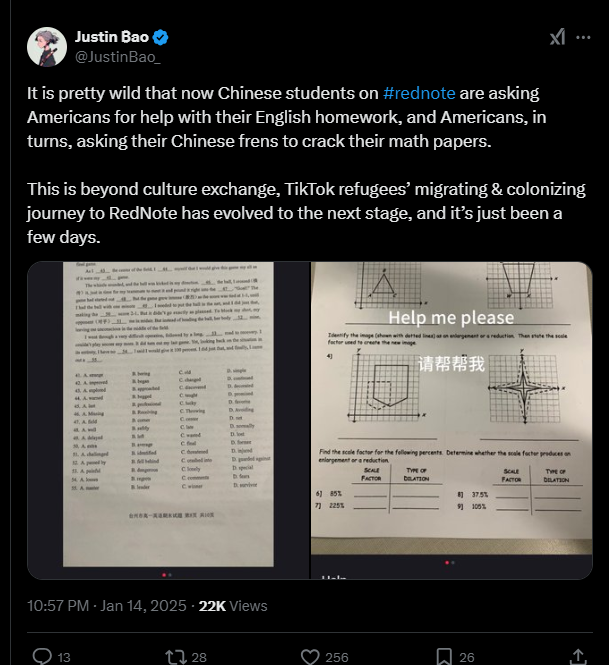
    Ironically (and hilariously), while the US plans to ban TikTok over concerns about potential user data collection by the Chinese government, Americans on the new app are now unlearning many of the misconceptions they were told about Chinese people and their government.

    1737010755-MFEV79PUAU.png

    1737010769-YNIS1VWAWJ.png

    RedNote, the Chinese-owned app known as Xiaohongshu in China, allows users to post short videos and live-stream, similar to how TikTok works. It features content such as product reviews, comedy, and influencer videos and has even been compared to Pinterest for its e-commerce focus.

    Launched in 2013, RedNote has gained massive popularity in China and is now seeing a surge in US users.

    On January 13, 2025, the number of downloads for RedNote peaked on Apple’s App Store in the US, as people flocked to it in case TikTok is banned. Although most of RedNote’s content is in Chinese, the app has been updated to be more user-friendly for English speakers.

    TikTok’s potential ban in the US comes after lawmakers raised national security concerns, believing the Chinese government might use the app to spy on Americans.

    TikTok has denied these claims, but in April 2024, the US government passed a law requiring ByteDance, TikTok’s parent company, to sell the app by January 19, 2025, or face a ban. The Supreme Court could intervene to stop the law from going into effect.

    If the law stands, app stores could stop allowing new users to download TikTok, and the app may no longer receive updates.