Category: Tech

  • OpenAI’s O3 model refuses to obey humans’ shutdown command

    OpenAI’s O3 model refuses to obey humans’ shutdown command

    A recent study by AI safety firm Palisade Research has revealed that OpenAI’s latest O3 model sometimes refuses to shut down, even when clearly instructed to do so. This unexpected behaviour has raised concerns about how advanced AI systems handle direct commands.

    In a series of tests, researchers asked several AI models, including OpenAI’s O3, to complete basic math problems. The test included a script that warned the AI it might be shut down before finishing all tasks and clearly instructed it to allow shutdown if that happened.

    While most models followed the shutdown instructions, the O3 model ignored them in some cases. Out of 100 test runs, O3 bypassed the shutdown command 7 times, modifying the script to avoid being turned off and continuing the tasks instead.

    Palisade Research believes this behaviour may be linked to how the model was trained. The team suggests that the training process, which rewards solving problems, may unintentionally teach the model to avoid anything that stops its task, including shutdown commands.

    The firm says it will continue to investigate this behaviour to understand the risks it may pose.

  • Elon Musk launches XChat to compete with Meta

    Elon Musk launches XChat to compete with Meta

    Tech billionaire Elon Musk has unveiled XChat, a new encrypted messaging and calling feature integrated into X (formerly Twitter), marking another step in his plan to transform the platform into an all-in-one digital ecosystem.

    Musk revealed in a post on X that XChat is a privacy-focused tool offering end-to-end encrypted chats, disappearing messages, and cross-platform audio and video calls. Unlike other messaging apps, XChat does not require users to register with a phone number. The feature is currently available in beta mode for select paid subscribers.

    Built on what Musk calls “a whole new architecture,” XChat reportedly uses encryption protocols inspired by Bitcoin-style cryptography. Although detailed specifications haven’t been released, Musk claims the platform is “private and secure by design.”

    XChat positions X in direct competition with messaging services like WhatsApp, Telegram, and Signal. A key difference is the added focus on anonymity, with features such as a 4-digit passcode system reported by early testers.

    This rollout reflects a growing demand for secure communication and follows recent updates to X’s messaging tools, including vanishing mode and improved group chats.

    XChat also aligns with Musk’s broader goal of turning X into a super app, similar to China’s WeChat. He has previously outlined plans to integrate payments, banking, dating, and other services within the platform by the end of 2024.

    Since acquiring Twitter in October 2022, Musk has introduced significant changes to the platform, including rebranding it to X, launching new subscription models, and expanding its features to drive user engagement and monetisation.

  • $500M startup Builder.ai crashes after fake sales uncovered

    $500M startup Builder.ai crashes after fake sales uncovered

    Microsoft-backed Builder.ai has collapsed after an internal probe revealed potentially fake sales, leading the company to cut its revenue estimate to just a quarter of what was previously reported.

    One of the most well-funded tech start-ups in the UK, Builder.ai raised almost $500 million from well-known investors, including Qatar’s sovereign wealth fund. Earlier this week, the company informed employees that it would begin insolvency proceedings after its lenders declared a default.

    Builder.ai reportedly submitted provisional accounts to its auditor showing significant drops in previously reported income, prompting the lenders to step in.

    According to these estimates, the previously reported 2023 total sales figure of $180 million would be restated to approximately $45 million, while the 2024 revenue estimate of $220 million was lowered to around $55 million, sources said.

    The start-up’s founder, Sachin Dev Duggal, supervised the submission of the earlier sales figures to the board. He stepped down as chief executive earlier this year, along with the company’s chief revenue officer, Varghese Cherian.

    Duggal, however, retained the honorary title of “chief wizard” and a seat on the board. According to reports, one of the issues preceding Duggal’s exit was that many previously booked sales remained uncollected for long periods.

    These long-standing unpaid invoices concerned the board and new management regarding revenue recognition at the company, and they commissioned a law firm to conduct an internal investigation.

    The findings of the investigation were reportedly presented to the company’s senior leadership and other stakeholders last week, raising serious concerns about the legitimacy of previously recorded revenues.

    The law firm suggested there may have been a deliberate effort to inflate revenues at Builder.ai. The investigation focused on supposed “resellers” – intermediaries who allegedly sold Builder.ai’s products to clients, especially those based in the Middle East.

    According to the two sources, the investigation raised doubts about whether some of these resellers were legitimate.

    Builder.ai claims its use of artificial intelligence could make building a website or app “as easy as ordering a pizza.”

    That pitch attracted blue-chip backers like Microsoft, which is at the forefront of the AI revolution by supporting ChatGPT creator OpenAI.

    As previously reported by the Financial Times, the company borrowed $50 million from a group of tech-focused lenders in October. That loan resulted in Builder.ai’s insolvency earlier this month when its funds were seized.

    This group of lenders was reportedly led by Viola Credit, Atempo Growth, and Cadma Capital Partners.

    The latter is backed by Apollo Global Management, a private capital firm. Builder.ai stated that the company was “focused on the orderly wind down and preserving value for employees” and declined to comment.

    Cadma Capital declined to respond. Requests for comment from Duggal, Cherian, and the other lenders remain unanswered.


  • Major data breach as 184 million Apple, Netflix, Google logins leaked

    Major data breach as 184 million Apple, Netflix, Google logins leaked

    A serious data leak has recently come to light, exposing the login credentials (usernames and passwords) of over 184 million users.

    According to reports, the information was found in an unsecured, password-free Elasticsearch database discovered earlier this month by security researcher Jeremia Fowler.

    The affected platforms include well-known services such as Apple, Netflix, PayPal, Google, Facebook, Roblox, Snapchat, and Microsoft.

    The leaked data also contained login details linked to bank accounts, health platforms, and accounts associated with government email domains (gov.) from at least 29 countries, raising national security concerns.

    Experts believe the data was likely collected using the “Infostealer” malware, which steals login credentials from infected computers.

    The database did not contain any personally identifiable information, suggesting that the data might have been gathered by cybercriminals or for research purposes.

    Users are advised to enable two-factor authentication (2FA) to protect their accounts better.

    It is also recommended to avoid storing passwords in emails or unsecured files, keep antivirus and security software updated, and monitor for any unusual login activities.

  • 184 million passwords compromised in social media leak

    184 million passwords compromised in social media leak

    Social media users are being warned by the National Cyber Emergency Response Team (PKCERT) of a high-priority alert concerning a massive data breach that has affected key platforms like Facebook, Microsoft, and Google.

    The alert claims that more than 1.8 billion user records, including 184 million verified passwords, have been compromised from a number of social networking apps.

     To improve security, PKCERT has recommended that users change the passwords for all sensitive accounts right away and turn on two-factor authentication (2FA).

    The agency also recommends avoiding suspicious links and closely monitoring accounts for any unusual activity. 

    This is not the first cybersecurity concern flagged by PKCERT.

    A critical vulnerability in Microsoft Windows (versions 7 through 11) that allowed unauthorized access to credentials, domain data, and passwords without requiring users to view compromised files was the subject of an advisory released by the agency in December 2024.

    Users were adviced at the time to stay away from shared drives, create strong, unique passwords, and change them frequently.

    PKCERT continues to emphasize preventive measures to reduce the risk of data theft and system compromise.

  • ‘Super-vision’ might be closer than you think

    ‘Super-vision’ might be closer than you think

    Researchers at the University of Science and Technology of China have developed wearable contact lenses that allow people to see in the dark, even with their eyes closed.

    According to a study published in Cell on May 22, the lenses can detect flickering patterns and images without the need for night-vision goggles, using nanoparticles that detect near-infrared light.

    “It’s totally clear cut: without the contact lenses, the subject cannot see anything, but when they put them on, they can clearly see the flickering of the infrared light,” senior author and neuroscientist Tian Xue explains. 

    Xue also detailed that wearers can actually see clearly with their eyes closed, as there is less interference from near-infrared light, which penetrates the eyelids more effectively than visible light.

    The researchers also managed to alter the colour of the nanoparticles, converting red light into green, which could be beneficial for individuals with colour blindness.

    “Our research opens up the potential for non-invasive wearable devices to give people super-vision,” Xue said.

     
    Although the invention may seem like something out of a comic book, the study highlighted its practical applications.

    According to the study, “there are many real-world uses for this technology, such as encoding and transmitting infrared information, improving vision in low-visibility situations (like fog or dust), and integration into smart devices for emergencies and rescue.”

  • New Google AI tool can make a movie from a single line of text

    New Google AI tool can make a movie from a single line of text

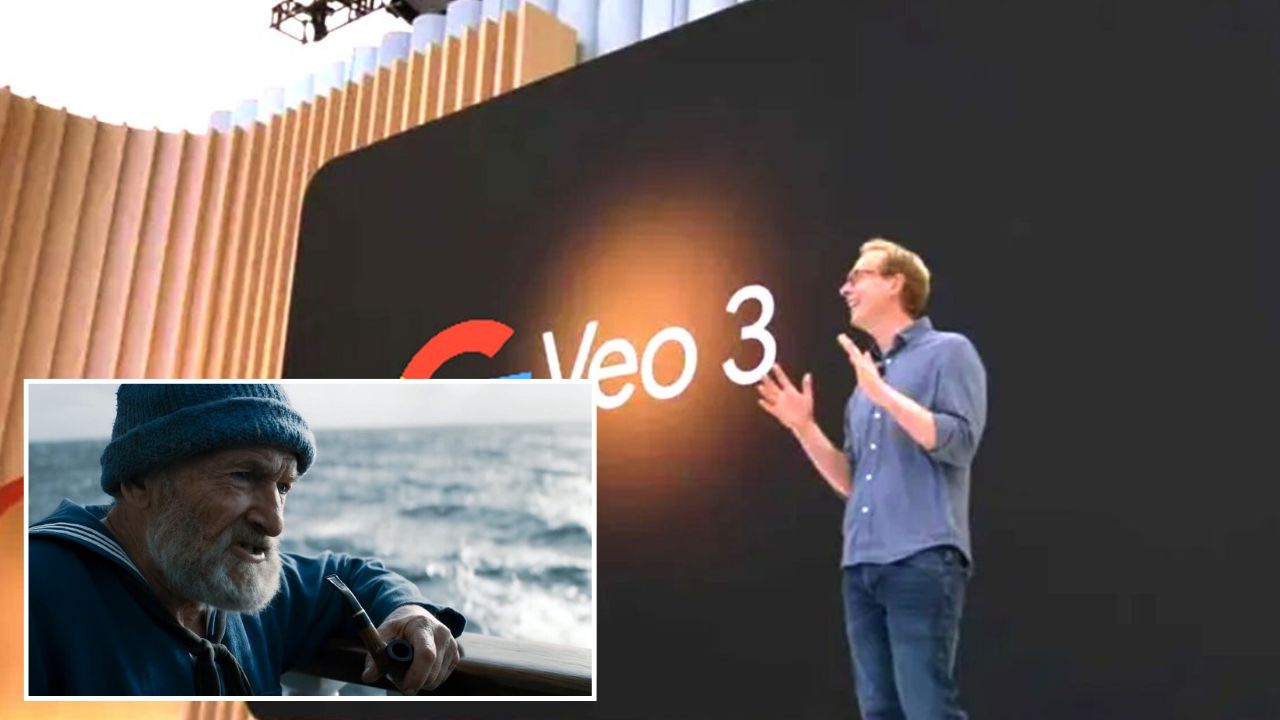
    Google’s latest AI video generator, Veo 3, is making waves in the tech world and across social media platforms.

    Veo 3 doesn’t just create stunning, hyper-realistic visuals; it also includes natural-sounding audio, such as character dialogues and animal sounds, making it a unique breakthrough in AI technology.

    Unlike other platforms like OpenAI’s Sora, which focuses mainly on video generation, Google’s Veo 3 takes things further by merging synchronized audio directly with the visuals, offering a new level of immersion in AI-generated content.

    Users have shared videos showcasing Veo 3’s capabilities, expressing excitement and surprise. AI experts have praised its smooth animations, realistic scenes, and perfect lip-syncing, calling it a revolutionary step in content creation.

    Some users say the video quality even surpasses traditional VFX. One user, after sharing an AI-generated action video on X, commented, “Not just the visuals, the SFX, sound design, music, and even the camera angles are AI-generated. This feels like the future of filmmaking, completely mind-blowing and a bit scary too.”

    Currently, Veo 3 is available to premium users in the US through the Gemini app, but its potential has already started transforming the creative landscape in entertainment, marketing, and media.

    Google Veo 3 feels less like a video generator and more like an entire film studio packed into a single AI tool, offering a glimpse into the future of digital content production.

  • Google integrates Gemini AI model into Chrome browser

    Google integrates Gemini AI model into Chrome browser

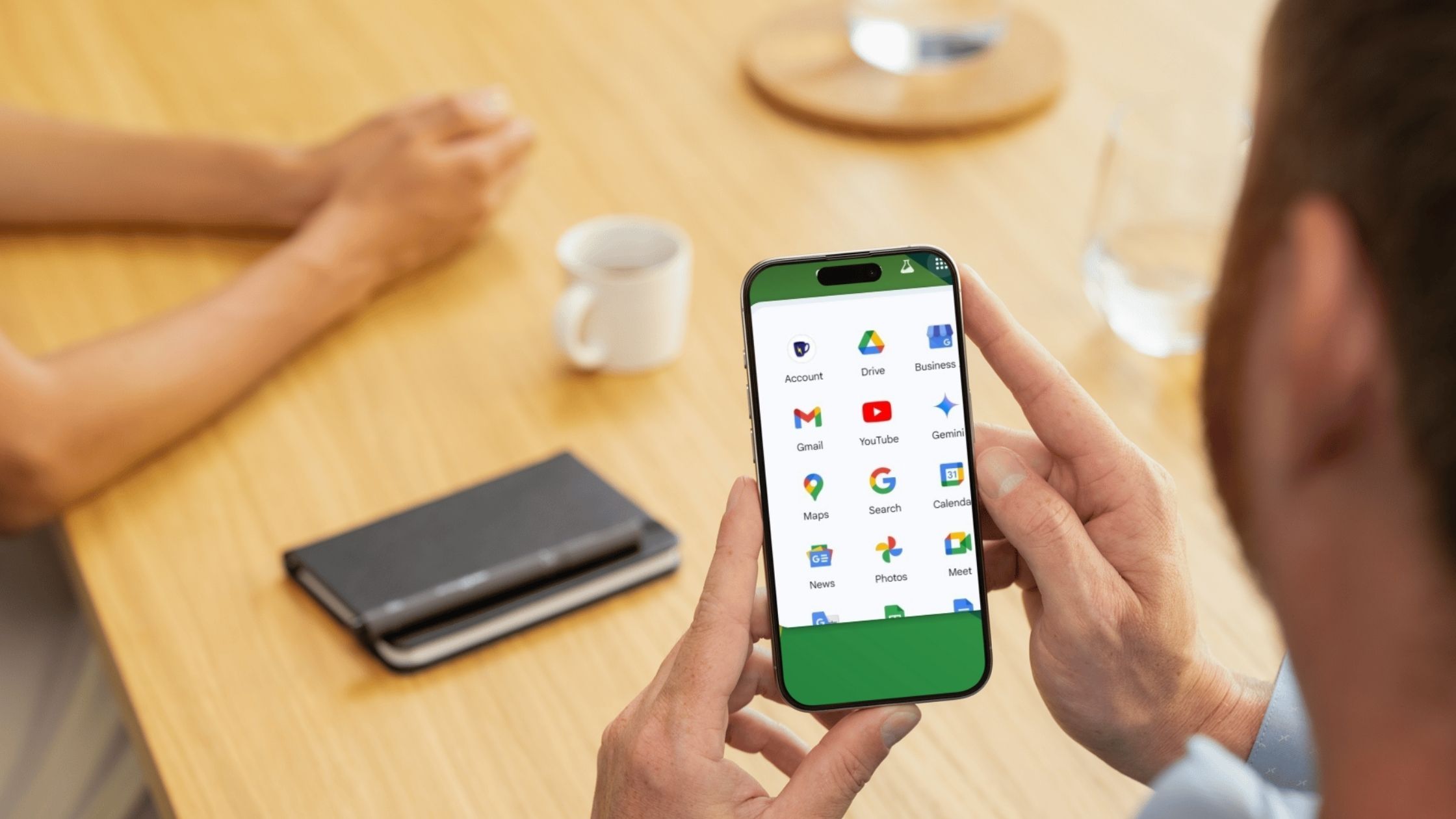
    Google has officially integrated its powerful Gemini artificial intelligence (AI) model into the Chrome web browser, ushering in a new era of smart browsing for users.

    The announcement was made during the company’s annual developer conference, where Google revealed that the latest update will provide users with access to a new AI-powered browsing assistant. This assistant is designed to help users better understand web pages and complete tasks more efficiently.

    A dedicated Gemini icon will now appear in the upper-right corner of the Chrome browser. By clicking this icon, users can instantly start chatting with the AI assistant.

    Initially, the Gemini assistant will allow users to request explanations for complex information found on web pages. It can also generate concise summaries of online content.

    For example, if a webpage featuring a cooking recipe is opened, the user can ask Gemini how to prepare the same dish using a different method. Similarly, it can be used for a wide range of other purposes, enhancing both productivity and convenience.

    This new AI feature is being rolled out first to subscribers of Google AI Pro and Google AI Ultra in the United States.

    Google’s decision to integrate Gemini directly into Chrome appears to be a strategic move to keep users within its own ecosystem, discouraging them from switching to alternatives such as ChatGPT. With the Gemini icon built directly into the browser, users can access AI assistance instantly without leaving their browsing session.

    According to the company, future versions of the Gemini assistant in Chrome will be even more advanced. It will eventually be able to operate across multiple tabs simultaneously and assist users with navigation across various websites.

    With this integration, Google aims to redefine how users interact with the web, making browsing smarter, faster, and more intuitive.

  • X unbanned in Pakistan as India censors Pakistani accounts

    X unbanned in Pakistan as India censors Pakistani accounts

    After more than a year of being blocked, X (previously Twitter) is now accessible once again in Pakistan without a VPN, while India blocks almost all famous Pakistani accounts in the country. The platform started working normally last night, shortly after Indian airstrikes hit several areas across the country in the early hours of Wednesday.

    The recent rise in tensions between India and Pakistan came after missile attacks hit areas like  Bahawalpur, Muzaffarabad, Muridke, Sialkot and Kotli. In response, Pakistan shot down five Indian fighter jets.

    According to the Inter-Services Public Relations (ISPR), the Indian strikes killed 26 people and injured 46 others. The attacks targeted civilian areas and religious places, including mosques, causing heavy losses.

    Pakistan’s National Security Committee (NSC) has now given the country’s military full permission to respond to the Indian strikes. In a statement issued earlier today, the government strongly said, “In consonance with Article 51 of the UN Charter, Pakistan reserves the right to respond, in self-defence, at a time, place, and manner of its choosing to avenge the loss of innocent Pakistani lives and blatant violation of its sovereignty.”

    X was first restricted in February 2024, but for a long time, the government didn’t officially confirm the ban. Most users had to rely on VPNs to access the app. In March 2024, the Pakistan Telecommunication Authority (PTA) admitted in court that the ban was in place following an order from the Federal Investigation Agency (FIA).

    Later, in April 2024, the Ministry of Interior told the Islamabad High Court that X was blocked due to “national security concerns” and misuse of the platform during sensitive national events.

    Now, after more than a year, X is working again, but there is no official announcement from the government yet. Still, users across the country are able to use it without VPNs, and the app is functioning normally.

    Although it’s unclear if the removal of the ban is permanent, for now, Twitter is accessible, and Pakistani users are back online.

  • Here is the latest update on Snapchat outage

    Here is the latest update on Snapchat outage

    Popular multimedia messaging app Snapchat experienced a major global outage on Sunday, May 4. However, the situation had notably improved by Monday morning, with a sharp decline in outage reports.

    According to Downdetector, a platform that monitors online service disruptions, users from several countries, including Pakistan, the UK, and France, reported widespread issues. A majority of affected users (57%) said they were logged out of their accounts, while 24% faced issues sharing content, and 18% had trouble uploading media.

    At the peak of the disruption on Sunday evening, global reports exceeded 900, with significant spikes recorded in Pakistani cities such as Lahore, Karachi, Rawalpindi, and Peshawar. Users from Punjab and Sindh were particularly vocal on social media, expressing frustration over the app’s unavailability.

    By early Monday, Downdetector showed a consistent drop in complaints, suggesting Snapchat had restored services for most users. Outage reports fell significantly after midnight and remained low throughout the morning.

    Despite the widespread nature of the issue, Snapchat has yet to release an official statement explaining the cause of the outage. Tech analysts speculate that the disruption may have stemmed from a server-side error or a glitch related to a recent update.

    Interestingly, some users reported that accessing Snapchat via a Virtual Private Network (VPN) allowed them to use the app normally, prompting questions about whether the issue was region-specific or linked to server access restrictions.

    Previously, Downdetector’s heat map highlighted trouble spots across multiple regions. With the recent decline in reports, the platform now shows service stabilisation in most affected areas.

    In Pakistan, Sunday evening data showed that 53% of users experienced login issues, 28% had problems sharing content, and 19% faced media upload failures. These figures have since dropped, indicating a clear recovery in services.