Category: Tech

  • Meta to start labeling AI-generated content in May

    Meta to start labeling AI-generated content in May

    Facebook and Instagram giant Meta on Friday said it will begin labeling AI-generated media beginning in May, as it tries to reassure users and governments over the risks of deepfakes.

    The social media juggernaut added that it will no longer remove manipulated images and audio that don’t otherwise break its rules, relying instead on labeling and contextualization, so as to not infringe on freedom of speech.

    The changes come as a response to criticism from the tech giant’s oversight board, which independently reviews Meta’s content moderation decisions.

    The board in February requested that Meta urgently overhaul its approach to manipulated media given the huge advances in AI and the ease of manipulating media into highly convincing deepfakes.

    The board’s warning came amid fears of rampant misuse of artificial intelligence-powered applications for disinformation on platforms in a pivotal election year not only in the United States but worldwide.

    Meta’s new “Made with AI” labels will identify content created or altered with AI, including video, audio, and images. Additionally, a more prominent label will be used for content deemed at high risk of misleading the public.

    “We agree that providing transparency and additional context is now the better way to address this content,” Monika Bickert, Meta’s Vice President of Content Policy, said in a blog post.

    “The labels will cover a broader range of content in addition to the manipulated content that the Oversight Board recommended labeling,” she added.

    These new labeling techniques are linked to an agreement made in February among major tech giants and AI players to cooperate on ways to crack down on manipulated content intended to deceive voters.

    Meta, Google and OpenAI had already agreed to use a common watermarking standard that would invisibly tag images generated by their AI applications.

    Identifying AI content “is better than nothing, but there are bound to be holes,” Nicolas Gaudemet, AI Director at Onepoint, told AFP.

    He took the example of some open source software, which doesn’t always use this type of watermarking adopted by AI’s big players.

    Meta said its rollout will occur in two phases with AI-generated content labeling beginning in May 2024, while the removal of manipulated media solely based on the old policy will cease in July.

    According to the new standard, content, even if manipulated with AI, will remain on the platform unless it violates other rules, such as those prohibiting hate speech or voter interference.

    Recent examples of convincing AI deepfakes have only heightened worries about the easily accessible technology.

    The board’s list of requests was part of its review of Meta’s decision to leave a manipulated video of US President Joe Biden online last year.

    The video showed Biden voting with his adult granddaughter, but was manipulated to falsely appear that he inappropriately touched her chest.

    In a separate incident not linked to Meta, a robocall impersonation of Biden pushed out to tens of thousands of voters urged people to not cast ballots in the New Hampshire primary.

    In Pakistan, the party of former prime minister Imran Khan has used AI to generate speeches from their jailed leader.
  • X gives free blue check to big follower accounts

    X gives free blue check to big follower accounts

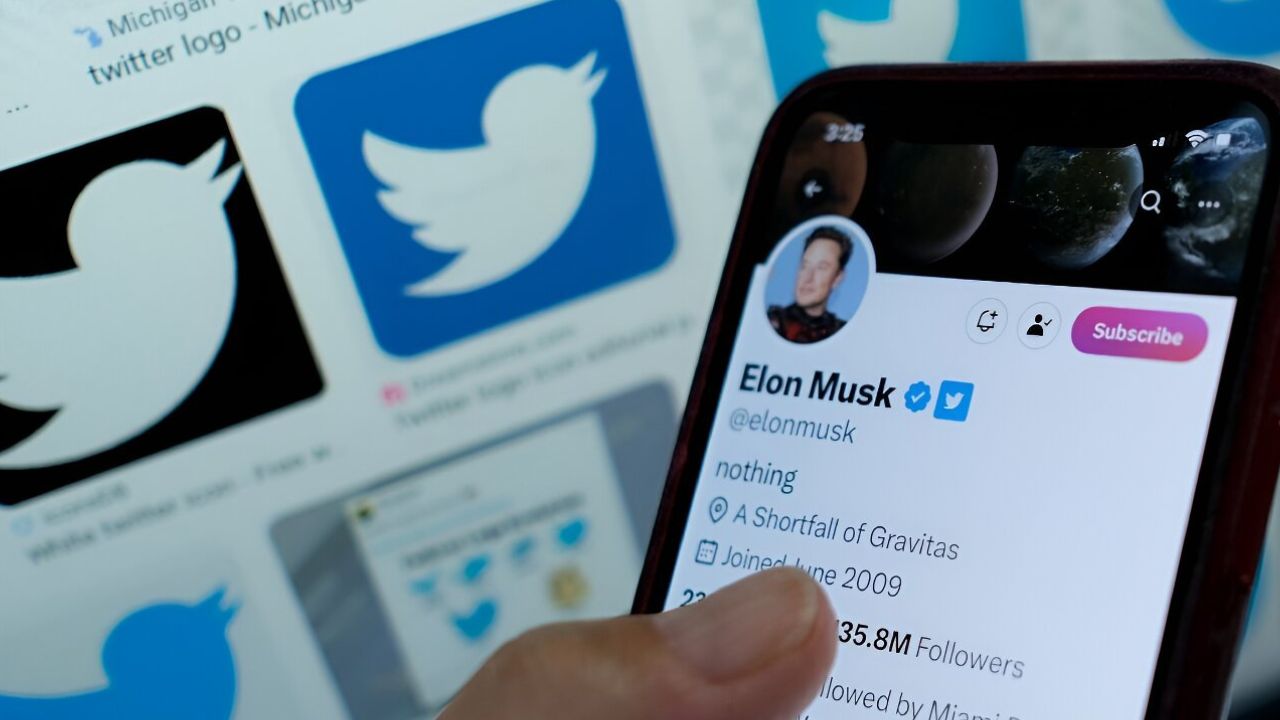
    Users with big followings will receive a free subscription to X, formerly Twitter – and the platform’s famous blue check, the company said in another policy U-turn.

    Before Musk, the blue check mark was used as a verification system for major accounts including celebrities, institutions and journalists.

    But Musk saw the system as unfair to regular users and overhauled the blue checks so that they went only to paying subscribers, which meant thousands of holders were stripped of the feature.

    Late Wednesday, some users were surprised and even angry to find the blue tick reinstated.

    A message from the platform explained that they were given free subscriptions because they were an “influential member” of X.

    The site added that it “reserves the right to cancel the complimentary subscription in its sole discretion.”

    Musk said last week that “going forward, all X accounts with over 2,500 verified subscriber followers will get Premium features for free and accounts with over 5,000 will get Premium+ for free.”

    Premium or Premium+ perks include reduced ads and higher placement in the platform’s feeds, as well as access to Grok, X’s AI chatbot.

    Some users who received the blue check saw it as a bid by Musk to revitalize the struggling platform.

    “Translation: Pay $8? Kidding. Help me. But don’t say anything too free speechy about me or my Garbage Tower of Babel,” actor Jeffrey Wright, who received an unsolicited check, said in a post on X.

    Since Musk bought Twitter for $44 billion in 2022, the platform’s advertising business has collapsed as marketers soured on his leadership and the mass firings at the company that gutted content moderation.

    X on Tuesday named company veteran Kylie McRoberts as the new head of safety in an effort to shore up income from advertising, still the site’s main source of revenue.

    According to most industry-accepted metrics, X has lost users since Musk took ownership, but the company says activity on the site has grown.

  • Samsung Electronics expects 10-fold rise in Q1 profit

    Samsung Electronics expects 10-fold rise in Q1 profit

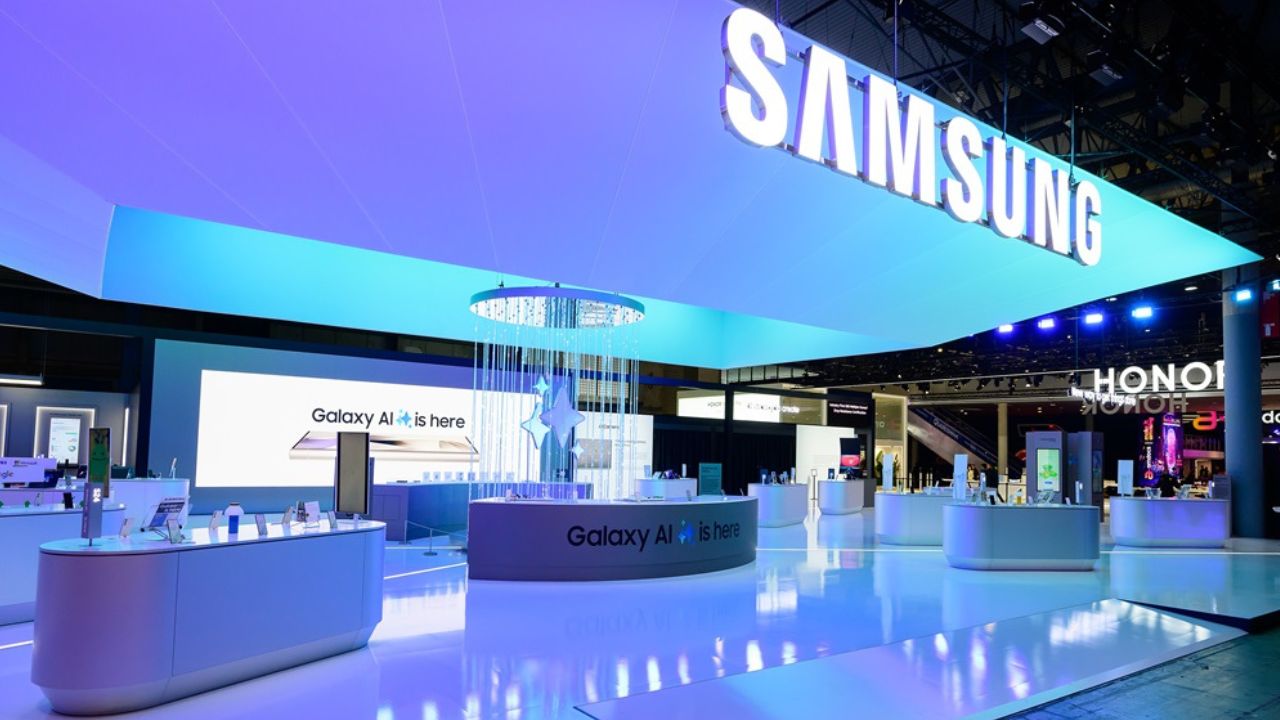
    Samsung Electronics said Friday it expects first-quarter operating profits to rise more than 10-fold year on year as chip prices recover.

    The firm is the flagship subsidiary of South Korean giant Samsung Group, by far the largest of the family-controlled conglomerates that dominate business in Asia’s fourth-largest economy.

    The tech giant said in a regulatory filing that January-March operating profits were expected to rise 931.3 percent to 6.6 trillion won ($4.89 billion). Operating profits in the same period last year totalled around 640 billion won.

    The expectation exceeded the average estimate by 20.5 percent, according to South Korea’s Yonhap news agency, which referenced its financial data firm.

    Sales, meanwhile, are expected to rise 11.4 percent to 71 trillion won, Samsung said.

    South Korean chipmakers, led by Samsung, enjoyed record profits in recent years as prices for their products soared, but a global economic slowdown dealt a blow to memory chip sales.

    However, the semiconductor market had been predicted to recover this year and grow 11.8 percent, according to industry monitor World Semiconductor Trade Statistics.

    The news from Samsung comes after South Korea’s SK Hynix — the world’s second-largest memory chip maker — announced in January that it had returned to profit after four consecutive quarters of losses.

    Samsung’s overall outlook is “fortified by a resurgence in the smartphone market, escalating DRAM (memory chip) prices”,  Neil Shah, vice president of Counterpoint Research, told AFP.

    Samsung is expected to release its final earnings report at the end of this month.

  • Apple explores making personal robots: report

    Apple explores making personal robots: report

    Apple engineers are working on making personal robots, a report said on Wednesday, just weeks after the iPhone-maker abandoned its efforts to develop an electric car.

    The tech titan has people working on a robot that would follow people around at home and be helpful, according to Bloomberg that cited unnamed people familiar with the situation.

    The project was in a nascent stage and it was unclear whether it would lead to a product sold by Apple, the report indicated.

    Apple did not reply to a request for comment.

    The California-based company has been looking for new ways to make money beyond its iPhones and the digital content and services it sells to users.

    Apple recently abandoned its ambitions to produce an electric car, according to US media reports, ending a struggling decade-long project.

    It has never publicly disclosed its EV plans, despite a steady drip of media leaks over the years.

    Apple is reported to have transferred employees from the shuttered car division to generative artificial intelligence projects.

    The robot project is being overseen by Apple’s hardware engineering division and its AI and machine learning group, Bloomberg reported.

    The report came as analysts are keen to hear what progress Apple is making with AI at the company’s annual WWDC developers gathering at its Silicon Valley campus in June.

    Around the world, major tech companies including Google, Microsoft, Meta and Amazon are rapidly pursuing the development and deployment of AI products.

  • Google to delete incognito search data to end privacy suit

    Google to delete incognito search data to end privacy suit

    San Francisco (AFP) – Google has agreed to delete a vast trove of search data to settle a suit that it tracked millions of US users who thought they were browsing the internet privately.

    If a proposed settlement filed Monday in San Francisco federal court is approved by a judge, Google must “delete and/or remediate billions of data records” linked to people using the Chrome browser’s incognito mode, according to court documents.

    “This settlement is an historic step in requiring dominant technology companies to be honest in their representations to users about how the companies collect and employ user data, and to delete and remediate data collected,” lawyer David Boies said in the filing.

    A hearing is slated for July 30 before Judge Yvonne Gonzalez Rogers, who is to decide whether to approve the deal that would let Google avoid a trial in the class-action suit.

    The settlement calls for no cash damages to be paid but leaves an option for Chrome users who feel they were wronged to sue Google separately to get money.

    The suit originally filed in June of 2020 sought at least $5 billion in damages.

    “We are pleased to settle this lawsuit, which we always believed was meritless,” Google spokesman Jorge Castaneda said in a statement.

    “We are happy to delete old technical data that was never associated with an individual and was never used for any form of personalization.”

    The object of the lawsuit was the “Incognito Mode” in the Chrome browser that plaintiffs said gave users a false sense that what they were surfing online was not being tracked by the Silicon Valley tech firm.

    But internal Google emails brought forward in the lawsuit demonstrated that users using incognito mode were being followed by the search and advertising behemoth for measuring web traffic and selling ads.

    The lawsuit, filed in a California court, claimed Google’s practices had infringed on users’ privacy by intentionally deceiving them with the incognito option.

    The original complaint alleged that Google had been given the “power to learn intimate details about individuals’ lives, interests, and internet usage.”

    “Google has made itself an unaccountable trove of information so detailed and expansive that George Orwell could never have dreamed it,” it added.

    The settlement requires Google, for the next five years, to block third-party tracking “cookies” by default in Incognito Mode.

    Third-party cookies are small files which are used to target advertising by tracking web navigation and are placed by visited sites and not by the browser itself.

    No cookies?

    Google earlier this year began limiting third-party cookies for some users of its Chrome browser, a first step towards eventually abandoning the files that have raised privacy concerns.

    Google announced in January 2020 that it would begin eliminating third-party cookies within two years, but the start has been delayed several times amid opposition from web media publishers.

    Cookies have recently been subject to greater regulation, including the European Union’s General Data Protection Regulation introduced in 2016 as well as regulations in California.

  • Here’s why Samsung is not making displays for the new iPhone SE

    Here’s why Samsung is not making displays for the new iPhone SE

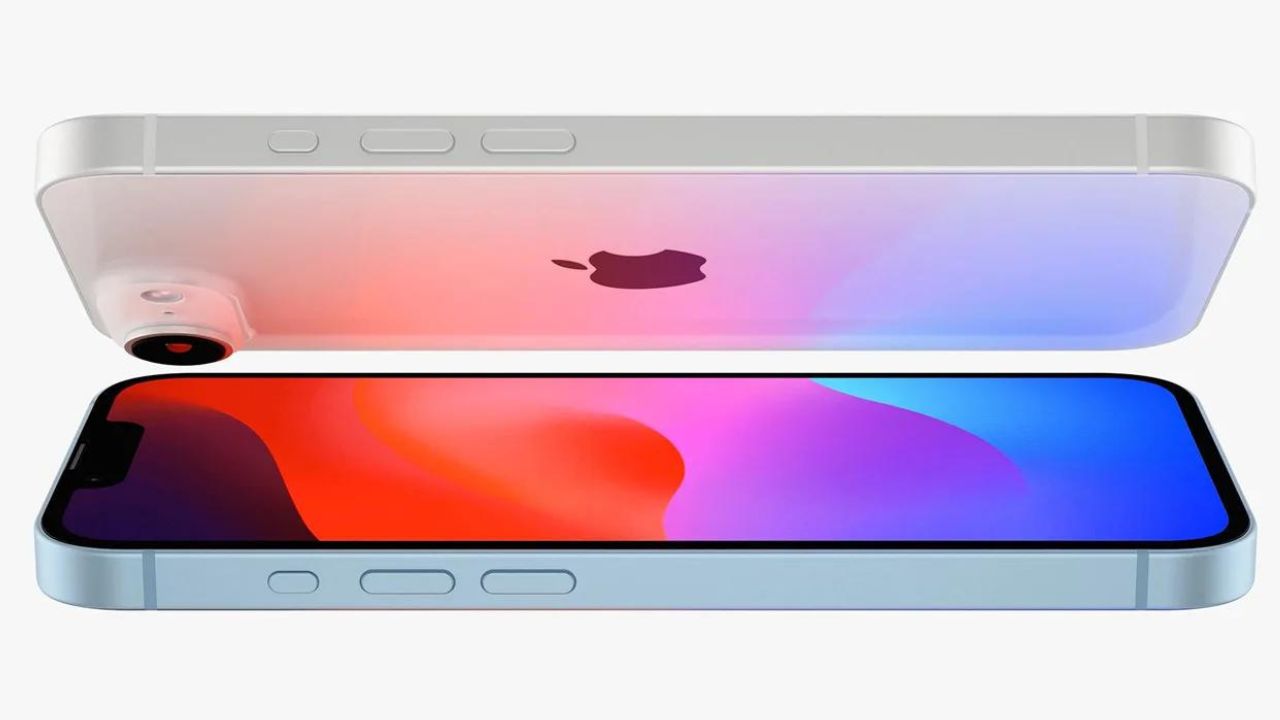
    Apple is currently in the development phase of the iPhone SE (4th generation), with reports indicating that the tech giant intends to utilise the same display technology found in the iPhone 13 for its upcoming model.

    In recent developments, it was revealed last month that three major companies—BOE, Samsung Display, and Tianma—were competing to secure contracts for supplying display panels for the iPhone SE 4.

    Initial bids for the panel prices were submitted, with Samsung Display proposing the lowest price at USD 30 per unit, followed by BOE at USD 35 and Tianma at USD 40. However, Apple remained firm on its budget, not willing to exceed USD 20 per unit.

    Recent reports from IT Home suggest that Samsung Display has opted out of the negotiations due to pricing issues.

    Consequently, Apple has forged a partnership with BOE, the second-largest supplier among the contenders, to procure display panels for the iPhone SE (4th generation) at a rate of USD 25 per unit.

    It’s noteworthy that, despite Samsung Display initially offering the lowest price, it was unable to further reduce its price point.

    On the other hand, BOE, which initially quoted USD 5 higher than Samsung Display, managed to undercut the South Korean company’s proposed price.

    This development marks a significant loss for Samsung Display, as it will not be providing display panels for the iPhone SE 4.

    Speculations arise as to why Samsung Display withdrew from negotiations.

    It is possible that the company recognised the potential for higher profits by focusing on supplying displays for the iPhone 15 series rather than pursuing contracts for the iPhone SE 4, where profit margins would be significantly narrower.

  • Leaks suggest iPhone 16 Pro Max will feature a 6.9-inch display

    Leaks suggest iPhone 16 Pro Max will feature a 6.9-inch display

    New images purportedly showcasing dummy models of the upcoming iPhone 16 and iPhone 16 Pro have surfaced, offering enthusiasts a tantalising glimpse into the potential design evolution.

    Shared initially on the Chinese platform Baolin Video and subsequently disseminated by a Weibo user, these visuals have ignited speculation among tech aficionados.

    Pro models to get bigger

    One notable revelation from the leaked images is the difference in size between the standard and Pro variants. Reports suggest that the iPhone 16 Pro and iPhone 16 Pro Max are poised to expand to 6.3 and 6.9 inches, respectively. In contrast, the iPhone 16 and iPhone 16 Plus are anticipated to maintain the familiar 6.1 and 6.7-inch dimensions reminiscent of recent iPhone iterations.

    Redesigned aesthetics

    While the dimensions of the standard iPhone 16 models remain consistent, discernible alterations adorn their backs and sides. Notably, the dummy models feature a redesigned camera block, housing vertically aligned lenses. This adjustment is believed to accommodate spatial video recording capabilities, a feature currently exclusive to the iPhone 15 Pro and iPhone 15 Pro Max.

    Innovative button configuration

    The leaked images also shed light on an intriguing departure from convention: the replacement of the traditional mute slider with an action button on the left edge of the iPhone 16 dummy. This transition mirrors the existing configuration found solely on the iPhone 15 Pro models. Moreover, speculation abounds regarding the elongated nature of the Action button, a potential ergonomic enhancement over its predecessor.

    Introducing the capture button

    A noteworthy addition visible on both dummy models is the introduction of a capture button—a dedicated key located beneath the power button, speculated to function as a camera shutter button. Unlike conventional physical buttons protruding from the device’s frame, the capture button is purportedly an inductive or capacitive mechanism seamlessly integrated into the side rail.

    Anticipated revelations and continued speculation

    As the tech community eagerly awaits the official unveiling, these leaks offer but a glimpse into the myriad innovations anticipated with Apple’s next-generation iPhones. With the expected launch window in early September looming on the horizon, enthusiasts can anticipate a deluge of further revelations.

    Among the speculated enhancements are a more robust chipset tailored to support cutting-edge generative AI functionalities and the integration of 48MP ultrawide cameras for the Pro variants.

  • AirCar technology purchased by Chinese company for exclusive use

    AirCar technology purchased by Chinese company for exclusive use

    A Chinese firm has acquired the technology behind a flying car, originally developed and tested in Europe. This AirCar, powered by a BMW engine and conventional fuel, completed a 35-minute flight between two Slovakian airports in 2021, utilising standard runways for take-off and landing. Its transformation from car to aircraft took just over two minutes.

    The Hebei Jianxin Flying Car Technology Company, based in Cangzhou, has obtained exclusive rights to manufacture and operate AirCar aircraft within a designated region in China. The company, after acquiring technology from a Slovak aircraft manufacturer, has established its own airport and flight school.

    China, known for spearheading the electric vehicle revolution, is now actively pursuing aerial transport solutions. Recently, Autoflight conducted a successful test flight of a passenger-carrying drone, drastically reducing travel time between Shenzhen and Zhuhai. Meanwhile, eHang, another Chinese firm, received safety certification for its electric flying taxi in 2023, with the UK government anticipating regular flying taxi operations by 2028.

    Unlike vertical take-off and landing drones, AirCar operates on traditional runways, presenting challenges in infrastructure, regulation, and public acceptance. While the sale details remain undisclosed, AirCar received airworthiness certification in 2022 and gained attention through a video by YouTuber Mr. Beast.

    Despite the excitement surrounding prototypes like AirCar, practical implementation may involve mundane aspects such as queues and security checks, according to experts. However, similar concerns once surrounded electric cars, which China has since dominated in the global market. The sale of AirCar raises speculation about China’s potential influence in the flying car industry.

  • Meta’s ban on word ‘shaheed’ restricts free expression: Oversight Board

    Meta’s ban on word ‘shaheed’ restricts free expression: Oversight Board

    Meta’s independent Oversight Board urged the company to revise its broad ban on the Arabic word “shaheed,” which translates to “martyr” in English.

    After a year-long review, the board found Meta’s current policy to be overly restrictive, silencing millions of users.

    The board, funded by Meta but operating autonomously, recommends keeping “shaheed” posts only if they directly promote violence or violate existing Meta content guidelines.

    This decision follows mounting criticism, particularly regarding Meta’s handling of content related to the Middle East.

    A 2021 study commissioned by Meta itself revealed a negative impact on the free expression rights of Palestinians and Arabic users.

    Criticism further intensified during the 2021 Israel-Hamas conflict, with accusations of content censorship on Facebook and Instagram.

    The oversight board’s report highlights Meta’s failure to consider the various meanings of “shaheed,” leading to the removal of harmless content.

    Co-chair Helle Thorning-Schmidt argues that Meta’s heavy reliance on censorship might unintentionally marginalise entire communities without effectively improving safety.

    Currently, Meta removes any post containing “shaheed” if it mentions someone on their “dangerous organisations” list. This includes Islamist groups, drug cartels, white supremacist organisations, and Hamas.

    Meta sought the board’s guidance after failing to reach an internal consensus on revising the policy in 2020. The board noted that “shaheed” was the most frequently removed term across Meta platforms.

    A Meta spokesperson confirmed they would review the recommendations and respond within 60 days.

  • Want to ‘think’ of a tweet and have it posted via your thoughts? It’s happening

    Want to ‘think’ of a tweet and have it posted via your thoughts? It’s happening

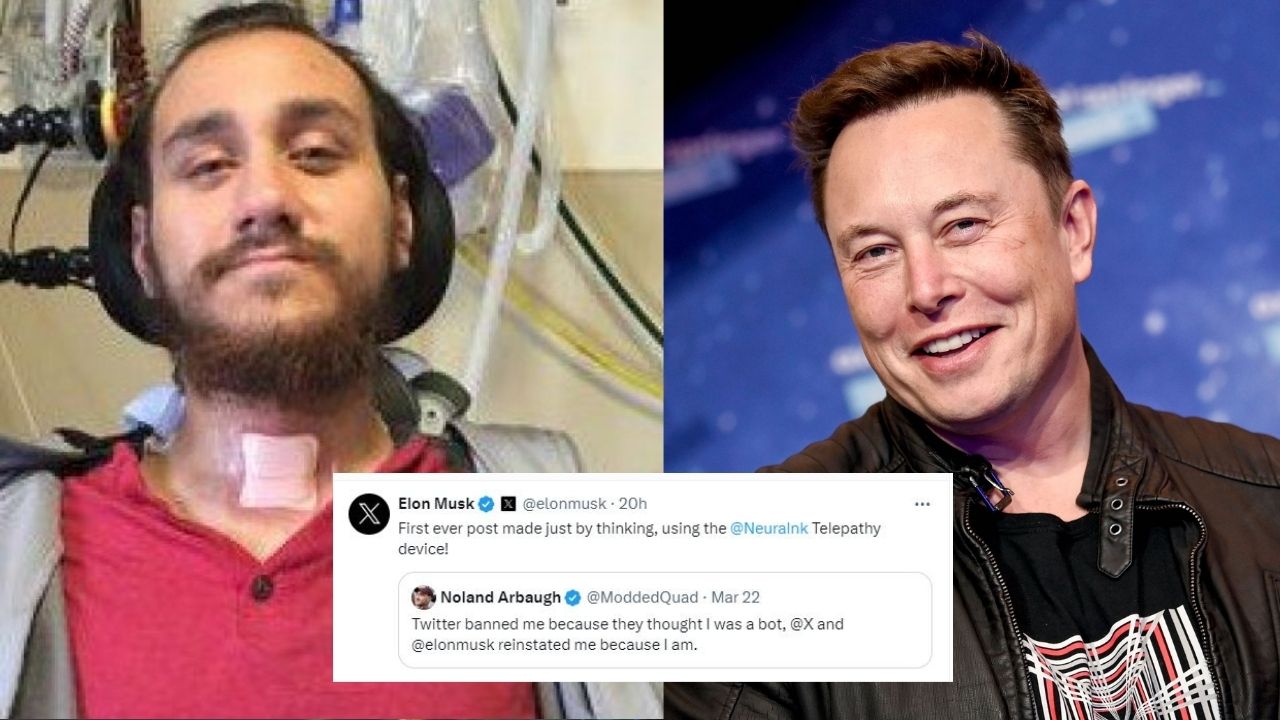
    Elon Musk has announced that the first-ever Neuralink patient Noland Arbaugh has shared a post on social media using a telepathic device. Musk reposted the patient’s tweet on X.

    Noland Arbaugh wrote on ‘X’, “Twitter banned me because they thought I was a bot, @X and @elonmusk reinstated me because I am.”

    Elon Musk also shared Arbaugh’s tweet stating, “First ever post made just by thinking, using the Neuralink Telepathy device!”

    Noland Arbaugh is a man who can’t move his body from the shoulders down because of paralysis. He plays chess on a computer using only his thoughts and now posts on social media the same way. He thinks of what to say, and it appears online. He said using Neuralink feels like having “the force” from Star Wars, where people can communicate telepathically.