Category: Tech

  • Booming demand for Samsung Galaxy S24 leads to shortage in Pakistan

    Booming demand for Samsung Galaxy S24 leads to shortage in Pakistan

    Samsung Electronics Co. is experiencing a shortage of its Galaxy S24 smartphones in Pakistan due to overwhelming demand for the flagship device, according to Bloomberg.

    Since the device’s launch earlier this year, demand has surged, leading to limited availability across the country.

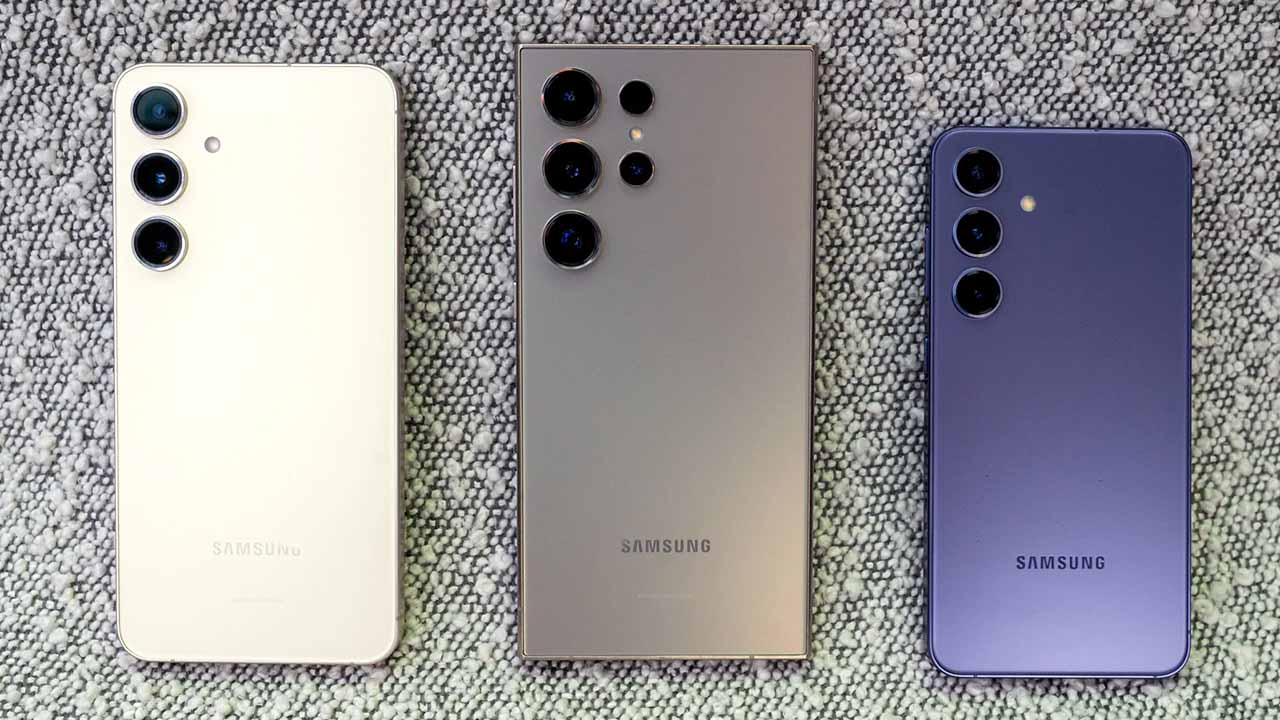
    The Galaxy S24 series, which is assembled in Pakistan, has garnered considerable interest, particularly for its premium models like the Galaxy S24 Ultra.

    This surge in demand suggests a growing market for high-end smartphones among Pakistan’s more affluent consumers.

    With 192 million mobile phone users, Pakistan is the world’s fifth-most populous nation, representing a significant market for smartphone manufacturers.

    Samsung Electronics acknowledged the shortage in an email statement, stating that the company is working to meet customer demand and expects sales to resume shortly.

    The Pakistani government has introduced financial incentives that have transformed the country’s smartphone industry.

    In 2017, Pakistan primarily imported smartphones, but the majority of handsets are now assembled domestically. This shift has contributed to a growing mobile phone manufacturing sector.

    According to the Pakistan Telecommunication Authority, mobile companies in Pakistan produced about 21 million units last year, with local and Chinese brands such as VGOTEL, Infinix, and Itel leading production. An additional 1.7 million units were imported.

    Despite the shortage, the Galaxy S24 models are crucial for Samsung’s position in the global smartphone market.

    The company lost its top ranking to Apple Inc. last year, marking the first time since 2010 that Samsung was not the world’s leading smartphone maker, according to industry tracker IDC.
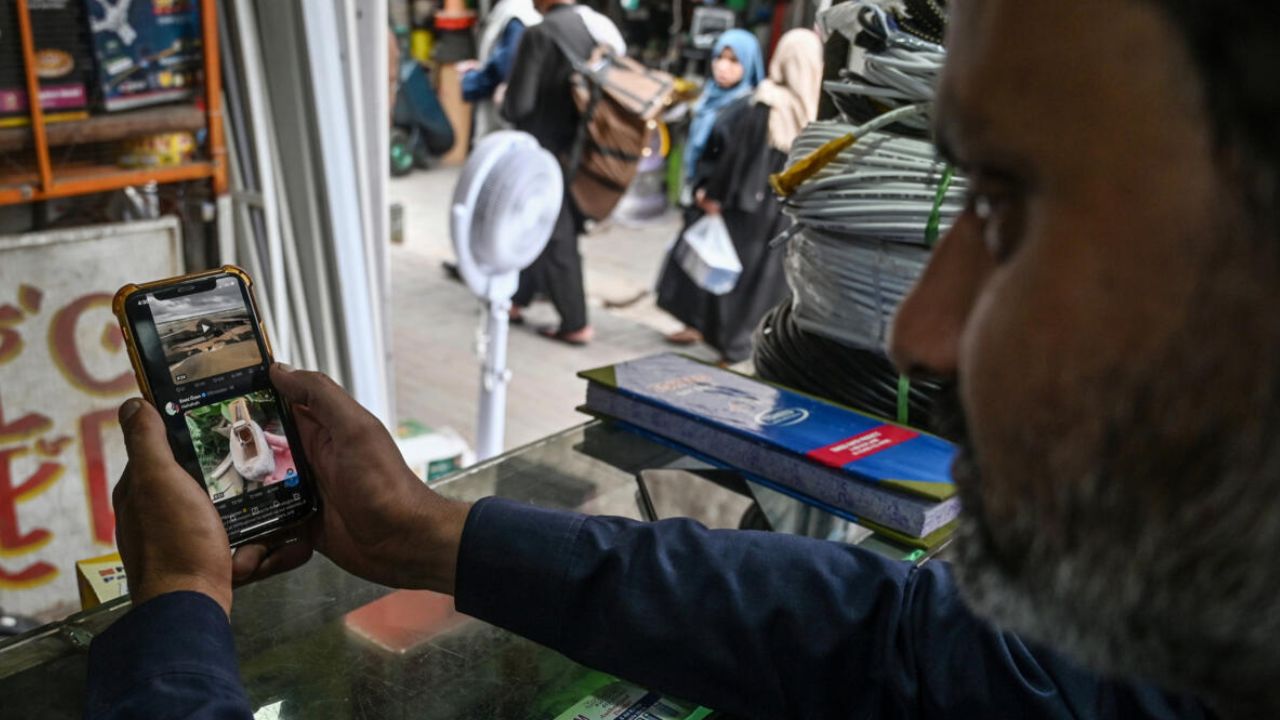
  • Apple drops WhatsApp, Threads from China app store on official order: report

    Apple drops WhatsApp, Threads from China app store on official order: report

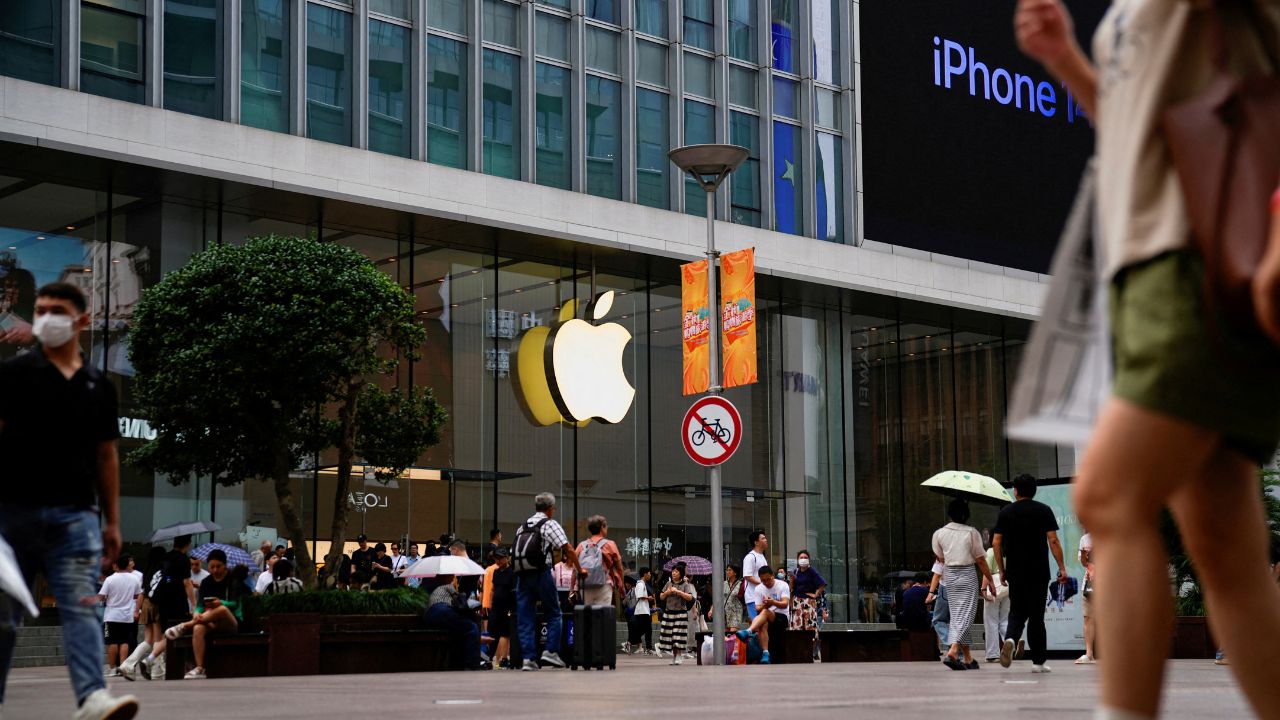
    Beijing (AFP) – Apple has removed the Meta-owned WhatsApp and Threads from its App Store in China following an order from the country’s top internet regulator, Bloomberg reported Friday citing the tech giant.

    Beijing engages in some of the world’s most extensive internet censorship, with web users in mainland China unable to access everything from Google to many foreign apps without using a virtual private network.

    “We are obligated to follow the laws in the countries where we operate, even when we disagree,” said Apple in a statement, according to Bloomberg.

    “The Cyberspace Administration of China (CAC) ordered the removal of these apps from the China storefront based on their national security concerns,” said Apple, referring to China’s internet regulator.

    “These apps remain available for download on all other storefronts where they appear.”

    A Meta spokesperson referred AFP to Apple, which did not immediately respond to a request for comment.

    The CAC and the Ministry of Industry and Information Technology — another top Chinese internet regulatory body — also did not immediately respond.

    China is a key market for Apple, which last year topped the country’s smartphone market for the first time.

    But thorny issues of censorship and national security have long hounded the US-based firm’s operations in China as Beijing and Washington engage in a fierce battle for technological supremacy.

    In January, China said it had cracked Apple’s encrypted AirDrop communication service, which had once given protesters a vital channel for sharing information during the major 2019 pro-democracy protests in Hong Kong.

    State-backed experts said in January that they had devised a way to reveal an iPhone’s encrypted device log, allowing them to then identify an AirDrop user’s phone number and email accounts.

    Many online platforms that are popular in much of the world — including Google, Facebook, X, WhatsApp and TikTok — are blocked in mainland China.

    But savvy iPhone users in China have still been able to download banned platforms through Apple’s app store, then use a VPN to get around the restrictions.

    Removing WhatsApp and Threads from the Chinese app store will greatly complicate the ability of new iPhone users to access the apps.

    The latest development comes a day before a scheduled vote in the US House of Representatives to force the wildly popular video app TikTok to sever all links with its Chinese parent ByteDance.

    US officials have raised concerns in recent years over potential national security and privacy threats posed by TikTok, despite repeated assurances by the firm that it presents no risks to the American public.

    Beijing has frequently lashed out against US restrictions on Chinese tech, claiming they are a pretext to contain the country’s economic rise.

  • X working with Pakistan govt to ‘understand concerns’ over ban

    X working with Pakistan govt to ‘understand concerns’ over ban

    Islamabad, Pakistan – Social media platform X said Thursday it would work with Pakistan’s government “to understand its concerns” after authorities insisted an ongoing two-month ban was based on security grounds.

    The platform, formerly known as Twitter, has been rarely accessible since February 17, when jailed former prime minister Imran Khan’s party called for protests following a government official’s admission of vote manipulation in the February election.

    “We continue to work with the Pakistani Government to understand their concerns,” X’s Global Government Affairs team posted, in their first comments since the site was disrupted.

    The Interior Ministry on Wednesday said X was blocked on security grounds, according to a report submitted to the Islamabad High Court where one of several challenges to the ban is being heard.

    On the same day, the Sindh High Court ordered the government to restore access to social media platform X within a week.

    “The Sindh High Court has given the government one week to withdraw the letter, failing which, on the next date, they will pass appropriate orders,” Moiz Jaaferi, a lawyer challenging the ban, told AFP.

    The court’s full decision is expected to be published this week.

    Both the government and the Pakistan Telecommunication Authority (PTA) had for weeks refused to comment on the outages.

    “It is the sole prerogative and domain of the federal government to decide what falls within the preview of terms of ‘defence’ or ‘security’ of Pakistan and what steps are necessary to be taken to safeguard National Security,” said the interior ministry’s report, submitted by senior official Khurram Agha.

    The interior ministry suggested intelligence agencies were behind the order.

    The closure of a social media service “when there is request from any security or intelligence agency” is “well within the scope of provisions of the PTA act”, the report said.

    Digital rights activists, however, said it was designed to quash dissent after February 8 polls that were fraught with claims of rigging.

    Access to X has been sporadic, occasionally available for short cycles based on the internet service provider, forcing users to use virtual private networks.

    Mobile services were cut across Pakistan on election day, with the interior ministry also citing security reasons.

    It was followed by a long delay in issuing voting results, giving rise to allegations of tampering.

    Khan’s opposition party had already faced heavy censorship in the weeks before the election, banned from television channels and from holding rallies, forcing its campaign online.

    Despite the crackdown, his party won the most seats but was kept from power by a coalition of rival parties that had the backing of the military.

    stm-ecl/jts/ssy

    © Agence France-Presse

  • Meta shouldn’t force users to pay for data protection: EU watchdog

    Meta shouldn’t force users to pay for data protection: EU watchdog

    Brussels, Belgium – Facebook owner Meta and other online platforms must not force users to pay for the right to data protection enshrined in EU law when offering ad-free subscriptions, the European data regulator said Wednesday.

    “Online platforms should give users a real choice when employing ‘consent or pay’ models,” the European Data Protection Board (EDPB) chair Anu Talus said in a statement.

    “The models we have today usually require individuals to either give away all their data or to pay,” she said. “As a result, most users consent to the processing in order to use a service, and they do not understand the full implications of their choices.”

    Meta in November launched a “pay or consent” system allowing users to withhold use of their data for ad targeting in exchange for a monthly fee — a model that has faced several challenges from privacy and consumer advocates.

    Meta has long profited from selling user data to advertisers but this business model has led to multiple battles with EU regulators over data privacy.

    The latest announcement came after the data protection authorities of The Netherlands, Norway and the German state of Hamburg went to the EDPB for an opinion regarding the pay-or-consent model used by Meta.

    The Silicon Valley company allows users of Instagram and Facebook in Europe to pay between 10 and 13 euros (around $11 and $14) a month to opt out of data sharing.

    Meta pointed to an EU court ruling last year that it said opened the way for subscriptions as a “legally valid” option. “Today’s EDPB opinion does not alter that judgment and subscription for no ads complies with EU laws,” a Meta spokesperson said.

    Meta is waiting for a decision on its model by the data privacy regulator in Ireland where the company is headquartered.

    ‘Binary choice’

    All digital platforms must comply with the European Union’s mammoth general data protection regulation (GDPR), which has been at the root of EU court cases against Meta.

    The EDPB in its opinion argued that Meta’s model was at odds with the GDPR’s requirement that consent for data use must be freely given.

    “In most cases, it will not be possible for large online platforms to comply with the requirements for valid consent if they confront users only with a binary choice between consenting to processing of personal data for behavioural advertising purposes and paying a fee,” the opinion read.

    The EDPB also warned the type of subscription service put forward by Meta “should not be the default way forward” for platforms.

    It suggested that platforms should consider an alternative that would give users the right to reject being tracked for advertising purposes without the need to pay.

    Privacy defenders welcomed the opinion.

    “Overall, Meta is out of options in the EU. It must now give users a genuine yes/no option for personalised advertising,” said prominent online privacy activist Max Schrems.

    “We know that ‘Pay or Okay’ shifts consent rates from about three percent to more than 99 percent — so it is as far from ‘freely given’ consent as North Korea is from a democracy,” said Schrems.

    Tech lobby group CCIA however warned the EDPB risked “opening a Pandora’s Box”.

    “Forcing businesses to offer services at a loss is unprecedented and sends the wrong signals,” said CCIA Europe’s senior policy manager, Claudia Canelles Quaroni.

    “All companies should be able to offer paid-for versions of their services.”

    raz/gv

    © Agence France-Presse

  • Largest black hole discovered in Milky Way

    Largest black hole discovered in Milky Way

    PARIS: Astronomers identified the largest stellar black hole yet discovered in the Milky Way, with a mass 33 times that of the Sun, according to a study published on Tuesday.

    The black hole, named Gaia BH3, was discovered “by chance” from data collected by the European Space Agency’s Gaia mission, said an astronomer from the National Centre for Scientific Research (CNRS) at the Observatoire de Paris, Pasquale Panuzzo.

    Gaia, which is dedicated to mapping the Milky Way galaxy, located BH3 2,000 light years away from Earth in the Aquila constellation.

    As Gaia’s telescope can give a precise position of stars in the sky, astronomers were able to characterise their orbits and measure the mass of the star’s invisible companion — 33 times that of the Sun.

    Further observations from on-the-ground telescopes confirmed that it was a black hole with a mass far greater than the stellar black holes already in the Milky Way.

    “No one was expecting to find a high-mass black hole lurking nearby, undetected so far. This is the kind of discovery you make once in your research life,” Panuzzo said in a press release.

    The stellar black hole was discovered when scientists spotted a “wobbling” motion on the companion star that was orbiting it.

    Stellar black holes are created from the collapse of massive stars at the end of their lives and are smaller than supermassive black holes whose creation is still unknown.

    Such giants have already been detected in distant galaxies via gravitational waves. But “never in ours”, said Panuzzo.

    BH3 is a “dormant” black hole and is too far away from its companion star to strip it of its matter and therefore emits no X-rays — making it difficult to detect.

    Gaia’s telescope identified the first two inactive black holes (Gaia BH1 and Gaia BH2) in the Milky Way.

    Gaia has been operating 1.5 million kilometres from Earth for the past 10 years and in 2022 delivered a 3D map of the positions and motions of more than 1.8 billion stars.

  • Samsung returns to top of the smartphone market: industry tracker

    Samsung returns to top of the smartphone market: industry tracker

    San Francisco (AFP) – Samsung regained its position as the top smartphone seller, wresting back the lead from Apple as Chinese rivals close the gap on both market leaders, industry tracker International Data Corporation (IDC) reported Monday.

    South Korea-based Samsung overtook Apple as worldwide smartphone shipments grew nearly 8 percent in the first quarter of this year to 289.4 million, IDC said, citing its preliminary data.

    It was the third consecutive quarter of growth in the global smartphone market, signalling that a recovery from a slump in the sector is underway, according to IDC.

    IDC Worldwide Mobility and Consumer Device Trackers team vice president Ryan Reith expected top smartphone companies to gain share and small brands to struggle for position as recovery progresses.

    Samsung shipped 60.1 million smartphones in the first quarter of this year, claiming nearly 21 percent of the market, according to IDC figures.

    Apple shipped 50.1 million iPhones, garnering just over 17 percent of the market in the same period, IDC reported.

    Apple smartphone shipments were down 9.6 percent in a quarter-over-quarter comparison, while Samsung shipments slipped less than one percent, according to the market tracker.

    Meanwhile, China-based Xiaomi saw shipments grow about 33 percent to 40.8 million and Transsion about 85 percent to 28.5 million, taking third and fourth positions in the overall smartphone market, IDC reported.

    “While Apple managed to capture the top spot at the end of 2023, Samsung successfully reasserted itself as the leading smartphone provider in the first quarter,” Reith said.

    IDC expects Samsung and Apple to maintain their hold on the high end of the smartphone market while Chinese competitors seek to expand sales, according to Reith.

    Nabila Popal, research director with IDC’s Worldwide Tracker team, said: “There is a shift in power among the Top 5 companies, which will likely continue as market players adjust their strategies in a post-recovery world.

    “Xiaomi is coming back strong from the large declines experienced over the past two years and Transsion is becoming a stable presence in the Top 5 with aggressive growth in international markets.”

  • Samsung overtakes Apple in sales as iPhone shipments drops

    Samsung overtakes Apple in sales as iPhone shipments drops

    The first quarter of 2024 saw Apple’s smartphone shipments decreased by about 10 percent, data from research firm IDC (International Data Corporation) has revealed. The drop was caused by increased competition from Android smartphone makers who are trying to become the top-selling brand.

    The iPhone-maker’s sales dropped significantly after a strong performance in the December quarter when it became the world’s No.1 phone maker, surpassing Samsung. Now, it’s back in the second spot with a 17.3 percent market share, as Chinese brands like Huawei record gains.

    Xiaomi, a popular smartphone brand from China, held the third position with a market share of 14.1 percent in the first quarter.

    Meanwhile, Samsung, the leading smartphone company from South Korea, shipped over 60 million phones during the same period, boosted by the launch of its latest flagship smartphone lineup, the Galaxy S24 series, earlier in the year.

    Data provider Counterpoint previously reported that global sales of Galaxy S24 smartphones increased by 8 percent compared to last year’s Galaxy S23 series during the first three weeks of availability.

    In the first quarter, IDC stated that Apple shipped 50.1 million iPhones, a decrease from the 55.4 million units it shipped during the same period last year.

    Apple’s smartphone sales in China dropped by 2.1 percent in the last quarter of 2023 compared to the previous year.

  • OpenAI comes to Asia with new office in Tokyo

    OpenAI comes to Asia with new office in Tokyo

    Tokyo (AFP) – ChatGPT creator OpenAI opened a new office in Tokyo on Monday, the first Asian outpost for the groundbreaking tech company as it aims to ramp up its global expansion.

    Thanks to the stratospheric success of its generative tools that can create text, images and even video, OpenAI has become a leader in the artificial intelligence revolution and one of the most significant tech companies in the world.

    The Japan office is the latest part of the Microsoft-backed firm’s international push, having already set up bases in London and Dublin.

    “We’re excited to be in Japan which has a rich history of people and technology coming together to do more,” OpenAI CEO Sam Altman said in a statement.

    “We believe AI will accelerate work by empowering people to be more creative and productive, while also delivering broad value to current and new industries that have yet to be imagined.”

    OpenAI said its Japan office would bring it closer to enterprise clients — including global auto leader Toyota, tech conglomerate Rakuten and industrial giant Daikin — that are using its products “to automate complex business processes”.

    “We chose Tokyo as our first Asian office for its global leadership in technology, culture of service, and a community that embraces innovation,” the company added.

    OpenAI also announced a new Japanese-language version of ChatGPT on Monday, and hailed the country as a “key global voice on AI policy”, offering potential solutions to issues such as labour shortages.

    The company said its Japan office would also help “accelerate the efforts of local governments, such as Yokosuka City” in their drive to improve the efficiency of public services.

    The Tokyo ‘buzz’

    The San Francisco-based firm has been reportedly in discussions with hundreds of companies as it looks to expand revenue sources.

    OpenAI’s chief operating officer Brad Lightcap told Bloomberg in an interview published this month that the firm has seen huge demand for its corporate version of ChatGPT.

    “We have a very global base of demand,” he said in the interview.

    “So we want to show up where our customers are. We feel a lot of pull from places like Japan and Asia broadly.”

    OpenAI, reportedly valued at $80 billion or more earlier this year, is the latest major tech firm to invest in Japan.

    Microsoft, one of OpenAI’s biggest investors, last week announced a separate $2.9 billion investment to provide Japan with the powerful graphics processing units crucial for running AI apps, and to train three million Japanese workers in AI skills.

    Amazon Web Services is spending $14 billion to expand its cloud infrastructure in Japan, while Google has launched a regional cybersecurity hub in the country.

    Experts say geopolitical tensions have made Japan an increasingly attractive partner for tech firms compared to China, in addition to advantages such as supportive policies and a highly educated talent pool.

    “What happens in Tokyo can create a buzz,” Hideaki Yokota, vice president of the MM Research Institute, told AFP.

    “A base in Tokyo should help (OpenAI) attract much young talent.”

  • Apple set to unveil new iPad Pro, iPad Air models in May

    Apple set to unveil new iPad Pro, iPad Air models in May

    Apple is preparing for a significant launch event, as reported by Mark Gurman in Bloomberg’s Power On newsletter. The tech giant is set to unveil its latest offerings, the new iPad Pro and iPad Air, during the week of May 6.

    The anticipated launch will introduce new models, including 11-inch and 13-inch OLED iPad Pro versions, alongside a larger 12.9-inch iPad Air. Additionally, consumers can expect refreshed Magic Keyboard and Apple Pencil accessories to accompany these devices.

    This announcement marks a notable event for Apple, as it’s been nearly eighteen months since the release of any new iPad hardware. The upcoming iPad Pros are expected to boast enhanced displays, transitioning from mini-LED to OLED panels similar to those found in iPhones.

    This upgrade promises deeper contrast and increased brightness. Alongside display improvements, there’s anticipation for a sleeker design, with a thinner chassis and a repositioned front camera to the landscape edge. These new models will be powered by the advanced M3 chip.

    However, consumers may need to prepare for potential price hikes, as hinted by Gurman’s newsletter. Currently, the 11-inch iPad Pro starts at $799, while the 12.9-inch model begins at $1099.

    For those seeking a more budget-friendly option, the new 12.9-inch iPad Air aims to deliver a larger screen size without breaking the bank. Details regarding its processor, whether M2 or M3, remain unclear at this stage.

    Excitingly, the new accessories are expected to enhance the user experience further. Rumors suggest that the new Apple Pencil might include a new squeeze gesture feature, while the Magic Keyboard for iPad Pro is set to mimic a laptop with its aluminum base and larger trackpad.

    Although updates for the base model iPad and iPad mini are scheduled for later in the year, Gurman anticipates only minor improvements, primarily a processor upgrade for the iPad mini.

  • Tesla cancels affordable electric car, shifts focus to Robotaxis

    Tesla cancels affordable electric car, shifts focus to Robotaxis

    Tesla has made a significant shift in its strategy, announcing the cancellation of its long-awaited affordable electric car, a move that has left investors and consumers stunned.

    The decision, revealed by three reliable sources familiar with the matter and corroborated by company messages obtained by Reuters, marks a departure from Tesla’s earlier mission of bringing affordable electric vehicles to the masses.

    The automaker, instead, will pivot its resources towards the development of self-driving robotaxis, utilizing the same small-vehicle platform, according to insiders. This strategic redirection signifies a significant deviation from Tesla CEO Elon Musk’s previous commitments and vision outlined in the company’s initial “master plan” in 2006.

    Musk, who has often emphasized the goal of making electric cars accessible to a broader audience, had initially promised investors and consumers an affordable vehicle following the success of luxury models. However, despite repeated assurances from Musk, including as recent as January, wherein he outlined plans for production at Tesla’s Texas factory by the second half of 2025, those aspirations have been dashed.

    Tesla’s cheapest model currently available, the Model 3 sedan, comes with a price tag of approximately $39,000 in the United States. The now-scrapped entry-level vehicle, often referred to as the Model 2, was anticipated to be priced around $25,000.

    In response to inquiries, Tesla remained silent, offering no official comment on the matter. However, Musk took to social media platform X to dispute the Reuters report, without specifying any inaccuracies, leading to a momentary fluctuation in Tesla’s stock prices.

    Following Musk’s online intervention, where he hinted at an upcoming Tesla Robotaxi unveiling, the company’s shares experienced a rebound in after-hours trading. This abrupt change in direction comes amidst mounting competition in the global electric vehicle market, particularly from Chinese manufacturers offering vehicles at significantly lower price points.

    The decision to prioritize the development of self-driving robotaxis, though potentially lucrative, poses considerable engineering challenges and regulatory hurdles, as highlighted by industry experts.

    Leaks reveal that the decision to scrap the Model 2 was communicated to employees in a meeting held in late February, further underscoring Tesla’s strategic pivot in the face of evolving market dynamics.