Category: Tech

  • Meta to restrict news content for Canadian users following passage of online news bill

    Meta to restrict news content for Canadian users following passage of online news bill

    Meta, formerly known as Facebook, has announced that it will impose limitations on the availability of news content for Canadian users on its platforms following the passage of a contentious online news bill by the Canadian parliament.

    The legislation, known as the Online News Act, obliges major platforms like Meta and Google to compensate news publishers for the content posted on their sites. Both Meta and Google have already been conducting trials restricting news access for certain Canadian users.

    This move follows a similar action taken by Facebook in Australia last year when users were blocked from sharing or viewing news in response to comparable legislation.

    The Online News Act, which recently received clearance from the senate, establishes regulations that mandate platforms such as Meta and Google to engage in commercial negotiations and remunerate news organisations for their published content.

    Meta has criticised the law, labeling it as “fundamentally flawed legislation that disregards the operational realities of our platforms.” Prior to the bill’s implementation, Meta announced that news availability on Facebook and Instagram would be terminated for all Canadian users.

    A spokesperson from Meta informed Reuters that “a legislative framework that compels us to pay for links or content that we do not post, and which are not the reason the vast majority of people use our platforms, is neither sustainable nor workable.” The company emphasised that these changes in news accessibility would not affect other services provided to Canadian users.

    Google, in its response, deemed the bill “unworkable” in its current form and expressed its intention to collaborate with the government to find a viable resolution.

    The federal government asserts that the online news bill is necessary “to enhance fairness in the Canadian digital news market” and to enable struggling news organisations to receive “fair compensation” for their news and links shared on these platforms.

    An analysis conducted by an independent parliamentary budget watchdog estimated that digital platforms could contribute approximately C$329 million ($250 million; £196 million) annually to news businesses.

    Canadian Heritage Minister Pablo Rodriguez previously conveyed his dissatisfaction with the testing conducted by the tech platforms, considering them “unacceptable” and a “threat.” In Australia, Facebook ultimately reinstated news content for its users after engaging in discussions with the government, leading to certain amendments.

    Minister Rodriguez’s office confirmed that he recently met with representatives from both Google and Facebook, with further discussions planned.

    However, the government remains committed to implementing the bill. In a statement, Minister Rodriguez posed the question, “If the government can’t stand up for Canadians against tech giants, who will?”

    Media industry groups have lauded the passage of the bill as a positive step towards achieving market fairness.

    Paul Deegan, President and CEO of News Media Canada, a media industry group, highlighted the significance of genuine journalism, produced by professional journalists, as an essential component of democracy that incurs substantial costs.

    The Online News Act is expected to come into effect in Canada within six months.

  • YouTube is introducing a new AI-powered tool to translate videos in different languages

    YouTube is introducing a new AI-powered tool to translate videos in different languages

    YouTube is introducing a new AI-powered feature to facilitate video dubbing in different languages. During the VidCon event, the company announced its collaboration with Aloud, an AI dubbing service developed by Google’s Area 120 incubator.

    Aloud’s website explains the process: First, the tool transcribes the video, providing a transcription that can be reviewed and edited. Then, it proceeds to translate and generate the dubbed audio. A demonstration video showcasing the details is available.

    According to YouTube’s Amjad Hanif, the tool is currently being tested with numerous creators, and Aloud already supports a select number of languages, including English, Spanish, and Portuguese. Additional languages will be added in the future, as confirmed by spokesperson Jessica Gibby.

    Despite the current limitations in language availability, Aloud holds promise for content creators who seek to incorporate multi-language dubs in their videos. To experience the results firsthand, you can listen to the Spanish dub track in a video from the Amoeba Sisters channel by accessing the gear icon and selecting “Audio track.”

    YouTube has plans to enhance the translated audio tracks further. By 2024, they aim to make them sound more natural, capturing the creator’s voice, emotions, and lip sync, as mentioned by Hanif. Gibby also confirmed that these features are on YouTube’s roadmap for the future.

  • Twitter aur Facebook ki kushti? Elon Musk, Mark Zuckerberg serious about cage fight

    Twitter aur Facebook ki kushti? Elon Musk, Mark Zuckerberg serious about cage fight

    Brawl of the Billionaires?

    The CEOs of the two leading social media apps, Facebook and Twitter, have reportedly decided to settle their competition with a fist fight. CEO of Twitter and Tesla, Elon Musk, suggested the idea when he responded to a user questioning him about Facebook’s plans to build a rival to the bird app. Musk, no stranger to eccentricity, asked if Facebook head Mark Zuckerberg would be ready for a cage match.

    ‘I’m up for a cage match if he is”, tweeted the SpaceX CEO.

    Zuckerberg then shared a screenshot of the conversation on his Instagram, writing: “Send me the location”.

    After a spokesperson from META seemingly confirmed that Zuckerberg was set for the billionaire brawl, Musk tweeted a sugggestion for the location: Vegas Octagon. He then stated hat he has a move called “The Walrus” where he sits on top of a person and does nothing.

    While social media is wondering who could win the Brawl of the Billionaires, sports journalist Nick Peet spoke to BBC and revealed that there is a chance this fight could actually take place because of “Elon Musk and his personality and his eccentric character. His career kind of suggests he’s not somebody who willingly steps down.”

    When asked about who would most probably win the fight, he said:

    “Zuckerberg all day! He’s 12 years younger. He is a lot smaller. I think he’s 5ft 7, Elon’s probably around 6ft. And Elon’s probably got a couple of stone in weight on him.”

    But unfortunately Mr Musk has got no training whatsoever. Even though Zuckerberg’s only been training Brazilian jiu-jitsu for 18 months, it wouldn’t be difficult for him to take his back, wrap his arms around his neck and give him a good old cuddle and choke him out!”

    The two CEOs have been at odds in the past, with Musk’s response to reports that Zuckerberg was planning to launch an app that will rival Twitter, and then in an interview with conservative satire website ‘The Babylon Bee’ he slammed Metaverse:

    “Am I like one of those people who was dismissing the internet [in] ’95 as some fad or something that’s never going to amount to anything? Sure you can put a TV on your nose. I’m not sure that makes you in the metaverse.”

  • Silence unknown callers: WhatsApp introduces solution to spam and scam calls

    Silence unknown callers: WhatsApp introduces solution to spam and scam calls

    WhatsApp, the messaging app owned by Meta, has introduced two new updates for its Android and iOS users. These updates offer enhanced privacy and control over incoming calls, as well as improved options for protecting user information.

    One of the updates is the “Silence Unknown Callers” feature, which automatically screens out unwanted calls from unknown or suspicious numbers. It helps users avoid spam, scams, and calls from people they don’t know. Instead of ringing on the phone, these calls will be listed in the call log, allowing users to check them later in case they are from important contacts. To enable this feature, users can go to their WhatsApp account privacy settings and select the “Silence Unknown Callers” option in the calls section.

    The second update is the “Privacy Checkup” feature, which assists users in navigating and configuring important privacy settings. By taking users through a step-by-step process, it helps them understand and choose the appropriate level of protection for their messages, calls, and personal information. By accessing the Privacy settings and selecting “Start checkup,” users can explore various privacy options and strengthen the security of their WhatsApp account.

    WhatsApp has taken innovative measures to spread awareness about these updates on a global scale. Emphasising the significance of secure communication, the app encourages users to connect with friends and family through private messaging, where they can freely express themselves. These updates aim to provide a safer and more private experience for WhatsApp users.

  • Pemra to take action against Netflix and other streaming platforms after Eid holidays

    Pemra to take action against Netflix and other streaming platforms after Eid holidays

    Pakistan Electronic Media Regulatory Authority (Pemra) is reportedly preparing to take action against over-the-top (OTT) platforms such as Netflix after the conclusion of Eid-ul-Azha, according to Khalid Arain, Chairman of the Cable Operators Association of Pakistan.

    Khalid disclosed that a productive dialogue had taken place between cable operators and senior officials from Pemra, during which the concerns of the cable operators were effectively communicated. He expressed the cable operators’ predicament, stating that they operate under broadcasting restrictions and are limited in the number of channels they can offer. In contrast, OTT platforms enjoy the freedom to stream popular channels.

    Khalid’s reference to OTT platforms pertains to online streaming services that deliver content via the internet. He further stressed the cable operators’ request for regulatory measures concerning operators that offer both internet and cable services.

    He said that the regulatory body has responded positively to the demands of cable operators. Pemra will establish a committee to address the issuance of licenses to cable operators and undertake a crackdown on OTT platforms following the conclusion of Eidul Azha.

    According to ProPakistani, the chairman also advocated for tax exemptions in the cable sector, drawing a parallel to the solar power industry and suggesting that taxes on cable operators should be alleviated. However, he did not provide a specific explanation or justification for this request.

    Additionally, he highlighted an inequity where the Pakistan Telecommunication Authority (PTA) collects Local Loop license fees from cable operators in US dollars, while subscribers make payments to cable operators in the local currency. Arain deemed this situation unfair, citing the existing rupee-dollar exchange rate as a contributing factor.

  • Global 5G subscriptions set to surpass 1.5 billion by the end of 2023

    Global 5G subscriptions set to surpass 1.5 billion by the end of 2023

    The latest edition of the Ericsson Mobility Report, released in June 2023, reveals that despite challenges posed by geopolitics and macroeconomic slowdown in certain markets, communication service providers worldwide are persistently investing in 5G technology. The report demonstrates that the adoption of 5G subscriptions in North America has surpassed previous expectations, with the region leading in global 5G subscription penetration at 41 per cent by the end of 2022.

    The study further indicates a consistent rise in 5G subscriptions across all regions, projected to reach over 1.5 billion by the end of 2023. Concurrently, global mobile network data traffic continues to escalate, with an anticipated monthly average usage per smartphone exceeding 20 GB by the end of 2023.

    Additionally, the report highlights sustained revenue growth in prominent 5G markets. Fredrik Jejdling, the Executive Vice President and Head of Networks at Ericsson, emphasises the positive impact of 5G technology on communication service providers, stating, “The global adoption of 5G technology has exceeded one billion subscriptions, resulting in favorable revenue growth for leading 5G markets. The increase in 5G subscriptions correlates directly with enhanced service revenue. Over the past two years, the introduction of 5G services in the top twenty markets has generated a seven percent revenue boost. This trend underscores the increasing value of 5G, benefiting both users and service providers.”

    Globally, approximately 240 communication service providers (CSPs) have introduced commercial 5G services, with around 35 deploying or launching 5G standalone (SA) networks. Notably, CSPs commonly offer various bundled packages that include popular entertainment services, such as television, music streaming, or cloud gaming platforms. Presently, about 58 per cent of 5G service providers offer such bundled packages in diverse formats.

    Moreover, the report identifies 5G as a catalyst for innovation in mobile service packaging. This is exemplified by the increasing number of CSPs offering Fixed Wireless Access (FWA) services over 5G, with more than 100 providers, accounting for approximately 40 per cent of FWA service providers, currently delivering FWA over 5G. FWA is experiencing solid growth in terms of the number of mobile service providers offering it, the proportion of providers offering FWA over 5G, the proportion of CSPs implementing speed-based tariff structures, and the volume of traffic served, as both the number of connections and traffic per connection continue to increase. By 2028, it is projected that 5G will account for nearly 80 per cent of all FWA connections.

    The June 2023 Ericsson Mobility Report also includes four comprehensive articles exploring various topics, including the influence of traffic patterns on network evolution, the potential for differentiated services in 5G networks, the advancements facilitated by mobile networks in augmented reality (AR) adoption, and the readiness of mobile networks to deliver a superior quality of experience for new services.

  • Google’s healthcare tech uses AI to predict heart disease with just an eye scan

    Google’s healthcare tech uses AI to predict heart disease with just an eye scan

    Google’s Artificial Intelligence (AI) diagnosis of diabetic retinopathy (a leading cause of blindness) has shown things in the retinal scans that “human beings didn’t know to look for”, according to CEO Sundar Pichai. The AI eye scans hold information with which Google can predict the five year risk of someone having a heart attack or a stroke.

    At last year’s Google IO, CEO Sundar Pichai announced GoogleAI, a culmination of the company’s efforts to bring the benefits of AI to everyone. DermAssist, Google’s AI program that detects and provides diagnosis for skin conditions, will be available on Google browser by the end of this year.

    Google had also been running field trials across hospitals in India, where Google used deep learning to help doctors diagnose diabetic retinopathy. Pichai says the field trials have been going very well, with AI offering expert diagnoses to places where trained doctors are scarce.

    As luck would have it, the very same eye scans that have helped successfully diagnose diabetic retinopathy also hold vital information that GoogleAI could use to predict the five year risk of an individual having an adverse cardiovascular event.

    Although the idea of looking into someone’s eyes to diagnose the condition of their heart sounds unusual, it actually draws from established research. The rear interior wall of the eye (the fundus) is full of blood vessels that reflect the body’s overall health. Information such as someone’s age, their biological sex, whether or not they smoke, their BMI and systolic blood pressure is readily available to doctors through a simple eye scan.

    According to Pichai, this could be the new basis for a non-invasive way of detecting cardiovascular risk. He says Google will be working with their partners to field trials.

    Another exciting AI-health related development is that AI can help in the prediction of medical events. Machine learning can go in and analyse over 100,000 data points per patient (obviously, more than one doctor could ever do), and then quantitatively predict the chance of readmission 24-48 hours to advance. This is hugely beneficial as it gives doctors more time to act.

  • Suzuki Motor Corp teams up with SkyDrive to manufacture ‘flying cars’

    Suzuki Motor Corp teams up with SkyDrive to manufacture ‘flying cars’

    In an exciting development for the automotive industry, Suzuki Motor Corp, the renowned Japanese automaker, has announced its partnership with SkyDrive Inc to produce “flying cars.” The collaboration aims to utilise a Suzuki Group factory located in central Japan to manufacture electric vertical take-off and landing (eVTOL) aircraft, with production set to commence by spring next year.

    Suzuki Motor Corp released a statement detailing the agreement with SkyDrive, highlighting their shared vision for the future of transportation. The company plans to establish a wholly owned subsidiary focused on the production of these innovative aircraft. Suzuki will play a crucial role in facilitating the manufacturing process by assisting in talent acquisition and other necessary preparations.

    Headquartered in Toyota, central Japan, SkyDrive boasts an impressive list of shareholders, including trading house Itochu Corp, tech firm NEC Corp, and a subsidiary of energy company Eneos Holdings Inc. This collaboration builds upon a previous agreement signed by the two companies in March of the previous year, which outlined their commitment to jointly explore research, development, and marketing opportunities in the field of flying cars.

    The emergence of eVTOL aircraft represents a significant leap forward in the realm of urban air mobility. These vehicles are designed to take off and land vertically, enabling efficient transportation in congested urban areas and reducing travel times significantly. By harnessing electric propulsion, eVTOL aircraft offer the potential for zero-emission travel, making them environmentally friendly alternatives to traditional modes of transportation.

    Suzuki’s entry into the flying car market signifies the company’s dedication to staying at the forefront of technological advancements in the automotive sector. With a rich history of producing high-quality vehicles, Suzuki’s involvement in the manufacturing process will undoubtedly contribute to the production of reliable and efficient flying cars.

    The partnership with SkyDrive aligns with Suzuki’s commitment to sustainable practices and innovative solutions. By exploring the possibilities of aerial mobility, the company aims to revolutionise transportation and redefine the way people commute within and between cities. The combination of Suzuki’s manufacturing expertise and SkyDrive’s pioneering technology is expected to result in cutting-edge eVTOL aircraft that meet the highest safety and performance standards.

    As the collaboration progresses, it is likely that Suzuki and SkyDrive will continue to leverage their respective strengths to overcome the unique challenges associated with manufacturing flying cars. These challenges include regulatory hurdles, infrastructure requirements, and public acceptance. However, with the commitment and resources of both companies, they are well-positioned to overcome these obstacles and drive the development of this exciting new industry forward.

    The successful implementation of flying cars has the potential to revolutionise urban transportation, alleviating congestion on the ground and opening up new possibilities for efficient, eco-friendly travel. It represents a significant step towards a future where aerial mobility is a viable and sustainable mode of transportation.

    As Suzuki and SkyDrive embark on this joint venture, the automotive industry eagerly anticipates the first batch of eVTOL aircraft to roll off the production line. Their collaboration serves as a testament to the boundless potential of human ingenuity and highlights the relentless pursuit of technological advancements that continue to shape our world.

  • Indian inventor introduces futuristic one-wheel self-balancing electric scooter

    Indian inventor introduces futuristic one-wheel self-balancing electric scooter

    A visionary Indian man has ingeniously crafted a remarkable electric scooter that defies convention by featuring only a single wheel, embodying his innovative approach to transportation.

    The entire captivating journey of building this extraordinary self-balancing electric scooter has been meticulously chronicled in a captivating video shared on the Creative Science YouTube channel.

    The video commences with the creator sketching the initial blueprint of the scooter on cardboard, meticulously refining the design and making necessary adjustments before commencing work with durable metal sheets. Transferring the meticulously finalised cardboard design onto a substantial metal sheet, the skilled individual deftly cuts out the required components, which are then skillfully welded together, culminating in the creation of the wheel’s arch.

    To ensure optimal stability, the scooter boasts a wider wheel embedded with a cutting-edge hub motor. Additionally, the ingenious inventor fabricates a comfortable seat using sturdy metal sheets, ingeniously incorporating a cleverly concealed storage compartment beneath it to house the scooter’s vital battery pack.

    Drawing inspiration from the vintage designs of yesteryears, an exquisite metal fairing is meticulously fashioned. Complementing the ensemble, the handlebar and headlamp unit are borrowed from an existing scooter, while a robust bracket ensures the wheel’s secure placement, and a custom-fabricated metal pipe serves as the elegant rod for the handlebar.

    Once the meticulous structural work reaches its completion, a crucial self-balancer sensor is meticulously integrated into the scooter. This sophisticated sensor plays an indispensable role in maintaining optimal stability, enabling the audacious scooter to effortlessly remain upright, defying expectations with its singular wheel.

    Precise installation of the sensor is of utmost importance, ensuring accurate calibration and steadfast security. The wires from the wheel are diligently connected to the sensor, while an additional set of wires establish a vital link between the sensor and the throttle cable.

    With the technical aspects artfully completed, the protective panels are deftly removed, and the entire scooter embarks on a transformative painting process. Beginning with a meticulous primer, the scooter is then adorned with a radiant yellow hue, instantly captivating attention.

    To ensure safety and comfort, any sharp metal edges on the scooter are conscientiously concealed with carefully placed piping. Despite its unconventional appearance, this remarkable scooter functions with remarkable finesse, thanks to the flawlessly integrated sensor that effectively safeguards against any untoward tipping forward or backward.

    It is worth noting that the creator’s exceptional achievement was accomplished without relying on advanced modern technologies, proudly showcasing their remarkable ingenuity in crafting this awe-inspiring, home-built marvel.

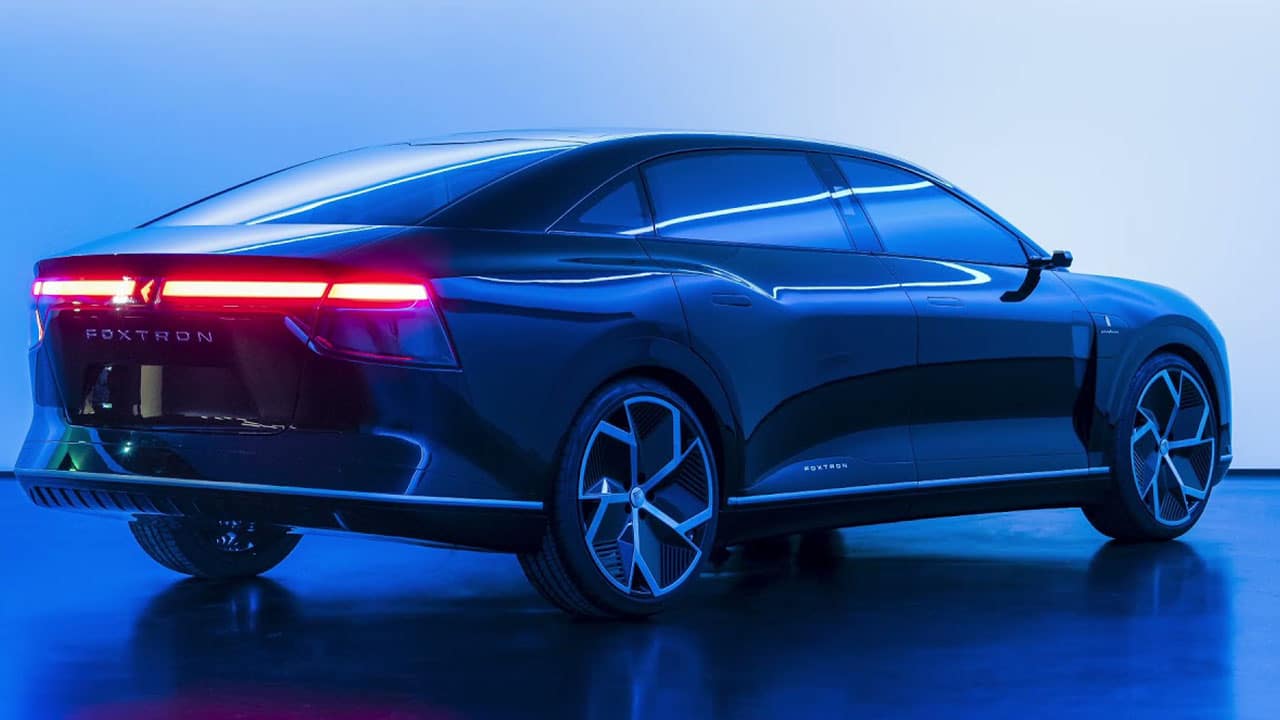
  • iPhone manufacturer Foxconn shifts focus to electric cars amidst US-China strained relations

    iPhone manufacturer Foxconn shifts focus to electric cars amidst US-China strained relations

    Taiwanese manufacturer Foxconn, renowned for its production of iPhones, has announced a strategic shift towards electric vehicles (EVs) amidst the strained relations between the United States and China.

    In an interview with the BBC, Chairman Young Liu conveyed the company’s intent to make substantial investments in the EV sector while concurrently diversifying its supply chains away from China.

    Liu acknowledged the importance of peace and stability between the two nations but emphasised the necessity, from a business standpoint, to consider contingency plans for adverse scenarios.

    In response to the prevailing geopolitical tensions, Foxconn has already commenced the relocation of certain production lines from China to alternative locations in Mexico and Vietnam.

    This decision comes as Foxconn finds itself embroiled in a contentious dispute, with Beijing claiming Taiwan as part of China and President Xi Jingping reiterating commitments to “reunification.” Meanwhile, the United States has expressed unequivocal support for Taiwan’s independence, with the looming specter of invasion having cast a shadow over the island nation for years.

    Having originated in 1974 as a manufacturer of television dials, Foxconn has emerged as a global technology powerhouse, amassing revenues of $200 billion. Responsible for over half of Apple’s product output, including iPhones and iMacs, the company also serves an array of esteemed clients such as Microsoft, Dell, and Amazon.

    Foxconn’s unique position as a company that designs products in the United States while predominantly manufacturing them in China has left it navigating a delicate equilibrium between the two global superpowers.

    Chairman Liu articulated his vision of capturing approximately 5 per cent of the global electric vehicle market within the coming years. He outlined plans for establishing Foxconn EV manufacturing facilities in Ohio, United States, as well as in Thailand, Indonesia, and potentially India.

    By pivoting toward electric cars, Foxconn seeks to leverage its technological prowess and industry influence to secure a significant stake in the evolving EV landscape.