Category: Tech

  • Peshawar High Court orders immediate ban on TikTok

    Peshawar High Court orders immediate ban on TikTok

    The Peshawar High Court (PHC) has banned TikTok, a popular social media application commonly used by teenagers and influencers for video sharing, over immoral content.

    PHC Chief Justice (CJ) Qasier Rashid Khan said that the ban will not be lifted till the immoral content is removed.

    The Pakistan Telecommunication Authority (PTA) Director General (DG) told the court he contacted TikTok management to remove the objectionable content but didn’t receive any response. Justice Khan remarked that the app should remain blocked till authorities respond.

    Last year in September, a man approached Peshawar High court after the PTA and other institutions failed to take notice of the “Immoral and objectionable” content on the app.

    He said that “such activities are leading the country’s youth astray, adding that suicide cases are on the rise too.”

    Last year, Pakistan also blocked the app on October 9, 2020, when PTA issued final notice to the TikTok management.

    They were given considerable time to respond and develop an effective mechanism for proactive moderation of unlawful online content. TikTok has failed to fully comply with PTA’s instructions.

    Later on, the ban was lifted when the TikTok management had told the authority that it will block all accounts repeatedly involved in spreading obscenity and immorality.

    As per the orders of PHC, PTA has directed the service providers to immediately block access to TikTok.

  • Bangladesh bought phone hacking, intercepting devices from Israel

    Bangladesh bought phone hacking, intercepting devices from Israel

    Bangladesh government spent around $330,000 on phone-hacking equipment made by an Israeli company.

    The two countries have not recognised each other and have no diplomatic relations.

    In an exclusive investigative report by Al Jazeera, a product called UFED is manufactured by Cellebrite security firm in Israel, and Bangladesh has acquired devices from the firm.

    It can access and extract data from a wide range of mobile phones. Civil rights and campaigners are worried about its ability to hack encrypted phone data and breach the privacy of users.

    Bangladesh does not recognise the state of Israel, forbids trade with it and prevents its citizens from travelling there. The Muslim-majority country officially stands in solidarity with the Palestinians due to the denied civil rights and live under Israeli military occupation. It is unclear whether UFED was provided to Bangladesh directly by the Israeli company or any other channel was created for acquiring the devices.

    In February, Al Jazeera revealed how the Bangladesh military in 2018 signed a contract to acquire mobile phone interception equipment from Israeli firm Picsix Ltd. In February 2019, Bangladeshi officers received training by Israeli intelligence experts in the Hungarian capital, Budapest.

    The Ministry of Defence in Bangladesh said the equipment, a passive mobile phone monitoring system called P6 Intercept, was made in Hungary and was purchased on United Nations missions but the claim was rejected by the world body.

    According to the contract, the manufacturer of P6 Intercept as Picsix Ltd Hungary is made in Hungry, but no public record of any such company exists, and all Picsix equipment are manufactured in Isreal.

  • Don’t fall for KFC ‘free chicken bucket’ scam

    Don’t fall for KFC ‘free chicken bucket’ scam

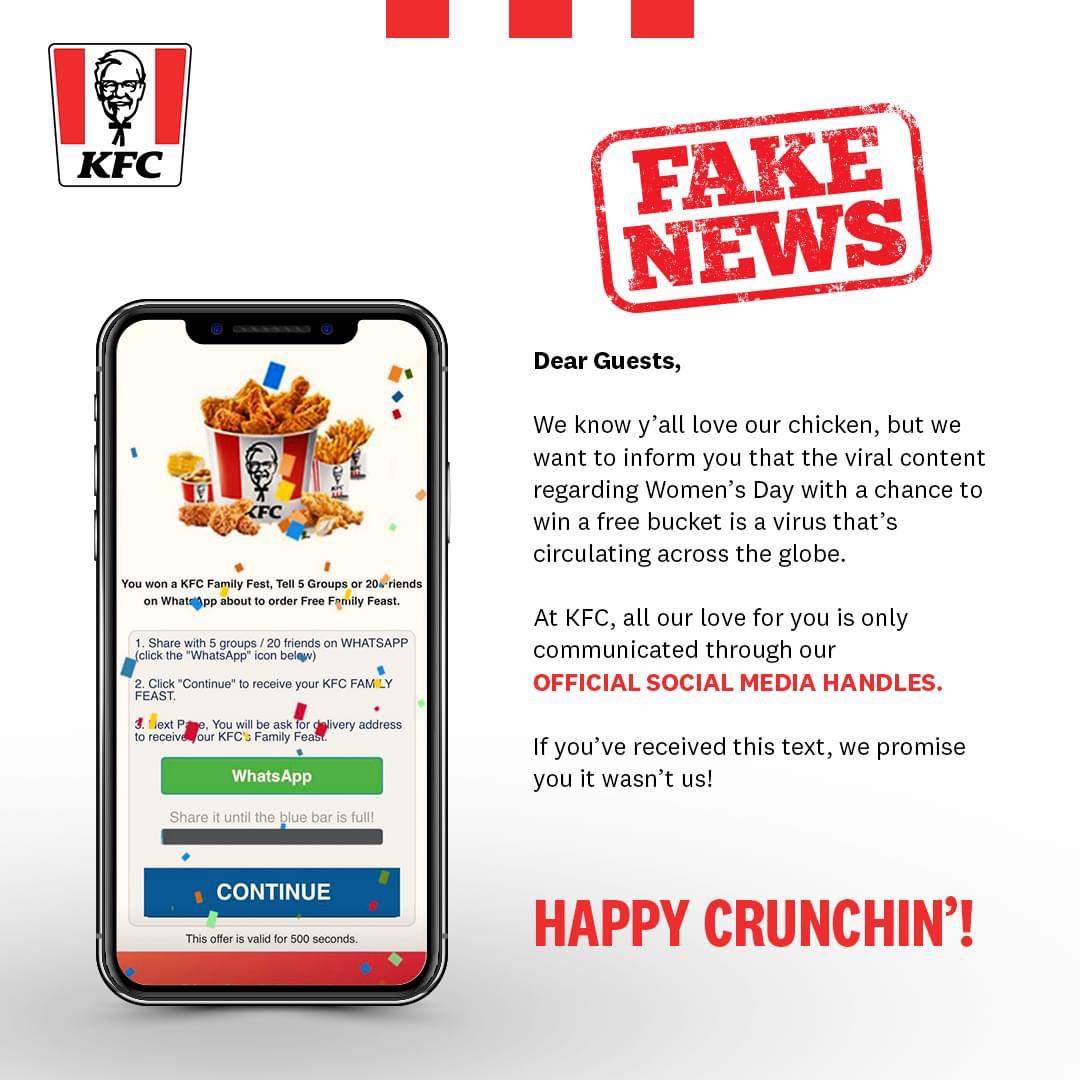
    A scam related to Women’s Day with a chance to win a free chicken bucket from (Kentucky Fried Chicken) KFC is circulating over social media. 

    This KFC scam is not new either, as it was initially busted in 2019 by KFC Malaysia itself. 

    Somehow these messages have reached Pakistan, and people are forwarding the message to each other on WhatsApp. 

    Not only will it waste your time by resharing or forwarding it to your friends multiple times before you can unlikely win anything, but it also contains malware. So don’t just fall for anything like that and do not continue resharing.

    Here is how a user gets a message and follows the steps to fall for the trap. 

    Once you click on the link, it will take you to a webpage with a couple of gift boxes that you are to open. You might fail with the first two boxes, but the third one is sure to open with the gift. 

    At that stage, you would likely share it until the progress bar turns full green, and then you will be able to continue to the next webpage.  

    The last step will lead you to click the link, where you will end up on a dead-end with nothing but hidden malware. 

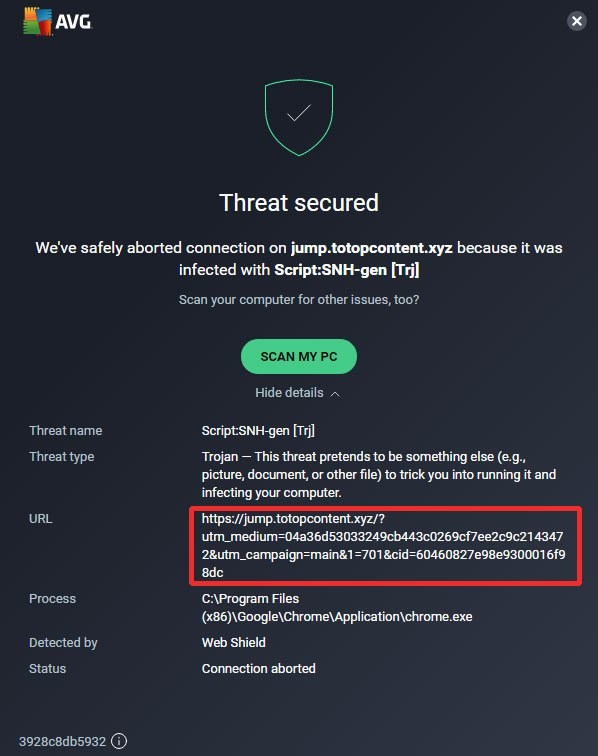
    You may not even know what you have got on your mobile phone if you have no protection software installed. Only anti-malware software could detect it, like the one below detected as a script: “SNH-gen [Trj].”

    It is better to stay away from free goodies until you know the source of the sender. Right now, It is good to share this article with your friends before they get trapped.

  • Microsoft hit by massive cyberattack

    Microsoft hit by massive cyberattack

    Microsoft’s Exchange Server used for email services is recently targeted by hackers. The company rolled out a security patch to secure the server. However, the company had been unable to locate the group of hackers.

    The Verge reported that the hackers are Chinese state-sponsored groups, and they managed to infiltrate nearly 30,000 United States (US) organizations using Microsoft’s Exchange Server.

    Big institutions like banks, police departments, hospitals, and local government department got affected due to the attack. The number of victims was reportedly over hundreds of thousands.

    The security patch has only fixed the vulnerabilities of the server and those whose systems have been compromised will still have to remove the backdoor channels from their systems.

    These backdoors were being used by the hacking group to plant “web shells” in their victims’ servers which would give them admin access and allow them to steal information.

    Security experts are now worried about these hackers planting additional backdoors while companies remove the ones already existing.

    Microsoft was reached out for comment on the matter and said that they are working with the US Cybersecurity & Infrastructure Security Agency and other agencies to provide their customers with additional investigation and mitigation guidance.

  • 8yo signs Rs5 million contract with esports team

    8yo signs Rs5 million contract with esports team

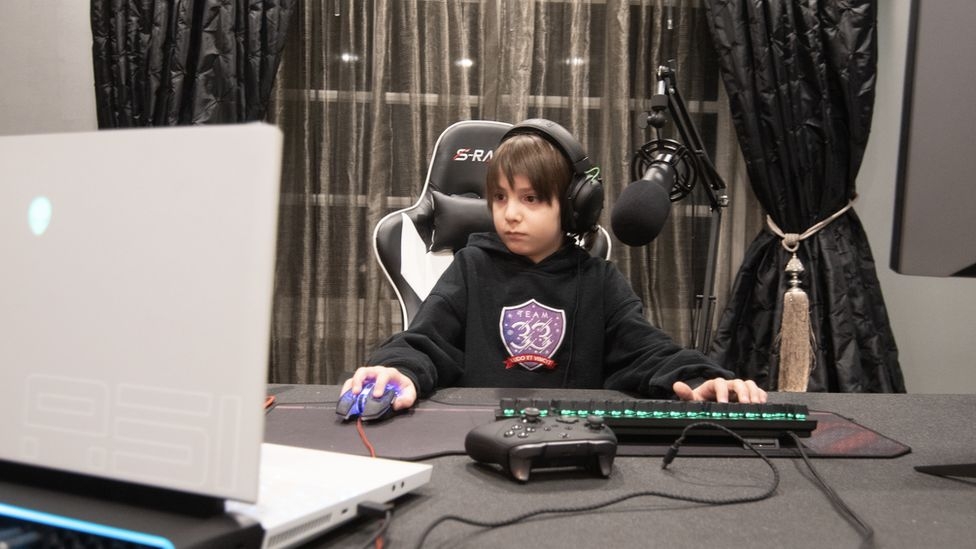
    Joseph Deen has become the youngest esports professional player as he signed up for Team 33, one of the best competitive teams for egames.

    The eight-years-old got a position and a $33,000 (approximately Rs5 million) sign-on bonus for his skills as a Fortnite player.

    The news has shocked many because of Deen’s age and the impressive amount of money he was offered for joining Team 33.

    Although Deen is the youngest asset of Team 33, he is not the only underage player to have joined a professional esports team.

    But Deen has signed the contract with Team 33 under different conditions. For example, Joseph Deen cannot participate in any Fortnite cup tournaments since he is not legally allowed to do so, and he will only be training for two to three hours a day.

    He has proven his outstanding skills in the Fortnite game. The co-founder of Team 33 Tyler Gallagher has mentioned that Deen got $33,000 sign-up because he had beaten another professional member of Team 33 in a Fortnite match.

    Deen himself has said that he has not been taken seriously before, and he hopes that the perception will change now after he became part of a professional esports team.

  • Facebook launches TikTok-like app for rappers

    Facebook has launched a TikTok-like app called BARS for creating and sharing short rap videos.

    According to reports, Facebook’s BARS is specifically designed for making content in rapping style. Rappers can create and share their raps using professionally created beats via this app.

    The app also suggests rhymes from a rhyming dictionary to keep your flow going. There is also a ‘Challenge Mode’ in which users can select ‘freestyle’ along with auto-suggested word cues.

    “Audio production tools can be complicated, expensive and difficult to use. With BARS, you can select one of our professionally-created beats, write lyrics and record yourself dropping bars,” Facebook said in a statement.

    The videos can be up to 60 seconds long and can be saved or shared out on other social media platforms.

    BARS, which was built with a team of aspiring rappers, is available for download through Apple’s US App Store and is initially accessible for a small number of iOS users only.

  • IBA Karachi launches exclusive dating app for students

    IBA Karachi launches exclusive dating app for students

    Students of the Institute of Business Administration (IBA) Karachi have launched an exclusive dating app for students only called ‘The Uni Dating.’ News of the dating app was posted on a Facebook group on Saturday and went viral like wildfire.

    A picture of the dating app was posted along with a caption: “Hey guys, just wanted to grab a couple of minutes of your time. We had something special cooking for a while and finally it is here. We would like to introduce you to your own exclusive IBA dating site for current IBA students only. If you know how Tinder works, then you are in for a treat.”

    If you click on the link, it will take you to the main page of the website. You will be asked to log in or sign up by providing your email address, along with the IBA student email address.

    IBA students are not the only ones who have come up with something exclusive like this for their students. Students of the Lahore University of Management Sciences (LUMS) have also set up a matchmaking group on Facebook to help fellow Luminites find rishtas. The group is exclusive to LUMS students and alumni and outsiders are not entertained here.

    What do you think of this dating app made specifically for IBA students? Share your thoughts in the comments section.

  • ‘Creepy’ or ‘magical’: With deepfake, you can reanimate anyone

    ‘Creepy’ or ‘magical’: With deepfake, you can reanimate anyone

    The rise of artificial intelligence (AI) and advance editing software have made it difficult to differentiate between real and fake content and it is enough to shatter the sense of reality.

    Telephone scams, catfishing schemes and social media trolling campaigns can all be launched with such fakery, and they can create equally unexpected consequences.

    People are taking fake content to the next level with this new technology. Recently, a TikToker used deepfake to mimic Tom Cruise, and it is shocking how well the video replicated his famous laugh.

    A few things can tell that it is not Tom Cruise. First, the voice is quite different; especially the lip-syncing is a bit off at some points as you can hear the real Tom Cruise in this video.

    There are glitches in the movement tracking and lighting in the content, especially in the golf video where the sunglasses disappear, and his mouth morphs for a frame or two.

    Even with small glitches of technical details, it is difficult to differentiate between fake and real.

    Recently a genealogy site MyHeritage has launched a tool where you can upload any picture, especially old ones to animate faces with deepfake technology of dead relatives. They have acknowledged that some people might find this feature “creepy” but others might consider it “magical”.

    We used deepfake technology on Gen. Ziaul Haq to test the feature

    The company deliberately avoid using speech feature in the creation to avoid “deepfake people.” The government of the United Kingdom (UK) is planning to pass legislation on this technology.

    The Law Commission is considering proposals to make it illegal to created deepfake videos without consent.

  • AI shocks experts by writing passing college paper in 20 minutes

    Artificial Intelligence (AI) has delivered results in many areas like medicine, defence, law enforcement, and education. But AI has shocked the researchers by producing an award-winning research paper.

    According to the reports, an online educational research provider performed a trail to analyse the capacity of the deep learning language prediction model known as GPT-3.

    A panel of professors was asked to create writing prompts. The prompts were then assigned to a group comprising of graduate and undergraduate level writers, apart from the GPT-3 model.

    The experts concluded that the AI writing capability closely mimics human writing in terms of syntax, grammar and word frequency.

    “Even without being augmented by human interference, GPT-3’s assignments received more or less the same feedback as the human writers,” said the report.

    Moreover, the deep learning tool completed the assignment in less time, i.e., between three and 20 minutes. Whereas it took human to complete the assignment in three days.

    The report expresses doubt about AI’s capacity to take over in this particular area. Despite its revolutionary output, GPT-3 will not earn college degrees on its own anytime soon.

    When put up against human writers, GPT-3 secured some passing grades but failed to nail creative writing.

  • People who use social media for news more susceptible to rumours: study

    People who use social media for news more susceptible to rumours: study

    The United States citizens who rely on social media as their main source of news are more likely to believe false or unproven stories about important topics such as politics and COVID-19, according to a survey.

    The Pew Research Centre report found that people who used social media platforms for news were less informed about major public matters and more susceptible to believing rumors and hoaxes.

    The report comes with social media platforms becoming a growing source of news amid struggles by traditional media to survive in the digital age.

    The Pew report found some 18 per cent of the participants of the survey got most of their political and election news through social media. But those people were less likely to rightly answer the fact-based questions about politics and current affairs than those relying on print, broadcast or news apps.

    Social media news consumers were more aware of specific false or unproven stories about COVID-19 and said they had seen more misinformation about the pandemic such as claims that Vitamin C could prevent infection, the survey found.

    On political news, social media users were less informed about facts such as the function of the state-by-state, Electoral College votes, which ultimately decide who wins the White House, or the unemployment rate.

    The report comes from a series on interviews with some 9,000 US adults from November 2019 through December 2020.

    A majority in the survey said they distrusted social media with Facebook the least trusted among the platforms.

    Among those using traditional media, the researchers also found that roughly a quarter of the US citizen on the political left and right consistently turned to “partisan” news sites, reinforcing their views.

    Pew found that roughly three in 10 Republicans relied on former president Donald Trump as a major source of news about the election and the coronavirus.

    These Republicans were more likely to think the COVID-19 pandemic had been overblown and more likely to see voter fraud as a significant threat to election integrity.