Category: Tech

  • PTI’s new social media laws: Are you in some sort of danger?

    PTI’s new social media laws: Are you in some sort of danger?

    The Pakistan Tehreek-e-Insaf (PTI) government in centre has approved a new set of rules to regulate social media, requiring companies such as Facebook, Twitter, YouTube and even TikTok, to register themselves and open offices in Pakistan to provide the government data of accounts found guilty of targeting state institutions, spreading fake news and hate speech, engaging in harassment, issuing statements that harm national security or uploading blasphemous content, Geo reported.

    But similar to claims of proponents of internet freedom, who fear that the legal document would be used to keep social media companies in check and curb dissent over the internet, is your freedom over the web really at risk?

    According to reports, the rules and regulations have been included in the Prevention of Electronic Crimes Act, 2016, and senior officials in the Ministry of Information Technology have confirmed that the cabinet has already given green light to the legal document.

    Further, IT & Telecommunication Federal Secretary Shoaib Siddiqui confirmed that after the cabinet’s approval, the rules and regulations need not be presented in the parliament for approval.

    According to the law, all global social media platforms and companies would have to register in Pakistan within three months and open offices in Islamabad within the same time period. The law requires digital media companies to appoint a representative in Pakistan to deal with a national coordination authority, which would be responsible to regulate content on social media platforms.

    It further requires the companies to set up data servers in Pakistan within a year and makes it compulsory for them to provide data of accounts found guilty of various crimes — including targeting state institutions, spreading fake news and hate speech, engaging in harassment, issuing statements that harm national security or uploading blasphemous content — to intelligence and law enforcement agencies (LEAs).

    It, however, is safe to say that only time would tell if the government can actually convince any digital media outlets to actually operate under these new regulations.


    Follow this link to give the new set of rules a read.

  • WhatsApp reaches 2 billion users

    WhatsApp reaches 2 billion users

    Facebook-owned instant messenger — WhatsApp — has crossed 2 billion users around the world, and on this success, has reaffirmed its commitment to strong encryption to protect the privacy of users’ data.

    WhatsApp, which was acquired by Facebook in 2014, turned into the most widely-used free messaging app that provides free text, voice and video communication services; enabling more than 2 billion people to have conversations from anywhere in the world.

    “Strong encryption is a necessity in modern life. We will not compromise on security because that would make people less safe,” WhatsApp said in an official statement. “For even more protection, we work with top security experts and employ industry-leading technology to stop misuse as well as provide controls and ways to report issues without sacrificing privacy.”

    The social network is working to extend end-to-end encryption across its messaging applications, including Facebook Messenger and Instagram.

    In a recent statement, Facebook had said some 2.89 billion people globally were daily users of at least one of its services. The growth has attracted more attention of regulators and activists concerned over the dominance of major tech platforms.

  • Govt mulls new rules to ‘control’ digital media in Pakistan

    Govt mulls new rules to ‘control’ digital media in Pakistan

    The government is planning to impose new rules that could radically redefine the digital landscape of Pakistan, ProPakistani reported Wednesday.

    According to reports, the government wants to curb blasphemous content for social media and the new rules would allow institutions to control all online content in the country.

    The new rules — named the Citizens Protection Against Online Harm Rules — are a sort of extension of legislation like the Prevention of Electronic Crimes Act (PECA) and would allow the government to bypass industry stakeholders following approval of the federal cabinet.

    While the document (available here courtesy of Digital Rights Monitor) talks about social media companies, the definition for “social media companies” is broad enough to bring any company with an online presence under its ambit. If companies don’t abide by any of the rules in the 14-page document, they’ll be blocked in Pakistan.

    The move comes days after a Senate panel rejected a proposed move to be initiated by the Pakistan Electronic Media Regulatory Authority (PEMRA) for regulating web TV and over-the-top (OTT) media service in the country following the authority failed to establish its jurisdiction for doing so before the house’s body.

    The Senate Functional Committee on Human Rights which met with Senator Mustafa Nawaz Khokhar in the chair held a detailed discussion on PEMRA’s proposal of regulating web TV and OTT content.

  • Ready for the most exciting phone of 2020?

    Ready for the most exciting phone of 2020?

    Samsung’s second fordable phone Galaxy Z Flip is not like its predecessors. The company unveiled this art piece with the most awaited flagship series of the Galaxy S20.

    Design and Display

    Apart from its foldability feature, Galaxy Z has unique hinge, perhaps the strongest clamshell folding device. However, it is also reported that it is a little harder to open it as compared to its predecessor (Galaxy Fold).

    Colors

    It is available for sale in Mirror Purple, Mirror Black and Mirror Gold colors. The smartphone is also launched in a Thom Browne edition, featuring the designer’s signature stripes.

    Internal features and Storage

    The smartphone is powered by Snapdragon 855+ with 8 GB RAM and 256 GB storage. However, it does not have any storage expansion options. Samsung Galaxy Z Flip runs on One UI 2.1 based Android 10 OS.

    Cameras

    At the back, the smartphone features a dual-sensor rear camera with 12 MP regular wide sensor and a 12 MP ultra-wide sensor. On the front, it is equipped with 10 MP single sensor for selfies.

    Battery and Pricing

    It is equipped with two batteries that, when combined, total 3300 mAh. The smartphone surprisingly also supports wireless charging.

    Samsung Galaxy Z Flip complete specifications

    • CPU: Octa-core (2×2.3 GHz Kryo 360 Gold & 6×1.7 GHz Kryo 360 Silver)
    • GPU: Adreno 616
    • Chipset: Qualcomm SDM855+ Snapdragon 855+ (7 nm)
    • OS: Android 10.0; One UI 2.0
    • Networks: 2G, 3G, 45, LTE;
    • Display:
      • AMOLED, 6.7 inches, 2636 x 1080 pixels resolution, 22:9 aspect ratio + 1.1″, Super AMOLED, 112 x 300 pixels resolution
    • Memory:
      • RAM: 8 GB
      • Internal: 256 GB
      • Card slot: No
    • Camera:
      • Primary: 12 MP +12 MP
      • Secondary: 10 MP
    • Connectivity: Wi-Fi 802.11ac, Bluetooth 5.0, GPS, USB Type-C
    • Fingerprint scanner: Side-mounted
    • Battery: 3300 mAh
    • Price: $1380

    It is still unclear that when this device will be launched in Pakistan.

  • Israeli PM’s election app leaks personal data of 6.5 million people

    Israeli PM’s election app leaks personal data of 6.5 million people

    Threats of electoral manipulation and identity theft are rising in Israel after a critical flaw in a voting app used by Israeli Primer Minister (PM) Benjamin Netanyahu leaked personal data of 6.5 million voters.

    The app was used to communicate with voters and it also allowed their personals to be viewed without the need for any technical skills. The leaked data includes voters’ full names, addresses, identity card numbers and phone numbers.

    Read more – Windows 7 is officially out of support from Microsoft

    As for how the cyberattack was inflicted, the source code of the app was available on the website and even included the personal data of administrators in charge of the app’s database. While Israel’s Privacy Protection Authority has denied the accusation and is looking into the matter, the cause of the breach still remains uncertain.

    A petition has been filed against the Israeli PM’s political party after a programmer said that it was one of the largest and most compromising leaks of Israelis’ personal information in the nation’s history.

    Read more – New survey reveals Pakistani businesses positive about future

    The party is being accused of violating privacy laws for creating and sharing their database with access to all of the government’s voting registry.

    While the flaw in the app has been fixed, it goes to show how electoral apps aren’t being tested thoroughly and aren’t ready to carry sensitive information.

  • Windows 7 is officially out of support from Microsoft

    Windows 7 is officially out of support from Microsoft

    Last month, Microsoft shut down Windows 7 completely. Even then, a large number of people are still using the same operating system, but should immediately upgrade to better versions for a number of reasons. 

    Windows 7 users are receiving troublesome bugs since the shutdown. The first bug broke the operating system’s wallpapers and internet browser but a recent one is much more dangerous. 

    Some users have been reporting a new bug that prevents them from shutting down or rebooting their PC, claiming that “you don’t have permission to shut down this computer”. The source of this bug is still unknown. 

    Windows 7 is officially out of support and Microsoft may never fix this bug, but some hope still remains as they did make an exception to the rule when they patched the wallpaper bug a few days ago.

    It is recommended that all users upgrade their operating systems and even their old devices. When a new technology is introduced, companies start focusing on their contemporary products to improve users’ experience.  

  • Chinese phone makers: A big threat to Google Play

    China’s top smartphone makers Huawei, Oppo, Xiaomi, and Vivo have collaborated to build a shared platform to compete with Google’s Play store, latest reports have revealed. The move is believed to be a direct threat to the $1 trillion parent Alphabet company and the de-facto US dominance of Android.

    Manufacturers in China rely on Android to run their devices but they use domestic app stores inside China, where Google services are blocked. Chinese manufacturers have continued to reply to pre-installed Google Play, offering the users the most popular social apps like Facebook and WhatsApp that are not available for download in China.

    The four Chinese handset makers together shipped around 40pc of the world’s smartphones in the fourth quarter of 2019.

    They will now let foreign app developers like Facebook upload and update the software to all the respective stores, through the new platforms, with a single click.

    If this initiative materializes successfully, this will create a new universe of apps which will be in direct competition with Google Play Store.

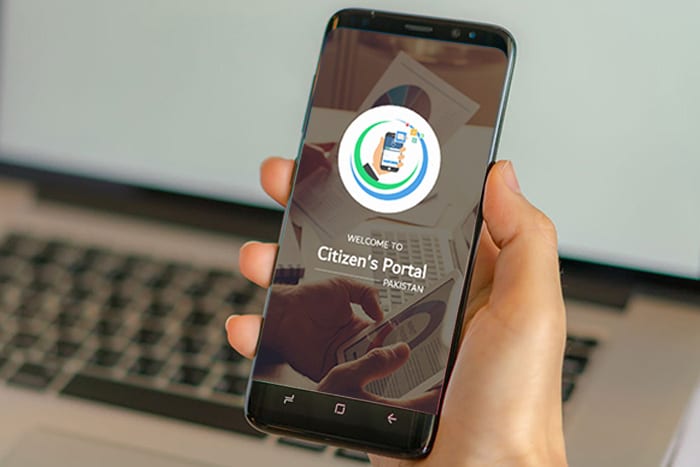
  • You can now report corruption, bribery on Pakistan Citizen’s Portal

    You can now report corruption, bribery on Pakistan Citizen’s Portal

    A category for ‘Corruption and Malpractices’ has been introduced on the Pakistan Citizens’ portal to curb these illegal practises from the government departments. The portal now allows people to report corrupt practices on the complaint lodging mechanism.

    The Prime Minister’s Performance Delivery Unit (PMDU) has introduced the category on the directives of Prime Minister Imran Khan. As per the unit, subcategories have also been made to help citizens classify the nature of the complaint.

    Matters related to the corruption in public funds, bribery, and kickbacks can be reported under financial corruption. While irregularities in recruitment, procurement, and allotment processes fall under the Violation of Merit/Rules category.

    Similarly, favoritism, unauthorized privileges, etc. characterise the Power Abuse section.

    In addition to this, citizens can also report physical or sexual harassment, threatening and blackmailing, under the harassment category. Any case regarding fake documents and impersonation will go under the Fraud/Mockery section.

    PMDU said these categories will not only facilitate the public, but they will also organise the complaint lodging process. It will also protect the integrity of the portal as most of the cases received through this platform are proved to be mala fide and irrational serving only vested interests.

  • Apple fined again for slowing down old devices

    Apple fined again for slowing down old devices

    France’s competition and fraud watchdog DGCCRF has fined Apple $27 million for deliberately slowing down older devices without making it clear to consumers.

    In 2017, Apple had confirmed that it slowed down devices but claimed it was done to “prolong the life” of older smartphones of Apple.

    However, many users believe that Apple slows down the phones to create psychological pressure on consumers so that they upgrade their devices.

    In 2017, the company acknowledged that operating system updates released for the iPhone 6, iPhone 6s, iPhone SE and iPhone 7 included a feature “to smooth out” power supply from batteries that are cold, old or low on charge.

    The lithium-ion batteries installed in the smartphone become less proficient in supplying to demands and become dated over time.

    The smartphones without the adjustment would shut down abruptly because of a safeguard designed to prevent components from getting fried, said Apple.

    However, according to the French watchdog, iPhone users “were not informed that installing iOS updates (10.2.1 and 11.2) could slow down their devices”.

    According to reports, the amount of the fine is equal to profits Apple earns in just three hours.

  • Anonymously report harassment, bias at work with this new app

    A tool called AllVoice is here to make it easier for employees to anonymously send feedback to the company’s leadership, and report harassment or bias.

    According to the details, the app has been launched by Eponymous, and the company has raised $3 million in seed funding for the facilitation of their startup.

    AllVoices is a platform that lets people send complaints to the human resources (HR) department. All complaints are displayed on the dashboard of the application that helps HR to launch investigations.

    Founder Claire Schmidt was inspired to create AllVoices after former Uber engineer Susan Fowler investigated sexual harassment and discrimination in the ride-hailing company.

    Once the report is sent to the department concerned, it sends text notifications for the complainant to track the response from the company.

    Employees in HR won’t see any information such as names, and AllVoices won’t know which employer is involved. All communication is encrypted, the company says.

    After 60 days have passed following a complaint, AllVoices asks the employee if he or she knows whether the company has taken any action and, if so, how satisfactory it is. AllVoices then gives that data to the company.

    AllVoices is hoping to create a free version of the app for employees who work at companies that do not use the app. They’d be able to report issues by sharing an email for someone in their human resources department.