Category: Tech

  • US firm helps Modi govt keep social media blocked in held Kashmir

    US firm helps Modi govt keep social media blocked in held Kashmir

    The Indian government imposed communication blackout in August last year and stripped India Occupied Kashmir (IOK) of its special autonomous status.

    The administration has reached out to a US-based software firm Cisco Systems in order to prevent fixed-line internet users from accessing social media websites, reported ThePrint.

    The step has been taken to remove the restriction on a fixed-line broadband connection, however, social media platforms will still not be accessible to local residents even when internet connectivity is restored.

    Back in January, users were allowed 2G mobile internet and broadband for 1,500 individuals, including those providing essential services such as hospitals with access to only 1600 website.

    The firewall is being analysed and tested, and if it will be capable enough to sustain the blockage, it will be purchased, a senior government official said.

  • Citizen Protection Rules 2020 suspended

    Citizen Protection Rules 2020 suspended

    Citizens Protection (Against Online Harm) Rules 2020 suspended when more than 100 rights organisations and individuals boycott consultation with government, DAWN reported.

    The right groups in a statement said that the government had refused to elaborate on the legal status of the rules, so “any consultation is merely token to deflect criticism and not a genuine exercise to seek input.”

    According to the report, when Pakistan Telecommunication Authority (PTA) Chairman Amir Azeem Bajwa was approached to seek clarification, he said: “The rules are expected to be improved/amended suitably at the end of the consultation process. Implementation of [existing] rules has been suspended.”

    This Monday, the PTA chairman-led committee that the IT minister formed following the premier’s instruction from consultation with stakeholders. Additional Secretary of IT Eazaz Aslam Dar, Digital Pakistan head Tania Aidrus and the focal person on digital media Dr Arslan Khalid are committee members.

    On the contrary, the Federal Minister for human rights Dr shireen Mazari and barrister Ali Zafar are also expected to be a part of the process.

    According to the press release of PTA, the committee decides to initiate an open consultation with all stakeholders including civil society, human and digital rights groups.

    PTA further added that a questionnaire seeking input from all stakeholders shall be posted on its official website.

    PM’s focal person on digital media Arslan Khalid said all proceedings would be “inclusive” and done in a “transparent” manner. “The rules have not been implemented. Prime Minis­ter Imran Khan has clearly instructed for robust and broad-based consultations before any rules can be put into place,” he told Dawn.

  • Google, Facebook and Twitter threaten to shut services in Pakistan

    Google, Facebook and Twitter threaten to shut services in Pakistan

    When PTI’s government unveiled some of the world’s most sweeping censorship rules for the internet, global internet companies like Facebook, Google and Twitter threatened to shut services in the country, a step which would leave 70 million internet users in digital darkness, New York Times reported

    Through the Asia Internet Coalition, they wrote a letter to Prime Minister Imran Khan, warning him that “the rules as currently written would make it extremely difficult for AIC Members to make their services available to Pakistani users and businesses.”

    READ MORE: Punjab govt’s first-ever digital payment method collects Rs1 billion

    This undemocratic policy of PTI’s government faced severe backlash from rights groups forcing the government to retreat. Pakistani officials, this week, pledged to review regulations by doing a broad-based consultation process with all relevant stakeholders of civil society and technology companies.

    Pakistan’s digital censorship law will give power to the government to take-down a wide range of content. These laws can be easily abused by the powerful if they consider any sort of content harmful, distasteful or simply a threat to their interests.

    The unified resistance by Facebook, Google, Twitter and other tech companies in Pakistan is highly unusual. Companies often protest these types of regulations, but to leave a country is very unusual. Google pulled its search engine out of China in 2010 rather than submit to government censorship of search results.

    READ MORE: OGRA to drastically cut down petrol prices

    Under the new regulations, formally known as the Citizen Protection (Against Online Harm) Rules 2020, social media services must remove or block content within 24 hours of a request from a newly appointed officer, called the national coordinator.

    Companies must also prevent the live-streaming of any type of content the authorities say is objectionable.

    In addition, the companies must open permanent offices in Islamabad and set up servers to store data in the country. Violations of the law are subject to fines of more than $3 million, with the authorities even empowered to block services entirely.

    READ MORE: Christian youngster killed for ‘polluting’ tube-well water by bathing in it

    The new laws are a direct threat to the digital economic future for Pakistan. This will also decrease freedom of expression, increase censorship and diminish digital rights.

    What is interesting to note is that PM Khan rose to power in Pakistan in 2018 largely because of his party’s strong presence on social media. But now that he is in charge, and he is very intolerant towards online criticism.

    Pakistan’s powerful military is also averse to debates on social media platforms, especially on Twitter, which is used by critics to question human rights violations and Pak-military’s involvement in politics.

  • Punjab govt’s first-ever digital payment method collects Rs1 billion

    Punjab govt’s first-ever digital payment method collects Rs1 billion

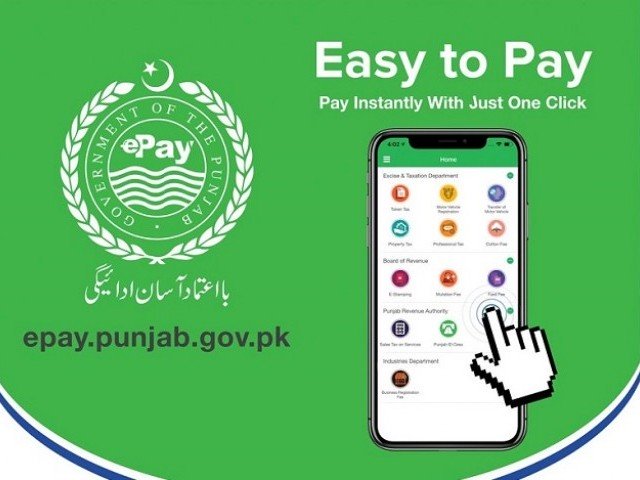
    Punjab government’s first-ever payment aggregator — a service provider that allows merchants to process mobile or e-commerce payments — called ePay and launched for citizen facilitation and ease of business, has collected over Rs1 billion in tax revenue, The Express Tribune reported.

    ePay was launched on October 4 last year in a collaborative effort between the provincial finance department and Punjab Information Technology Board (PITB).

    Read more: Realme unveils ‘Quad Camera BatteryKing 5i’, ‘Triple Camera Game Monster C3’

    This application provides the public with a stress-free and efficient method of paying taxes and making payments to the government through contemporary banking channels, without going through the ages-old exhausting process.

    Moreover, multiple new payment channels like debit/credit card, mobile wallets, TELCO agent networks and direct debit from the account are being added to further increase the payment options available to the citizens and businesses in the app.

    Read more: Study reveals: Excessive smartphone usage affects brain like drugs

    Additionally, it is also planned to include Government to Public (G2P) and Government to Business (G2B) payment models in future to broaden the horizon of the programme and also add tax/non-tax receipts like online admission fee for colleges/schools, driving license fee, e-challan, character certificate, domicile, fitness certificate (commercial vehicles) and agriculture income tax.

    Read more: Pakistan, US trade negotiation failed

    The initiative has proved to be a game-changer in the local fintech industry by playing a pivotal role in increasing tax revenue collection of the province and improving financial inclusion. In its first phase, 13 taxes/levies of five departments have been made part of the system.

    Excise & Taxation, Board of Revenue (BoR), Punjab Revenue Authority (PRA), Industries and Transport are the departments liaised with the system through which citizens can pay token tax, motor vehicle registration, transfer of motor vehicle, property tax, professional tax, cotton fee, e-stamping, mutation fee, fard fee and sales tax among others.

  • SPONSORED: Realme unveils ‘Quad Camera BatteryKing 5i’, ‘Triple Camera Game Monster C3’

    SPONSORED: Realme unveils ‘Quad Camera BatteryKing 5i’, ‘Triple Camera Game Monster C3’

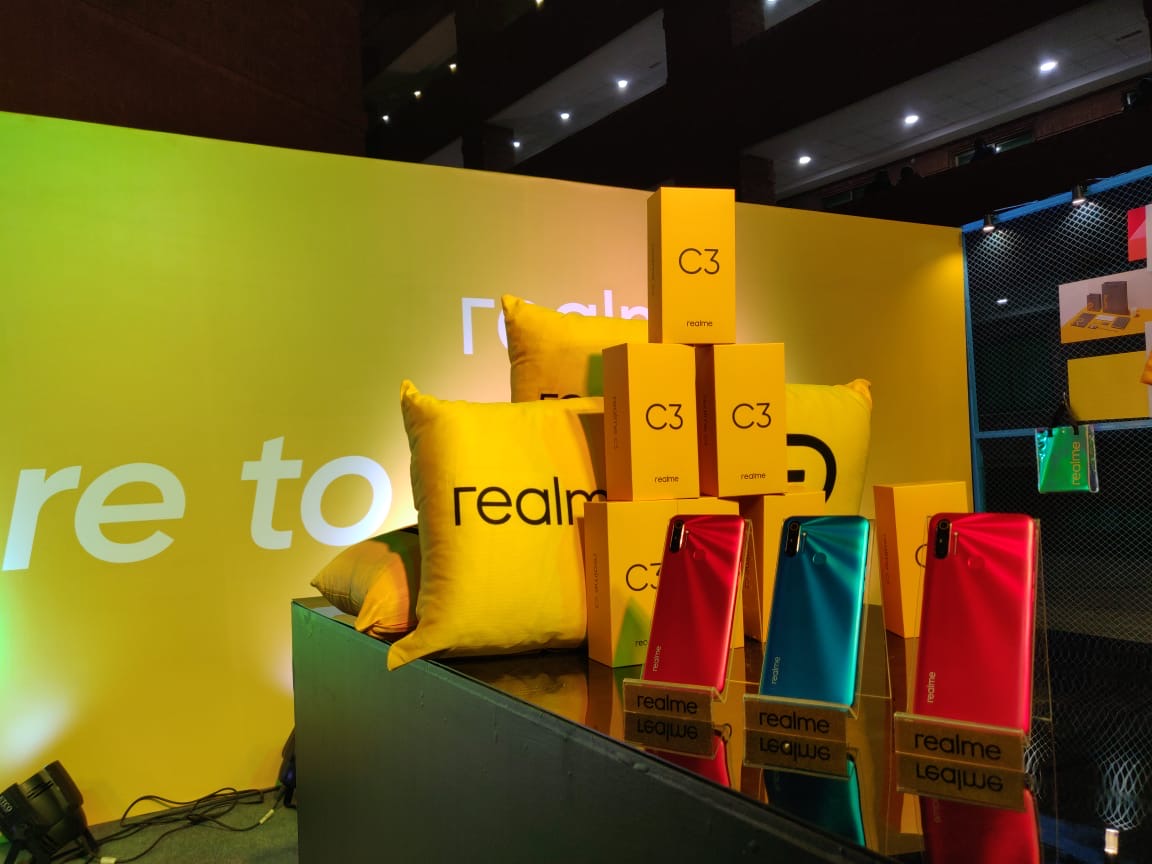
    Realme – the fastest growing smartphone brand in Pakistan that resonates with the young generation – has unveiled two new devices, Realme 5i and C3, in its maiden campus launch for youngsters in Pakistan.

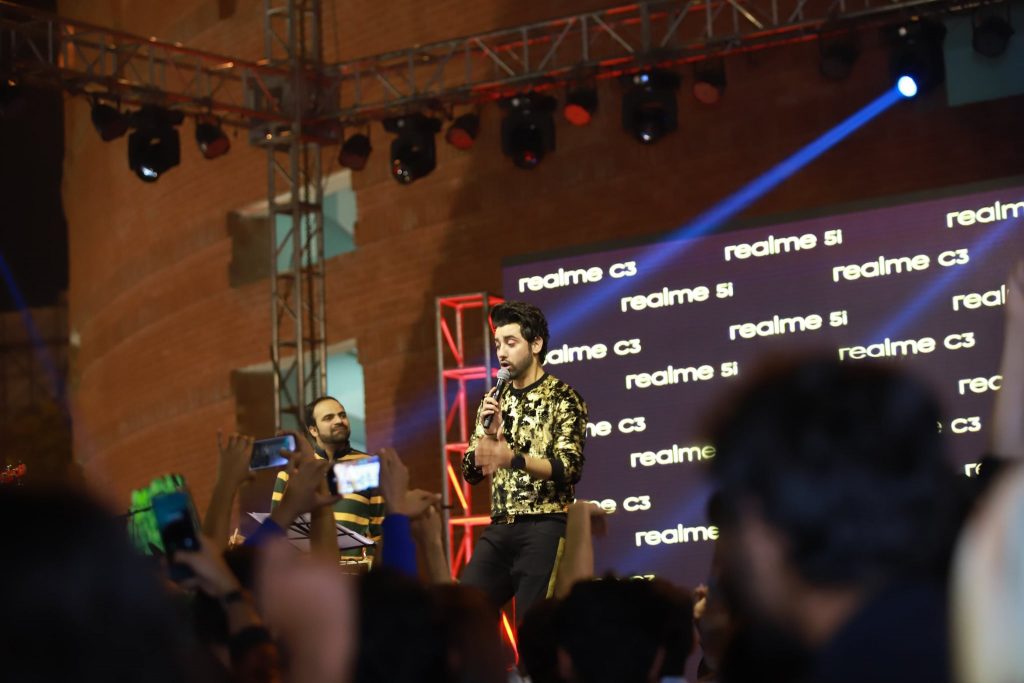
    The brand hosted a musical concert with Amanat Ali along with other celebrities, including Aiman Khan, Hina Altaf, Zubab Rana and Ramsha Khan, who were invited as brand promoters for the latest devices.

    Youth’s Favorite and Pakistan’s top YouTubers like Shahveer Jaffry, Raza Samo, Video wali sarkar, connect Kashan and RHS – Rana Hamza Saif were also part of the launch event.

    On February 25, within the framework of the Realme campus launch, hundreds of youngsters and media representatives participated in Realme product experience activities. The experience space was divided into different areas such as the space for taking photos with Realme smartphones, IoT products wall and a collection of photos shot on Realme phones to help students to understand the key specifications of the newly-launched devices.

    This first smartphone lineup of the year, the Realme 5i and Realme C3, has been launched in the company’s first-ever campus launch event to engage with youngsters and help them experience the device first hand.

    realme C3

    The Realme 5i is available in one variant – 4GB RAM + 64GB storage priced at PKR 24,999 available for sale since February 26 –, while Realme C3 with 3GB RAM + 32GB storage — priced at PKR 20,999 — will be available for sale from February 29.

    realme 5i

    Realme, which provides high-quality products for the youth of the country, has always been closely connected with its young fans. The brand is known to offer a wide range of sophisticated and advanced products for the youth at the best price-points.

    Over a short time-span, Realme has established an unbreakable bond with its users, making them the true brand ambassadors. Realme is recognised as the 7th largest smartphone brand globally. Besides a high value for money, Realme’s availability across all tiers of the smartphone market ensures great visibility.

  • Study reveals: Excessive smartphone usage affects brain like drugs

    Excessive smartphone usage is not only an addiction, but it also does to your brain what drugs or substance abuse does, German researchers have revealed in a recent study, The News International reported.

    It’s almost impossible to spend a day without using your smartphone. Whether you need it to set alarms, access your daily news or surf social media.

    The study published in the journal ‘Addictive Behavior’ says smartphone addiction is not only alarming, but it should be taken seriously because it has effects of narcotics on your brain.

    German professors at Heidelberg University used brain MRI scans of 48 people, out of which 22 people were addicted to their phones. The comparative study revealed that people with smartphone addiction underwent a change in size and density of their brain — similar to those who suffer from substance abuse.

    One of the areas of the brain that got affected was the grey matter, which is responsible for speech control, cognition, emotions, sight and self-control.

  • TikTok’s life-threatening ‘skull-breaker challenge’ is trending

    TikTok’s life-threatening ‘skull-breaker challenge’ is trending

    To go viral and gain views, TikTok users have started the ‘Skull-Breaker Challenge’ causing people to end up in the hospital with broken bones and fatal injuries.

    The challenge begins with three people standing alongside one another and in a row, the middle person jumps while the other two kick his/her legs out from under causing a dangerous fall.

    https://twitter.com/britishchickAD/status/1228335700132712450?s=20

    Falling like this is life-threatening and can cause paralysis and even death as severe head trauma could lead to serious internal bleeding in the brain.

    Meanwhile, TikTok does not allow content that is harmful. The community guidelines for the app state: “We do not promote participation in activities that could lead to harm. We also do not permit users to encourage others to take part in dangerous activities. We do not allow content that promotes self-harm or suicide, but we do allow our users to share their experiences in order to raise awareness about these issues.”

    However, TikTok has not officially responded to this matter.

  • ‘Worst clampdown on freedom of expression,’ rights groups regret PTI’s social media laws

    ‘Worst clampdown on freedom of expression,’ rights groups regret PTI’s social media laws

    Pakistan Federal Union of Journalists (PFU), lawyers and civil society members have decided to launch a nationwide movement for getting trashed the Pakistan Tehreek-e-Insaf (PTI) government’s Citizens Protection (Against Online Harm) Rules, DAWN reported.

    Addressing a press conference at the National Press Club on Thursday, the journalists’ union, lawyers, and civil society termed the government’s notified rules unacceptable, and demanded that the government revoked them.

    READ: PM House’s conversion into university to cost taxpayers over Rs35 billion

    Members of the Human Rights Commission of Pakistan (HRCP), the Islamabad High Court Bar Association (IHCBA) and Media Matters for Democracy attended the presser.

    READ: Pakistan secures four-months to comply with FATF agenda

    Many prominent journalists were of the view that these rules exceeded the mandate given by the 2016 Prevention of Electronic Crimes Act. In addition, they all said the regulation was a clampdown on online content as the final extreme in the series of restrictions on freedom of expression as well as press freedom in the country.

    READ: Here is everything that happened at the opening ceremony of PSL V

    They, however, appreciated Prime Minister (PM) Imran Khan’s statement regarding having consultation with all stakeholders before enforcing the rules.

  • Facebook CEO shares views on social media regulations

    Mark Zuckerberg, the chief executive officer (CEO) of Facebook, has said that the social media giant is working to counter online election interferences, Business Recorder reported.

    According to reports, Mark, while speaking at the Munich Security Conference in Germany, said that so far there were no well-defined rules to regulate social media, however, the subject had been brought to debate for privacy and security reasons.

    Read more: WhatsApp reaches 2 billion users

    In his opinion, social media should be regulated with a system somewhere between the existing rules used for telecommunication and media industries.

    “Right now there are two frameworks that I think people have for existing industries – there’s like newspapers and existing media, and then there are the telecommunication type models, which is ‘the data just flows through you’, but you’re not going to hold a telecom responsible if someone says something harmful on a phone line.”

    Read more: PTI’s new social media laws: Are you in some sort of danger?

    “I actually think where we should be is somewhere in between,” he said.

    Facebook and social media giants including Twitter and Alphabet’s Google have come under increasing pressure to better combat governments and political groups using their platforms to spread false and misleading information.

    Read more: The inconvenient truth about Pakistan’s economy

    Mark maintained he had employed 35,000 people to review online content and implement security measures to counter fake news and privacy protection.

  • ‘.com’ domain prices to hike after 8 years

    ‘.com’ domain prices to hike after 8 years

    Domain prices for ‘.com’ are expected to rise by seven percent this year. The price has been static for the last eight years at $7.82 (Rs 1,212).

    According to reports, the proposal for an increase in domain prices was submitted in 2018. However, the matter only came to light now because the Internet Corporation for Assigned Names and Numbers (ICANN), a non-profit organisation responsible for coordinating the maintenance and procedures of several databases, is close to granting the final approval for the price hikes.

    As per the proposal, the prices will increase to $13.50 (Rs 2,092).

    Why is The Price Increasing?

    Verisign, an American company that operates a diverse array of network infrastructure, recently signed a deal with the US government, which will allow the company to gradually increase domain prices.

    It is important to understand that price hikes do not come from ICANN. They are actually a result of Verisign reaching an agreement with the Commerce Department, which supervises the ‘.com’ domains.

    In a recent blogpost, ICANN’s CEO Goran Marby said that “the organisation is not a price regulator and defers to the US Department of Commerce and the US Department of Justice for the regulation of pricing for ‘.com’ registry services.”