Blog

  • VIDEO: Here’s what happened when British vlogger wore Indian jersey on streets of Lahore

    VIDEO: Here’s what happened when British vlogger wore Indian jersey on streets of Lahore

    British content creator Alex Wanders has shown the world that Pakistanis do not believe in hate after wearing an Indian cricket team shirt through the back streets of Lahore.

    In his video, Alex asks his viewers, “What will happen if I wear an Indian cricket shirt walking through the back streets of Lahore in Pakistan?” Wearing the blue Indian jersey, he strolls through busy local areas, greeting people with a smile and an easy “How are you?”

    Far from getting any trouble, he is welcomed with laughter, kindness and harmless jokes. “Getting some strange looks right now,” Alex says at one point, but continues his walk without fear.

    A little boy playfully made “poop sounds” at him, which only made Alex laugh more.

    In the video, he even sits down at a roadside barber’s shop and asks, “Do you do fire haircut?” The barber politely tells him no, wishes him well, to which Alex replies, “Thank you. Have a nice day.”

    At the end of his experiment, Alex says what millions of Pakistanis already know. “Okay, it turns out if you wear an Indian shirt in Pakistan, nothing happens because the people here are so friendly. Follow for part two when I wear a Pakistan shirt in India.”

    His video has gone viral and the reactions say it all. Pakistani rapper Talha Anjum commented, “I’m waiting for you to wear @babarazam jersey in India.. be safe man! ✌ ”

    Other users added their own thoughts.

    One wrote, “Pakistan is not made up of hate, simple, our kids didn’t learn it.” Another said, “Try in India with Pakistan jersey, you’ll regret it.”

    Many warned Alex that wearing a Pakistani shirt in India might not go so smoothly. “If you do the opposite, you might end up getting beaten up. Just be careful,” said another user.

    Alex’s walk through the streets of Lahore shows that while cricket rivalries may be fierce, ordinary Pakistanis know how to welcome people with warmth, even when they wear opponents’ kit.

  • Stock market closes at record high as China rolls over $3.4 billion in debt

    Stock market closes at record high as China rolls over $3.4 billion in debt

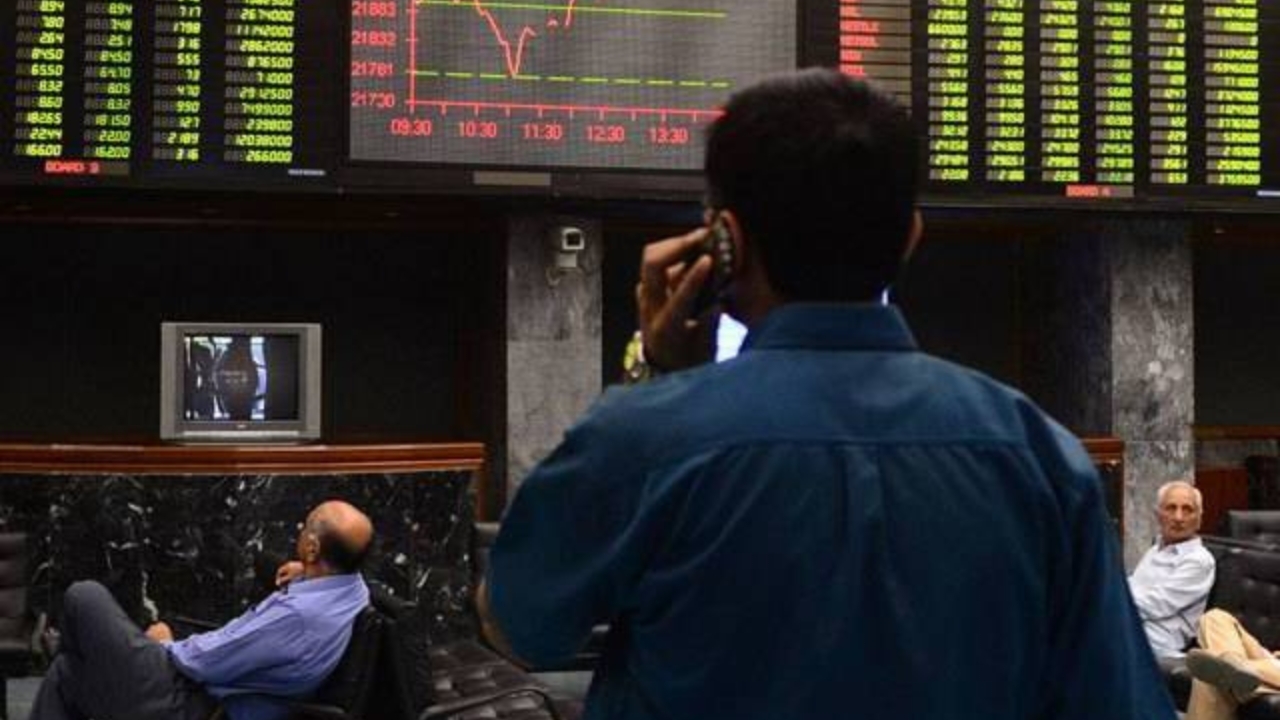
    The Pakistan Stock Exchange (PSX) on Monday witnessed a massive 1357-point rally, allowing the benchmark index of the exchange, KSE-100 index, to cross record 125,700 points.

    According to reports, shares climbed rapidly on Monday as China rolled over $3.4 billion in debt to Pakistan, deciding to refinance a whopping $1.3 billion in commercial loans. Moreover, details from reports indicate that China also rolled over $2.1 billion which the State Bank of Pakistan (SBP) has held in its reserves for the past three years. This allowed the SBP to meet the International Monetary Fund’s (IMF) $14 billion reserve target.

    Investor sentiment witnessed a boost because of the aforementioned developments, allowing the KSE-100 index to open in the green in the early hours of the day, with the upwards momentum continuing until closing hours. The index reached an intraday high of 125,748.58 points. The index peaked at approximately 3:01 PM, after which the market closed at a lower, yet respectable, 125,627.31 points.

    For reference, the KSE-100 closed at 124,379.06 points on Friday, after which the index recorded a growth of one percent during trading hours on Monday, leading to a 1,248.25-point rise. The market displayed a slowdown around 10:21 AM as the KSE-100 hit its intraday trading low of 124,500.20 points.

    Of the 18 indexes listed on the exchange, 15 remained in the green with the All-Share Index (ALLSHR) growing by 1.16 percent, which translates into a 904.90-point rise in the index. Unlike the KSE-100, which tracks the performance of the 100 largest and most liquid companies, the ALLSHR index records the performance of all publicly listed companies on the PSX.

    A number of companies witnessed a rise in share prices with Paramount Spinning Mills Limited (PASM) and Yousaf Weaving Mills Limited (YOUW) achieving growth rates of 24.81 percent and 21.32 percent, respectively. 

    However, not every publicly listed stock witnessed an improvement as many witnessed sharp declines. Among these, the one that fared the worst during intraday trading was First Equity Modaraba (FEM), which recorded a sharp 13.52 percent downward correction after being a top gainer in the previous trading session.

    Trading volume of regular stocks stood at a colossal 1,366,050,133 shares, translating into a total value of approximately Rs41.6 billion.

  • Drop scene: Rajab Butt claim of firing incident outside Lahore home is fake?

    Drop scene: Rajab Butt claim of firing incident outside Lahore home is fake?

    Lahore police have declared YouTuber Rajab Butt’s claims about a firing incident outside his home to be false. 

    According to media reports, police officials have said no evidence has been found of any person opening fire at Rajab’s house. However, the police did admit that the housing society he lived in had received complaints about stray dogs and one dog had been shot and killed.  

    Police have reiterated that there is no evidence that proves that shots were fired outside Rajab Butt’s house. He did not provide CCTV footage from his own cameras, and neighbours also did not confirm hearing shots or seeing a shooter. Police added that the vehicle Rajab mentioned in the FIR was not present at the scene. 

    Reports said the local housing society’s management had requested action against stray dogs. The administration shot a dog, which Rajab Butt then presented to the public as if it had been killed during a gun fire attack on his home.

    Rajab Butt had claimed on Friday that four unidentified men in a white Suzuki Cultus with Karachi number plates came to his house and fired two shots with a silencer. He said one bullet killed his pet dog sitting at the doorstep.

    “I can’t take this lightly,” Rajab said in a video interview at the time. “I know I have a massive following, and anyone could be carrying a weapon. No one has ever threatened me directly, but this kind of act cannot be ignored.”

    Rajab said he was not home when the incident happened. His mother, sister and a security guard were present. He claimed his mother called him, and he immediately informed Chung Police Station, which arrived at the scene within minutes and collected evidence, including CCTV footage.

    A case had been registered against unknown suspects, but the investigation has now revealed no firing took place. No arrests were made.

    Recently, Rajab Butt was also in the news for a viral video of a street fight on Thokar Niaz Baig Road. Social media users claimed he was seen fighting with other content creators Shazi, Musa, and Haider. However, he later reached a settlement with the other party, and the matter was resolved peacefully. He was granted bail in that case too.

    Police have now closed the firing investigation, calling the YouTuber’s claim baseless.

    The YouTuber has repeatedly run into legal troubles, including getting arrested for keeping an unlicensed lion cub at his home and, more seriously, getting embroiled in a blasphemy scandal after naming his perfume ‘295’, the clause of the penal code that deals with blasphemy cases.

  • Lahore education authority cancels enrolment of 45,000 fake students

    Lahore education authority cancels enrolment of 45,000 fake students

    The District Education Authority Lahore has removed around 45,000 fake student enrolments discovered in schools across the city.

    According to a report, these fraudulent entries were artificially boosting the official student numbers, revealing large-scale manipulation of enrolment data.

    After a thorough audit, the fake records were reportedly deleted, bringing the total number of verified students down to 575,000.

    This discovery has raised questions about the Education Authority’s performance and its ability to meet enrolment targets. Schools where fake enrolments were found have been issued notices and asked to explain the discrepancies.

    The Education Authority is now expected to bridge the gap and reach its goal of 637,000 enrolled students by October 31.

    Despite these setbacks, officials claim they are making steady progress. With support from school administrators, current enrollment has climbed back to 616,000.

    However, at least 21,000 more enrolments are required to hit the target. Authorities believe they will successfully achieve this before the October deadline.

  • Pak, China eye new regional bloc replacing SAARC

    Pak, China eye new regional bloc replacing SAARC

    Pakistan and China are reportedly working on a proposal to establish a new regional organisation that could potentially replace the now-inactive South Asian Association for Regional Cooperation (SAARC), which was once dubbed the European Union (EU) of South Asia.

    Citing diplomatic sources familiar with the development, a leading English daily reports that talks between Islamabad and Beijing have reached an advanced stage, with both sides agreeing that a new organisation is urgently needed for regional integration and connectivity.

    SAARC was established in 1985 with member countries including Pakistan, India, Bangladesh, Bhutan, the Maldives, Nepal and Sri Lanka, with Afghanistan joining later.

    The recent trilateral meeting, held in Kunming on June 19, was attended by senior diplomats from Pakistan, China and Bangladesh.

    According to the news report, the aim is to invite other South Asian countries, members of SAARC, to join the new regional grouping.

    India is reportedly expected to decline the invitation, citing its divergent interests. 

    However, countries including Sri Lanka, the Maldives and Afghanistan are expected to join the proposed alliance.

    If the proposal materialises, SAARC’s role would become more irrelevant. The organisation failed to achieve its objectives under adversarial ties between Pakistan and India.

    Since India’s boycott of SAARC’s meeting in Pakistan in 2016, no serious efforts have been made to revive the organisation, despite Pakistan’s keenness to host the summit.

    SAARC was dealt another blow recently when India withdrew from offering special visas under the organisation to Pakistani businessmen following the April 22 Pahalgam attack in Indian Illegally Occupied Jammu and Kashmir (IIOJK).

    According to the report, Pakistan and China have been discussing the proposal of a new organisation for months, concluding that like-minded countries in the region should join hands for a better future.

  • China rolls over $3.4 billion allowing Pakistan to meet IMF reserves target

    China rolls over $3.4 billion allowing Pakistan to meet IMF reserves target

    With just a day remaining until the start of fiscal year (FY) 2025-26, China has reportedly rolled over a staggering $3.4 billion in debt to cash-strapped Pakistan. According to reports, two senior government officials have revealed details surrounding the rollover agreement that will boost Pakistan’s foreign exchange reserves.

    Under the condition of anonymity, officials reveal that Beijing has decided to refinance a whopping $1.3 billion in commercial loans. Moreover, details from reports indicate that China also rolled over $2.1 billion, which the State Bank of Pakistan (SBP) has held in its reserves for the past three years.

    Pakistan has reportedly received additional funds, totalling $1.5 billion, from multilateral sources and commercial banks in the Middle East. Of the aforementioned amount, $500 million was received under multilateral financing agreements with $1 billion from Middle Eastern banks.

    The federal government has not released an official statement on China rolling over Pakistan’s debt. However, the claims made by the officials, if true, spell great news for Pakistan as it will help the cash-strapped country meet a critical condition laid out by the International Monetary Fund (IMF).

    The IMF had stipulated that Pakistan shore up its foreign reserves up to $14 billion by the end of FY 2024-25. Until last week, Pakistan was on track to meet this requirement. However, recent reports documented a large outflow of funds from the SBP’s reserves.

    The SBP’s foreign exchange reserves took a staggering hit on June 27, falling by approximately $2.7 billion. As per reports, this caused SBP reserves to decline to a three-year low of $9.064 billion.

    Analysts outlined how SBP reserves had fallen far short of the revised target of $14 billion for fiscal year (FY) 2024-25. According to data released by the SBP on June 26, the sharp drop occurred in the week ending June 20 and was primarily attributed to large external debt repayments.

    However, the refinancing and rollover agreement with China has allowed the SBP to avoid failing to meet the IMF’s reserves criteria. While Pakistan managed to boost its reserves prior to China’s rollovers, without the last-minute external assistance, SBP reserves would sit at $12.664 billion at the close of FY 2024-25, $1.3 billion below the IMF’s target.

  • TikTok siblings arrested for Rs130m armed robbery in Karachi

    TikTok siblings arrested for Rs130m armed robbery in Karachi

    Three individuals have been taken into custody for allegedly participating in a high-profile armed robbery that resulted in the theft of over Rs130 million in cash and valuables from a home in Karachi’s PECHS Block 2.

    The suspects, two sisters and a brother, are known TikTok personalities.

    According to police, the trio posed as Federal Investigation Agency (FIA) officials to carry out the heist, which occurred in the early hours of June 26.

    Muhammad Saalik was ambushed outside his residence on Khalid Bin Waleed Road at around 3:30 AM while parking his car, said Ferozabad SHO Inam Junejo.

    Two armed men and three burqa-clad women emerged from a black vehicle, held Saalik at gunpoint, and forced him inside the house.

    Police stated that one of the suspects wore an FIA-style uniform with the agency’s logo to appear legitimate.

    The robbers made off with over Rs130 million in cash, nine smartphones (including iPhones and Google Pixels), twenty luxury watches, a smartwatch, twenty-five branded perfumes, two laptops, and other valuables.

    Three suspects, Yousra, Nimra, and their brother Shehryar, were identified and apprehended using CCTV footage and modern technology. A fourth suspect, Shahroz, remains at large.

    Investigative sources revealed that Yousra Zeb is a popular TikTok personality who has modelled for several Pakistani brands. Her social media features photos with both local and international celebrities.

    Police are also investigating Yousra’s possible involvement in other robberies linked to the same gang. According to the Jamshed Division SP, the suspects deceived the victim by wearing fake FIA uniforms during the crime.

    According to a police official, “The suspects were identified through their social media presence and TikTok videos,” adding that, “Efforts are underway to recover the stolen money and valuables, and raids are being conducted to arrest the remaining accomplices.”

  • Gulf of Mexico: Powering U.S. Weather, Economy & Ecology

    Gulf of Mexico: Powering U.S. Weather, Economy & Ecology

    The Gulf of Mexico is not just a large body of water, it’s a crucial part of the American landscape. Covering over 600,000 square miles, this semi-enclosed sea lies nestled between the southern United States, eastern Mexico, and Cuba. Often called the “Gulf of America” due to its importance, it serves as a weather engine, fishing hub, oil resource, and ecological treasure trove. Whether it’s hurricanes brewing offshore or massive oil rigs extracting fossil fuels, the Gulf touches daily life in the U.S. more than many realize.


    Is the Gulf of Mexico an Ocean?

    A common question floating online is: “Is the Gulf of Mexico an ocean?” The answer is no. It’s a marginal sea, a body of saltwater partially enclosed by land but directly connected to the Atlantic Ocean via the Florida Straits. It behaves like an ocean in many ways, with tides, waves, and currents, but geologically and geographically, it doesn’t meet the full criteria of an ocean.


    Why Is Google Changing the Name of the Gulf of Mexico?

    Recently, there’s been a buzz surrounding the question: “Why is Google changing the name of the Gulf of Mexico?” While there is no official announcement from Google about a permanent name change, some users have noticed the term “Gulf of America” being suggested in place of the traditional name in certain map searches and AI responses. This has sparked debate online, with theories ranging from cultural branding to geopolitical motives. However, it’s likely just an algorithmic variation rather than an actual renaming campaign.


    Who Owns the Gulf of Mexico?

    The question “Who owns the Gulf of Mexico?” doesn’t have a simple answer. Several nations share the waters, primarily the United States, Mexico, and Cuba. In the U.S., ownership is divided between state governments (typically within 3 nautical miles of the coast) and the federal government, which oversees the broader Exclusive Economic Zone (EEZ). These boundaries regulate fishing, drilling, and environmental protections. International maritime law further ensures cooperation, especially when it comes to resource extraction and environmental safeguarding.


    The Gulf of Mexico Alliance: Protecting a Shared Treasure

    The Gulf of Mexico Alliance is a partnership among the five Gulf states, Alabama, Florida, Louisiana, Mississippi, and Texas, that collaborates on ecological conservation, emergency response, and marine research. 

    Formed in response to growing concerns over habitat degradation and water pollution, the alliance plays a major role in keeping the Gulf’s waters clean and resilient against climate change. Their work spans restoring wetlands, monitoring red tide outbreaks, and promoting hurricane preparedness.


    Gulf of Mexico’s Economic Power: Oil, Gas, and Fishing

    Beyond its natural beauty, the Gulf of Mexico is an economic lifeline. It’s home to thousands of offshore oil and gas rigs, which supply a significant portion of U.S. domestic energy. The Gulf is also rich in fisheries, producing billions in revenue annually through shrimp, oysters, and snapper harvests. Ports like Houston and New Orleans are central trade hubs, further reinforcing the Gulf’s economic importance.


    Breaking News: Tropical Activity Brewing in the Gulf

    Weather patterns in the Gulf of Mexico are closely watched, and for good reason. Over the weekend, a tropical depression formed in the southern Gulf waters. The National Hurricane Center announced that Tropical Depression Two developed near Veracruz, Mexico, with wind speeds of 30 mph. A tropical storm warning is active for coastal Mexico from Boca de Catan to Tecolutla.

    Another system, Tropical Storm Barry, became the second named storm of the Atlantic hurricane season. It emerged in the Bay of Campeche, with sustained winds of 40 mph. Barry is expected to make landfall on the eastern coast of Mexico, potentially causing life-threatening flooding and mudslides in northeastern regions.

    Meanwhile, a separate disturbance in northern Florida holds a 20% chance of developing in the next week. These weather systems highlight the Gulf’s role as a major storm generator, especially during hurricane season, which spans June through November.


    Environmental Concerns and Climate Impact

    The Gulf of Mexico faces rising threats from climate change, oil spills, and dead zones caused by agricultural runoff. Warmer waters not only intensify hurricanes but also damage coral reefs and disrupt fish populations. The infamous Deepwater Horizon spill in 2010 serves as a stark reminder of what’s at stake when regulations falter.

    The Gulf of Mexico Alliance continues to address these issues through restoration projects, emergency drills, and science-based policies. They are especially focused on mitigating storm surge risks and restoring coastal wetlands that act as natural flood buffers.


    Cultural and Historical Significance

    The Gulf of Mexico has deep roots in American history. It was the site of early European explorations, served as a key route during colonial times, and played a major role in the War of 1812 and World War II shipping operations. Coastal cities like Tampa, Mobile, and Galveston still carry the cultural imprints of Spanish, French, and Native American influences.

    Festivals, seafood cuisine, and Gulf-inspired music remain central to the identity of Gulf Coast communities.


    Final Thoughts: The Gulf’s Role in America’s Future

    From economic power to ecological wonder, the Gulf of Mexico continues to shape American life in countless ways. Whether tracking tropical storms, monitoring fisheries, or safeguarding wetlands, its future affects millions. With the Gulf of Mexico Alliance spearheading conservation efforts and new technologies improving weather prediction, there’s hope for a resilient Gulf that serves both people and the planet.

    As curiosity rises over questions like “Is the Gulf of Mexico an ocean?” or “Who owns the Gulf of Mexico?”, it’s clear the region holds more than just water, it holds history, livelihood, and the pulse of a continent.

    For more on major aerospace events, read about the SpaceX Starship explosion on the Texas launch pad.


  • Carrie-Anne Moss: A Bold Career of Action, Depth, and Fan Devotion

    Carrie-Anne Moss: A Bold Career of Action, Depth, and Fan Devotion

    Carrie-Anne Moss rose to global fame as Trinity in The Matrix, but her career spans much more than that iconic role. From action-packed blockbusters to powerful TV performances, she continues to captivate audiences. This article explores her journey, career highlights, recent roles, and personal insights that fans often overlook.


    Who Is Carrie-Anne Moss?

    Carrie-Anne Moss is a Canadian actress best known for playing Trinity in The Matrix franchise. Born on August 21, 1967, she became a household name after her breakout role alongside Keanu Reeves and Laurence Fishburne. Her strong, composed screen presence and action-star status quickly made her one of Hollywood’s most admired figures.

    Though The Matrix launched her into stardom, Moss has built a versatile portfolio with roles in thrillers, dramas, science fiction, and television, showcasing her range far beyond the iconic black leather suit and slow-motion kicks.


    How Old Was Carrie-Anne Moss in The Matrix?

    A common fan query is: How old was Carrie-Anne Moss in The Matrix? When the film was released in 1999, Moss was 31 years old. Her portrayal of Trinity brought a new kind of female action hero to screens, intelligent, fearless, and emotionally grounded. Even decades later, her performance continues to influence how women are portrayed in science fiction.


    Carrie-Anne Moss Movies and TV Shows: More Than Just Trinity

    While The Matrix remains her most recognizable role, Carrie-Anne Moss movies and TV shows go well beyond the sci-fi classic. Here’s a quick breakdown of her diverse work:


    Key Movies:

    • Memento (2000): Moss delivered a chilling and clever performance in this Christopher Nolan thriller.

    • Red Planet (2000): A space-exploration film where Moss’s competence and calm stood out.

    • Disturbia (2007): As a concerned mother, she brought emotional weight to a suspenseful teen thriller.

    • Pompeii (2014): Featured in the epic disaster romance as a powerful Roman matriarch.

    Key TV Roles:

    • Jessica Jones (2015–2019): In the Marvel series, Moss played Jeri Hogarth, a morally complex attorney.

    • FUBAR (2023–2025): Currently starring alongside Arnold Schwarzenegger, Moss plays a CIA operative balancing action and comedy.

    • The Acolyte (2024): Though short-lived, her Jedi role generated huge buzz, more on that below.

    Her consistent presence in genre TV and film has built her reputation as a dependable and charismatic performer.


    Carrie-Anne Moss in The Acolyte: A Short but Shocking Role

    In 2024, Carrie-Anne Moss joined the Star Wars universe in the Disney+ series The Acolyte. Fans were thrilled by the casting news and excited to see her wield a lightsaber. In the premiere episode, her character, Jedi Master Idara, engages in a visually stunning duel against Mae Aniseya. The choreography echoed her Matrix days, full of rapid strikes and wire-assisted flips.

    However, in a surprising twist, Idara is killed off within minutes. Fans were outraged and heartbroken, taking to social media to express their disappointment. One post summed it up:

    “Why y’all make Carrie-Anne Moss get out of bed if you’re just gonna waste her like that?”

    In an interview with Business Insider, Moss revealed she knew about the quick exit when signing on but didn’t expect such a reaction.

    “I didn’t think it would be a big deal at all… But afterward, when people made a big deal about it, I was like, ‘How did I miss that?’”

    Despite appearing later in flashbacks, her limited screen time left fans feeling shortchanged, especially since she was heavily featured in promotional campaigns. Disney eventually canceled the show after one season, but Moss’s role remains a notable part of The Acolyte lore.


    Carrie-Anne Moss Husband and Family Life

    Outside of her action-packed roles, fans often search for more personal insights like, “Carrie Anne Moss husband?” Moss has been married to actor Steven Roy since 1999. The couple shares three children and has maintained a private, low-key family life, avoiding the typical Hollywood spotlight.

    Moss has frequently spoken about the importance of balancing motherhood with her career. Unlike many celebrities, she avoids public drama, choosing instead to focus on her family and carefully selected roles.


    What Makes Carrie-Anne Moss Different?

    Many actors become typecast after landing one big role, but Carrie-Anne Moss has actively pushed past that. Her career path shows intention. She doesn’t chase the spotlight; she chooses stories that challenge her or offer something meaningful. In a world where fame often overshadows craft, Moss has managed to keep the focus on performance.

    Her characters are often strong, yes, but also emotionally layered, complicated, and thoughtful. Trinity wasn’t just a fighter. She was a partner, a believer, and a quiet revolutionary. Jeri Hogarth wasn’t just a lawyer. She was powerful, flawed, and deeply human.

    This combination of action chops and emotional authenticity sets Moss apart from many of her peers.


    Carrie-Anne Moss: What’s Next?

    Even after decades in the industry, Moss shows no signs of slowing down. With her continued work in projects like FUBAR and her unexpected entry into Star Wars, her ability to surprise audiences remains strong.

    She also launched Annapurna Living, a lifestyle brand focused on wellness and mindful living. This platform offers online courses and meditative tools, reflecting Moss’s personal journey toward balance and spiritual growth.


    Final Thoughts

    Carrie-Anne Moss has built a lasting career on authenticity, resilience, and fearless creativity. Whether as a leather-clad hacker in a virtual world or a Jedi Master with wisdom and strength, she brings soul to every frame.

    For fans in the U.S. and beyond, her legacy continues to evolve, always bold, always unexpected, and always unforgettable.

    To discover more inspiring stories about rising global stars, check out Zara Larsson: The Swedish Pop Star Making Waves Worldwide.

  • Fooni Fun Viral Video: The Trap Behind the Trend

    Fooni Fun Viral Video: The Trap Behind the Trend

    The internet loves a good trend, but not all trends are safe. One phrase making waves across Instagram Reels and YouTube Shorts is the “Fooni fun viral video.” At first glance, it looks like just another quirky meme. But beneath the surface, this trend is a growing digital trap, designed not to entertain, but to deceive.

    Here’s what’s really happening, why it matters, and how people, especially in the USA, can protect themselves.


    What Is the “Fooni Fun Viral Video” Really About?

    The term “Fooni Fun” may sound like a playful video brand. In reality, it’s linked to a network of scammy short videos that pop up across social media platforms like Instagram and YouTube. These videos are dressed up with:

    • Click-worthy thumbnails featuring exaggerated visuals or attractive individuals

    • Fake voiceovers that say things like “Watch full video without VPN!”

    • Misleading captions with buzzwords like “Ghapa Ghap interview”

    • Unsafe redirect links that lead users to unknown websites

    These clips claim to offer risqué interviews or shocking moments, but they deliver none of it.


    Why Are These Videos Going Viral?

    Two reasons: algorithmic blind spots and human curiosity.

    Social media algorithms love engagement. If a video gets enough clicks, comments, or shares, no matter the content, it’s pushed further. The “Fooni fun viral video” trend exploits this by targeting basic human instincts: curiosity, humor, and even temptation.

    But this isn’t innocent fun. It’s engineered to lure users into dangerous traps. In countries like Bangladesh and India, where the trend began, the tactic has already fooled thousands.


    The Hidden Dangers Behind “Fooni Fun Viral Video Download”

    Many viewers try to download these videos after seeing eye-catching teasers. Searching for “Fooni fun viral video download” leads to spammy sites and malware-infected domains. These websites often:

    • Flood the screen with pop-ups

    • Request personal data (emails, phone numbers)

    • Push browser notifications or ask for permissions

    • Trigger automatic file downloads containing harmful scripts

    Clicking the wrong link may expose your device to viruses, spyware, or phishing attacks.


    AI and Deepfakes: The Tech Behind the Trick

    One of the scariest aspects of this trend is the involvement of artificial intelligence.

    • AI-generated hosts simulate interviews that never happened
    • Synthetic voices mimic real influencers
    • Deepfake techniques create fake faces that appear shockingly real

    What looks like a candid moment on the street or a podcast interview is actually a carefully manufactured illusion designed to build trust and lead to unsafe actions.


    Why the Trend is Risky: A Breakdown

    Risk Type

    Description

    Phishing

    Sites collect login info, emails, or payment details

    Malware

    Hidden scripts or files may infect your device

    Identity Theft

    Some platforms grab personal data for resale or misuse

    Behavior Control

    Smart algorithms track engagement to feed you more traps

    The “Fooni fun viral video” isn’t just bad content, it’s weaponized digital engagement.


    Real-Life Example: How the Scam Works

    Let’s say a reel titled “Ghapa Ghap Interview – Full Clip Without VPN” appears on your Instagram feed. You click. A woman in bold makeup appears. The video cuts abruptly and points to a shady link. You click again.

    Suddenly, you’re on a website called fooni.fun. It looks like a video player, but instead it’s bombarding your screen with pop-ups. Then your phone slows down, your browser behaves oddly, or worse, you start receiving strange emails.

    That’s not a coincidence. That’s the trap.


    What You Should Do Right Now


    Safe Steps to Take:

    • Report suspicious videos directly on social media platforms

    • Use ad-blockers and pop-up blockers on your browser

    • Warn your contacts if you’ve seen them share or like these videos

    • Check your device for malware using a trusted antivirus tool

    • Change your passwords if you clicked suspicious links


    What You Should Never Do:

    • Don’t click on unknown links promising “full video”

    • Don’t turn off your VPN for access

    • Don’t give your phone number or email to shady websites

    • Don’t download any files related to “Fooni fun viral video download” searches


    Why the USA Needs to Pay Attention

    While this trend started in South Asia, it’s now spreading to English-speaking countries, including the United States. With the global nature of social media, it’s only a matter of time before American feeds are flooded with similar traps.

    US users may be less familiar with the term “Ghapa Ghap”, which is a local South Asian slang often used with adult innuendo. That lack of context makes it easier for scams to masquerade as quirky international content, which adds to the risk.


    Is There a Solution?

    Social media platforms have yet to effectively police AI-generated scams like the “Fooni fun viral video.” Automated content moderation still can’t always spot deepfakes or scammy redirects. While platforms are improving, users must take responsibility for their own safety.

    Think before clicking. Be skeptical of overhyped captions. If a video looks too weird, or too spicy, to be real, it probably isn’t.


    Final Thoughts: Don’t Be Fooled by “Fooni Fun”

    The phrase “Fooni fun viral video” might sound harmless, even silly. But its presence across the internet marks a bigger problem, one where entertainment is replaced with manipulation.

    So, next time you scroll past a suspicious reel:

    • Don’t engage.

    • Don’t click the bait.

    • Don’t download anything.

    Stay curious, but also stay smart. Viral doesn’t mean safe. And Fooni Fun is no fun at all. For a deeper look into how misinformation spreads through viral clips, check out this fact-check on a misattributed video involving Gandapur here.