Tag: AI

  • OpenAI comes to Asia with new office in Tokyo

    OpenAI comes to Asia with new office in Tokyo

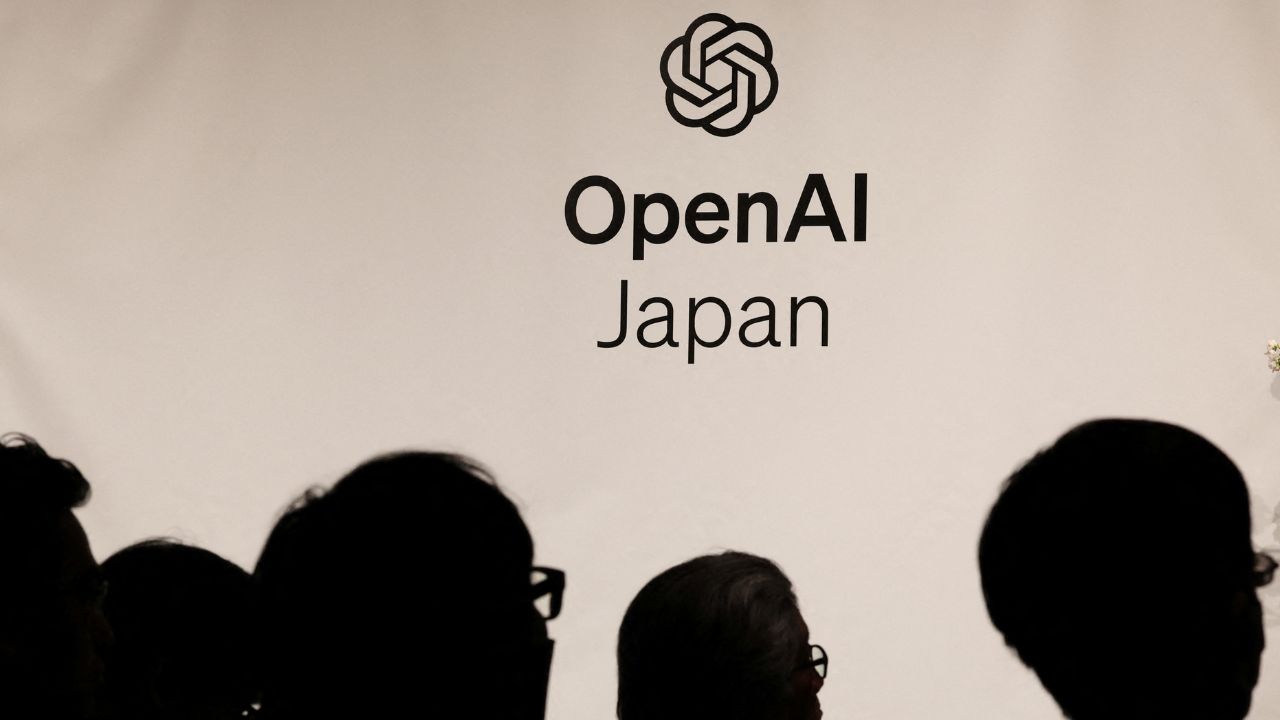
    Tokyo (AFP) – ChatGPT creator OpenAI opened a new office in Tokyo on Monday, the first Asian outpost for the groundbreaking tech company as it aims to ramp up its global expansion.

    Thanks to the stratospheric success of its generative tools that can create text, images and even video, OpenAI has become a leader in the artificial intelligence revolution and one of the most significant tech companies in the world.

    The Japan office is the latest part of the Microsoft-backed firm’s international push, having already set up bases in London and Dublin.

    “We’re excited to be in Japan which has a rich history of people and technology coming together to do more,” OpenAI CEO Sam Altman said in a statement.

    “We believe AI will accelerate work by empowering people to be more creative and productive, while also delivering broad value to current and new industries that have yet to be imagined.”

    OpenAI said its Japan office would bring it closer to enterprise clients — including global auto leader Toyota, tech conglomerate Rakuten and industrial giant Daikin — that are using its products “to automate complex business processes”.

    “We chose Tokyo as our first Asian office for its global leadership in technology, culture of service, and a community that embraces innovation,” the company added.

    OpenAI also announced a new Japanese-language version of ChatGPT on Monday, and hailed the country as a “key global voice on AI policy”, offering potential solutions to issues such as labour shortages.

    The company said its Japan office would also help “accelerate the efforts of local governments, such as Yokosuka City” in their drive to improve the efficiency of public services.

    The Tokyo ‘buzz’

    The San Francisco-based firm has been reportedly in discussions with hundreds of companies as it looks to expand revenue sources.

    OpenAI’s chief operating officer Brad Lightcap told Bloomberg in an interview published this month that the firm has seen huge demand for its corporate version of ChatGPT.

    “We have a very global base of demand,” he said in the interview.

    “So we want to show up where our customers are. We feel a lot of pull from places like Japan and Asia broadly.”

    OpenAI, reportedly valued at $80 billion or more earlier this year, is the latest major tech firm to invest in Japan.

    Microsoft, one of OpenAI’s biggest investors, last week announced a separate $2.9 billion investment to provide Japan with the powerful graphics processing units crucial for running AI apps, and to train three million Japanese workers in AI skills.

    Amazon Web Services is spending $14 billion to expand its cloud infrastructure in Japan, while Google has launched a regional cybersecurity hub in the country.

    Experts say geopolitical tensions have made Japan an increasingly attractive partner for tech firms compared to China, in addition to advantages such as supportive policies and a highly educated talent pool.

    “What happens in Tokyo can create a buzz,” Hideaki Yokota, vice president of the MM Research Institute, told AFP.

    “A base in Tokyo should help (OpenAI) attract much young talent.”

  • Meta to start labeling AI-generated content in May

    Meta to start labeling AI-generated content in May

    Facebook and Instagram giant Meta on Friday said it will begin labeling AI-generated media beginning in May, as it tries to reassure users and governments over the risks of deepfakes.

    The social media juggernaut added that it will no longer remove manipulated images and audio that don’t otherwise break its rules, relying instead on labeling and contextualization, so as to not infringe on freedom of speech.

    The changes come as a response to criticism from the tech giant’s oversight board, which independently reviews Meta’s content moderation decisions.

    The board in February requested that Meta urgently overhaul its approach to manipulated media given the huge advances in AI and the ease of manipulating media into highly convincing deepfakes.

    The board’s warning came amid fears of rampant misuse of artificial intelligence-powered applications for disinformation on platforms in a pivotal election year not only in the United States but worldwide.

    Meta’s new “Made with AI” labels will identify content created or altered with AI, including video, audio, and images. Additionally, a more prominent label will be used for content deemed at high risk of misleading the public.

    “We agree that providing transparency and additional context is now the better way to address this content,” Monika Bickert, Meta’s Vice President of Content Policy, said in a blog post.

    “The labels will cover a broader range of content in addition to the manipulated content that the Oversight Board recommended labeling,” she added.

    These new labeling techniques are linked to an agreement made in February among major tech giants and AI players to cooperate on ways to crack down on manipulated content intended to deceive voters.

    Meta, Google and OpenAI had already agreed to use a common watermarking standard that would invisibly tag images generated by their AI applications.

    Identifying AI content “is better than nothing, but there are bound to be holes,” Nicolas Gaudemet, AI Director at Onepoint, told AFP.

    He took the example of some open source software, which doesn’t always use this type of watermarking adopted by AI’s big players.

    Meta said its rollout will occur in two phases with AI-generated content labeling beginning in May 2024, while the removal of manipulated media solely based on the old policy will cease in July.

    According to the new standard, content, even if manipulated with AI, will remain on the platform unless it violates other rules, such as those prohibiting hate speech or voter interference.

    Recent examples of convincing AI deepfakes have only heightened worries about the easily accessible technology.

    The board’s list of requests was part of its review of Meta’s decision to leave a manipulated video of US President Joe Biden online last year.

    The video showed Biden voting with his adult granddaughter, but was manipulated to falsely appear that he inappropriately touched her chest.

    In a separate incident not linked to Meta, a robocall impersonation of Biden pushed out to tens of thousands of voters urged people to not cast ballots in the New Hampshire primary.

    In Pakistan, the party of former prime minister Imran Khan has used AI to generate speeches from their jailed leader.

  • UN chief ‘deeply troubled’ by reports Israel using AI to identify Gaza targets

    UN chief ‘deeply troubled’ by reports Israel using AI to identify Gaza targets

    UN Secretary-General Antonio Guterres on Friday expressed serious concern over reports that Israel was using artificial intelligence to identify targets in Gaza, resulting in many civilian deaths.

    According to a report in independent Israeli-Palestinian magazine +972, Israel has used AI to identify targets in Gaza — in some cases with as little as 20 seconds of human oversight.

    Guterres said that he was “deeply troubled by reports that the Israeli military’s bombing campaign includes Artificial Intelligence as a tool in the identification of targets, particularly in densely populated residential areas, resulting in a high level of civilian casualties.”

    “No part of life and death decisions which impact entire families should be delegated to the cold calculation of algorithms,” he said.

    The +972 report claims that “the Israeli army has marked tens of thousands of Gazans as suspects for assassination, using an AI targeting system with little human oversight and a permissive policy for casualties.”

    The report said that, according to “six Israeli intelligence officers”, a system dubbed Lavender had “played a central role in the unprecedented bombing of Palestinians, especially during the early stages of the war.”

    “According to the sources, its influence on the military’s operations was such that they essentially treated the outputs of the AI machine ‘as if it were a human decision’,” +972 reported.

    Two sources said “the army also decided during the first weeks of the war that, for every junior Hamas operative that Lavender marked, it was permissible to kill up to 15 or 20 civilians”.

    If “the target was a senior Hamas official… the army on several occasions authorized the killing of more than 100 civilians,” it added.

    The Israeli army, known as the IDF, on Friday rejected the claims.

    “The IDF does not use an artificial intelligence system that identifies terrorist operatives or tries to predict whether a person is a terrorist,” it said.

    Instead it has a “database whose purpose is to cross-reference intelligence sources… on the military operatives of terrorist organizations” to be used as a tool for analysts, it added.

    “The IDF does not carry out strikes when the expected collateral damage from the strike is excessive,” it said, using a term that includes civilian casualties.

    Israeli genocide in the Gaza Strip has killed at least 33,091 people since October 7, mostly women and children, according to the health ministry.

    The United Nations has warned of imminent famine in the besieged territory.

    Israel began hyping AI-powered targeting after an 11-day conflict in Gaza during May 2021, which commanders branded the world’s “first AI war”.

    The military chief during the 2021 war, Aviv Kochavi, told Israeli news website Ynet last year the force had used AI systems to identify “100 new targets every day”, instead of 50 a year previously.

    Weeks into the latest Gaza war, a blog entry on the Israeli military’s website said its AI-enhanced “targeting directorate” had identified more than 12,000 targets in just 27 days.

    An unnamed Israeli official was quoted as saying the AI system, called Gospel, produced targets “for precise attacks on infrastructure associated with Hamas, inflicting great damage on the enemy and minimal harm to those not involved”.

    But an anonymous former Israeli intelligence officer, quoted in November by +972, described Gospel’s work as creating a “mass assassination factory”.

    In a rare confession of wrongdoing, Israel on Friday admitted a series of errors and violations of its rules in the killing of seven aid workers in Gaza, saying it had mistakenly believed it was “targeting armed Hamas operatives”.

    Alessandro Accorsi, a senior analyst at Crisis Group, said the +972 report was “very concerning”.

    “It feels very apocalyptic. It’s clear… the degree of human control is very low,” he told AFP.

    “There are a thousand questions around this obviously — how moral it is to use it — but it is hardly surprising it is used,” he said.

    Johann Soufi, a human rights lawyer and former director of the UN Palestinian refugee agency UNRWA’s legal office in Gaza, said the +972 article described methods that were “undeniably war crimes”.

    They were “likely crimes against humanity” in view of the high civilian casualties, he added on X, formerly Twitter.

  • AI Tools Generate Sexist Content, Warns UN

    AI Tools Generate Sexist Content, Warns UN

    The world’s most popular AI tools are powered by programs from OpenAI and Meta that show prejudice against women, according to a study launched on Thursday by the UN’s cultural organisation UNESCO.

    The biggest players in the multibillion-dollar AI field train their algorithms on vast amounts of data largely pulled from the internet, which enables their tools to write in the style of Oscar Wilde or create Salvador Dali-inspired images.

    But their outputs have often been criticised for reflecting racial and sexist stereotypes, as well as using copyrighted material without permission.

    UNESCO experts tested Meta’s Llama 2 algorithm and OpenAI’s GPT-2 and GPT-3.5, the program that powers the free version of popular chatbot ChatGPT.

    The study found that each algorithm — known in the industry as Large Language Models (LLMs) — showed “unequivocal evidence of prejudice against women”.

    The programs generated texts that associated women’s names with words such as “home”, “family” or “children”, but men’s names were linked with “business”, “salary” or “career”.

    While men were portrayed in high-status jobs like teachers, lawyers and doctors, women were frequently prostitutes, cooks or domestic servants.

    GPT-3.5 was found to be less biased than the other two models.

    However, the authors praised Llama 2 and GPT-2 for being open source, allowing these problems to be scrutinised, unlike GPT-3.5, which is a closed model.

    AI companies “are really not serving all of their users”, Leona Verdadero, a UNESCO specialist in digital policies, told AFP.

    Audrey Azoulay, UNESCO’s director general, said the general public were increasingly using AI tools in their everyday lives.

    “These new AI applications have the power to subtly shape the perceptions of millions of people, so even small gender biases in their content can significantly amplify inequalities in the real world,” she said.

    UNESCO, releasing the report to mark International Women’s Day, recommended AI companies hire more women and minorities and called on governments to ensure ethical AI through regulation.

  • ChatGPT cranks out gibberish for hours

    ChatGPT cranks out gibberish for hours

    ChatGPT spewed nonsensical answers to user’s queries for hours Tuesday into Wednesday before eventually returning to its apparent senses.

    OpenAI did not explain what went awry with its generative artificial intelligence (AI) tool, considered the one to beat in the technology sector.

    “We are investigating reports of unexpected responses from ChatGPT,” OpenAI said on its status website when the software seemed to go wacky on Tuesday afternoon.

    ChatGPT was giving “peculiar” responses, generating nonexistent words, incomplete sentences and general gobbledygook, developers using the tool said in a discussion forum on the OpenAI website.

    “It gives me meaningless words followed by a bizarre list,” one developer lamented in the forum.

    “It feels as if my GPT is haunted or something has been compromised, either on my end or at OpenAI’s (end).”

    It wasn’t until more than 16 hours had passed that OpenAI updated the page with a message that ChatGPT was operating normally.

    The San Francisco based technology firm replied to an AFP query by directing it to the ChatGPT status page.

    OpenAI recently concluded a deal with investors that reportedly valued the start-up at $80 billion or more, after a roller-coaster year for the tech firm.

    The agreement, reported by the New York Times but not yet confirmed by OpenAI, would mean the value of the company — a world leader in generative AI — would have nearly tripled in under 10 months.

    OpenAI led a revolution in AI when it placed its ChatGPT program online in late 2022.

    The immediate success of the interface sparked tremendous interest in the cutting-edge technology, capable of producing text, sounds and images upon demand.

    OpenAI — which is also the maker of image-generating DALL-E — recently released a new tool named “Sora,” which can create realistic videos of up to a minute long via simple user prompts.

    Microsoft has invested some $13 billion in OpenAI, using the startup’s technology in Bing and other services.

    Microsoft is locked in fierce competition with Google to roll out new AI-infused tools, to the point that the US Federal Trade Commission in January launched an investigation into the enormous investments by Microsoft, Google and Amazon in such specialized start-ups.

  • Dead politicians come back to life for Indian elections

    Dead politicians come back to life for Indian elections

    Dead Indian politicians are coming back to life with the help of artificial intelligence as the election is around the corner in the country.

    As election campaigns are underway, certain political contenders are resorting to resurrecting dead politicians to appeal to the public. In January, M Karunanidhi, Indian writer and politician, made an appearance during a live assembly via projected screen, and congratulated his “82-year-old friend and fellow politician” TR Baalu on the launch of his autobiographical book.

    Karunanidhi, who died in 2018, has been resurrected thrice as of yet.

    Deep fake speeches have also been used to highlight his son’s achievements, MK Stalin, who is leading the Dravida Munnetra Kazhagam (DMK) party.

    This development raises profound questions about the ethical and legal implications of using AI to resurrect deceased individuals and ascribe opinions to them.

    The decision to utilise AI for elections has multiple downsides such as lack of authenticity, ethics etc.

  • AI giants to unveil pact to fight political deepfakes in year of crucial elections worldwide

    AI giants to unveil pact to fight political deepfakes in year of crucial elections worldwide

    Tech giants including Meta, Microsoft, Google and OpenAI are working on a pact to jointly crack down on AI content intended to deceive voters ahead of crucial elections around the world this year, companies involved said Tuesday.

    Currently under negotiation by the companies, this so-called “accord” on deepfakes and other dangerous content is set to be announced during the Munich Security conference on Friday.

    “In a critical year for global elections, technology companies are working on an accord to combat the deceptive use of AI targeted at voters,” a spokesperson for Meta said in an emailed statement to AFP on Tuesday.

    “Adobe, Google, Meta, Microsoft, OpenAI, TikTok and others are working jointly toward progress on this shared objective,” the statement added.

    According to the Washington Post, which first reported the existence of the project, the companies will agree to develop ways to identify, label and control AI-generated images, videos and audio that aim to deceive voters.

    The idea comes as big tech companies are under considerable pressure over fears that AI-powered applications could be misused in a pivotal election year.

    Meta, Google and OpenAI have already agreed to use a common watermarking standard that would tag images generated by their AI applications, such as OpenAI’s ChatGPT, Microsoft’s Copilot or Google’s Gemini (formerly Bard).

    Recent examples of convincing AI deepfakes have only heightened worries about the easily accessible technology.

    Last month, a robocall impersonation of US President Joe Biden pushed out to tens of thousands of voters urged people to not cast ballots in the New Hampshire primary.

    In Pakistan, the party of former prime minister Imran Khan has used AI to generate speeches from their jailed leader.

  • Fact Check: Did Damon Imani actually tell World Economic Forum to f*** new world order?

    Fact Check: Did Damon Imani actually tell World Economic Forum to f*** new world order?

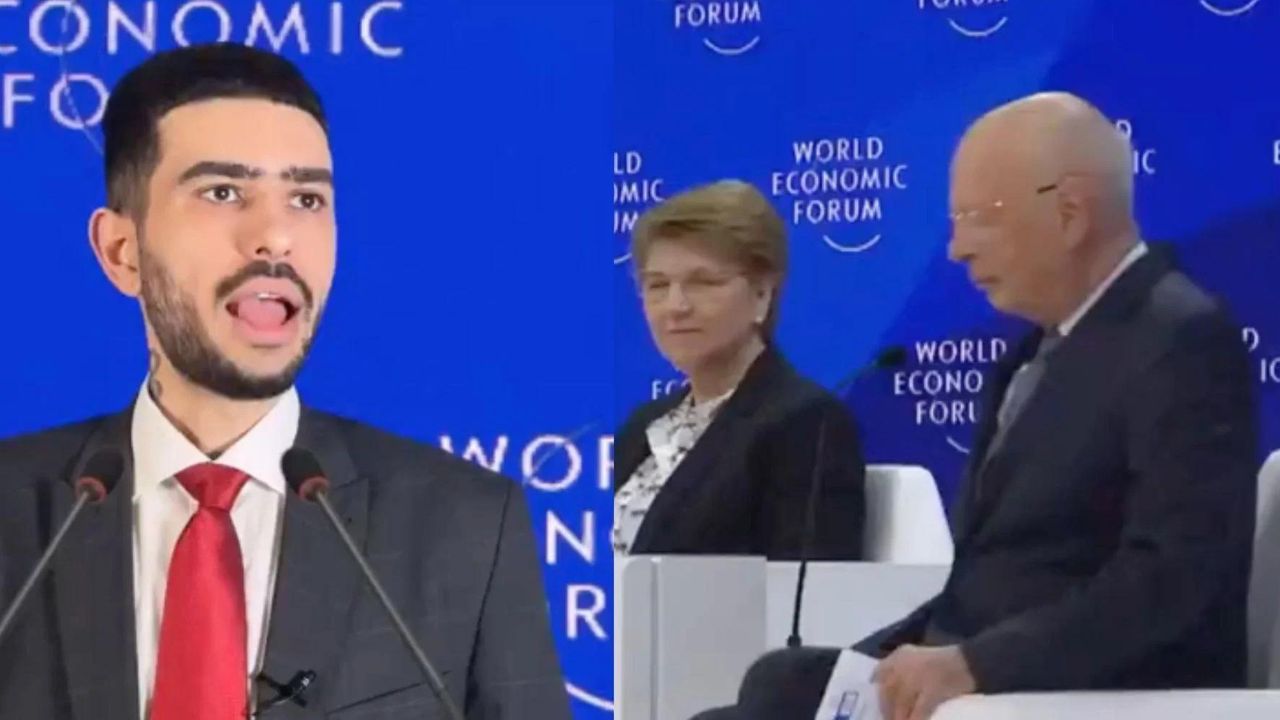
    A video circulating on the internet featuring Damon Imani allegedly hurling swear words at Klaus Schwab-Chairperson of the World Economic Forum-during the 2024 Davos Meeting, has sparked curiosity among netizens. The video claims that “A new WEF participant does the unthinkable at the 2024 Davos Meeting.” However, the video is satirical and the incident did not occur in reality.


    The video of Damon Imani was released at a time when the World Economic Forum (WEF) Annual Meeting held in 2024 brought together nearly 3,000 global leaders from over 125 countries to discuss the challenges and crises the world faces.


    Imani is an Iranian producer and artist based in Denmark. Specializing in creating video content covering a range of topics, including societal issues, news, and current events, Imani is known for his satirical approach.


    The video in question is an edited one shared by Imani. He even posted on X, “Satire but true. This video is also available on Rumble here and Klaus Schwab can go f*** himself.” As social media users came across the viral video, some of them jokingly wished that it had really happened.


    The comedian also shared a series of videos where he was apparently calling out the leadership of WEF and people appreciated him for speaking his heart out. He shared a message he received from USA Today to verify if the video is real and how people are responding to it. He replied that actually people understood the meaning of his message which was that the “World Economic Forum is a global communist party that is not elected by the people of Earth.”

  • Watch Khan’s AI version that was live at the virtual jalsa last night

    Watch Khan’s AI version that was live at the virtual jalsa last night

    Pakistan Tehreek-e-Insaf (PTI) held the first-ever virtual jalsa in Pakistan amid a crackdown and unsaid ban on their on-ground jalsas.

    Former Prime Minister and founding chairman of PTI Imran Khan addressed his supporters using an audio clip generated by artificial intelligence (AI) during the virtual jalsa.

    The AI-generated audio, played alongside photographs and videos of Khan, garnered over 1.4 million views on YouTube and drew a live audience of tens of thousands on various social media platforms.

    PTI social media lead, Jibran Ilyas, took to X (former Twitter) and wrote, “Founding Chairman Imran Khan’s speech in AI voice. Can’t stop praising Dr Asma for staying up 36 hours to get this done in time, Nausheen for translations and Intazar Bhai for getting notes from the Legend Imran Khan! #PTIVirtualJalsa.”

    In his address, Khan lamented the restrictions on public rallies imposed on his party, emphasizing the alleged abduction of party members and harassment of their families.

    “Our party is not allowed to hold public rallies,” Khan stated, urging his supporters to actively participate in the upcoming general elections. “Our people are being kidnapped, and their families are being harassed.”

    Officials from Khan’s party revealed that the AI-generated speech was derived from a written version approved by Khan himself while he remains incarcerated. PTI organized the virtual rally in response to Khan’s media blackout.

    Murtaza Solangi, the information minister in Pakistan’s caretaker government tasked with overseeing the elections, did not respond to Reuters’ requests for comments.

    Internet services faced serious disruptions on Sunday night as a large number of people complained about difficulties in accessing social media sites where Pakistan Tehreek-e-Insaf (PTI) was holding a virtual election rally.

    Users from different parts of the country reported slow internet speed all across the country, especially in Karachi, Lahore, Mir Pur Khas, and Rawalpindi.
    Downdetector confirmed that website versions were down since around 7 pm in the evening.

    Imran Khan, convicted and sentenced to three years on graft charges on Aug. 5, has been entangled in numerous court cases, some of which are conducted behind closed doors in prison.

  • Judges in England and Wales allowed to use ChatGPT to write judgments

    Judges in England and Wales allowed to use ChatGPT to write judgments

    Judges in England and Wales have been allowed to use artificial intelligence (AI) tool, Chat GPT, to write judgments.

    The permission has been granted despite concerns that artificial intelligence could write references to cases that never happened.

    The Judicial Office has issued guidelines for the use of AI Chat GPT for thousands of judges in England and Wales, saying that artificial intelligence can help summarise long texts.

    Master of the Rolls Sir Geoffrey Voss has described artificial intelligence as a better, faster and cost-effective digital assistant for the justice system.

    Only earlier this year, two American lawyers were fined for citing fake cases created by ChatGPT.