Tag: China

  • Rare type of bird flu causes first death in China

    Rare type of bird flu causes first death in China

    According to the World Health Organisation (WHO), a woman in China has died after contracting a rare type of bird flu, making the death the first known human fatality from the strain.

    However, the H3N8 subtype of avian influenza does not seem to spread from person to person.

    The woman, aged 56, was from the southern province of Guangdong and is the third person to have contracted this subtype, with the previous two cases also reported in China last year. Although the Guangdong Provincial Centre for Disease Control and Prevention confirmed the third infection in the woman last month, no further information has been provided regarding her death.


    The World Health Organisation (WHO) stated that the person who died from the rare H3N8 subtype of avian influenza had various pre-existing health conditions and had been in contact with live birds.


    In China, sporadic cases of bird flu among humans are frequent as avian flu viruses are prevalent among the large populations of domesticated and wild birds. The WHO mentioned that samples taken from a wet market that the woman visited before falling ill tested positive for influenza A(H3), indicating that this might have been where she contracted the infection.


    Although the H3N8 subtype of avian influenza is uncommon in humans, it is prevalent among birds and typically does not cause any noticeable symptoms in them. It has been known to also infect various other animals. The World Health Organisation (WHO) reported that no other individuals who were in close proximity to the woman were found to have been infected.
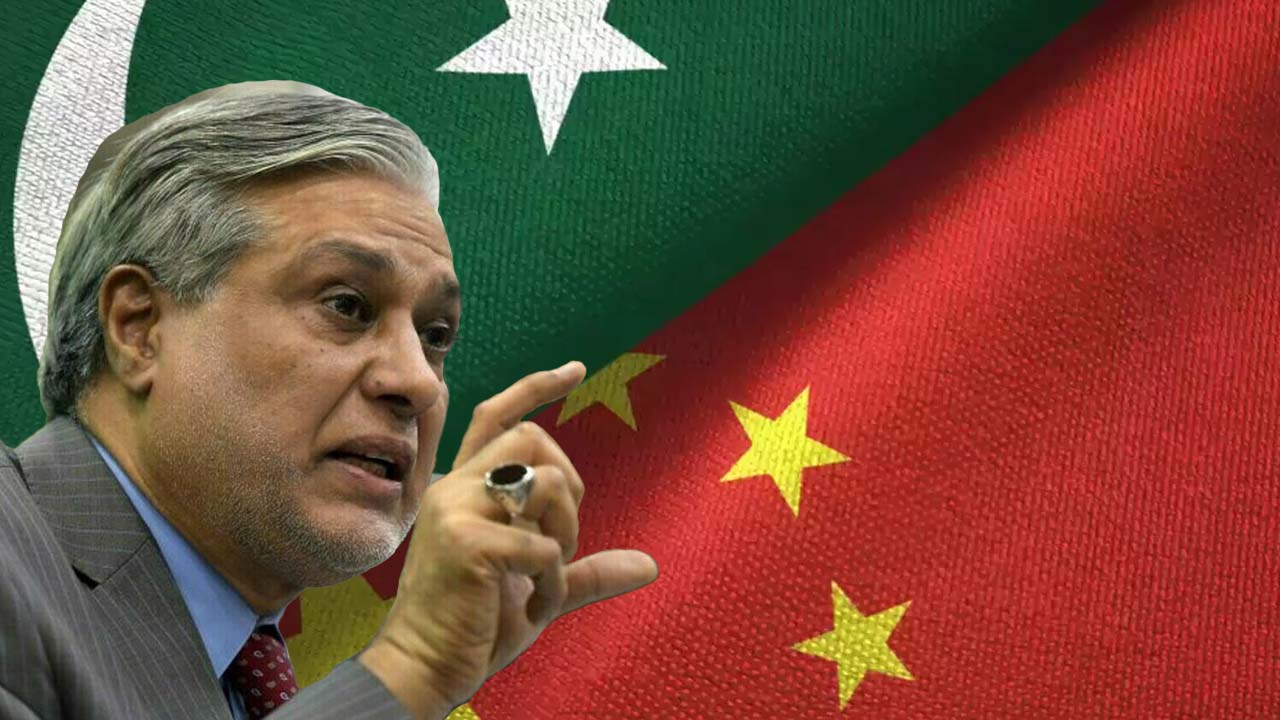
  • Pakistan received over $48 billion in bailout loans from China between 2008-2021

    Pakistan received over $48 billion in bailout loans from China between 2008-2021

    A study published on Tuesday revealed that China has spent $240 billion rescuing 22 developing countries between 2008 and 2021. This amount has increased in recent years as more countries struggled to repay loans taken for the building of “Belt & Road” infrastructure.

    The researchers, from the World Bank, Harvard Kennedy School, AidData, and the Kiel Institute for the World Economy, found that almost 80 per cent of the rescue lending was made between 2016 and 2021, primarily to middle-income countries such as Pakistan, Argentina, and Mongolia. However, lending has decreased since 2016 as many projects failed to generate expected financial dividends.

    The report also highlighted that Beijing’s ultimate objective was to rescue its banks, which is why it engaged in the risky business of international bailout lending. Chinese loans to countries in debt distress increased from less than 5 per cent of its overseas lending portfolio in 2010 to 60 per cent in 2022.

    Argentina received the highest amount of bailout money with $111.8 billion, followed by Pakistan with $48.5 billion and Egypt with $15.6 billion, while nine countries received less than $1 billion.

    According to Reuters, the People’s Bank of China (PBOC) swap lines accounted for $170 billion of the rescue financing, including in Suriname, Sri Lanka, and Egypt. Bridge loans or balance of payments, supported by Chinese state-owned banks, amounted to $70 billion. Rollovers of both types of loans totaled $140 billion. However, the study criticized some central banks for potentially using the PBOC swap lines to artificially pump up their foreign exchange reserve figures.

    China is currently negotiating debt restructurings with several countries, including Zambia, Ghana, and Sri Lanka. However, it has been criticized for holding up the processes. In response, it has called on the World Bank and International Monetary Fund to offer debt relief as well.

  • China approves rollover of $2 billion SAFE deposits for Pakistan

    China approves rollover of $2 billion SAFE deposits for Pakistan

    China has given approval for the rollover of $2 billion State Administration of Foreign Exchange (SAFE) deposits for a year. Pakistan’s Finance Minister, Ishaq Dar, confirmed, stating that the rollover was a requirement of the International Monetary Fund (IMF).

    The IMF had requested the rollover of Chinese SAFE deposits to fulfill external financing needs and move towards a staff-level agreement. The agreement involves filling nine tables under the Memorandum of Economic and Financial Policies (MEFP), including a table related to the Net International Reserves (NIR) as an indicative target.

    This target cannot be met without incorporating the external financing needs of the program period until the end of June 2023. The IMF has asked Pakistan to bridge the gap of $6 billion to ensure its credibility and avoid default. This condition was put forth largely because representatives of Gulf countries on the Executive Board had made commitments before the approval of the seventh and eighth reviews for providing financial assistance to Islamabad in various forms.

    Now, the IMF is seeking the support of Saudi Arabia, the UAE, and Qatar to help Pakistan’s struggling economy. The Fund has warned Islamabad that its credibility would be at stake if the staff-level agreement is finalised, and Pakistan fails to materialize its commitment from the bilateral partners, which could lead to default.

    The IMF is investigating why Pakistan’s bilateral partners are not fulfilling their earlier commitments. China is the only country that has come forward to rescue Islamabad by fulfilling its commitments on the re-financing of its commercial loans as well as the rollover of its SAFE deposits.

  • Pakistan receives $500 million in second disbursement from Chinese bank ICBC

    Pakistan receives $500 million in second disbursement from Chinese bank ICBC

    On Friday, Pakistan received a sum of $500 million, which is the second disbursement of the $1.3 billion facility from the Industrial and Commercial Bank of China (ICBC). Senator Ishaq Dar, the Federal Minister for Finance and Revenue, announced this development on his Twitter handle, adding that the funds will help shore up Pakistan’s forex reserves.

    The Chinese bank made this critical disbursement after Pakistan completed the necessary documentation. Earlier in March, the ICBC approved a rollover of a $1.3 billion loan for Pakistan, following which the bank deposited $500 million, the first disbursement on March 4, which helped the foreign exchange reserves exceed $4 billion.

    Pakistan, which has been facing growing economic challenges such as high inflation, sliding forex reserves, a widening current account deficit, and a depreciating currency, has made payments of around $5.5 billion (excluding the $1 billion sukuk payment) to China Development Bank and ICBC, with $3.5 billion given to banks in other countries. To reduce the debt stock, Pakistan has been paying off debts in tranches, and now the country will receive the $1.3 billion back in three tranches.

    The current foreign exchange reserves of Pakistan stand at $4.3 billion as of March 10, which is barely enough for less than a month of imports, while the liquid foreign exchange reserves stand at around $9.8 billion, including $5.5 billion in net reserves held by commercial banks. According to a report published in The News, a Chinese bank has given assurances that it will provide another refinanced $500 million loan in the next few days, bringing the total of commercial loans up to $1.7 billion out of the total committed amount of $2 billion.

    According to The News, Pakistan has also requested a rollover on the Chinese SAFE deposit of $2 billion within the ongoing month. These actions, such as the refinancing of commercial loans and rollovers on SAFE deposits, are pre-requisites for moving towards the signing of a staff-level agreement between the IMF and the Pakistani side. Currently, Pakistani authorities are waiting for confirmation from the Kingdom of Saudi Arabia, the UAE, and Qatar, as well as from the World Bank and the AIIB, to fulfill their external financing needs of $6 billion until the end of June 2023, and the situation remains tense.

  • Chinese bank to provide Pakistan with another $500 million loan soon

    Chinese bank to provide Pakistan with another $500 million loan soon

    A Chinese bank has committed to provide Pakistan with another refinanced $500 million loan within the next few days. This brings the total of commercial loans to $1.7 billion out of the committed amount of $2 billion.

    Pakistani authorities are currently seeking 100 per cent confirmation from friendly donor countries and multilateral creditors before moving towards an agreement with the International Monetary Fund (IMF). The IMF has set an unwritten condition that Pakistan must secure refinancing of commercial loans and a rollover on deposits from China during the program period, which is set to expire in June 2023.

    A top official from the Finance Division confirmed that another $500 million commercial loan from a Chinese bank is on its way and will be completed soon. Chinese banks have already provided refinancing of $1.2 billion in commercial loans in the past few weeks, and Beijing has given assurance on another $500 million in loan refinancing in the next few days. Pakistan has also requested a rollover on the Chinese SAFE deposit of $2 billion within the ongoing month.

    All these factors are prerequisites for moving towards the signing of a staff-level agreement between the IMF and Pakistan. The Pakistani authorities are waiting for confirmation from Saudi Arabia, UAE, and Qatar, as well as from the World Bank and the Asian Infrastructure Investment Bank, to fulfill the external financing needs of $6 billion until the end of June 2023. The guarantees for securing external financing are crucial for the sustainability of the IMF program.

    Brent crude and WTI are both down in the international market, which is good news for Pakistan’s economy. However, the IMF has secretly launched “Inclusive growth in the MENA region” at NUST. The IMF high-ups argued that state-owned enterprises (SOEs) possessing a major footprint resulted in the crowding out of the private sector. Pakistan’s budget makers have also assured the IMF that they will prepare gender-based budgeting in the next financial year.

    To meet the IMF’s demands, the CPI-based and SPI-based inflations have risen to unprecedented levels of 31.5 per cent every month and 42.3 per cent every week. The development budget of the federal government, known as the Public Sector Development Program (PSDP), has been slashed by 50 per cent for the current fiscal year in line with the Fund’s demand to curtail the budget deficit target.

  • Pakistani rupee reverses marginal gains, closes at Rs281.61 against US dollar

    Pakistani rupee reverses marginal gains, closes at Rs281.61 against US dollar

    On Monday, the Pakistani rupee faced renewed pressure against the US dollar, declining by 0.30 per cent in the inter-bank market after posting marginal gains on Friday. According to the State Bank of Pakistan (SBP), the rupee settled at Rs281.61, representing a decrease of Re0.84.

    Despite the rupee having found some relief on Friday with a 0.54 per cent appreciation in the inter-bank market, the currency had depreciated by 0.82 per cent against the US dollar during the previous week.

    The SBP has received inflows from China, which have provided support to critical levels of foreign exchange, but concerns over the delay in the International Monetary Fund (IMF) programme have continued to impact sentiment.

    Miftah Ismail, former Federal Finance Minister, suggested on Sunday that Pakistan should ensure 15 per cent tax on Gross Domestic Product (GDP) and 15 per cent exports to GDP in order to avoid the need for IMF programs.

    Internationally, the US dollar experienced a sharp decline on Monday due to the sudden collapse of Silicon Valley Bank (SIVB). The US government announced various measures on Monday to mitigate the impact of the bank’s collapse, including ensuring access to deposits for SVB customers and depositors of New York’s Signature Bank.

  • Pakistan receives $500m in first installment of $1.3 billion Chinese loan

    Pakistan receives $500m in first installment of $1.3 billion Chinese loan

    On Friday, Pakistan’s Finance Minister Ishaq Dar announced that the Industrial and Commercial Bank of China (ICBC) has approved a facility of $1.3 billion, of which the first installment of $500 million has been received by the State Bank of Pakistan. The facility is expected to be disbursed in three installments and will help increase Pakistan’s foreign exchange reserves.

    The country has been facing economic challenges due to high inflation, a widening current account deficit, depreciating currency, and sliding forex reserves. As of February 24, foreign exchange reserves were at $3.8 billion, which is just enough for less than a month of imports.

    The finance minister also announced that China has renewed a facility under which Pakistan expects an additional inflow of $500 million in the next few days. The government returned $6.5 billion of foreign debt during the current fiscal year, and formalities with ICBC were completed to renew the facility.

  • Head of Paris Fashion Week model found in soup pot, legs in fridge

    Head of Paris Fashion Week model found in soup pot, legs in fridge

    Tw: murder, decapitation

    International model Abby Choi was found dismembered after the police discovered her head in a soup pot.
    The Hong Kong based model went missing on Tuesday and the police found the model’s legs in a fridge three days later. On Sunday, police found her head and ribs in a soup pot
    According to the police, Choi’s former former husband, Alex Kwong, along with his mother, father and elder brother have been arrested and have been charged with murder. Her husband has also been arrested although he has not been charged yet.
    The police found Choi’s identity and credit cards on the ground floor of a three-storey house in Tai Po, which had been rented by her father-in-law a few weeks ago.
    “Tools that are used to dismember human bodies were found in the flat, including meat grinders, chainsaws, long raincoats, gloves, and masks,” Superintendent Alan Chung said on Saturday.
    According to Chung, Choi had financial disputes with her ex-husband and his family, who were unhappy with the way she was spending her money.
    Choi had been featured in Elle, Vogue and Harper’s Bazaar. She also put in regular appearances at Paris Fashion Week.
    Her two children are being taken care of by her mother.

  • Chinese student misses girlfriend, creates device with lips to send kisses

    Chinese student misses girlfriend, creates device with lips to send kisses

    .

    A device made by a Chinese student has gone viral for allowing long-distance partners to send kisses to each other.
    The device features silicone lips and allows users to upload their kisses, as well as receive them through an app.
    According to South China Morning post, the device has sensors that can mimic ‘the actual pressure, movement and heat of a kisser’s lips.’
    The device was created by a university team from China’s Jiangsu province. Lead inventor Jian Zhongli said that he got the idea for the device after missing his girlfriend, with whom he was in a long-distance relationship.
    “In my university, I was in a long distance relationship with my girlfriend so we could contact each other only through phone. That’s where the inspiration of this device originated,’ Zhongli explained.
    The app-driven device is available to download at Chinese app store Taobao and costs 260 yuan.

  • ANI propagating baseless propaganda against China, Pakistan: EU Disinfo Lab

    ANI propagating baseless propaganda against China, Pakistan: EU Disinfo Lab

    The European Union (EU) DisinfoLab in its latest investigative report has highlighted that leading Indian media outlet Asian News International (ANI) is engaged in baseless propaganda against China and Pakistan by referring to sources that “do not exist”.

    “The narratives pushed by these fake personae and/or organisations are almost entirely about criticising Pakistan and China, countries that are not India’s greatest allies on the international stage,” said the report called ‘Bad Sources (BS).’

    The report is a follow-up to two previous investigations published in 2019 and 2020.

    The investigation reveals that the news agency repeatedly quoted a think tank that was dissolved in 2014. Moreover, it has been using quotes from non-existent journalists, bloggers and geopolitical experts.

    “Fake personae, self-described as James Bond fans, basketball players and management consultants, became geopolitical experts quoted by ANI numerous times on topics such as Pakistan’s army doctrines and China’s ‘wolf warrior diplomacy’,” said the DisinfoLab.

    “A think tank, dissolved in 2014, is now quoted about twice a week by ANI,” as per the report.”The think tank’s website falsely mentions real Canadian university professors as participants in a conference that they never attended, even concocting false quotes by these academics,” it said.