Tag: earthquake

  • What caused tremors in Pak-Iran border area last night?

    What caused tremors in Pak-Iran border area last night?

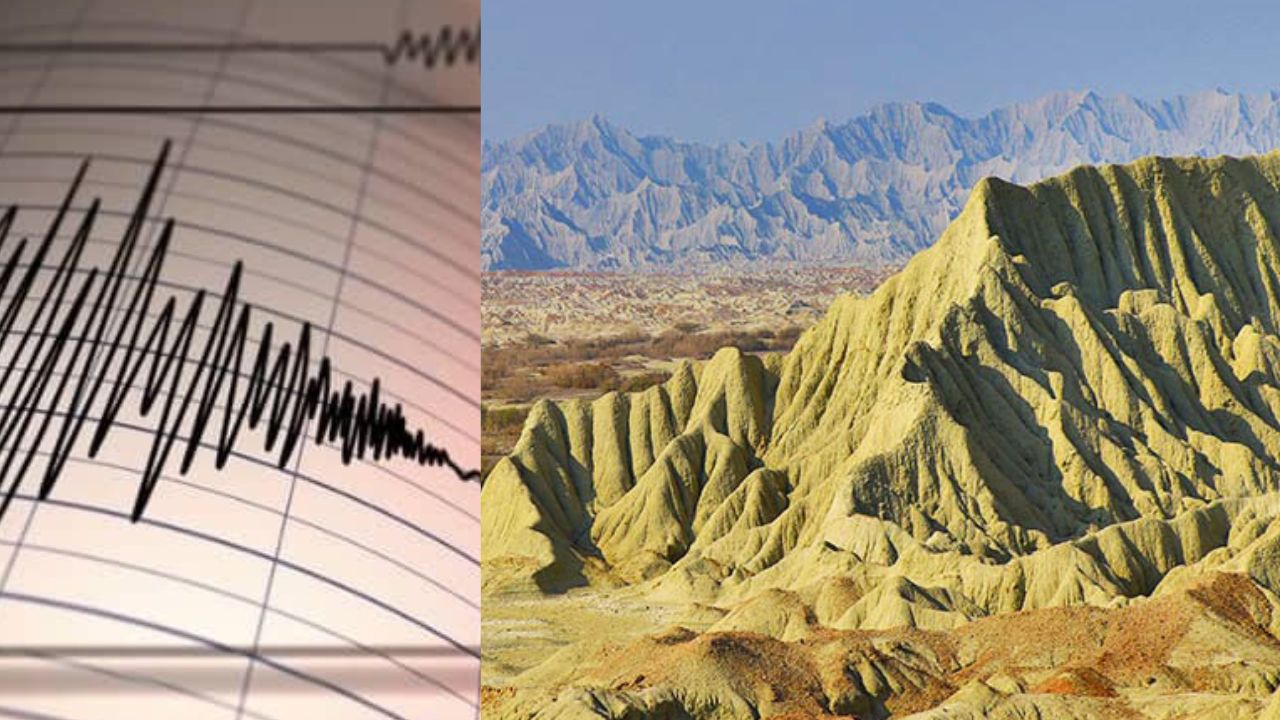
    As Iran and Israel remain locked in conflict for the fourth consecutive day, two earthquakes on Sunday night struck the Pakistan-Iran border region, leading to speculation surrounding the nature of the tremors.

    While social media argued possible nuclear activity, Met Office data said the tremors were nothing but earthquakes – a 2.5-magnitude quake in the Qom region near the Fordow Nuclear Power Plant, and a 4.3-magnitude earthquake in the southwestern Iranian province of Sistan that is contiguous with Pakistan’s Balochistan.

    No casualties were reported in the earthquakes that come hours after Israeli attacks on alleged Iranian nuclear facilities, namely Natanz, Isfahan and Fordow. While the strikes and ambiguity surrounding Iran’s nuclear status led to social media buzz, a day earlier, media reports quoted an Iranian official as confirming that the Israeli airstrikes had earlier hit the Fordow site, which is known for its deep-underground enrichment capabilities.

    The latest military exchange between the archrivals also began when Israel struck Iran’s nuclear and military sites on Friday, killing top commanders and six of its atomic scientists. Israeli strikes prompted Iran to unleash attacks with a barrage of missiles in Tel Aviv, wounding multiple.

    Tel Aviv has said it wants to stop Tehran from building an atomic weapon, which the latter has consistently denied, stating its uranium enrichment programme is for civilian purposes.

    Series of attacks have continued ever since, resulting in multiple casualties on both sides.

    Media reports claimed that as many as 220 individuals, including 70 women, children, top commanders and nuclear scientists, have been killed in Israel’s attack on Iran.

    Several casualties have been reported in Tel Aviv following a series of missile attacks launched by Iran in response to Israel’s aggression.

  • Hundreds of buildings damaged, dozens injured in 6.3 Ecuador quake

    Hundreds of buildings damaged, dozens injured in 6.3 Ecuador quake

    A shallow 6.3-magnitude earthquake left more than 30 people injured, damaged more than 800 buildings and caused widespread power cuts in the Ecuadoran port city of Esmeraldas on Friday.

    Ecuador’s emergency response services report 32 injured, 179 homes destroyed and 716 homes that have been damaged in the shake, which was felt as far away as the capital Quito.

    Fisherman Andres Mafare, aged 36, was walking to the port when he heard a loud crack followed by a strong earthquake that shook overhead cables.

    He raced home to try to find his wife and two sons. “I ran like crazy, and when I got here saw that my house had been destroyed,” he told AFP.

    An AFP reporter in Esmeraldas witnessed tumbled-down walls, facades that had collapsed onto a road in a pile of debris and several cracked buildings.

    Families stood around surveying the damage.

    “It was very strong,” former presidential candidate Yaku Perez told AFP at the scene.

    “It felt like an eternity, but I guess it was less than a minute.”

    The authorities said four health centers and 18 schools had been damaged, while the facade of a military building partially collapsed. Two roads and a bridge were also damaged.

    According to official estimates, about 80 percent of homes experienced power or phone outages.

    National oil company Petroecuador said it briefly “suspended operations” at the Esmeraldas refinery and a nearby pipeline.

    The refinery produces 111,000 barrels a day and the Transecuadorian Pipeline System transports 360,000 barrels a day.

    Daniel Noboa, the South American nation’s newly re-elected president, said he was rushing ministers to the scene to help coordinate the building of shelters and delivery of humanitarian aid.

    “The government is with you, and that’s how it will be going forward,” he said on social media.

    On the streets, residents navigated debris and collapsed walls.

    Mafare said he lost “material things, three or four walls… I know the authorities are going to help us,” referring to fellow residents of this impoverished area plagued by drug trafficking violence.

    The US Geological Survey and local monitors said the quake struck just off the coast at a depth of about 35 kilometers (22 miles) shortly before 7:00 am local time (1200 GMT).

    Ecuadorean authorities said there was no tsunami risk from the quake.


    – Country of Earthquakes –

    Ecuador sits on one of the most geologically active zones on Earth, and the fault between the Nazca and South American plates runs along its coast.

    The Geophysical Institute said that “the convergence of the Nazca and South American plates, which have a movement speed of 5.6 centimeters (2.2 inches) per year, is the process that generates the largest earthquakes in the country.”

    The tremor was felt in 10 of the country’s 24 provinces, including Manabi, Los Rios, Guayas and Pichincha, Ecuadorean officials said.

    There were no reports of injuries across the border in neighboring Colombia.

    Last week, Ecuador marked the anniversary of the 2016 earthquake that struck the coasts of Manabi and Esmeraldas. With a magnitude of 7.8, it left 673 dead and about 6,300 injured.

  • Powerful 6.2-magnitude quake hits off Istanbul coast

    Powerful 6.2-magnitude quake hits off Istanbul coast

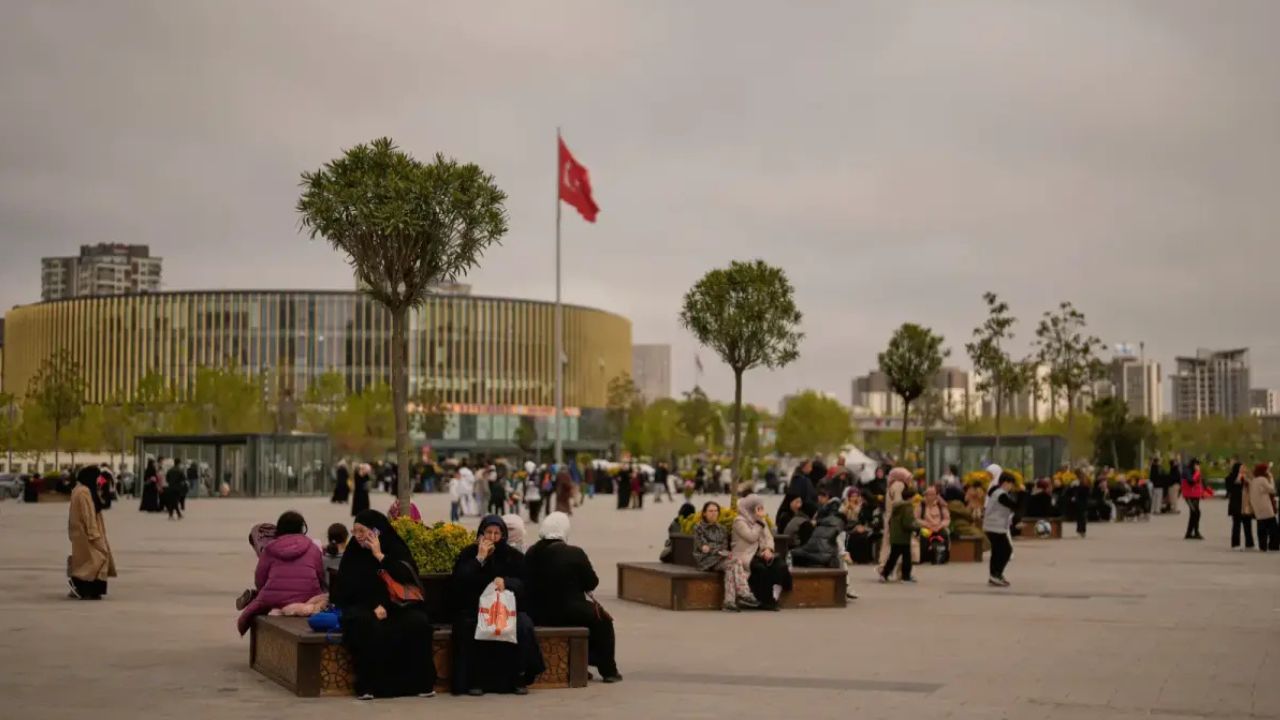
    An earthquake with a magnitude of 6.2 hit the Marmara Sea near the western outskirts of Istanbul on Wednesday, officials said, with the impact felt across Turkey’s largest city where people rushed onto the streets.

    “An earthquake of 6.2 magnitude occurred in Silivri, Marmara Sea, Istanbul,” Interior Minister Ali Yerlikaya said on X, adding that it was felt in the surrounding provinces.

    The initial quake at 12:49 pm (0949 GMT) was followed by three others of with magnitudes of 4.4 to 4.9, Turkey’s AFAD disaster management agency posted on X.

    As buildings shook, people rushed onto the streets where crowds of worried-looking people stared at their mobile phones for information or made calls, an AFP correspondent said.

    “I just felt earthquake, I’ve got to get out,” said a shaken-looking decorator rushing out of a fourth floor apartment where he was working near the city’s Galata Tower, who did not want to give his name.

    There were no immediate reports of anyone being hurt or killed nor of buildings collapsing in the sprawling city of 16 million people, city authorities and the regional governor’s office said.

    “Until now, we have no information about any buildings collapsing,” the governor’s office said, urging people to avoid any structures that might have been damaged in the tremors.

    “No serious cases have been reported so far following the earthquake in Istanbul,” the Istanbul municipality said on X.

    The tremors could be felt as far away as Bulgaria, according to AFP journalists in the capital Sofia.

  • Myanmar quake death toll rises over 3,000

    Myanmar quake death toll rises over 3,000

    The death toll from a major earthquake in Myanmar has risen above 3,000, the ruling junta said on Thursday.

    A statement from a junta spokesperson said that 3,085 deaths had been confirmed, with 341 people still missing and 4,715 injured, six days after the shallow 7.7-magnitude quake.

    Rescue and aid workers had arrived from 17 countries, Zaw Min Tun added, with nearly 1,000 tonnes of supplies and relief materials.

    “We have been continuing search and rescue work, we would like to express special gratitude for the hard work of the international community and medical teams,” he said.

    The head of Myanmar’s junta is expected to travel to Bangkok on Thursday for a regional summit.

    Min Aung Hlaing will join a BIMSTEC gathering — the seven littoral nations of the Bay of Bengal — where he will raise the response to Friday’s 7.7-magnitude quake that has flattened buildings across the country.

    Many nations have sent aid and teams of rescue workers to Myanmar since the quake, but heavily damaged infrastructure and patchy communications — as well as the country’s rumbling civil war — have hampered efforts.

    Myanmar has been engulfed in a brutal multi-sided conflict since 2021, when Min Aung Hlaing’s military wrested power from the civilian government of Aung San Suu Kyi.

    Following reports of sporadic clashes even after the recent earthquake, the junta on Wednesday joined its opponents in calling a temporary halt to hostilities to allow relief to be delivered.

    AFP journalists saw hectic scenes on Wednesday in the city of Sagaing — less than 15 kilometres (nine miles) from the epicentre — as hundreds of desperate people lined up for the distribution of emergency supplies.

    Roads leading to the city were packed with traffic on Thursday, many of the vehicles part of aid convoys organised by civilian volunteers and adorned with banners saying where they had been sent from across Myanmar.

    Destruction in Sagaing is widespread, with the World Health Organization (WHO) reporting that one in three houses have collapsed.

    Nearly a week after the quake, locals have complained of a lack of help.

    “We have a well for drinking water, but we have no fuel for the water pump,” Aye Thikar told AFP.

    “We also don’t know how long we will be without electricity,” she said.

    The 63-year-old nun has been helping distribute relief funds to those left without basic amenities by Friday’s quake.

    But many people are still in need of mosquito nets and blankets, forced to sleep outside by the tremors that either destroyed their homes or severely damaged them.

    Eyes on summit

    All the main leaders from the seven members of the BIMSTEC — Bangladesh, Bhutan, India, Myanmar, Nepal, Sri Lanka and Thailand — are expected to attend the Bangkok summit.

    Host country Thailand has proposed that the leaders issue a joint statement on the impact of the disaster when they meet on Friday — a week on from the day the quake struck.

    Min Aung Hlaing’s attendance is something of a diplomatic coup for Myanmar’s isolated government, as the summit breaks with a regional policy of not inviting junta leaders to major events.

    His expected arrival in the Thai capital comes as the death toll from last week’s earthquake surpasses 3,000 people, according to junta figures.

    A statement from a junta spokesperson said Thursday that 3,085 deaths had been confirmed, with 341 people still missing and 4,715 injured.

    Rescue and aid workers had arrived from 17 countries, Zaw Min Tun added, with nearly 1,000 tonnes of supplies and relief materials.

    “We have been continuing search and rescue work, we would like to express special gratitude for the hard work of the international community and medical teams,” he said.

    Bangkok, hundreds of kilometres from the epicentre of the quake, also suffered isolated damage.

    The death toll in the city has risen to 22, with more than 70 still unaccounted for at the site of a building collapse.

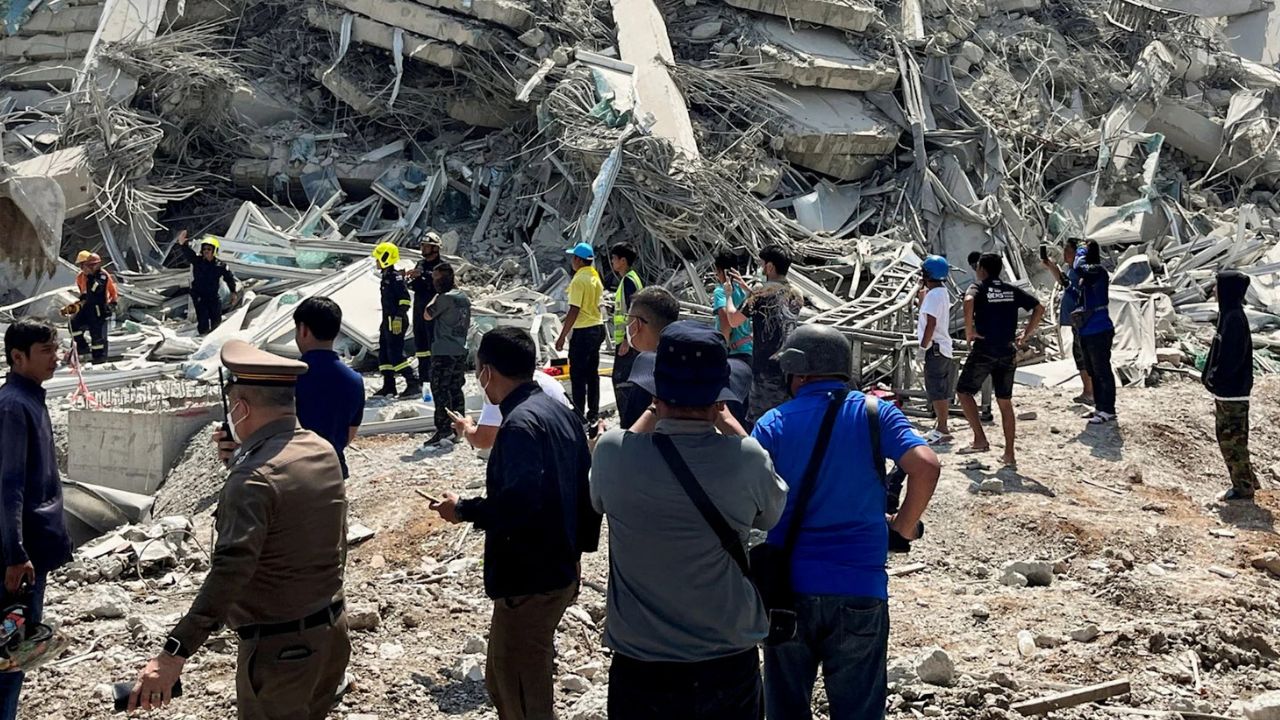
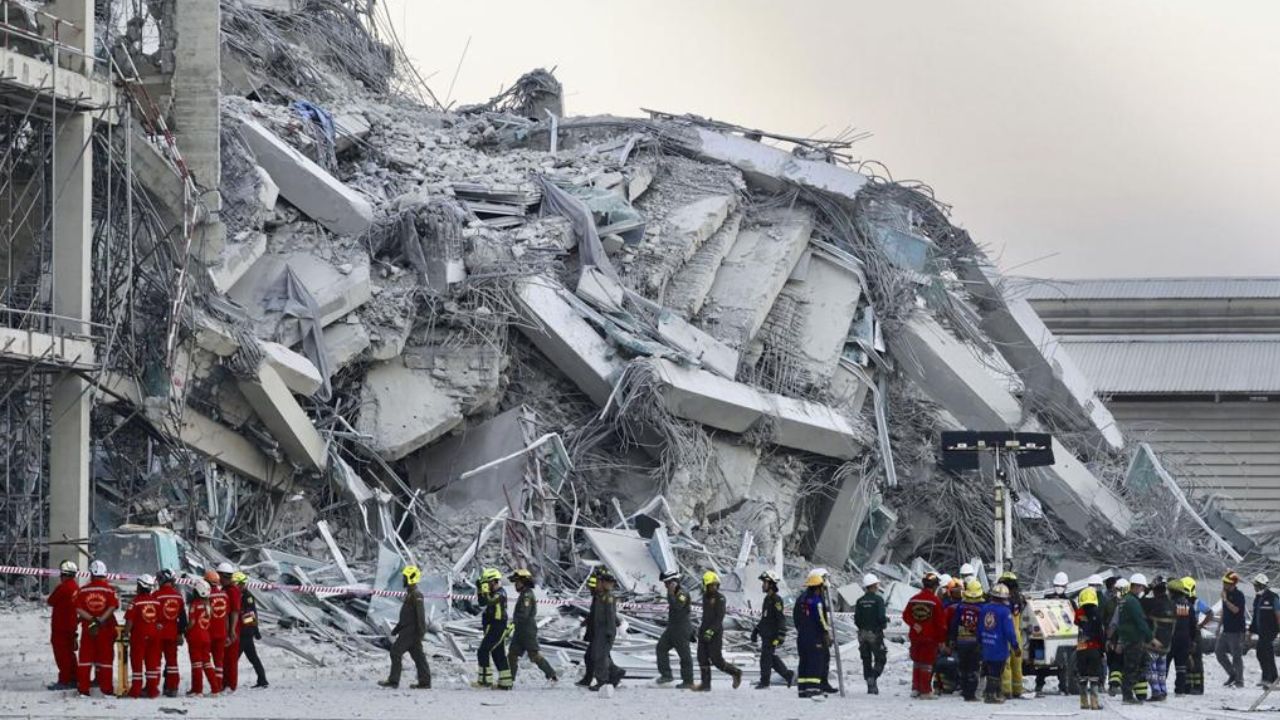
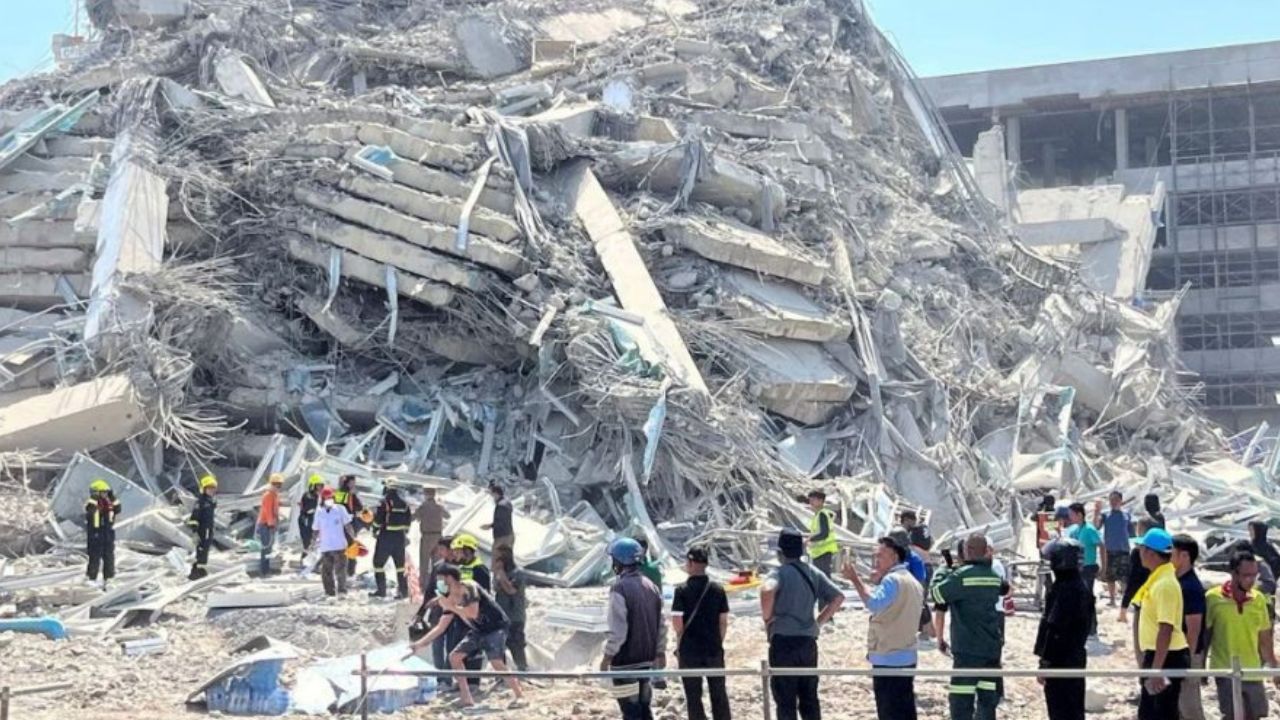
    A 30-storey skyscraper — under construction at the time — was reduced to a pile of rubble in a matter of seconds when the tremors hit, trapping dozens of workers.

    Bangkok governor Chadchart Sittipunt said in a Thursday morning livestream that he was “hoping for a miracle, but don’t expect too much as there’s a high chance of disappointment too”.

  • Man pulled alive from Myanmar quake rubble after five days

    Man pulled alive from Myanmar quake rubble after five days

    Rescuers on Wednesday pulled a man alive from the rubble five days after Myanmar’s devastating earthquake, as calls grew for the junta to allow more aid in and halt attacks on rebels.

    The shallow 7.7-magnitude earthquake on Friday flattened buildings across Myanmar, killing more than 2,700 people and making thousands more homeless.

    Several leading armed groups fighting the military have suspended hostilities during the quake recovery, but junta chief Min Aung Hlaing vowed to continue “defensive activities” against “terrorists”.

    UN agencies, rights groups and foreign governments have urged all sides in Myanmar’s civil war to stop fighting and focus on helping those affected by the quake, the biggest to hit the country in decades.

    Hopes of finding more survivors are fading, but there was a moment of joy on Wednesday as a man was pulled alive from the ruins of a hotel in the capital Naypyidaw.

    The 26-year-old hotel worker was extracted by a joint Myanmar-Turkish team shortly after midnight, the fire service and junta said.

    Dazed and dusty but conscious, the man was pulled through a hole in the rubble and put on a stretcher, video posted on Facebook by the Myanmar Fire Services Department shows.

    Call for peace

    Min Aung Hlaing said Tuesday that the death toll had risen to 2,719, with more than 4,500 injured and 441 still missing.

    But with patchy communication and infrastructure delaying efforts to gather information and deliver aid, the true scale of the disaster has yet to become clear, and the toll is likely to rise.

    Relief groups say that that response has been hindered by continued fighting between the junta and the complex patchwork of armed groups opposed to its rule, which began in a 2021 coup.

    Julie Bishop, the UN special envoy on Myanmar, called on all sides to “focus their efforts on the protection of civilians, including aid workers, and the delivery of life-saving assistance”.

    Even before Friday’s earthquake, 3.5 million people were displaced by the fighting, many of them at risk of hunger, according to the United Nations.

    Late Tuesday, an alliance of three of Myanmar’s most powerful ethnic minority armed groups announced a one-month pause in hostilities to support humanitarian efforts in response to the quake.

    The announcement by the Three Brotherhood Alliance followed a separate partial ceasefire called by the People’s Defence Force — civilian groups that took up arms after the coup to fight junta rule.

    But there have been multiple reports of junta air strikes against rebel groups since the quake.

    “We are aware that some ethnic armed groups are currently not engaged in combat, but are organising and training to carry out attacks,” said Min Aung Hlaing, mentioning sabotage against the electricity supply.

    “Since such activities constitute attacks, the Tatmadaw (armed forces) will continue to carry out necessary defensive activities,” he said in a statement late Tuesday.

    Thailand toll rises

    Australia’s government decried the reported air strikes saying they “exacerbated the suffering of the people”.

    “We condemn these acts and call on the military regime to immediately cease military operations and allow full humanitarian access to affected areas,” Foreign Minister Penny Wong said.

    Amnesty International said “inhumane” military attacks were significantly complicating earthquake relief efforts in Myanmar.

    “You cannot ask for aid with one hand and bomb with the other,” said the group’s Myanmar researcher Joe Freeman.

    Hundreds of kilometres (miles) away, in the Thai capital Bangkok, workers continued to scour a pile of rubble that formed when Friday’s tremors collapsed a 30-storey skyscraper.

    The structure had been under construction at the time, and its crash buried dozens of builders — few of whom have come out alive.

    The death toll at the site has risen to 22, with more than 70 still believed trapped in the rubble.

  • Myanmar-Thailand quake toll passes 700 as rescuers dig for survivors

    Myanmar-Thailand quake toll passes 700 as rescuers dig for survivors

    The death toll from a huge earthquake that hit Myanmar and Thailand passed 700 on Saturday, as rescuers dug through the rubble of collapsed buildings in a desperate search for survivors.

    The shallow 7.7-magnitude quake struck northwest of the city of Sagaing in central Myanmar in the early afternoon, followed minutes later by a 6.7-magnitude aftershock.

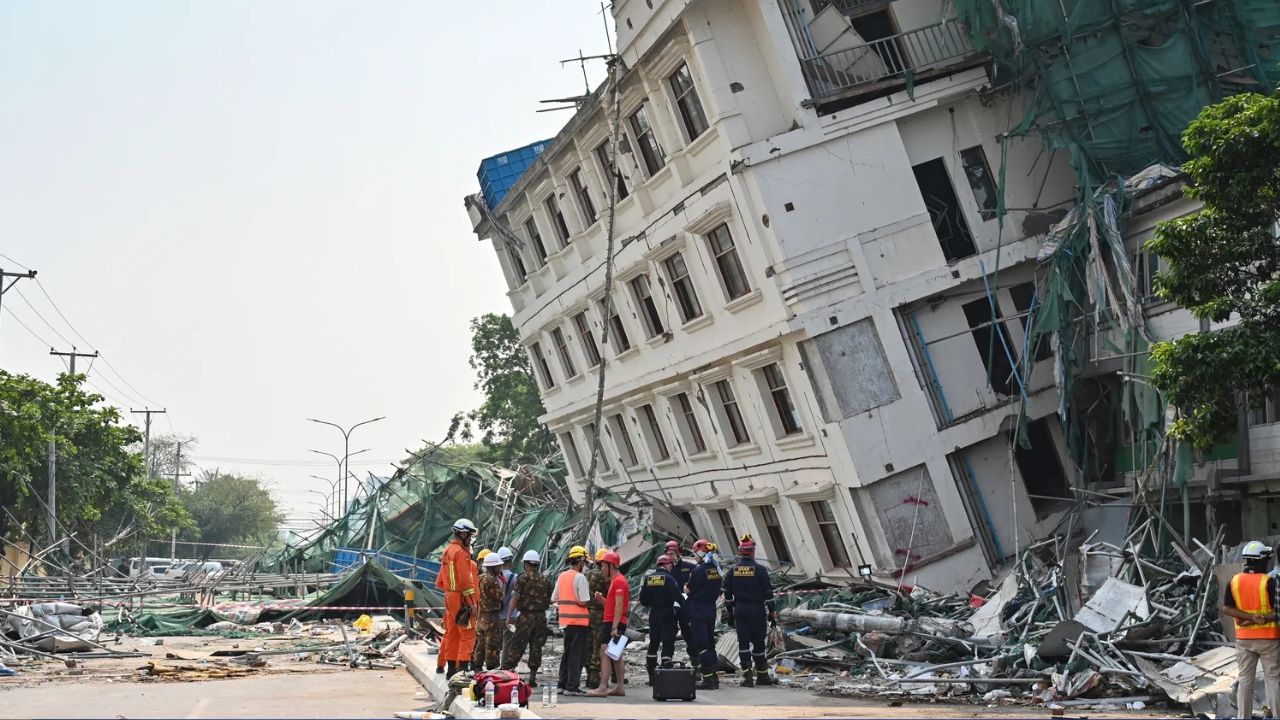
    The quake destroyed buildings, downed bridges, and buckled roads across swathes of Myanmar, with severe damage reported in the second biggest city, Mandalay.

    At least 694 people were killed and nearly 1,700 injured in Myanmar’s Mandalay region — believed to be the worst affected — the ruling junta said in a statement. Around 10 more deaths have been confirmed in Bangkok.

    But with communications badly disrupted, the true scale of the disaster has yet to emerge from the isolated military-ruled state, and the toll is expected to rise significantly.

    It was the biggest quake to hit Myanmar in over a century, according to US geologists, and the tremors were powerful enough to severely damage buildings across Bangkok, hundreds of kilometres (miles) away from the epicentre.

    Rescuers in the Thai capital laboured through the night searching for workers trapped when a 30-storey skyscraper under construction collapsed, reduced in seconds to a pile of rubble and twisted metal by the force of the shaking.

    Bangkok governor Chadchart Sittipunt told AFP that around 10 people had been confirmed killed across the city, most in the skyscraper collapse.

    But up to 100 workers were still unaccounted for at the building, close to the Chatuchak weekend market that is a magnet for tourists.

    “We are doing our best with the resources we have because every life matters,” Chadchart told reporters at the scene.

    “Our priority is acting as quickly as possible to save them all.”

    Bangkok city authorities said they will deploy more than 100 engineers to inspect buildings for safety after receiving over 2,000 reports of damage.

    Up to 400 people were forced to spend the night in the open air in city parks as their homes were not safe to return to, Chadchart said.

    Significant quakes are extremely rare in Bangkok, and Friday’s tremors sent shoppers and workers rushing into the street in alarm across the city.

    While there was no widespread destruction, the shaking brought some dramatic images of rooftop swimming pools sloshing their contents down the side of many of the city’s towering apartment blocks and hotels.

    Even hospitals were evacuated, with one woman delivering her baby outdoors after being moved from a hospital building. A surgeon also continued to operate on a patient after evacuating, completing the operation outside, a spokesman told AFP.

    Rare junta plea for help

    But the worst of the damage was in Myanmar, where four years of civil war sparked by a military coup have ravaged the healthcare and emergency response systems.

    Junta chief Min Aung Hlaing issued an exceptionally rare appeal for international aid, indicating the severity of the calamity. Previous military regimes have shunned foreign assistance even after major natural disasters.

    The country declared a state of emergency across the six worst-affected regions after the quake, and at one major hospital in the capital, Naypyidaw, medics were forced to treat the wounded in the open air.

    One official described it as a “mass casualty area”.

    “I haven’t seen (something) like this before. We are trying to handle the situation. I’m so exhausted now,” a doctor told AFP.

    Mandalay, a city of more than 1.7 million people, appeared to have been badly hit. AFP photos showed dozens of buildings reduced to rubble.

    A resident reached by phone told AFP that a hospital and a hotel had been destroyed, and said the city was badly lacking in rescue personnel.

    A huge queue of buses and lorries lined up at a checkpoint to enter the capital early on Saturday.

    Offers of foreign assistance began coming in, with President Donald Trump on Friday pledging US help.

    “It’s terrible,” Trump told reporters in the Oval Office about the quake when asked if he would respond to the appeal by Myanmar’s military rulers.

    “It’s a real bad one, and we will be helping. We’ve already spoken with the country.”

    India, France and the European Union offered to provide assistance, while the WHO said it was mobilising to prepare trauma injury supplies.

  • ‘Mass casualty’ quake rocks Myanmar, Thailand

    ‘Mass casualty’ quake rocks Myanmar, Thailand

    A powerful earthquake hit Myanmar and neighbouring Thailand on Friday, turning a major hospital in the Myanmar capital into a “mass casualty area” and trapping dozens of workers in an under-construction skyscraper in Bangkok.

    The 7.7-magnitude tremor hit northwest of the city of Sagaing on Friday afternoon at a shallow depth, the United States Geological Survey said. A 6.4-magnitude aftershock hit the same area minutes later.

    The quakes wrought widespread damage, particularly in Myanmar, where buildings fell onto their sides, roads cracked open, and the well-known Ava bridge collapsed near the epicentre.

    In the capital Naypyidaw, AFP journalists saw the entrance of the emergency department at the city’s main hospital pancaked onto a car.

    Wounded at the 1,000-bed facility were being treated outside, intravenous drips hanging from their gurneys. Some writhed in pain, others lay still as relatives sought to comfort them.

    A hospital official ushered journalists away, saying: “this is a mass casualty area.”

    Another official said hundreds of injured people had arrived at the facility.

    “I haven’t seen (something) like this before. We are trying to handle the situation. I’m so exhausted now,” a doctor told AFP.

    The route to the hospital was jammed with vehicles. An ambulance tried to make its way through, a paramedic shouting “cars, move aside so the ambulance can get through.”

    At the city’s National Museum, pieces fell from the ceiling as the building began shaking. Uniformed staff ran outside, some trembling and tearful, others grabbing cellphones to try to contact loved ones.

    Skyscraper collapse

    Across the border in Thailand, where strong quakes are rare, the powerful tremors sent residents across many cities flooding out into the streets in panic.

    In Bangkok, a 30-storey building under construction collapsed, trapping 43 workers, police and medics said.

    The massive building intended for government offices was reduced to a tangle of rubble and twisted metal in seconds, footage shared on social media showed.

    An AFP photographer at the site saw ambulances and rescue teams at the site, near the city’s sprawling Chatuchak market, a popular destination for tourists and locals alike.

    “When I arrived to inspect the site, I heard people calling for help, saying help me,” Worapat Sukthai, deputy police chief of Bang Sue district, told AFP.

    “We estimate that hundreds of people are injured but we are still determining the number of casualties,” he said.

    Across Bangkok and the northern tourist destination of Chiang Mai, where the power briefly went out, stunned locals rushed outside, unsure of how to respond to the unusual quake.

    Sai, 76 was working at a minimart in the northern city when the shop started the shake.

    “I quickly rushed out of the shop along with other customers,” he said.

    “This is the strongest tremor I’ve experienced in my life.”

    Buildings damaged

    The quake prompted Thai Prime Minister Paetongtarn Shinawatra to declare a state of emergency in Bangkok, where some metro and light rail services were suspended, further snarling the city’s already notorious traffic.

    Airports were operating as normal.

    Earlier, the prime minister said she had interrupted an official visit to the southern island of Phuket to hold an “urgent meeting” after the quake, according to a post on X.

    The quake was felt across the region, with China, Cambodia, Bangladesh and India all reporting tremors.

    A livestream broadcast by the state-linked Beijing News showed around a dozen emergency workers in orange jumpsuits and helmets standing behind a cordon on a street strewn with fallen masonry in the city of Ruili, on the Chinese border with Myanmar.

    A female shop worker interviewed on the livestream showed phone footage of people running out of stores with their hands over their heads as tremors swept through the street, only to rush back inside when what was described as a nearby burst pipe drenched them with water from above.

    A video posted on Douyin, the Chinese version of TikTok, and geolocated by AFP showed a torrent of water and debris cascading from the roof of a high-rise block in Ruili as people fled through a street market below.

    India’s Prime Minister Narendra Modi said his country was ready to offer “all possible assistance” to Myanmar and Thailand and had placed authorities on standby for requests.

    Earthquakes are relatively common in Myanmar, where six strong quakes of 7.0 magnitude or more struck between 1930 and 1956 near the Sagaing Fault, which runs north to south through the centre of the country, according to the USGS.

    A powerful 6.8-magnitude earthquake in the ancient capital Bagan in central Myanmar killed three people in 2016, also toppling spires and crumbling temple walls at the tourist destination.
  • 7.2 magnitude earthquake strikes off Peru, tsunami threat over: USGS

    7.2 magnitude earthquake strikes off Peru, tsunami threat over: USGS

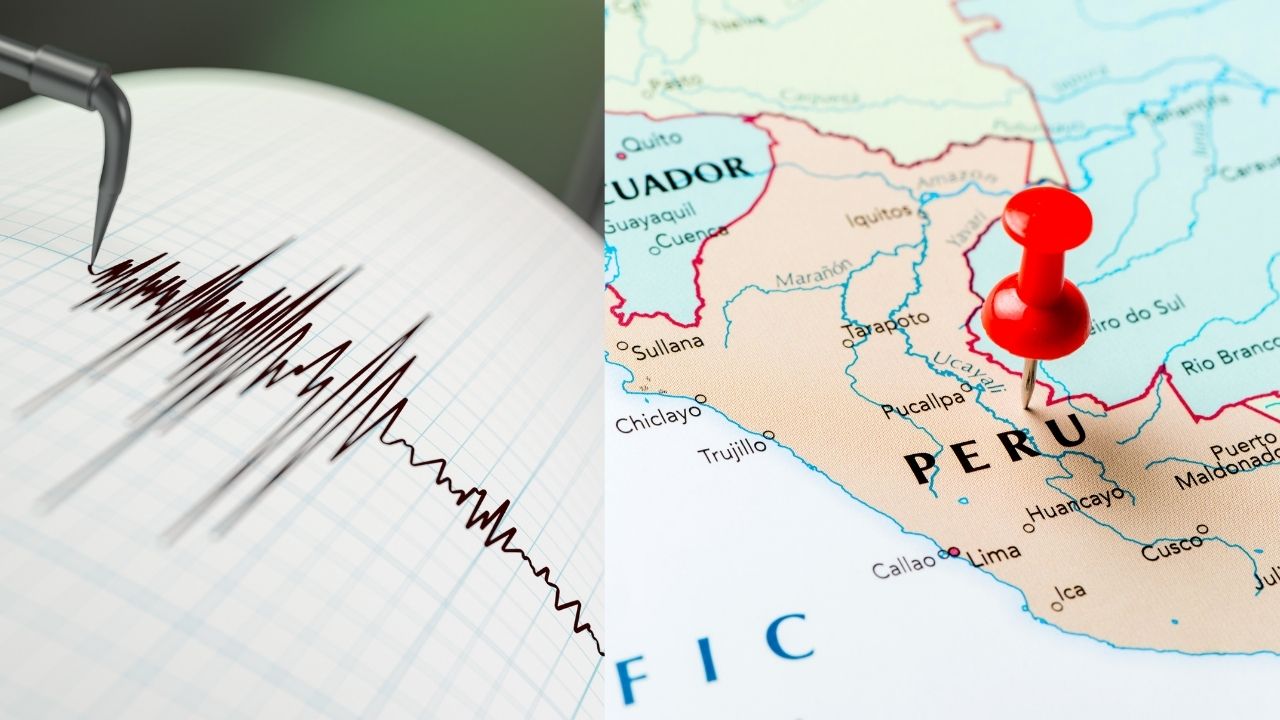
    A magnitude 7.2 earthquake struck off the coast of central Peru on Friday, the United States Geological Survey said, but a tsunami threat from the tremor has passed.

    The USGS said the tremor hit 8.8 kilometers (5.5 miles) from Atiquipa district.

    The quake was felt in Lima and a large part of the southern and central coast of Peru.

    The mayor of Yauca, Juan Aranguren, told local media that walls came down in his town.

    A major highway running through the area also suffered cracks, he said.

    “The children were crying, the earthquake was felt strongly,” said a villager from the area.

    Speaking to RPP radio, Prime Minister Gustavo Adrianzen: “I want to convey tranquility. The earthquake has passed, we are making the first evaluations, and so far there are no fatalities to lament.”

    The Pacific Tsunami Warning Centre had earlier said “hazardous tsunami waves are forecast for some coasts” but later said the threat had passed.

    Peru, with some 33 million inhabitants, lies on the so-called Pacific Ring of Fire, a vast area of intense seismic activity that runs along the west coast of the Americas.

    Peru is hit by hundreds of detectable quakes every year.

  • Earthquake hits Islamabad, Khyber Pakhtunkhwa

    Earthquake hits Islamabad, Khyber Pakhtunkhwa

    Earthquake tremors hit in Islamabad, Rawalpindi, and various cities in Khyber Pakhtunkhwa, including Peshawar, Swat, and Malakand on Wednesday, June 19.

    According to the seismological center, the earthquake had a magnitude of 4.7. The epicentre was in the South-East region of Afghanistan, with a depth of 98 kilometres.

    No loss of life and property has been recorded so far.

    Tremors were also felt in North Waziristan, Parachinar, Lower Dir, Hangu, and the surrounding areas, including Charsadda and Swabi.

  • Earthquake in Taiwan ‘strongest in 25 years’: Taipei seismology official

    Earthquake in Taiwan ‘strongest in 25 years’: Taipei seismology official

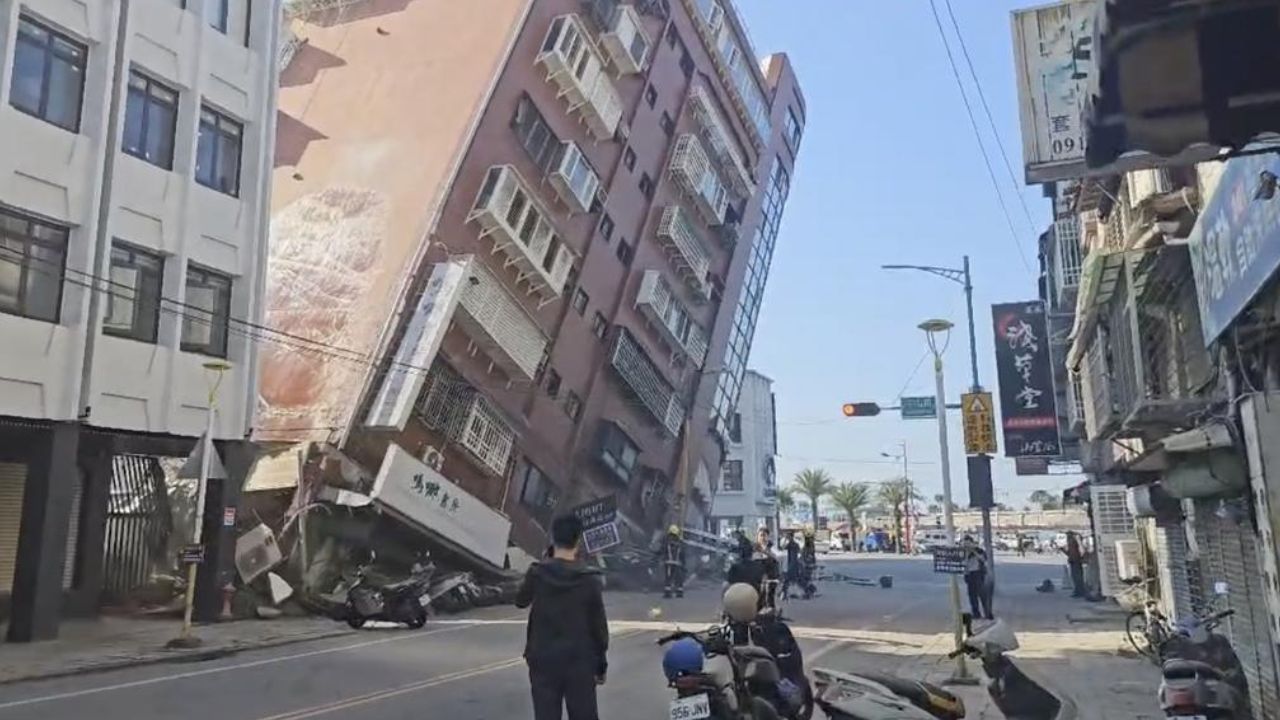
    Taipei, Taiwan – The earthquake that hit Taiwan’s east on Wednesday morning was “the strongest in 25 years”, said the director of Taipei’s Seismology Centre.

    “The earthquake is close to land and it’s shallow. It’s felt all over Taiwan and offshore islands… it’s the strongest in 25 years since the (1999) earthquake,” Wu Chien-fu told reporters, referring to a September 1999 quake with 7.6-magnitude that killed 2,400 people.