Tag: earthquake

  • 1,000 homes destroyed after earthquake in Papua New Guinea: Governor

    1,000 homes destroyed after earthquake in Papua New Guinea: Governor

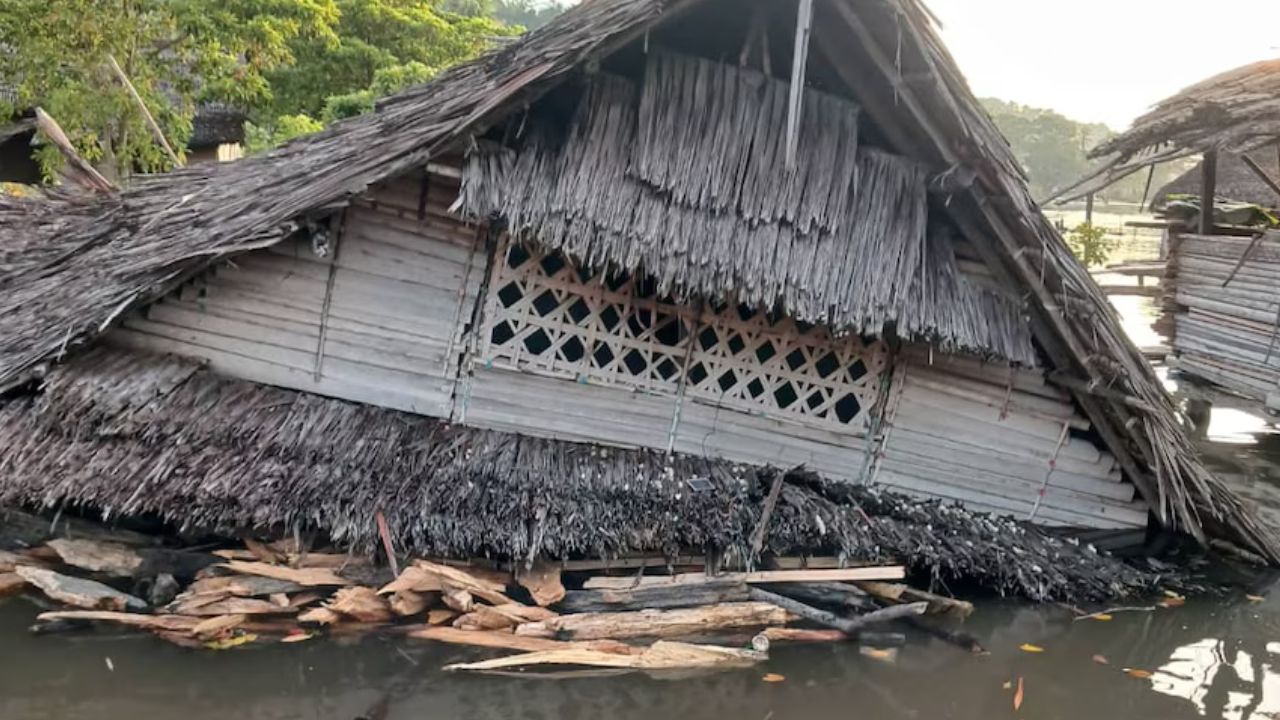
    At least five people were killed and an estimated 1,000 homes destroyed when a magnitude 6.9 earthquake rocked flood-stricken northern Papua New Guinea, officials said Monday as disaster crews poured into the region.

    “So far, around 1,000 homes have been lost,” said East Sepik Governor Allan Bird, adding that emergency crews were “still assessing the impact” from a tremor that “damaged most parts of the province”.

    Dozens of villages nestled on the banks of the country’s Sepik River were already dealing with major flooding when the quake struck early Sunday morning.

    Provincial police commander Christopher Tamari told AFP that authorities had recorded five deaths but the number of fatalities “could be more”.

    Photos taken in the aftermath of the quake showed damaged wooden houses collapsing into the surrounding knee-high floodwaters.

    Earthquakes are common in Papua New Guinea, which sits on top of the seismic “Ring of Fire” — an arc of intense tectonic activity that stretches through Southeast Asia and across the Pacific basin.

    Although they seldom cause widespread damage in the sparsely populated jungle highlands, they can trigger destructive landslides.

    Many of the island nation’s nine million citizens live outside major towns and cities, where the difficult terrain and lack of sealed roads can seriously hamstring search-and-rescue efforts.

  • Magnitude 6.9 quake hits Papua New Guinea: USGS

    Magnitude 6.9 quake hits Papua New Guinea: USGS

    A magnitude 6.9 earthquake hit northern Papua New Guinea on Sunday morning, the United States Geological Survey said.

    The Pacific Tsunami Warning Centre said there was “no tsunami threat” from the inland quake, which struck at 6:22 am local time (2022 GMT Saturday) at a depth of approximately 35 kilometres (21 miles).

    The “notable quake” hit some 88 kilometres (54 miles) southwest of Wewak, the USGS said, a town of 25,000 people that serves as the capital of Papua New Guinea’s East Sepik province.

    There were no immediate reports of damage or injuries. The tremor was downgraded from an preliminary magnitude of 7.0.

    Earthquakes are common in Papua New Guinea, which sits on top of the seismic “Ring of Fire” — an arc of intense tectonic activity that stretches through Southeast Asia and across the Pacific basin.

    Although they seldom cause widespread damage in the sparsely populated jungle highlands, they can trigger destructive landslides.

    At least seven people were killed in April last year when a 7.0-magnitude quake hit a jungle-clad area in the country’s interior.

    Many of the island nation’s nine million citizens live outside major towns and cities, where the difficult terrain and lack of sealed roads can seriously hamstring search-and-rescue efforts.

  • Another earthquake jolts Balochistan

    Another earthquake jolts Balochistan

    Earthquake tremors once again jolted different regions in Balochistan, including Quetta, early this morning.

    The earthquake was also detected at the Pak-Iran border areas including Chaman, Qila Abdullah, Nushki, Pashin and Dalbandin.

    According to the Seismological Center, the magnitude of the earthquake was recorded at 5.6, and the epicentre was 166 kilometres southwest of Quetta.

    The depth of the earthquake was recorded at 30 kilometres.

    No loss of life or property was reported.

  • 5.4 magnitude earthquake hits Quetta

    5.4 magnitude earthquake hits Quetta

    Earthquake measuring 5.4 has hit Quetta and its neighbouring regions in Balochistan.

    The Pakistan Met Department reported that an earthquake measuring 5.4 jolted the area at 5:35 am.

    The epicenter was located 150 kilometres southwest of Quetta with a depth of 35 kilometres.

    This was followed by another earthquake at 06:24 am – a magnitude of 4.5 with epicenter located 120 kilometer southwest of Quetta and depth of 136 kilometers.

    There have been no reports of casualties or damage.

  • Strong earthquake in Punjab, Khyber Pakhtunkhwa and AJK

    Strong earthquake in Punjab, Khyber Pakhtunkhwa and AJK

    Lahore, Islamabad, Peshawar, Azad Jammu, and Kashmir (AJK), and their adjoining areas were jolted by a strong earthquake around 2:30 pm on Thursday. However, strong tremors were felt for only a few seconds. In Islamabad, people were seen coming out of high-rise buildings.

    According to the Pakistan Meteorological Department (PMD), the epicentre of the earthquake was the Hindu Kush region in Afghanistan and the depth of the quake was 213 kilometres.

    The earthquake was also felt in Peshawar, Gujrat, Gujranwala, and other regions of Punjab and Khyber Pakhtunkhwa. Malakand, Upper and Lower Dir, Kohat, Swat experienced both light and strong jolts.

  • Death Toll From Japan Quake Rises Above 200

    Death Toll From Japan Quake Rises Above 200

    The death toll from the powerful earthquake that flattened parts of central Japan on January 1 passed 200 on Tuesday, with just over 100 still unaccounted for, authorities said.

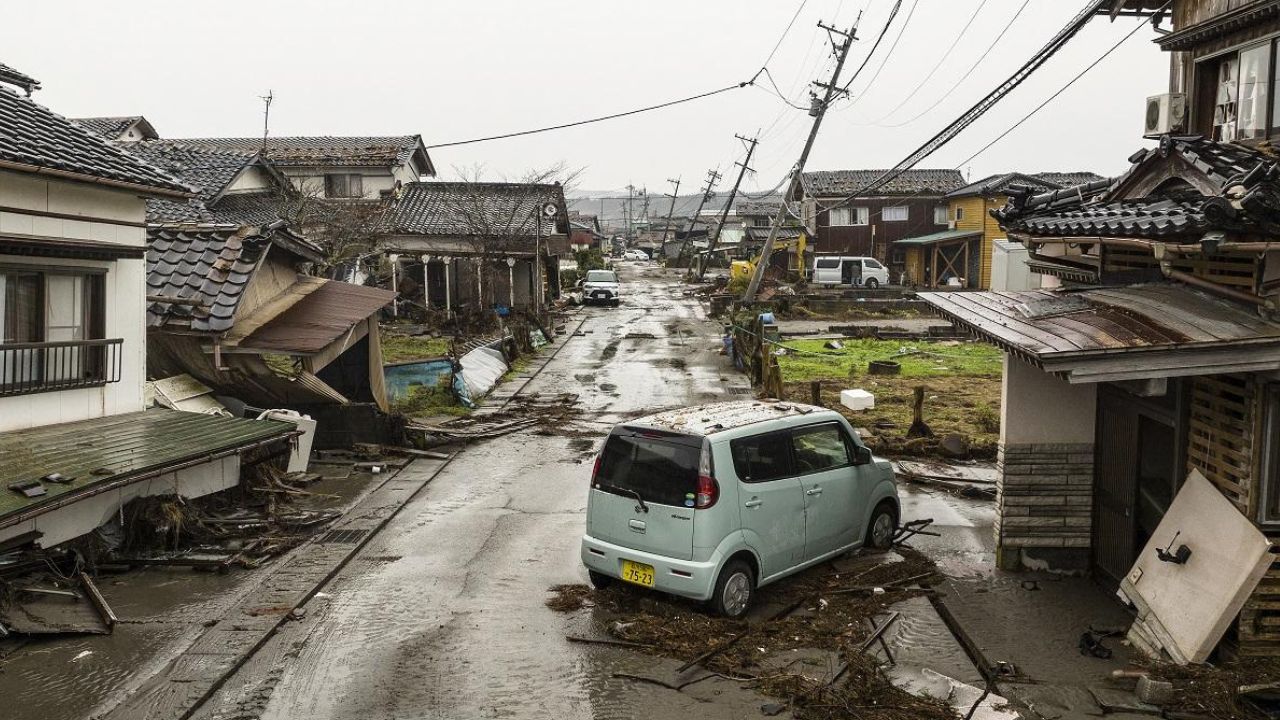
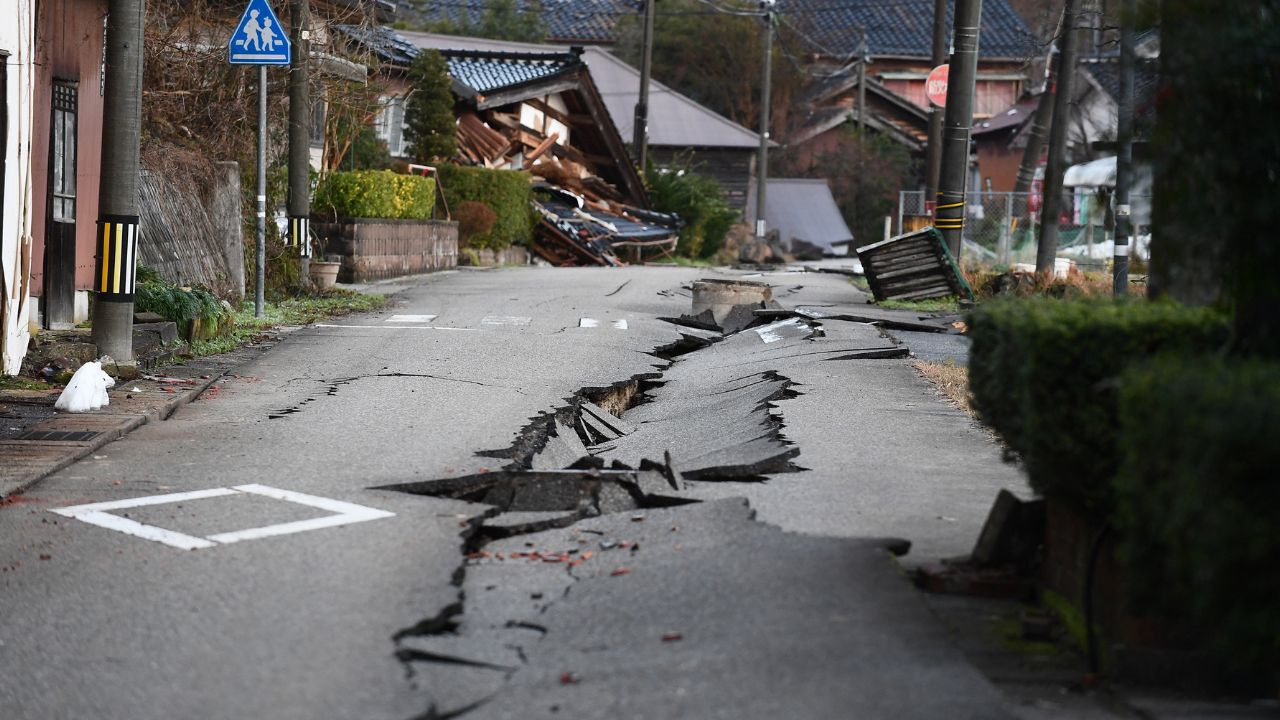
    The 7.5 magnitude quake destroyed and toppled buildings, caused fires and knocked out infrastructure on the Noto Peninsula on Japan’s main island Honshu just as families were celebrating New Year’s Day.

    Eight days later thousands of rescuers were battling blocked roads and poor weather to clear the wreckage as well as reach almost 3,500 people still stuck in isolated communities.

    Ishikawa regional authorities released figures on Tuesday showing that 202 people were confirmed dead, up from 180 earlier in the day, with 102 unaccounted for, down from 120.

    On Monday, authorities had more than tripled the number of missing to 323 after central databases were updated, with most of the rise related to badly hit Wajima.

    But since then “many families let us know that they were able to confirm safety of the persons (on the list)”, Ishikawa official Hayato Yachi told AFP.

    With heavy snow in places complicating relief efforts, as of Monday almost 30,000 people were living in around 400 government shelters, some of which were packed and struggling to provide adequate food, water and heating.

    Almost 60,000 households were without running water and 15,600 had no electricity supply.

    Road conditions have been worsened by days of rain that have contributed to an estimated 1,000 landslides.

    At a daily disaster-relief government meeting on Tuesday, Prime Minister Fumio Kishida instructed ministers to “make efforts of resolving the state of isolation (of communities) and continue tenacious rescue activities”.

    Kishida also urged secondary evacuations to other regions outside the quake-hit area, top government spokesman Yoshimasa Hayashi told reporters.

    In Ishikawa prefecture’s city of Suzu, a woman in her 90s managed to survive five days under the wreckage of a collapsed house before being saved on Saturday.

    “Hang in there!” rescuers were heard calling to the woman, in police footage from the rainy scene published by local media.

    Not all were so lucky, with Naoyuki Teramoto, 52, inconsolable on Monday after three of his four children’s bodies were discovered in the town of Anamizu.

    “We were talking of plans to go to Izu,” a famous hot spring resort, after his daughter passed her high school entrance exam, he told broadcaster NTV.

    Japan experiences hundreds of earthquakes every year, though most cause no damage because of strict building codes in place for more than four decades.

    But many structures are older, especially in rapidly ageing communities in rural areas like Noto.

    The country is haunted by the monster quake of 2011 that triggered a tsunami, left around 18,500 people dead or missing, and caused a nuclear catastrophe at the Fukushima plant.

  • Japan quake death toll rises to 92, missing 242

    Japan quake death toll rises to 92, missing 242

    Anamizu (Japan) (AFP) – The death toll from a devastating earthquake in central Japan rose to 92 on Friday, regional authorities said, with the number of missing jumping to 242.

    Two elderly women were pulled from the rubble, but hopes of finding other survivors faded as thousands of rescuers raced against the clock four days after the 7.5-magnitude quake on New Year’s Day.

    Thousands of rescuers from all over Japan have been battling aftershocks and roads littered with gaping holes and blocked by frequent landslides in the Ishikawa region to reach hundreds of people in stranded communities.

    On Thursday afternoon, 72 hours after the quake, the two older women were miraculously pulled alive from the remains of their homes in Wajima, one of them thanks to a sniffer dog called Jennifer.

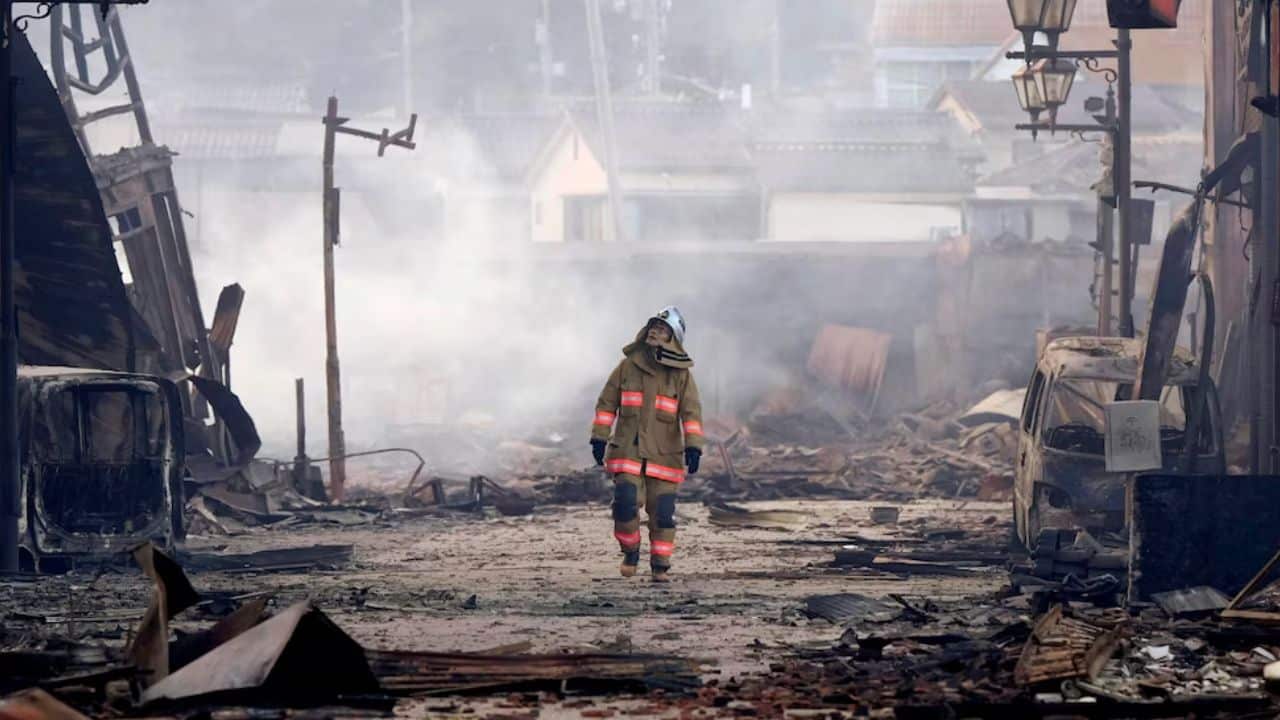
    The port city of Wajima on the Noto Peninsula was one of the worst hit, with a pungent smell of soot still in the air and faint columns of smoke visible from a huge fire that destroyed hundreds of structures on the first day.

    “I was relaxing on New Year’s Day when the quake happened. My relatives were all there and we were having fun,” Hiroyuki Hamatani, 53, told AFP amid the burnt-out cars, wrecked buildings and fallen telegraph poles.

    “The house itself is standing but it’s far from livable now… I don’t have the space in my mind to think about the future,” he told AFP.

    Grief

    The powerful main tremor, followed by hundreds of aftershocks, injured at least 330 people, local authorities said.

    Around 30,000 households were without electricity in the Ishikawa region, and 89,800 homes there and in two neighbouring regions had no water.

    Hundreds of people were in government shelters.

    The Suzu area was also devastated, with fishing boats sunk or lifted like toys onto the shore by tsunami waves that also reportedly swept one person away.

    Noriaki Yachi, 79, fought back tears after his wife was pulled from the rubble there and confirmed dead, the Asahi Shimbun daily reported.

    “My life with her was a happy one,” Yachi said.

    Earthquakes have hit the Noto region with intensifying strength and frequency over the past five years.

    The country is haunted by a massive 9.0-magnitude undersea quake in 2011, which triggered a tsunami that left around 18,500 people dead or missing.

    It also swamped the Fukushima atomic plant, causing one of the worst nuclear disasters in history

  • Japan quake toll rises to 62 as weather hampers rescuers

    Japan quake toll rises to 62 as weather hampers rescuers

    Japanese rescuers scrambled to search for survivors on Wednesday (January 3) as authorities warned of landslides and heavy rain after a powerful earthquake that killed at least 62 people.

    The 7.5-magnitude quake on January 1 that rattled Ishikawa prefecture on the main island of Honshu triggered tsunami waves more than a metre high, sparked a major fire and tore apart roads.

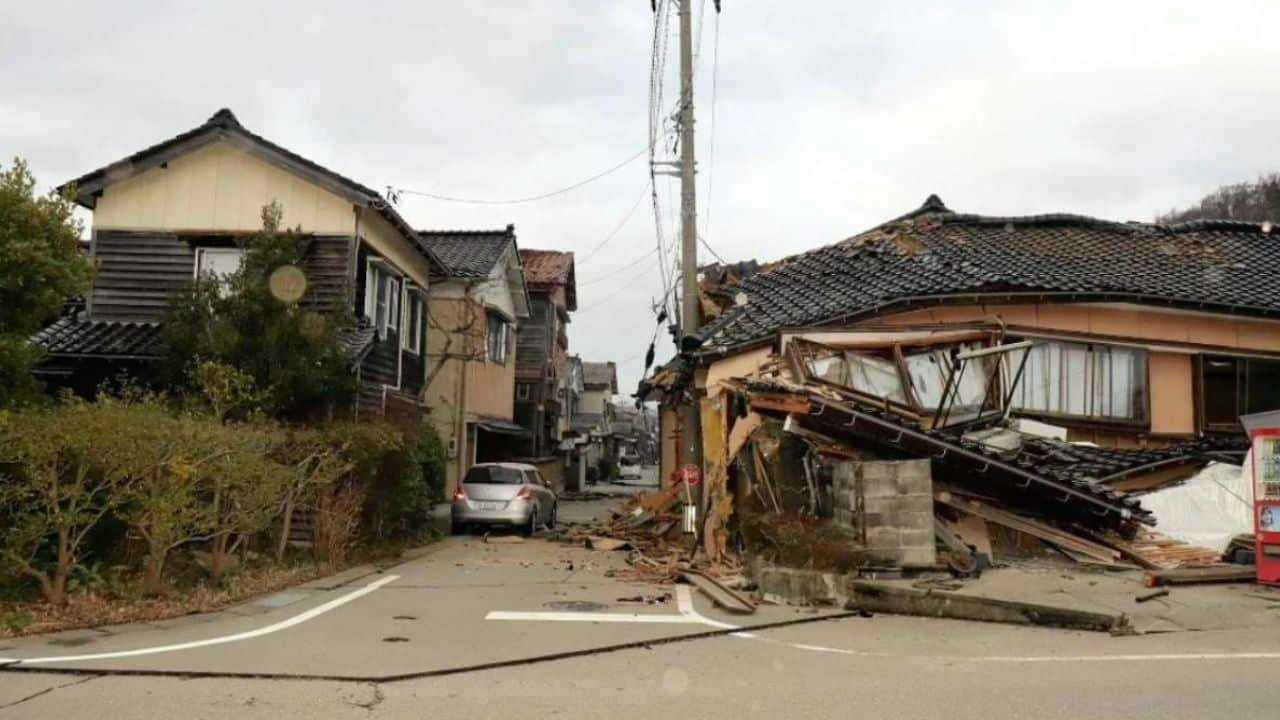
    The Noto Peninsula of the prefecture was most severely hit, with several hundred buildings ravaged by fire and houses flattened in several towns, including Wajima and Suzu, as shown by before-and-after satellite images released on Wednesday.

    The regional government announced Wednesday that 62 people had been confirmed dead and more than 300 injured, 20 of them seriously.

    The toll was expected to climb as rescuers battle aftershocks and poor weather to comb through rubble.

    More than 31,800 people were in shelters, the government said.

    “More than 40 hours have passed since the disaster. We have received a lot of information about people in need of rescue and there are people waiting for help,” Prime Minister Fumio Kishida said Wednesday after an emergency task force meeting.

    “Rescue efforts are being made by the local authorities, police, firefighters and other operational units, while the number of personnel and rescue dogs is enhanced.

    “However, we ask you to remain fully mindful that we are in a race against time and to continue to do your utmost to save lives, putting people’s lives first,” Kishida said.

    The Japan Meteorological Agency (JMA) has issued a heavy rain warning in the area.

    “Be on the lookout for landslides until the evening of Wednesday,” the agency said.

    In the coastal city of Suzu, mayor Masuhiro Izumiya said there were “almost no houses standing”.

    “About 90 per cent of the houses (in the town) are completely or almost completely destroyed… the situation is really catastrophic,” he said, according to broadcaster TBS.

    A woman at a shelter in the town of Shika told TV Asahi that she “hasn’t been able to sleep” due to aftershocks.

    “I’ve been scared because we don’t know when the next quake will hit,” she said.

    Nearly 34,000 households were still without power in Ishikawa prefecture, the local utility said.

    Many cities were without running water.

    Shinkansen bullet trains and highways have resumed operations after several thousand people were stranded, some for almost 24 hours.

    The US Geological Survey said the quake had a magnitude of 7.5, while the JMA measured it at 7.6, triggering a major tsunami warning.

    The powerful quake was one of more than 400 to shake the region through Wednesday morning, the JMA said.

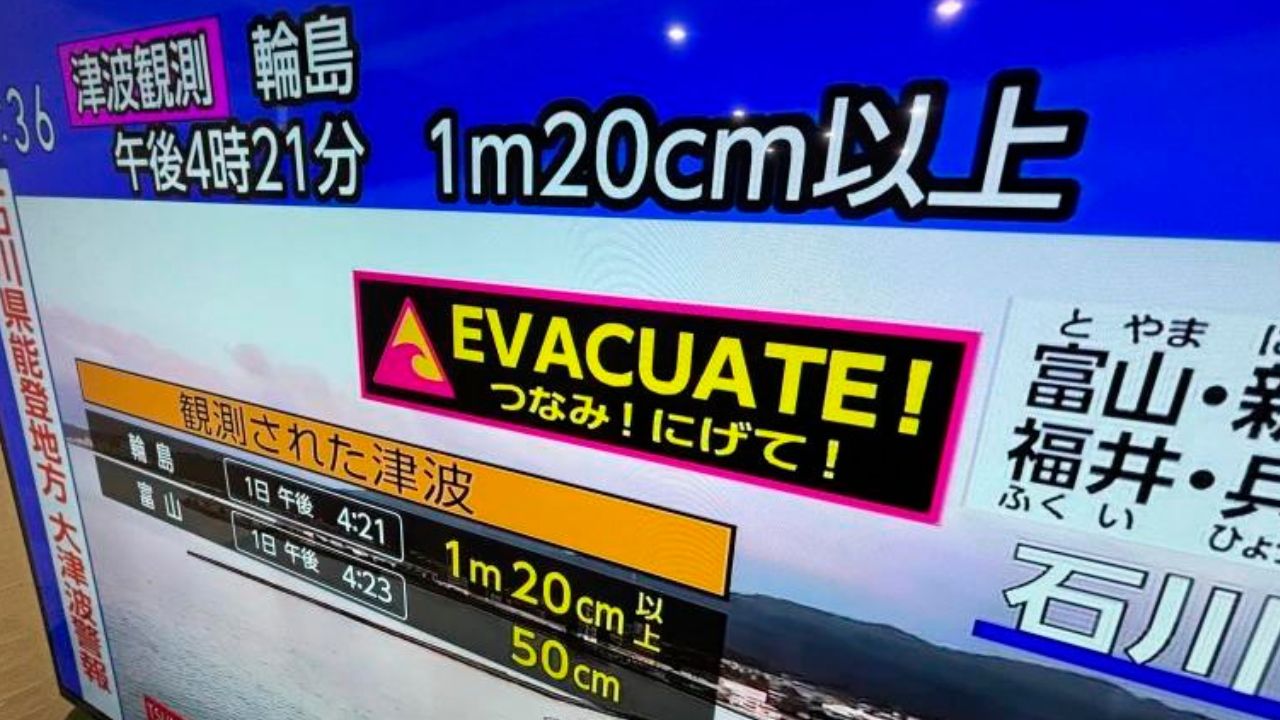
    Japan lifted all tsunami warnings after waves at least 1.2m high hit the town of Wajima and a series of smaller tsunamis were reported elsewhere.

    Japan experiences hundreds of earthquakes every year and the vast majority cause no damage.

    The number of earthquakes in the Noto Peninsula region has been steadily increasing since 2018, a Japanese government report said last year.

    The country is haunted by a massive 9.0-magnitude undersea quake off northeastern Japan in 2011, which triggered a tsunami that left around 18,500 people dead or missing.

    It also swamped the Fukushima atomic plant, causing one of the world’s worst nuclear disasters.

  • Japan quake death toll rises to 48: official

    Japan quake death toll rises to 48: official

    At least 48 people are confirmed dead following a major earthquake in Japan, a local official said.

    The official in Ishikawa prefecture, who spoke on condition of anonymity, told AFP the “death toll has reached 48”.

    Japanese rescuers battled against the clock and powerful aftershocks Tuesday to find survivors of a major earthquake that struck on New Year’s Day, killing at least six people and leaving a trail of destruction.

    The 7.5-magnitude quake, which hit Ishikawa prefecture on the main island of Honshu, triggered tsunami waves over a metre high, toppled buildings, caused a major port fire and tore apart roads.

    As daylight arrived, the scale of the destruction in Ishikawa emerged with buildings still smouldering, houses flattened and fishing boats sunk or washed ashore.

    “Very extensive damage has been confirmed, including numerous casualties, building collapses and fires,” Prime Minister Fumio Kishida said after a disaster response meeting.

    “We have to race against time to search for and rescue victims of the disaster.”

    Police said six people had been killed although the toll was almost certain to climb. The Kyodo news agency reported that 13 people had died, including seven in the badly hit port of Wajima.

    Aerial news footage showed devastation from a major fire at the port, where a seven-storey building collapsed.

    Almost 45,000 households were without power in the region which saw temperatures touch freezing overnight, the local energy provider said. Many cities were without running water.

    The US Geological Survey (USGS) said the quake had a magnitude of 7.5. Japan’s meteorological agency measured it at 7.6, and said it was one of more than 150 to shake the region through Tuesday morning.

    Several strong jolts were felt early Tuesday, including one measuring 5.6 percent that prompted national broadcaster NHK to switch to a special programme.

    “Please take deep breaths,” the presenter said, reminding viewers to check for fires in their kitchens.

    Tsunami warning lifted

    On Monday waves at least 1.2 metres (four feet) high hit Wajima on Monday, and a series of smaller tsunamis were reported elsewhere.

    But warnings of much larger waves proved unfounded and on Tuesday Japan lifted all tsunami warnings.

    Images on social media showed cars and houses in Ishikawa shaking violently and terrified people cowering in shops and train stations. Houses collapsed and huge cracks appeared in roads.

    A team of firefighters crawled under a collapsed, large commercial building in Wajima, television footage showed.

    “Hang in there! Hang in there,” they shouted as they battled through piles of wooden beams with an electric saw.

    “There were shaking that I have never experienced before, a local elderly man told NHK.

    “Inside my house, it was so terrible… I am still alive. Maybe I have to  be content with that.”

    The fire in Wajima engulfed a row of houses, video footage showed, with people being evacuated in the dark, some with blankets and others carrying babies.

    A duty officer at Wajima Fire Department said they still were being overwhelmed Tuesday by rescue requests and reports of damages.

    A total of 62,000 people had been ordered to evacuate, according to the fire and disaster management agency.

    About 1,000 people were staying at a military base, the defence ministry said.

    Bullet trains suspended

    Defense Minister Minoru Kihara said 1,000 military personnel were preparing to go to the region, while 8,500 others were on standby. Around 20 military aircraft were dispatched to survey the damage.

    Monday’s quake shook apartments in the capital Tokyo some 300 kilometres away, where a public New Year greeting event that was to be attended by Emperor Naruhito and his family members was cancelled.

    Several major highways were closed around the epicentre, Japan’s road operator said, and bullet train services from Tokyo were also suspended.

    Japan experiences hundreds of earthquakes every year and the vast majority cause no damage.

    The country has strict regulations intended to ensure buildings can withstand strong quakes and routinely holds emergency drills.

    But the country is haunted by the memory of a massive 9.0-magnitude undersea quake off northeastern Japan in March 2011, which triggered a tsunami that left around 18,500 people dead or missing.

    The 2011 tsunami also sent three reactors into meltdown at the Fukushima nuclear plant, causing Japan’s worst post-war disaster and the most serious nuclear accident since Chernobyl.

    Japan’s nuclear authority said there were no abnormalities reported at the Shika atomic power plant in Ishikawa or at other plants after Monday’s quake.

    In Washington, US President Joe Biden was briefed on Monday’s quake and offered Japan “any necessary assistance” to cope with the aftermath.

    French President Emmanuel Macron expressed “solidarity” while Italian Prime Minister Giorgia Meloni offered condolences and assistance.
  • First Tsunami Waves Hit Japan After Major Quake: Weather Agency

    First Tsunami Waves Hit Japan After Major Quake: Weather Agency

    The first tsunami waves, some more than a metre high, arrived on the north coast of central Japan on Monday after a series of powerful earthquakes rocked the region.

    Waves as high as 1.2 meters (four feet) hit Wajima port in Ishikawa prefecture at 4:21 pm (0721 GMT), the Japan Meteorological Agency said, after the US Geological Survey and other agencies registered a major 7.5 magnitude quake little more than 10 minutes earlier.

    Total of 21 earthquakes above 4.0 magnitude hit Japan.