Tag: education

  • No freedom of speech in American universities

    No freedom of speech in American universities

    Many people have lost jobs for views that contradict mainstream US approach towards Israel and Palestine, despite a strong movement of solidarity with Palestine.

    Palestinian solidarity activists faced monitoring and restricted mobility on campus as administrators heightened security measures. Many felt unwelcome, with reports of harassment against Muslim women, including spitting and hijab removal.

    Students for Justice in Palestine, the leading pro-Palestinian campus group, has been suspended from several universities, including Columbia, Brandeis, George Washington, and Rutgers since October 7. Accusations against the group include alleged support for Hamas, disruption of classes, and intimidation of other students. None of the charges have been proved.

    In late October, the chancellor of the State University System of Florida issued a letter to school presidents, directing them to “deactivate” chapters of Students for Justice in Palestine across the state. Civil rights groups assert that this directive blatantly violates the First Amendment.

    At Brandeis University, known for its public endorsement of free speech, a pro-Palestinian student group was prohibited from campus due to statements made by its national leadership.

    Meanwhile, at the University of Vermont, plans for a Palestinian poet Mohammed el-Kurd to speak were canceled after students raised concerns about alleged antisemitism, prompting the school to withdraw the venue.

    The board of the Harvard Law Review in mid-Nomber, 2023, decided against publishing an article by Rabea Eghbariah – Palestinian scholar and human rights lawyer – who had asserted that the situation in Gaza should be considered under the framework of genocide as laid down by the United Nations.

    At the University of Pennsylvania, the progressive Jewish student group Penn Chavurah planned to screen the documentary “Israelism” since July but postponed it in October due to proximity to a Hamas attack. The film, made by American Jews reevaluating their views on Israel after visiting the country, has sparked controversy on campuses. Although initially denied approval for a late November screening, the group attempted to secure space through the university’s Middle East Center. However, administrators warned of potential disciplinary action if they proceeded with the screening of “Israelism.”

    Hunter College too, cancelled the screening.

    In December 2023, University of Pennsylvania President M. Elizabeth Magill stepped down following a widely criticized congressional hearing.

    Magill, along with her counterparts from MIT and Harvard, consistently emphasized that their response would be contingent on the “context.” However, they faced criticism for failing to outright condemn any expressions advocating for the genocide of Jews.

    Students at Harvard have reportedly expressed their concern of the consequences of speaking out for Palestinians – even if it is expressing their views in class.no freedom of speech in maerican unis etc.
  • Maryam Nawaz announces transgender schools in each division while they exist since PTI times

    Maryam Nawaz announces transgender schools in each division while they exist since PTI times

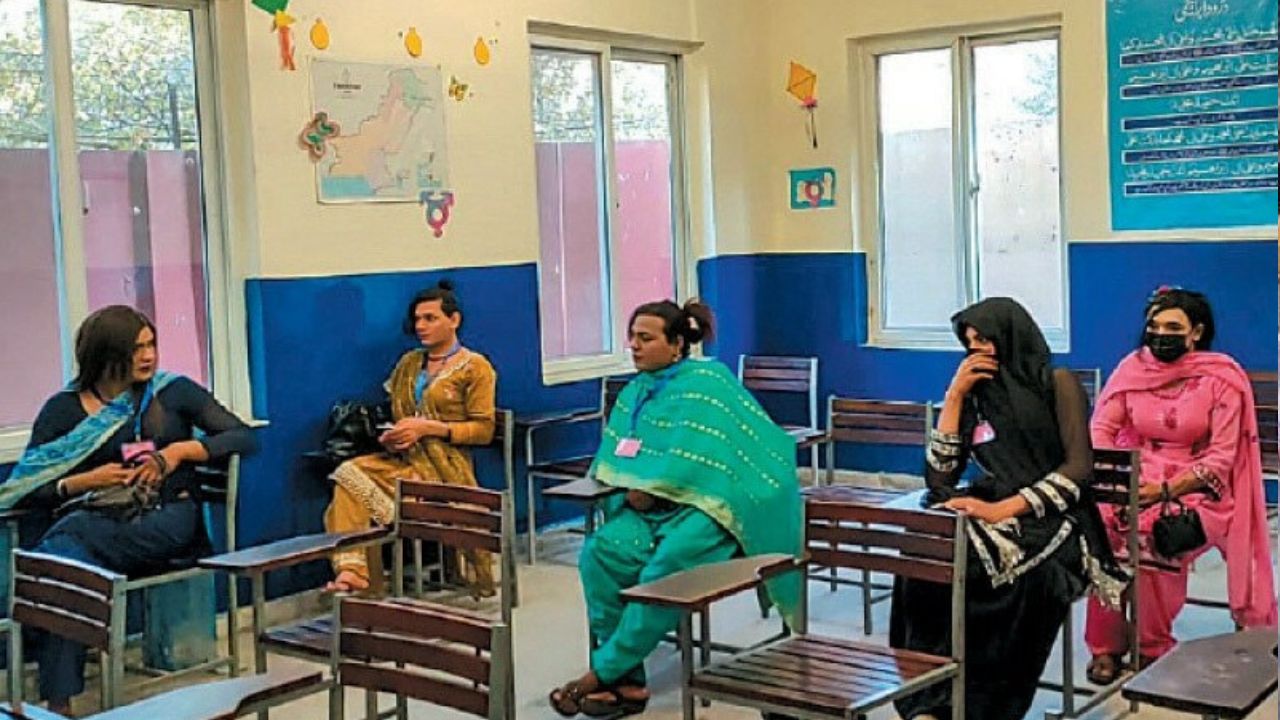
    Chief Minister Punjab Maryam Nawaz has announced the establishment of transgender schools at the division level. Additionally, she directed the relevant officials to provide educational facilities to special children in at least one government school in each district.


    Dawn reports that these decisions were ta­­ken at a meeting held to re­­­view proposed school education reforms in the province.


    While chairing the revi­­ew meeting, CM Nawaz said: “Schools for trans­ge­nder [community] will be established at divisional level.”


    PTI-initiated Transgender schools


    Nine of the 11 divisions in Punjab already have schools for the transgender community. The initiative was taken by the previous PTI government under the supervision of the then Punjab Minister for School Education Murad Raas.


    Trans Educational School Sys­t­­em, Multan, Principal Ali­sha Sherazi told Dawn that no one from the government had contacted them for the establishment of transgender schools, as such schools already exis­ted in different cities of Punjab like D.G. Khan, Gujran­wala, Rawalpindi, Sargo­dha, Faisalabad, Gujrat, Multan and Bahawalpur. Only the one established in Lahore was later closed, she added.


    Transgender schools


    Alisha Sherazi, a trans­gender and a former cons­u­ltant of UNDP who did her MPhil in Education, Planning and Manage­m­ent from Burhanuddin Za­­kariya University, expl­ai­ned that three of the scho­ols including D.G. Khan, Multan and Bahawalpur were giving vocational tr­­a­ining to members of the transgender community. Four labs for IT, stitching, cooking and make-up classes were established in those schools, while other schools were focusing on academics, according to the principal.


    The government did not have the exact figures of transgender community’s population in the Punjab, Alisha added.


    At the meeting, CM Maryam Nawaz directed relevant authorities to implement a new comprehensive procedure.

  • Two out of five Yemeni children out of school: aid group

    Two out of five Yemeni children out of school: aid group

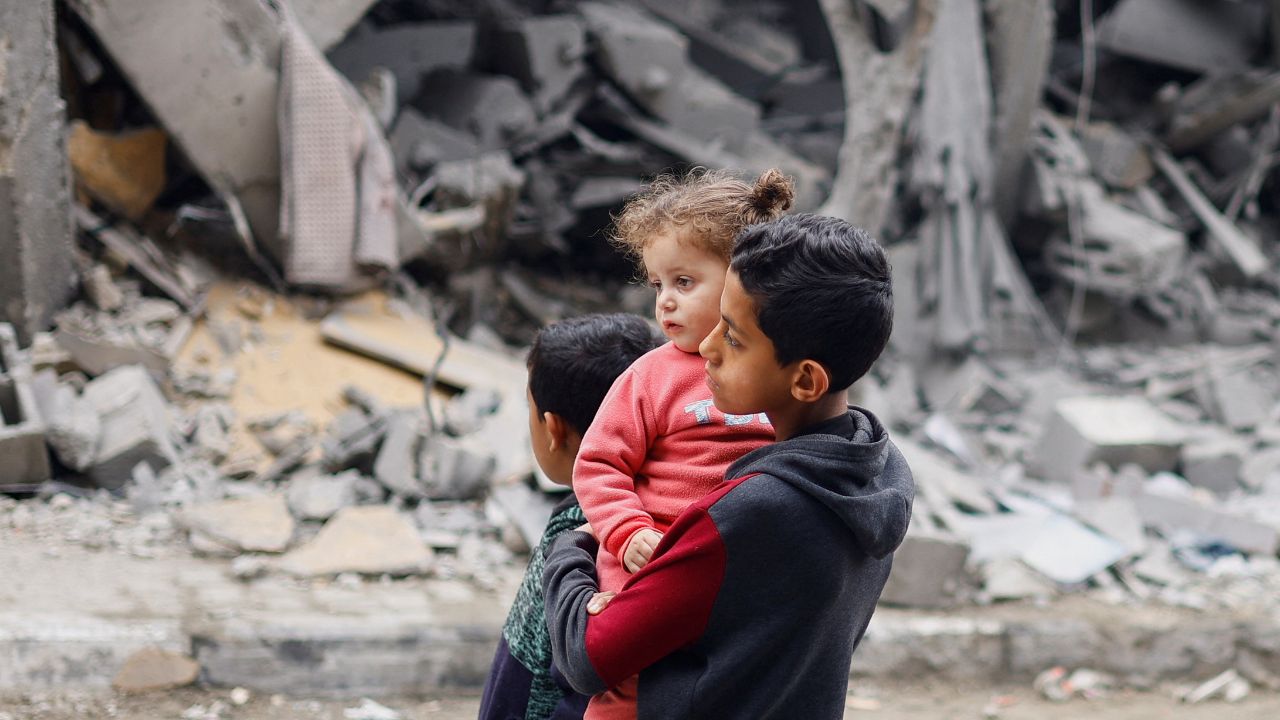
    Dubai: Nearly a decade into Yemen’s brutal war, some 4.5 million of its children are not attending school, the charity Save the Children said Monday.

    The figure underlines how precarious daily life remains in the Arabian Peninsula’s poorest country, despite relative calm since an April 2022 ceasefire.

    “Two in five children, or 4.5 million, are out of school, with displaced children twice as likely to drop out than their peers,” the group said in a report.

    “One third of families surveyed in Yemen have at least one child who has dropped out of school in the past two years despite the UN-brokered truce,” it added.

    The conflict in Yemen began when Iran-backed Houthi rebels seized the capital Sanaa in September 2014, prompting Saudi Arabia to lead a coalition to prop up the internationally recognized government months later.

    Economic insecurity amid the war has plunged two thirds of Yemen’s 33 million inhabitants below the poverty line, the charity said, while also displacing about 4.5 million people.

    “Displaced children are twice as vulnerable to school dropouts,” Save the Children said.

    “Nine years into this forgotten conflict, we are confronting an education emergency like never before,” said Mohammed Manna, Save the Children’s interim country director in Yemen.

    “Our latest findings must be a wake-up call and we must act now to protect these children and their future.”

    The report said 14 percent of families interviewed by the aid group pointed to insecurity as the reason behind their children dropping out.

    But a larger majority — some 44 percent — pointed to economic reasons, in particular the need to support family incomes. Some 20 percent said they were unable to afford regular school costs.

    “The impact of the education crisis on Yemen’s children and their future is profound,” the charity said.

    “Without immediate intervention, an entire generation risks being left behind.”

  • Afghan schools restart, with girls barred for third year running

    Afghan schools restart, with girls barred for third year running

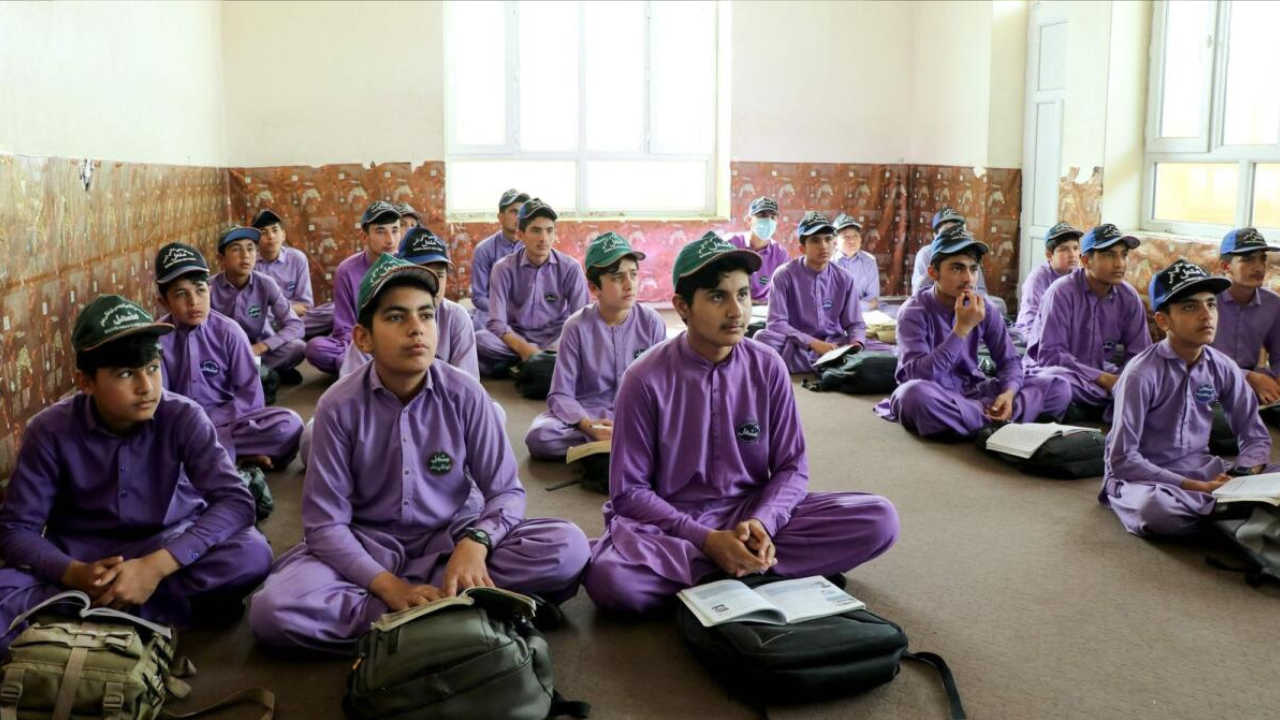
    Kabul, Afghanistan – Schools in Afghanistan opened for the new academic year on Wednesday, with girls lamenting being banned from joining secondary-level classes for a third year in a row.

    Taliban authorities barred girls from secondary school in March 2022, after surging back to power in 2021 and imposing an austere vision of Islam with curbs the United Nations labels “gender apartheid”.

    On Wednesday morning, uniformed boys carried black and white Taliban flags as they lined the entrance of Kabul’s Amani school, where local officials arrived for the ceremonial start of the school year.

    But 18-year-old Kabul resident Zuhal Shirzad had to stay home when the school bell rang.

    “Every year when my brother went to school, I felt very disappointed,” she told AFP.

    “I was happy for him and sad for myself,” she said.

    “This winter, my brother was studying and preparing for the university entrance exam,” she added.

    “I looked at him desperately and said that if I had been allowed to go to school, I would also be preparing for the university entrance exam now.”

    Afghanistan is the only country where girls’ education has been banned after elementary school.

    “None of the girls like me can continue our education and studies, and it is excruciating that boys can continue,” said 18-year-old Asma Alkozai, from the western city of Herat.

    “When there are barriers to education in society, such societies can never progress,” she told AFP.

    Online classes have sprung up in response to restrictions but a dearth of computers and internet, as well as the isolation of learning via screen, makes them a poor substitute for in-person learning, students and teachers say.

    Education ‘essential’

    The education ministry announced the new school year on Tuesday, a day before the start of the Afghan calendar’s new year, in a media invitation that expressly forbade women journalists from covering the ceremony at the Amani school.

    At the ceremony, Taliban government Deputy Prime Minister Abdul Salam Hanafi praised education, saying, “A nation without education will always be dependent on others”, local media reported.

    Universities also recently started the new academic year, but women have been blocked from attending since December 2022.

    Under the Taliban authorities, women have been excluded from many spheres of public life. Beauty salons have been shuttered and women have been barred from parks, funfairs and gyms.

    Women’s rights remain a key obstacle to international recognition of the Taliban government, which has not yet been recognised by any country.

    The United Nations mission in Afghanistan (UNAMA) called on the authorities to “end this unjustifiable and damaging ban”.

    “Education for all is essential for peace & prosperity,” the agency said in a post on social media platform X.

    ‘Half of society’

    Taliban authorities have insisted since girls were barred from secondary school that they are working on establishing a system that aligns with their interpretation of Islamic law.

    Thirteen-year-old Mudasir in eastern Khost province said girls and women should be given their rights to education “in the Islamic framework”.

    “They can go to school wearing Islamic hijab (covering),” he told AFP.

    “They must be given their rights, because if a sister is educated, she can be the reason for the whole family to be educated.”

    Faiz Ahmad Nohmani, who started secondary school at a private institution in Herat on Wednesday, was excited to start the new academic year but said he was “very sorry” that girls were not also returning.

    “Today, when I came to school, I wanted our sisters to come as well because they are half of society,” the 15-year-old told AFP. “They should study like us.”

    Ali Ahmad Mohammadi, an 18-year-old student in his final year of secondary school, also in Herat, said he’s aware of the chance he has to study.

    “Literacy helps us progress, it saves society,” said the teenager, who hopes to go on to university.  “An illiterate society will always face stagnation.”

    qb-sw/ssy

    © Agence France-Presse

  • Khyber Medical University prohibits ‘intimate relationship’ between faculty, students to counter sexual harassment on campus

    Khyber Medical University prohibits ‘intimate relationship’ between faculty, students to counter sexual harassment on campus

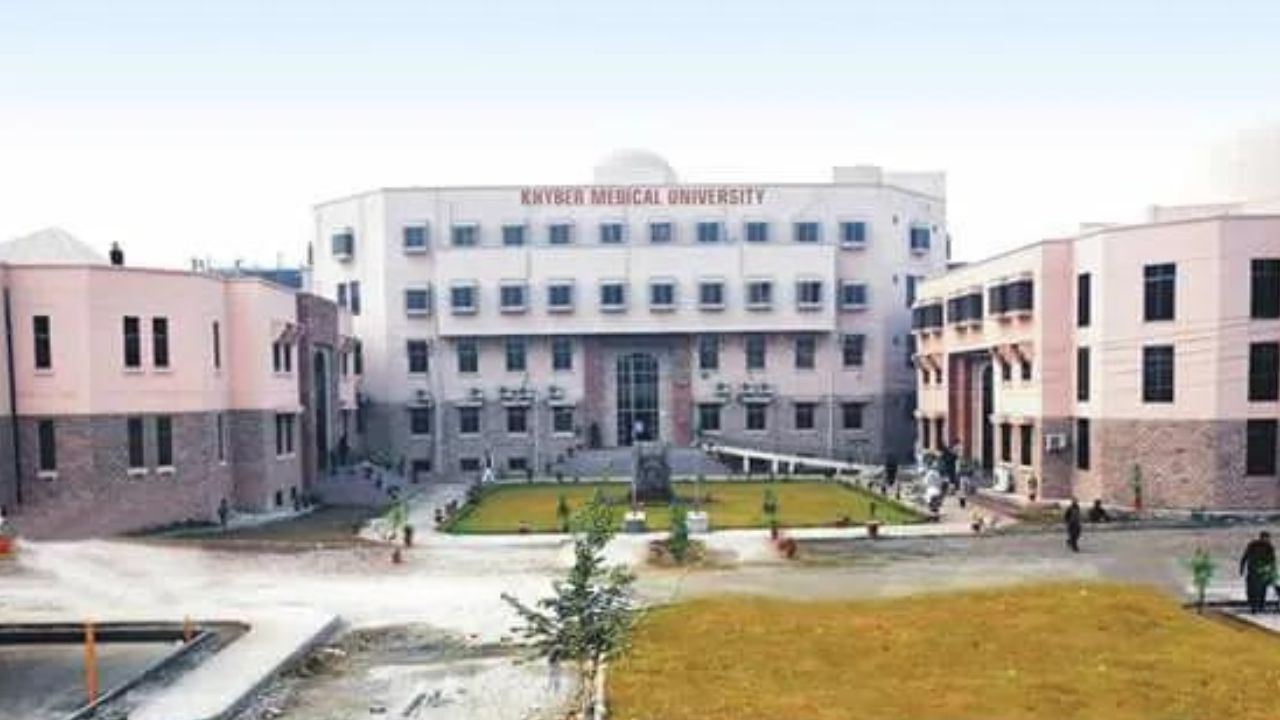
    Khyber Medical University (KMU) has officially prohibited ‘intimate relationship’ between members of staff and students in accordance with the Higher Education Commission to put an end to harassment on campuses.

    Dr Brekhna Jamil, the chairperson of KMU’s harassment inquiry committee, issued the notification, stating that severe penalties will be implemented if the policy is violated along with a possible oral or written “reprimand, dismissal, suspension, expulsion, disciplinary probation, imposition of fine, withholding of degree, cancellation of professional licence, inclusion of decision in personal file and other related sanctions as deemed appropriate,” reports Dawn.

    “These relationships pose conflicts of interest, compromise professional judgment, and risk the credibility of the institution. The individuals involved in such relationships should declare it,” the notification read — titled ‘Prohibition of intimate or romantic relationships between faculty members, staff and students as per HEC’s policy on protection against sexual harassment in higher education institutions 2020,’ .

  • Khyber schools shifting to a new examination system

    Khyber schools shifting to a new examination system

    The District Education Office has launched a novel approach to annual examinations, emphasizing student learning outcomes (SLO) over rote memorization. This initiative aims to shift the focus from cramming to demonstrating genuine subject knowledge in exam papers.

    According to officials speaking to Dawn, the inspiration for the SLO-based exam system stems from the annual intermediate exams conducted by the board of Intermediate and secondary education. Under this system, subject specialists set uniform exam papers for all affiliated educational institutions.

    Abdur Rehman, Principal of a government high school in Jamrud and a member of the committee responsible for drafting unified exam papers highlighted that the introduction of the SLO-based system intends to discourage cramming and promote genuine understanding of subjects among students.

    He cited the poor results from last year’s grade 9–10 annual exams as a driving force behind this initiative.

    “The new exam system, which has been introduced at the school level in Khyber district for the first time, will not only help improve exam results, but it will strengthen the mental faculties of the students as well,” he said.

    Under the new system, exam papers consist of two parts: Part I comprises multiple-choice questions (short questions), while Part II includes critical questions aimed at encouraging students to provide detailed answers based on their understanding of the subjects.

    The examinations are currently underway in the district, commencing on March 4 and scheduled to conclude on March 25.

    “A three-member committee engaged at least 12 qualified subject specialists for scrutinising and proofreading new papers,” he said.

    Education expert Bahadar Khan lauded the initiative, emphasizing the quality of papers designed under the SLO-based system, which he believes will benefit both students and teachers.

    Moreover, the system is expected to reduce expenses for schools by eliminating the need for separate exam paper drafting and printing.

    Senior teacher Sharifullah Afridi from a government school in Landi Kotal also praised the new exam system.

    He also said the SLO-based exam system would do away with “laziness and indolence” among teachers and would make them more responsible regarding the discharge of their duties.

  • JI calls for sit-in outside Board of Intermediate Education Karachi after 80 per cent students fail

    JI calls for sit-in outside Board of Intermediate Education Karachi after 80 per cent students fail

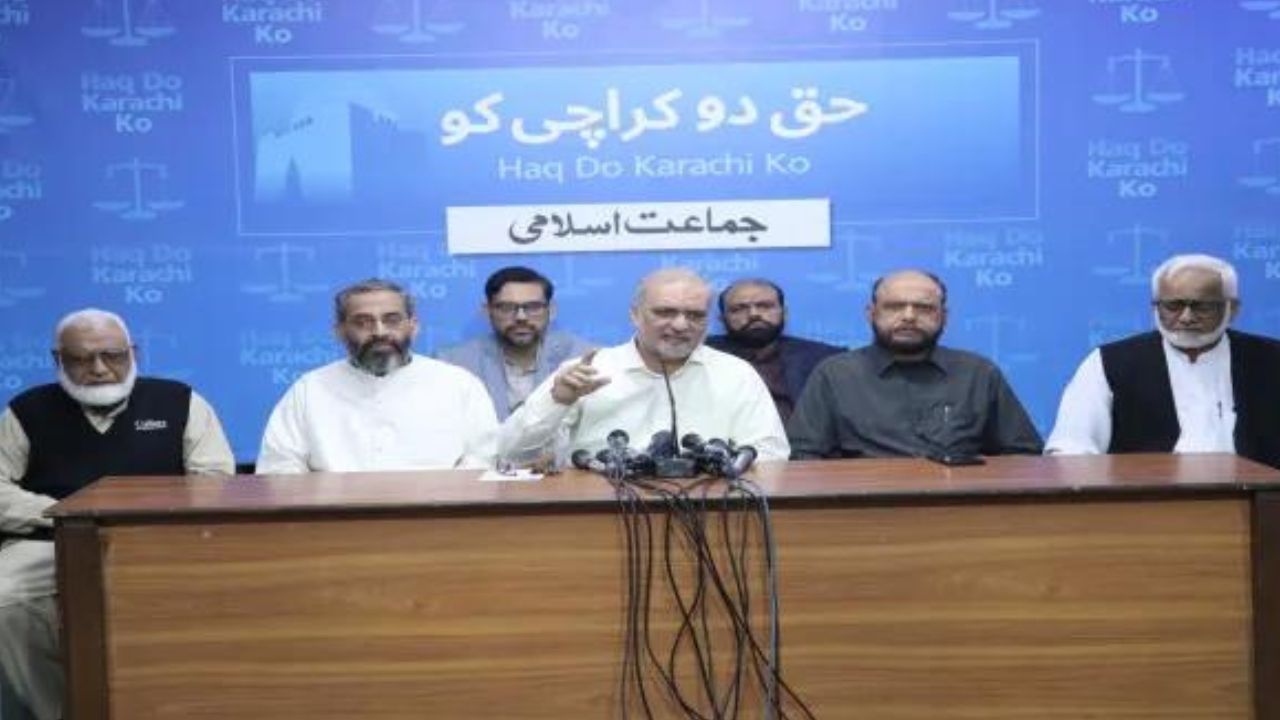
    The Jamaat-e-Islami (JI) has announced a sit-in outside the Board of Intermediate Education office in Karachi (BoIEK) following the announcement of inter results which revealed that about 80 per cent Arts students had failed.

    In a press conference in Karachi, JI’s city chief Hafiz Naeemur Rehman blamed BoIEK for putting children’s future at stake by undermining their education due with their ineptness.

    He has also claimed that the students were subjected to board’s incompetence during examinations such as cheating, paper leaks, and external interference, so much so that Metropolitan University, Karachi University, and NED University can not be deemed as credible anymore.

    Hafiz Naeemur Rehman also called for a protest outside the Intermediate Board office on Friday, asking students to join along with their mark sheets.

    Background

    The results for first-year (Part-I) examination announced by the Board of Intermediate Education Karachi (BIEK) raised concerns as more than 50 per cent of the students have failed.

    According to the inter board spokesperson, 72 per cent of the candidates failed in arts first year (private) and 80 per cent in arts (regular).

    He added that 11,046 candidates participated in the Arts (regular) exams in which only 2,298 candidates were successful while 2,795 candidates participated in the Arts private exams in which 792 candidates passed all the papers.

    Additionally, 63 per cent of the candidates failed in Commerce (private) as 1,986 candidates participated in the exams, out of which 744 candidates passed all the papers.

  • Security situation in Islamabad is under control: IG

    Security situation in Islamabad is under control: IG

    Islamabad Police’s Inspector General, Dr. Akbar Nasir Khan, has stated that the security situation in Islamabad is “under control”.

    His statement comes hours after it was reported by news platforms that educational institutions were unexpectedly shut over security concerns.

    Arab News reveals that parents received messages from schools on Monday morning “urging them to pick their children a few hours after they had dropped them off” for reasons pertaining to their “safety and security.”

    According to IG Islamabad, however, the situation is under control.

    “I would like to inform you that the security and law and order situation in Islamabad is currently under control,” Dr. Khan said in a video message posted on X (formerly Twitter).

    “As of now, there is no situation which should cause you to bring about any change in your [routine regarding] schools and colleges and usual way of life out of fear,” he added.

    He added that citizens should avoid moves that could threaten the security of the city.

    What happened earlier?

    On Monday morning, several educational institutes located in Islamabad reportedly closed until further notice amid security concerns.

    According to news reports, Bahria University, Air University, and National Defence University were shut down. Security, in particular areas of and around Margalla road, F-8, and F-10, had been beefed up.

    However, according to ARY News, a number of other schools and colleges were also shut down, adding that sources reported that threat alert suggested that ‘terror attacks’ were to be carried out by “female suicide bombers affiliated with the banned organisations between January 22-24″.

    Geo News reported that according to the Islamabad Police, security was already tight due to the upcoming elections and protests outside the Press Club. Additionally, search operations were conducted yesternight in certain areas.

  • TikTok star Sabrina Bahsoon launches fund for Palestinian children’s education

    TikTok star Sabrina Bahsoon launches fund for Palestinian children’s education

    Lebanese-Malaysian TikTok star Sabrina Bahsoon, also known as “Tube Girl,” is helping Palestinians by initiating a fund to assist Palestinian children. With a following of nearly 800,000 on TikTok, Sabrina has teamed up with Geutanyoe Malaysia, an advocacy group, to provide aid to Palestinian refugees in Malaysia. These refugees have come from Gaza and the West Bank

    Sabrina’s initiative focuses on education and she has established a fund dedicated to sponsoring the schooling of 14 Palestinian children at the Marifah International School in Seri Kembangan, Malaysia. Sabrina’s kind act is all about making sure these children can go to a good school and have the opportunity for a better future.
    Geutanyoe Malaysia has expressed sincere appreciation for Sabrina’s generous support, acknowledging her commitment to the cause through the creation of the “Sabrina Bahsoon’s Fund for Palestinian Children’s Education.”

    It added: “This contribution not only nurtures young minds but also serves as a safe haven for them in a context of protracted displacement. Together, this coordinated effort strengthens our resolve to empower the Palestinian community through education.”

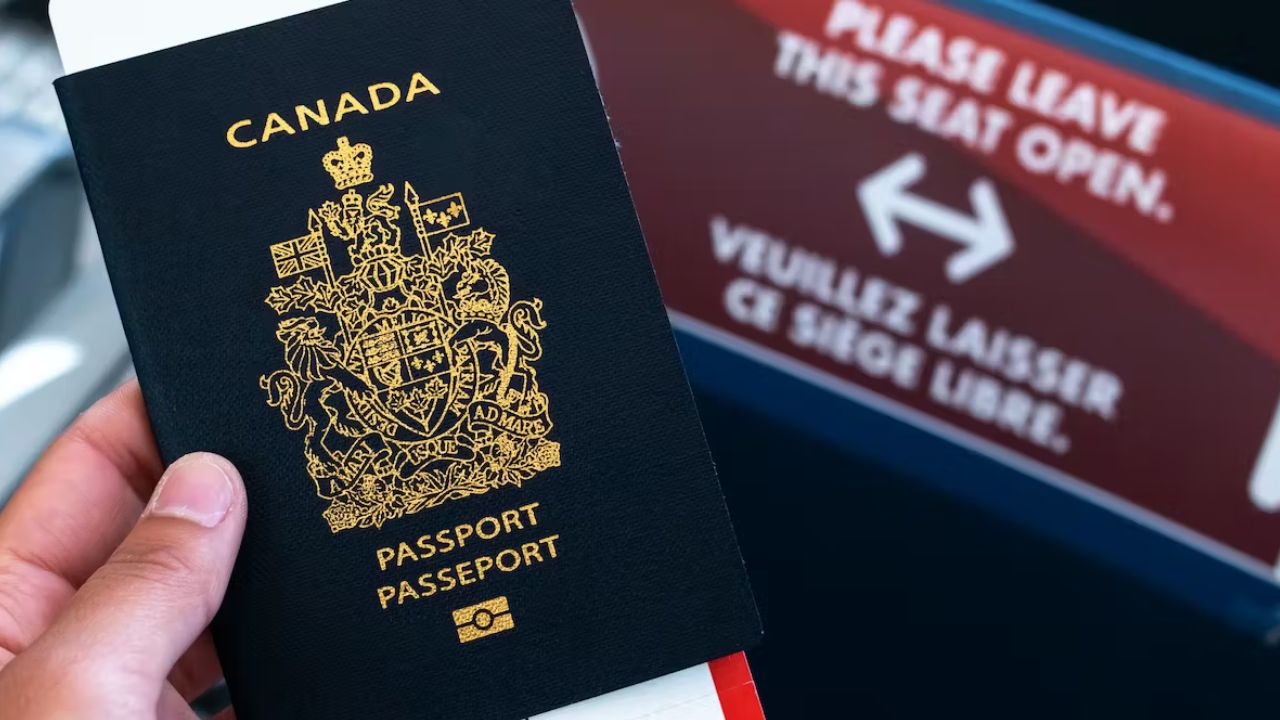
  • Canada’s ‘Startup Visa Program’ with no education, experience, job requirement or age limit

    Canada’s ‘Startup Visa Program’ with no education, experience, job requirement or age limit

    Umair Saleemi, journalist for BBC Urdu, shed light on Canada’s ‘Startup Visa Program’ in his latest piece:

    Every year, thousands of people from India and Pakistan migrate to America, Canada and European countries for better opportunities and a brighter future.

    Therefore, any changes in immigration and work visa laws or the introduction of any new programs are closely monitored in these countries.

    As Canada has changed the work permit law this month, Canadian authorities extended work permits for 18 months due to increased demand in the labour market during the Covid era, which is being phased out from January next year.

    Since then, Canada has initiated a startup visa program has been hailed by some experts as a golden opportunity.

    The program is mainly for talented foreigners who want to establish their own small businesses or startups in Canada.

    Certain criteria have been set to assess the quality of a startup, including innovation, creation of new jobs for local people and ability to compete globally.

    Who can apply for a Canadian Startup Visa?

    To apply for a Canadian start-up visa, a candidate must have a valid business. It is important that the candidate owns the shares of the business. One must hold 10 per cent or more of the company’s shares and have voting power (at shareholders’ meetings).

    A maximum of five people can apply in this program. It is important that the startup is supported by a Canadian organisation or ‘designated body’ and a letter of support is issued.

    Your business must operate from Canada, have its main activities from Canada and be established in Canada.

    In addition to mastering the English language, knowledge of French can further help your startup succeed in Canada. Canadian visa rules require the applicants to be fluent in speaking, writing and understanding either English or French.

    The startup visa candidate also has to provide evidence to the Canadian government that they have the resources to support themselves and their dependents. Candidates cannot manage this money by borrowing money.

    Immigration expert Julie Desai told BBC Gujarati that a startup visa is quite different from a normal work permit visa. Its aim is only to attract businessmen and entrepreneurs to Canada.

    The most important requirement is that the candidate’s business must be innovative enough to create new jobs in Canada, Desai explains. This visa is not for general business people — such start-up plans are needed that they can compete in the world.

    Under this program, the financial resources required by a family can be determined by the number of its members. If only one person wants to go to Canada under this program, one will need 13757 Canadian dollars. This amount can increase if other family members also want to go along. It will also be important to see if the Canadian authorities revise this amount every year.

    Meanwhile the candidate needs a ‘Letter of Support’ for start-up from a recognized business group in Canada. For this the candidate approaches these organisations and assures them that their startup idea deserves support.

    Candidate has to contract with these institutions for a letter of support as this letter is proof that a Canadian investor, such as a venture capital fund, angel investor group or business incubator, supports the candidate’s idea.

    In addition, accredited organisations also issue Canadian Government ‘Certificates of Commitment’ to candidates. The government then verifies both the letters for the visa application.

    The Canadian government may ask for more information about your startup to review the information.

    The Canadian government may reject the application if the letter of support or other requirements are not met.

    Immigration lawyer Prashant Ajmera asserts that it is very important that the startup plan has the support of Canadian organisations, that the candidate has a detailed business plan, and to have knowledge of the Canadian market.