Tag: FBR

  • PM orders rapid action against tax evaders

    PM orders rapid action against tax evaders

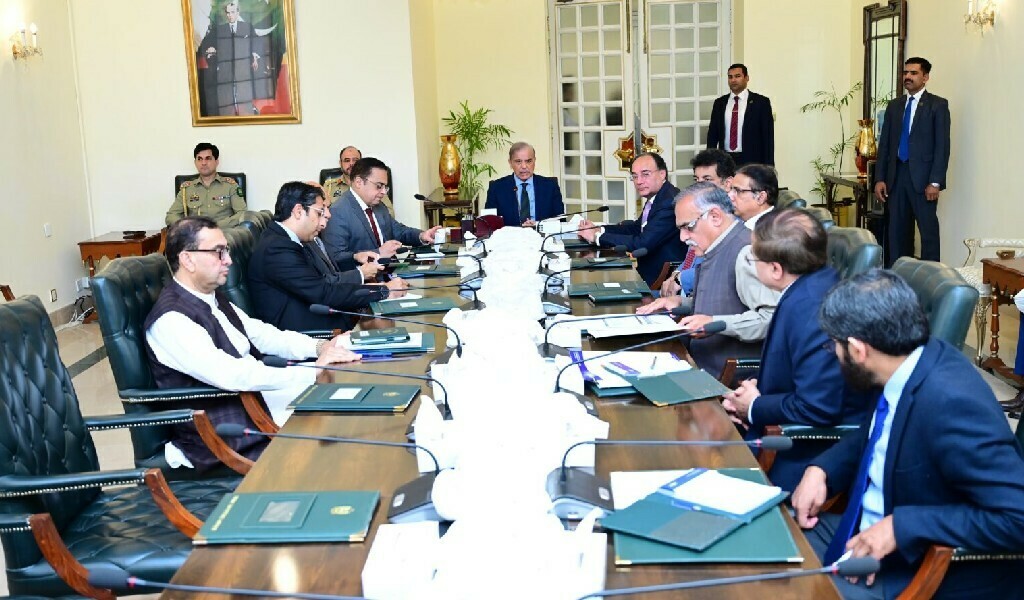
    In a meeting held on Monday, Prime Minister Shehbaz Sharif has authorised that swift action be taken against tax evaders and defaulters. He tasked the committee to identify all obstacles and delays in the implementation of Trace and Track System (TTS) in tobacco, sugar, cement and fertilizer industries.

    The PM also said that action should be taken within seven days against tax evaders. PM Shehbaz emphasized that all legal obstacles in the implementation of trace and track system should be removed and that this system should be enforced at all production lines of cement factories. Those factories who refuse to follow the rules, should be immediately sealed, the Premier ordered.

    He was of the opinion that besides an increase in revenue, the trace and track system could also be used for identification of counterfeit products.
    The premier also called for an end to fake and unregistered cigarettes. The meeting was apprised that TTS was fully operational in 14 tobacco factories whereas 12 other factories had been sealed for non-compliance.

    The system faced problems in sugar and cement industries due to technical issues while it was working in fertilizer industry. The PM also stressed action against smuggling that was causing serious loss to the national exchequer.

  • IMF wants Pakistan to increase petrol prices

    IMF wants Pakistan to increase petrol prices

    The International Monetary Fund (IMF) conveyed to the Pakistani authorities that while the Petroleum Development Levy (PDL) has considerably increased in recent years, the taxation of petroleum products has declined since 2019. “The relatively low rate of taxation of petrol is also reflected in the sale price relative to other countries.” The IMF emphasized that there is a difference of gasoline prices when compared to selected neighboring countries and emerging economies.

    The average 2023 price of gasoline at the pump was $1.12 per litre against $0.97 per litre in Pakistan. The IMF report said that taking off the exemption of petroleum products under the Sales Tax would increase prices by 18% with the standard rate of General Sales Tax.
    Moreover, the IMF has also recommended in its Technical Assistance Report with the Pakistani authorities to raise taxes on domestically manufactured automobiles and on luxury goods such as yachts. It also said to increase border control to stop smuggling of oil derivatives.

    Pakistan faces a problem of smuggling especially on it Western borders with both Iran and Afghanistan. A 2023 Civil Intelligence Agency report exposed that Pakistan faced loss of more than Rs. 60 billion annually due to smuggling of more than 2.81 billion litres of oil from Iran to Pakistan, as per the report of Business Recorder.

    The Fund also recommended the Federal Board of Revenue (FBR) to tax e-cigarettes equal to tobacco in the country.

  • IMF urges Pakistan to expand capital gains tax scope to include cryptocurrencies

    IMF urges Pakistan to expand capital gains tax scope to include cryptocurrencies

    The International Monetary Fund (IMF) has advised the Federal Board of Revenue (FBR) to broaden the scope of capital gains tax (CGT) by incorporating cryptocurrencies into the tax regime.

    This recommendation arises amidst ongoing discussions between the Fund and Pakistani authorities regarding the $3 billion stand-by arrangement (SBA).

    The four-day review, which commenced on Thursday, aims to unlock the final tranche of approximately $1.1 billion secured by Islamabad under a last-minute rescue package last summer, thus averting a sovereign debt default.

    During these deliberations, the IMF proposed a reassessment of tax slabs for real estate and listed securities to ensure comprehensive taxation of all gains, irrespective of asset holding periods.

    Moreover, the IMF urged the FBR to mandate property developers to monitor and report all pre-completion property transfers, with penalties for non-compliance. This move aims to bring under the tax umbrella the prevalent practice of trading property plot files within housing schemes.

    These recommendations are anticipated to be incorporated into the forthcoming bailout package under the Extended Fund Facility (EFF), potentially becoming integral to the FY2024–25 budget through the finance bill.

    The IMF’s technical assistance report highlights the challenges faced by Pakistani authorities in assessing and collecting taxes on capital gains from real estate transactions, particularly those occurring before formal property registration.

    To address this issue, the IMF suggests obligating property developers to track and report all pre-completion property transfers, with penalties for non-compliance, thereby shifting tax liabilities to developers if they are not recoverable from the initial transferor.

    Furthermore, the IMF advocates for the expansion of assets subject to capital gains tax to include emerging investment avenues such as cryptocurrencies alongside real estate and listed securities. 

    It also proposes revising tax slabs to ensure equitable taxation of capital gains, irrespective of asset holding durations.

    Overall, these IMF recommendations seek to fortify the taxation framework, ensuring a more inclusive and equitable approach to capital gains taxation in Pakistan.

  • IMF mission to arrive tomorrow for final review discussions on Pakistan’s SBA

    IMF mission to arrive tomorrow for final review discussions on Pakistan’s SBA

    The International Monetary Fund (IMF) mission is poised to commence vital economic review discussions from March 14 to 18, 2024, marking the conclusive evaluation of Pakistan’s Standby Arrangement (SBA).

    Sources within the Finance Ministry have confirmed that the IMF mission is scheduled to touch down in Pakistan tomorrow night, kickstarting a series of pivotal discussions set to unfold over the next four days.

    During this intensive period, the IMF mission is slated to engage in comprehensive dialogue with Pakistan’s economic team. Key participants include representatives from the Finance Ministry, Energy Ministry, Federal Board of Revenue (FBR), State Bank of Pakistan (SBP), Planning Commission, and the Petroleum Division.

    Insiders suggest that the IMF mission will delve into discussions covering a spectrum of economic facets. Talks are expected to encompass various critical sectors, including finance, energy, taxation, and central banking.

    Furthermore, in parallel with these discussions, preliminary conversations are anticipated to unfold regarding the potential initiation of a new loan programme with the IMF mission. This prospect adds an extra layer of significance to the ongoing economic deliberations as Pakistan navigates its financial landscape in the pursuit of sustainable economic growth.

    Stay tuned for comprehensive coverage as the IMF mission engages in the final review of Pakistan’s Standby Arrangement, paving the way for crucial decisions that could shape the nation’s economic trajectory in the coming months.

  • Pakistan seeks global assistance to overhaul tax system amidst significant drop in active taxpayers

    Pakistan seeks global assistance to overhaul tax system amidst significant drop in active taxpayers

    In a significant development, the count of active taxpayers has dwindled to 3.4 million, marking a 41 per cent decrease from the previous year. The government is contemplating seeking financial support from the Bill and Melinda Gates Foundation to enhance digital services within the Federal Board of Revenue (FBR).

    According to Express Tribune, approximately 500,000 individuals were excluded from the Active Taxpayers List (ATL) for tax year 2023 due to delayed submission of annual income tax returns. These individuals will incur a nominal penalty for reinstatement. Newly appointed economic czar, Muhammad Aurangzeb, chaired his inaugural meeting to explore avenues for improving digital services and expanding the tax base.

    The gathering, which included representatives from Karandaaz Pakistan, a firm specializing in financial inclusion services, concluded with the decision for Karandaaz to approach the Bill and Melinda Gates Foundation for financial backing in establishing a digital platform within the FBR.

    The government aims to streamline interactions between tax authorities and taxpayers, fostering transparency and curbing corruption. This initiative arises as the number of active taxpayers further drops to a mere 3.4 million, compared to last year’s figure of over 5.7 million—an alarming 41 per cent reduction.

    The FBR, having received 3.9 million income tax returns, removed approximately 500,000 individuals from the active list due to delayed filings. Consequently, those not on the active taxpayers list will face a 0.6 per cent withholding tax on cash withdrawals.

    To encourage compliance, the government allows the reactivation of approximately 500,000 individuals by paying a nominal Rs1,000 fine for late filing of returns. The International Monetary Fund (IMF) is expected to exert pressure on the government to expand the tax base and simplify tax slabs for both salaried and business individuals.

    Recent data reveals a noteworthy contribution of Rs217 billion from the salaried class in the first eight months of the current fiscal year, surpassing the combined taxes paid by rich exporters and real estate players by Rs37 billion, or one-fifth.

  • FBR collects Rs5.15 trillion in taxes in less than eight months

    FBR collects Rs5.15 trillion in taxes in less than eight months

    The Federal Board of Revenue (FBR) has revealed that it has achieved a remarkable milestone by collecting revenue amounting to Rs5.15 trillion from July 2023 to mid-February 2024.

    This represents a substantial 30 per cent increase compared to the same period in the previous fiscal year, according to an official press release.

    The report indicates that the growth in tax revenue is attributed to a comprehensive strategy employed by the FBR, with a keen focus on both domestic and import taxes.

    Tax refunds during this period witnessed a substantial 28 per cent growth, further contributing to the positive financial trajectory.

    A breakdown of the month-wise revenue collection for the period from July 2023 to January 2024 reveals that overall growth in domestic taxes reached an impressive 40 per cent. Concurrently, import duty and related taxes experienced a significant uptick of 16 per cent.

    The surge in revenue collection aligns with the revival of the Gross Domestic Product (GDP) and increased scrutiny of FBR’s collection processes.

    However, growth in import taxes faced challenges, primarily due to downward adjustments in import tariffs over the years and recent restrictions on import licences imposed by the State Bank of Pakistan to address balance of payments concerns amid foreign exchange constraints.

    The report acknowledges that revenue collection from imports incorporates the impact of improvements in import valuations, resulting in an additional Rs151 billion in collections.

    Additionally, the anti-smuggling drive witnessed a substantial 69 per cent growth in the fiscal year compared to the previous year (FY 22–23).

    Despite these achievements, concerns were raised regarding the decline in the growth of import taxes. This decline is attributed to two main factors: the gradual reduction in import tariffs and recent restrictions on import licenses.

    The need for continued efforts in anti-smuggling activities was emphasised, particularly in Baluchistan, where the customs force currently consists of only 378 personnel.

    Strengthening the enforcement efforts by increasing personnel in this region was suggested as a potential solution.

    The report concludes on a positive note, highlighting that the revenue mobilisation from domestic taxes now accounts for over 64 per cent of the total revenues collected in the current financial year.

    Simultaneously, the share of import taxes has decreased to 36 per cent, marking a significant shift from the 50 per cent share observed just three years ago. This indicates a positive trend in the diversification of revenue sources for the FBR.

  • FBR grants importers, wholesalers direct access to digital invoicing

    FBR grants importers, wholesalers direct access to digital invoicing

    The Federal Board of Revenue (FBR) has granted permission to importers, manufacturers, and wholesalers/dealers/distributors of fast-moving consumer goods to seamlessly integrate their electronic invoicing system with the FBR’s digital invoicing platform, eliminating the requirement for licenced integrators.

    The clarification, issued by the FBR, states that starting from February 1, 2024, entities involved in the import, manufacturing, wholesale, and distribution of fast-moving consumer goods must electronically transmit sales tax invoices.

    To ease the process for registered individuals, the FBR emphasises that until licenced integrators are officially designated, those notified under S.R.O. 28 of Sales Tax should integrate their electronic invoicing system with the FBR’s digital platform, readily accessible on the FBR’s website.

    The FBR has outlined specific categories of registered persons obligated to electronically transmit sales tax invoices, as per rule 150Q of Notification No. 1525(1)/2023 under Chapter XIV of the Sales Tax Rules 2006. This directive is effective February 1, 2024.

    Notably, the mentioned registered persons may request an extension for compliance by submitting an application to the Commissioner of Inland Revenue with jurisdiction, citing plausible reasons. In the context of this notification, “fast-moving consumer goods” refers to consumer goods supplied in retail markets based on daily consumer demand, excluding durable goods, according to the FBR’s definition.

  • FBR surpasses Rs1 trillion tax collection milestone in December

    FBR surpasses Rs1 trillion tax collection milestone in December

    In a historic achievement, the Federal Board of Revenue (FBR) announced the unprecedented collection of over Rs1 trillion in December, marking the first instance of such a milestone, as per a press release issued today.

    Furthermore, the FBR has set a new record by collecting Rs4.468 trillion in the initial six months of Fiscal Year 2024, indicating a notable increase of over Rs1 trillion when compared to the Rs3.43 trillion collected during the same period in FY23.

    Remarkably, the FBR has surpassed its targeted collection for the first half of FY24, which was initially set at Rs4.425 trillion. The government’s ambitious projection for the entire fiscal year stands at Rs9.415 trillion.

    Despite challenges such as the issuance of Rs230 billion in refunds, up from Rs177 billion in the corresponding period of the previous year, and sustained import compression, the FBR continues to face obstacles in revenue collection at the import stage.

    Traditionally, the revenue mix at the import stage and domestic taxes had a 50:50 ratio. However, this balance has shifted to 36:64, with the FBR mitigating the impact of import compression by generating more revenue domestically.

    The ratio of direct to indirect taxes has also experienced a shift, with the share of direct taxes increasing to 49 per cent in the first six months.

    Notably, in December alone, direct taxes accounted for 59 per cent, marking a 41 per cent increase in the first six months compared to the previous year.

    Within the category of direct taxes, the FBR has reduced the share of withholding taxes from 70 per cent to 55-58 per cent over the past two years. Remarkably, the share of withholding taxes reached as low as 40 per cent in December 2023.

    It’s worth noting that the FBR had achieved a Rs1 trillion annual collection back in 2007-08, a milestone that took 50 years to accomplish.

    In contrast, the FBR has achieved a comparable feat within a single month after 15 years, underscoring the relentless efforts, unwavering dedication, and hard work demonstrated by the field formations and top leadership of the FBR.

  • Non-filers may face bank account suspension, travel bans: FBR 

    Non-filers may face bank account suspension, travel bans: FBR 

    The Federal Board of Revenue (FBR) has issued a stern warning to individuals who have not filed their income tax returns, stating that they could face severe consequences, including the suspension of bank accounts and restrictions on both domestic and international travel via motorways and air travel. 

    Muhammad Asif, Chief of Broadening the Tax Base (BTB), informed the media that the FBR has initiated a comprehensive nationwide survey of businesses and commercial entities to identify non-filers for registration. 

    Non-filers are urged to register with their nearest tax office promptly to avoid penalties, fines, utility disconnection, and the suspension of bank accounts.  

    In extreme cases, non-compliance may lead to restrictions on movement on motorways and at airports.  

    The FBR, through its countrywide field formations, is actively conducting surveys to gather information on businesses and commercial activities, which will be accessible on the official website soon. 

    According to official documents, despite Pakistan’s population reaching 240 million, only around 5.2 million individuals are registered in the tax system and filed their income returns in 2022.  

    The country faces significant challenges in its fiscal landscape, marked by widespread tax evasion, a low tax-to-GDP ratio, and a limited number of tax filers, resulting in insufficient funding for essential public services and critical socioeconomic development initiatives. 

    Recognising the urgency of expanding the tax base to strengthen the nation’s financial foundation, the FBR has launched a nationwide drive targeting eligible individuals and those with taxable income to register with the tax system and file their income returns. The goal for the current year is to add 1.5 million new taxpayers. 

    The Director of BTB highlighted that the FBR, through third-party data acquisition, has compiled the financial transaction data of hundreds of thousands of individuals not yet in the tax net.  

    This information is accessible on the FBR’s website under the title “MALOMAAT,” allowing individuals to review their transactions over the past few years. 

    The FBR emphasises that it possesses data on nearly all eligible individuals for filing income returns, and non-compliance will be addressed within a few weeks.  

    According to Brecorder, to avoid penalties, fines, utility disconnection, and travel restrictions, individuals are urged to take advantage of the available time, visit their nearest tax office, and register promptly, as stated by Muhammad Asif. 

  • Pakistan forms new body led my three-star military general to expand tax base

    Pakistan forms new body led my three-star military general to expand tax base

    The government has established a new committee, led by a three-star military general, to oversee data integration efforts aimed at expanding the tax base.

    This move precedes the imminent arrival of a technical mission from the International Monetary Fund (IMF), tasked with assessing Pakistan’s tax system.

    Lieutenant General Muhammad Munir Afsar Chairman of the National Database and Registration Authority (NADRA), will head the technical committee, as notified by the Federal Board of Revenue (FBR).

    The newly formed committee will devise proposals for data integration to expand the tax base and formulate an IT infrastructure transformation plan.

    The eight-member committee, consisting of three senior FBR members, has been tasked with crafting a comprehensive plan for data integration. Their primary objective is to significantly increase the number of income tax return filers, aiming to elevate last year’s count of 4.9 million to 6.5 million within the next eight months, as outlined in an official notification.

    As reported by Express Tribune, Pakistan has shared an FBR restructuring plan with the IMF, outlining the integration of 145 entities into the FBR network to expand the tax base. However, the Prime Minister has withheld approval, instructing further refinement to address ambiguities and contradictions in the proposed restructuring plan.

    This strategic initiative aligns with the impending visit of an IMF technical mission to Pakistan, scheduled to commence next week.

    The mission will conduct a thorough review of the country’s tax laws and FBR’s administrative structure, ultimately delivering recommendations within two months. These suggestions may serve as a foundation for the upcoming IMF program.