Tag: FBR

  • FBR hikes motor vehicle tax by 200% for non-filers

    FBR hikes motor vehicle tax by 200% for non-filers

    The Federal Board of Revenue (FBR) has implemented significant changes to the tax structure for motor vehicles in an effort to boost government revenue and encourage tax compliance. The new regulations apply to both Active Taxpayers List (ATL) filers and non-filers.

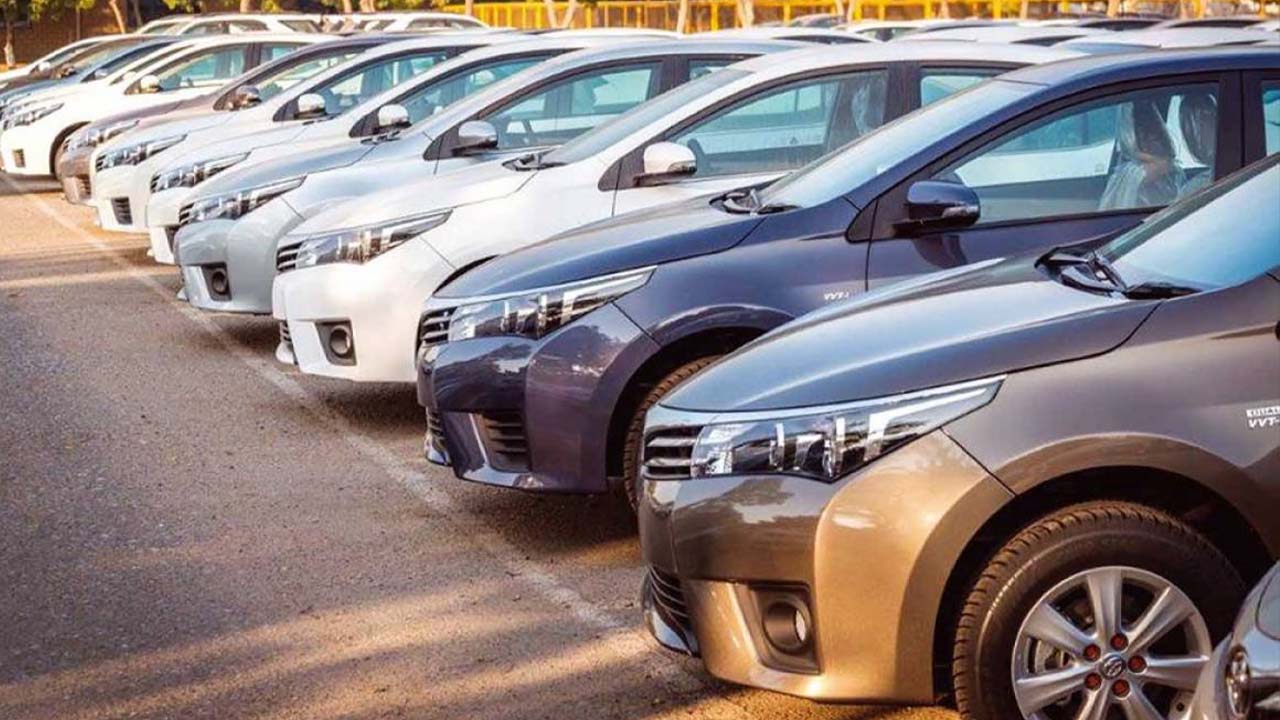
    For individuals not on the ATL, the tax rates on motor vehicles have been increased by a substantial 200 per cent. This means that non-filers will now be subject to fixed tax rates of 18 per cent, 24 per cent, and 30 per cent, based on the engine capacity of their vehicles, specifically 2001cc to 2500cc, 2501cc to 3000cc, and above 3000cc, respectively.

    On the other hand, ATL filers will experience a different taxation structure. Instead of fixed tax amounts, they will be required to pay tax at a rate of 6 per cent, 8 per cent, and 10 per cent, depending on the engine capacity of their motor vehicles, namely 2001cc to 2500cc, 2501cc to 3000cc, and above 3000cc, respectively.

    In cases where the engine capacity is not applicable, and the value of the vehicle exceeds Rs5,000,000, the tax rate will be 3 per cent of the import value (including customs duty, sales tax, and federal excise duty for imported vehicles, and invoice value for locally manufactured or assembled vehicles).

    It is worth noting that certain exemptions have been made. Pakistan’s government agencies and foreign diplomats will not be subject to these revised tax rates.

    Furthermore, the circular introduced tax implications for bank withdrawals based on the withdrawn amount. Non-ATL filers will be taxed Rs303 for withdrawals of Rs50,500 and taxed Rs450 for withdrawals ranging from Rs55,000 to Rs75,000.

    Additionally, to curb unnecessary foreign exchange outflows via credit/debit card transactions, the withholding tax rates for ATL persons have been increased from 1 per cent to 5 per cent, while non-ATL persons will face a higher rate of 10 per cent, up from the previous 2 per cent.

    These adjustments in the tax policy aim to strengthen the country’s revenue generation while encouraging citizens to become active taxpayers.

  • FBR to increase property valuation rates by 13-15% in accordance with World Bank loan conditions

    FBR to increase property valuation rates by 13-15% in accordance with World Bank loan conditions

    In accordance with the loan conditions set by the World Bank, the Federal Board of Revenue (FBR) has made the decision to increase property valuation rates in various urban centers across the country. This increase will range from 13 per cent to 15 per cent on average.

    As part of this ongoing exercise, the FBR has also expanded the number of cities covered from 42 to 51. The revised property valuation rates will be officially announced for these cities.

    High-ranking sources within the FBR have confirmed that consultations with provincial authorities are underway to determine the adjusted property valuation rates, which are scheduled to take effect from August 1, 2023.

    Presently, the FBR’s property valuation rates are applicable in over 40 cities and towns, including Abbottabad, Attock, Bahawalnagar, Bahawalpur, Chakwal, Dera Ismail Khan, Dera Ghazi Khan, Faisalabad, Ghotki, Gujranwala, Gujrat, Gwadar, Hafizabad, Haripur, Hyderabad, Islamabad, Jhang, Jhelum, Karachi, Kasur, Khushab, Lahore, Larkana, Lasbela, Lodhran, Mandi Bahauddin, Mansehra, Mardan, Mirpurkhas, Multan, Nankana Sahib, Narowal, Peshawar, Quetta, Rahimyar Khan, Rawalpindi, Sahiwal, Sargodha, Sheikhupura, Sialkot, Sukkur, and Toba Tek Singh.

    Under the revised valuation tables, all of these cities will experience an increase of 13 per cent to 15 per cent. Additionally, starting from August 1, 2023, nine more cities and towns will be added to the list of covered areas.

    The Punjab Board of Revenue recently communicated to all deputy commissioners and district collectors, informing them of a meeting held under the chairmanship of a senior member of the Board of Revenue, Punjab. The purpose of the meeting was to discuss the progress in preparing the DC Valuation Tables in consultation with FBR representatives.

    During the meeting, the senior member requested that instructions be issued to all Punjab district collectors regarding the preparation of valuation tables for the fiscal year 2023-24.

    To ensure consistency and alignment between the DC valuation tables and the FBR valuation tables, district collectors have been advised to include FBR representatives as members of the committee, as previously stipulated in the Punjab Stamp (Valuation Tables in respect of Immovable Property) Rules of 1999.

    It is recommended that the specified timelines for completing the valuation tables be adhered to. Furthermore, the valuation tables should include the name of the housing society or scheme, as well as the Khasra numbers corresponding to the developed housing society or scheme.

    In determining the rates, consideration should also be given to the brochure value advertised by the housing societies or schemes. This task should be given top priority, as per the order.

    The FBR’s higher authorities are currently reviewing the work conducted by field formations in consultation with the respective provincial authorities.

    According to Geo, the upcoming exercise will result in an average increase of 15 per cent in the valuation tables, effective from August 1, 2023. The aim is to establish the updating of valuation tables as an annual practice, as there is still a disparity between the FBR’s notified rates and the current market rates.

    The revision of property valuation tables is a condition attached to the $400 million World Bank loan known as the ‘Pakistan Raises Revenues (PRR) and RISE-II program’. The adjusted valuation rates will contribute to increased tax collection from immovable properties. However, it is important to note that the FBR’s notified rates still remain lower than the prevailing fair market value.

  • FBR faces Rs75 billion shortfall in annual tax collection target

    FBR faces Rs75 billion shortfall in annual tax collection target

    The Federal Board of Revenue (FBR) is currently confronted with a shortfall of Rs75 billion in attaining the revised annual tax collection target of Rs7,200 billion for the fiscal year.

    Despite collecting Rs7,125 billion, which falls short of the revised target, the FBR faces a net revenue shortfall of Rs75 billion for the fiscal year 2022-2023.

    Originally, the FBR’s annual tax collection target was established at Rs7,640 billion for the outgoing fiscal year, subsequent to the unveiling of the mini-budget in February 2023.

    To generate additional revenue, the government implemented various measures, including an increase in the Goods and Services Tax (GST) rate from 17 per cent to 18 per cent, the application of a higher GST rate of 25 per cent on luxury goods, and a 154 per cent rise in the Federal Excise Duty (FED) on cigarettes.

    However, over the past four months, the FBR failed to generate the anticipated additional revenue, leading to a downward revision of the revenue collection target from Rs7,640 billion to Rs7,200 billion by the end of June 2023.

    Notably, Minister for Finance and Revenues, Ishaq Dar, took to Twitter to highlight the achievement of the highest-ever tax collection for the outgoing fiscal year.

    He stated, FBR has collected Rs7,000 billion in taxes for the first time in the country’s history as of June 26, 2023, and expressed optimism that the revenue collection would further increase by June 30, 2023.

    It is expected that the FBR will issue a formal statement regarding the revenue collection in due course.

  • Budget 2023-24: FBR considers decreasing duty on mobile phones

    Budget 2023-24: FBR considers decreasing duty on mobile phones

    The Federal Board of Revenue (FBR) is considering options to decrease the duty on mobile phones in the forthcoming federal budget for the fiscal year 2023-24. The budget is expected to be disclosed on June 9. The FBR is taking into account the suggestions put forward by mobile phone traders.

    Previously, the government was obligated to raise the duty on mobile phones by 100 per cent to 150 per cent, resulting in a deposit of only Rs5 billion to Rs10 billion in the national exchequer, instead of the anticipated Rs85 billion.

    According to The News, the number of mobile phone users in Pakistan has surpassed 186.9 million. To address the financial crisis of the current fiscal year, the new budget is contemplating a significant reduction in the rates of duties on cellular phones. Currently, the duties on small and big mobile phones stand at approximately 100 per cent to 150 per cent.

    The mobile industry is teetering on the verge of collapse due to the increased taxes. This not only affects traders but also poses difficulties for millions of people who rely on earning a livelihood through this sector.

    It has been reported that a delegation from the Mobile Phones Traders Association has submitted recommendations to Finance Minister Ishaq Dar and other senior officials. The delegation has assured that efforts will be made to incorporate these recommendations into the budget. The proposals and recommendations are currently under review for potential inclusion in the new budget.

    It has come to light that a 75 per cent duty is imposed on cellular phones in Pakistan, in contrast to other countries in the region such as Singapore, Bangladesh, and Turkey, where the duty is not as high. Consequently, people have been using smartphones without paying duties in collusion with the FBR.

    The additional 100 per cent to 150 per cent duty on cell phones has made them unaffordable for the poor, laborers, daily wage earners, students, professionals, the legal community, and civil society.

    Munir Beg Mirza, the General Secretary of the All Pakistan Mobile Phones Traders Association, stated that the ban on importing used mobile phones has led to an increase in smuggling to favor a few companies. Additionally, people are illegally using smartphones without paying substantial taxes, thus causing a loss to the national treasury.

    He further noted that if an appropriate duty is imposed in the new financial year, not only will every consumer pay tax, but the government will also receive Rs100 billion instead of Rs5 billion in revenue from phones.

  • Proposed increase in advance tax on vehicle registration to impact expensive car buyers

    Proposed increase in advance tax on vehicle registration to impact expensive car buyers

    With the upcoming budget just days away, the Federal Board of Revenue (FBR) is deliberating on measures to increase the advance tax on motor vehicle registration, particularly targeting non-filers. The proposed plan suggests raising the tax rate by 10 to 35 per cent based on the value of vehicles.

    Currently, the advance tax is determined by engine capacity, but significant changes are being considered for the forthcoming budget, set to be revealed in the first week of June. The Resource and Revenue Mobilisation Commission (RRMC) has recommended imposing the advance tax based on the value of the vehicle.

    As per the proposed rates, the RRMC has advised the government to impose a 2 per cent advance tax on the corporate sector and 3 per cent on the non-corporate sector for individuals listed in the active taxpayers list (ATL) for the past three years. These rates would apply to motor vehicles valued up to Rs10 million.

    For individuals, the proposed tax rate stands at 10 per cent. As for motor vehicles valued between Rs10 million and Rs30 million, the recommended tax rates are 4 per cent and 5 per cent for the corporate and non-corporate sectors, respectively, provided they are part of the ATL for the past three years.

    Moving up the value scale, vehicles valued between Rs30 million and Rs100 million would face tax rates of 6-7 per cent for the corporate and non-corporate sectors. The proposed tax rate for individuals would be increased significantly to 30 per cent.

    For vehicles valued up to Rs100 million, the proposed tax rates are 8 per cent and 10 per cent for the corporate and non-corporate sectors, respectively, for individuals present in the ATL for the past three years. Individuals falling under this category would face a tax rate of 35 per cent.

    The RRMC has also recommended subjecting the transport sector to a minimum tax regime of 3 per cent of the gross turnover, applicable to transport services provided to withholding agents. Additionally, a tax rate of 3.5 per cent would be levied on the gross amount received for the provision of carriage services by transport contractors, while oil tanker contractors would face a tax rate of 2.5 per cent.

    These proposed changes in the tax structure aim to generate increased revenue for the government and incentivize compliance with tax regulations. By targeting motor vehicle registration, the FBR hopes to enhance revenue collection and promote a fair tax system.

    It is essential to note that these proposed changes are subject to approval and implementation during the budget announcement. The FBR and RRMC are carefully evaluating the potential impact of these adjustments on various sectors and taxpayers, striving to strike a balance between revenue generation and taxpayer convenience.

  • Pakistan Tobacco Company fears surge in smuggling, fake cigarette supply after tax hike

    Pakistan Tobacco Company fears surge in smuggling, fake cigarette supply after tax hike

    Pakistan Tobacco Company (PTC) has expressed serious concern over the recent mini-budget announcement, stating that new taxes on cigarettes will result in an increase in smuggling and counterfeit products in markets. Speaking to the media on Friday, PTC’s Director Legal and External Affairs, Syed Asad Shah, explained that the increase in federal excise duty (FED) and the lower minimum price set by the Federal Board of Revenue (FBR) would lead to less revenue collection from the cigarette industry.

    Shah displayed several illicit cigarette packs available in markets across the country, including some smuggled brands without health warnings, counterfeit products of local brands, and unregistered and non-tax-paid locally produced cigarettes.

    Shah projected that the share of illicit cigarettes in Pakistan would increase from the current 35 per cent to 40-50 per cent in the current year. He added that if the government did not rationalize the policy of managing the threshold price level and did not restrict illicit trade, its revenues would also decline after two years. Illicit cigarettes are sold below the minimum price because the applicable tax per pack is not paid on these products.

    The cigarette industry paid total taxes of Rs150 billion in fiscal year 2021-22, and the expected tax receipts this year would be around Rs185 billion because of the new taxation measures. According to the industry, tax contribution by PTC and Philip Morris, two multinational companies, alone will be around Rs182 billion.

    Shah pointed out that around 35 cigarette companies were running in Pakistan, making some 200 brands, but local players paid only Rs3 billion in taxes and duties. He added that many companies were not paying due taxes, which was why some were selling cigarette packs for Rs7.

    PTC officials emphasized the need for a rational increase in the minimum legal price of cigarettes. After the recent rise in FED, taxes, and duties on tier-2 cigarette packs came in at Rs101, but the minimum sale price of the same packs was Rs108.

    According to Express, the company officials demanded that the finance ministry take stringent action against the illicit cigarette trade and ensure across-the-board implementation of the FBR’s track and trace system that monitors the production and supply of cigarettes.

  • Govt to present Finance Bill 2023 today to fulfil IMF conditions

    Govt to present Finance Bill 2023 today to fulfil IMF conditions

    The federal government has been forced to head to parliament after President Arif Alvi ‘adv­ised’ Finance Minister Ishaq Dar on Tuesday to take parliament into confidence over the Rs 170 billion in new taxes that are being levied.

    As per the agenda, the National Assembly will meet at 3:30pm and Finance Minister Senator Ishaq Dar will present the Finance Supplementary Bill, 2023 in the lower house.

    A session of the Senate has also been summoned at 4:30pm to move the bill there as well so the document can be sent to President Dr Arif Alvi immediately for assent.

    Prime Minister Shehbaz Sharif, who didn’t attend the last session, will be present during today’s meeting.

    The governm­ent had initially planned to introduce “tax and non-tax mea­­sures” to generate funds to the tune of Rs 170 billion. However, in a last-minute change, it decided to drop proposals pertaining to non-tax measures, particularly the flood levy to the tune of Rs 100 billion.

    In a late-night development, the Federal Board of Revenue (FBR) issued SRO178 to enhance a federal excise duty on locally manufactured cigarettes which would generate up to Rs 60 billion in taxes on tobacco products.

    The government will generate Rs 55 billion more through a 1 per cent increase in GST – from 17pc to 18pc. The remaining Rs 55 billion will be collected through an increase in excise duty on airlines tickets, sugary drinks and an increase in withholding tax rates.

    Dar had called on President Alvi to apprise him about the talks with the IMF for the revival of the programme.

    The government decided to approach the Parliament after President Dr Arif Alvi gave the government a cold shoulder on bringing the mini-budget via an ordinance in his meeting with Dar.

    “The president advised that it would be more appropriate to take parliament into confidence on this important subject, and that a session be called immediately so that the bill is enacted without delay,” a statement issued by the President House said after the meeting.

  • IMF rejects Pakistan’s circular debt management plan, advises raising power tariff

    IMF rejects Pakistan’s circular debt management plan, advises raising power tariff

    In order to cap the extra subsidy at Rs335 billion for the current fiscal year, the International Monetary Fund (IMF) has rejected the circular debt management plan (CDMP) that the government had given and requested the authorities to hike the power tariff by Rs12.50 per unit.

    Talks on the ninth review are now being held in Pakistan by an IMF team; they will last until February 9 and are anticipated to result in a staff-level agreement between the two parties.

    During the second day of technical discussions, the Washington-based lender referred to the amended CDMP as “unrealistic,” which is based on several incorrect assumptions. Therefore, the government would need to make further adjustments to its recommended course of action to limit the losses in the cash-strapped electricity industry.

    A fiscal deficit will be worked up between the IMF and the Finance Ministry, and various extra taxing measures will then be finalised through the forthcoming mini-budget.

    The international lender has asked Pakistan to impose Rs600–800 billion in additional taxes in the second round of talks to revive the $7 billion Extended Fund Facility (EFF), which has been stalled for months.

    According to details, the Federal Board of Revenue held a second round of technical talks with the IMF mission, led by Mission Chief to Pakistan Nathan Porter, on the ninth review of a $7 billion loan programme.

    The lender also demanded the government increase tax collection to 1 per cent of the gross domestic product (GDP). Sources claimed that the fund demanded the government fix the next fiscal year’s tax collection target at Rs8.3 billion.

  • Pakistan will take fiscal measures set by IMF but there will be no burden on the common man: Ishaq Dar

    Pakistan will take fiscal measures set by IMF but there will be no burden on the common man: Ishaq Dar

    Federal Minister for Finance and Revenue Ishaq Dar has categorically denied rumours suggesting that the government is considering “access to foreign exchange held with commercial banks.”

    “It is categorically denied and clarified that there is no such move under consideration of the government,” said Dar, in a series of tweets.

    The statement come days after the finance minister said that the country’s foreign exchange reserves stand at $10 billion, a much higher amount than the SBP’s $5.6 billion reserves as of December 30, 2022, since “dollars held by commercial banks also belonged to the country.”

    This comment gave rise to fears that the government may confiscate dollars from private banks as had been done in 1998 when Dar was the finance minister.

    However, Dar said that his comment was “greatly misconstrued” and nothing like this would happen.

    Dar explained at a press conference with Prime Minister Shehbaz Sharif and other federal cabinet members that before 1999, all foreign currency was deposited with the State Bank of Pakistan (SBP), and private banks were not permitted to hold any foreign currency.

    “In February 1999, when I was the finance minister, we devised a system whereby a substantial amount [of dollars] remain with [private] banks. It was on June 30, 1999 that reserves were broken down into three columns — those with the SBP, commercial banks and total.

    “Whenever Pakistan’s reserves are quoted anywhere in the world — a survey or a document — the [total figure] is quoted and then a breakdown is given. I gave a breakdown too,” he added.

    The minister claimed that certain people were to blame for the country’s dire circumstances, which caused it to drop from the 24th to the 47th largest economy in 2016.

    “Even now, they cannot tolerate any good development. They gave such a twist [to my statement],” he said, adding that while the federal cabinet was busy working for Pakistan under PM Shehbaz’s guidance, such people were spreading rumours that the government would take dollars from commercial banks.

    “Nothing of that sort will happen. Everything is all worked out … and in order. Nothing to worry about,” he assured, urging those “spreading the rumours” to play a positive national role.

    Dar also tweeted about the reserves later, saying national foreign exchange reserves always include forex held with SBP and commercial banks.

    Furthermore, Dar tweeted about the reserves and stated that SBP and commercial bank holdings are usually included in the nation’s foreign exchange reserves.

    “Recently I quoted the forex reserves figure based on this principle. Some vested elements who ruined this country’s economy in the past, gave it a deliberate twist and started a campaign as if govt was considering access to foreign exchange held with commercial banks which indeed is the property of the citizens.

    “It is categorically denied and clarified that there is no such move under consideration of the government,” he emphasised.

    The finance minister once again claimed that Pakistan’s foreign exchange reserves would increase soon.

    As of December 30, 2022, Pakistan’s foreign exchange reserves had decreased to $5.6 billion, an eight-year low. This is equivalent to imports for three weeks.

    The swift decrease has made it impossible for the government to repay its international debts without taking out new loans from allies.

    Govt to comply with IMF conditions without burdening common man

    The International Monetary Fund (IMF) programme’s ninth review, which would release $1.18 billion, has been postponed for months due to the government’s refusal to comply with some conditions imposed by the international lender.

    In today’s press conference, Dar acknowledged the delay and claimed that it was due to revenue collection. The Federal Board of Revenue (FBR) missed its goal in December, the finance minister said, and the super tax that the administration enacted in June of last year had been declared unlawful by a high court.

    Dar said that his team informed the IMF that Pakistan could recover the amount easily after the Supreme Court takes a decision on the super tax.

    “We are not changing the fiscal budget target and we will achieve it,” he claimed.

    Dar said that the IMF suggested that the government implement fiscal measures and eliminate some subsidies. “We have identified some budgetary measures, but the average person won’t be overburdened.”

    He asserted that the measures would be very specific and classified.
  • IMF asks Pakistan to reduce expenses before loan talks

    IMF asks Pakistan to reduce expenses before loan talks

    The International Monetary Fund (IMF) has asked Pakistan to reduce expenses before talks on the ninth review of a $7 billion loan programme.

    Discussions between Pakistan and the IMF are still underway, but no party has reached a broad agreement on a revised macroeconomic framework for the current fiscal year.

    According to The News, the ninth review’s conclusion and the distribution of the $1 billion tranche might not happen until the following calendar year 2023 as a result of the ongoing negotiations.

    The discussions went on for weeks, but the two parties were unable to agree to begin policy-level discussions to wrap up the approaching ninth review by the end of November.

    Although both Pakistan and the international lender are keeping quiet and refusing to make any public statements, rumours in the background indicate that the talks broke down due to disagreements over the revised macroeconomic and fiscal framework that Islamabad had prepared and shared with the IMF.

    Pakistan must now put in a lot of effort to finish the review by the first week of December 2022. If the negotiations are successful next month, the IMF will ultimately release the next tranche in January 2023 because the Christmas and New Year holidays start after that date. The Executive Board of the multilateral lender will meet the following year to approve Pakistan’s next tranche.

    The News had approached both IMF and Finance Ministry officials to inquire about the exact schedule for the conclusion of the pending review. One close aide of Minister for Finance Ishaq Dar stated that “discussions were going on Zoom. Insha Allah soon (the review will be concluded).”

    The new macroeconomic and fiscal framework for 2022–23 is being contested by the IMF because it thinks the goals are unattainable and at odds with actual conditions.

    The government anticipated nominal growth in the range of 25 per cent, with real GDP growth of 2 per cent and an average inflation rate of 23 per cent, however, the other numbers did not line up with the revised nominal growth estimates.

    The government has not revised the $7.47 trillion yearly objective set by the Federal Board of Revenue (FBR). The IMF, however, thinks that the reduction of imports may result in a shortfall for the tax collector. Second, assuming FBR met its goal, the tax-to-GDP ratio would decline even lower because it did not equal the nominal growth statistics of 25 per cent. Third, the aim of Rs2 trillion in non-tax revenue also might not be met.

    The government had set a target of Rs855 billion before the next budget, therefore the IMF highlighted that the petroleum development levy may not completely materialise. Because the government was unable to impose a fee of Rs50 per litre on diesel and because the consumption of petroleum products fell by 21 per cent, the levy target may now be reduced downward to Rs500 billion.

    Another obstacle to reaching agreement was the government’s failure to pass legislation and reforms to the energy industry.

    Given that the State Bank of Pakistan’s (SBP) reserves currently stand at $7.8 billion, the delay in finalising the IMF agreement could exacerbate the economic problems already plaguing the nation.