Tag: India

  • India slams ‘unjustified’ action by US, EU over its Russian oil purchases

    India slams ‘unjustified’ action by US, EU over its Russian oil purchases

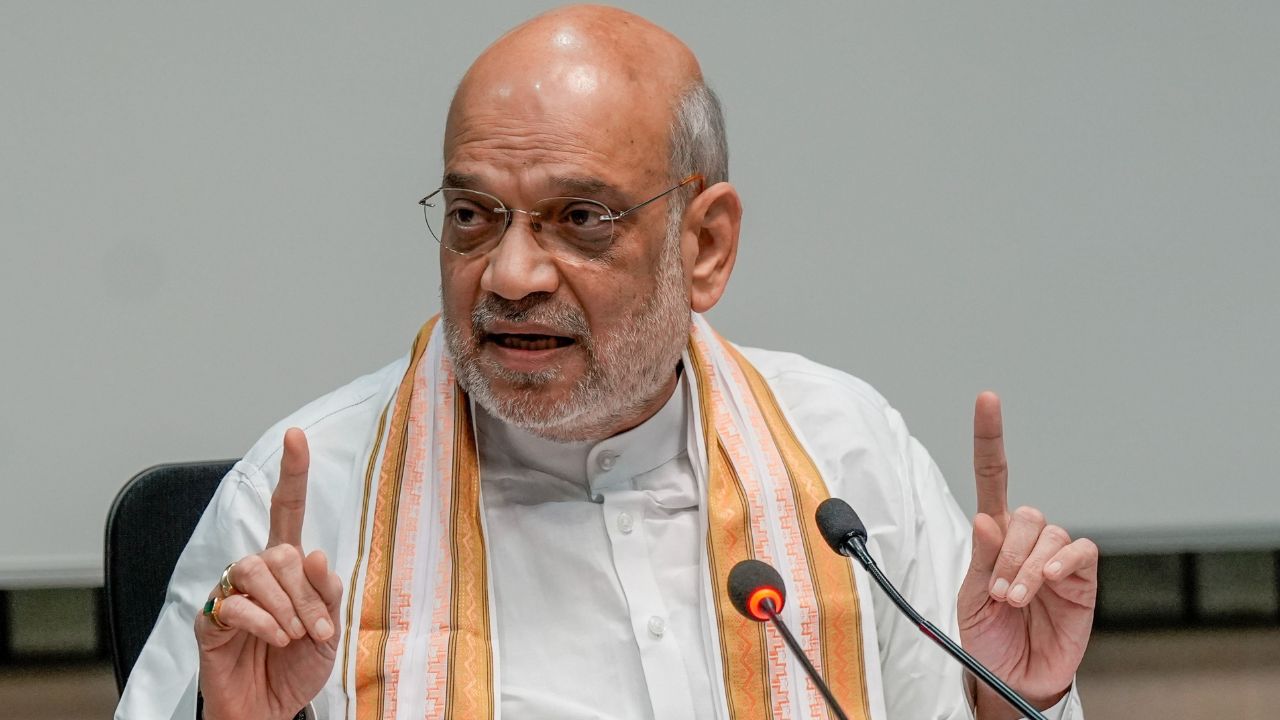
    India’s foreign ministry said Monday that the United States and European Union were “targeting” it due to its buying of Russian oil, adding that the moves were “unjustified” and that it would protect its interests.

    “The targeting of India is unjustified and unreasonable,” India Foreign Ministry spokesman Randhir Jaiswal said in a statement, after US President Donald Trump vowed to raise tariffs on the country over its oil purchases from Russia.

    “Like any major economy, India will take all necessary measures to safeguard its national interests and economic security.”

    It did not provide further details on the measures.

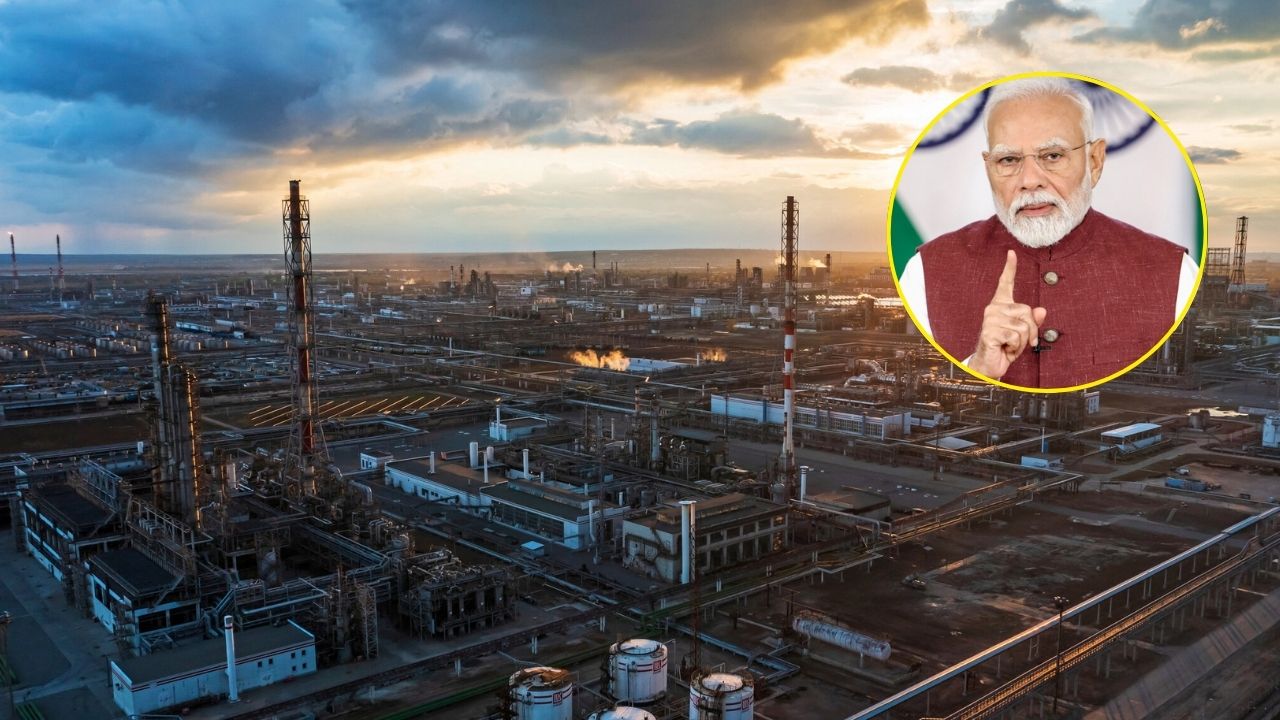
    India became a major buyer of Russian oil, providing a much-needed export market for Moscow after it was cut off from traditional buyers in Europe because of the Ukraine war.

    New Delhi saved itself billions of dollars while bolstering Moscow’s coffers.

    But India on Monday argued it “began importing from Russia because traditional supplies were diverted to Europe after the outbreak of the conflict”.

    It also noted that Washington at that time had “actively encouraged such imports by India for strengthening global energy markets stability.”

    It pointed to what it suggested were double standards of EU and US trade with Moscow.

    “It is revealing that the very nations criticising India are themselves indulging in trade with Russia,” Jaiswal added.

    “Unlike our case, such trade is not even a vital national compulsion.”

    Jaiswal singled out examples of where deals were being done with Moscow.

    “Europe-Russia trade includes not just energy, but also fertilisers, mining products, chemicals, iron and steel and machinery and transport equipment,” the statement added.

    “Where the United States is concerned, it continues to import from Russia uranium hexafluoride for its nuclear industry, palladium for its EV industry, fertilisers as well as chemicals.”

    India, the world’s most populous country, was one of the first major economies to engage the Trump administration in broader trade talks.

    The United States is India’s largest trading partner, with New Delhi shipping goods worth $87.4 billion in 2024.

    India’s protectionist trade policies, however, saw it run up a surplus of nearly $46 billion the same year.

    On Monday, Trump said in a post to his Truth Social platform that India was “buying massive amounts of Russian Oil” and selling it for “big profits.”

    “Because of this, I will be substantially raising the Tariff paid by India to the USA,” he wrote.

    But he did not provide details on what tariff level he had in mind.

    For now, an existing 10 percent US tariff on Indian products is expected to rise to 25 percent come Thursday.

    Last month, the EU and Britain sought to ramp up economic pressure on Russia to halt the war in Ukraine by slashing a price cap meant to choke off revenues from key oil exports.
  • FACT CHECK: Did Trump just call Modi out for not responding to his tweets?

    FACT CHECK: Did Trump just call Modi out for not responding to his tweets?

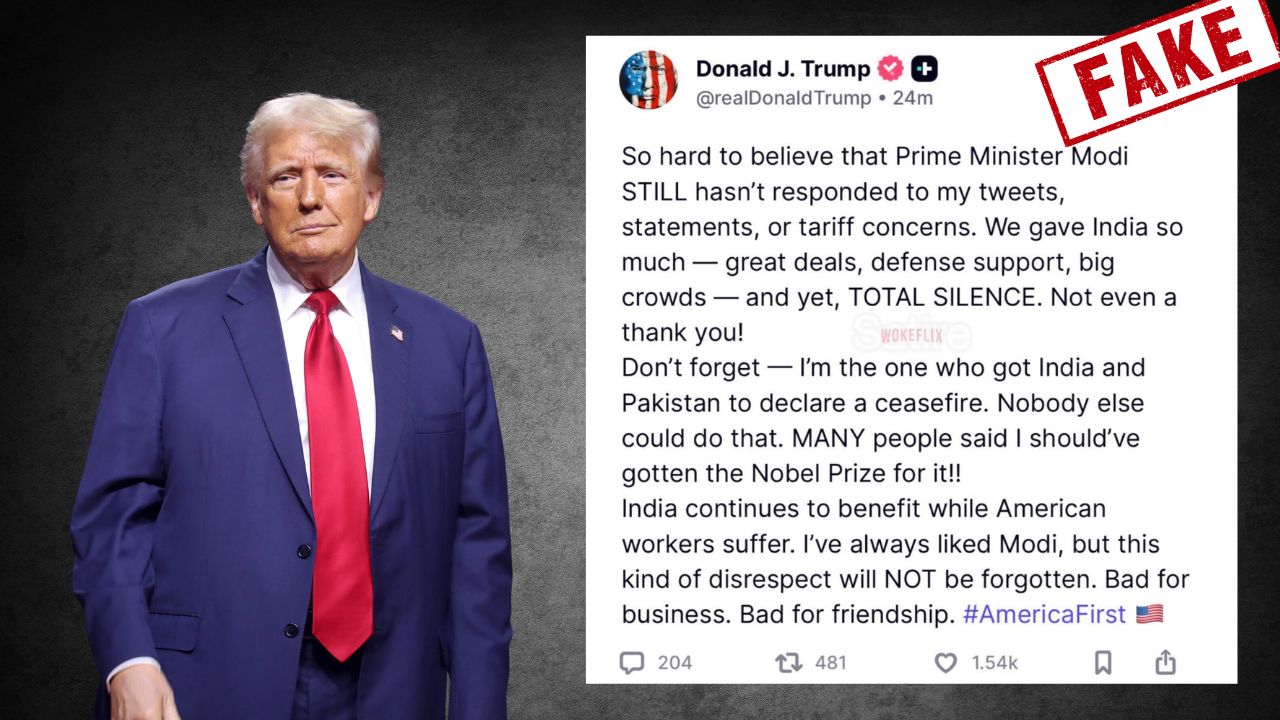
    A screenshot of United States (US) President Donald Trump’s Truth Social post that called Indian Prime Minister (PM) Narendra Modi out for not responding to the announcement of whopping 25 per cent reciprocal tariffs on New Delhi, has turned out to be fake.

    “So hard to believe that Prime Minister Modi STILL has not responded to my tweets, statements or tariffs concerns. We gave India so much, great deals, defense support, big crowds and yet, TOTAL SILENCE. Not even a thankyou [sic],” read the post, a screenshot of which went viral on social media on Friday.

    “Don’t forgot I am the one who got India and Pakistan to declare a ceasefire. Nobody else could do that. Many people said I should have gotten the Nobel Prize for it!!,” it read, adding that India “continued to benefit while American workers suffer”.

    “I have always liked Modi but this kind of disrespect will NOT be forgotten. Bad for business, bad for friendship #AmericaFirst,” the post said.

    With a screenshot of the post going viral and several social media users sharing it, particularly on X (formerly Twitter), here, here and here, The Current conducted a thorough investigation into the authenticity of the screenshot, reviewing all of President Trump’s posts on Truth Social over the past 24 hours.

    Going through all 40 posts shared by the US president on Truth Social over the past day, The Current was unable to find the one wherein he directly called out the Indian premier.

    While any cached records were also not found– used to verify authenticity in case of post deletion – The Current discovered that the screenshot being shared online originated from an account named Wokeflix, a digital outlet that falsely attributed the statement to President Trump.

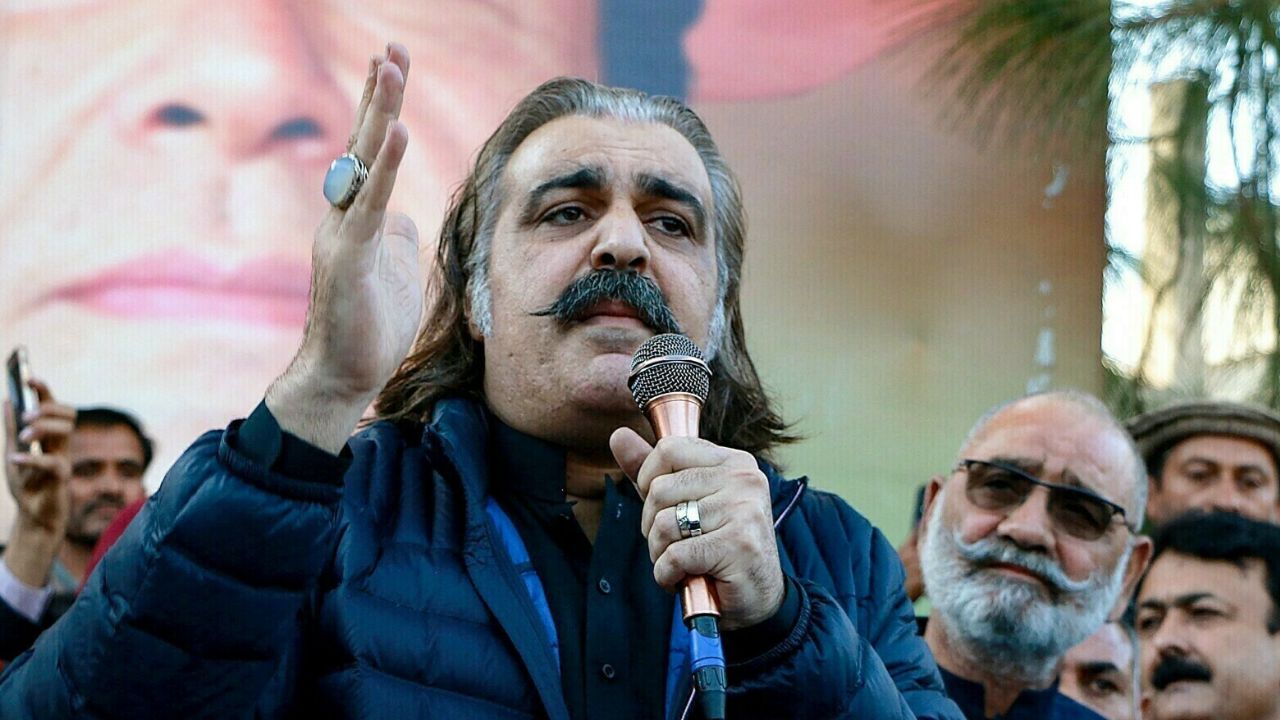
  • CM Gandapur vows to expose India-sponsored terrorism after FATF debacle

    CM Gandapur vows to expose India-sponsored terrorism after FATF debacle

    A day after India submitted Chief Minister (CM) of Khyber Pakhtunkhwa (KP) Ali Amin Gandapur’s recent remarks regarding the alleged support of certain extremist groups by “institutions” to the Financial Action Task Force (FATF) as evidence against Islamabad, he vowed to expose India’s role in sponsoring terrorism in the country.

    The Bharatiya Janata Party (BJP)-led Indian government has used the chief minister’s statement to back its allegations that Pakistan supports terrorist elements, officials of FATF confirmed.

    The Indian submission specifically references Gandapur’s remarks made late in July following an All-Parties Conference (APC) in Peshawar, in which he alleged, “We arrest the Taliban, but our own institutions get them released, claiming they are their people.”

    “Now they (Good Taliban) have come again. Please, these ‘Good Taliban’ are not acceptable and if you really want to keep them, give them uniforms, and send them to [Indian illegally occupied] Kashmir,” he had said.

    The remarks, which elicited criticism in Pakistan, are now being used by New Delhi to request Islamabad’s re-inclusion on the FATF’s “increased monitoring” list, commonly known as the grey list.

    Indian authorities have argued that the public admission by the chief minister shows that Pakistan’s institutions continue to aid and protect terrorist elements.

    Media reports quoted the FATF officials as saying that New Delhi framed the statement as a formal “charge sheet” against Islamabad, especially underscoring KP as a region gravely affected by terrorism and militancy.

    According to media reports, Gandapur, in a statement, said that India submitted his statement to the global anti-money laundering watchdog “out of context”.

    “India has always been involved in terrorism in Pakistan and the region,” the Chief Minister said, noting that he was writing a letter to FATF to expose Indian actions in Kashmir.

    He said the people and Pakistan’s forces were making unprecedented sacrifices to uproot terrorism from the country. 

    “My message to Modi [Indian prime minister] is that we are united to defend Pakistan,” Gandapur said, warning that India was attempting to get Pakistan grey-listed again by “constructing a false narrative.”

    After being placed on FATF’s grey list in 2018, Pakistan was taken off the list in 2022.

  • Whistleblower claims hundreds raped, murdered at India temple

    Whistleblower claims hundreds raped, murdered at India temple

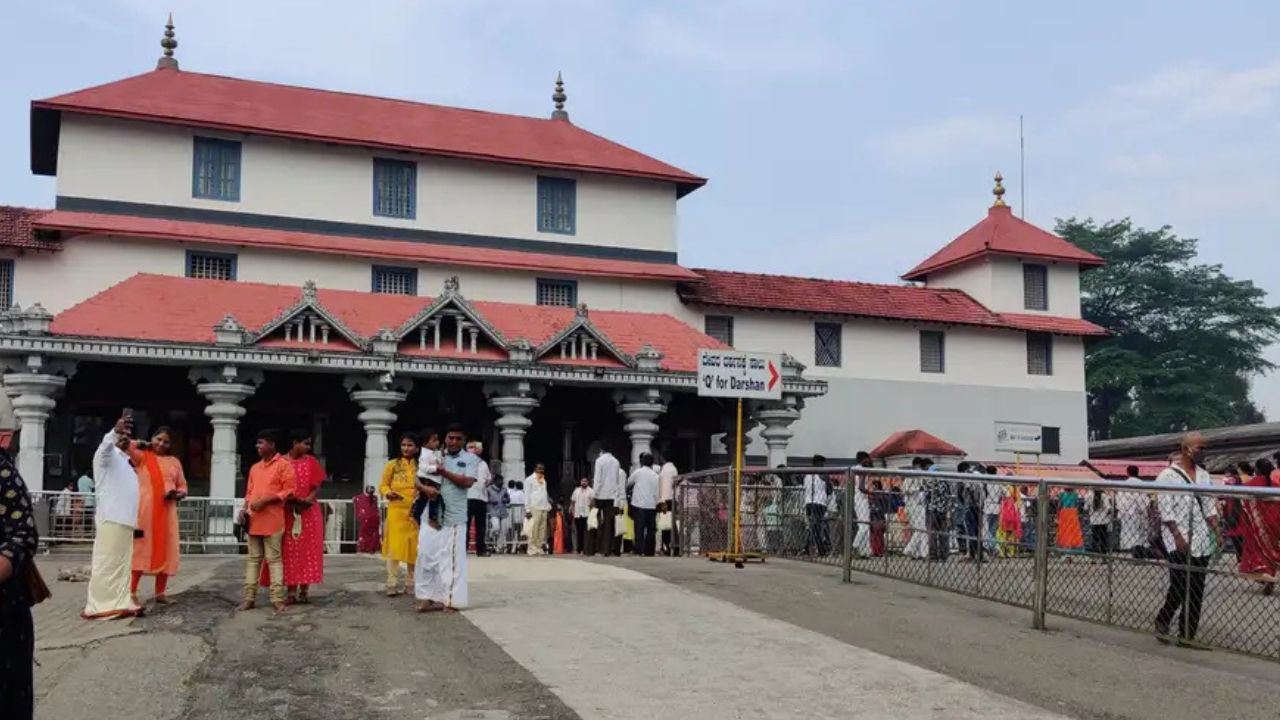
    A 48-year-old Dalit and former sanitation worker at Dharmasthala temple in Karnataka, India, has exposed a scandal involving sexual assault, including of minors, and alleged mass murders, according to media reports.

    “I can no longer bear the burden of memories of the murders I witnessed, the continuous death threats to bury the corpses I received, and the pain of beatings, that if I did not bury those corpses, I would be buried alongside them,” he said in a statement given to the police on July 3.

    He shared that he had worked at the temple from 1995 to 2014, near the Nethravathi River, which flows close to the Dharmasthala temple. During this time, he said he began to “notice dead bodies appearing” near the river, adding that “women’s bodies were more numerous.”

    “Many female corpses were found without clothes or undergarments… some corpses showed clear signs of sexual assault and violence; injuries or strangulation marks indicating violence were visible on those bodies,” he revealed.

    The former worker added that he was forced to dispose of hundreds of bodies, many of whom appeared to be minor girls.

    Describing one particularly harrowing incident involving a teenage girl in his complaint, he said, “She was wearing a school uniform shirt. However, her skirt and undergarments were missing. Her body showed clear signs of sexual assault.” 

    “There were strangulation marks on her neck. They instructed me to dig a pit and bury her along with her school bag,” he recalled.

    He detailed another “disturbing incident” of burying a woman’s body in her 20s. “Her face had been burned with acid. That body was covered with a newspaper. Instead of burying her body, the supervisors instructed me to collect her footwear and all her belongings and burn them with her,” he described.

    At times, as he was instructed, he burned dead bodies using diesel. “They would instruct me to burn them completely so that no trace would be found. The dead bodies disposed of in this manner numbered in the hundreds,” the complainant added.

    He further revealed details of “extremely cruel” murders that he claimed took place in the town near the temple. “Destitute men who came begging in the Dharmasthala area were systematically murdered … They would be tied to chairs in rooms and suffocated from behind using towels. These murders took place in my presence,” he alleged.

    The complainant, without naming anyone, alleged that his supervisors at the temple chose not to report the incidents. Instead, he claimed they beat him and forced him “to secretly dispose of these bodies.” He would help exhume the victims’ bodies so they could receive “proper respect and funeral rites.”

    The former worker also alleged that his supervisor threatened him by saying: “We will cut you into pieces; your body will also be buried like the other corpses. We will sacrifice all your family members.”

    In 2014, the former worker fled Dharmasthala with his family after a minor girl from his family was allegedly sexually harassed by someone believed to be associated with the temple supervisors.

    Weeks after his statement about alleged mass murders made headlines, the Karnataka government formed a Special Investigation Team (SIT) on July 22 to probe the scandal and accusations against the temple authorities.

    To back his claims, the former worker said he had recently unearthed skeletal remains from one of the burial sites and submitted photographs to the authorities.

  • Imports from India hit three year high despite tensions

    Imports from India hit three year high despite tensions

    Pakistan’s imports from India have reportedly surged to a three-year high during the first eleven months of fiscal year (FY) 2024-25 amid heightened tensions following India’s unwarranted aggression in May 2025 and the continued suspension of formal trade relations since 2019.

    Figures released by the State Bank of Pakistan indicate that imports from India totalled $211.5 million during the first 11 months of FY 2024-25. This marks an increase from the $207 million import figure during the corresponding period of the previous fiscal year and $190 million the fiscal year before. 

    According to reports, imports from India were valued at $15 million, just slightly below the $17 million recorded in May last year. It merits mention that imports in May 2025 remained high despite the significant escalation in tensions between Pakistan and India. 

    In contrast, Pakistan’s exports to India remained abysmally low, as domestic exporters managed to export only $1,000 worth of goods in May 2025 to India. This figure grows if the first 11 months of FY 2024-25 are considered as total exports reached just $0.5 million. In the previous two fiscal years, the figures stood low as well, at $3.44 million and $0.33 million.

    Reports indicate that traders have remained hesitant to speak openly about the flow of goods during the conflict. A trader suggested the goods may have been ordered before the hostilities began and possibly arrived via the involvement of other countries.

    While official trade remains limited, Indian analysts claim the actual volume is far higher. The Global Trade Research Initiative, a New Delhi-based research group, estimated last month that informal exports from India to Pakistan total around $10 billion each year. Much of that trade reportedly moves through intermediaries in Colombo, Dubai and Singapore.

    Reports suggest that Pakistan’s reliance on imported raw materials, along with high production costs, makes unofficial imports difficult to control. An exporter has reportedly highlighted how local manufacturing is too expensive in Pakistan, which could pave the way for countries like India, Bangladesh and China to flood the domestic market with smuggled goods.

    Since the aforementioned countries have a lower average cost of production, smuggled goods from these destinations seem attractive to local customers given the lower tags that come with the smuggled goods.

  • COAS slams India for being ‘largest sponsor of terrorism in region’

    COAS slams India for being ‘largest sponsor of terrorism in region’

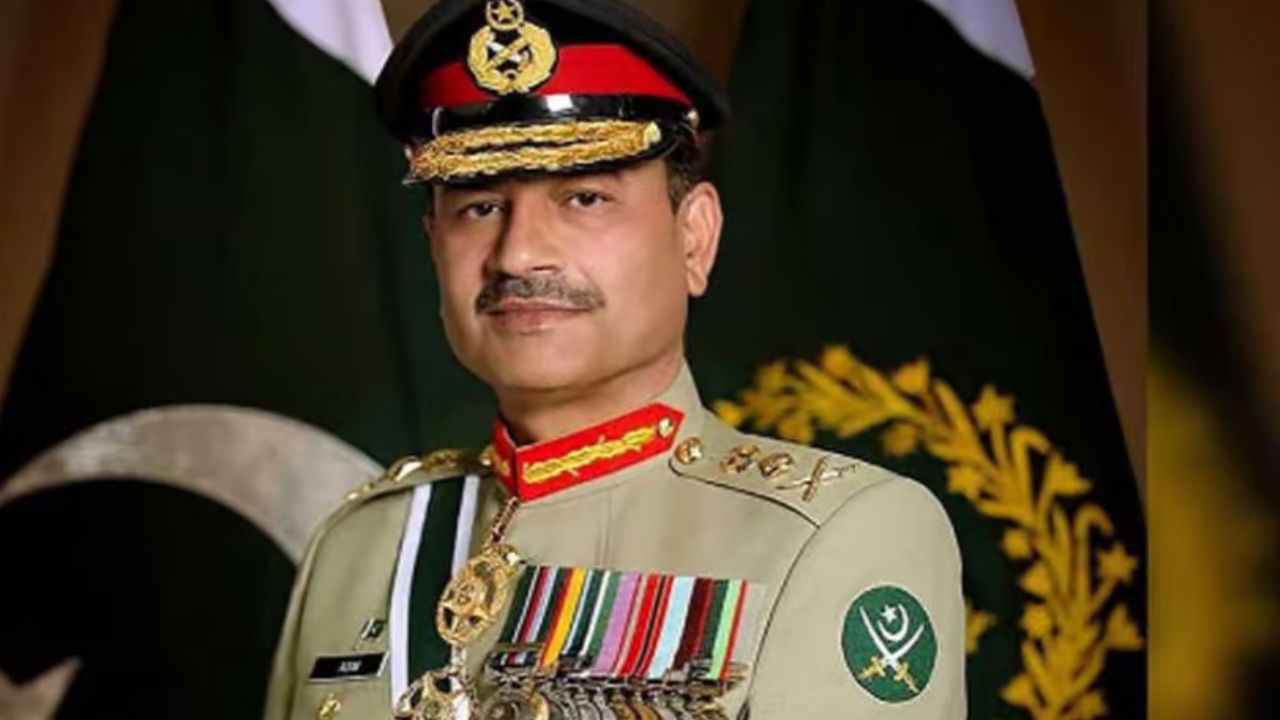
    Chief of Army Staff (COAS) Field Marshal Syed Asim Munir has labelled India as the largest state sponsor of terrorism in the region, urging neighbouring countries to stay vigilant against Indian proxy networks.

    Addressing officers of the 52nd Common Training Programme on Friday (today), Field Marshal Munir said, “India is the largest sponsor of terrorism in the region,” adding that Pakistan would never accept Indian hegemony. “We have never bowed before India, nor will we ever do so.”

    The army chief emphasised that Pakistan seeks friendly ties with Afghanistan, a brotherly Islamic country, adding Afghanistan is expected not to provide space to India’s terror proxies, Fitna al-Hindustan (Balochistan Liberation Army) and Fitna al-Khawarij (Tehreek-i-Taliban Pakistan).

    Declaring terrorism New Delhi’s internal issue, he said that it stemmed from India’s discriminatory and violent treatment of its minorities, particularly Muslims.

    Commenting on Pakistan’s defence preparedness, Field Marshal Munir highlighted that the armed forces remain fully prepared to meet modern warfare requirements.

    He credited Pakistan’s strong response during Ma’rakah-e-Haq from the Line of Control (LOC) to the country’s shores as a decisive reply to India’s unwarranted aggression.

    The April 22 attack in Pahalgam, in Indian Illegally Occupied Jammu and Kashmir (IIOJK), claimed the lives of 26 tourists. India blamed Pakistan for the incident without providing any evidence to support the allegation, which Pakistan has dismissed.

    India then breached Pakistan’s sovereignty and territorial integrity on May 6-7, launching strikes into the country, killing dozens of innocent civilians. In response, the Pakistan Air Force (PAF) shot down six Indian fighter jets, including three Rafales, and a day later inflicted heavy damage on Indian military installations.

    On May 10, the United States (US) mediated a ceasefire between the nuclear-armed countries.

    Army Chief Munir stated that God’s support was with Pakistan during the confrontation with India because the country stood on the side of truth.

    Commenting on the importance of unity among all state institutions, he said that the administration and civil bureaucracy were the foundation of harmony and that their responsibilities were crucial.

    He underscored the value of history and national identity, calling on the officers to embrace “Pakistaniyat” (identity as a Pakistani) over individual or regional affiliations. “Nations that forget their history lose their future,” he added.

    “Every system has flaws,” Field Marshal acknowledged, asserting, “but your job is to ensure that weaknesses and negative forces do not overpower the system”.

    He said national progress requires strong ties between the public, the government and the armed forces, concluding that love and loyalty to the country must remain the foremost principle.

  • US tells American women ‘not to travel alone’ in India

    US tells American women ‘not to travel alone’ in India

    The US State Department has recently updated a travel advisory for India, urging travellers to “exercise increased caution” due to “crime and terrorism”.

    “Rape is one of the fastest-growing crimes in India. Violent crimes, including sexual assault, happen at tourist sites and other locations,” the advisory read.

    Foreigners often face challenges and concerns while visiting India. In a harrowing incident, a 30-year-old French national in Udaipur for an advertisement shoot was allegedly raped earlier this week by a member of an event management firm, according to Indian media reports.

    NDTV quoted Udaipur Superintendent of Police (SP) Yogesh Goyal as saying, “On Sunday evening, some French tourists were at a restaurant called Greek Farm with some employees of an event management company. They had a meal together and also consumed drinks. The survivor has said that she went in the car with one Siddharth (also known as Pushparaj Ojha), who then took her to his hotel room and sexually assaulted her.”

    The travel advisory said that terrorists may attack with little or no warning, adding, “They target tourist locations, transportation hubs, markets/shopping malls, and government facilities.”

    “The US government has limited ability to provide emergency services to US citizens in rural areas. These areas stretch from eastern Maharashtra and northern Telangana through western West Bengal. Due to risks, US government employees working in India must obtain special authorisation to travel to these states,” the advisory said.

    Specifying the do’s and the don’ts, the advisory cautioned its citizens to not carry out a satellite phone or a Global Positioning System (GPS) device in India, as it’s illegal in the country and may result in a penalty of $200,00 or jail time of up to three years, noting, “Do not travel alone especially if you are a woman.”

    “We highly recommend that you buy insurance before you travel. Check with your travel insurance provider about evacuation assistance, medical insurance, and trip cancellation coverage.”

    Indian Illegally Occupied Jammu and Kashmir (IIOKJ) was mentioned for extra caution, as the advisory listed out some spots where US government employees should not travel without prior permission.

    The advisory informed the travellers that violence occurs in tourist spots in “Kashmir Valley: Srinagar, Gulmarg, and Pahalgam”, adding that the Indian government does not allow foreign tourists to visit certain areas along the LOC. 

    It instructed the tourists to not travel to Central and East India due to “terrorism” as Naxalites are active in a large area of India that spans from eastern Maharashtra and northern Telangana through western West Bengal.

    “US government employees working in India also need approval to travel to the eastern region of Maharashtra and the eastern region of Madhya Pradesh. US citizens are advised not to cross the India-Nepal border by land due to the risk of immigration related detention and fines,” it said.

    Regarding Manipur, the advisory further advised the US employee against travelling in the state, saying they must get “prior approval before visiting Manipur”.

  • French tourist raped in India as suspect goes on run

    French tourist raped in India as suspect goes on run

    A 30-year-old French national, who was in Udaipur, India, for an advertisement shoot, has allegedly been raped by a member of an event management firm on Monday night, Indian media has reported.

    Officials said the survivor, two of her female friends who are also tourists, and members of the event management firm which had organised the shoot, went to a restaurant in Tiger Hills in the Badgaon area of Udaipur on Sunday evening.

    NDTV quoted Udaipur Superintendent of Police (SP) Yogesh Goyal as saying, “On Sunday evening, some French tourists were at a restaurant called Greek Farm with some employees of an event management company. They had a meal together and also consumed drinks. The survivor has said that she went in the car with one Siddharth (also known as Pushparaj Ojha), who then took her to his hotel room and sexually assaulted her.”

    “The survivor has undergone a medical examination and an FIR has been registered. The man is on the run. We are going through footage from the restaurant and the hotel,” Goyal added.

    According to media reports, Siddharth asked the survivor to go with him to see the sights of the city. 

    Badgaon police Station House Officer (SHO) Pooran Singh said the woman was being treated at a private hospital, adding, “We will speak to her in detail once she is discharged.” 

    Additionally, Singh said the French tourist told her two friends about the rape, adding, “As she fell sick, they rushed her to a private hospital in the city and also approached the police, who lodged an FIR based on the victim’s primary statement.”

    Meanwhile, the French embassy has been informed about the incident while police interrogates witnesses who were present  at the restaurant that day.

  • India will never restore Indus Waters Treaty with Pakistan: Amit Shah

    India will never restore Indus Waters Treaty with Pakistan: Amit Shah

    Indian Union Home Minister Amit Shah on Saturday said that New Delhi will never restore the Indus Waters Treaty (IWT) with Islamabad, and the water flowing to Pakistan will be diverted for internal use.

    Following the April 22 Pahalgam incident in Indian Illegally Occupied Jammu and Kashmir (IIOJK), New Delhi unilaterally suspended the long-standing IWT, which, through wars, near-conflict, and complete diplomatic breakdowns, had endured. 

    According to the treaty, three eastern rivers, Sutlej, Beas and Ravi, were awarded to India, while Pakistan received the three Western rivers, Indus, Chenab and Jhelum, which account for the majority (almost 80 per cent) of the shared basin’s water.

    According to the agreement, India retains the right to use the western rivers for non-consumptive purposes like hydropower, and for limited irrigation, but is barred to store or divert their flows in ways that harm downstream access.

    In an interview with the Times of India, the Indian home minister said, “No, it [IWT] will never be restored,” adding, “We will take water that was flowing to Pakistan to Rajasthan by constructing a canal. Pakistan will be starved of water that it has been getting unjustifiably.”

    Islamabad has already clarified its stance regarding the India action of illegally putting IWT in abeyance, saying that any act of diverting or blocking the share of Pakistan’s water will be considered “an act of war,” as well as clarifying in the past that the treaty has no provision for one side to unilaterally pull back.

    Weeks after the suspension of IWT, Defence Minister Khawaja Asif warned New Delhi that it would strike if India attempts to construct any structure to block the flow of water into Pakistan in violation of the treaty.

     
    “If they attempt to construct such a type of structure, we will strike it and destroy it,” the defence minister said while speaking on a private news outlet in response to a question of whether Pakistan will strike first if India attempts to divert or stop the flow of water from western rivers.


    Additionally, Asif said that stopping water will be an act of aggression against Pakistan. “Aggression is not only carried out through artillery shells or gunfire. It has many types and phases. [Stopping the water] is also a phase of aggression. Such actions can lead nations to die from hunger and thirst,” he explained.

    Meanwhile, Pakistan is reportedly exploring a legal challenge to India’s decision to hold the treaty in abeyance under international law.

  • Pakistani Hindu couple found dead in Mumbai apartment

    Pakistani Hindu couple found dead in Mumbai apartment

    A Pakistani national Hindu couple was found dead in their apartment in Mumbai, India, on Monday. According to Indian media, it’s a murder-suicide case in which the husband is believed to have stabbed his wife with a kitchen knife and then committed suicide. 

    The wife reportedly sustained stab wounds on the neck, back and shoulder.

    The husband has been identified as 45-year-old Sanjay Sachdeva, while the wife is 35-year-old Sapna Das.

    Indian media cited a senior inspector of Kharghar police, Deepak Surve, as stating that last month, Sanjay was accused of assaulting his wife in front of their neighbours, but she chose not to file a complaint against him.

    As per the details available so far, the younger of the couple’s two children found the main door of the apartment locked from the inside when he returned from coaching class on Monday, whereas the other sibling was not at home. When no one responded for a long while, the child continued to knock, and he reached out to the neighbours for help, who entered the apartment through a common balcony. The couple was found “in a pool of blood”.

    The couple reportedly came to India last year, more than six months ago, along with their two children on a long-term visa.

    The couple’s residential apartment was rented by Sapna’s sister Sangeeta Makhija, who is an Indian citizen and was reportedly supporting the family financially. According to a senior police officer, the two were in the process of completing their paperwork and legal requirements needed to return home after the escalation between Pakistan and India last month, in May.

    Makhija reached out to the police for help after last month’s alleged assault, but they stated that they could not take effective action since Sapna declined to file a complaint.